Showing posts with label Boasian anthropology. Show all posts

Saturday, April 18, 2015

More on the younger Franz Boas


As a professor at Columbia, Franz Boas encountered the elite liberal culture of the American Northeast, one example being Mary White Ovington, a founder of the NAACP (Wikicommons)


Antiracism has roots that go back to early Christianity and the assimilationist Roman and Hellenistic empires. In its modern form, however, it is a much more recent development, particularly in its special focus on relations between whites and blacks and its emphasis on discrimination as the cause of any mental or behavioral differences.

Modern antiracism began in the early 1800s as a radical outgrowth of abolitionism, reaching high levels of popular support in the mid-1800s, particularly in the American Northeast, and then falling into decline due to growing interest in Social Darwinism and increasing disillusionment with the aftermath of the Civil War. By the 1920s, it really held sway only in the Northeast, and even there it was losing ground.

This situation changed dramatically in the 1930s. Antiracism revived and entered a period of growth that would eventually go global. The anthropologist Franz Boas played a key role through his own work and indirectly through the work of his two protégés: Margaret Mead and Ruth Benedict.

Yet this was the old Boas, a man already in his seventies. The younger Boas had thought differently, as seen in an 1894 speech he gave on "Human Faculty as Determined by Race":

We find that the face of the negro as compared to the skull is larger than that of the American [Indian], whose face is in turn larger than that of the white. The lower portion of the face assumes larger dimensions. The alveolar arch is pushed forward and thus gains an appearance which reminds us of the higher apes. There is no denying that this feature is a most constant character of the black races and that it represents a type slightly nearer the animal than the European type. [...] We find here at least a few indications which tend to show that the white race differs more from the higher apes than the negro. But does this anatomical difference prove that their mental capacity is lower than that of the white? The probability that this may be the case is suggested by the anatomical facts, but they by themselves are no proof that such is the case. (Boas, 1974, p. 230)

It does not seem probable that the minds of races which show variations in their anatomical structure should act in exactly the same manner. Differences of structure must be accompanied by differences of function, physiological as well as psychological; and, as we found clear evidence of difference in structure between the races, so we must anticipate that differences in mental characteristics will be found. (Boas, 1974, p. 239)

We have shown that the anatomical evidence is such, that we may expect to find the races not equally gifted. While we have no right to consider one more ape-like than the other, the differences are such that some have probably greater mental vigor than others. The variations are, however, such that we may expect many individuals of all races to be equally gifted, while the number of men and women of higher ability will differ. (Boas, 1974, p. 242)

Boas returned to this topic in a 1908 speech on "Race Problems in America":

I do not believe that the negro is, in his physical and mental make-up, the same as the European. The anatomical differences are so great that corresponding mental differences are plausible. There may exist differences in character and in the direction of specific aptitudes. There is, however, no proof whatever that these differences signify any appreciable degree of inferiority of the negro, notwithstanding the slightly inferior size, and perhaps lesser complexity of structure, of his brain; for these racial differences are much less than the range of variation found in either race considered by itself. (Boas, 1974, pp. 328-329)

How did his views on race evolve over the next twenty years? This evolution is described by Williams (1996), who sees his views beginning to change at the turn of the century. After getting tenure at Columbia University in 1899, he became immersed in the elite liberal culture of the American northeast and began to express his views on race accordingly. The onset of this change is visible in 1905, when he penned an article for the first issue of The Crisis, the organ of the NAACP: “The Negro and the Demands of Modern Life.” While pointing out that the average negro brain was "smaller than that of other races" and that it was "plausible that certain differences of form of brain exist," he cautioned:

We must remember that individually the correlation [...] is often overshadowed by other causes, and that we find a considerable number of great men with slight brain weight. [...] We may, therefore, expect less average ability and also, on account of probable anatomical differences, somewhat different mental tendencies. (Williams, 1996, p. 17)

The same year, he wrote to a colleague, stressing "the desirability of collecting more definite information in relation to certain traits of the Negro race that seem of fundamental importance in determining the policy to be pursued towards that race" (Williams, 1996, p. 18). In 1906, he sought funding for such a project with two specific goals:

(1) Is there an earlier arrest of mental and physical development in the Negro child, as compared with the white child? And, if so, is this arrest due to social causes or to anatomical and physiological conditions?

(2) What is the position of the mulatto child and of the adult mulatto in relation to the two races? Is he an intermediate type, or is there a tendency of reversion towards either race? So that particularly gifted mulattoes have to be considered as reversals of the white race. The question of the physical vigor of the mulatto could be taken up at the same time. (Williams, 1996, p. 19)

His tone was less even-handed in a private letter, written the same year:

You may be aware that in my opinion the assumption seems justifiable that on the average the mental capacity of the negro may be a little less than that of the white, but that the capacities of the bulk of both races are on the same level. (Williams, 1996, p. 19)

In 1911, Boas published the first edition of The Mind of Primitive Man. It recycled most of his previous writings on race, while emphasizing that race differences in mental makeup were statistical and showed considerable overlap. In 1915, he continued in this direction when he wrote a preface to Half A Man by Mary White Ovington, one of the founders of the NAACP:

Many students of anthropology recognize that no proof can be given of any material inferiority of the Negro race; that without doubt the bulk of the individuals composing the race are equal in mental aptitude to the bulk of our own people; that, although their hereditary aptitude may lie in slightly different directions, it is very improbable that the majority of individuals composing the white race should possess greater ability than the Negro race. (Williams, 1996, pp. 22-23)

Nonetheless, one finds little change from his earlier writings in his 1928 work Anthropology and Modern Life:

[...] the distribution of individuals and of family lines in the various races differs. When we select among the Europeans a group with large brains, their frequency will be relatively high, while among the Negroes the frequency of occurrence of the corresponding group will be low. If, for instance, there are 50 percent of a European population who have a brain weight of more than, let us say 1,500 grams, there may be only 20 percent of Negroes of the same class. Therefore, 30 percent of the large-brained Europeans cannot be matched by any corresponding group of Negroes. (Williams, 1996, p. 35)

Conclusion

From 1900 to 1930, Boas seemed to become increasingly liberal in his views on race, but this trend was hesitant at best and reflected, at least in part, a change in the audience he was addressing. As a professor at Columbia, he was dealing with a regional WASP culture that still preserved the radical abolitionism of the previous century. A good example was Mary White Ovington, whose Unitarian parents had been involved in the anti-slavery movement and who in 1910 helped found the NAACP. Boas was also dealing with the city's growing African American community and, through Ovington's contacts, wrote articles for the NAACP. Finally, he was also dealing with the growing Jewish community, who identified with antiracism partly out of self-interest and partly out of a desire to assimilate into northeastern WASP culture.

Boas didn't really change his mind on race until the 1930s. The cause is not hard to pinpoint. When he died in 1942, an obituary mentioned his alarm over the threat of Nazism:

Dr. Boas, who had studied and written widely in all fields of anthropology devoted most of his researches during the past few years to the study of the "race question," especially so after the rise of the Nazis in Germany. Discussing his efforts to disprove what he called "this Nordic nonsense," Prof. Boas said upon his retirement from teaching in 1936 that "with the present condition of the world, I consider the race question a most important one. I will try to clean up some of the nonsense that is being spread about race those days. I think the question is particularly important for this country, too; as here also people are going crazy." (JTA, 1942)

Hitler's rise to power created a sense of urgency among many academics, both Jewish and non-Jewish, thereby convincing fence-sitters like Franz Boas to put aside their doubts and take a more aggressive stand on race. Thus began the war on racism, which foreshadowed the coming world conflict.

References

Boas, F. (1974). A Franz Boas Reader. The Shaping of American Anthropology, 1883-1911, G.W. Stocking Jr. (ed.), Chicago: The University of Chicago Press.

Frost, P. (2014). The Franz Boas you never knew, Evo and Proud, July 13  http://evoandproud.blogspot.ca/2014/07/the-franz-boas-you-never-knew.html

JTA (1942). Dr. Franz Boas, Debunker of Nazi Racial Theories, Dies in New York, December 23  http://www.jta.org/1942/12/23/archive/dr-franz-boas-debunker-of-nazi-racial-theories-dies-in-new-york


Williams Jr., V.J. (1996). Rethinking Race: Franz Boas and His Contemporaries, University Press of Kentucky.  https://books.google.ca/books?id=MKnIOfHNxXMC&printsec=frontcover&dq=Rethinking+race+franz+boas&hl=fr&sa=X&ei=lTkcVcLqLs-OyATM-IGoCQ&ved=0CCAQ6AEwAA#v=onepage&q=Rethinking%20race%20franz%20boas&f=false
Saturday, July 19, 2014

From Nazi Germany to Middletown: ratcheting up the war on racism


Licensed under public domain via Wikimedia Commons
 
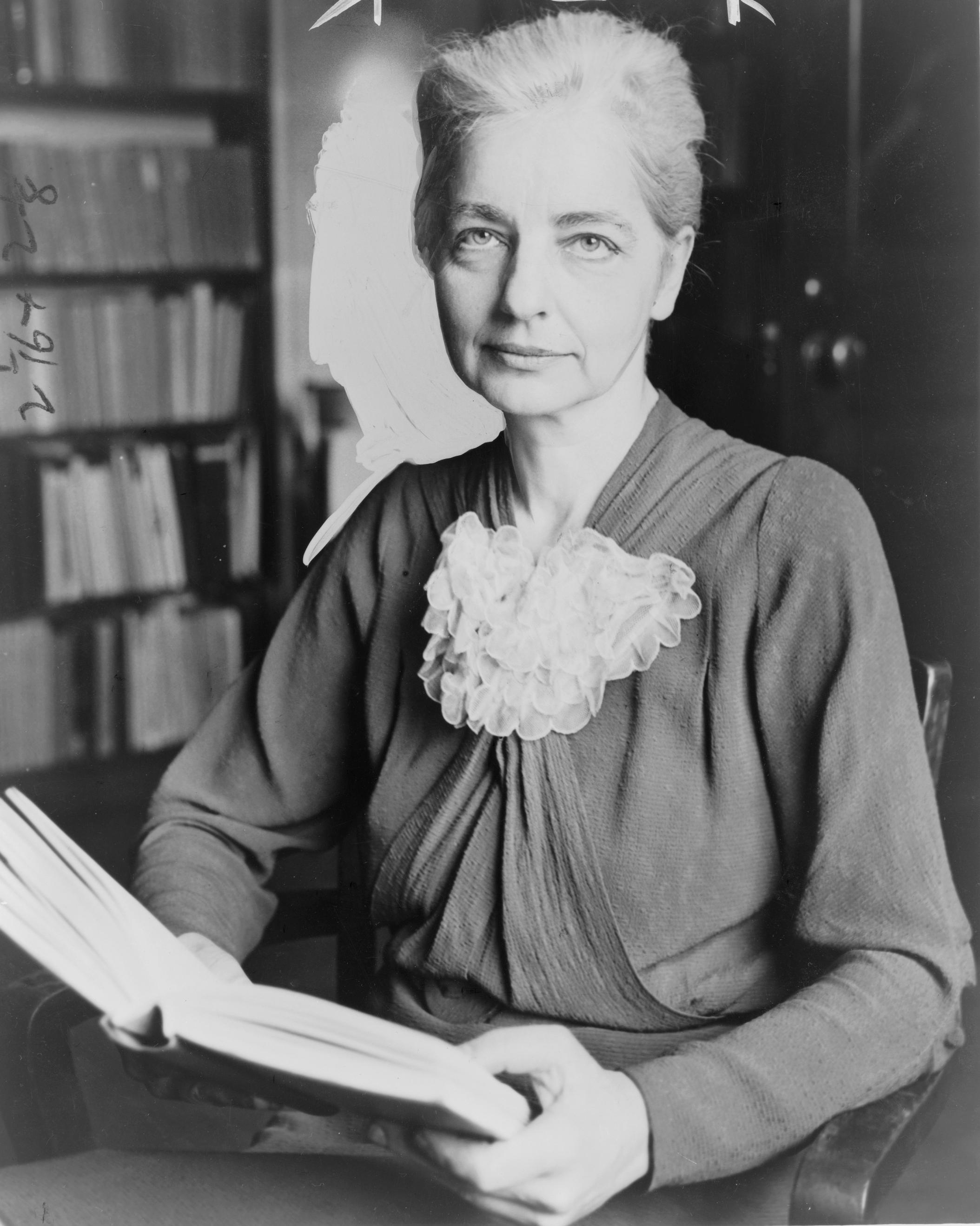
Ruth Benedict (1887-1948), much more than Franz Boas, would define the aims of Boasian anthropology for postwar America.


When Franz Boas died in 1942, the leadership of his school of anthropology passed to Ruth Benedict and not to Margaret Mead. This was partly because Benedict was the older of the two and partly because her book Patterns of Culture (1934) had already assumed a key role in defining Boasian anthropology.

The word "define" may surprise some readers. Wasn't Boas a Boasian? Not really. For most of his life he believed that human populations differ innately in their mental makeup. He was a liberal on race issues only in the sense that he considered these differences to be statistical and, hence, no excuse for systematic discrimination. Every population has capable individuals who should be given a chance to rise to the limits of their potential.

He changed his mind very late in life when external events convinced him of the need to fight "racism," at that time a synonym for extreme nationalism in general and Nazism in particular. In 1938, he removed earlier racialist statements from his second edition of The Mind of Primitive Man, and the next year Ruth Benedict wrote Race: Science and Politics to show that racism was more than a Nazi aberration, being in fact an ingrained feature of American life. Both of them saw the coming European conflict as part of a larger war. 

This is one reason why the war on racism did not end in 1945. Other reasons included a fear that extreme nationalism would lead to a second Hitler and a Third World War. How and why was never clear, but the fear was real. The two power blocs were also competing for the hearts and minds of emerging nations in Asia and Africa, and in this competition the West felt handicapped. How could it win while defining itself as white and Christian? The West thus redefined itself in universal terms and became just as committed as the Eastern bloc to converting the world to its way of life. Finally, the rhetoric of postwar reconstruction reached into all areas of life, even in countries like the U.S. that had emerged unscathed from the conflict. This cultural reconstruction was a logical outcome of the Second World War, which had discredited not just Nazism but also nationalism in general, thereby leaving only right-wing globalism or left-wing globalism. Ironically, this cultural change was weaker in the communist world, where people would remain more conservative in their forms of sociality.

Ruth Benedict backed this change. She felt that America should stop favoring a specific cultural tradition and instead use its educational system to promote diversity. To bring this about, she had to reassure people that a journey through such uncharted waters would not founder on the shoals of unchanging human nature. This fear had been addressed in Patterns of Culture (1934). Inspired by Pavlov’s research on conditioned reflexes, she argued that people are conditioned by their culture to think, feel, and behave in a particular way. This pattern assumes over time such a rigid form that even a student of anthropology will assume it to be innate:
 
He does not reckon with the fact of other social arrangements where all the factors, it may be, are differently arranged. He does not reckon, that is, with cultural conditioning. He sees the trait he is studying as having known and inevitable manifestations, and he projects these as absolute because they are all the materials he has to think with. He identifies local attitudes of the 1930’s with Human Nature […] (Benedict, 1989, p. 9)

 
She argued that such behavioral traits cannot be innate, since they assume different patterns in different human populations and in different time periods of a single population. Our potential for social change is thus greater than what we imagine, being limited only by the range of behavior that exists across all societies. Because we underestimate this potential, we resist social change on the grounds that it would violate a nonexistent human nature:
 
The resistance is in large measure a result of our misunderstanding of cultural conventions, and especially an exaltation of those that happen to belong to our nation and decade. A very little acquaintance with other conventions, and a knowledge of how various these may be, would do much to promote a rational social order. (Benedict, 1989, p. 10)

 
In contradistinction to Boas, who believed that human populations differ innately in various mental and behavioral traits, she argued that cultural evolution had long ago replaced genetic evolution:
 
Man is not committed in detail by his biological constitution to any particular variety of behaviour. The great diversity of social solutions that man has worked out in different cultures in regard to mating, for example, or trade, are all equally possible on the basis of his original endowment. Culture is not a biologically transmitted complex. (Benedict, 1989, p. 14)

 
In short, humans have turned the tables on evolution. Instead of being changed by their environment via natural selection, they redesign it with the tools provided by their culture. To a large degree, humans create their own environment:
 
The human animal does not, like the bear, grow himself a polar coat in order to adapt himself, after many generations, to the Arctic. He learns to sew himself a coat and put up a snow house. From all we can learn of the history of intelligence in pre-human as well as human societies, this plasticity has been the soil in which human progress began and in which it has maintained itself. [...] The human cultural heritage, for better or for worse, is not biologically transmitted. (Benedict, 1989, p. 14)

 
Since human nature is everywhere the same, whatever works in any other culture ought to work in America’s, and this greater diversity should pose no serious problem. This argument would eventually be topped off by American can-doism: if other cultures can cope with some diversity, we can do even better!
 
Much more deviation is allowed to the individual in some cultures than in others, and those in which much is allowed cannot be shown to suffer from their peculiarity. It is probable that social orders of the future will carry this tolerance and encouragement of individual difference much further than any cultures of which we have experience. (Benedict, 1989, p. 273)

 
Such social change would be resisted by Middletown—originally a pseudonym for Muncie, Indiana in two sociological studies, and later a synonym for whitebread small-town America.
 
The American tendency at the present time leans so far to the opposite extreme that it is not easy for us to picture the changes that such an attitude would bring about. Middletown is a typical example of our usual urban fear of seeming in however slight an act different from our neighbours. Eccentricity is more feared than parasitism. Every sacrifice of time and tranquillity is made in order that no one in the family may have any taint of nonconformity attached to him. Children in school make their great tragedies out of not wearing a certain kind of stockings, not joining a certain dancing-class, not driving a certain car. The fear of being different is the dominating motivation recorded in Middletown. (Benedict, 1989, p. 273)


Conclusion 

Ruth Benedict wrote well, so well that any flaws are easily missed. Much of her reasoning revolved around the concept of cultural conditioning. Just as a dog will salivate on hearing the tinkling of a bell, if associated with food, so people will come to respond unthinkingly and in the same way to a situation that occurs over and over again. Such behavior may seem innate, yet it isn't. This part of her reasoning is true, but it is also true that natural selection tends to hardwire any recurring behavioral response. Mental plasticity has a downside, particularly the risks of responding incorrectly to a situation when one is still learning. It's better to get things right the first time. In sum, conditioned reflexes and innate reflexes both have their place, and one doesn't preclude the other ... for either dogs or humans.

Benedict seems on firmer ground in saying that humans are uniquely able to change the world around themselves. Instead of having to adapt biologically to our environment, we can invent ways to make it adapt to us. It's this manmade environment—our culture—that does the evolving, not our genes. This view used to be widely accepted in anthropology and has been proven false only recently. We now know that cultural evolution actually caused genetic evolution to accelerate. At least 7% of the human genome has changed over the last 40,000 years, and most of that change seems to be squeezed into the last 10,000, when the pace of genetic change was more than a hundred-fold higher (Hawks et al., 2007). By that time, humans were no longer adapting to new physical environments; they were adapting to new cultural environments. Far from slowing down genetic evolution, culture has speeded it up by greatly diversifying the range of circumstances we must adapt to.

Benedict was right in foreseeing a time when tolerance would become a virtue. Yet, strangely enough, Middletown America is no more tolerant today than it was in her time. Americans are simply obeying a new set of rules, whose first commandment is now "Thou shalt not be intolerant."  People are still fearful of being different from their neighbours. It's just that the fears have another basis. People are still insulted for being different. It's just that the insults have changed. "Filthy pervert" has given way to "Dirty homophobe." Mistrust of the stranger has been replaced by mistrust of those who are not inclusive. Pierre-André Taguieff has described this new conformity in France:
 
[...] over the last thirty years of the 20th century, the word "racism" became an insult in everyday language ("racist!" "dirty racist!"), an insult derived from the racist insult par excellence ("dirty nigger!", "dirty Jew!"), and given a symbolic illegitimating power as strong as the political insult "fascist!" or "dirty fascist!". To say an individual is "racist" is to stigmatize him, to assign him to a heinous category, and to abuse him verbally [...] The "racist" individual is thus expelled from the realm of common humanity and excluded from the circle of humans who are deemed respectable by virtue of their intrinsic worth. Through a symbolic act that antiracist sociologists denounce as a way of "racializing" the Other, the "racist" is in turn and in return categorized as an "unworthy" being, indeed as an "unworthy" being par excellence. For, as people say, what can be worse than racism? (Taguieff, 2013, p. 1528)

 
It's hard to believe that the sin of racism did not yet exist in Ruth Benedict's day. The word itself was just starting to enter common use. At most, there was a growing movement for people to be more tolerant, and even that movement was very limited in its aims. "Tolerance" had a much less radical meaning.

Interestingly, Benedict did touch on the reason for Middletown's intolerance. In her book, The Chrysanthemum and the Sword (1946), she explained that human cultures enforce social rules by means of shame or guilt. You feel ashamed if your wrongdoing is seen by another person. In contrast, you feel guilty even if nobody else has seen it, or even if you merely think about doing wrong. Although all humans have some capacity for both shame and guilt, the relative importance of one or the other varies considerably among individuals and among human populations. "Shame cultures" greatly outnumber "guilt cultures," which are essentially limited to societies of Northwest European origin, like Middletown.

But how does a guilt culture survive? If a few individuals feel no guilt as long as no one is looking, they will have an edge over those who do. Over time, they will proliferate at the expense of the guilt-prone, and the guilt culture will become a shame culture. It seems that this outcome does not happen because the guilt-prone are always looking for signs of deviancy in other individuals, however trifling it may seem. We have here the "broken windows" theory of law enforcement:  if a person tends to break any rule, however minor, he or she will likely break a major one, since the psychological barrier against wrongdoing is similar in both cases. The guilt-prone will judge such people to be morally worthless and will ultimately expel them from the community. Intolerance is the price we pay for the efficiency of a guilt culture.

Today, this mechanism has been turned upon itself. The new social rule—intolerance of intolerance—will, over the not so long term, dissolve the mental makeup that makes a guilt culture possible. Benedict did not foresee this outcome in her own time. Middletown was too set in its ways, too monolithic, too well entrenched. At most, one could hope for a little more leeway for the socially deviant. A few bohemians here, a few oddballs there ...  

Ruth Benedict saw Middletown as a difficult case, particularly its extreme guilt culture, and she drew on the language of education and psychotherapy to frame this difficulty in terms of long-term treatment:
 
 […] there can be no reasonable doubt that one of the most effective ways in which to deal with the staggering burden of psychopathic tragedies in America at the present time is by means of an educational program which fosters tolerance in society and a kind of self-respect and independence that is foreign to Middletown and our urban traditions. (Benedict, 1989, pp. 273-274)

They [the Puritans] were the voice of God. Yet to a modern observer it is they, not the confused and tormented women they put to death as witches, who were the psychoneurotics of Puritan New England. A sense of guilt as extreme as they portrayed and demanded both in their own conversion experiences and in those of their converts is found in a slightly saner civilization only in institutions for mental diseases. (Benedict, 1989, p. 276)
 
By the time of her death in 1948, Boasian anthropology had become fully mobilized for the war on racism. This mobilization had begun in response to the rise of Nazi Germany but was soon extended to a much larger enemy that included America itself, as seen in the increasingly radical meanings of “racism” and “tolerance.” Only a determined, long-term effort would bring this enemy to heel.
 

References


Benedict, R. (1989 [1934]). Patterns of Culture, Boston: Houghton Mifflin.

Benedict, R. (2005 [1946]). The Chrysanthemum and the Sword. Patterns of Japanese Culture, First Mariner Books.

Hawks, J., E.T. Wang, G.M. Cochran, H.C. Harpending, & R.K. Moyzis. (2007). Recent acceleration of human adaptive evolution. Proceedings of the National Academy of Sciences (USA), 104, 20753-20758.
http://www.ncbi.nlm.nih.gov/pmc/articles/PMC2410101/  

Taguieff, P-A. (2013). Dictionnaire historique et critique du racisme, Paris: PUF.

Sunday, July 13, 2014

The Franz Boas you never knew


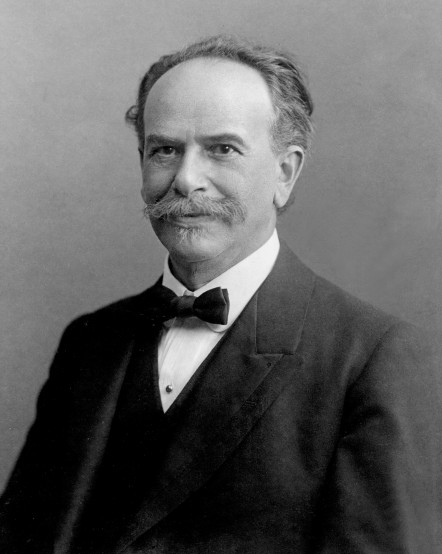
The anthropologist Franz Boas is remembered for moving the social sciences away from genetic determinism and toward environmental determinism. In reality, he felt that genes do contribute substantially to mental and behavioral differences ... and not just between individuals.


Most of us identify with certain great teachers of the past: Christ, Marx, Freud … Though long dead, they still influence us and we like to think that their teachings have come down to us intact. We know what they believed … or so we like to think. This raises a problem when we find discrepancies. Jesus was so humble that he resented being called good, since only God is truly good. But then ...

Often, however, the discrepancies remain unknown. They develop too gradually for the average person to notice and are most obvious to those who least want to point them out, i.e., the successors of the great teacher. Of course, the great teacher is no longer around to set things straight.

This has happened to many belief-systems. In my last post, I discussed how the real Sigmund Freud differed significantly from the one we know. The same is true for Franz Boas (1858-1942), whose school of anthropology is as much a product of his immediate disciples—Margaret Mead and Ruth Benedict—as of Boas himself.

Today, Boas is remembered as the man who moved the social sciences away from genetic determinism and toward environmental determinism. His Wikipedia entry states:

Boas was one of the most prominent opponents of the then popular ideologies of scientific racism, the idea that race is a biological concept and that human behavior is best understood through the typology of biological characteristics. [...] Boas also worked to demonstrate that differences in human behavior are not primarily determined by innate biological dispositions, but are largely the result of cultural differences acquired through social learning.

In reality, he felt that genes do contribute substantially to mental and behavioral differences ... and not just between individuals. This is apparent in a speech he gave in 1894 under the title "Human Faculty as Determined by Race."

It does not seem probable that the minds of races which show variations in their anatomical structure should act in exactly the same manner. Differences of structure must be accompanied by differences of function, physiological as well as psychological; and, as we found clear evidence of difference in structure between the races, so we must anticipate that differences in mental characteristics will be found.  [...] As all structural differences are quantitative, we must expect to find mental differences to be of the same description, and as we found the variations in structure to overlap, so that many forms are common to individuals of all races, so we may expect that many individuals will not differ in regard to their faculty, while a statistical inquiry embracing the whole races would reveal certain differences. Furthermore, as certain anatomical traits are found to be hereditary in certain families and hence in tribes and perhaps even in peoples, in the same manner mental traits characterize certain families and may prevail among tribes. It seems, however, an impossible undertaking to separate in a satisfactory manner the social and the hereditary features. Galton's attempt to establish the laws of hereditary genius points out a way of treatment for these questions which will prove useful in so far as it opens a method of determining the influence of heredity upon mental qualities (Boas, 1974, p. 239)

We have shown that the anatomical evidence is such, that we may expect to find the races not equally gifted. While we have no right to consider one more ape-like than the other, the differences are such that some have probably greater mental vigor than others. The variations are, however, such that we may expect many individuals of all races to be equally gifted, while the number of men and women of higher ability will differ. (Boas, 1974, p. 242) 

 When discussing brain size, Boaz merely pointed to the overlap among racial groups:

We find that 50 per cent of all whites have a capacity of the skull greater than 1550 cc., while 27 per cent of the negroes and 32 per cent of the Melanesians have capacities above this value. We might, therefore, anticipate a lack of men of high genius, but should not anticipate any great lack of faculty among the great mass of negroes living among whites and enjoying the advantages of the leadership of the best men of that race. (Boas, 1974, pp. 233-234)

He did add that "mental ability certainly does not depend upon the size of the brain alone." He then argued, quoting an authority, that the encephalon and the cortex develop to a greater degree in whites, especially after puberty:

When we compare the capacity for education between the lower and higher races, we find that the great point of divergence is at adolescence and the inference is fairly good that we shall not find in the brains of the lower races the post-pubertal growth in the cortex to which I have just alluded. (Boas, 1974, p. 234)

Boas would return to this topic, such as in this 1908 speech on "Race Problems in America":

I do not believe that the negro is, in his physical and mental make-up, the same as the European. The anatomical differences are so great that corresponding mental differences are plausible. There may exist differences in character and in the direction of specific aptitudes. There is, however, no proof whatever that these differences signify any appreciable degree of inferiority of the negro, notwithstanding the slightly inferior size, and perhaps lesser complexity of structure, of his brain; for these racial differences are much less than the range of variation found in either race considered by itself. (Boas, 1974, pp. 328-329)

All of these remarks must be judged in context. Boaz was trying to stake out a reasonable middle ground in opposition to the view that human races differ not only in degree but also in kind. There is also little doubt about his opposition to racial discrimination, which he felt was holding back many capable African Americans.

But he did not feel that equality of opportunity would lead to equality of results. This was the middle ground he defended, and it is far removed from today's middle ground. The two don't even overlap. What happened between then and now?

Something critical seems to have happened in the late 1930s. When Boas prepared the second edition of The Mind of Primitive Man (1938), he removed his earlier racialist statements. The reason was likely geopolitical. As a Jewish American seeing the rise of Nazi Germany, he may have felt that the fight against anti-Semitism would require a united front against all forms of “racism”—a word just starting to enter common use and initially a synonym for Nazism.

Boas died in 1942 and the leadership of his school of anthropology fell to Ruth Benedict and Margaret Mead. With the end of the war, both of them wished to pursue and even escalate the fight against racism. Escalation was favored by several aspects of the postwar era: lingering fears of a revival of anti-Semitism, competition between the two power blocs for the hearts and minds of the Third World, and an almost utopian desire to rebuild society—be it through socialism, social democracy, or new liberalism … In all this, we are no longer in the realm of science, let alone anthropology. 

Boas had sought to strike a new balance between nature and nurture in the study of Man. The war intervened, however, and Boasian anthropology was conscripted to fight not only the Axis but also racism in any form. Today, three-quarters of a century later, we’re still fighting that war.
 

References


Boas, F. (1974). A Franz Boas Reader. The Shaping of American Anthropology, 1883-1911, G.W. Stocking Jr. (ed.), Chicago: The University of Chicago Press. 

Wikipedia (2014). Franz Boas
http://en.wikipedia.org/wiki/Franz_Boas