Showing posts with label COVID-19. Show all posts

Monday, February 21, 2022

A natural vaccine?


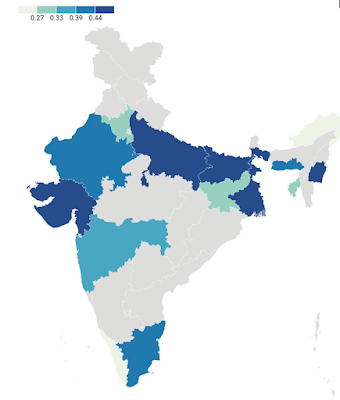
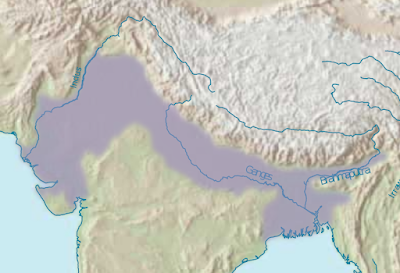
Geographic distribution of the G allele (TIMPRSS2), which is associated with a higher death rate from COVID-19. It’s most frequent on the Indo-Gangetic Plain, which has the longest continuous history of urban settlement in South Asia. Did that environment select for susceptibility to coronaviruses as a way to boost resistance to deadlier respiratory viruses?


The common cold is caused by over 200 strains of rhinoviruses, coronaviruses, adenoviruses, and enteroviruses. Coronaviruses differ from other respiratory viruses in one key respect: they can enter lung tissue via the ACE2 receptor. So if that receptor is altered to allow easier entry, the host would become more susceptible to the common cold but not to other respiratory diseases, including much deadlier ones that cause tuberculosis, pneumonia, or pneumonic plague.


The last point is important because there is evidence that a viral infection can protect against subsequent infection by respiratory viruses. When mice are infected with γherpesvirus 68, which is similar to Epstein-Barr virus, there is production of large quantities of IFN-γ and activation of macrophages that protect against Listeria monocytogenes (which causes listeriosis), Mycobacterium tuberculosis (which causes tuberculosis), and Yersinia pestis (which causes bubonic and pneumonic plague) (Barton et al., 2007; Miller et al., 2019). A cytomegalovirus infection likewise protects against Listeria monocytogenes and Yersinia pestis (Barton et al., 2007).


Coevolution between coronaviruses and early urban settlement


Beginning some 10,000 years ago, hunting and gathering gave way to farming, and nomadism to sedentism. People began to live in progressively larger settlements along the Nile in Egypt, the Tigris and the Euphrates in Mesopotamia, the Indus and the Ganges in northern India, and the Yellow and the Yangtze in China. That is where large numbers of humans first lived in close proximity to each other, and they were particularly vulnerable to the spread of respiratory diseases from one person to another. There may thus have been selection among them for increased susceptibility to coronaviruses, which are normally mild in their effects, as a means to increase resistance to deadlier respiratory viruses.


A recent Indian study by Pandey et al. (2022) suggests that coronavirus susceptibility may have coevolved with risk of infection by life-threatening respiratory viruses like tuberculosis, pneumonia, and pneumonic plague, at least in South Asia. People are more susceptible to infection by coronaviruses if they have the G allele of the TMPRSS2 gene. The research team found that the G allele is significantly associated with a higher fatality rate for COVID-19, apparently because it helps coronaviruses enter lung tissue via the ACE2 receptor.


Pandey et al. (2022) also charted the geographic distribution of the G allele in South Asia. This allele is most frequent among inhabitants of the Indo-Gangetic Plain, i.e., the fertile lowlands that border the Indus and Ganges rivers of northern India and Pakistan. This is also where urbanization has existed for the longest continuous time in South Asia, specifically since the early first millennium BCE. The Indo-Gangetic Plain has had "an uninterrupted sequence of economic development, state formation, and cultural expansion affecting the entire subcontinent as well as Central, East and Southeast Asia" (Heitzman 2008, pp. 12-13).


These findings are roughly consistent with an earlier finding by the same research team. Srivastava et al. (2020) found that an ACE2 allele, at rs2258666, has a negative relationship with the fatality rate for COVID-19. It is also most frequent in the northeast of India, which until recent times was sparsely populated, and whose inhabitants lived in dispersed rural settlements.


References


Barton, E.S., D.W. White, J.S. Cathelyn, K.A. Brett-McClellan, M. Engle, et al. (2007). Herpesvirus latency confers symbiotic protection from bacterial infection. Nature

447: 326-329.

https://doi.org/10.1038/nature05762


Frost, P. (2020). Does a commensal relationship exist between coronaviruses and some human populations? Journal of Molecular Genetics 3(2): 1-2.

https://researchopenworld.com/does-a-commensal-relationship-exist-between-coronaviruses-and-some-human-populations/


Heitzman, J. (2008). The City in South Asia. London: Routledge


Miller, H.E., K.E. Johnson, V.L. Tarakanova, and R.T. Robinson. (2019). γ-herpesvirus latency attenuates Mycobacterium tuberculosis infection in mice. Tuberculosis 116: 56-60.

https://doi.org/10.1016/j.tube.2019.04.022


Pandey, R.K., A. Srivastava, P.P. Singh, and G. Chaubey. (2022). Genetic association of TMPRSS2 rs2070788 polymorphism with COVID-19 case fatality rate among Indian populations. Infection, Genetics and Evolution 98 https://doi.org/10.1016/j.meegid.2022.105206


Shirato, K., M. Kawase, and S. Matsuyama. (2018). Wild-type human coronaviruses prefer cell-surface TMPRSS2 to endosomal cathepsins for cell entry. Virology 517: 9-15.

https://doi.org/10.1016/j.virol.2017.11.012


Srivastava, A., A. Bandopadhyay, D. Das, R.K. Pandey, V. Singh, N. Khanam, N. Srivastava, P.P. Singh, P.K. Dubey, A. Pathak, P. Gupta, N. Rai, G.N.N. Sultana, and G. Chaubey. (2020). Genetic Association of ACE2 rs2285666 Polymorphism with COVID-19 Spatial Distribution in India. Frontiers in Genetics. September 25

https://doi.org/10.3389/fgene.2020.564741


Tuesday, June 29, 2021

American Indians in decline


After three decades of sharp decline, American Indians now have the lowest fertility rate of all ethnic groups in the U.S. The trend is real and is not due to sub-fertile Whites self-identifying as American Indians.


The pandemic has reduced the American birth rate. According to data from 2020 and early 2021, almost all ethnic groups have taken a hit, but the magnitude has been greater for some than for others.


Asian Americans took the biggest hit. At first thought, this makes sense. Asians, especially East Asians (who make up a majority of Asian Americans) tend to take infectious diseases more seriously. They are generally more willing to wear masks, practice social distancing, and wash their hands, and it seems logical that they would also be more willing to postpone childbearing.


But that's not the whole story. The pandemic has accelerated an ongoing fertility decline among East Asians at home and abroad. With the exception of North Korea, East Asia was already a zone of ultra-low fertility—about one child per woman. When the pandemic is over, I predict that East Asian fertility will not return to pre-pandemic levels. The decline will continue. The pandemic has merely acted as a social accelerant (Frost 2020).


This view is strengthened if we return to the above graph and look at the group that took the second-biggest hit: American Indians and Alaskan Natives. Their fertility rate has likewise been declining. It was still high in the 1980s, but sometime around 1990 it began to plummet, falling below the fertility rate of any other ethnic group in the U.S. by the early 2000s.


What's going on? Is the decline real? Or is it a statistical fluke? Perhaps sub-fertile Whites are self-identifying as American Indians in growing numbers. This hypothesis was tested by Cannon and Percheski (2017):


Concurrent with this decline in estimated TFRs, the self-identified AI/AN population enumerated in the decennial US Census increased in size, largely because of changes in the racial categories and in the wording of racial identity items on the census forms.


The increase in the census counts of the American Indian population means that there are several possible explanations for the decline in American Indian fertility rates published by Vital Statistics. First, the decline could be a mechanical artifact of differential changes in racial identification between the two data systems Vital Statistics used to calculate fertility rates. Second, the decline could be driven by compositional changes in who identifies as American Indian. Third, there may be real changes infertility behavior that are unrelated to changes in who identifies as American Indian.


To control for these differences in definition and self-identification, Cannon and Percheski (2017) used a single data system (the American Community Survey) for the period 1980 to 2010. They also examined the fertility decline on the basis of three definitions of American Indian/Alaskan native: 1) women who identify as AI/AN only, 2) any woman who identifies as AI/AN, whether identifying one or more races, and 3) women who list a specific tribe or American Indian for the ancestry question. The second definition seems to be the one most vulnerable to "ethnic reassignment."


Cannon and Percheski (2017) found that all three definitions showed a fertility decline, particularly the first one. The decline was steepest among younger women. However, there was no indication that lower fertility at younger ages was being offset by higher fertility at older ages. The authors concluded: "This finding of declining TFRs estimated within a single data system is evidence against the explanation that fertility declines are merely artifacts of data collection changes or incongruences."


So what is the explanation? The main cause seems to be the declining marriage rate: "fertility rates among married and unmarried women have remained fairly stable, while the share of women ever married has declined across birth cohorts. Thus declines in fertility rates seem to be linked with changes in marriage for this population."


In this respect, American Indians are more vulnerable than most other ethnic groups in the U.S. Their women seem to prefer having children when a man is in the home. As the authors note, "other population subgroups in the United States who have experienced substantial declines in marriage have not experienced such drastic declines in fertility levels" (Cannon and Percheski 2017, pp. 8-9). 


Anthropologists have long noted that the Indigenous peoples of the Americas still retain many "Arctic" adaptations in their anatomy. Could the same be true for their behavioral predispositions? Some 12,000 years ago, their ancestors lived in northeast Asia and Beringia. In that environment, women had almost no food autonomy and could not raise children on their own. Perhaps their female descendants are still making a half-conscious link between having a baby and having a male provider.


References


Cannon, S., and C. Percheski. (2017). Fertility change in the American Indian and Alaska Native population, 1980-2010. Demographic Research 37: 1-12.

http://www.jstor.org/stable/26332188


Frost, P. (2020). An Accelerant of Social Change? The Spanish Flu of 1918-19. International Political Anthropology Journal 13(2): 123-133.

https://doi.org/10.5281/zenodo.4295574


Hamilton, B.E., M.J.K. Osterman, and J.A. Martin. (2021). Declines in births by month: United States, 2020. NVSS Vital Statistics Rapid Release. Report no. 14, June

https://www.cdc.gov/nchs/data/vsrr/vsrr014-508.pdf


Monday, November 30, 2020

The genetics of susceptibility to COVID-19

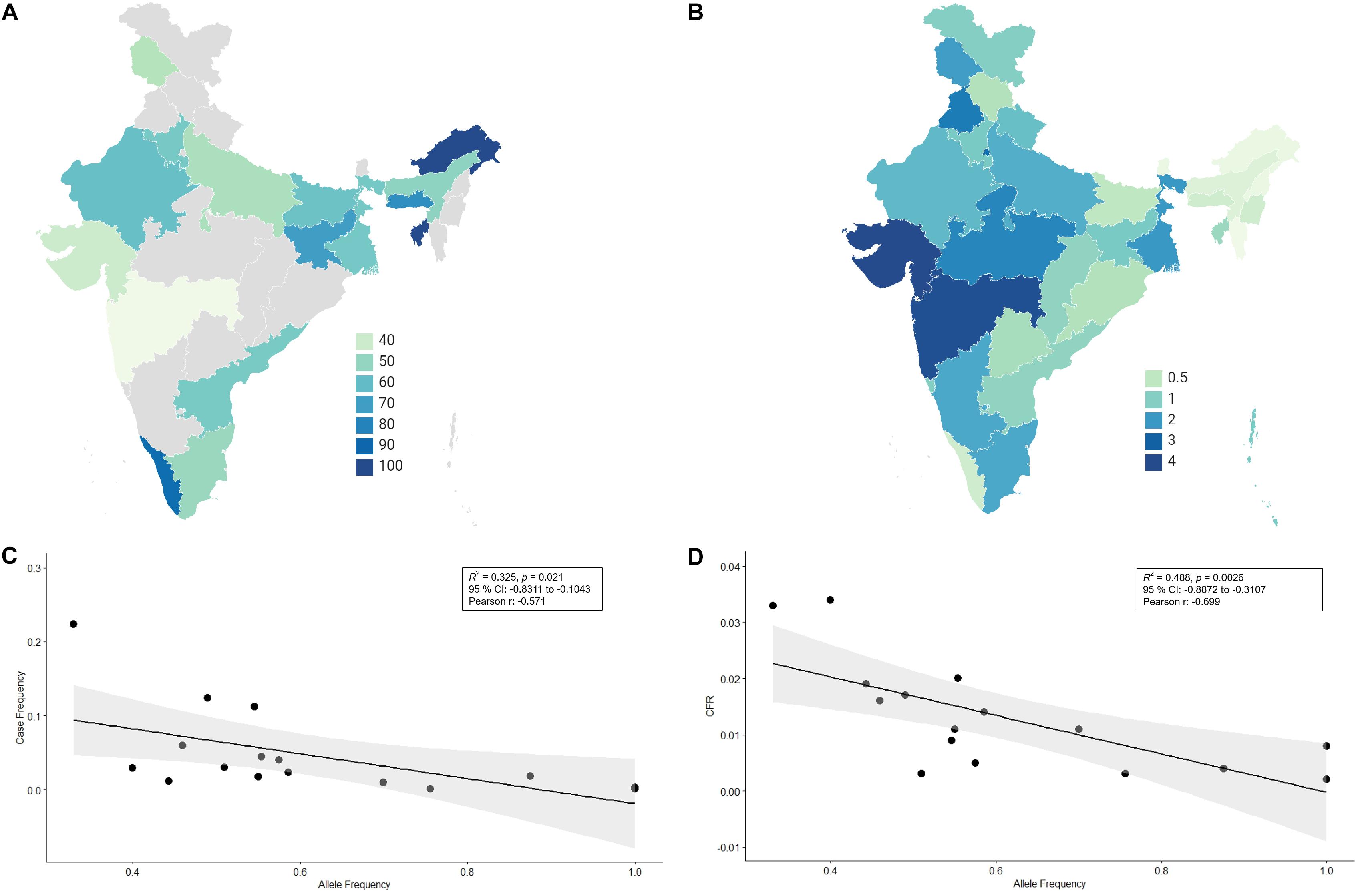
Left: Frequency of an rs2258666 allele in Indian populations (TT-plus strand or AA-minus strand). Right: COVID-19 case-fatality rate (August 2020).


ACE2 is a cell receptor that mediates the infection of lung tissue by coronaviruses, either the one that causes COVID-19 or others that cause the common cold. The ACE2 gene has 1,700 alleles, some of which are associated with increased susceptibility to coronavirus infection (Frost 2020).


This difference in susceptibility has been shown in a recent Indian study (Srivastava et al. 2020). COVID-19 is most fatal in the western states of Gujarat, Maharashtra, Madhya Pradesh, and Punjab. Conversely, it is least fatal in the northeast states of Assam, Arunachal Pradesh, and Nagaland. This pattern closely correlates with genetic variation at the rs2285666 locus of ACE2. The presence or absence of a single allele explains 35% of the variation in the COVID-19 case-fatality rate.


The authors conclude that some kind of selection has been acting on rs2285666. If we look at the map, susceptibility to COVID-19 seems to be strongest in those regions with the longest history of sedentary living and large urban centers. Conversely, it seems to be weakest in the Northeast, which is home to people who, until recent times, belonged to small communities that routinely moved from one cultivable area to another.


These findings are consistent with the hypothesis that the ACE2 receptor has coevolved with human environments. Because respiratory viruses boost the immune response of lung tissue and thereby prevent more serious pulmonary diseases (e.g., tuberculosis, pneumonia, pneumonic plague), some human populations may have gained protection from severe respiratory infections by becoming more susceptible to mild respiratory infections, such as those normally caused by coronaviruses. This commensal relationship would have been especially adaptive where respiratory pathogens could easily propagate, that is, in crowded environments where many people live in proximity not only to each other but also to livestock. In regions that have long had crowded environments, natural selection may have favored susceptibility to infection by coronaviruses, which are normally mild in their effects, as a means to maintain a strong immune response to deadly pulmonary diseases (Frost 2020).


****************************************************


I'm sorry for the break in my posting. When the pandemic first struck, I expected to have a lot of time on my hands, so I began a series of writing projects: four articles and a manuscript for a book. Unfortunately, my free time dried up over the summer, and my workload became overwhelming. I hope I've now found the right balance between my writing projects and my regular work.


References


Frost, P. (2020). Does a commensal relationship exist between coronaviruses and some human populations? Journal of Molecular Genetics 3(2): 1-2.

https://researchopenworld.com/does-a-commensal-relationship-exist-between-coronaviruses-and-some-human-populations/


Srivastava, A., A. Bandopadhyay, D. Das, R.K. Pandey, V. Singh, N. Khanam, N. Srivastava, P.P. Singh, P.K. Dubey, A. Pathak, P. Gupta, N. Rai, G.N.N. Sultana, and G. Chaubey. (2020). Genetic Association of ACE2 rs2285666 Polymorphism with COVID-19 Spatial Distribution in India. Frontiers in Genetics. September 25

https://doi.org/10.3389/fgene.2020.564741


Friday, May 22, 2020

This is where the virus is least deadly


Patterson Town Hall, (Wikicommons - Anthony22). Putnam County NY has the lowest IFR for COVID-19 in the United States.


SARS-CoV-2 is more virulent in southern Europe than in northern Europe. The reason, I’ve argued, is that the Mediterranean Basin is one of several regions where humans have coevolved for a longer time with crowded social environments. By "crowded" I mean not only proximity to other people but also proximity to domesticated animals. In such environments, which are prone to deadly pulmonary diseases like tuberculosis and pneumonia, natural selection may have favored susceptibility to infection by coronaviruses, which are normally mild in their effects, as a means to maintain a strong immune response to respiratory infections (Frost 2020). 

If we look at case fatality rates, Italy and Spain have been hit much worse than Germany, Switzerland, Austria, and Iceland. The United Kingdom falls between the two extremes, although a confounding factor is its large population of non-native origin (Singh 2020).

This pattern also shows up in a meta-study of infection fatality rates. Meyerowitz-Katz and Merone (2020) examined thirteen estimates of IFR from a wide range of countries. They came to two main conclusions:

- Mean IFR is 0.75% but varies considerably between countries;

- IFR has increased over time, being lower in February and March than in April and May.

Earlier estimates were based on the assumption that the average time lag between infection and death is two weeks on average. Actually, it's probably longer, perhaps a month. Later deaths may have thus been missed by estimates made in February and March.

If we look only at IFRs from April and May, the meta-study shows a north-south cline in the virulence of SARS-CoV-2:

Germany - 0.36%
France - 0.70%, 0.80%
Italy - 0.95%, 1.29%, 1.60%

For the same time period, the meta-study also presented three estimates from the United States:

New York City - 0.93%
California - 0.20%
United States - 1.30%

The last study provides estimates ranging from a low of 0.5% in Putnam County NY to a high of 3.6% in King County WA (Basu 2020). These numbers are so high because IFR is calculated only in relation to symptomatic cases. In my opinion, this study is not comparable to the others and should not have been included in the metastudy. It is nonetheless useful for charting the virulence of SARS-CoV-2 within the United States.

So why would the virus be less virulent in Putnam County NY than in King County WA? Let's consider the demographics in each case. The first county is 80% non-Hispanic White, 14% Hispanic, 3% Black, and 2% Asian. The second county is 65% non-Hispanic White, 15% Asian, 9% Hispanic, and 6% Black. Putnam County is whiter and probably less cosmopolitan than King County, which encompasses the Seattle area. This impression is strengthened by the voting pattern in Putnam County, which trends much more Republican than Democrat (Wikipedia 2020). The virus thus seems to be least virulent among "old stock" Euro Americans. I would also predict low virulence in Amerindian communities.

Virulence may also differ between west coast Hispanics and east coast Hispanics, as suggested by the difference between California and New York City. East Coast Hispanics are less often Mexican and more often Puerto Rican. They may thus be more vulnerable because they are more Mediterranean and less Amerindian by ancestry.


References

Basu, A. (2020). Estimating The Infection Fatality Rate Among Symptomatic COVID-19 Cases In The United States. Health affairs (Project Hope). 2020:101377hlthaff202000455.
https://www.healthaffairs.org/doi/full/10.1377/hlthaff.2020.00455

Frost, P. (2020). Does a commensal relationship exist between coronaviruses and some human populations? Journal of Molecular Genetics 3(2): 1-2.
https://researchopenworld.com/does-a-commensal-relationship-exist-between-coronaviruses-and-some-human-populations/

Meyerowitz-Katz, G. and L. Merone. (2020).  A systematic review and meta-analysis of published research data on COVID-19 infection-fatality rates.  medRxiv, May 18, 2020
https://www.medrxiv.org/content/10.1101/2020.05.03.20089854v2 

Singh, S. (2020). BCG vaccines may not reduce COVID-19 mortality rates. medRxiv April 11, 2020 
https://www.medrxiv.org/content/10.1101/2020.04.11.20062232v1

Wikipedia (2020). Putnam County, New York.
https://en.wikipedia.org/wiki/Putnam_County,_New_York 

Friday, May 15, 2020

Does a commensal relationship exist between coronaviruses and some human populations?


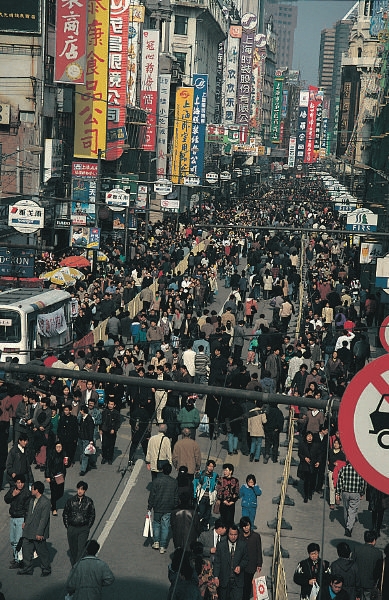
Nanjing Road, Shanghai (Wikicommons - Stephen Codrington). Populations with a long history of social crowding may have become more susceptible to coronavirus infection.


I've published a paper on coevolution between coronaviruses and "crowded" social environments. Comments are welcome. Here is the abstract:


Coronaviruses enter lung tissue via the ACE2 receptor, which varies structurally among human populations. In particular, the Chinese population has fewer variants that bind weakly to the coronavirus S-protein. This global variation suggests that the ACE2 receptor has coevolved with different environments, some of which have favored susceptibility to infection of lung tissue by coronaviruses. 

It has been argued that respiratory viruses boost the immune response of lung tissue and thereby prevent more serious pulmonary diseases, like tuberculosis, pneumonia, and pneumonic plague. This preventive effect has been shown with other viral pathogens, notably γherpesvirus 68 and cytomegalovirus. Some human populations may have therefore gained protection from severe respiratory infections by becoming more susceptible to mild respiratory infections, such as those normally caused by coronaviruses. 

This commensal virus-host relationship would have been especially adaptive wherever respiratory pathogens could easily propagate, i.e., in crowded environments, where many people live in proximity not only to each other but also to animal sources of infection. In regions that have long had crowded environments, natural selection may have favored susceptibility to infection by coronaviruses, which are normally mild in their effects, as a means to maintain a strong immune response to deadly pulmonary diseases.


Reference

Frost, P. (2020c). Does a commensal relationship exist between coronaviruses and some human populations? Journal of Molecular Genetics 3(2): 1-2.
https://researchopenworld.com/does-a-commensal-relationship-exist-between-coronaviruses-and-some-human-populations/   

Tuesday, April 7, 2020

COVID-19 update


A dying man, stoned on suspicion of spreading the plague - Felix Jenewein, 1899 (Wikicommons)


SARS-CoV-2, though novel, belongs to a long-existing group of respiratory pathogens: coronaviruses. Until the first appearance of SARS in 2002, these pathogens did little harm to their hosts, usually causing nothing worse than a common cold. So they may have coevolved with us. Furthermore, this coevolution may have taken different forms in different human populations and different cultural environments.

Coronaviruses infect lung tissue via a receptor, ACE2, that varies structurally not only between Asians and other human groups but also between different Asian groups. In particular, the Chinese population has fewer alleles that code for weak binding to the coronavirus S-protein (Cao et al. 2020). Different ACE2 alleles are also associated with differences in susceptibility to diabetic retinopathy, an eye disease with a distinct global pattern of prevalence: 22% in Italy, 23% in China, 30% in the United Kingdom, and 40% in the United States (Adams 2020).

This geographic pattern doesn’t exist because some populations have become more resistant to coronaviruses. Instead, the reverse seems to have happened: some populations have become more susceptible to coronavirus infection, perhaps as a means to prevent more serious pulmonary infections, like tuberculosis and pneumonic plague (Shekhar et al. 2017). Such an effect has been shown with γherpesvirus 68 and cytomegalovirus (Barton et al. 2007; Miller et al. 2019). This crude vaccination boosts the immune response through increased production of IFN-γ and increased activation of macrophages.

Historically, tuberculosis was especially common in crowded environments, where people lived in proximity not only to each other but also to domesticated animals (Comas et al. 2013). Such environments have existed continuously for the longest time in China, as well as in areas like the Indo-Gangetic Plain, the Fertile Crescent, and the Mediterranean Basin. Those areas are where people should be most susceptible to coronavirus infection.

This may explain why COVID-19 has been more severe in southern Europe than in northern Europe. It is surprising that infection tends to become less severe with latitude when one would expect the opposite: respiratory viruses spread more effectively under conditions of lower temperature, lower humidity, and lower solar UV.


Ongoing research?

These geographic differences have caught the interest of a molecular epidemiologist at the University of Hawai'i, Maarit Tiirikainen:

"There have been major differences in the rates of SARS-CoV-2 infection and the severe disease between the different geographic regions since the beginning of the COVID-19 pandemic, even among young individuals," Dr. Tiirikainen said. "Epidemiological studies-so-called Genome Wide Association Studies (GWAS)-indicate that populations carry different variants of the ACE2 gene. This variation in the gene coding for the ACE2 receptor may have an effect on the number of ACE2 receptors on the lung cells, as well as on how effectively the virus binds to the receptor. There may also be genetic differences in immune and other important genes explaining why some people get more sick than others."

She is collaborating with a genomics company, LifeDNA, in a study that will initially focus on Hawai'i's multiethnic inhabitants, specifically their diversity of ACE2 alleles in relation to the latest coronavirus (LifeDNA 2020 – h/t to Steve Sailer).


Parting thoughts

All humans can get infected by coronaviruses, but the infection tends to vary in severity from one population to another. This variance may reflect differences in genetic adaptation in different cultural environments.

Of course, adaptation may also be cultural. Because natural selection acts on the end result, and not on the means to that end, the means may be a purely learned algorithm, like adding spices to food or avoiding physical contact with strangers. One might not have understood why or how such practices worked, but they did work and would be passed on to subsequent generations, thus becoming the traditional way of doing things. Today, we’re likely to reject such practices as outmoded superstitions.

So be modern. Hug a stranger.


References

Adams N. (2020). Cracking the code to the 2019 novel coronavirus (COVID-19): Lessons from the eye. Eye Reports 6(1). 
https://eyereports.org/index.php/eyereports/article/view/97

Barton E.S., White D.W., Cathelyn J.S., Brett-McClellan K.A., Engle M., Diamond M.S., et al. (2007). Herpesvirus latency confers symbiotic protection from bacterial infection. Nature 447: 326-329. 
https://www.nature.com/articles/nature05762

Cao Y., Li L., Feng Z., Wan S., Huang P., Sun X., et al. (2020). Comparative genetic analysis of the novel coronavirus (2019-nCoV/SARS-CoV-2) receptor ACE2 in different populations. Cell Discovery 6(11). 
https://www.nature.com/articles/s41421-020-0147-1%3C/blockquote%3E 

Comas I., Coscolla M., Luo T., Borrell S., Holt K.E., Kato-Maeda M., et al. (2013). Out-of-Africa migration and Neolithic coexpansion of Mycobacterium tuberculosis with modern humans. Nature Genetics 45(10): 1176-1182.
https://www.ncbi.nlm.nih.gov/pmc/articles/PMC3800747/

LifeDNA (2020). COVID-19: LifeDNA and University of Hawai’i Collaborate on Studying Why Certain Populations Are Hit Harder. Research focuses on ACE2 receptor, probing the role of genetics in both susceptibility to infection and severity of response April 2, University of Hawai'i Cancer Center 
https://www.uhcancercenter.org/about-us/newsroom/600-covid-19-lifedna-and-university-of-hawai-i-collaborate-on-studying-why-certain-populations-are-hit-harder

Miller H.E., Johnson K.E., Tarakanova V.L., Robinson R.T. (2019). γ-herpesvirus latency attenuates Mycobacterium tuberculosis infection in mice. Tuberculosis 116: 56-60. 
https://www.ncbi.nlm.nih.gov/pmc/articles/PMC6876742/

Shekhar S., Schenck K., Petersen F.C. (2017). Exploring host-commensal interactions in the respiratory tract. Frontiers in Immunology 8: 1971. 
https://www.frontiersin.org/articles/10.3389/fimmu.2017.01971/full