Showing posts with label Charles Darwin. Show all posts

Monday, August 5, 2019

Classical antiquity was a low point of human intelligence


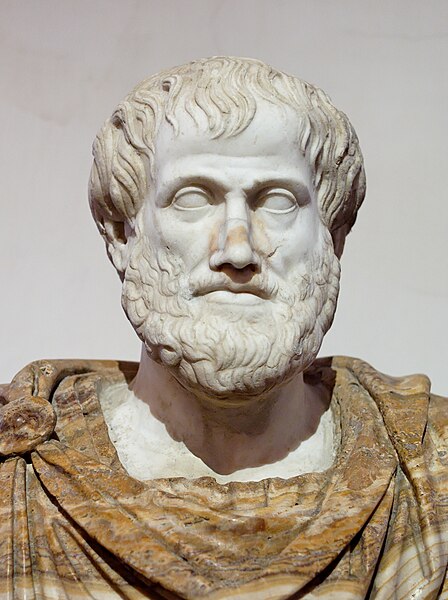
Aristotle discussed adaptation by natural selection long before Darwin, yet despite his fame this theory remained ignored throughout antiquity. (Wikicommons)


Gabriel Andrade and Maria Campo Redondo have come out with a paper on the ancient Greeks and how they saw differences between human groups:

Critics of Rushton and Jensen, and of the very category of race, claim that race is a social construct that only came up in the 16th century, as a result of overseas voyages and the Atlantic slave trade. The goal of this article is to refute that particular claim, by documenting how, long before the 16th century, in classical antiquity race was already a meaningful concept, and how some Greek authors even developed ideas that bear some resemblance to Rushton and Jensen's theory. The article documents how ancient Egyptians already had keen awareness of race differences amongst various populations. Likewise, the article documents passages from the Hippocratic and Aristotelian corpus, which attests that already in antiquity, there was a conception that climatic differences had an influence on intelligence, and that these differences eventually become enshrined in fixed biological traits. (Andrade and Redondo 2019)

The ancients knew about psychological differences between human groups but usually put them down to the direct action of the climate. This environmental explanation seemed disproved by black Africans, or "Ethiopians" as they were called, because they and their descendants remained just as dark-skinned at northern latitudes. But this example of heritability didn't lead to a theory of genetics. Instead, black skin was seen as an indelible stain, perhaps due to divine punishment of Ham (or Cham), the ancestor of the Egyptians and black Africans, for seeing the nakedness of his father Noah (Goldenberg 2003). This view appears in a homily by the third-century Christian writer Origen: 


But Pharao easily reduced the Egyptian people to bondage to himself, nor is it written that he did this by force. For the Egyptians are prone to a degenerate life and quickly sink to every slavery of the vices. Look at the origin of the race and you will discover that their father Cham, who had laughed at his father's nakedness, deserved a judgment of this kind, that his son Chanaan should be a servant to his brothers, in which case the condition of bondage would prove the wickedness of his conduct. Not without merit, therefore, does the discolored posterity imitate the ignobility of the race.   Homily on Genesis XVI (Origen 2010)

In general, human differences were attributed to direct action by the environment:

Greek authors to a large extent believed that acquired characteristics were inherited. For example, the text On Airs, Waters and Places considers the people of Trapezus, who had the custom of artificially elongating their children's heads. The author of this text believed that this particular practice would make elongated heads in the future generations, without parents having to artificially do the procedure: "Thus, at first, usage operated, so that this constitution was the result of force: but, in the course of time, it was formed naturally; so that usage had nothing to do with it... If, then, children with bald heads are born to parents with bald heads; and children with blue eyes to parents who have blue eyes; and if the children of parents having distorted eyes squint also for the most part; and if the same may be said of other forms of the body, what is to prevent it from happening that a child with a long head should be produced by a parent having a long head?". Aristotle had similar ideas: "Mutilated young are born of mutilated parents".


Why wasn’t natural selection understood?

Ironically, and long before Darwin, the Greek philosopher Empedocles (494-434 BC) came up with another explanation: adaptation through natural selection. Change initially occurs by accident. If the change is good, the changed life-form will survive and reproduce; if not, it will perish. Good changes are therefore kept and bad changes lost. Thus, all aspects of living matter look "as if they were made for the sake of something," but this is only illusion. There is no conscious "maker" of all things. 

This idea was summarized by Aristotle (384-322 BC):


So what hinders the different parts (of the body) from having this merely accidental relation in nature? as the teeth, for example, grow by necessity, the front ones sharp, adapted for dividing, and the grinders flat, and serviceable for masticating the food; since they were not made for the sake of this, but it was the result of accident. And in like manner as to other parts in which there appears to exist an adaptation to an end. Wheresoever, therefore, all things together (that is all the parts of one whole) happened like as if they were made for the sake of something, these were preserved, having been appropriately constituted by an internal spontaneity; and whatsoever things were not thus constituted, perished and still perish. Physicae Auscultationes 2:8, 2 (Darwin 1936 [1888], p. 3)

Aristotle's fame, as well as Empedocles', ensured that this idea would be read and passed on for generations, and yet it failed to take root in the minds of classical antiquity. It fell on barren ground. Aristotle himself rejected it, saying that all things must be for an end. Only much later, and independently, would natural selection be rediscovered.

The difficulty was not in understanding that humans, like other animals, are adapted to their environment. That part was obvious. The difficulty was in understanding adaptation as an indirect process. People more easily understood direct processes: something changed some people, and that change was passed on to their descendants. Aristotle himself fell for that idea when he mused that mutilated young are born to mutilated parents. 

This was the mentality of classical antiquity, and indeed of many people today. Change implies the existence of a changer, just as creation implies the existence of a creator. Few people rose above that level of thinking.


Did most people in classical antiquity think like children?

A Swiss psychologist, Jean Piaget (1896-1980), studied children in his country and concluded that all individuals go through stages of mental development. Children go through a "pre-operational stage" when causality is understood only in terms of conscious intent, specifically animism, artificialism, and transductive reasoning:

Animism is the belief that inanimate objects are capable of actions and have lifelike qualities. An example could be a child believing that the sidewalk was mad and made them fall down, or that the stars twinkle in the sky because they are happy. Artificialism refers to the belief that environmental characteristics can be attributed to human actions or interventions. For example, a child might say that it is windy outside because someone is blowing very hard, or the clouds are white because someone painted them that color. Finally, precausal thinking is categorized by transductive reasoning. Transductive reasoning is when a child fails to understand the true relationships between cause and effect. Unlike deductive or inductive reasoning (general to specific, or specific to general), transductive reasoning refers to when a child reasons from specific to specific, drawing a relationship between two separate events that are otherwise unrelated. For example, if a child hears the dog bark and then a balloon popped, the child would conclude that because the dog barked, the balloon popped. (Wikipedia 2019)

Piaget correctly observed Swiss children in the mid-20th century. He incorrectly concluded that the mind develops at the same pace in all humans (Oesterdiekhoff 2012). Indeed, you need not go far back to reach a time when most individuals never developed beyond the pre-operational stage. Just go back to classical antiquity.

At that time, the smart fraction was relatively small. Most intellectuals seemed to be loners. There were no academic societies, no academic journals, and no indications that large numbers of scholars did, or could, interact with each other. This point is made in an article on Roman science:

According to Sarton, who is the foremost living historian of science, "Roman science at its best was but a pale imitation of the Greek." "The Romans," he continues, "were so afraid of disinterested research that they discouraged any investigation the utilitarian value of which was not obvious."


Reymond remarked in his "History of Science" that the Romans were never distinguished for any love or even interest in pure science or abstract thinking. Virtually the same conclusion was reached by Heiberg, and Fowler made the interesting observation that even their literature and their philosophy had a practical object.


[...] historians of the economic life of ancient Rome have shown that there was a surprising paucity of inventions. They were not only few in number, but they lacked originality and were unimportant. (Salant 1938)

The Roman Empire was organizationally strong but intellectually weak. It depended on a store of knowledge that had been laid up in earlier times, notably by the ancient Greeks. This was the prevailing opinion among Roman writers, an opinion today dismissed as nostalgia for a mythical golden age.


The evidence of ancient DNA

"Cognitive archaeology" is a new field that has been made possible by retrieval of DNA from human remains and by calculation of polygenic cognitive scores from this DNA (based on alleles associated with educational attainment).

To date, two studies have used these research tools to chart changes in mean intelligence. The first study used ancient DNA from Europe and central Asia and found that the polygenic cognitive score gradually increased between 4,560 and 1,210 years ago (Woodley of Menie et al 2017).

This finding has been nuanced by a second study, using a sample of ancient DNA that was much larger and only from ancient Greece. It found that mean intelligence was initially high in ancient Greece and then began to decline after the end of the Mycenaean period in 1100 BC (Woodley of Menie et al. 2019). It looks like intelligence was at first strongly advantageous as humans adapted to increasing social complexity: farming, sedentism, literacy … Then something made it much less advantageous.

Mean intelligence was therefore lower during Roman times in comparison both to Greece in earlier periods and to Europe in later periods. 


Conclusion

So was Aristotle the Gregor Mendel of natural selection? Not really. Aristotle was much more famous than Mendel, and his works were read over a much longer span of time. Furthermore, Mendel's findings had to wait only 35 years before getting their due recognition. Aristotle's thoughts on natural selection lay dormant for more than two millennia before their significance was pointed out to Charles Darwin.

Aristotle didn't suffer from being insufficiently known. He had a worse handicap, especially in this case: not enough people could understand his line of reasoning. He was a lone voice in the wilderness over the many centuries separating him from Darwin. By Darwin’s time, many more people could understand natural selection, both in absolute numbers and as a proportion of the population. Even before The Origin of Species Darwin had a large audience of thinking people who could answer his questions and comment on his ideas. Earlier thinkers were not so lucky.

In the final analysis, the people of classical antiquity failed to understand natural selection for the same reason they failed to understand economics. They preferred to imagine cause and effect in simple terms: a person or personified thing producing a big change over a short time, and not impersonal forces producing an accumulation of small changes over a long time. They thought like children.


References

Andrade, G. and M.C. Redondo. 2019. Rushton and Jensen's Work Has Parallels with Some Concepts of Race Awareness in Ancient Greece. Psych 1 (1): 391-402.
https://www.mdpi.com/2624-8611/1/1/28/htm

Aristotle. Physics
http://classics.mit.edu/Aristotle/physics.2.ii.html

Darwin, C. (1936) [1888]. The Origin of Species and The Descent of Man. reprint of 2nd ed., The Modern Library, New York: Random House.

Goldenberg, D.M. (2003). The Curse of Ham. Race and Slavery in Early Judaism, Christianity, and Islam. Princeton: Princeton University Press.

Oesterdiekhoff, G.W. (2012). Was pre-modern man a child? The quintessence of the psychometric and developmental approaches. Intelligence 40: 470-478.
http://www.iapsych.com/iqmr/fe/LinkedDocuments/oesterdiekhoff2012.pdf

Origen (2010). Homilies on Genesis and Exodus, transl. by R.E. Heine., Washington D.C.: Catholic University of America Press
https://books.google.ca/books?id=X_mSBavPcq4C&pg=PA214&source=gbs_toc_r&cad=2#v=onepage&q&f=false 

Salant, W. (1938). Science and Society in Ancient Rome. The Scientific Monthly 47(6): 525-535.
https://www.jstor.org/stable/16625?seq=1#page_scan_tab_contents 

Woodley, M.A., S. Younuskunju, B. Balan, and D. Piffer. (2017). Holocene selection for variants associated with general cognitive ability: comparing ancient and modern genomes. Twin Res Hum Genet 20: 271-280.
https://www.cambridge.org/core/journals/twin-research-and-human-genetics/article/holocene-selection-for-variants-associated-with-general-cognitive-ability-comparing-ancient-and-modern-genomes/BF2A35F0D4F565757875287E59A1F534

Woodley of Menie, M.A., J. Delhez, M. PeƱaherrera-Aguirre, and E.O.W. Kirkegaard. (2019). Cognitive archeogenetics of ancient and modern Greeks. London Conference on Intelligence 
https://www.youtube.com/watch?v=UES_tpDxz9A 

Wikipedia (2019). Piaget's theory of cognitive development. https://en.wikipedia.org/wiki/Piaget%27s_theory_of_cognitive_development#Concrete_operational_stage

Friday, July 4, 2014

The origins of guilt: Darwin and Freud


Sigmund Freud (1856-1939) believed that the capacity for guilt varies between individuals and among human populations. He also believed that this variability had, in part, a heritable basis.


Humans are motivated to act correctly by either shame or guilt. We feel shame after acting wrongly in the presence of others. We feel guilt even when no one else sees us acting wrongful or even when we merely think about committing a wrongful act. To varying degrees, all humans seem to have some capacity for both shame and guilt. Most cultures, however, rely primarily on shame and only a minority rely primarily on guilt. In the literature, the distinction between the two is presented as one between non-Western and Western cultures or between collectivistic and individualistic cultures. The capacity for guilt thus seems to be strongest in populations of Northwest European descent.

From the time of Charles Darwin onward, this subject has attracted the interest of several thinkers. How have they explained the origins of shame and guilt?


Charles Darwin

Darwin speculated that shame originated from a universal desire to "save face," which was initially concern about one's personal appearance:

We have seen that in all parts of the world persons who feel shame for some moral delinquency, are apt to avert, bend down, or hide their faces, independently of any thought about their personal appearance. [...] And as the face is the part of the body which is most regarded, it is intelligible that any one ashamed of his personal appearance would desire to conceal this part of his body. The habit, having been thus acquired, would naturally be carried on when shame from strictly moral causes was felt; and it is not easy otherwise to see why under these circumstances there should be a desire to hide the face more than any other part of the body. (Darwin, 1872, p. 123)

Shame, however, is not the same as guilt, and Darwin took care to distinguish between the two when discussing how and why people blush:

With respect to blushing from strictly moral causes, we meet with the same fundamental principle as before, namely, regard for the opinion of others. It is not the conscience which raises a blush, for a man may sincerely regret some slight fault committed in solitude, or he may suffer the deepest remorse for an undetected crime, but he will not blush. "I blush," says Dr. Burgess, "in the presence of my accusers." It is not the sense of guilt, but the thought that others think or know us to be guilty which crimsons the face. A man may feel thoroughly ashamed at having told a small falsehood, without blushing; but if he even suspects that he is detected he will instantly blush, especially if detected by one whom he reveres. (Darwin, 1872, p. 126)

With respect to real shame from moral delinquencies, we can perceive why it is not guilt, but the thought that others think us guilty, which raises a blush. A man reflecting on a crime committed in solitude, and stung by his conscience, does not blush; yet he will blush under the vivid recollection of a detected fault, or of one committed in the presence of others, the degree of blushing being closely related to the feeling of regard for those who have detected, witnessed, or suspected his fault. Breaches of conventional rules of conduct, if they are rigidly insisted on by our equals or superiors, often cause more intense blushes even than a detected crime, and an act which is really criminal, if not blamed by our equals, hardly raises a tinge of colour on our cheeks. (Darwin, 1872, p. 130)

Darwin saw guilt as being not only less universal but also more recent in origin:

The highest possible stage in moral culture is when we recognize that we ought to control our thoughts, and "not even in inmost thought to think again the sins that made the past so pleasant to us." (Darwin, 1936[1888], p. 492)

A few lines further on, he suggested that this kind of mental discipline is "more or less strongly inherited":

There is not the least inherent improbability, as it seems to me, in virtuous tendencies being more or less strongly inherited; for, not to mention the various dispositions and habits transmitted by many of our domestic animals to their offspring, I have heard of authentic cases in which a desire to steal and a tendency to lie appeared to run in families of the upper ranks: and as stealing is a rare crime in the wealthy classes, we can hardly account by accidental coincidence for the tendency occurring in two or three members of the same family. If bad tendencies are transmitted, it is probable that good ones are likewise transmitted. (Darwin, 1936[1888], p. 492)

Has the capacity for guilt been more strongly selected in some human populations than in others? Darwin does not address this question, other than to add:

Except through the principle of the transmission of moral tendencies, we cannot understand the differences believed to exist in this respect between the various races of mankind. (Darwin, 1936[1888], p. 493)


Sigmund Freud

In his work Civilization and Its Discontents (1930), Sigmund Freud argued that guilt was initially a fear of discipline by close kin, particularly one's father. Only later was this fear broadened to include fear of discipline by non-kin, this change being related to the development of larger human communities:

When an attempt is made to widen the community, the same conflict is continued in forms which are dependent on the past; and it is strengthened and results in a further intensification of the sense of guilt. Since civilization obeys an internal erotic impulsion which causes human beings to unite in a closely knit group, it can only achieve this aim through an ever-increasing reinforcement of the sense of guilt. What began in relation to the father is completed in relation to the group. If civilization is a necessary course of development from the family to humanity as a whole, then [...] there is inextricably bound up with it an increase of the sense of guilt, which will perhaps reach heights that the individual finds hard to tolerate. (Freud, 1962, pp. 79-80)

Guilt and shame are two means by which social rules are enforced in large communities where most interactions are no longer with close kin. Shame is enforced by external supervision, i.e., by other people who witness a wrongful act. Guilt is enforced by internal supervision, i.e., by one's conscience, which Freud called the super-ego:

We have also learned how the severity of the super-ego -- the demands of conscience -- is to be understood. It is simply a continuation of the severity of the external authority, to which it has succeeded and which it has in part replaced (Freud, 1962, p. 74)

As the super-ego took over from paternal supervision and discipline, it became not only more important but also more hardwired:

A great change takes place only when the authority is internalized through the establishment of a super-ego. The phenomena of conscience then reach a higher stage. Actually, it is not until now that we should speak of conscience or a sense of guilt. At this point, too, the fear of being found out comes to an end; the distinction, moreover, between doing something bad and wishing to do it disappears entirely, since nothing can be hidden from the super-ego, not even thoughts. It is true that the seriousness of the situation from a real point of view has passed away, for the new authority, the super-ego, has no motive that we know of for ill-treating the ego, with which it is intimately bound up; but genetic influence, which leads to the survival of what is past and has been surmounted, makes itself felt in the fact that fundamentally things remain as they were at the beginning. The super-ego torments the sinful ego with the same feeling of anxiety and is on the watch for opportunities of getting it punished by the external world. (Freud, 1962, p. 72)

The translation is awkward (the original was in German), but he seems to be referring to the heritability of traits that have proven their adaptiveness over time, i.e., "genetic influence, which leads to the survival of what is past and has been surmounted." This heritable component seems to be a capacity, or a willingness, to identify social rules and comply with them, the actual rules being non-innate, i.e., "softwired." This notion of an innate, heritable component comes up again a few pages later:

Experience shows, however, that the severity of the super-ego which a child develops in no way corresponds to the severity of treatment which he has himself met with. The severity of the former seems to be independent of that of the latter. A child who has been very leniently brought up can acquire a very strict conscience. But it would also be wrong to exaggerate this independence; it is not difficult to convince oneself that severity of upbringing does also exert a strong influence on the formation of the child's super-ego. What it amounts to is that in the formation of the super-ego and the emergence of a conscience innate constitutional factors and influences from the real environment act in combination. This is not at all surprising; on the contrary, it is a universal aetiological condition for all such processes. (Freud, 1962, p. 77)

Freud also argued that people differ in their capacity for guilt. In a footnote to the above passage, he explained that the super-ego emerged through "gradual transitions" and thus exists to varying degrees in different people: "[...] it is not merely a question of the existence of the super-ego but of its relative strength and sphere of influence" (Freud, 1962, p. 72). Some individuals are thus extremely guilt-prone:

For the more virtuous a man is, the more severe and distrustful is its [the conscience's] behavior, so that ultimately it is precisely those people who have carried saintliness furthest who reproach themselves with the worst sinfulness. (Freud, 1962, pp. 73-74)

These statements may seem surprising. Didn't Freud believe that neuroses are due to learned inhibitions and that we ought to overcome our inhibitions? Here, however, he argues that both the inhibition of behavior and the expectation of inhibition are instinctual. There has thus been a co-evolution between the internal control mechanism (the super-ego) and human desires (the ego):

The sense of guilt, the harshness of the super-ego, is thus the same things as the severity of the conscience. It is the perception which the ego has of being watched over in this way, the assessment of the tension between its own strivings and the demands of the super-ego. The fear of this critical agency [...] the need for punishment, is an instinctual manifestation on the part of the ego, which has become masochistic under the influence of a sadistic super-ego; it is a portion, that is to say, of the instinct toward internal destruction present in the ego [...] (Freud, 1962, p. 83)

When this control mechanism enters into conflict with human desires, the result is a "conflict between the two primal instincts" (Freud, 1962, p. 84).

We must distinguish between the real Freud and the one of undergrad courses. The latter Freud has become a mouthpiece for beliefs, like rejection of biological determinism and rejection of inhibitions, that did not become dominant until after his death. The real Freud believed that mental and behavioral traits have a substantial heritable basis, as did most scholars of his day. By emphasizing the importance of both nature and nurture, he was in fact taking a very middle-of-the-road position ... for his time. The middle ground would not shift toward environmental determinism until later, with growing interest in the findings of Ivan Petrovich Pavlov and subsequent efforts by the Boasian school of anthropology to explain human behavior in terms of cultural conditioning.

To be continued


References

Darwin, C. (1936) [1888]. The Descent of Man and Selection in relation to Sex. reprint of 2nd ed., The Modern Library, New York: Random House.

Darwin, C. (1872). The Expression of the Emotions in Man and Animals, London: Murray.

Freud, S. (1962[1930]). Civilization and Its Discontents, New York: W.W. Norton

Saturday, May 17, 2014

Another Robert Chambers?


Robert Chambers (1802-1871). His anonymously published book, Vestiges of the Natural History of Creation (1844), helped pave the way for public acceptance of Darwin’s theory of evolution. (source)


I haven't yet read Nicholas Wade's book A Troublesome Inheritance. I will venture to say, however, that it will be remembered less for its actual content than for its role in encouraging discussion of a difficult topic. In particular, it will familiarize a broad audience with the following points:

1. Biological evolution did not slow down with the advent of cultural evolution. In fact, it speeded up, particularly when farming began to replace hunting and gathering some 10,000 years ago. At that time, the pace of genetic change may have risen a hundred-fold.

2. Cultural evolution diversified the range of human environments. Instead of adapting only to differences in climate or food sources, like other animals, our species also adapted to differences in social structure, in the division of labor, in the means of subsistence, in unwritten or codified norms of conduct, in the degree of sedentary living, and in many other human-made phenomena. Our ancestors reshaped their environments, and these human-made environments reshaped them via gene-culture co-evolution.

3. This gene-culture co-evolution persisted into modern times. The English population, for instance, evolved between the twelfth and nineteenth centuries in terms of certain behavioral traits, particularly future time orientation and distaste for violence as a means to settle personal disputes. As Gregory Clark has shown, this behavioral change resulted from a demographic change—the relative reproductive success of the middle and upper classes—which altered the composition of the English gene pool. So the mantra that "we, too, were once savages" does not, in fact, deny the reality of biological evolution. It affirms it.

4. Human populations thus differ not only anatomically but also in various mental and behavioral predispositions. These differences are statistical and often apparent only when one compares large numbers of people. But even a weak statistical difference can profoundly affect how a society will develop and organize itself.

5. Finally, Richard Lewontin was right when he reported that genes vary much more within populations than between populations. He was unaware, however, that genetic variability between populations is qualitatively different from genetic variability within a population. The more a gene has value, the more it will vary across a population boundary, since such boundaries usually coincide with barriers that separate different habitats, different environments, different means of subsistence and, hence, different selection pressures. Conversely, the less a gene has value, the more it will vary within a population, that is, among individuals who share similar conditions of life. The selection pressure is uniform but this uniformity will not level out the variability of such genes within the population—much as a steam iron will smooth a rumpled shirt—since this variability is less phenotypically significant, i.e., it produces fewer functional differences that natural selection can act on. 

 
Are there questionable points in Wade's book? Undoubtedly. But we should not wait until all issues are settled before we put pen to paper. Writing is a process where ideas are shared with a broader audience for debate. We may forget that The Origin of Species was written without any knowledge of Mendelian genetics. We may also forget, or simply not know, that Darwin’s path to public acceptance was cleared by an earlier book: Vestiges of the Natural History of Creation (1844). Although its anonymous author, Robert Chambers, had no understanding of natural selection, he nonetheless played a key role in familiarizing the public with the fossil record and the reality of biological change over time. As one historian pointed out:

It is customary among biographers of Darwin to speak of the excitement which greeted the appearance of the Origin and of Huxley's able defense of Darwin at Oxford in his clash with Bishop Wilberforce. Actually, however, by the time Darwin published, Robert Chambers had drawn much of the first wrath of the critics and the intelligent public was at least reasonably prepared to consider a more able, scientific presentation of the subject.

[…] The attacks which the scientific world launched upon the Vestiges have, in retrospect, a quite unreal character. They belabor minutiae and amateurish minor errors as though there was some subconscious recognition that the heart of the thesis was unassailable.

[…] With its publication and success as a best seller, the world of fashion discovered evolution. The restricted professional worlds of science and of theology both lost their ability to suppress or intimidate public thinking upon the matter.

[…] By 1859, when the Origin of Species was published, an aroused and eager audience was considerably prepared for the revelations of Charles Darwin. The great amateur disputant and the great professional scholar should always be remembered as having together won the public mind to evolution. (Eiseley, 1958, pp. 134, 138, 139)


References 

Chambers, R. (1844). Vestiges of the Natural History of Creation, London: John Churchill
http://darwin-online.org.uk/content/frameset?itemID=A2&viewtype=text&pageseq=1

Eiseley, L. (1958). Darwin's Century. Evolution and the Men Who Discovered It, New York: Anchor Books.

Wade, N. (2014). A Troublesome Inheritance. Genes, Race and Human History, Penguin Books.


Saturday, August 10, 2013

Great hair ... and how it evolved


Crystal Gayle, American country music singer (source). In humans of Eurasian origin, head hair can grow down to the mid-back and even farther. Long silky hair must have evolved relatively late, certainly no earlier than the last 50,000 years.
 

All of us are born pale, and this infant pallor is striking in otherwise dark-skinned families. Lighter skin also characterizes women, who in this and other ways seem to mimic certain visual, tactile, and auditory aspects of infants (paedomorphic face, soft hairless skin, higher pitch of voice, etc.). Skin tone is, in fact, a key input for sex recognition, particularly the luminous contrast between facial skin and the eyes or lips. This visual cue becomes critical to the mating success of women wherever the supply of mateable men is limited, the result being sexual selection for lighter-skinned women and, thus, a gradual lightening of mean skin color not only for women but for the entire population as well.

Head hair, silkier and longer …

Head hair may have followed a similar evolutionary trajectory. In sub-Saharan Africa:

[…] the majority of African babies are not born with springy tight curls, the African child at birth is either bald or has silky loose curls similar to the Jheri curls. The springy tight curls develop within the first year of life but a few negroid Africans retain their silky hair type for life. (Ajose, 2012)

As ancestral humans spread north and out of Africa, loose silky hair began to persist beyond early childhood and became lifelong. Several changes were involved: faster rate of growth, longer growing phase, increased density, and greater resistance to physical damage (Khumalo, 2005; Loussouarn et al., 2005).

This process seems to have gone further in women, their scalp hairs having higher mean diameter and hence more volume, even in the naturally shorthaired New Guineans (Walsh and Chapman, 1966). Men also tend to lose their head hair, often as early as their 20s. In his review of the literature, Sigler (2011, p. 13) concludes that hair growth rate and final length are somewhat greater in women than in men. It looks as if this hair lengthening was driven by a selection pressure that acted primarily on women.

… but not in all humans

Long silky hair isn’t universal in our species. It exists only in those humans who are native to temperate and arctic regions or in those whose ancestors have back-migrated to the tropics, i.e., tropical Amerindians and Austronesians. Darwin noted "the extraordinary difference in the length of the hair in the different races; in the negro the hair forms a mere curly mat; with us it is of great length, and with the American natives it not rarely reaches to the ground" (Darwin, 1936 [1888], p. 906).

If long silky hair evolved outside the tropics, it must have appeared after ancestral humans had begun to spread out of Africa, some 50 thousand years ago. This point is lost on many paleoanthropologists who attribute this evolutionary change to much earlier events, like the discovery of fire or even a hypothetical aquatic phase of our hominid past.

Whatever the initial cause, there is a consensus, going back to Charles Darwin, that long silky hair is primarily ornamental and due to sexual selection: “we know that long tresses are now and were formerly much admired, as may be observed in the works of almost every poet; St. Paul says, "if a woman have long hair, it is a glory to her” (Darwin, 1936 [1888], p. 906). This view was part of his more general one that “the differences between the races of man, as in colour, hairiness, form of features, &c., are of a kind which might have been expected to come under the influence of sexual selection” (Darwin, 1936 [1888], p. 556).

Darwin believed that sexual selection produced physical differences among human populations through differing notions of beauty. He even raised the possibility that “each race would possess its own innate ideal standard of beauty” (Darwin, 1936 [1888], p. 890). An alternate view, which I favor, is that innate notions of beauty are similar in all humans. To the extent that physical differences among human populations are due to sexual selection, the reason is that this selection pressure has been stronger in some populations than in others (Frost, 2008). 

Why, then, did head hear grow longer as humans left the tropics?

As ancestral humans spread out of the tropics, women found it harder to gather food during the cold season and had to rely more on men to get food for themselves and their children. Polygyny accordingly became costlier for men, with the result that only the ablest hunters could take additional wives. At the same time, men had to roam over larger hunting territories because the density of wildlife was lower. Hunting-related mortality thus rose among young men.

For these two reasons—less polygyny and higher male mortality—the non-tropical zone tended to have a lower ratio of men to women on the mate market. More women had to compete for fewer available men, thus shifting the pressure of sexual selection from the latter to the former. The situation was not unlike that of actresses lining up for a part in a Hollywood movie. When all of the candidates seem perfect for the job, even little details can make a big difference.

One of those details was head hair. Men do notice long silky hair, if only as a visual input for recognition of women or infants, and such noticeability may be a dealmaker in a mate market where women are in excess supply. In such ancestral environments, head hair would have grown longer and longer with each generation.

Was there gene-culture co-evolution?

This lengthening may have been helped by gene-culture co-evolution. In other words, there was a transitional period when women used artificial means to lengthen their head hair. The resulting cultural expectation for longer hair may have favored the mating success of naturally long-haired women.

This hypothesis has support in the apparently ancient time depth of hair lengthening in Africa. As Khumalo (2008) notes:

Africa as the cradle of mankind is likely to have had hair care since the beginning of human existence. Partly because of the oral tradition of passing down history, it is difficult to corroborate evidence of hair care. But probably the earliest form of hair straightening was the molding of hair into shapes using various clays and mud (e.g., indicating the station of a married woman among the Zulu’s). […] Hair was also lengthened with fibers and grasses, much as is done for braids with synthetic extensions nowadays. Although small decorative comb-like structures have been discovered with archeological finds, it is not clear whether original Africans combed their hair or if these implements were purely decorative. Although not written down, fascinating stories of more recent hair care (and hair disasters) are often told by older women about straightening hair using hot stones even before hot combs became available.

West African women invest much time and effort in lengthening their head hair. This isn’t just an obsession of African American women, as some may think: 

“Big hair,” “plenty of hair,” “much hair”—West African communities, including Mende, admire a fine head of long, thick hair on a woman. Both these elements are crucial: thickness and length. Thickness equals increase in the number of individual strands, and the length is proof of strength. Growing such luxuriant hair requires a Mende woman’s patience and care. Because a man’s hair is kept shaved or cut close to the scalp, people say that “men don’t have hair.” Beautiful hair thus is a distinctly female trait; the more of it, the more feminine the woman (Boone,1986, p. 184).

This hairdressing tradition is ancient enough to have spawned myths:

It is known among Mende that all the “water people,” angels, have marvelous hair. The mermaid Tingoi is known by her long, wavy hair and her glamorous habit of dressing it with a golden comb while seated on a rock. A little girl with especially long hair is feared to be in danger of drowning because she will be very attractive to the “water people,” who may think she is one of them and wish her to join them. (Boone, 1986, p. 192)

Among African Americans, women braided and threaded their hair from an early date, whereas men often shaved their heads—an indication that head hair was deemed to be a female characteristic (White and White, 1995).

In sum, hair lengthening seems to be an indigenous tradition whose origins precede not only enslavement in the Americas but also the first contacts with Europeans in Africa. Its purpose has always been to look more feminine … and not “white.”

From artificial to natural

In sub-Saharan Africa, sexual selection was never strong enough to favor women with naturally long hair. This selection pressure would have steadily increased, however, as ancestral humans spread farther north into environments that tended to limit polygyny and boost male mortality.

Head hair may have lengthened during the initial phase of this increasingly intense sexual selection. Eventually, peak intensity was reached as humans spread into the habitable steppe-tundra of northern and eastern Europe—where women had few opportunities for food gathering and where men had to hunt migratory herds of game animals over long distances. It was this later phase that likely produced the diverse palette of hair and eye colors in present-day Europeans, as well as their strange, albino-like skin.

References 

Ajose, F.O.A. (2012). Diseases that turn African hair silky, International Journal of Dermatology, 51 (supp. S1), 12-16
http://onlinelibrary.wiley.com/doi/10.1111/j.1365-4632.2012.05556.x/full 

Boone, S.A. (1986). Radiance from the Waters: Ideals of Feminine Beauty in Mende Art, New Haven and London
http://books.google.fr/books?id=anjOC0zZ6kgC&printsec=frontcover&dq=Radiance+from+the+Waters:+Ideals+of+Feminine+Beauty+in+Mende+Art&hl=fr&sa=X&ei=kTIBUoHfJYfu8ATZ9YGQBw&ved=0CDsQuwUwAA#v=onepage&q=Radiance%20from%20the%20Waters%3A%20Ideals%20of%20Feminine%20Beauty%20in%20Mende%20Art&f=false

Darwin, C. (1936) [1888]. The Descent of Man and Selection in relation to Sex, reprint of 2nd ed., The Modern Library, New York: Random House.

Frost (2008). Sexual selection and human geographic variation, Special Issue: Proceedings of the 2nd Annual Meeting of the NorthEastern Evolutionary Psychology Society. Journal of Social, Evolutionary, and Cultural Psychology, 2(4),169-191. http://137.140.1.71/jsec/articles/volume2/issue4/NEEPSfrost.pdf 

Khumalo, N.P. (2008). On the history of African hair care: more treasures await discovery, Letter to the Editor, Journal of Cosmetic Dermatology, 7, 231.
http://onlinelibrary.wiley.com/doi/10.1111/j.1473-2165.2008.00396.x/abstract 

Khumalo, N.P. (2005). African hair morphology: macrostructure to ultrastructure, International Journal of Dermatology, 44(Suppl. 1), 10-12.
http://onlinelibrary.wiley.com/doi/10.1111/j.1365-4632.2005.02805.x/abstract 

Loussouarn, G., El Rawadi, C., and Genain, G. (2005). Diversity of hair growth profiles. International Journal of Dermatology, 44(Suppl. 1), 6-9.

Sigler, R. (2011). Our Long Hairitage, Bloomington (Indiana): WestBow Press.
http://books.google.fr/books?id=gUEct0Dxt2IC&printsec=frontcover&dq=our+long+hairitage&hl=fr&sa=X&ei=9SsBUvP0OIaQ9gS-xoDQBg&ved=0CDUQ6AEwAA#v=onepage&q=our%20long%20hairitage&f=false 

Walsh, R.J., and Chapman, R.E. (1966). A study of the quantitative measurement of human head hair fibres, Man, new series, 1, 226-232.
http://www.jstor.org/discover/10.2307/2796348?uid=3737720&uid=2&uid=4&sid=21102539793897 

White, S. and G. White. (1995). Slave Hair and African American Culture in the Eighteenth and Nineteenth Centuries, The Journal of Southern History, 61, 45-76.
http://www.jstor.org/discover/10.2307/2211360?uid=3737720&uid=2&uid=4&sid=21102539793897