Showing posts with label Middle Ages. Show all posts

Friday, September 26, 2014

A fruitful encounter


Original Sin, by Michiel Coxie (1499-1592). Did the Christian doctrine of original sin create the guilt cultures of Northwest Europe? Or did the arrow of causality run the other way? (source: Wikicommons)


By definition, gene-culture co-evolution is reciprocal. Genes and culture are both in the driver's seat. This point is crucial because there is a tendency to overreact to cultural determinism and to forget that culture does matter, even to the point of influencing the makeup of our gene pool. Through culture, humans have directed their own evolution.

Take the ability to digest lactose, commonly called milk sugar. Among early humans, only babies could digest it because only they made the enzyme that breaks it down. This enzyme was lost as one grew up, with the result that milk consumption would cause indigestion, abdominal gas, and diarrhea. This is still the case in humans from much of Africa and Asia.

Then some cultures began to domesticate cattle, initially for meat. In times of famine, they turned to milk, and those who could better tolerate it had better chances of survival. So there was now natural selection for individuals who could produce the necessary enzyme not only in childhood but in adulthood as well.

The resulting evolutionary change was both genetic and cultural. With more and more adults being able to digest milk, it became possible to develop various dairy products, like cheese, and use milk as an ingredient in a wide range of foods. It also became possible to select for cattle that produce more and better milk (Beja-Pereira et al., 2003). A new way of life developed and thus brought about even more selection for this enzyme.

In sum, a genetic change can open up new paths for culture to follow and thereby create new paths for genes to follow. But that isn't all. The same situation can develop even when no genetic change has taken place, at least not initially. We see this, for instance, when a culture spreads out of one population and into another. The gene-culture interaction is new even though neither party to the interaction is new.
 

A fruitful encounter

One specific example is the encounter between Christianity and the guilt cultures of Northwest Europe, which differ from the shame cultures that prevail elsewhere. The difference is a major one. In a shame culture, your wrongdoings are punished only when witnessed by someone from your community. In a guilt culture, they are punished even when there is no witness, other than the one inside your head.

Guilt culture is commonly attributed to the Christian doctrine of original sin, and more specifically to the radicalization of this doctrine under Protestantism (see Note 1). Yet neither of these presumed causes really lines up with the presumed effect.

For one thing, it's doubtful whether this doctrine was even known to early Christians in the Middle East. True, Paul did write that humans had lost their immortality because of Adam's sin:

Therefore, just as through one man sin entered into the world, and death through sin, and so death spread to all men, because all sinned. Romans 5.12

This belief also appears in the Talmud, but it was never understood there as meaning that people are sinful because they inherit Adam's burden of sin. The Jewish view, like the later Muslim one, has been that people are sinful because they are imperfect beings. This was probably also the view of early Christians. Even today, Eastern Christians reject the doctrine of original sin, preferring the term "ancestral sin":

In the Orthodox Christian understanding, they explicitly deny that humanity inherited guilt from anyone. Rather, they maintain that we inherit our fallen nature. While humanity does bear the consequences of the original, or first, sin, humanity does not bear the personal guilt associated with this sin. (Original sin, 2014)

It was among Western Christians—Roman Catholics and, later, Protestants—that original sin developed into a doctrine. We see this in the writings of Irenaeus (2nd century) and Augustine (354-430), who identified the original sin as concupiscence, i.e., ardent, sensual longing. Protestantism is then said to have radicalized this doctrine, as seen in the Augsburg Confession of Lutheranism:

It is also taught among us that since the fall of Adam all men who are born according to the course of nature are conceived and born in sin. That is, all men are full of evil lust and inclinations from their mothers' wombs and are unable by nature to have true fear of God and true faith in God. Moreover, this inborn sickness and hereditary sin is truly sin and condemns to the eternal wrath of God all those who are not born again through Baptism and the Holy Spirit. 

But this radicalization was already under way before Protestantism. An English Catholic, Anselm of Canterbury (1033-1109), was the one who first separated original sin from concupiscence and defined it as "privation of the righteousness that every man ought to possess" (Original sin, 2014). Within Western Christendom, pre-Protestant England was likewise the epicenter of an intense penitential tradition that dated back at least to Anglo-Saxon times (Frantzen 1983). This tradition can be summed up as follows: "it is better to be shamed for one's sins before one man (the confessor) in this life than to be shamed before God and before all angels and before all men and before all devils at the Last Judgement" (Godden, 1973). The English abbot Aelfric of Eynsham (955-1010) described the need to do penance for all shameful acts, even those that are witnessed solely by spirits of the dead: 

He who cannot because of shame confess his faults to one man, then it must shame him before the heaven-dwellers and the earth-dwellers and the hell-dwellers, and the shame for him will be endless. (Bedingfield, 2002, p. 80)


Conclusion

As evidenced by the doctrine of original sin and the penitential tradition, Northwest European guilt culture was not a product of Christianity in general or of Protestantism in particular. It seems to have its origins in pre-existing tendencies that were absorbed into the new spiritual environment, much like the Christmas tree and other formerly pagan traditions. It thus grew steadily more important as the geocenter of Christianity moved steadily west and north.

This is not to belittle Christianity’s role. The new faith created ideological, social, and physical structures that were better at enforcing moral norms than anything beforehand. These norms may have had pagan antecedents, but they were now being enforced much more thoroughly.

We see this in the Medieval Synthesis that took hold from the 11th century onward, when Church and State joined forces to defend the Christian world: externally, through military campaigns against Muslims in the Iberian Peninsula, southern Italy, and the Middle East; and internally, through vigorous efforts to pacify social relations, either by increased use of capital punishment or by the Pax Dei—a Church-led movement to limit the scope of war in feudal society (Peace and Truce of God, 2014). Finally, guilt culture was strengthened through confession of one's sins, particularly after this practice became mandatory with the Fourth Lateran Council (1215). All wrongdoings had to be atoned at least once a year, however private or personal they might be (Sacrament of Penance, 2014).

Medieval Christian culture favored the survival and reproduction of people who previously would not have survived and reproduced. Conversely, by criminalizing personal violence, particularly in cases where the offender felt no guilt or remorse, this culture was now eliminating people for behavior that had once been admired.

It is often believed that Europe took off from the 15th century onward, when it expanded into Africa, the Americas, and Asia. Actually, the takeoff began earlier, particularly during this period when Church and State teamed up to lay a new basis for social relations. It was this new moral order that enabled Europe to get ahead (Frost, 2012). As Thomas Hobbes (1588-1679) wrote, no advanced society can develop where men have no "other security than what their own strength and their own invention shall furnish them withal." 

In such condition there is no place for industry, because the fruit thereof is uncertain: and consequently no culture of the earth; no navigation, nor use of the commodities that may be imported by sea; no commodious building; no instruments of moving and removing such things as require much force; no knowledge of the face of the earth; no account of time; no arts; no letters; no society; and which is worst of all, continual fear, and danger of violent death; and the life of man, solitary, poor, nasty, brutish, and short. [The Leviathan, 13]


Note

Missionaries, for example, point to the relationship between Christianity and guilt culture:

There is a lack of a sense of sin in African thinking for many reasons: (1) there is a belief that God and the ancestors are unconcerned about private and public morality. People believe more in this life than the next life; (2) there is more of a shame-culture than a guilt-culture. People are more afraid of public opinion than of God; and (3) there is a focus on communal living where people look at who caused a problem. (Tittley, 2001)


References

Bedingfield, M.D. (2002). The Dramatic Liturgy of Anglo-Saxon England, The Boydell Press. 

Beja-Pereira A., G. Luikart, P.R. England, et al. (2003). Gene-culture coevolution between cattle milk protein genes and human lactase genes, Nature Genetics, 35, 311-313.
http://www.bioquest.org/summer2007/sessionA/ng1263.pdf 

Carroll, J. (1981). The role of guilt in the formation of modern society: England 1350-1800, The British Journal of Sociology, 32, 459-503.
http://www.jstor.org/discover/10.2307/590129?uid=3739448&uid=2&uid=3737720&uid=4&sid=21104745207513 

Frost, P. (2012). On global inequality, Evo and Proud, August 25
http://evoandproud.blogspot.ca/2012/08/on-global-inequality.html

Frantzen, A.J. (1983). The literature of penance in Anglo-Saxon England, New Brunswick (N.J.): Rutgers University Press.

Godden, M.R. (1973). An Old English penitential motif, Anglo-Saxon England, 2, 221-239.

Hobbes, T. (2010). The Leviathan. Peterborough: Broadview Press. 

Lebra, T.S. (1971). The social mechanism of guilt and shame: the Japanese case, Anthropological Quarterly, 44, 241-255.
http://www.jstor.org/discover/10.2307/3316971?uid=3739448&uid=2&uid=3737720&uid=4&sid=21104745207513 

Original Sin. (2014). Wikipedia
http://en.wikipedia.org/wiki/Original_sin 

Peace and Truce of God. (2014). Wikipedia
http://en.wikipedia.org/wiki/Peace_and_Truce_of_God 

Sacrament of Penance. (2014). Wikipedia
http://en.wikipedia.org/wiki/Sacrament_of_Penance_(Catholic_Church)  

Tittley, M. (2001). Book summary of The Primal Vision: Christian Presence amid African Religion, by John V. Taylor, SCM Press, 1963.
http://www.ymresourcer.com/Summaries.php

Sunday, September 22, 2013

From Slavs to slaves. Part II


St. Adalbert freeing Slavic slaves (source). With the Christianization of Eastern Europe, the trade in fair-skinned women and boys came to an end.


The white slave trade played a key role in ending the Dark Ages—this seemingly unending downward spiral that followed the collapse of the Roman Empire. By the 8th century, the elites of Western Europe had run out of gold and possessed very little else that could be traded for luxury Oriental goods. It was at that point in time that the possibility arose of selling fellow Europeans into slavery, particularly Slavs from the lands between the Elbe and the Volga.

Yet this historical episode is relatively unknown. One reason was its semi-illegality. Involuntary servitude wasn’t unlawful in itself. In fact, most Europeans were bound by long-term ties of submission, like the serfs who farmed the land. This was an accepted part of life. Enslavement was even seen as a humane way of dealing with criminals, prisoners of war, and other people who would otherwise be killed. But this particular form of enslavement meant more than just inferior status. Some of its aspects contravened both secular law and Christian morality, notably castration, the breaking up of families, and the abandonment of individuals who were too old or too young. There was also the exporting of fellow Europeans to the Muslim world and the prohibition against letting them learn about the Christian faith. It was for this reason that the existing term for involuntary servitude—servus—was felt to be inappropriate. The ethnonym ‘Slav’ thus came to mean a particularly degraded kind of servant—a slave.

This leads to another reason why this trade is little talked about. It sheds an unflattering light on our early history. The end of the Dark Ages was bought at a high moral price, even by medieval standards. After selling off the family heirlooms, our ancestors began to sell eunuchs, concubines, and toy boys—all this to get gold and precious fabrics to adorn their palaces … and churches.

This same price would also make possible the rise of states in Eastern Europe. When we read that early Polish and Russian kings had hundreds of wives or concubines, we smile and assume that this sort of thing was normal in those days. Yet it wasn’t. The slave trade initiated a cultural revolution that radically transformed social relations throughout pre-Christian Slavic Europe. Chieftains were previously elected and ruled over small territories through consensus; now, with Arab gold and silver, some of them had the means to assert their power unilaterally over much larger territories. A primitive form of democracy gave way to despotic rule.

Finally, this historical episode sheds an unflattering light on a group of Jews based in Spain and France who came to be called Radhanites. Being neither Christian nor Muslim, they were ideal middlemen for the overland trade route to Muslim Spain. At the other end of this route, there arose between the 8th and 12th centuries a network of trading posts across the Slavic lands that stretched from the Elbe in the West to the Volga in the East.

These trading posts may have eventually given rise to the Ashkenazi community of Eastern Europe. Admittedly, the usual explanation is that Jews emigrated to Poland in the wake of 12th-century persecutions in Western Europe. Yet there are earlier references to the presence of Jewish traders in what is now eastern and central Europe:

The appearance of Jews in central and eastern Europe occurred, it seems, only in the eighth century. It was linked to two important facts, the first of which was the establishment of a Jewish cultural and political center in Khazaria, a great Turkish empire whose center was on the lower Volga. […] The second fact that favored the formation of Jewish colonies in central and eastern Europe (located east of the Elbe) was the role played by Jewish merchants in the trade between Western Europe and the Muslim East.

[…] The Jews of Bohemia are cited for the first time in the 10th century; the Jews of Prague, in particular, are mentioned in the biographies of St. Adalbert. The existence of Jewish colonies in Poland go back only to the early 11th century.

[…] Jewish trade with central and eastern Europe was from the beginning closely linked to the fact that the Western Jews, especially the Spanish, French, and Rhineland Jews, played a major role in the international trade of Western Europe with the Muslim East. This trade began in the late 8th century at the initiative of Arab and Muslim traders. Many colonies of Jewish merchants formed along the trading routes that linked Western Europe to the countries of the Abbasid Caliphate. 

[…] We have already mentioned the existence of Jewish traders in Prague in the late 10th century. The biographies of St. Adalbert tell us that they trafficked in slaves. There was also in the early 11th century, we will discuss further, a Jewish establishment at Przemysl, a town at the crossroads of two trading routes: Prague-Krakow-Kiev and Hungary-Kiev. The importance of this center is confirmed by the discovery, made in the mid 19th century of a great treasure of dirhams (Arab silver money) from the Iranian dynasty of the Samanids, dating from the first half of the 10th century (Lewicki, 1960)

This settlement model is also consistent with the genetic evidence that Ashkenazi Jews descend from a small founder group of only 300 to 400 individuals who lived about 800 years ago (Carmi et al., 2013).

We should keep in mind that that these merchants were only a small group within a much larger Jewish community. Moreover, this trade was shared with at least two other groups: the Vikings, who dominated the trading routes via the Baltic and the Dnieper, the Don, and the Volga, and the Khazars, who controlled the Volga trading route. Indeed, the sudden eruption of Viking raids into Western and Eastern Europe at this time was, to a large degree, motivated by a desire to cash in on the white slave trade. Captives from both western and eastern Europe were taken to the trading center at Hedeby (in present-day Denmark) for sale to Muslim traders (Skirda, 2010, pp. 143-146). 

The world was a very different place in the 8th century and should not be seen through the lens of more recent times. Back then, Western Europe was a ruined civilization with memories of former grandeur. The white slave trade offered the ruling classes a way out, either indirectly through taxation or through direct sale of prisoners of war from the Elbe frontier. Had Jewish merchants not been available as go-betweens, there would have been other middlemen. The Vikings and the Khazars, for instance, who dominated this trade at the eastern and northern ends, would have eventually developed the overland route through Germany and France to Muslim Spain.

References 

Carmi, S., E. Kochav, K. Hui, X. Liu, J. Xue, F. Grady, S. Guha, K. Upadhyay, S. Mukherjee, B.M. Bowen, V. Joseph, A. Darvasi, K. Offit, L. Ozelius, I. Peter, J. Cho, H. Ostrer, G. Atzmon, L. Clark, T. Lencz, and I. Pe'er. (2013). The Ashkenazi Jewish genome, American Society of Human Genetics, Annual Meeting
http://www.ashg.org/2013meeting/abstracts/fulltext/f130120972.htm 

Lewicki, T. (1961). Les sources hébraïques consacrées a l'histoire de l'Europe centrale et Orientale et particulièrement a celle des pays slaves de la fin du IXe au milieu du XIIIe siècle, Cahiers du Monde russe et soviétique, 2, 228-241.
http://www.persee.fr/web/revues/home/prescript/article/cmr_0008-0160_1961_num_2_2_1466

Skirda, A. (2010). La traite des Slaves. L’esclavage des Blancs du VIIIe au XVIIIe siècle, Paris, Les Éditions de Paris Max Chaleil.

Saturday, September 14, 2013

From Slavs to Slaves


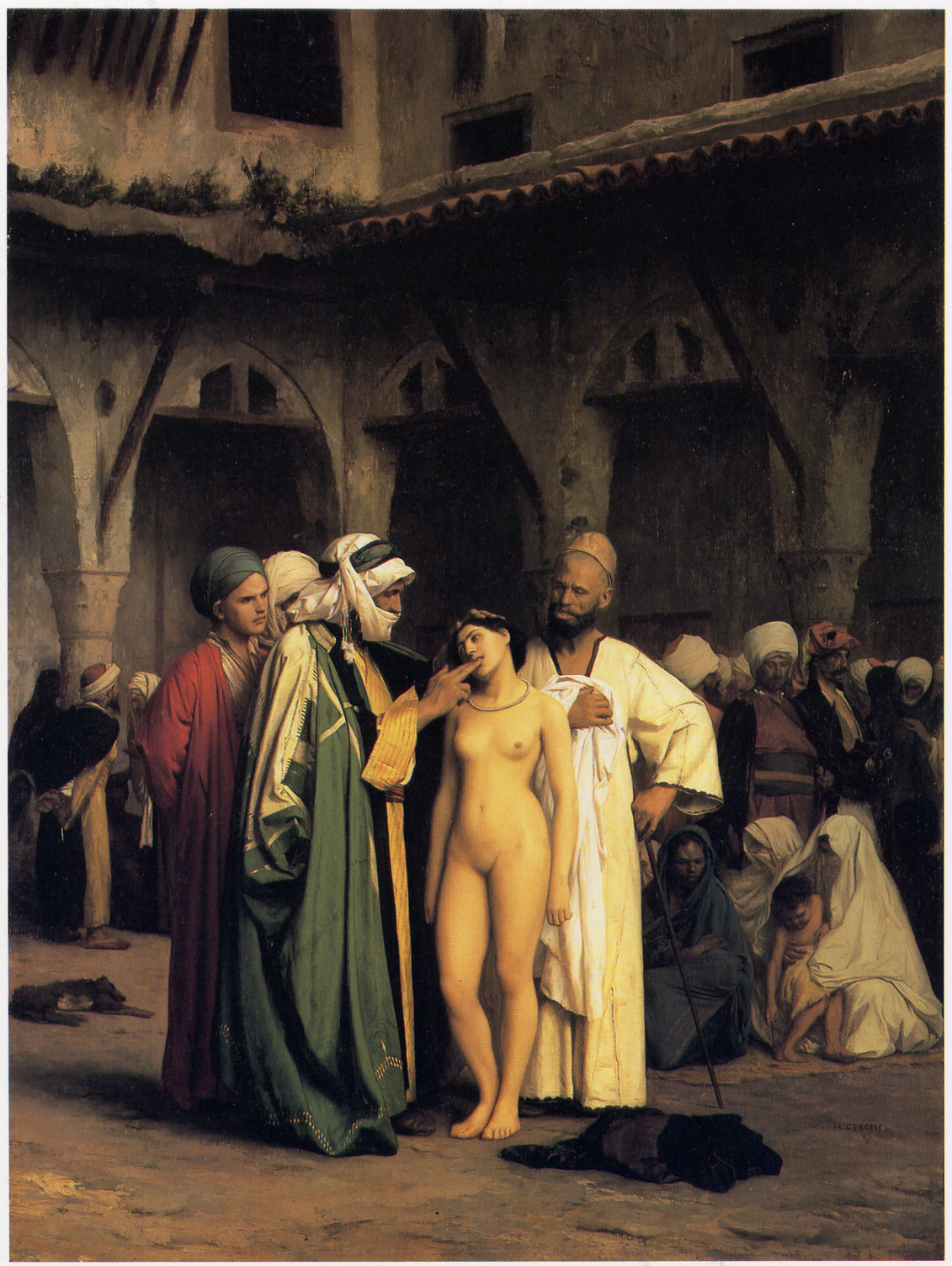
The Slave Market, painting (c. 1884) by Jean-Léon Gérôme (source)

Can Europeans, and European women in particular, become objects of trade? The idea seems laughable, since the term ‘slave trade’ almost always brings Africans to mind. Yet there was a time not so long ago when Europe exported slaves on a large scale. Between 1500 and 1650, Eastern Europe exported 1.5 million slaves to North Africa, the Middle East, and South Asia (Fisher, 1972; Kolodziejczyk, 2006). Western Europe exported a little over a million between 1530 and 1780 (Davis, 2004).

These slaves were taken during hit-and-run raids by either Crimean Tatar horsemen or North African corsairs. A raiding party would typically descend on an isolated village and carry away its inhabitants—or rather those who were commercially useful, particularly young women and young boys.

There was a time farther back, however, when Europeans were accomplices in this trade and when it provided most of their foreign exchange. This was during the Dark Ages and the early Middle Ages, specifically the 8th to 12th centuries.

The slave trade was a godsend for the elites of France, Germany, and Italy. With the collapse of the Western Roman Empire in the 5th century, they had to dip into their gold reserves to buy foreign luxury goods from the Middle East, generally clothing, upholstery, tapestries, carpets, and other precious fabrics (Skirda, 2010, pp. 56-57). By the 8th century, these reserves had been almost completely exhausted. Gold was giving way to silver, and even that medium of exchange was being debased. Western Europe had largely reverted to an economy of autarky, its shrunken towns and cities no longer major centers of trade. Most people produced everything they needed within their local village or manor.

Would Western Europe have eventually returned on its own to an international trading economy? Perhaps, although revival of trade would have become more difficult once the elites had become accustomed to autarky. As things turned out, they found the means to buy foreign luxury goods almost at the same time their gold reserves ran out. The 8th century brought the rapid expansion of a new civilization, Islam, into the Middle East, North Africa, and Spain. Its Arab elite was darker-skinned than the Greco-Roman or Visigothic elites it displaced. It was also more polygynous. A new market had come into being, a market for wives and concubines. European women were especially sought after, not because they were exotic but because their fair skin and fine facial features corresponded to notions of beauty that were indigenous to Arab culture (see previous post).

And so began the commodification of European women. Initially, this trade involved prisoners of war captured during the Islamic wars of expansion. Soon, however, a peaceful trading relationship developed. It was officially prohibited by Christian emperors and popes alike, but “in reality, people closed their eyes and everything was tolerated in exchange for good gold dinars” (Skirda, 2010, p. 75).

The women came from a belt of territory stretching from the Elbe in the West to the Volga in the East. This territory was inhabited by Slavic tribes—the ancestors of today’s Poles, Czechs, Slovaks, Byelorussians, Ukrainians, and Russians. They were typically prisoners of war who had been taken during fighting either between Germans and Slavs or among different Slavic tribes:

Only the adolescent boys and girls—the Slavonici—were spared, enslaved, and immediately sold to the merchants accompanying the armies. The Barbarian-ruled West, abandoned by major international trade and bereft of gold, was able to get gold by trading in slaves, who were almost exclusively Slavs. These objects of servile trade and commerce would be integrated into harems and used as military slaves or eunuchs. Adults and children were eliminated for obvious reasons. They did not correspond to the Muslim demand for young virgin girls and beardless boys and it was out of the question to gather children and raise them. The traders had neither the time nor the willingness and more importantly it would not have been cost-effective. Later, they would spare the lives of more captives, by selecting them according to their capacities for productive work and by using them to the limit of their strength at laborious physical tasks (Skirda, 2010, pp. 85-86).

The captives were taken overland by various routes: through Germany and France to Muslim Spain; through Venice and by ship to the Middle East; or down the Dniepr, the Don, or the Volga to the Middle East via the Black Sea or the Caspian. How many were traded? It’s difficult to say, but Skirda (2010, p. 6) advances a figure between several tens of thousands and several hundreds of thousands for the period extending from the 8th to 12th centuries.

It was this trade, more than any other, that revived the old trading networks not only between Europe and the Middle East, but also within Europe itself. The balance of foreign exchange also shifted in Europe’s favor, thus giving the elites of France, Germany, and Italy the means to buy not only foreign goods but also local products, thereby stimulating a long economic recovery that would take Europe out of the Dark Ages. As Skirda notes ironically:

The Italians who […] were the “great initiators of Europe” […] became the promoters of trading companies, creators of credit, restorers of currency. The only major oversight [of historians]: all of that was accomplished through the trade in Slavs. It is easier to understand why almost all historians and commentators have silently observed this phenomenon. It is difficult for them to acknowledge that the economic renaissance of the West of the 10th and 11th centuries was achieved through human trafficking! (Skirda, 2010, p. 112)

References

Davis, R. (2004). Christian Slaves, Muslim Masters: White Slavery in the Mediterranean, the Barbary Coast, and Italy, 1500-1800, Palgrave-Macmillan.

Fisher, A. (1972). Muscovy and the Black Sea slave trade, Canadian American Slavic Studies, 6, 575-594.

Kolodziejczyk, D. (2006). Slave hunting and slave redemption as a business enterprise: The northern Black Sea region in the sixteenth to seventeenth centuries, Oriente Moderno, 86, 1, The Ottomans and Trade, pp. 149-159.

Skirda, A. (2010). La traite des Slaves. L’esclavage des Blancs du VIIIe au XVIIIe siècle, Paris, Les Éditions de Paris Max Chaleil.

Saturday, July 6, 2013

White skin privilege


A new arrival (painting by Giuilo Rosati - source). The privilege of white skin …


Earlier this year, fashion model Cameron Russell condemned the unbearable whiteness of her industry:

[…] I won a genetic lottery, and I am a recipient of a legacy. For the past few centuries, we have defined beauty not just as health and youth and symmetry that we’re biologically programmed to admire, but also as tall, slender figures with femininity and white skin. This is a legacy that was built for me, and that I’ve been cashing in on. (Russell, 2013)

Yes, Ms. Russell did win a genetic lottery, being certainly more attractive than average. But she also mentioned a second unearned windfall: a beauty privilege due to the “legacy” of the past few centuries, when Europeans lorded over the world. Without that legacy, she would presumably be a very ordinary woman, perhaps even ugly.

This presumption can be tested. There was a time, not so long ago, when Europeans were weaklings on the world scene, when large parts of their continent were ruled by other peoples, and when the center of geopolitical power lay in the Middle East. In such a context, women like Cameron Russell would have had much less beauty privilege to cash in on.

In reality, they had plenty, and not just in Europe. ‘White slavery’ today means the international trafficking of women for prostitution. Back then, it meant the provisioning of the Muslim world with European concubines, who were valued for their white skin (Lewis, 1990, pp. 11-13, 56, 72). This trade was considerable in Muslim Spain:

The same convoys of booty also included women, these Frankish women who were all the more sought after in Cordova because they were blond and fair-skinned. It was among them, as among the captive women from Gascony, that the Umayyad princes chose their most pampered concubines and who, once they became mothers, were themselves raised to the rank of veritable princesses, of proven sultanesses (umm walad) who were influential and quick to enter, with the assistance of Slav eunuchs, into secret and complicated palace intrigues. But the Frankish women did not populate only the caliph's harems; the dignitaries of the khassa and the rich burghers of the cities also procured them at lavish prices, like, in the modern period, the Circassian women who have so curiously tinted the upper classes of oriental Muslim society. (Lévi-Provençal, 1953, p. 179)

Such women came from places that were poorer and less advanced than the Muslim world. Neither they nor their future masters knew what white skin would signify over a half-millennium later. Indeed, no one foresaw the rise of Europe to geopolitical preeminence, certainly not this 11th-century Muslim author:

For those who live furthest to the north between the last of the seven climates and the limits of the inhabited world, the excessive distance of the sun in relation to the zenith line makes the air cold and the atmosphere thick. Their temperaments are therefore frigid, their humors raw, their bellies gross, their color pale, their hair long and lank. Thus they lack keenness of understanding and clarity of intelligence, and are overcome by ignorance and dullness, lack of discernment, and stupidity. Such are the Slavs, the Bulgars, and their neighbors. (Lewis, 1990, p. 47)

Nonetheless, their women were considered strikingly attractive, even to the point of being simply called ‘beautiful girls.’ An 8th-century Arab musician wrote: “They used not to train beautiful slave girls to sing, but they used only to train yellow and black girls. The first to teach valuable girls to sing was my father” (Lewis, 1990, p. 56).

What gave rise to this desire for light-skinned foreign women? It seems that fair skin has long been key to Arab notions of female beauty:

Praise of a girl's looks is traditionally couched in such terms as: Her face is like the full moon, her mouth is an almond, her nose a cardamon, she is plump, and dimpled etc. [...] The highest praise is perhaps that she is as white as snow — strange praise indeed to come from a people very few of whom had ever seen snow. (Haim 1978, p. 88)

[The moon] is the most common image used to represent female beauty. When attempting to draw the attention of a beautiful girl on the street, a young man may call out, “’Es ya qamar?” (roughly, “What’s happening, O moon?”). Two important components of the image, brightness (fairness of skin) and roundness (of face), convey the popular conception of beauty in Palestinian and Arab culture. (Muhawi and Kanaana 1989, p. 60, cf. also 122, 181)

Not just in Arab societies …

In general, traditional human societies share a belief that women should be fairer-skinned than men (van den Berghe and Frost, 1986). This cultural norm runs parallel to a physical norm, i.e., in all human populations, women are less pigmented than men from puberty onward. Both melanin and cutaneous blood are involved, with the result that women look paler and men browner and ruddier. Women also display a sharper contrast between facial skin color and eye/lip color. These visual cues are subconsciously used by the human mind to determine whether an individual is a man or a women (Dupuis-Roy et al., 2009; Frost, 2011; Russell, 2010; Russell, 2003; Russell and Sinha, 2007; Tarr et al., 2001).

In addition to aiding sex recognition, these visual cues may also trigger feelings that in one way or another depend on the sex of the person being observed. Since lighter skin is specific not only to women but also to infants, some authors view it as one of several features (smooth, pliable skin, high-pitched voice, small nose and chin, etc.) that the adult female body has borrowed for the purpose of calming aggressive impulses in the adult male and inducing feelings of care (Frost, 2010, pp. 134-135). Such feelings may feed into male eroticism but are not erotic per se. Desire for darker female skin is attested as an alternate, though secondary mode of sexual arousal, even in contexts where exotic otherness seems to play no role, such as premodern European peasant societies, specifically within a context of passionate but short-lived relationships (Frost, 2010, pp. 90-91). This alternate eroticism, previously repressed, has become popular in the Western world since the 1920s with the growing acceptance of tanned skin as a female fashion accessory (Frost, 2010, pp. 91-103).

Men thus seem to be innately oriented toward paler female skin, if only as part of a mechanism for sex recognition. This orientation can, but does not always, translate into erotic attraction and mate choice. One notable exception is the modern Western world, where tanned female skin has become increasingly popular. Another seems to be the high-polygyny region of sub-Saharan Africa and Papua-New Guinea, where attitudes toward female skin color tend to be ambivalent (Frost, 2010, pp. 83-97). First, the relative scarcity of female mates ensures that all available women have takers. Second, due to the higher polygyny rate, fathers invest less in their offspring and mothers invest more. Darker women may thus benefit from a perception that they are better at hoe farming and providing for their children. Ardener (1954) makes this point with regard to the Ibo of Nigeria:

In the choice of a wife, yellow-skinned girls are regarded as beauties, and, other things being equal, they command higher bride prices.  On the other hand it is generally held, especially by dark-complexioned persons, that yellow-skinned people are not as strong as the dark and do not live as long.  A 'black' girl is said to be a harder worker. […] A Mission headmaster was of the opinion that the preference for yellow girls was greater nowadays than in his youth.  He thought that the reason for this was that people formerly looked for strength rather than beauty and tended to marry black girls.

Conclusion

There is a widespread belief, particularly among proponents of whiteness studies, that notions of beauty are determined by power relationships. The strong and mighty are inevitably ‘beautiful.’ This belief is so entrenched that little concern is shown for counterfactual evidence, such as the medieval trade in fair-skinned women for clients in North Africa, the Middle East, and South Asia.

This trade existed for two reasons. On the one hand, European states were too weak to stop it. On the other, European women were considered beautiful by people in geopolitically stronger states to the south and east.  Again, this pattern is inconsistent with the belief that power relationships determine notions of beauty.
 

References

Ardener, E.W. (1954). Some Ibo attitudes to skin pigmentation, Man, 54, 71-73.

Dupuis-Roy, N., I. Fortin, D. Fiset, et al., et al. (2009). Uncovering gender discrimination cues in a realistic setting, Journal of Vision, 9(2), art. 10, 1–8.

Haim, S.G. (1978). Love in an Arab Climate, Encounter, 50, 86‑91.

Frost, P. (2011). Hue and luminosity of human skin: a visual cue for gender recognition and other mental tasks, Human Ethology Bulletin, 26(2), 25-34. http://media.anthro.univie.ac.at/ISHE/index.php/bulletin/bulletin-contents

Frost, P. (2010). Femmes claires, hommes foncés. Les racines oubliées du colorisme, Quebec City : Presses Universitaires de Laval.

Lévi-Provençal, É. (1953). Histoire de l’Espagne musulmane, tome III, Paris: G.P. Maisonneuve.

Lewis, B. (1990). Race and Slavery in the Middle East, New York: Oxford University Press.

Muhawi, I. and S. Kanaana. (1989). Speak, Bird, Speak Again, Berkeley: University of California Press.

Russell, C. (2013). Model Cameron Russell: I get what I don’t deserve, February 18, CNN Edition International
http://edition.cnn.com/2013/02/17/opinion/russell-model-genetic-lottery/index.html?hpt=hp_c3

Russell, R. (2010). Why cosmetics work, in R. B. Adams, N. Ambady, K. Nakayama et al. (eds.) The Science of Social Vision. New York, Oxford.

Russell, R. (2003). Sex, beauty, and the relative luminance of facial features, Perception, 32, 1093-1107.

Russell, R. and P. Sinha. (2007). Real-world face recognition: The importance of surface reflectance properties, Perception, 36, 1368-1374.

Tarr, M.J., D. Kersten, Y. Cheng et al. (2001). It’s Pat! Sexing faces using only red and green, Journal of Vision, 1(3), 337, 337a.

Van den Berghe, P. L. and P. Frost. (1986). Skin color preference, sexual dimorphism, and sexual selection: A case of gene-culture co-evolution?, Ethnic and Racial Studies, 9, 87-113.
 

Saturday, June 15, 2013

How the pacification of Europe came to an end


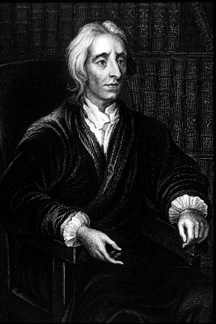
John Locke: “every man, in the state of nature, has a power to kill a murderer […] such men are not under the ties of the common law of reason, have no other rule, but that of force and violence, and so may be treated as beasts of prey (source of picture)
 

The last millennium has seen three overlapping trends in Western societies with respect to unlawful violence.

The first one began in the 12th century with the rise of strong States and a growing determination, with the consent of the Church, to punish the “wicked” so that the “good” may live in peace. By the late Middle Ages, the courts were condemning to death between 0.5 and 1.0 % of all men of each generation, with an equal number dying while awaiting trial. There was correspondingly a shift in the cultural environment. The violent male went from hero to zero; even if he didn’t pay the ultimate penalty, his opportunities for social advancement were now much more constrained.

The second trend was a steady drop in the homicide rate throughout most of Western Europe. In England, this rate fell by over a hundred-fold between the 12th and 19th centuries (Eisner, 2001).

The third trend began in the 17th century with a growing unwillingness by the courts to impose the death penalty. Then, from the mid-18th century onward, one country after another began to limit the death penalty or abolish it altogether.

These three trends were interrelated. The first one—the “war on murder”—succeeded all too well. The pool of violent men dried up to the point that most murders occurred only under conditions of extreme stress, jealousy, or intoxication. Violence ceased to be a socially approved way to gain prestige and advance personal interests. It became a mark of shame, condemning those guilty of it to the margins of society, if not to the gallows. Thus, the longer the death penalty was used, the less necessary it became.

The ideological background

But there was another reason, an ideological one. At all levels of society, people began to see the death penalty as being inherently wrong. In the early 19th century, for instance, English law still required hanging for thefts equal to or greater than forty shillings. To get around the law, and save a condemned man, a jury decided that a stolen 10-pound note was worth only thirty-nine shillings. Another jury came to the same decision for a theft of a hundred pounds! (Savey-Casard, 1968).

What caused this change of heart? The usual answer is liberalism, specifically “the Enlightenment”—a philosophical movement of the 18th century that sought to base public policy on reason and science. For many traditionalists today, this is one example among many of how the Enlightenment replaced the old faith in proven tradition with a new faith in unproven ideals.

Yet most philosophers of the Enlightenment accepted the death penalty. This was the case with John Locke (1632-1704), the Father of Classical Liberalism:

[…] every man, in the state of nature, has a power to kill a murderer, both to deter others from doing the like injury, which no reparation can compensate, by the example of the punishment that attends it from every body, and also to secure men from the attempts of a criminal, who having renounced reason, the common rule and measure God hath given to mankind, hath, by the unjust violence and slaughter he hath committed upon one, declared war against all mankind, and therefore may be destroyed as a lion or a tyger, one of those wild savage beasts, with whom men can have no society nor security: and upon this is grounded that great law of nature, Whoso sheddeth man's blood, by man shall his blood be shed. (Second Treatise of Government, 2, 11)

[…] one may destroy a man who makes war upon him, or has discovered an enmity to his being, for the same reason that he may kill a wolf or a lion; because such men are not under the ties of the common law of reason, have no other rule, but that of force and violence, and so may be treated as beasts of prey, those dangerous and noxious creatures, that will be sure to destroy him whenever he falls into their power. (3, 16)

This is the idea of the “Social Contract.” In modern societies, people forego the use of violence for personal ends so that they may enjoy the benefits of a peaceful society. If a man commits unlawful violence, he repudiates this implicit contract and thus loses his immunity from violence. Interestingly, Locke supported the death penalty not just for murder but for lesser offences as well: “each transgression may be punished to that degree [with death], and with so much severity, as will suffice to make it an ill bargain to the offender, give him cause to repent, and terrify others from doing the like” (2, 12). 

The Social Contract was central to an essay by Jean-Jacques Rousseau (1712-1778):

The death-penalty inflicted upon criminals may be looked on in much the same light: it is in order that we may not fall victims to an assassin that we consent to die if we ourselves turn assassins. […]

Again, every malefactor, by attacking social rights, becomes on forfeit a rebel and a traitor to his country; by violating its laws he ceases to be a member of it; he even makes war upon it. In such a case the preservation of the State is inconsistent with his own, and one or the other must perish; in putting the guilty to death, we slay not so much the citizen as an enemy. (Du contrat social, 2, 5)

Among the philosophers of the Enlightenment, Cesare Beccaria (1738-1794) was the only major one to argue against the death penalty:

[…] the laws, which are intended to moderate the ferocity of mankind, should not increase it by examples of barbarity the most horrible, as this punishment is usually attended with formal pageantry. Is it not absurd that the laws, which detest and punish homicide, should, in order to prevent murder, publicly commit murder themselves? (On crimes and punishments, 28)

But Beccaria’s opinion was a minority one. After the French Revolution, his arguments for abolition were presented to the Assembly by several deputies, but the majority remained opposed (Carbasse, 2011, p. 76-77).

Was abolitionism liberal?

The French Revolution actually reversed an abolitionist trend that had developed under the Ancien Régime. From 1750 onward, the courts had become increasingly reluctant to condemn people to death. In Dijon, the death penalty accounted for 13 to 14.5% of all sentences before 1750, 8.5% in 1758-1760, 6% in 1764-1766, and less than 5% after 1770. By 1788, on the eve of the revolution, no executions at all were being carried out in Paris (Carbasse, 2011, p. 70).

Elsewhere, abolitionism made the most progress where liberalism was the weakest. In Russia, the death penalty was unofficially abolished during the reign of Elizaveta Petrovna (1741-1762), apparently out of Christian piety. It was then reestablished by Ekaterina II (Catherine the Great), who corresponded with Voltaire and professed Enlightenment ideals (Carbasse, 2011, pp. 74-75). Under the influence of Beccaria, the death penalty was abolished in countries that were nonetheless illiberal by any other standard, notably Tuscany in 1786 and the Hapsburg dominions in 1787. The least progress was made in England, the very epicenter of liberalism:

The only European country where the ideas of penal reform had almost no effect was finally England. English criminal law, whose particular ferocity we have pointed out, remained just as repressive. In the late 18th century, nearly 300 infractions were still punishable by death (Carbasse, 2011, p. 75).  

Who was breaking with the past?

Thus, when debating the rightness or wrongness of the death penalty, most philosophers of the Enlightenment did not break with the past. Medieval views similarly prevailed in secondary debates, like whether this penalty should be motivated by retribution or by the need to maintain public order. The latter, more utilitarian view is often associated with the Enlightenment, yet it had been earlier expressed by medieval thinkers, such as Thomas Aquinas (1225-1274):

[…] it is lawful to kill an evildoer in so far as it is directed to the welfare of the whole community, so that it belongs to him alone who has charge of the community's welfare. Thus it belongs to a physician to cut off a decayed limb, when he has been entrusted with the care of the health of the whole body. Now the care of the common good is entrusted to persons of rank having public authority: wherefore they alone, and not private individuals, can lawfully put evildoers to death.  (IlaIlae, q. 64)

Another secondary debate was whether murderers act out of free will and, if not, whether it is fair to execute them. On this, the philosophers of the Enlightenment denied the existence of free will. All behavior is channeled through constraints that exist either within oneself or in one’s environment, and these constraints are stronger in those murderers who act on impulse and not after sober reflection. Nonetheless, lack of free will is no excuse for a condemned murderer, any more than for a mad dog. He isn’t sentenced to be executed because he “deserves” it and will know better next time. There will be no next time. He is simply removed, permanently, from the community of peace-loving citizens. In this, the Enlightenment was reiterating views held by Thomas Aquinas and other medieval scholars. (Carbasse, 2011, pp. 62-63).

The Enlightenment thus refined ideas that had already taken shape during the late Middle Ages. It was really the 12th century that had broken with prior thinking. Previously, the death penalty had been reserved for exceptional cases, partly because the Church considered it inherently wrong and partly because the State preferred to be an honest broker in personal conflicts that did not challenge its authority. It was only from the 12th century onward that the death penalty came to be seen as a force for good, and this consensus still prevailed among most philosophers of the Enlightenment.

So how did this consensus come to an end? The Enlightenment was paralleled by an ideological change within Christianity itself. The same processes that made the Enlightenment possible—invention of printing, mass distribution of books, rising level of literacy—also allowed more and more Christians to discover the Bible. They soon discovered that this book did not contain the overlay of correction, interpretation, and commentary that had been added during the Middle Ages. Why, they wondered, was this overlay absent from the Holy Scriptures? Surely it must be a sham! And so they discarded the hard lessons that had been learned at much cost. The clock was literally turned back to the Dark Ages—when the Church provided murderers with sanctuary and when the State preferred to be an arbiter between the murderer and the victim’s family.

We associate this rejection of medieval teachings with Protestantism, but it has also been present in Catholicism. In both, there has been a move towards a truncated kind of Christianity … towards “Jesusism.”

It is this Jesus-centered Christianity, much more so than the Enlightenment, that has shaped modern liberalism. For every copy of John Locke’s works, there have been millions more of the Bible, and millions more of writings by people who spurn medieval Christianity as one would an imposter.

Conclusion

Some people have called me a thinker of the “Dark Enlightenment.” Actually, the original one seems fine enough to me. We have not been failed by science and reason. Rather, we have been failed by an ideological change within Christianity that has become secularized and now dominates the modern world view. One might call it “secularized Christianity” or perhaps “Christian atheism,” but neither is really appropriate. It is a changeling. It claims descent from our rich traditions of the Middle Ages and the Enlightenment … while actually owing little to either.
 

References

Beccaria, C. (1767). An Essay on Crimes and Punishments, transl. from the Italian
http://archive.org/details/anessayoncrimes00beccgoog

Carbasse, J-M. (2011). La peine de mort, Que sais-je ?, Paris.

Eisner, M. (2001). Modernization, self-control and lethal violence. The long-term dynamics of European homicide rates in theoretical perspective, British Journal of Criminology, 41, 618-638.

Locke, J. (1690). Second Treatise of Government,
http://www.gutenberg.org/files/7370/7370-h/7370-h.htm

Rousseau, J-J. (1762). The Social Contract or Principles of Political Right, transl. from the French
http://www.constitution.org/jjr/socon.htm

Savey-Casard, P. (1968). La peine de mort, Librairie Droz, Geneva.

Thomas Aquinas. Ila Ilae, The Summa Theologica, Benziger Bros (transl. 19474)
http://dhspriory.org/thomas/summa/SS/SS064.html#SSQ64A3THEP1

Saturday, June 8, 2013

Making Europeans kinder, gentler


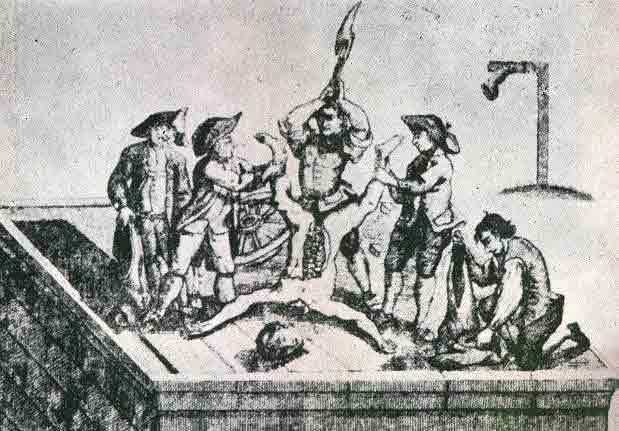
Hanged, drawn, and quartered. (source)

Although the Middle Ages were, in the imagination of our contemporaries, “the time of the gallows,” the reality was appreciably different (Carbasse, 2011, pp. 38-39)

Like many well-meaning people, I once considered the death penalty a relic of a more barbaric age. Outside the old jailhouse, here in Quebec City, I can see the open space where people used to be hanged … in public. In some cases, the authorities would go one better. The body would be placed in a cage and suspended near a thoroughfare for all to see … while it decomposed. This was our past, and presumably the system of justice was even more gruesome longer ago.

Actually, it wasn’t. Longer ago, the death penalty was not the preferred punishment for murder.

The Dark Ages – 5th to 12th centuries

When the Roman Empire collapsed in the 5th century, so did its system of retributive justice. Actually, justice had already become less retributive through the growing influence of Christianity. This is apparent in a letter from a Roman magistrate who felt troubled by the death penalty and sought advice from Ambrose, bishop of Milan (374-397). In a long reply, the bishop defended this punishment, but then went on to praise those who refrain from it. In fact, most of his reply was an appeal for mercy on the grounds that the wrongdoer may end up repenting (Swift, 1970, p. 542, see also Frost, 2010).

This trend continued after the Empire’s collapse. In 511, the bishops of France greatly extended the right of sanctuary. If a man committed murder, he could now ask for and receive sanctuary in any holy place. This policy was defended by Pope Gregory the Great: “Let the Church extend its protection even to those who have spilled blood, for it must not contribute, even indirectly, to the shedding of their own blood” (Carbasse, 2011, p. 34).

The new barbarian rulers also disliked the death penalty, but for different reasons. There was a strong feeling that every adult male had a right to use violence and to kill, if need be. This right was of course reciprocal. If you killed a man, his death could be avenged by his brothers and other male kinsmen. The prospect of a vendetta thus created a ‘balance of terror’ that kept violence within limits. So, initially, the barbarians allowed capital punishment only for treason, desertion, and cowardice in combat (Carbasse, 2011, p. 35).

As the barbarian kingdoms developed on the ruins of the Roman Empire, steps were taken to limit male violence, particularly when it took the form of vendettas. This was the aim of the Salic Law, proclaimed in 507-511:

[The Salic Law] is a pact (pactus) “concluded between the Franks and their chiefs,” for the specific purpose of ensuring peace among the people by “cutting short the development of brawls.” This term evidently means private acts of vengeance, the traditional vendettas that went on from generation to generation. In place of the vengeance henceforth forbidden, the law obliged the guilty party to pay the victim (or, in the case of murder, his family) compensation. This was an indemnity whose amount was very precisely set by the law, which described with much detail all of the possible damages, this being to avoid any discussion between the parties and make [murder] settlements as rapid, easy, and peaceful as possible. […] This amount was called the wergild, the “price of a man.” The victim’s family could not refuse the wergild, and once it was paid, the family had to be satisfied. They no longer had the right to avenge themselves (Carbasse, 2011, pp. 33-34).

The punishment for murder was thus monetized. If you killed a boy under 10, you paid 24,000 denars. Killing a free pregnant woman would cost a bit more: 28,000 denars. The payment was only 12,000 denars for killing a Roman who ate in the king’s palace (source). Capital punishment existed only for the murder of the king, for whom there was no wergild, or in the case of a slave killing a free man.

Over the next few centuries, attempts were made to broaden the scope of the death penalty but to little avail, partly because law enforcement was still rudimentary and because of resistance from the Church:

[…] the couple “peace and charity” remained the supreme objective. This ideal had practical applications, since the legal forms of this time offered model agreements called “peace” or “concords” (today we would say ‘plea bargaining’) for even major crimes like murder. Clearly, the public justice system was used only in exceptional cases, the usual way of settling disputes being private in nature (Carbasse, 2011, p. 36).

The war on murder – 12th to 17th centuries

Thus, for a long period, murder was normally a personal matter to be settled by the victim’s family, through vengeance or a cash settlement.

This situation began to change in the 12th century. One reason was that the State had become stronger. But there also had been an ideological change. The State no longer saw itself as an honest broker for violent disputes that did not challenge its existence. Jurists were now arguing that the king must punish the wicked to ensure that the good may live in peace. The Church itself was coming around to this view through what may be called a medieval synthesis of Christian morality:

[…] a reaction arose beginning in the 11th century against the previous system of monetary compensation. Henceforth, increasingly, it was felt that money could not be a sufficient compensation for such an infraction. The idea that the murder of a man is a crime too serious, an offence too manifest to the order of Creation, to be simply “compensated” by a sum of money was present from the early 11th century onward in the thinking of some bishops (Carbassse, 2011, p. 38)

And so began the war on murder. From the 12th to 17th centuries, capital punishment became steadily more prevalent. We see this in an increasing willingness to use it not only for murder but also for other crimes (rape, abortion, infanticide, lèse majesté, theft, counterfeiting, etc.). We also see this in the use of ‘exemplary’ punishment: drawing and quartering, breaking on the wheel, and burning. Beginning in the 13th and 14th centuries, we see cases of a murderer being buried alive in a casket placed underneath the victim’s casket (Carbasse, 2011, p. 53).

Then, after the 17th century, the war on murder began to go into reverse. It had been largely won, and public sympathy now shifted to the condemned man. In England, the homicide rate fell by over a hundred-fold between 1300 and 1900 (Eisner, 2001). Europeans were becoming kinder and gentler, and this pacification of social relations would make possible much of what we call modernity: the expansion of the market economy; a growing freedom to live among total strangers; the rise of the individual as an autonomous, self-maximizing being, and so on.

But this pacification also had a down side. We now take it for granted. If people act violently, to the point of committing murder, we assume there must be a very good reason. Otherwise, why would they have done it?

References

Carbasse, J-M. (2011). La peine de mort, Que sais-je ? Paris

Eisner, M. (2001). Modernization, self-control and lethal violence. The long-term dynamics of European homicide rates in theoretical perspective, Br J Criminol.,41, 618-638. http://bjc.oxfordjournals.org/content/41/4/618.abstract

Frost, P. (2010). The Roman State and genetic pacification, Evolutionary Psychology, 8(3), 376-389.
http://www.epjournal.net/filestore/EP08376389.pdf


Swift, L.J. (1970). St. Ambrose on violence and war, Transactions and Proceedings of the American Philological Association, 101, 533-543.