Showing posts with label Protestantism. Show all posts

Tuesday, March 6, 2018

Why universal human rights aren't universal


Jean Piaget (1896-1980). A renowned Swiss psychologist, he argued that moral development is linked to cognitive development.


Are intelligence and morality interlinked? This was what Swiss psychologist Jean Piaget concluded from his studies of child development. With increasing age, children develop not only intellectually but also morally, growing out of infantile self-centredness and into adult decentered-ness:

According to Piaget, moral development — the ability to judge ethical problems in an impartial and unbiased way — relies on prior cognitive development. Indeed, cognitive and moral development are structurally similar. In both is acquired a well-founded, reasonable structure. As Jean Piaget (1948/1932, p. 404) stated: "Parallelism exists between moral and intellectual development: ... Logic is the morality of thought just as morality is the logic of action." And this parallelism is based on the cognitive nature of morality, e.g. to behave ethically one has to take the perspective of third parties. (Rindermann and Carl 2018, p. 32)

This view has become popular and is even central to much of present-day thinking. If people are better educated, they will presumably become not only smarter but also more empathic and, thus, more considerate of their fellow humans. This view, as popular as it is, doesn't seem quite true. Many of us have known people who are intelligent and yet lacking in empathy. We call them psychopaths. Usually, they're explained away as aberrations. They're sick, aren't they? In reality, the line between 'normal' and 'psychopath' is arbitrary—like most mental traits, the capacity for empathy is distributed continuously along a bell curve. Lots of seemingly normal people have little empathy.

Nor does Piaget's view seem true if we look farther afield. Many moral systems attach little importance to empathy. Indeed, of all the world religions, Christianity seems unique in advocating the moral duty not only to help others but also to feel their pain, even when they aren't fellow Christians. Yes, most Christians fail to meet this standard of universal selflessness, but other religions don't set the bar so high. 

Indeed, the ideal of universal selflessness isn’t at all universal. It developed essentially within a single cultural context, the Christian world:

In Judaism and Christianity, "God created man in his own image" (Gen1:27 ESV). Humans being the image of God, "God-likeness", implies treating humans in a respectful way. Of course, at first blush, history reveals large discrepancies between the message of Christianity and the actual behavior of Christians. However, this does not mean that such behavior was consistent with the Christian message, and in many cases it was criticized by prominent Christians at the time. The Christian message had a corrective function. For instance, the inhumane treatment of American Indians by Spanish colonists was criticized by the Dominican priest Bartholomé de Las Casas (as mentioned above). The abolitionist movement was organized by Protestants and led by the Evangelical Christian William Wilberforce. The horrors of war were mitigated by charities such as the Red Cross, which was founded by the evangelical Christian, Henry Dunant. (Rindermann and Carl 2018, p. 34)

The Muslim world imported as many slaves as did the Christian world, yet a Muslim abolitionist movement never arose, and the trade was ultimately abolished worldwide through the intervention of Christian nations, particularly Great Britain. Today, the slave trade has left no legacy of guilt among Muslims, while it definitely has in those nations that strove to bring it to an end.

This apparent paradox has led Heiner Rindermann—a well-known psychologist in HBD circles—to challenge the Piagetian idea that moral development is linked to intellectual development. These two mental traits are distinct and have followed their own trajectories in different moral traditions.

To prove his point, he teamed up with sociologist Noah Carl to study how respect for human rights is related, cross-culturally, to cognitive ability and religion. They found a stronger relationship with religion than with cognitive ability. Specifically, the percentage of Christians in a society had a stronger positive impact (r = .62) on respect for human rights (Rindermann and Carl 2018) than did educational level (r = .54) or cognitive ability (r = .50 to .51).

One can quibble about the methodology. The study defines human rights largely as the right to make choices on one's own, regardless of existing social norms. Freedom of religion, for instance, is defined as the freedom not only to practice one's religion but also to convert to another. As the authors themselves note, this is not a legitimate freedom in much of the world, unless one is converting to the majority religion. Freedom doesn’t mean that a minority is free to become the majority.

Nonetheless, there does seem to be a correlation between Christianity and respect for human rights as long as we define the latter, at least in part, as maximization of personal choice and autonomy. 


Is Christianity confounded with European ancestry?

Correlation isn't causation. Couldn't Christianity be a proxy for "European-ness"? Indeed, most Christians are at least partly of European ancestry, and even more live in societies founded and still largely run by people of European origin.

To control for this confounding factor, one could compare Christian and non-Christian societies within a region where European ancestry is minimal. Sub-Saharan Africa comes to mind. Even in South Africa, the European minority is down to the single digits.

Rindermann and Carl (2018, p. 60) did make that comparison:


Within sub-Saharan Africa [...] the percentage of Christians is still positively (but weakly) related to human rights (r = .10; N = 48), and the percentage of Muslims is still negatively (but weakly) related to human rights (r = -.12).


Those correlations are indeed weak. Moreover, the one between Christianity and respect for human rights is largely due to the relatively stable societies of southern Africa, i.e., South Africa itself, Namibia, Botswana, Lesotho, and Swaziland. Those societies enjoy a judicial and administrative legacy that may not last much longer, given recent events and the example of Zimbabwe.

To be honest, I feel little in common with fellow Christians like Jacob Zuma and Robert Mugabe. Ironically, both of them have a better claim to being Christian than I do, since I refused to be confirmed after attending my confirmation classes.


Is European ancestry confounded with a genetically influenced trait?

If European ancestry is a confounding factor, could it be a proxy for some unknown genetically influenced trait? Rindermann and Carl tried to answer this question by estimating the average "skin brightness" of each country.

Skin brightness is more highly correlated with human rights than is cranial capacity (r = .25 vs. .18). Of course, skin color itself is unlikely to exert any effect; it constitutes a marker for evolutionary pressures that may be associated with culture. (Rindermann and Carl 2018, p. 53)

This is, I suspect, a reference to Arthur Schopenhauer (1788-1860) and his belief that humans had to become more intelligent as they spread into harsher northern climates: "those tribes that emigrated early to the north, and there gradually became white, had to develop all their intellectual powers, and invent and perfect all the arts in their struggle with need, want, and misery, which, in their many forms, were brought about by the climate. This they had to do in order to make up for the parsimony of nature, and out of it all came their high civilization" Parerga and Paralipomena, Volume II, Section 92.

Rindermann and Carl seem to be assuming that European skin became white solely as an adaptation to the northern natural environment. They also seem to be assuming that moral development is linked to cognitive development—the very hypothesis they want to test.

A better genetic marker would be the long allele for the 5-HTTLPR serotonin transporter gene. It's less frequent in collectivistic cultures than in individualistic cultures, the latter being the cultures of western and northern Europe—the same cultures that value so much the rights of the individual (Chiao and Blizinsky 2010). In a study of American toddlers, carriers of the short allele were more likely to imitate the way other people behaved (Schroeder et al. 2016).

The study provides additional evidence for the view that Christianity, in itself, doesn't explain why Europeans, and especially northwest Europeans, see all individuals as being endowed with the same rights. Of the three branches of Christianity, Protestantism has the strongest correlation with respect for human rights (r = .48), followed by Catholicism (r = .42), and finally Orthodoxy (r = -.07) (Rindermann and Carl 2018, p. 52). This suggests that Christianity changed as its geocenter progressively moved from the Middle East to southern Europe and then to northwest Europe, along the way becoming more focused on the individual and on individual responsibility. 

Within Christianity, Protestantism stresses conscience, individual guilt, internal control, autonomy and self-responsibility (Weber, 2008/1904). All these traits are conducive for liberty, the rule of law, democracy and human rights (Rindermann and Carl 2018, p. 34)

[...] in Protestant countries, trust is higher, corruption is lower and levels of social and economic freedom are higher (Delhey & Newton, 2005; Harrison, 2013). People tend to be more self-controlled, having internalized social rules, meaning that harsh and violent control by the state is not needed. (Rindermann and Carl 2018, p. 37)

The two authors are aware of the Hajnal Line and its relationship to a suite of psychological and behavioral traits. In societies north and west of a line running approximately from Trieste to St. Petersburg, social relations have long shown a certain pattern:

- men and women marry relatively late

- many people never marry

- children usually leave the nuclear family to form new households

- households often have non-kin members

This is the Western European Marriage Pattern (WEMP). Everyone is single for at least part of adulthood, many stay single their entire lives, and a significant proportion of households have members not belonging to the immediate family or even to kin. In short, an individual is less fettered by the bonds of kinship even within his or her household (Frost 2017).

This led to late marriage, high rates of childlessness (of about half of the cohort), more rights for women, and large investments in education. Going further than Hajnal himself did, it arguably also enhanced delay of gratification, self-control (especially of sexuality), conscientiousness, frugality, industry and cognitive ability. The causes of this marriage pattern can be traced to Roman, Germanic and Christian traditions, to the interests of the church, and to the interests of landlords and guilds. (Rindermann and Carl 2018, p. 39)

The above view is also the one held by *hbd chick, i.e., the WEMP developed after the introduction of Christianity and was, at least in part, a consequence of medieval Christian practices and institutions. Yet there is good evidence for the existence of the WEMP as early as ninth-century France and fragmentary evidence even earlier (Frost 2017). I have argued that the arrow of causality points in the other direction: a pre-existing mindset in northwest Europe was carried over into Christianity, much like the Christmas tree and other pagan traditions. Later, as the center of Christendom moved west and north, this mindset gained importance within Western Christianity and pushed it more and more toward the idea of individual salvation and an individual relationship with God. 

The northwest European mindset is characterized essentially by four interrelated mental traits:

Independent social orientation - independence of the self from others, including stronger motivation toward self-expression, self-esteem, and self-efficacy and emphasis on personal happiness rather than social happiness. 

Universal rule adherence - capacity to obey universal and absolute moral rules, i.e., moral universalism and moral absolutism, as opposed to situational morality based on kinship. These rules are enforced by monitoring not only others but also oneself. Rule-breakers may be branded as morally worthless and expelled.

Affective empathy - capacity to experience the emotional states of other people in order to prevent harm and to provide help if needed. Help is conditional on the other person being judged morally worthy.

Guilt proneness - capacity to self-monitor thoughts and behavior for rule adherence in order to self-judge and, if necessary, to self-punish.


Conclusion

Are universal human rights truly universal? If we look at cultures across space and time, we find that the notion of human rights was nonexistent in most cultures and historical periods. Not until the 18th and 19th centuries did some countries codify this notion in law, although it clearly has antecedents that go farther back, at least to the formulation of canon law by the Catholic Church and perhaps farther. Northwest Europeans seem to have long been predisposed to think in terms of individual rights and universal moral rules.

Since the early 19th century, we in the West have tried to impose these rights on the entire world, initially through the suppression of the slave trade and then through the efforts of missionaries and colonial authorities to ban certain practices, like the custom of sati in India. Such efforts became an integral part of Western imperialism and "the white man's burden."

Although this burden has since been taken up by truly international bodies, like the U.N., the notion of universal human rights still reflects a Western view of people as atomized individuals who mainly seek to maximize their wealth, happiness, and personal autonomy. This is not how most humans view the purpose of existence. For that matter, this view was not originally held by northwest Europeans, whose understanding of moral universalism has steadily radicalized and expanded in scope over time.


References

Chiao, J.Y. and Blizinsky, K.D. (2010). Culture-gene coevolution of individualism-collectivism and the serotonin transporter gene. Proceedings of the Royal Society B 277: 529-537.
http://rspb.royalsocietypublishing.org/content/277/1681/529.short

Frost, P. (2017). The Hajnal line and gene-culture coevolution in northwest Europe, Advances in Anthropology 7: 154-174.
http://file.scirp.org/pdf/AA_2017082915090955.pdf

Rindermann, H. and N. Carl. (2018). Human rights: Why countries differ, Comparative Sociology 17: 29-69.

Schopenhauer, A. (1974)[1851]. Parerga and Paralipomena, English translation by E. F. J. Payne, Clarendon Press, Oxford, 2 volumes.

Schroeder, K.B., Asherson, P., Blake, P.R., Fenstermacher, S.K., and Saudino, K.J. (2016). Variant at serotonin transporter gene predicts increased imitation in toddlers: relevance to the human capacity for cumulative culture. Biology Letters 12(4).
http://europepmc.org/articles/pmc4881356
Saturday, November 1, 2014

The evolution of antiracism


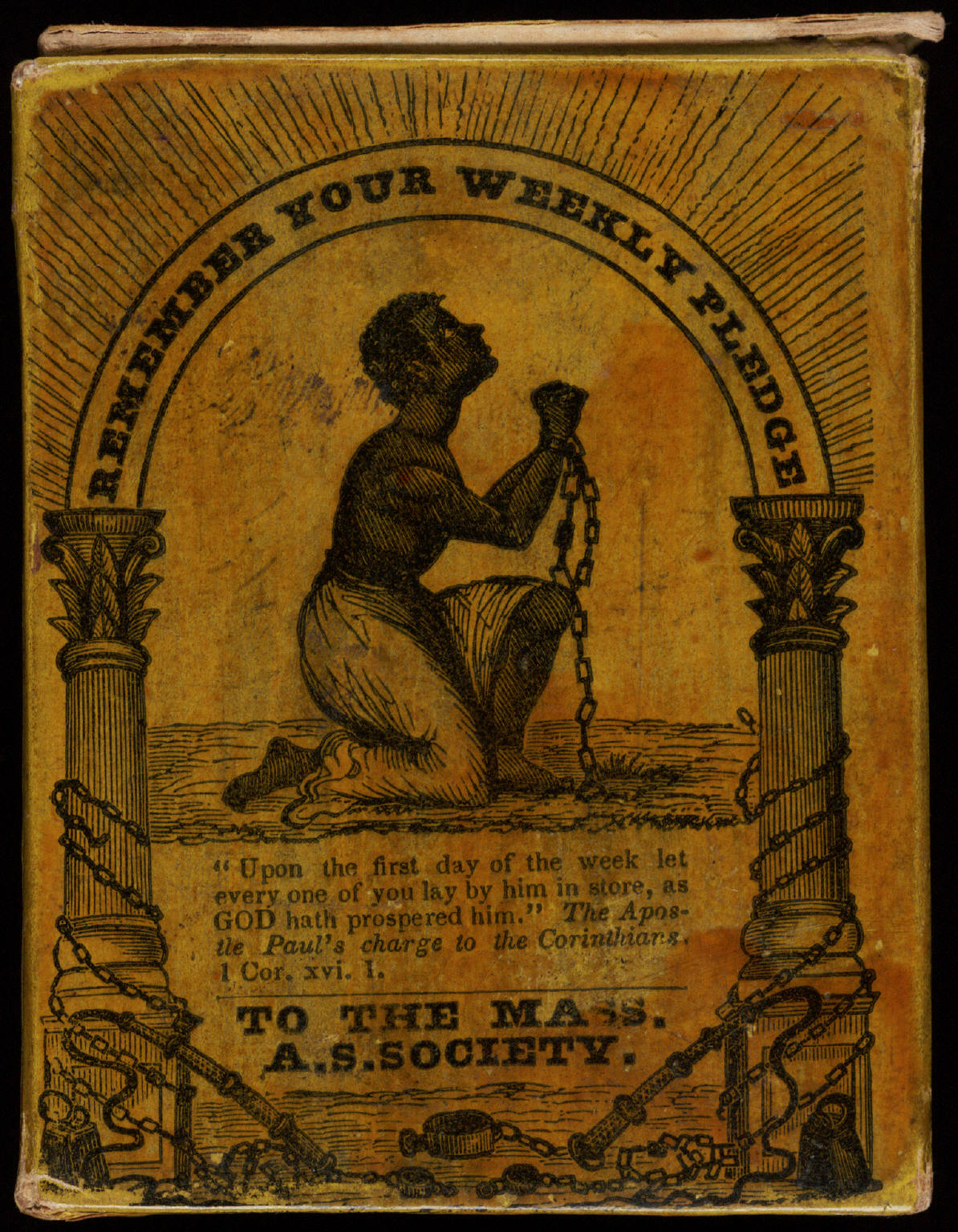
Collection box for the Massachusetts Anti-Slavery Society, circa 1850 (Wikicommons).


Throughout the world, kinship used to define the limits of morality. The less related you were to someone, the less moral you had to be with him or her. We see this in the Ten Commandments. The phrase "against thy neighbor" qualifies the commandment against bearing false witness and, implicitly, the preceding ones against killing, adultery, and stealing. For the modern reader, "thy neighbor" is helpfully explained as meaning "the children of thy people" (Leviticus 19:18).

In some cases, this kin-based morality gradually ceased to apply the farther away one went from home and from immediate kith and kin. Usually, however, the limits of one's moral community coincided with some kind of boundary: a geographic barrier, a political border, and/or an ethnic frontier. Beyond lay the world of "strangers."

Toward a universal morality

The first efforts to universalize morality—to create a single moral system that could apply to everyone—"arose simultaneously around 500 BCE in various parts of the world, from China in the Far East to Southern Italy in the West" (Assmann and Conrad, 2010, p. 121). These efforts were initially driven by the need to form alliances between different peoples:

Alliance - the formation of treaties - proved the most important instrument of internationalism. Forming an alliance required mutual recognition of the deities which served as patrons. The treaties which these empires formed with each other and with their vassals had to be sealed by solemn oaths invoking the gods of both parties. The list of these gods conventionally closes the treaty [...]. They had to be equal in their function and rank. Intercultural theology became a concern of international law. (Assmann and Conrad, 2010, p. 125) 

As ancient empires expanded and absorbed different peoples, this intercultural theology became useful for internal peace, notably with the Hellenistic empires that arose in the wake of Alexander the Great's conquests. By affirming that different religions are interchangeable, it became possible to create a common civic culture for diverse peoples:

Hellenization had two faces. On the one hand, it referred to the diffusion of Greek language, ideas and customs all over the Ancient World; on the other hand, it appeared to be more of a construction of a 'common culture', suggesting a similar change in Greece as in the other cultures. Flavius Josephus did not speak of 'Greek' but of 'common culture', ho koinos bios, as the goal of Jewish assimilation or reform in the Hellenistic age. (Assmann and Conrad, 2010, p.  127) 

One result would be the emergence of a universal religion. We like to associate this development with the teachings of Jesus, but a kind of proto-Christianity was already emerging near the end of the pre-Christian era.  At that time, many Jews were adapting their belief in one God to the universal worldview of Hellenistic culture:

Thus, while biblical universalism was founded on a notion of the mission of Israel to save all of humanity and bring them to the true worship of the only God, Hellenistic notions of universalism involved the assumption that all the gods were really different names for one God. (Boyarin, 1994, chap. 3). 

The two belief-systems merged among the increasingly Hellenized Jews of the eastern Mediterranean, thus setting the stage for Jesus and making it easier for his movement to succeed.


The Christian impulse

This new religion became a vehicle not only for moral universalism but also for belief in human equality. For if morality is universal, all humans must have the same capacity to follow its rules. In Christ, asserted Paul, there is neither Jew nor Greek, neither slave nor free, neither male nor female (Galatians 3:28).

While Christianity would steer people in the direction of universalism, there were limits to how far it could go. Theologians sometimes spoke of the need to set lower aims for average people and higher aims for saintly men and women. We see this realism in Augustine's position on prostitution: "If you do away with harlots, the world will be convulsed with lust" (De Ordine ii, 4). The same could be said for the Church's position on war, slavery, prejudice, and other manifestations of human inequality. These were the realities of an imperfect world. 

Such imperfections nonetheless became harder to accept over the following centuries. First, there was "mission creep." Once the Church had established certain ideals, there was continual pressure to bring human behavior into line with them. Second, the geocenter of the Church was shifting away from the eastern Mediterranean, where the absolute morality of Christianity had been constrained by the relative morality of kinship. Farther north and west, beyond the Hajnal Line, kinship ties were weaker and people more receptive to universal principles. There was thus a "fruitful encounter" between the Christian faith and these northwest Europeans who were more willing to internalize such principles and apply them more thoroughly (Frost, 2014a). 

Within this region, Catholicism would radicalize to the point of splitting away and becoming Protestantism. Here, too, Christian ideals would increasingly be taken to their logical conclusion.


The Abolitionist movement

Abolitionism began in the 17th century among English Quakers as a movement to abolish the slave trade. Over time, it grew more radical, seeking not only to free black slaves but also to extirpate racial and ethnic prejudice. Although "antiracism" did not yet exist as a word, its form and substance were already recognizable by the early 19th century. This was particularly so in the American northeast, where radical abolitionists denounced not only slavery but also fellow abolitionists who wanted to settle freed slaves in Africa. "In the 1830s, for the first time in American history an articulate and significant minority of Americans embraced racial equality as both a concept and a commitment" (Goodman, 1998, p. 1). This militant minority wanted more than simply an end to slavery: 

Believing that racial prejudice underpinned slavery, abolitionists committed themselves not just to emancipation [...] "Our prejudice against the blacks is founded in sheer pride; and it originates in the circumstance that people of their color, only, are universally allowed to be slaves," Child argued. "We made slavery, and slavery makes the prejudice." Color phobia, abolitionists contended, is irrational, wicked, preposterous, and unmanly. It is contrary to natural rights and Christian teaching, which recognizes no distinctions based on color. Race prejudice, Elizur Wright Jr. exploded, is "a narrow, bitter, selfish, swinish absurdity." (Goodman, 1998, p.58)


Decline ... and resurgence

That first wave of antiracism subsided in the late 19th century, partly because of the rise of Social Darwinism and partly because of disillusionment with the Civil War's aftermath. Radical abolitionists had long set their sights on ending slavery and crushing the American South, yet achievement of both goals failed to bring the final goal of human equality any closer. In the face of growing self-doubt, they lacked the ideological stamina to keep the faith and push forward, come what may. The movement thus fell into decline, remaining dominant only in the American northeast.

This first wave did not die, however. It was resuscitated in the early 1930s and would give rise to a much more dynamic second wave. The rise of Nazism convinced many Jewish intellectuals, notably the anthropologist Franz Boas, of the need to fight "racism" in all its forms, this word being initially a synonym for Nazism (Frost, 2014b). The war on racism would outlive the defeat of Nazi Germany, as a result of continuing fears of anti-Semitism in the postwar era. Moreover, it had now taken on a life of its own, much like its 19th-century predecessor. 

Today, some eighty years later, that war is still being fought. What began as a reaction to Nazism has become a permanent cultural revolution.


References 

Assmann, A., and S. Conrad. (2010). Memory in a Global Age. Discourses, Practices and Trajectories, Palgrave Macmillan Memory Studies, New York
http://archiv.ub.uni-heidelberg.de/propylaeumdok/1831/1/Assmann_Globalization_2010.pdf  

Boyarin, D. (1994). A Radical Jew. Paul and the Politics of Identity, Berkeley: University of California Press.
http://publishing.cdlib.org/ucpressebooks/view?docId=ft7w10086w;brand=ucpress  

Frost, P. (2014a). A fruitful encounter, Evo and Proud, September 26
http://evoandproud.blogspot.ca/2014/09/a-fruitful-encounter.html  

Frost, P. (2014b). From Nazi Germany to Middletown: ratcheting up the war on racism, Evo and Proud, July 19
http://evoandproud.blogspot.ca/2014/07/from-nazi-germany-to-middletown.html  

Goodman, P. (1998). Of One Blood. Abolitionism and the Origins of Racial Equality, Berkeley: University of California Press.
http://books.google.ca/books?hl=fr&lr=&id=Zy47hp0QjFQC&oi=fnd&pg=PR9&ots=f0ONCiUl-T&sig=TDfjRtlGuGRd-kxwZ8fXlL8OpCU#v=onepage&q&f=false

Friday, September 26, 2014

A fruitful encounter


Original Sin, by Michiel Coxie (1499-1592). Did the Christian doctrine of original sin create the guilt cultures of Northwest Europe? Or did the arrow of causality run the other way? (source: Wikicommons)


By definition, gene-culture co-evolution is reciprocal. Genes and culture are both in the driver's seat. This point is crucial because there is a tendency to overreact to cultural determinism and to forget that culture does matter, even to the point of influencing the makeup of our gene pool. Through culture, humans have directed their own evolution.

Take the ability to digest lactose, commonly called milk sugar. Among early humans, only babies could digest it because only they made the enzyme that breaks it down. This enzyme was lost as one grew up, with the result that milk consumption would cause indigestion, abdominal gas, and diarrhea. This is still the case in humans from much of Africa and Asia.

Then some cultures began to domesticate cattle, initially for meat. In times of famine, they turned to milk, and those who could better tolerate it had better chances of survival. So there was now natural selection for individuals who could produce the necessary enzyme not only in childhood but in adulthood as well.

The resulting evolutionary change was both genetic and cultural. With more and more adults being able to digest milk, it became possible to develop various dairy products, like cheese, and use milk as an ingredient in a wide range of foods. It also became possible to select for cattle that produce more and better milk (Beja-Pereira et al., 2003). A new way of life developed and thus brought about even more selection for this enzyme.

In sum, a genetic change can open up new paths for culture to follow and thereby create new paths for genes to follow. But that isn't all. The same situation can develop even when no genetic change has taken place, at least not initially. We see this, for instance, when a culture spreads out of one population and into another. The gene-culture interaction is new even though neither party to the interaction is new.
 

A fruitful encounter

One specific example is the encounter between Christianity and the guilt cultures of Northwest Europe, which differ from the shame cultures that prevail elsewhere. The difference is a major one. In a shame culture, your wrongdoings are punished only when witnessed by someone from your community. In a guilt culture, they are punished even when there is no witness, other than the one inside your head.

Guilt culture is commonly attributed to the Christian doctrine of original sin, and more specifically to the radicalization of this doctrine under Protestantism (see Note 1). Yet neither of these presumed causes really lines up with the presumed effect.

For one thing, it's doubtful whether this doctrine was even known to early Christians in the Middle East. True, Paul did write that humans had lost their immortality because of Adam's sin:

Therefore, just as through one man sin entered into the world, and death through sin, and so death spread to all men, because all sinned. Romans 5.12

This belief also appears in the Talmud, but it was never understood there as meaning that people are sinful because they inherit Adam's burden of sin. The Jewish view, like the later Muslim one, has been that people are sinful because they are imperfect beings. This was probably also the view of early Christians. Even today, Eastern Christians reject the doctrine of original sin, preferring the term "ancestral sin":

In the Orthodox Christian understanding, they explicitly deny that humanity inherited guilt from anyone. Rather, they maintain that we inherit our fallen nature. While humanity does bear the consequences of the original, or first, sin, humanity does not bear the personal guilt associated with this sin. (Original sin, 2014)

It was among Western Christians—Roman Catholics and, later, Protestants—that original sin developed into a doctrine. We see this in the writings of Irenaeus (2nd century) and Augustine (354-430), who identified the original sin as concupiscence, i.e., ardent, sensual longing. Protestantism is then said to have radicalized this doctrine, as seen in the Augsburg Confession of Lutheranism:

It is also taught among us that since the fall of Adam all men who are born according to the course of nature are conceived and born in sin. That is, all men are full of evil lust and inclinations from their mothers' wombs and are unable by nature to have true fear of God and true faith in God. Moreover, this inborn sickness and hereditary sin is truly sin and condemns to the eternal wrath of God all those who are not born again through Baptism and the Holy Spirit. 

But this radicalization was already under way before Protestantism. An English Catholic, Anselm of Canterbury (1033-1109), was the one who first separated original sin from concupiscence and defined it as "privation of the righteousness that every man ought to possess" (Original sin, 2014). Within Western Christendom, pre-Protestant England was likewise the epicenter of an intense penitential tradition that dated back at least to Anglo-Saxon times (Frantzen 1983). This tradition can be summed up as follows: "it is better to be shamed for one's sins before one man (the confessor) in this life than to be shamed before God and before all angels and before all men and before all devils at the Last Judgement" (Godden, 1973). The English abbot Aelfric of Eynsham (955-1010) described the need to do penance for all shameful acts, even those that are witnessed solely by spirits of the dead: 

He who cannot because of shame confess his faults to one man, then it must shame him before the heaven-dwellers and the earth-dwellers and the hell-dwellers, and the shame for him will be endless. (Bedingfield, 2002, p. 80)


Conclusion

As evidenced by the doctrine of original sin and the penitential tradition, Northwest European guilt culture was not a product of Christianity in general or of Protestantism in particular. It seems to have its origins in pre-existing tendencies that were absorbed into the new spiritual environment, much like the Christmas tree and other formerly pagan traditions. It thus grew steadily more important as the geocenter of Christianity moved steadily west and north.

This is not to belittle Christianity’s role. The new faith created ideological, social, and physical structures that were better at enforcing moral norms than anything beforehand. These norms may have had pagan antecedents, but they were now being enforced much more thoroughly.

We see this in the Medieval Synthesis that took hold from the 11th century onward, when Church and State joined forces to defend the Christian world: externally, through military campaigns against Muslims in the Iberian Peninsula, southern Italy, and the Middle East; and internally, through vigorous efforts to pacify social relations, either by increased use of capital punishment or by the Pax Dei—a Church-led movement to limit the scope of war in feudal society (Peace and Truce of God, 2014). Finally, guilt culture was strengthened through confession of one's sins, particularly after this practice became mandatory with the Fourth Lateran Council (1215). All wrongdoings had to be atoned at least once a year, however private or personal they might be (Sacrament of Penance, 2014).

Medieval Christian culture favored the survival and reproduction of people who previously would not have survived and reproduced. Conversely, by criminalizing personal violence, particularly in cases where the offender felt no guilt or remorse, this culture was now eliminating people for behavior that had once been admired.

It is often believed that Europe took off from the 15th century onward, when it expanded into Africa, the Americas, and Asia. Actually, the takeoff began earlier, particularly during this period when Church and State teamed up to lay a new basis for social relations. It was this new moral order that enabled Europe to get ahead (Frost, 2012). As Thomas Hobbes (1588-1679) wrote, no advanced society can develop where men have no "other security than what their own strength and their own invention shall furnish them withal." 

In such condition there is no place for industry, because the fruit thereof is uncertain: and consequently no culture of the earth; no navigation, nor use of the commodities that may be imported by sea; no commodious building; no instruments of moving and removing such things as require much force; no knowledge of the face of the earth; no account of time; no arts; no letters; no society; and which is worst of all, continual fear, and danger of violent death; and the life of man, solitary, poor, nasty, brutish, and short. [The Leviathan, 13]


Note

Missionaries, for example, point to the relationship between Christianity and guilt culture:

There is a lack of a sense of sin in African thinking for many reasons: (1) there is a belief that God and the ancestors are unconcerned about private and public morality. People believe more in this life than the next life; (2) there is more of a shame-culture than a guilt-culture. People are more afraid of public opinion than of God; and (3) there is a focus on communal living where people look at who caused a problem. (Tittley, 2001)


References

Bedingfield, M.D. (2002). The Dramatic Liturgy of Anglo-Saxon England, The Boydell Press. 

Beja-Pereira A., G. Luikart, P.R. England, et al. (2003). Gene-culture coevolution between cattle milk protein genes and human lactase genes, Nature Genetics, 35, 311-313.
http://www.bioquest.org/summer2007/sessionA/ng1263.pdf 

Carroll, J. (1981). The role of guilt in the formation of modern society: England 1350-1800, The British Journal of Sociology, 32, 459-503.
http://www.jstor.org/discover/10.2307/590129?uid=3739448&uid=2&uid=3737720&uid=4&sid=21104745207513 

Frost, P. (2012). On global inequality, Evo and Proud, August 25
http://evoandproud.blogspot.ca/2012/08/on-global-inequality.html

Frantzen, A.J. (1983). The literature of penance in Anglo-Saxon England, New Brunswick (N.J.): Rutgers University Press.

Godden, M.R. (1973). An Old English penitential motif, Anglo-Saxon England, 2, 221-239.

Hobbes, T. (2010). The Leviathan. Peterborough: Broadview Press. 

Lebra, T.S. (1971). The social mechanism of guilt and shame: the Japanese case, Anthropological Quarterly, 44, 241-255.
http://www.jstor.org/discover/10.2307/3316971?uid=3739448&uid=2&uid=3737720&uid=4&sid=21104745207513 

Original Sin. (2014). Wikipedia
http://en.wikipedia.org/wiki/Original_sin 

Peace and Truce of God. (2014). Wikipedia
http://en.wikipedia.org/wiki/Peace_and_Truce_of_God 

Sacrament of Penance. (2014). Wikipedia
http://en.wikipedia.org/wiki/Sacrament_of_Penance_(Catholic_Church)  

Tittley, M. (2001). Book summary of The Primal Vision: Christian Presence amid African Religion, by John V. Taylor, SCM Press, 1963.
http://www.ymresourcer.com/Summaries.php