Showing posts with label discrimination paradigm. Show all posts

Saturday, November 7, 2015

The missing hour of sleep


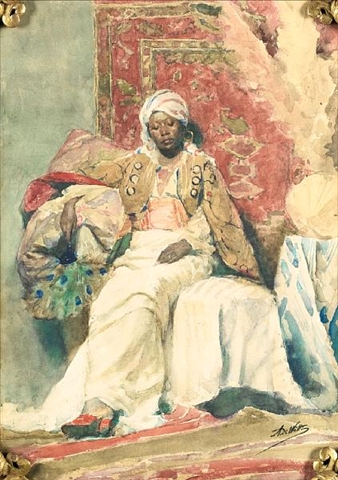
Rêverie, Adrien de Witte (1850-1935), Wikicommons


African Americans sleep on average almost an hour less than do Euro Americans. The two groups have mean sleep times of 6.05 hours and 6.85 hours. This finding has recently been discussed by Brian Resnick in National Journal and by our Steve Sailer.

Researchers reject a genetic explanation: "There is a consensus that innate biological differences between blacks and whites are not a factor" (Resnick, 2015). So what is the cause?

One study points the finger at racism:  "If you can take out that discrimination piece, the average African-American and the average Caucasian look at lot more similar. [...]  "It's not perfect, but in terms of sleep, a lot of the disparity goes away" (Resnick, 2015).

The study is by Tomfohr et al. (2012). It found that duration of deep sleep and duration of Stage 2 of light sleep correlated in African Americans with perceived discrimination, which is defined as "the extent to which an individual believes that members of his or her ethnic group have been discriminated against in society."

Nonetheless, as the authors note, sleep duration still differs significantly between African and Euro Americans even when the difference is adjusted for the effects of perceived discrimination. So we are left with a curious finding: two separate causes, one genetic and the other environmental, are producing the same pattern of effects. Both are reducing deep sleep and Stage 2 light sleep in African Americans while not affecting Stage 1 light sleep.

Whenever I see this kind of finding, I start looking for confounds. Is one cause a sock puppet for the other? It may be that perceived discrimination increases with African ancestry. Perhaps African Americans who feel conscious of discrimination also tend to be darker-skinned and more visibly African than those who don’t. This confound has actually been shown by several studies, such as the following:

This study tested the extent to which skin color is associated with differential exposure to discrimination for a sample of 300 Black adults. Results revealed that dark-skinned Blacks were 11 times more likely to experience frequent racial discrimination than their light-skinned counterparts; 67% of subjects reporting high discrimination were dark-skinned and only 8.5% were light-skinned. (Klonoff and Landrine, 2000; see also Keith and Herring, 1991)

Even if perceived discrimination could fully explain the race difference in sleep duration, we still couldn’t exclude a genetic explanation, since the degree of perceived discrimination is confounded with the degree of African ancestry.

In reality, perceived discrimination accounts for only part of the race difference, and since this difference remains significant even if we factor out that putative cause, the most parsimonious explanation is a genetic cause. Only that cause can fully account for shorter sleep duration in African Americans.

Studies in Africa

Another way to solve this puzzle is to look at Africans living in Africa. Do they show the same pattern we see in African Americans?

We know less about sleep patterns in Africa, but what we do know suggests that Africans, too, have shorter sleep duration. When Friborg et al. (2012) studied sleep in Ghanaians and Norwegians, they found that Ghanaians slept about an hour less than do Norwegians on weekends and between a quarter and half an hour less on weekdays. Oluwole (2010) studied sleep in Nigerian undergraduates and found they slept an average of 6.2 hours plus another 70 minutes in the afternoon. This pattern is actually typical in the tropical zone. People prefer to get some sleep when the temperature is at its peak and spend more time awake when it's more bearable.

But why would this pattern persist in African Americans? Perhaps it’s hardwired to some degree. When siestas become the cultural norm, there is selection for those individuals who enjoy being normal (and against those who don't).

Sleep patterns are heritable:

Assessed self-reported sleep data from 2,238 monozygotic (MZ) and 4,545 dizygotic (DZ) adult twin pairs born in Finland before 1958. Results indicate a significant hereditary effect on sleep length and on sleep quality. When the data were examined in subgroups defined by sex, age (18-24 yrs and 25+ yrs), and cohabitation status of the twin pair, the highest heritability estimates for sleep length were for Ss living together aged 25 yrs or older. For Ss living apart, the heritability estimates were statistically significant in all Ss aged 25 yrs or older. For sleep quality, significant heritability estimates were found for all groups except women living together. Results indicate that a significant proportion of the variance in sleep length and quality was due to factors that make MZ Ss more similar than DZ Ss. (Partinen et al., 1983)

A single genetic polymorphism seems to explain much of the variability between individuals in sleep patterns, particularly deep sleep and slow wave activity (SWA):

Here we show in humans that a genetic variant of adenosine deaminase, which is associated with the reduced metabolism of adenosine to inosine, specifically enhances deep sleep and SWA during sleep. In contrast, a distinct polymorphism of the adenosine A2A receptor gene, which was associated with interindividual differences in anxiety symptoms after caffeine intake in healthy volunteers, affects the electroencephalogram during sleep and wakefulness in a non-state-specific manner. Our findings indicate a direct role of adenosine in human sleep homeostasis. Moreover, our data suggest that genetic variability in the adenosinergic system contributes to the interindividual variability in brain electrical activity during sleep and wakefulness. (Retey et al., 2005)

Conclusion

So African Americans are getting enough sleep at night. It’s just that they're not getting enough afternoon naps. But aren't naps for kids? Or old fogeys? Actually, they’re quite normal for adults in much of the world. In the Nigerian study, 82% of the participants regularly took afternoon naps.

It’s ironic that the “r word” has been injected into this debate. If a behavior deviates from the white American norm, and if racism is held responsible either directly or indirectly, one is assuming that this deviation is pathological. It is “deviant.” It shouldn’t exist and something should be done about it. The white American norm thus becomes a norm for all humans, and all humans—if they want to be fully human—should strive toward it.

In reality, there is no single human nature. Genetic evolution didn’t slow down when humans began to split up and settle the different continents. It accelerated. And not just because our ancestors were adapting to different natural environments. Most of the acceleration took place long after the globe had been settled from the equator to the arctic. It happened when humans began to adapt to an increasingly diverse range of cultural environments. And those adaptations were mostly behavioral and psychological.

One of them is the way we sleep. The African sleep pattern is normal in its native environment. It is simply an adaptation to a particular set of circumstances, just as the northern European sleep pattern is an adaptation to another set of circumstances.

References

Friborg, O., B. Bjorvatn, B. Amponsah, and S. Pallesen. (2012), Associations between seasonal variations in day length (photoperiod), sleep timing, sleep quality and mood: a comparison between Ghana (5°) and Norway (69°). Journal of Sleep Research, 21: 176-184.

Keith, V. M., and Herring, C. (1991). Skin Tone and Stratification in the Black-Community. American Journal of Sociology, 97(3), 760-778.

Klonoff, E. A., and Landrine, H. (2000). Is skin color a marker for racial discrimination? Explaining the skin color-hypertension relationship. Journal of Behavioural Medicine, 23(4), 329-338.

Oluwole, O. S. A. (2010), Sleep habits in Nigerian undergraduates. Acta Neurologica Scandinavica, 121, 1-6.

Partinen, M., J. Kaprio, M. Koskenvuo, P. Putkonen, and H. Langinvainio (1983). Genetic and environmental determination of human sleep. Sleep: Journal of Sleep Research & Sleep Medicine, 6(3), 79-185.

Resnick, B. (2015). The Black-White sleep gap, National Journal, October 23

Retey, J.V., M. Adam, E. Honegger, R. Khatami, U.F.O. Luhmann, H.H. Jung, W. Berger, and H.P. Landolt. (2005). A functional genetic variation of adenosine deaminase affects the duration and intensity of deep sleep in humans, Proceedings of the National Academy of Sciences U.S.A., 102, 15676-15681

Sailer, S. (2015). Racism never sleeps: "The Black-White Sleep Gap: An Unexpected Challenge in the Quest for Racial Justice",  The Unz Review, October 29

Tomfohr, L., M.A. Pung, K.M. Edwards, and J.E. Dimsdale. (2012). Racial differences in sleep architecture: The role of ethnic discrimination, Biological Psychology, 89, 34-38.
https://www.researchgate.net/profile/Lianne_Tomfohr/publication/51649994_Racial_differences_in_sleep_architecture_The_role_of_ethnic_discrimination/links/00b495314ab6f01fae000000.pdf

Friday, March 25, 2011

Skin color and the discrimination paradigm

Lighter skin color correlates with higher earnings among new immigrants to the U.S. This correlation holds up even if one controls for English language proficiency, education, occupation before migrating to the United States, and family background. It even holds up among immigrants of the same ethnicity, race, and country of origin. For some social scientists, only one possible explanation remains: discrimination.

The modern American credo blames underachievement by minorities on the majority, specifically through discrimination. The causal relationship may be direct, i.e., some people are consciously assigned to lower-paying jobs simply because of their skin color. Or it may be indirect, as Gunnar Myrdal argued almost seventy years ago in An American Dilemma:

The mechanism that operates here is the “principle of cumulation,” also commonly called the “vicious circle.”

[…] White prejudice and discrimination keep the Negro low in standards of living, health, education, manners and morals. This, in its turn, gives support to white prejudice. White prejudice and Negro standards thus mutually “cause” each other.

[…] If, for example, we assume that for some reason white prejudice could be decreased and discrimination mitigated, this is likely to cause a rise in Negro standards, which may decrease white prejudice still a little more, which would again allow Negro standards to rise, and so on through mutual interaction. If, instead, discrimination should become intensified, we should see the vicious circle spiraling downward.
(Myrdal, 1962, pp. 75-76)

Originally, this ‘American dilemma’ was supposed to explain underachievement by African Americans. Today, it is increasingly extended to immigrants, even newly arrived ones. This is the premise of a recent study by Joni Hersch (2008):

[…] most new legal immigrants to the United States have darker skin color than white U.S. natives and are on average shorter. This article considers whether skin color and height affect economic outcomes among new legal immigrants to the United States. (Hersch, 2008, p. 346)

To this end, Hersch consulted the New Immigrant Survey 2003. The survey involved interviewing a nationally representative sample of immigrants as soon as possible after they got permanent resident status. Among other things, the immigrant’s skin color was measured with a color scale: a series of increasingly darker hands numbered from one to ten. Interviewers were given the following instructions:

As you know, human beings display a wide variety of physical attributes. One of these is skin color. Unfortunately discrimination on the basis of skin color continues to be a reality in American life. Substantial evidence suggests that lighter skinned people fare better in a variety of social and economic settings than those with darker skins. In order to detect such discrimination, it is important that the NIS include a measure of skin color. We therefore ask interviewers to use the Scale of Skin Color Darkness as a guide to rate the skin color of each respondent on a scale of 0 to 10, where 0 is the lightest possible skin color (such as that of an albino) and 10 is the darkest possible skin color” (Hersch, 2008, p. 361)

After analysing the data, Hersch found the following:

[…] I find strong evidence that darker skin color is associated with lower wages, taking into account a wide array of demographic and productivity-related characteristics such as English language proficiency, education, occupation before migrating to the United States, and family background, as well as ethnicity, race, and country of origin, which are themselves highly correlated with skin color. Immigrants with the lightest skin color earn on average 17% more than comparable immigrants with the darkest skin color. On average, moving from the 10th percentile to the 90th percentile of the distribution of skin color within ethnic or racial groups would reduce wages by about 7%-9%. These magnitudes are roughly similar to the black-white disparity and Hispanic-non-Hispanic disparity reported in Altonji and Blank. (Hersch, 2008, p. 346)

She concluded: “The results indicate that any such discrimination is not merely ethnic or racially based nor due to country of birth. […] Skin color is not merely capturing the effects of ethnicity, race, or country of birth but also has an independent effect on wages.”

Why does skin color have greater explanatory power than race, ethnicity, or country of origin? One reason is that these other variables are often problematic. ‘Blacks’ include anyone with some ancestry from sub-Saharan Africa. ‘Hispanics’ encompass a wide range of populations. At one end, there are Amerindian groups in Guatemala and southern Mexico who use Spanish as a second language. At the other, there are Italian, German, and Jewish communities in Argentina who still maintain strong links with Europe.

Similar objections could be raised for country of origin. Hersch’s data show that 18.2% of immigrants from the United Kingdom self-identify as ‘non-white’ (Hersch, 2008, p. 355). There are similarly large non-European communities in France, Belgium, the Netherlands, Norway, and Sweden. In an increasingly globalized world, what does it mean to be ‘French’, ‘Dutch’, or ‘Norwegian’?

Interestingly, 1.7% of ‘Polish’ immigrants in the U.S. are actually Hispanic (Hersch, 2008, p. 355). This should be no surprise. Eastern European universities, with their low tuition, attract large number of Third World students. Many remain after graduation before eventually moving on to a third country, like the United States.

So to explain economic success among new immigrants, we should look at their skin color rather than their ‘race,’ ‘ethnicity,’ or ‘country of origin’. Does it follow, then, that color prejudice is the ultimate cause? Or do some immigrants fare poorly because they are less able? Hersch (2008, p. 378) reports some evidence for the second explanation:

The possible connection between skin color and ability has been examined using the 1982 GSS, which includes a 10-item vocabulary test as well as a measure of skin color for a sample of about 500 African Americans. Using these data, Lynn (2002) reports a positive correlation between lighter skin color and higher test scores.

But this kind of explanation strikes her as being faulty:

However, using the same data, Hill (2002) demonstrates that controlling for education and family background eliminates the relation between skin color and test scores. […] Available evidence in the scientific literature does not support a link between skin color and intelligence. In addition, the correlation between skin color and ancestry varies considerably, with low correlations in many populations of mixed ancestry (Parra, Kittles, and Shriver 2004). In the absence of genetic evidence or a high correlation between skin color and ancestry, it seems unlikely that inclusion of test scores as a measure of ability would greatly alter the skin color effects found in this article.

This is more than a bit disingenuous. First, saying that some immigrants are less able than others doesn’t necessarily imply a genetic explanation, even if they share the same ethnic background and supposedly differ ‘only’ in skin color. A Mayan immigrant from Guatemala may be as Hispanic as a Jewish immigrant from Buenos Aires, but the two individuals bring very different attitudinal and behavioral tools for survival in a modern market economy.

Second, a genetic explanation doesn’t imply a direct causal link between skin color and intelligence. Skin color is just an indicator of one’s ancestral gene pool, which may statistically differ from other gene pools for any number of heritable traits, including those that influence intelligence. It’s also disingenuous to claim that skin color is weakly correlated with ancestry by referencing a study done on a population that has been intermixed over many generations. If a British immigrant has brown skin, the chances are very good that he or she is not of European origin.

Finally, it’s disingenuous to treat discrimination as a default explanation that should be accepted unless there is strong evidence to the contrary. This is in contrast to evidence for discrimination, which is usually inferred. For instance, Hersch (2008, p. 368) notes:

An analysis shows that those with darker skin color are less likely to be self-employed, controlling for the same predetermined characteristics used in the regression equations reported below. While it might be tempting to interpret this finding as suggestive that immigrants with darker skin color avoid self-employment out of concern about customer discrimination, there is no information in the data regarding customer contact, and there is limited empirical evidence of customer discrimination in the literature generally, so it seems wisest to avoid making this leap.

The above interpretation doesn’t strike me as “tempting.” Self-employment is typically a refuge for those who have been excluded from the job market. I remember many young people who turned to self-employment in the 1980s and early 1990s because they had no alternative. All of the stable jobs were reserved for older workers with seniority. But for Hersch, self-employment shows you’ve had more freedom to choose your livelihood.

Another point deserves mention here. When I think of self-employed immigrants, I readily think of Sikhs, Lebanese, Chinese, Armenians, and other ‘middleman’ minorities. Yes, they’re lighter-skinned than most immigrants. But do they choose self-employment over wage labor because they face little or no discrimination? That’s not my impression.

Conclusion

The discrimination paradigm was first applied to a minority that had suffered centuries of unequal, prejudicial treatment. Bit by bit, and somewhat unthinkingly, it has been extended to other groups: Amerindians and Mexican Americans and, now, newly arrived immigrants. Discrimination is no longer supposed to exercise its crippling effects through generations of enslavement and Jim Crow. After all, we see these effects in people who’ve just arrived.

Well, why not look just a bit further ‘upstream’? These different patterns of economic behavior also exist in the immigrants’ home countries. They exist worldwide. They have nothing to do with whatever prejudices White Americans might have.

But why do these patterns exist? Why should lighter skin improve one’s ability to perform in a modern market economy? Surely that proposition is just as absurd.

Actually, no. Please hear me out before you start shouting. Success in a modern market economy depends on the ability to plan ahead, and that ability has been favored outside the tropics—in areas where people tend to be lighter-skinned. The non-tropical zone has a yearly cycle that makes planning necessary. This cycle began to impact human survival as early hunter-gatherers spread into the temperate and arctic zones. It became even more important when their descendents took up agriculture. The fall harvest had to last until early summer; otherwise you and your family would starve (Frost, 2010; Frost, 2011).

The same yearly cycle also made men necessary for family survival, particularly in winter when hunting used to be the only other means of sustenance. This is in contrast to the tropics, where year-round agriculture enabled women to provide for themselves and their children with minimal male assistance. In such circumstances, men spent more time and energy seeking additional mates (Frost, 2008).

Are these patterns of behavior genetic? Or are they learned from one’s cultural environment? From the standpoint of natural selection, the question is unimportant. What works works, and what doesn’t doesn’t. But the question does matter to curious humans. To find the answer, the first step is to admit that the question is legitimate. Are we ready to take that step?

References

Frost, P. (2011). Religiosity and the origins of civilization, Evo and Proud, January 21
http://evoandproud.blogspot.com/2011/01/religiosity-and-origins-of-civilization.html

Frost, P. (2010). Out of North Eurasia, Evo and Proud, May 27
http://evoandproud.blogspot.com/2010/05/out-of-north-eurasia.html

Frost, P. (2008). Sexual selection and human geographic variation, Special Issue: Proceedings of the 2nd Annual Meeting of the NorthEastern Evolutionary Psychology Society. Journal of Social, Evolutionary, and Cultural Psychology, 2(4),169-191.
http://www.jsecjournal.com/articles/volume2/issue4/NEEPSfrost.pdf

Hersch, J. (2008). Profiling the new immigrant worker: the effects of skin color and height, Journal of Labor Economics, 26, 345-386.

Myrdal, G. (1962). An American Dilemma, New York: Harper & Row.