Showing posts with label MC1R. Show all posts

Monday, January 14, 2019

Unusually diverse


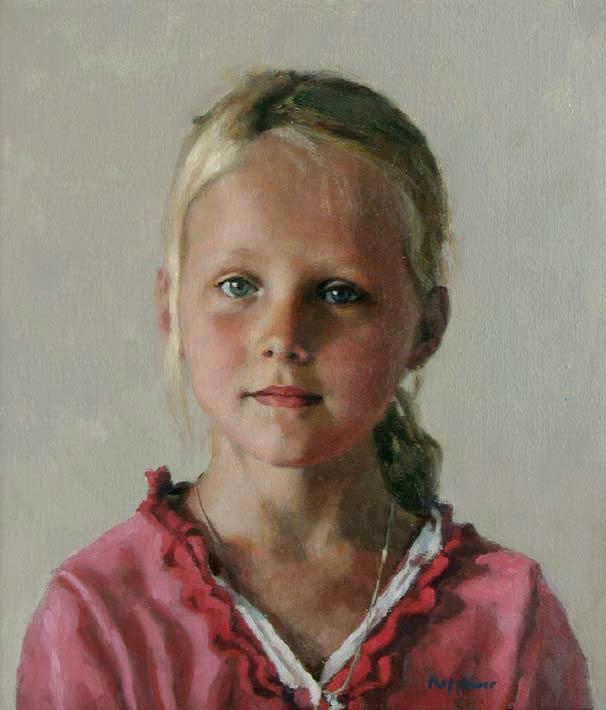
Portrait “Mijke” – Frans Koppelaar (1943 - ). Europeans are unusually diverse for hair color. Over 200 alleles have been identified in British subjects.


Europeans are unusually diverse for hair color. When this diversity was being studied two decades ago, 11 nonsynonymous alleles for hair color had been identified in Europeans, versus 5 in Asians and 1 in Africans (Harding et al. 2000; Rana et al. 1999). The disparity is even greater because the Asian alleles produce pretty much the same hair color.

European hair color is unusual in another way. “Nonsynonymous alleles” make a visible difference and are usually outnumbered by those that don’t. The reverse is true, however, at the main gene for hair color, MC1R, where nonsynonymous alleles outnumber synonymous alleles by a ratio of two to one. 

Rana et al. (1999) concluded that some kind of selection had caused hair color to diversify outside Africa. Harding et al. (2000) disagreed, attributing this diversification to relaxation of selection: as humans spread out of Africa, selection for black hair grew weaker and new hair colors gradually accumulated. Of course, this scenario would require a long span of time: close to a million years to produce the current variability of hair color, including approximately 80,000 years for today's prevalence of red hair alone (Harding et al. 2000; Templeton 2002). 

That is a long time. Given that modern humans left Africa some 60,000 years ago and arrived in Europe only 45,000 years ago, some academics began to argue that Europeans must have inherited their diverse hair colors from the Neanderthals. 

A Neanderthal origin is nonetheless problematic, if only because ancestral Neanderthals and Denisovans separated from ancestral modern humans an estimated three quarters of a million years ago (Rogers et al. 2017). Well, perhaps that's close enough to the above estimate of one million years ago. Another problem: when Ding et al. (2017) examined alleles for red hair, they identified only one as being of Neanderthal origin; the others apparently arose among modern humans. Finally, even if the different alleles for hair color had been introduced through Neanderthal admixture, some kind of selection would have still been needed to increase their frequency in the European gene pool, which is only 1 to 4% of Neanderthal origin.

With enough hand-waving, one can explain the many hair colors of Europeans in terms of relaxation of selection and Neanderthal admixture... as long as there are only a dozen alleles to explain away. A recent study, however, has found a lot more:

We report here the analysis of the majority of UK Biobank, a total of almost 350,000 subjects. By performing genome-wide analyses across hair colours, we have discovered novel variation in and around MC1R that contributes to red hair. [...] Furthermore, we identify more than 200 genetic variants independently associated with multiple hair colours on the spectrum of blond to black. (Morgan et al. 2018)

More than two hundred! If these alleles were due to relaxation of selection we would have to assume they had slowly accumulated over tens of millions of years—a time span longer than the existence of all hominids. Clearly, the facts call for another explanation: some kind of selection created these numerous hair colors, and very strong selection at that. 

This selection operated relatively fast and over a relatively small geographic area, while also causing eye color to diversify at the same time. Ancient DNA shows that most Europeans had only black hair and brown eyes until seven thousand years ago, and perhaps later still. Previously, the other hair and eye colors existed only in humans from Scandinavia, the East Baltic and, apparently, areas farther east (Günther et al. 2018; Mittnik et al. 2018). 

In fact, the oldest genetic evidence of blond hair, dated to 18,000 years ago, comes from the site of Afontova Gora in central Siberia (Mathieson et al. 2018, p. 52). At sites in south-central Siberia dating from the third millennium B.C. to the fourth century A.D. we find that most individuals had blue or green eyes and blond, red, or brown hair (Bouakaze et al. 2009). This finding is consistent with old Chinese records, which mention south Siberian peoples with "green eyes" and "red hair" (Keane 1886, p. 703).

The evidence thus suggests that the current European phenotype came into being during the last ice age 10,000 to 20,000 years ago on the plains stretching from the Baltic to central Siberia. But why would a cold, open environment select for a diverse palette of hair and eye colors? Apparently, this was not natural selection by the steppe-tundra environment; it was sexual selection by the accompanying social environment, specifically a mate market where too many women had to compete for too few men. Polygyny was not an option for most men. Almost all of the food was obtained through hunting of big game (reindeer, bison, etc.), and this high meat diet made it too costly for all but the ablest hunters to support a second wife and her offspring. High male mortality further reduced the number of men available for mating. Game animals had to be pursued over long distances and unstable terrain with no alternative food sources (Frost 2006; Frost 2014; Frost, Kleisner, and Flegr 2017).

This new phenotype eventually died out in its eastern range and became confined to the northeast of Europe. From there it spread to the rest of the continent on the eve of recorded history. Only then, not long before the beginnings of ancient Greece, did most Europeans come to look European ... as if they were a cast of actors who had been made up and rushed onto the stage just moments before curtain time.


References

Bouakaze, C., C. Keyser, E. Crubézy, and D. Montagnon, and B. Ludes. (2009). Pigment phenotype and biogeographical ancestry from ancient skeletal remains: inferences from multiplexed autosomal SNP analysis. International Journal of Legal Medicine 123(4): 315-325.

Ding, Q., Y. Hu, S. Xu, C.C. Wang, H. Li, R. Zhang, et al. (2014). Neanderthal origin of the haplotypes carrying the functional variant Val92Met in the MC1R in modern humans. Molecular Biology and Evolution 31(8): 1994-2003

Frost, P. (2006). European hair and eye color - A case of frequency-dependent sexual selection? Evolution and Human Behavior 27(2): 85-103.

Frost, P. (2014). The puzzle of European hair, eye, and skin color. Advances in Anthropology 4(2): 78-88. 

Frost, P., K. Kleisner, and J. Flegr. (2017). Health status by gender, hair color, and eye color: Red-haired women are the most divergent. PLoS One 12(12): e0190238. 

Günther, T., H. Malmström, E.M. Svensson, A. Omrak, F. Sánchez-Quinto, G.M. Kilinç, et al. (2018). Population genomics of Mesolithic Scandinavia: Investigating early postglacial migration routes and high-latitude adaptation. PLoS Biol 16(1): e2003703. https://doi.org/10.1371/journal.pbio.2003703 

Harding, R.M., E. Healy, A.J. Ray, N.S. Ellis, N. Flanagan, C. Todd, et al. (2000). Evidence for variable selective pressures at MC1R. American Journal of Human Genetics 66(4): 1351-1361.

Keane, A.H. (1886). Asia with Ethnological Appendix. London: Edward Stanford.

Mathieson, I., S.A. Roodenberg, C. Posth, A. Szécsényi-Nagy, N. Rohland, S. Mallick, et al. (2018). The Genomic History of Southeastern Europe, Supplementary Information, p. 52. Nature 555: 197-203

Mittnik, A., C-C. Wang, S. Pfrengle, M. Daubaras, G. Zarina, F. Hallgren, et al. (2018). The genetic prehistory of the Baltic Sea region. Nature Communications 9(442)

Morgan, M.D., E. Pairo-Castineira, K. Rawlik, O. Canela-Xandri, J. Rees, D. Sims, A. Tenesa, and I.J. Jackson. (2018). Genome-wide study of hair colour in UK Biobank explains most of the SNP heritability. Nature Communications 9: 5271

Rana, B.K., D. Hewett-Emmett, L. Jin, B.H.J. Chang, N. Sambuughin, M. Lin, et al. (1999). High polymorphism at the human melanocortin 1 receptor locus. Genetics 151(4): 1547-1557.

Rogers, A.R., R.J. Bohlender, C.D. Huff. (2017). Early history of Neanderthals and Denisovans. Proceedings of the National Academy of Sciences 114 (37): 9859-9863, 

Templeton, A.R. (2002). Out of Africa again and again. Nature 416(6876): 45-51.

Thursday, January 4, 2018

Red-haired women are special


The Damsel of the Sanct Grael – Dante Gabriel Rossetti (1828-1882)


It's known that red-haired women, but not red-haired men, are more sensitive to pain. Red hair is also associated with a higher risk of developing endometriosis, Parkinson's disease, and decreased platelet function.

A study in the latest issue of PLoS One has confirmed that red hair, especially in women, is linked to certain health issues. According to a survey of over seven thousand participants, red-haired women do worse than other women in ten health categories and better in only three, being especially prone to colorectal, cervical, uterine, and ovarian cancer. Red-haired men seem to be as healthy as other men, doing better in three categories and worse in three. Reproductive success, i.e., number of children, is the only category where redheads of both sexes do better than other participants.

This study has also confirmed that red hair is naturally more frequent in women than in men. To a lesser degree, the same is true for blond hair and green eyes. These bright colors seem to result from a selection pressure that mainly targeted women, i.e., sexual selection. In other words, among early Europeans there were too many women and not enough men; hence, competition between women for mates favored those who could better catch the attention of men, such as through a palette of bright hair and eye colors.

Because women are overrepresented among redheads, it may be that estrogen promotes synthesis of red pigments by hair follicles, particularly during fetal development. Thus, if a baby is born red-haired and female, estrogenization of its body tissues should be, on average, near the top end of the normal range. It will therefore be more at risk of developing certain health issues.

Another hypothesis can be put forward. If red hair was the last hair color to evolve, the underlying alleles may not have finished adapting to the rest of the genome, and vice versa. This reciprocal adaptation is all the more necessary because one of the five alleles for red hair seems to be of Neanderthal origin. The hypothesis of incomplete adaptation does not exclude the hypothesis of high estrogenization. In fact, there may be interaction between the two factors. Although it's likely that sexual selection did produce new hair and eye colors, we must still explain why, in this palette of colors, red hair seems to show the greatest difference between men and women both in population frequency and in associated health effects. 


Reference

Frost P, Kleisner K, Flegr J (2017) Health status by gender, hair color, and eye color: Red-haired women are the most divergent. PLoS ONE 12(12): e0190238. 


----------------------------------------------------------------------------------


La rousse est particulière


On sait que les rousses, mais pas les roux, sont plus sensibles que les autres à la douleur. La rousseur est également associée à un plus grand risque de développer l'endométriose, la maladie de Parkinson, ainsi que des troubles de l'agrégation plaquettaire.

Une étude publiée dans le dernier numéro de la revue PLoS ONE confirme que la rousseur, surtout chez la femme, est reliée à certains problèmes de santé. Selon une enquête menée auprès de plus de sept mille participants, les rousses se classent pire que les autres femmes dans dix catégories de santé et mieux dans seulement trois, étant surtout susceptibles de développer des cancers du gros intestin, du col utérin, de l'utérus ou des ovaires. Quant aux roux, leur état de santé ressemble à celui des autres hommes : mieux dans trois catégories et pire dans trois. Le succès reproducteur, soit le nombre d'enfants, est la seule catégorie où les têtes rouges des deux sexes font mieux que les autres participants.

Cette étude confirme également que la rousseur est naturellement plus fréquente chez la femme que chez l'homme. Dans une moindre mesure,  c'est le même constat avec la blondeur et les yeux verts. Ces couleurs vives semblent être le résultat d'une pression de sélection visant surtout la femme, soit la sélection sexuelle. Autrement dit, il y aurait eu trop de femmes et pas assez d'hommes chez les premiers Européens, avec pour résultat une concurrence entre les femmes favorisant celles qui attiraient mieux les regards des hommes, comme par exemple par une palette de couleurs vives décorant les cheveux et les yeux.

Les femmes étant surreprésentées parmi les têtes rouges, on peut émettre l'hypothèse que l'œstrogène favorise la synthèse de pigments rouges dans les follicules pileux, particulièrement au cours du développement fœtal. Alors, si un enfant nait à la fois roux et de sexe féminin, l'œstrogénisation de ses tissus organiques doit être, en moyenne, vers la limite supérieure de la normale. La rousse sera donc plus à risque de connaitre certains problèmes de santé.

Une autre hypothèse est possible. Si la rousseur a été la dernière couleur de cheveux à paraître, il se peut que les allèles sous-jacents n’aient pas encore fini de s'adapter au reste du génome et vice versa. Cette adaptation réciproque est d'autant plus nécessaire parce que l'un des cinq allèles pour la rousseur semble être d'origine néandertalienne. Notons que l'hypothèse d'adaptation incomplète n'exclut pas celle de forte œstrogénisation. En fait, il pourrait y avoir une interaction entre les deux facteurs. S'il est vraisemblable que la sélection sexuelle ait produit de nouvelles couleurs des cheveux et des yeux, il faudra toujours expliquer pourquoi, dans cette palette de couleurs, la rousseur semble montrer la plus grande différence entre les hommes et les femmes, autant en termes de fréquence dans la population que sur le plan de la santé. 

Saturday, June 14, 2014

A hair-color allele of Neanderthal origin?


Taiwanese aboriginal children, Bunun village (source: Jeremy Kemp). 60-70% of Taiwanese aborigines have a loss-of-function allele at the main hair color gene, MC1R, yet their hair is as black as humans with the original “African” allele. This seems to be a general pattern in Asians. They have fewer MC1R alleles than do Europeans, and the ones they have produce the same hair color.


When I first wrote about the puzzle of European hair and eye color, a common explanation was Neanderthal admixture. Modern humans intermixed with Neanderthals in Europe, and one legacy of this intermixture is the high prevalence of non-black hair and non-brown eyes we see in present-day Europeans.

I was skeptical. Scientists had already retrieved mtDNA from the remains of Neanderthals and early modern humans, and there was no discernible genetic continuity between the two. Neanderthal admixture seemed minor and could hardly account for the high proportion of Europeans who deviate from the species norm of black hair and brown eyes (Frost, 2006).

With the sequencing of the Neanderthal genome, it became apparent that some admixture had taken place, but only on the order of 1 to 4% in modern Eurasians. Neanderthals did resemble modern humans in having the same main gene for hair color, i.e., MC1R, but the Neanderthal allele at that gene was unlike any allele in modern humans (Lalueza-Fox et al., 2007). Moreover, there was no evidence of the polymorphism that exists for European hair color. The same allele was present in the two Neanderthal individuals that had been sampled.

That seemed to be the end of the story. A new twist, however, has been added by a recent paper. Ding et al. (2014) have found that one of the MC1R alleles in modern humans (Val92Met) appears to be of Neanderthal origin:

In this paper, we present evidences of Neanderthal introgression encompassing the MSH receptor gene MC1R. Furthermore, our evidences support that the derived allele at the functional variant Val92Met of MC1R (i.e., rs2228479*A) is likely of two origins: the vast majority of haplotypes carrying this allele in the human gene pool is resulted from Neanderthal introgression, while one haplotype (NA19084_a) carrying this allele may be from a recurrent mutation in the AMH linage, double recombination, or biased gene conversion.

This finding is consistent with the theory, first advanced by Gregory Cochran, that archaic admixture made it easier for modern humans to adapt to new environments. To be sure, Val92Met is only one of eleven derived MCIR alleles that exist in modern humans. But Ding et al. (2014) also believe that some of these other MC1R alleles are mosaics of Neanderthal and non-Neanderthal segments. So Neanderthal admixture may have helped European hair color to diversify by providing raw material for selection to act on.
 

A silent allele or a silenced allele?

By itself, Neanderthal admixture cannot explain the unusual diversity of hair color in present-day Europeans. It simply provided some of the raw material for this evolutionary development, and in most cases this raw material had to undergo further changes, through mutation and recombination, before it could become useful.

Indeed, despite being a loss-of-function allele, Val92Met seems to produce the same black hair as the original "African" allele. This may be seen in its geographic distribution: ~5% in Europeans, ~30% in continental East Asians, and 60-70% in Taiwanese aborigines (Ding et al., 2014). It has also been reported in South Asians, Papua-New Guineans, Japanese, and Inuit (Harding et al., 2000). Ding et al. (2014) state that this allele is associated with red hair, but the study they cite found only one individual with Val92Met among the 21 redheads examined (Valverde et al., 1995). This proportion is almost identical to the allele's incidence among Europeans in general. More likely than not, that single individual owed her red hair to an allele somewhere else on her genome.

Hair color is much less diverse in Asians, and this is reflected in lower MC1R diversity. Whereas Europeans have eleven MC1R alleles, Asians have only five, and all five produce the same black hair color (Harding et al., 2000). In short, Asians have fewer alleles and proportionately fewer of these differ phenotypically from the ancestral African allele. It looks as if something downstream prevents these alleles from affecting hair color.

As I've argued elsewhere, Europe's diverse palette of hair and eye colors is due to unusual evolutionary circumstances, i.e., intense sexual selection of women within an ecozone (continental steppe-tundra of the last ice age) where almost all food was obtained through long-distance hunting. The consequently higher death rate and lower polygyny rate among hunters dried up the pool of men available for mating and increased competition by women for mates. Women were more strongly selected for eye-catching traits, particularly bright or novel hues, thus creating an increasingly diverse palette of hair and eye colors (Frost, 2006; Frost, 2014).

This ecozone was more suitable for continuous human settlement in Europe than in northern Asia, where it was farther north and farther removed from the moderating influence of the Atlantic. A site in central Siberia from the last ice age has yielded human DNA that shows strong affinities with present-day Europeans and Amerindians, but much less affinity with present-day northern Asians, who seem to be largely the product of repeopling from the south near the end of the last ice age (Maanasa et al., 2014). Europeans have thus better preserved the legacy of this episode of intense sexual selection.

Perhaps the story ends there. Present-day Asians have preserved less of that MC1R diversity and what they have preserved has less functional significance. Or perhaps that diversity was initially functional and then gradually ceased to be functional … because of some other selection pressure? Perhaps, at the end of the last ice age, there was some non-black hair among northern Asians, though much less than among Europeans. Being less common and thus less normal, and no longer favored by intense sexual selection, there may have been stronger social selection to eliminate deviant hair colors.

A similar kind of social selection might explain why red hair is less common than blond hair among Europeans, i.e., stigmatization of redheads that was ultimately due to a mental association between red hair and menstrual blood (Frost, 2012).

There may be a story behind these "silent alleles." 
 

References 

Ding, Q., Y. Hu, S. Xu, C. Wang, H. Li, R. Zhang, S. Yan, J. Wang, and L. Jin (2014). Neanderthal origin of the haplotypes carrying the functional variant Val92Met in the MC1R in modern humans, Molecular Biology and Evolution, published online June 10, 2014
http://mbe.oxfordjournals.org/content/early/2014/06/02/molbev.msu180.abstract

Frost, P. (2006). European hair and eye color - A case of frequency-dependent sexual selection? Evolution and Human Behavior, 27, 85-103. 

Frost, P. (2012). Why are redheads less common than blondes? Evo and Proud, March 10
http://evoandproud.blogspot.ca/2012/03/why-are-redheads-less-common-than.html  

Frost, P. (2014). The puzzle of European hair, eye, and skin color, Advances in Anthropology, 4, 78-88.
http://www.scirp.org/journal/PaperInformation.aspx?PaperID=46104

Harding, R.M., Healy, E., Ray, A.J., Ellis, N.S., Flanagan, N., Todd, C., Dixon, C., Sajantila, A., Jackson, I.J., Birch-Machin, M.A., and Rees, J.L. (2000). Evidence for variable selective pressures at MC1R. American Journal of Human Genetics, 66, 1351-1361. 

Lalueza-Fox, C., H. Römpler, D. Caramelli, C. Stäubert, G. Catalano, D. Hughes, N. Rohland, E. Pilli, L. Longo, S. Condemi, M. de la Rasilla, J. Fortea, A. Rosas, M. Stoneking, T. Schöneberg, J. Bertranpetit,  and M. Hofreiter. (2007). A melanocortin 1 receptor allele suggests varying pigmentation among Neanderthals, Science, 318 (5855), 1453-1455.
http://www.bio.davidson.edu/courses/genomics/Exams/2009/Neaderthal_pigment.pdf  

Maanasa, R., Skoglund, P., Graf, K.E., Metspalu, M., Albrechtsen, A., Moltke, I., Rasmussen, S., Stafford Jr, T.W., Orlando, L., Metspalu, E., Karmin, M., Tambets, K., Roots, S., Mägi, R., Campos, P.F., Balanovska, E., Balanovsky, O., Khusnutdinova, E., Litvinov, S., Osipova, L.P., Fedorova, S.A., Voevoda, M.I., DeGiorgio, M., Sicheritz-Ponten, T., Brunak, S., Demeshchenko, S., Kivisild, T., Villems, R., Nielsen, R., Jakobsson, M., and Willerslev, E. (2014). Upper Palaeolithic Siberian genome reveals dual ancestry of Native Americans. Nature, 505, 87-91.
http://cteg.berkeley.edu/~nielsen/wordpress/wp-content/uploads/2013/12/Raghavan-M.-et-al.-2013..pdf  

Valverde, P., E. Healy, I. Jackson, J.L. Rees, and J. Thody. (2005). Variants of the melanocyte-stimulating hormone receptor gene are associated with red hair and fair skin in humans, Nature Genetics, 11, 328-330.
http://www.nature.com/ng/journal/v11/n3/abs/ng1195-328.html