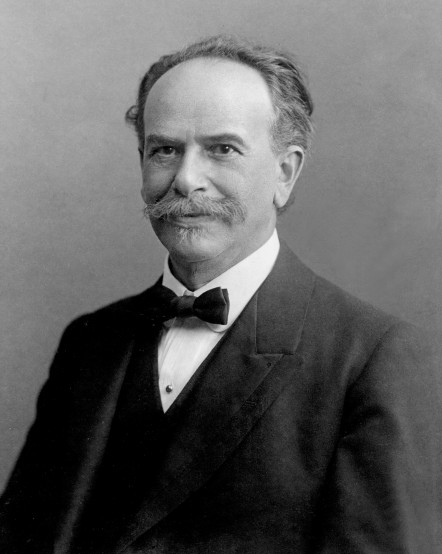
The anthropologist Franz Boas is remembered for moving
the social sciences away from genetic determinism and toward environmental
determinism. In reality, he felt that genes do contribute substantially to
mental and behavioral differences ... and not just between individuals.
Most of us identify with certain great teachers of the
past: Christ, Marx, Freud … Though long dead, they still influence us and we
like to think that their teachings have come down to us intact. We know what
they believed … or so we like to think. This raises a problem when we find
discrepancies. Jesus was so humble that he resented being called good, since
only God is truly good. But then ...
Often, however, the discrepancies remain unknown. They
develop too gradually for the average person to notice and are most obvious to
those who least want to point them out, i.e., the successors of the great
teacher. Of course, the great teacher is no longer around to set things
straight.
This has happened to many belief-systems. In my last post,
I discussed how the real Sigmund Freud differed significantly from the one we
know. The same is true for Franz Boas (1858-1942), whose school of anthropology
is as much a product of his immediate disciples—Margaret Mead and Ruth
Benedict—as of Boas himself.
Today, Boas is remembered as the man who moved the
social sciences away from genetic determinism and toward environmental
determinism. His Wikipedia entry states:
Boas was one of the most prominent opponents of the then popular ideologies of scientific racism, the idea that race is a biological concept and that human behavior is best understood through the typology of biological characteristics. [...] Boas also worked to demonstrate that differences in human behavior are not primarily determined by innate biological dispositions, but are largely the result of cultural differences acquired through social learning.
In reality, he felt that genes do contribute substantially to mental and behavioral differences ... and not just between individuals. This is apparent in a speech he gave in 1894 under the title "Human Faculty as Determined by Race."
It does not seem probable that the minds of races which show variations in their anatomical structure should act in exactly the same manner. Differences of structure must be accompanied by differences of function, physiological as well as psychological; and, as we found clear evidence of difference in structure between the races, so we must anticipate that differences in mental characteristics will be found. [...] As all structural differences are quantitative, we must expect to find mental differences to be of the same description, and as we found the variations in structure to overlap, so that many forms are common to individuals of all races, so we may expect that many individuals will not differ in regard to their faculty, while a statistical inquiry embracing the whole races would reveal certain differences. Furthermore, as certain anatomical traits are found to be hereditary in certain families and hence in tribes and perhaps even in peoples, in the same manner mental traits characterize certain families and may prevail among tribes. It seems, however, an impossible undertaking to separate in a satisfactory manner the social and the hereditary features. Galton's attempt to establish the laws of hereditary genius points out a way of treatment for these questions which will prove useful in so far as it opens a method of determining the influence of heredity upon mental qualities (Boas, 1974, p. 239)
We have shown that the anatomical evidence is such, that we may expect to find the races not equally gifted. While we have no right to consider one more ape-like than the other, the differences are such that some have probably greater mental vigor than others. The variations are, however, such that we may expect many individuals of all races to be equally gifted, while the number of men and women of higher ability will differ. (Boas, 1974, p. 242)
When discussing brain size, Boaz merely pointed to the overlap among racial groups:
We find that 50 per cent of all whites have a capacity of the skull greater than 1550 cc., while 27 per cent of the negroes and 32 per cent of the Melanesians have capacities above this value. We might, therefore, anticipate a lack of men of high genius, but should not anticipate any great lack of faculty among the great mass of negroes living among whites and enjoying the advantages of the leadership of the best men of that race. (Boas, 1974, pp. 233-234)
He did add that "mental ability certainly does not depend upon the size of the brain alone." He then argued, quoting an authority, that the encephalon and the cortex develop to a greater degree in whites, especially after puberty:
When we compare the capacity for education between the lower and higher races, we find that the great point of divergence is at adolescence and the inference is fairly good that we shall not find in the brains of the lower races the post-pubertal growth in the cortex to which I have just alluded. (Boas, 1974, p. 234)
Boas would return to this topic, such as in this 1908
speech on "Race Problems in America":
I do not believe that the negro is, in his physical and mental make-up, the same as the European. The anatomical differences are so great that corresponding mental differences are plausible. There may exist differences in character and in the direction of specific aptitudes. There is, however, no proof whatever that these differences signify any appreciable degree of inferiority of the negro, notwithstanding the slightly inferior size, and perhaps lesser complexity of structure, of his brain; for these racial differences are much less than the range of variation found in either race considered by itself. (Boas, 1974, pp. 328-329)
All of these remarks must be judged in context. Boaz was trying to stake out a reasonable middle ground in opposition to the view that human races differ not only in degree but also in kind. There is also little doubt about his opposition to racial discrimination, which he felt was holding back many capable African Americans.
But he did not feel that equality of opportunity would
lead to equality of results. This was the middle ground he defended, and it is
far removed from today's middle ground. The two don't even overlap. What happened
between then and now?
Something critical seems to have happened in the late
1930s. When Boas prepared the second edition of The Mind of Primitive Man (1938),
he removed his earlier racialist statements. The reason was likely
geopolitical. As a Jewish American seeing the rise of Nazi Germany, he may have
felt that the fight against anti-Semitism would require a united front against
all forms of “racism”—a word just starting to enter common use and initially a
synonym for Nazism.
Boas died in 1942 and the leadership of his school of
anthropology fell to Ruth Benedict and Margaret Mead. With the end of the war,
both of them wished to pursue and even escalate the fight against racism.
Escalation was favored by several aspects of the postwar era: lingering
fears of a revival of anti-Semitism, competition between the two power
blocs for the hearts and minds of the Third World, and an almost utopian
desire to rebuild society—be it through socialism, social democracy, or new
liberalism … In all this, we are no longer in the realm of science, let alone
anthropology.
Boas had sought to strike a new balance between nature
and nurture in the study of Man. The war intervened, however, and Boasian
anthropology was conscripted to fight not only the Axis but also racism in any
form. Today, three-quarters of a century later, we’re still fighting that war.
References
Boas, F. (1974). A Franz Boas Reader. The Shaping
of American Anthropology, 1883-1911, G.W. Stocking Jr. (ed.), Chicago: The
University of Chicago Press.
Wikipedia (2014). Franz Boas
http://en.wikipedia.org/wiki/Franz_Boas


