Showing posts with label Ruth Benedict. Show all posts

Saturday, July 19, 2014

From Nazi Germany to Middletown: ratcheting up the war on racism


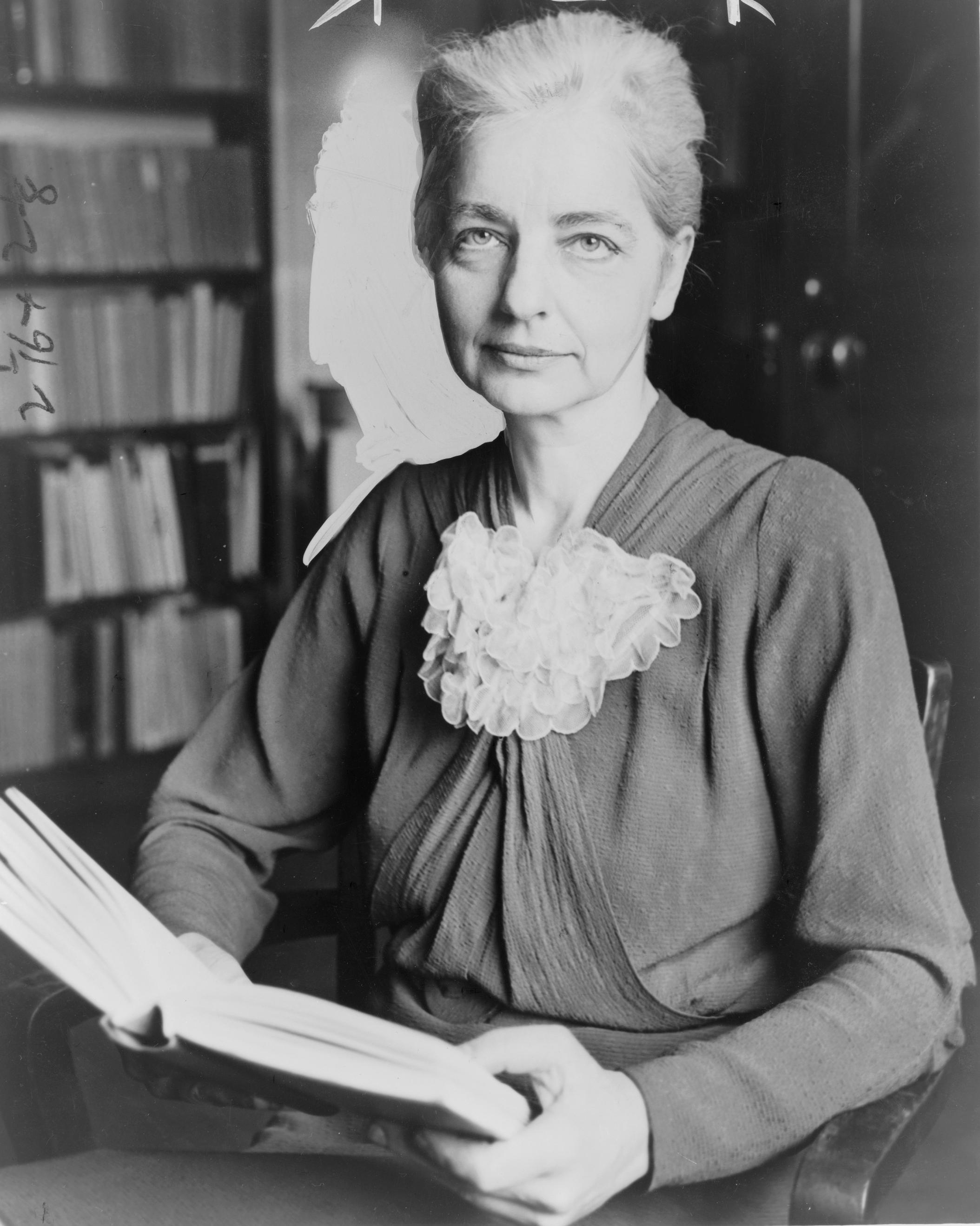
Licensed under public domain via Wikimedia Commons
 
Ruth Benedict (1887-1948), much more than Franz Boas, would define the aims of Boasian anthropology for postwar America.


When Franz Boas died in 1942, the leadership of his school of anthropology passed to Ruth Benedict and not to Margaret Mead. This was partly because Benedict was the older of the two and partly because her book Patterns of Culture (1934) had already assumed a key role in defining Boasian anthropology.

The word "define" may surprise some readers. Wasn't Boas a Boasian? Not really. For most of his life he believed that human populations differ innately in their mental makeup. He was a liberal on race issues only in the sense that he considered these differences to be statistical and, hence, no excuse for systematic discrimination. Every population has capable individuals who should be given a chance to rise to the limits of their potential.

He changed his mind very late in life when external events convinced him of the need to fight "racism," at that time a synonym for extreme nationalism in general and Nazism in particular. In 1938, he removed earlier racialist statements from his second edition of The Mind of Primitive Man, and the next year Ruth Benedict wrote Race: Science and Politics to show that racism was more than a Nazi aberration, being in fact an ingrained feature of American life. Both of them saw the coming European conflict as part of a larger war. 

This is one reason why the war on racism did not end in 1945. Other reasons included a fear that extreme nationalism would lead to a second Hitler and a Third World War. How and why was never clear, but the fear was real. The two power blocs were also competing for the hearts and minds of emerging nations in Asia and Africa, and in this competition the West felt handicapped. How could it win while defining itself as white and Christian? The West thus redefined itself in universal terms and became just as committed as the Eastern bloc to converting the world to its way of life. Finally, the rhetoric of postwar reconstruction reached into all areas of life, even in countries like the U.S. that had emerged unscathed from the conflict. This cultural reconstruction was a logical outcome of the Second World War, which had discredited not just Nazism but also nationalism in general, thereby leaving only right-wing globalism or left-wing globalism. Ironically, this cultural change was weaker in the communist world, where people would remain more conservative in their forms of sociality.

Ruth Benedict backed this change. She felt that America should stop favoring a specific cultural tradition and instead use its educational system to promote diversity. To bring this about, she had to reassure people that a journey through such uncharted waters would not founder on the shoals of unchanging human nature. This fear had been addressed in Patterns of Culture (1934). Inspired by Pavlov’s research on conditioned reflexes, she argued that people are conditioned by their culture to think, feel, and behave in a particular way. This pattern assumes over time such a rigid form that even a student of anthropology will assume it to be innate:
 
He does not reckon with the fact of other social arrangements where all the factors, it may be, are differently arranged. He does not reckon, that is, with cultural conditioning. He sees the trait he is studying as having known and inevitable manifestations, and he projects these as absolute because they are all the materials he has to think with. He identifies local attitudes of the 1930’s with Human Nature […] (Benedict, 1989, p. 9)

 
She argued that such behavioral traits cannot be innate, since they assume different patterns in different human populations and in different time periods of a single population. Our potential for social change is thus greater than what we imagine, being limited only by the range of behavior that exists across all societies. Because we underestimate this potential, we resist social change on the grounds that it would violate a nonexistent human nature:
 
The resistance is in large measure a result of our misunderstanding of cultural conventions, and especially an exaltation of those that happen to belong to our nation and decade. A very little acquaintance with other conventions, and a knowledge of how various these may be, would do much to promote a rational social order. (Benedict, 1989, p. 10)

 
In contradistinction to Boas, who believed that human populations differ innately in various mental and behavioral traits, she argued that cultural evolution had long ago replaced genetic evolution:
 
Man is not committed in detail by his biological constitution to any particular variety of behaviour. The great diversity of social solutions that man has worked out in different cultures in regard to mating, for example, or trade, are all equally possible on the basis of his original endowment. Culture is not a biologically transmitted complex. (Benedict, 1989, p. 14)

 
In short, humans have turned the tables on evolution. Instead of being changed by their environment via natural selection, they redesign it with the tools provided by their culture. To a large degree, humans create their own environment:
 
The human animal does not, like the bear, grow himself a polar coat in order to adapt himself, after many generations, to the Arctic. He learns to sew himself a coat and put up a snow house. From all we can learn of the history of intelligence in pre-human as well as human societies, this plasticity has been the soil in which human progress began and in which it has maintained itself. [...] The human cultural heritage, for better or for worse, is not biologically transmitted. (Benedict, 1989, p. 14)

 
Since human nature is everywhere the same, whatever works in any other culture ought to work in America’s, and this greater diversity should pose no serious problem. This argument would eventually be topped off by American can-doism: if other cultures can cope with some diversity, we can do even better!
 
Much more deviation is allowed to the individual in some cultures than in others, and those in which much is allowed cannot be shown to suffer from their peculiarity. It is probable that social orders of the future will carry this tolerance and encouragement of individual difference much further than any cultures of which we have experience. (Benedict, 1989, p. 273)

 
Such social change would be resisted by Middletown—originally a pseudonym for Muncie, Indiana in two sociological studies, and later a synonym for whitebread small-town America.
 
The American tendency at the present time leans so far to the opposite extreme that it is not easy for us to picture the changes that such an attitude would bring about. Middletown is a typical example of our usual urban fear of seeming in however slight an act different from our neighbours. Eccentricity is more feared than parasitism. Every sacrifice of time and tranquillity is made in order that no one in the family may have any taint of nonconformity attached to him. Children in school make their great tragedies out of not wearing a certain kind of stockings, not joining a certain dancing-class, not driving a certain car. The fear of being different is the dominating motivation recorded in Middletown. (Benedict, 1989, p. 273)


Conclusion 

Ruth Benedict wrote well, so well that any flaws are easily missed. Much of her reasoning revolved around the concept of cultural conditioning. Just as a dog will salivate on hearing the tinkling of a bell, if associated with food, so people will come to respond unthinkingly and in the same way to a situation that occurs over and over again. Such behavior may seem innate, yet it isn't. This part of her reasoning is true, but it is also true that natural selection tends to hardwire any recurring behavioral response. Mental plasticity has a downside, particularly the risks of responding incorrectly to a situation when one is still learning. It's better to get things right the first time. In sum, conditioned reflexes and innate reflexes both have their place, and one doesn't preclude the other ... for either dogs or humans.

Benedict seems on firmer ground in saying that humans are uniquely able to change the world around themselves. Instead of having to adapt biologically to our environment, we can invent ways to make it adapt to us. It's this manmade environment—our culture—that does the evolving, not our genes. This view used to be widely accepted in anthropology and has been proven false only recently. We now know that cultural evolution actually caused genetic evolution to accelerate. At least 7% of the human genome has changed over the last 40,000 years, and most of that change seems to be squeezed into the last 10,000, when the pace of genetic change was more than a hundred-fold higher (Hawks et al., 2007). By that time, humans were no longer adapting to new physical environments; they were adapting to new cultural environments. Far from slowing down genetic evolution, culture has speeded it up by greatly diversifying the range of circumstances we must adapt to.

Benedict was right in foreseeing a time when tolerance would become a virtue. Yet, strangely enough, Middletown America is no more tolerant today than it was in her time. Americans are simply obeying a new set of rules, whose first commandment is now "Thou shalt not be intolerant."  People are still fearful of being different from their neighbours. It's just that the fears have another basis. People are still insulted for being different. It's just that the insults have changed. "Filthy pervert" has given way to "Dirty homophobe." Mistrust of the stranger has been replaced by mistrust of those who are not inclusive. Pierre-AndrĂ© Taguieff has described this new conformity in France:
 
[...] over the last thirty years of the 20th century, the word "racism" became an insult in everyday language ("racist!" "dirty racist!"), an insult derived from the racist insult par excellence ("dirty nigger!", "dirty Jew!"), and given a symbolic illegitimating power as strong as the political insult "fascist!" or "dirty fascist!". To say an individual is "racist" is to stigmatize him, to assign him to a heinous category, and to abuse him verbally [...] The "racist" individual is thus expelled from the realm of common humanity and excluded from the circle of humans who are deemed respectable by virtue of their intrinsic worth. Through a symbolic act that antiracist sociologists denounce as a way of "racializing" the Other, the "racist" is in turn and in return categorized as an "unworthy" being, indeed as an "unworthy" being par excellence. For, as people say, what can be worse than racism? (Taguieff, 2013, p. 1528)

 
It's hard to believe that the sin of racism did not yet exist in Ruth Benedict's day. The word itself was just starting to enter common use. At most, there was a growing movement for people to be more tolerant, and even that movement was very limited in its aims. "Tolerance" had a much less radical meaning.

Interestingly, Benedict did touch on the reason for Middletown's intolerance. In her book, The Chrysanthemum and the Sword (1946), she explained that human cultures enforce social rules by means of shame or guilt. You feel ashamed if your wrongdoing is seen by another person. In contrast, you feel guilty even if nobody else has seen it, or even if you merely think about doing wrong. Although all humans have some capacity for both shame and guilt, the relative importance of one or the other varies considerably among individuals and among human populations. "Shame cultures" greatly outnumber "guilt cultures," which are essentially limited to societies of Northwest European origin, like Middletown.

But how does a guilt culture survive? If a few individuals feel no guilt as long as no one is looking, they will have an edge over those who do. Over time, they will proliferate at the expense of the guilt-prone, and the guilt culture will become a shame culture. It seems that this outcome does not happen because the guilt-prone are always looking for signs of deviancy in other individuals, however trifling it may seem. We have here the "broken windows" theory of law enforcement:  if a person tends to break any rule, however minor, he or she will likely break a major one, since the psychological barrier against wrongdoing is similar in both cases. The guilt-prone will judge such people to be morally worthless and will ultimately expel them from the community. Intolerance is the price we pay for the efficiency of a guilt culture.

Today, this mechanism has been turned upon itself. The new social rule—intolerance of intolerance—will, over the not so long term, dissolve the mental makeup that makes a guilt culture possible. Benedict did not foresee this outcome in her own time. Middletown was too set in its ways, too monolithic, too well entrenched. At most, one could hope for a little more leeway for the socially deviant. A few bohemians here, a few oddballs there ...  

Ruth Benedict saw Middletown as a difficult case, particularly its extreme guilt culture, and she drew on the language of education and psychotherapy to frame this difficulty in terms of long-term treatment:
 
 […] there can be no reasonable doubt that one of the most effective ways in which to deal with the staggering burden of psychopathic tragedies in America at the present time is by means of an educational program which fosters tolerance in society and a kind of self-respect and independence that is foreign to Middletown and our urban traditions. (Benedict, 1989, pp. 273-274)

They [the Puritans] were the voice of God. Yet to a modern observer it is they, not the confused and tormented women they put to death as witches, who were the psychoneurotics of Puritan New England. A sense of guilt as extreme as they portrayed and demanded both in their own conversion experiences and in those of their converts is found in a slightly saner civilization only in institutions for mental diseases. (Benedict, 1989, p. 276)
 
By the time of her death in 1948, Boasian anthropology had become fully mobilized for the war on racism. This mobilization had begun in response to the rise of Nazi Germany but was soon extended to a much larger enemy that included America itself, as seen in the increasingly radical meanings of “racism” and “tolerance.” Only a determined, long-term effort would bring this enemy to heel.
 

References


Benedict, R. (1989 [1934]). Patterns of Culture, Boston: Houghton Mifflin.

Benedict, R. (2005 [1946]). The Chrysanthemum and the Sword. Patterns of Japanese Culture, First Mariner Books.

Hawks, J., E.T. Wang, G.M. Cochran, H.C. Harpending, & R.K. Moyzis. (2007). Recent acceleration of human adaptive evolution. Proceedings of the National Academy of Sciences (USA), 104, 20753-20758.
http://www.ncbi.nlm.nih.gov/pmc/articles/PMC2410101/  

Taguieff, P-A. (2013). Dictionnaire historique et critique du racisme, Paris: PUF.
Sunday, July 13, 2014

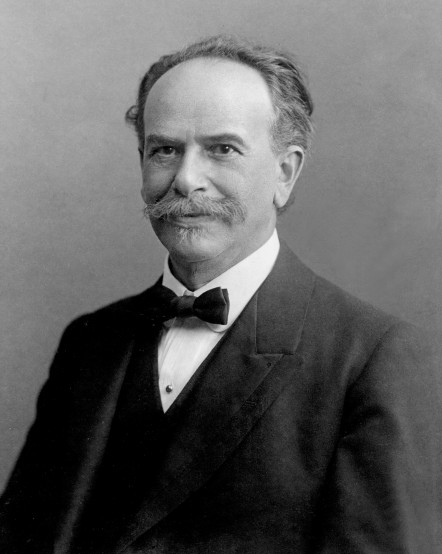
The Franz Boas you never knew


The anthropologist Franz Boas is remembered for moving the social sciences away from genetic determinism and toward environmental determinism. In reality, he felt that genes do contribute substantially to mental and behavioral differences ... and not just between individuals.


Most of us identify with certain great teachers of the past: Christ, Marx, Freud … Though long dead, they still influence us and we like to think that their teachings have come down to us intact. We know what they believed … or so we like to think. This raises a problem when we find discrepancies. Jesus was so humble that he resented being called good, since only God is truly good. But then ...

Often, however, the discrepancies remain unknown. They develop too gradually for the average person to notice and are most obvious to those who least want to point them out, i.e., the successors of the great teacher. Of course, the great teacher is no longer around to set things straight.

This has happened to many belief-systems. In my last post, I discussed how the real Sigmund Freud differed significantly from the one we know. The same is true for Franz Boas (1858-1942), whose school of anthropology is as much a product of his immediate disciples—Margaret Mead and Ruth Benedict—as of Boas himself.

Today, Boas is remembered as the man who moved the social sciences away from genetic determinism and toward environmental determinism. His Wikipedia entry states:

Boas was one of the most prominent opponents of the then popular ideologies of scientific racism, the idea that race is a biological concept and that human behavior is best understood through the typology of biological characteristics. [...] Boas also worked to demonstrate that differences in human behavior are not primarily determined by innate biological dispositions, but are largely the result of cultural differences acquired through social learning.

In reality, he felt that genes do contribute substantially to mental and behavioral differences ... and not just between individuals. This is apparent in a speech he gave in 1894 under the title "Human Faculty as Determined by Race."

It does not seem probable that the minds of races which show variations in their anatomical structure should act in exactly the same manner. Differences of structure must be accompanied by differences of function, physiological as well as psychological; and, as we found clear evidence of difference in structure between the races, so we must anticipate that differences in mental characteristics will be found.  [...] As all structural differences are quantitative, we must expect to find mental differences to be of the same description, and as we found the variations in structure to overlap, so that many forms are common to individuals of all races, so we may expect that many individuals will not differ in regard to their faculty, while a statistical inquiry embracing the whole races would reveal certain differences. Furthermore, as certain anatomical traits are found to be hereditary in certain families and hence in tribes and perhaps even in peoples, in the same manner mental traits characterize certain families and may prevail among tribes. It seems, however, an impossible undertaking to separate in a satisfactory manner the social and the hereditary features. Galton's attempt to establish the laws of hereditary genius points out a way of treatment for these questions which will prove useful in so far as it opens a method of determining the influence of heredity upon mental qualities (Boas, 1974, p. 239)

We have shown that the anatomical evidence is such, that we may expect to find the races not equally gifted. While we have no right to consider one more ape-like than the other, the differences are such that some have probably greater mental vigor than others. The variations are, however, such that we may expect many individuals of all races to be equally gifted, while the number of men and women of higher ability will differ. (Boas, 1974, p. 242) 

 When discussing brain size, Boaz merely pointed to the overlap among racial groups:

We find that 50 per cent of all whites have a capacity of the skull greater than 1550 cc., while 27 per cent of the negroes and 32 per cent of the Melanesians have capacities above this value. We might, therefore, anticipate a lack of men of high genius, but should not anticipate any great lack of faculty among the great mass of negroes living among whites and enjoying the advantages of the leadership of the best men of that race. (Boas, 1974, pp. 233-234)

He did add that "mental ability certainly does not depend upon the size of the brain alone." He then argued, quoting an authority, that the encephalon and the cortex develop to a greater degree in whites, especially after puberty:

When we compare the capacity for education between the lower and higher races, we find that the great point of divergence is at adolescence and the inference is fairly good that we shall not find in the brains of the lower races the post-pubertal growth in the cortex to which I have just alluded. (Boas, 1974, p. 234)

Boas would return to this topic, such as in this 1908 speech on "Race Problems in America":

I do not believe that the negro is, in his physical and mental make-up, the same as the European. The anatomical differences are so great that corresponding mental differences are plausible. There may exist differences in character and in the direction of specific aptitudes. There is, however, no proof whatever that these differences signify any appreciable degree of inferiority of the negro, notwithstanding the slightly inferior size, and perhaps lesser complexity of structure, of his brain; for these racial differences are much less than the range of variation found in either race considered by itself. (Boas, 1974, pp. 328-329)

All of these remarks must be judged in context. Boaz was trying to stake out a reasonable middle ground in opposition to the view that human races differ not only in degree but also in kind. There is also little doubt about his opposition to racial discrimination, which he felt was holding back many capable African Americans.

But he did not feel that equality of opportunity would lead to equality of results. This was the middle ground he defended, and it is far removed from today's middle ground. The two don't even overlap. What happened between then and now?

Something critical seems to have happened in the late 1930s. When Boas prepared the second edition of The Mind of Primitive Man (1938), he removed his earlier racialist statements. The reason was likely geopolitical. As a Jewish American seeing the rise of Nazi Germany, he may have felt that the fight against anti-Semitism would require a united front against all forms of “racism”—a word just starting to enter common use and initially a synonym for Nazism.

Boas died in 1942 and the leadership of his school of anthropology fell to Ruth Benedict and Margaret Mead. With the end of the war, both of them wished to pursue and even escalate the fight against racism. Escalation was favored by several aspects of the postwar era: lingering fears of a revival of anti-Semitism, competition between the two power blocs for the hearts and minds of the Third World, and an almost utopian desire to rebuild society—be it through socialism, social democracy, or new liberalism … In all this, we are no longer in the realm of science, let alone anthropology. 

Boas had sought to strike a new balance between nature and nurture in the study of Man. The war intervened, however, and Boasian anthropology was conscripted to fight not only the Axis but also racism in any form. Today, three-quarters of a century later, we’re still fighting that war.
 

References


Boas, F. (1974). A Franz Boas Reader. The Shaping of American Anthropology, 1883-1911, G.W. Stocking Jr. (ed.), Chicago: The University of Chicago Press. 

Wikipedia (2014). Franz Boas
http://en.wikipedia.org/wiki/Franz_Boas

Saturday, December 7, 2013

The origins of Northwest European guilt culture


Ruth Benedict first made the distinction between “shame cultures” and “guilt cultures” (source). Pervasive feelings of guilt are part of a behavioral package that enabled Northwest Europeans to adapt to complex social environments where kinship is less important and where rules of correct behavior must be obeyed with a minimum of surveillance. Is this pervasive guilt relatively recent, going back only half a millennium? Or is it much older?

 
As societies grew larger and more complex, it became necessary to interact with people who were less closely related. This new social environment was made to work by extending to non-kin the sort of conduct (trust, empathy, desire to cooperate, etc.) previously reserved for kin. To this end, language was manipulated: people would call each other “brother” and “sister” even when not from the same family. They also became more attuned to enforcement of correct behavior, either through external controls (shame) or through internal controls (guilt).

Shame is the primary means of behavioral control in most societies. If you are seen breaking a social rule, you will feel shame, and this feeling will be reinforced by what people say and do (gossiping, malicious looks, spitting, ostracism, etc.). Shame is much less effective if you break a rule without being seen or if you merely think about breaking a rule.

Guilt is more important in European societies, particularly those of Northwest European origin. It operates even when you act alone or merely think about breaking a rule. Behavior can thus be regulated in all possible situations with a minimum of surveillance.

The anthropologist Ruth Benedict describes how guilt differs from shame:

True shame cultures rely on external sanctions for good behavior, not, as true guilt cultures do, on an internalized conviction of sin. Shame is a reaction to other people’s criticism. A man is shamed either by being openly ridiculed and rejected or by fantasying to himself that he has been made ridiculous. In either case, it is a potent sanction. But it requires an audience or at least a man’s fantasy of an audience. Guilt does not. In a nation where honor means living up to one’s own picture of oneself, a man may suffer from guilt though no man knows of his misdeed and a man’s feeling of guilt may actually be relieved by confessing his sin. (Benedict, 1946, p. 223)

The high level of guilt in Western societies is often attributed to various traumatic events like the Holocaust, the assassination of JFK, the heritage of black slavery, the dispossession of the American Indian, and so on. Actually, a pervasive sense of guilt can be normal and even healthy. As Baumeister et al. (1994) explain:

Guilt serves various relationship-enhancing functions, including motivating people to treat partners well and avoid transgressions, minimizing inequities and enabling less powerful partners to get their way, and redistributing emotional distress.

Historically, guilt has proven to be a useful adaptation, being part of a larger behavioral package that has enabled Northwest Europeans to adapt to a social environment where kinship matters less and individualism matters more. This package is widely believed to have come together over the last thousand years, with increased reliance on guilt going back only half a millennium. The conventional view among historians may be summarized as follows:

11th century onward – Throughout Western Europe, states pacified social relations by imposing the death penalty for murder and other acts of personal violence. People no longer had to rely as much on kinsmen for protection of life and property (see previous post).

14th century – The Black Death created a widespread labor shortage that increased labor mobility and led to the dissolution of feudalism. The rural population was no longer bound to the land in static communities of closely related individuals.

16th century onward – Most of Northwest Europe converted to Protestantism, which emphasized the individual’s relationship with God. Faith became interiorized, and behavior became regulated more through the workings of private conscience and less through acts of public worship. Guilt also assumed more importance because it could no longer be routinely purged through confession (Carroll, 1981).

16th century onward – The market economy expanded beyond the marketplace at the expense of domestic modes of production. Instead of growing their own food, making their own clothes, and manufacturing their own wares, families increasingly sold what they made and bought what they needed. The family ceased to be the main organizing principle of economic and social relations (Seccombe, 1992).

This conventional view is not wholly false. From the 11th century to the 20th, the individual became more and more important in Northwest Europe while kinship became less and less so. Meanwhile, the same region broke away from Catholicism to create a more individualistic and guilt-based version of Christianity.

Of course, we are left with the question as to why these changes happened more readily there than elsewhere. Moreover, if we go back to the beginning of the past millennium, we still see a tendency towards greater individualism and looser kinship ties. The market economy was already replacing kinship as the main organizing principle of society:

Recent work on thirteenth century manorial documents has uncovered a very extensive land market from at least the middle of the thirteenth century. There is rapidly accumulating evidence of the buying and selling of pieces of land by non-kin; the idea that land passed down in the family is now increasingly regarded as a fiction. Whether in Suffolk, Huntingdonshire, the Eastern Midlands, Berkshire or elsewhere, the evidence suggests that the supposedly free and the unfree were buying and selling land.

[…] It appears probable that in many areas of England in the period before the Black Death up to half of the adult population were primarily hired laborers. It was not parents and children who formed the basic unit of production, but parents with or without hired labor. This was only made possible by the widespread use of money. The work of Kosminsky and Postan has shown that commutation of labor services for cash was widespread by the middle of the twelfth century. Cash penetrated almost every relationship; selling, mortgaging and lending are apparent in many of the documents. Most objects, from labor to rights in all kinds of property, were marketable and had a price. Production was often for exchange rather than for use. (Macfarlane, 1978a)

Individualism was strong even within the nuclear family:

Probably from Anglo-Saxon times – and certainly from the thirteenth century – children had no automatic rights in a parent’s property. A child could be disinherited; there is no ‘family property’, nemo est heres viventis (no one is the heir of a living person). Maitland documents this in detail, showing that from at least the thirteenth century parents could leave their property to whom they liked – and by gift, sale or will disinherit all their children if they so wished. (Macfarlane, 2012)

This was before the Black Death and thus barely fits into the conventional timeline of the origins of individualism. Does the picture change if we go further back in time?

Anglo-Saxon times and earlier

Family structures

Further back, before the last thousand years, the evidence becomes sparser. Nonetheless, we still see signs of weaker kinship ties and greater individualism in Northwest Europe:

Most family systems take as their basic premise that the group is more important than the individual. This is both caused by and reflected in their way of conceiving how people are related to each other, how kinship is passed on or what anthropologists call 'descent'. The majority of societies are what is known as 'unilineal', that is, they trace their ancestors or descendants through one gender alone, usually male, but sometimes female. This allows them to form into 'descent groups' of relatives. This is the case, for instance, in most of China, India and Africa and it was the breakdown of these larger 'corporate' groups that Weber thought marked out the West.

In contrast, if we inspect our own thoughts about the family, we will probably find that they show that, unusually, we operate in what is known as an 'ego-focused' cognatic system. This is a way of tracing relatives simultaneously through the male and female lines and of taking as the point of departure the individual who is tracing the relatives. This is part of a European-wide system (with a few variations). What is most striking, is that in England, as in much of Europe, this system of reckoning kin has remained practically unchanged since at least the seventh century. […]

Such a system already predisposes a society towards flexibility, networks and the concept of the individual as more important than the group. Indeed, there are no groups, just ego-centred networks of people. Each individual's kin (except brothers or sisters) is different. This is a central underpinning of an individualistic way of looking at the world. Already, by the Anglo-Saxon period, the movement away from strong family blocks, Weber's de-familization of society, had begun to occur. (Macfarlane, 1992, pp. 173-174; see also hbd* chick here and here)

The antiquity of these flexible family structures is supported by the antiquity of a related phenomenon: the Western European marriage pattern. West of a line running from Trieste to St. Petersburg, marriage has long had the following characteristics:

- relatively late marriage for men and women

- many people who never marry

- neolocality (children leave the family household to form new households)

- high circulation of non-kin among different households (typically young people sent out as servants) (Hajnal, 1965; ICA, 2013).

This pattern used to be attributed to the effects of the Black Death, but recent historical work has challenged this view, as in this study of marriage between 1252 and 1478 in an English community:

The average age at first marriage in the Lincolnshire Fenland before the Black Death would be 24 years for the woman and 32 years for the man. The wife would die one year before her husband and the marriage would last for about 13 years. The couple could have six children, if their fertility was higher than average, of whom, judging by pedigrees, perhaps three would survive to become adults. After the Black Death the mean age would be 27 for the woman and 32 for the man. The husband would die three years before his wife and the marriage would last about 12 years. Again the couple could have six children, of whom perhaps three would survive to become adult. (Hallam, 1985, p. 66)

Hallam (1985, p. 56) also points to evidence of late marriage in 9th-century France. On the estates of the Abbey of St Germain-des-PrĂ©s near Paris, about 16.3% of all adults were unmarried. In Villeneuve-Saint-Georges, the figure was 11.5%. Seccombe (1992, p. 94) cites a 9th-century survey of the Church of St Victor of Marseille, where both men and women appear to have married in their mid to late twenties. Going even farther back, Seccombe (1992, p. 94) cites the description by Tacitus (56-117) of Germanic women being “not hurried into marriage [and] as old and as full-grown as the men [who were] slow to mate.”

Guilt

In Anglo-Saxon England, guilt already existed as a major means of behavioral control. The English abbot Aelfric of Eynsham (955-1010) described it as a special kind of shame where the witnesses to the wrongful act are divine entities or spirits of the dead:

He who cannot because of shame confess his faults to one man, then it must shame him before the heaven-dwellers and the earth-dwellers and the hell-dwellers, and the shame for him will be endless. (Bedingfield, 2002, p. 80)

This argument comes up repeatedly in Anglo-Saxon literature, where it forms a ‘penitential motif’:

The motif runs: it is better to be shamed for one's sins before one man (the confessor) in this life than to be shamed before God and before all angels and before all men and before all devils at the Last Judgement. (Godden, 1973)

Guilt thus played a major role in English culture at least as far back as Anglo-Saxon times. Furthermore, it seems to have been indigenous:

One particularly interesting fact that emerges is the peculiarly Anglo-Saxon character of the motif. Not only did it circulate widely in Old English writings but the only two Latin works in which I have been able to find it were written by Anglo-Saxons — Alcuin and Boniface. Moreover an important element of the motif, the notion of three hosts present at the Last Judgement, is itself characteristic of Anglo-Saxon writers: the usual representation of the Last Judgement in continental works (as in Alcuin's letter) has the angels and all mankind present, and sometimes the devil as prosecutor, but not the whole host of devils, whereas the concept of the three hosts, as in Boniface's homily, is very common in Old English writings generally. (Godden, 1973)

Frantzen (1983) argues that the penitential tradition first developed in Anglo-Saxon England and then was exported to the continent in the 8th century. It is thus inaccurate to see this guilt culture as something that Christianity introduced into Northwest Europe. Instead, an indigenous guilt culture seems to have modified the historical development of Western Catholic Christianity, eventually giving rise to Protestantism.

A possibly earlier witness to Anglo-Saxon guilt is the epic poem The Song of Beowulf. The hero’s “dark thoughts” come from private fears of having broken some rule, as opposed to shame over a publicly known wrongdoing:

That was sorrow to the good man's soul, greatest of griefs to the heart. The wise man thought that, breaking established law, he had bitterly angered God, the Lord everlasting. His breast was troubled within by dark thoughts, as was not his wont. The Song of Beowulf, 90

With Beowulf, we are entering the transition between paganism and Christianity. Indeed, a pagan underlay is already visible in the above quote by Aelfric. Why should Christians worry about their wrongdoings being witnessed by “hell-dwellers”? The word ‘hell’ seems to be used in the old pagan sense (abode of the dead) rather than in the newer Christian sense (place of damnation). 

Conclusion

Clearly, the last thousand years have seen Northwest Europeans become increasingly individualistic and guilt-driven. Nonetheless, this behavioral trajectory began long before the timeline of the last millennium. In fact, it seems to have begun before the dawn of history.

It looks as though Northwest Europeans had already become pre-adapted to conditions that would arise much later. They would thus be better able to exploit the potential of later social environments, in particular the market economy. 

This raises questions of how and why. How did Northwest Europeans initially make the transition to more complex social relations? Why did they adopt a mode of socialization that was so different from that of other complex societies? And why the greater reliance on guilt as a means of regulating behavior?
 

To be cont’d


References

Anon. (1900). The Song of Beowulf, London: J.M. Dent & Sons.

Baumeister, R.F., A.M. Stillwell, and T.F. Heatherton. (1994). Guilt: An interpersonal approach, Psychological Bulletin, 115, 243-267.

Bedingfield, M.D. (2002). The Dramatic Liturgy of Anglo-Saxon England, The Boydell Press.

Benedict, R. (1946 [2005]). The Chrysanthemum and the Sword. Patterns of Japanese Culture, First Mariner Books.

Carroll, J. (1981). The role of guilt in the formation of modern society: England 1350-1800, The British Journal of Sociology, 32, 459-503.

Frantzen, A.J. (1983). The literature of penance in Anglo-Saxon England, New Brunswick (N.J.): Rutgers University Press.

Godden, M.R. (1973). An Old English penitential motif, Anglo-Saxon England, 2, 221-239.

Hajnal, John (1965). European marriage pattern in historical perspective. In D.V. Glass and D.E.C. Eversley. Population in History. Arnold, London.

Hallam, H.E. (1985). Age at first marriage and age at death in the Lincolnshire Fenland, 1252-1478, Population Studies, 39, 55-69. 

ICA (2013). Research Themes – Marriage Patterns, Institutions for Collective Action
http://www.collective-action.info/_THE_MarriagePatterns_EMP 

Macfarlane, A. (1978a). The origins of English individualism: Some surprises, Theory and society: renewal and critique in social theory, 6, 255-277.
http://www.alanmacfarlane.com/TEXTS/Origins_HI.pdf

Macfarlane, A. (1978b). The Origins of English Individualism: The Family, Property and Social Transition, Oxford: Blackwell. 

Macfarlane, A. (1992). On individualism, Proceedings of the British Academy, 82, 171-199.
http://www.alanmacfarlane.com/TEXTS/On_Individualism.pdf 

Macfarlane, A. (2012). The invention of the modern world. Chapter 8: Family, friendship and population, The Fortnightly Review, Spring-Summer serial
http://fortnightlyreview.co.uk/2012/07/invention-8/ 

Seccombe, W. (1992). A Millennium of Family Change. Feudalism to Capitalism in Northwestern Europe, London: Verso.