Showing posts with label Britain. Show all posts

Wednesday, September 14, 2022

The Great Decline


Mean polygenic score of Icelanders by year of birth (Kong et al. 2017, Fig. 2)


Three polygenic studies have shown that cognitive ability declined among European Americans, British people, and Icelanders during the 20th century. The decline briefly stopped during the postwar baby boom and again with the liberalization of abortion laws.


How can we measure the genetic component of cognitive ability? For a long time, the only way was to administer an IQ test, but the result would inevitably be influenced by the test-taker’s environment—not only culture and life history but also familiarity with taking tests and answering questions in rapid-fire succession. Yes, twin studies and adoption studies suggest that genetic factors largely explain variation in IQ between individuals. But the same is not necessarily true for variation in IQ between populations. That could be 100% environmental.


Recent years have seen the advent of a direct measure of innate cognitive ability: the educational attainment polygenic score. It’s a summation of the predicted effects of genetic variants that together explain 11-13% of the variance in educational attainment among individuals (Lee et al. 2018). It’s especially suited for predicting the mean IQ of a population—the correlation is 98% with the actual mean IQ (Piffer 2019).  Polygenic data predict a mean IQ of about 85 for sub-Saharan Africans, 100 for Europeans, and 105 for East Asians. There is also variation within each of those geographic groups. Among Europeans, predicted IQ varies from 97 for southern Europeans to 102 for Finns and 110 for Ashkenazi Jews. Among sub-Saharan Africans, it seems to be higher among groups who were more advanced during precolonial times, particularly those, like the Igbo, who lived along the Niger and took part in trade between the coast and the interior (Frost 2022).


The above predictions should be viewed with some caution. Because the genetic variants have been identified only in people of European descent, the polygenic score is less valid for non-Europeans, particularly those of sub-Saharan African descent. It thus predicts the IQ of African Americans with five times less accuracy than that of European Americans (Lasker et al. 2019).


Generational change


In addition to predicting differences in mean IQ across space, we can do the same across time. That begs the question: were past generations as intelligent as the latest one? We can answer that question by examining past generations who are still alive. That approach, however, raises the issue of survivorship bias: people who live to an old age are generally smarter than those who do not (Gottfredson and Deary 2004).


Beauchamp (2016) deals with this issue point by point when he discusses polygenic data from the Health and Retirement Study (HRS), a longitudinal study of 20,000 Americans shortly before and during retirement:


·         The HRS participants are people who have lived to the age of 50; however, about 10% of American women and 15% of American men born in 1940 were already dead by the age of 50.

·         Thus, in Beauchamp’s sample, 85% of the original participants were still alive in 2008, 69% were asked to be genotyped, and 59% consented to be genotyped.

·         Nonetheless, no important differences emerged when he compared the genotyped participants with the total sample. 


European Americans


Beauchamp found evidence that alleles associated with high educational attainment had declined in frequency among European Americans between the 1931 and 1953 birth cohorts. “[M]y results strongly suggest that genetic variants associated with EA have slowly been selected against among both female and male Americans of European ancestry born between 1931 and 1953.”


That decline is attributed to differences in fertility: “individuals with high EA typically have children at a more advanced age, which may further reduce their fitness.”


Icelanders


The above findings have been replicated by Kong et al. (2017) in their study of Icelanders born since 1910. Although survivorship bias is still a problem, it does not easily explain the decline in cognitive ability between the last two cohorts, i.e., Icelanders born in the 1970s and those born in the 1980s. In that decline, any survivorship bias would be due to deaths of people less than 44 years old, and in most cases less than 36 years old. “The samples studied here were collected between 1998 and 2014, with a majority (68%) ascertained before 2006” (Kong et al, 2017, p. E729).


Iceland’s cognitive decline had two “pauses”: one in the 1950s and another in the 1970s. The first pause coincides with the postwar economic boom and a corresponding improvement in the ability of middle class couples to start families early in life. The second pause may reflect the passage in 1975 of Iceland’s abortion law, which, while not allowing abortion on demand, did allow it for cases of rape, mental disability of the mother, and “difficult family situation” (Wikipedia 2022)


Kong et al. (2017) concluded that the cognitive decline was due only in part to more intelligent Icelanders staying in school longer and postponing reproduction. In fact, a high educational level, unlike a high polygenic score, was actually associated with somewhat higher fertility among males. A high polygenic score seems to reduce fertility independently of whether one pursues or does not pursue higher education, perhaps because higher intelligence goes hand in hand with greater ability to plan ahead and thus foresee, with trepidation, the costs of raising a family. 


British of European descent


In a study of British of European origin, using the UK Biobank, Hugh-Jones and Abdellaoui. (2022) found that mean cognitive ability had declined between two successive generations, particularly in lower-income groups. The median birth year was 1950 for the second generation and unknown for the first. The authors also looked at genetic variants that influence non-cognitive traits. In general, the bulk of the population seems to be getting dumber, fatter, and nuttier.


The authors nonetheless warn against excessive pessimism:


Many people would probably prefer to have high educational attainment, a low risk of ADHD and major depressive disorder, and a low risk of coronary artery disease, but natural selection is pushing against genes associated with these traits. Potentially, this could increase the health burden on modern populations, but that depends on effect sizes.


The authors go on to argue that the effect sizes are “small,” although one wonders: smaller than what? They then make the obvious point that generational change can accumulate from one generation to the next: “Although effects on our measured polygenic scores are small even after weighting, individually small disadvantages can cumulate to create larger effects” (Hugh-Jones and Abdellaoui 2022). Beauchamp (2016) makes a similar comment that seems reassuring on first thought, and then not so reassuring on second thought: “natural selection has thus been occurring in that population—albeit at a rate that pales in comparison with the rapid changes that have occurred in recent generations.”


Finally, Hugh-Jones and Abdellaoui (2022) point out that their data may suffer from ascertainment bias. For instance, the first generation of their dataset is composed of the parents of the second generation. The dataset thus excludes the childless individuals of the first generation. Were they more intelligent or less intelligent on average than the succeeding generation? Furthermore, participation in the UK Biobank is voluntary. Could that factor also be a source of bias? If so, in what direction?


Conclusion


As time goes by, intergenerational genetic datasets will become more complete, and the problem of survivorship bias will diminish. Ideally, we should conduct a “genetic census” of each generation, perhaps by collecting a DNA sample from everyone at the time of death. We will thus be able to see how we are evolving.


We now have intergenerational polygenic studies from three different Western countries: the U.S., the U.K., and Iceland. In all three cases, the genetic component of cognitive ability declined during the 20th century, with the exception of two pauses: one during the postwar baby boom and the other with the liberalization of access to abortion.


If we wish to halt the cognitive decline, we should push for the following measures:


·         A return to the protected high-wage economy that prevailed during the postwar era;

·         Free access to abortion, at least for cases of rape, mental disability of either parent, and difficult economic circumstances;

·         Pro-natalist measures to counteract the fear of not having the means to support a family. This fear is particularly strong among people who like to plan and are oriented toward the future.


References


Beauchamp, J.P. (2016). Genetic evidence for natural selection in humans in the contemporary United States. Proceedings of the National Academy of Sciences 113(28): 7774-7779. https://doi.org/10.1073/pnas.1600398113    


Frost, P. (2022). Recent cognitive evolution in West Africa: the Niger’s role. Evo and Proud, April 30. https://evoandproud.blogspot.com/2022/04/recent-cognitive-evolution-in-west.html  


Gottfredson, L. S., and I.J. Deary. (2004). Intelligence Predicts Health and Longevity, but Why? Current Directions in Psychological Science 13(1): 1–4. https://doi.org/10.1111/j.0963-7214.2004.01301001.x


Hugh-Jones, D., and A. Abdellaoui. (2022). Human Capital Mediates Natural Selection in Contemporary Humans. Behavior Genetics. https://doi.org/10.1007/s10519-022-10107-w  


Kong, A., M.L. Frigge, G. Thorleifsson, H. Stefansson, A.I. Young, F. Zink, G.A. Jonsdottir, A. Okbay, P. Sulem, G. Masson, D.F. Gudbjartsson, A. Helgason, G. Bjornsdottir, U. Thorsteinsdottir, and K. Stefansson. (2017). Selection against variants in the genome associated with educational attainment. Proceedings of the National Academy of Sciences 114(5): E727-E732. https://doi.org/10.1073/pnas.1612113114   


Lasker, J., B.J. Pesta, J.G.R. Fuerst, and E.O.W. Kirkegaard. (2019). Global ancestry and cognitive ability. Psych 1(1). https://doi.org/10.3390/psych1010034    


Lee, J. J., Wedow, R., Okbay, A., Kong, E., Maghzian, O., Zacher, et al. (2018). Gene discovery and polygenic prediction from a genome-wide association study of educational attainment in 1.1 million individuals. Nature Genetics 50(8): 1112-1121. https://doi.org/10.1038/s41588-018-0147-3  


Piffer, D. (2019). Evidence for Recent Polygenic Selection on Educational Attainment and Intelligence Inferred from Gwas Hits: A Replication of Previous Findings Using Recent Data. Psych 1(1): 55-75. https://www.mdpi.com/2624-8611/1/1/5   


Wikipedia (2022). Abortion in Iceland. https://en.wikipedia.org/wiki/Abortion_in_Iceland    
 

Saturday, July 4, 2020

Recent evolution of the British population


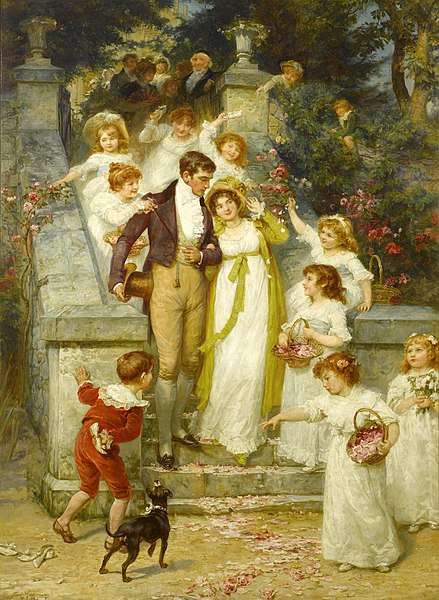
Frederick Morgan – Off for the Honeymoon (Wikicommons) Over the past 2,000 years, the British gene pool has shifted toward alleles that favor lighter hair, sunburn, and educational attainment. Was this because high-status men tended to mate with blonder, fairer women?


Have we evolved over the past two thousand years? Until recently, the answer was thought to be 'no.' Cultural evolution took over from genetic evolution around the time farming took over from hunting and gathering, some ten thousand years ago, thus putting our ancestors on a path to increasing social complexity: sedentary living, growth of towns and villages, formation of states, trade and specialization of labor, and so on. It was culture that changed during recorded history, not genes.

Well, things are not that simple. Genes and culture have coevolved with each other. Yes, culture has been changing rapidly over the past ten thousand years. But so have genes. During that time, our genetic evolution has been driven by adaptation not only to natural environments but also to cultural environments. Increasingly so. We live more and more in cultural environments of our making (Chen et al., 2016; Cochran and Harpending 2009; Hawks et al. 2007).

In what ways have we changed genetically during the past ten thousand years? In the ways we digest food. With the shift to dairy farming, and the resulting increase in milk consumption by adults, natural selection favored those who could digest milk sugar, an ability previously confined to infants.

We have also changed in the ways we think and behave. That kind of evolution is not difficult. A few point mutations may alter a behavior by changing its timing, its intensity, or its threshold of stimulation. Other alterations have been much more polygenic. Cognitive ability, for instance, seems to have increased through mutations at many genes, with each mutation causing only a tiny fraction of the increase.

Because recent evolutionary change has so often been polygenic, we need to examine it in relation to many genetic variants spread over the entire genome, i.e., by means of genome-wide association studies. Such studies can take many forms. A recent one, proposed by Stern et al. (2020), may be better than earlier versions, particularly in avoiding biases due to population structure and population stratification.

I nonetheless have a few reservation about this proposed method:

1. Population stratification can be a factor in evolutionary change. Let's take the work of Gregory Clark on the growth of the English middle class. He found it grew steadily from the twelfth century onward, its descendants not only growing in number but also replacing the lower classes through downward mobility. By the 1800s its lineages accounted for most of the English population. Parallel to that demographic growth, English society became more and more middle class in its values. "Thrift, prudence, negotiation, and hard work were becoming values for communities that previously had been spendthrift, impulsive, violent, and leisure loving" (Clark 2007, p. 166). Isn't that evolutionary change through population stratification? Or am I missing something?

2. The new method can reveal only evidence of directional selection. It thus fails to capture other interesting forms of selection, like diversifying selection.


How the British have evolved over the past 2,000 years

Stern et al. (2020) used their method to study how the British population has evolved over the past two thousand years. They found increases in the prevalence of lighter hair, in tanning and sunburn, in age at first birth, in bone mineral density, and in the risk of type 2 diabetes. They also found decreases in the risk of neuroticism and in the risk of high glycated hemoglobin levels.

Some of these changes correlate with each other. In such cases, we should step back and try to identify the common cause.

Lighter hair, more sunburn ... and higher educational attainment

Over the past 2,000 years, the British gene pool has shifted toward alleles that favor lighter hair, sunburn, and educational attainment. These changes in allele frequency correlate with each other, so what, exactly, was driving the overall change?

There is genetic linkage between light hair and pale skin, but it's weak. In fact, pale skin often coexists with dark hair. Moreover, we still have to explain the link to educational attainment. The common cause for all three changes may have been sexual selection mediated by social class. In other words, high-status men tended to mate with blonder, fairer women.

This form of sexual selection was observed in a Japanese study on social class and skin color. Upper-class men were shown to be fairer-skinned than lower-class men, even when the latter were factory workers and not farmers and even though the measurements were taken on unexposed skin. Wealthier men have a wider range of prospective brides and can thus choose the fairest women, for "skin color has long been regarded, by the Japanese, as one of the criteria for evaluating physical attractiveness, especially in young females" (Hulse 1967). Similarly, in India "[w]ealthy landowning families often have a tradition of seeking light-skinned brides among poorer members of their subcaste. It is very common to find a high concentration of lighter-skinned people among established land-owning families" (Béteille 1967).

Darwin discussed this sexual selection with reference to English social classes:

Many persons are convinced, as it appears to me with justice, that our aristocracy, including under this term all wealthy families in which primogeniture has long prevailed, from having chosen during many generations from all classes the more beautiful women as their wives, have become handsomer, according to the European standard, than the middle classes; yet the middle classes are placed under equally favorable conditions of life for the perfect development of the body. (Darwin 1936[1888], p. 892)

Until the 20th century, higher social status meant higher fertility (Clark 2007). Thus, the physical and mental characteristics of the upper and middle classes tended to displace those of the lower class.

Higher risk of Type 2 diabetes and glycated hemoglobin

Why would natural selection favor type 2 diabetes? Isn't diabetes harmful? It is, in a modern environment that lets you ingest calories almost without limit. That wasn't the case in Britain for most of the past two thousand years. During that time, food was scarce for most people, and natural selection favored the ability to get as many calories as possible out of our food.

Less neuroticism

This evolutionary change may be related to the demographic success of the middle class and associated mental and behavioral traits, particularly lower time preference and higher future orientation. The nascent English middle class valued being “calm, cool, and collected,” as opposed to reacting emotionally to negative outcomes.


References

Béteille, A. (1967). Race and descent as social categories in India. Daedalus 96(2): 444-463.

Chen, C., R.K. Moyzis, X. Lei, C. Chen, and Q. Dong. (2016). The encultured genome: Molecular evidence for recent divergent evolution in human neurotransmitter genes. In: J.Y. Chiao, S.-C. Li, R. Seligman, and R. Turner, Eds, The Oxford handbook of cultural neuroscience. New York, NY: Oxford University Press, 315-336.

Clark, G. (2007). A Farewell to Alms. A Brief Economic History of the World, 1st ed.; Princeton University Press: Princeton.

Cochran, G., and H. Harpending. (2009). The 10,000 Year Explosion: How Civilization Accelerated Human Evolution. Basic Books.

Darwin, C. (1936 [1888]). The Descent of Man and Selection in relation to Sex. reprint of 2nd edition, The Modern Library, New York: Random House.

Hawks, J., E.T. Wang, G.M. Cochran, H.C. Harpending, and R.K. Moyzis. (2007). Recent acceleration of human adaptive evolution. Proceedings of the National Academy of Sciences, 104(52), 20753-20758.

Hulse, F.S. (1967). Selection for skin color among the Japanese. American Journal of Physical Anthropology 27(2): 143-156.

Hysi, P.G., A.M. Valdes, F. Liu, N.A. Furlotte, D.M. Evans, V. Bataille, et al. (2018). Genome-wide association meta-analysis of individuals of European ancestry identifies new loci explaining a substantial fraction of hair color variation and heritability. Nature Genetics 50(5): 652-656.

Morgan, M.D., E. Pairo-Castineira, K. Rawlik, O. Canela-Xandri, J. Rees, D. Sims, A. Tenesa, and I.J. Jackson. (2018). Genome-wide study of hair colour in UK Biobank explains most of the SNP heritability. Nature Communications 9: 5271

Neel, J. V. (1962). Diabetes mellitus: a 'thrifty' genotype rendered detrimental by 'progress'? American Journal of Human Genetics 14: 353-362.

Stern, A.J., L. Speidel, N.A. Zaitlen, and R. Nielsen. (2020). Disentangling selection on genetically correlated polygenic traits using whole-genome genealogies
bioRxiv 2020.05.07.083402

Thursday, July 22, 2010

A strange story

Eboracum with the Colonia in the foreground and the fortress across the river.

In my last two posts, I presented evidence that Roman York (Eboracum) was home to a large African community in the late 300s. This was due to the stationing of Nubian archers and other African legionnaires in this and other garrison towns of northern England.

Did many remain after the end of Roman rule c. 400? By then, the legions had been largely pulled out and redeployed elsewhere in the dying empire. So the African legionnaires were certainly fewer in number. But these pullouts did not affect the veterans, who were already settled on local estates with their families. Among these ‘Afro-British’ settlers, valued skills like archery would have been passed down from father to son, thus making their community a key player during increasingly troubled times...

What happened after the end of Roman rule? Did this community survive into sub-Roman times? This is the period that began with the last pullout of Roman troops c. 400 and ended with the collapse of Romano-British society in the late 500s.

The historical sources are not entirely mute on this question. These sources, however, have been corrupted by the passage of time. There is also the human temptation to embellish the facts and tell a good story. This is especially so for the sub-Roman period, when many written records were destroyed and when writing itself became almost a lost art. Historical accounts survived only in oral form before being later written down, often much later.

The source that most interests us is the Historia Regum Britanniae (c. 1136), purportedly a translation of an old Welsh chronicle. It is largely consistent with earlier works on British history, like the Historia Britonum (9th-century), the Historia ecclesiastica gentis Anglorum (8th century), and the De Excidio et Conquestu Britanniae (6th century). On the other hand, many of its passages seem too outlandish to be true.

One passage, for instance, reports that over a hundred thousand Africans took part in the struggles between the Romano-British and the Anglo-Saxons:

The Saxons, having had experience of his [the British ruler’s] shiftiness, went unto Gormund, King of the Africans, in Ireland, wherein, adventuring thither with a, vast fleet, he had conquered the folk of the country. Thereupon, by the treachery of the Saxons, he sailed across with a hundred and sixty-six thousand Africans into Britain, which in one province the Saxons by perjuring their oath of fealty, and in another the Britons by continually carrying on civil wars amongst themselves, were utterly laying waste.

Entering into covenant, therefore, with the Saxons, Gormund made war upon Careticus, and after many battles betwixt them, drove him fleeing from city unto city until he forced him into Cirencester and did there beleaguer him.

[…] When Gormund at last had taken and burnt the said city, he did battle with Careticus and drove him fleeing beyond the Severn into Wales. Then he desolated the fields, set fire to all the neighbouring cities, nor did he stint his fury until he had burnt up well-nigh the whole face of the country from sea to sea; in such sort that all the colonies were battered to the ground by rams, and all they that dwelt therein along with the priests of the churches delivered up to the flashing of their swords or the crackling of the flames.

[… after] the tyrant of evil omen had laid waste, as hath been said, well-nigh the whole island with his countless thousands of Africans, the more part thereof which was called Loegria did he make over unto the Saxons through whose treachery he had come into the land. The remnant of the Britons did therefore withdraw them into the western parts of the kingdom, Cornwall, to wit, and Wales […]

Historia Regum Britanniae 11:8-10

If we exclude the African subplot, this story is consistent with other historical accounts, i.e., the Romano-British state fell because of internal dissensions and because the Anglo-Saxons had renewed their war of conquest after a half-century of vassalage.

But did these warring factions recruit soldiers from an African state in Ireland? No such state is described in any other account. On the other hand, the chronicler may have confused Hibernia (Ireland) with Eboracum (York)—the old garrison town where many African legionnaires had once been stationed. The two place names are especially similar if we remember that Eboracum would have been shortened to Ebora in late Latin.

Initially, these Africans may have hired themselves out to opposing Romano-British factions. Then, with the renewal of the Anglo-Saxon invasion, it is possible that many of them defected to that side, having seen which way the wind was turning. Perhaps this mass defection was decisive. Or perhaps the Welsh chronicler needed a scapegoat.

Anyhow, there is no doubt about the final outcome: the Romano-British state collapsed under conditions probably as dramatic as those described above. And it is certainly plausible that some soldiers switched sides. These were chaotic times when people had to live by their wits. In this, the Afro-British were probably no worse than others.

Did their community last into Anglo-Saxon times? This is doubtful. Even without the carnage of war, their numbers would have steadily declined, partly because of the below-replacement fertility that prevailed throughout the Roman Empire and partly because of the 6th-century plagues that carried off one in three people. There was also assimilation: beyond a certain point, successive intermarriage would have led to many individuals passing into the broader Romano-British society.

And, of course, there was the carnage of war. As soldiers, the Afro-British would have suffered many casualties. As civilians, they would have been caught up in the widespread destruction of the late 500s.

If this community did survive into Anglo-Saxon times, there would surely have been some mention by the
Venerable Bede [672-735], a prolific Christian writer who lived in Northumbria and often visited York. Yet he made no reference to them.

Or maybe he did. In his commentary on the book of Genesis, he comes down hard on Nimrod, who is often identified by Christian and Jewish commentators as a black African (because his father was Cush):

Genesis 10:8-9a Now Cush begot Nimrod. He began to be mighty on the earth, and he was a stout hunter before the Lord.
While the descendants of Shem and of Japheth remained in the innocence of a life of honesty, there arose from the cursed offspring of Ham one who corrupted the condition of the human way of life by a new kind of living. So long as he was puffed up by his remarkable power, he at first lived by hunting; then, having gathered an army, he strove to exert an unaccustomed tyranny upon the peoples. […]

10:9b From this came a proverb: Like Nimrod a stout hunter before the Lord.
It was turned into a proverb because unaccustomed deeds were done in his times. And the additional phrase, before the Lord, is for the sake of magnifying the outrage, namely that it was totally rash and arrogant that a man should dare to live in such a way on earth ‘before the Lord’.

But then why didn’t Bede mention these Afro-British in his Ecclesiastical History of the English People (Historia ecclesiastica gentis Anglorum)? Perhaps there was a reason for not mentioning them. He had sent an earlier draft to Ceolwulf, king of Northumbria, and asked for the king’s approval. If there had been an alliance between the Anglo-Saxons and Eboracum, Ceolwulf’s family would have been directly involved...

We will never know the full story. (It’s not for nothing that this period is called the Dark Ages). It’s likely that when Roman rule ended c. 400, power fell into the hands of a number of regional entities, including one centered on Eboracum. These entities gradually consolidated to fight the Anglo-Saxon invasion, eventually becoming a single kingdom under a charismatic leader, the semi-mythical “King Arthur.” This leader reduced the Anglo-Saxons to vassalage c. 500, thus bringing about a half-century of peace. Then, after his death c. 550, the Romano-British kingdom split up into warring factions. The Anglo-Saxons seized the opportunity and allied themselves with one or more of the losing factions, including the Afro-British warlords based at Eboracum.

It was an alliance that the Anglo-Saxons lived to regret, apparently because of “unaccustomed deeds.” Perhaps the African soldiers plundered not only Romano-British civilians but also those Anglo-Saxons who had remained in vassalage. Who knows? All we really know, based on archeological evidence, is that Eboracum became uninhabited at some point in the late 500s. And so ends a strange story.

References

Geoffrey of Monmouth. (1904) Histories of the Kings of Britain (Historia Regum Britanniae), transl. by Sebastian Evans
http://www.sacred-texts.com/neu/eng/gem/gem12.htm

Venerable Bede. (2008). On Genesis, transl. by C.B. Kendall, Liverpool University Press.

Friday, July 16, 2010

An African community in Roman Britain?

Figurines of Nubian archers (from Egypt)

The Roman conquest of Britain brought not only cultural change but also profound ethnic change, i.e., an influx of soldiers, officials, and traders from elsewhere. Until recently, historians placed this influx mainly in the first century of Roman rule. As the native British became Romanized, they would have increasingly filled local positions in the army and the administration. This view now appears to be erroneous: the process of ethnic replacement continued unabated and may have even intensified. In particular, the last century of Roman rule saw many soldiers arrive from North Africa and sub-Saharan Africa.

Leach et al. (2010) argue that the north of England, with its many garrison towns, became heavily multi-ethnic through the stationing of foreign soldiers and the subsequent settlement of veterans on local estates:


Inscriptions from York attest to the presence of Gauls, Italians and a possible Egyptian at York, although much of the epigraphic evidence is significantly earlier than the burial discussed here (Ottaway 2004). Artefactual evidence also suggests that ‘the Roman north was a cosmopolitan place with a great mixing of people from all over the empire’ (Cool 2002: 42). For example, Swan (1992) argued for the presence of North Africans in York on the basis of braziers and other vessels typical of North African food-ways but made in local fabrics.

Previous studies of the physical remains of the people of Eboracum (Buxton 1935; Warwick 1968) suggested that the males exhibited heterogeneous craniomorphometric traits suggesting migration from a variety of geographic locales. However, both argued that the female population of Roman York was indigenous. In their view, the diversity noted in the female crania represented genetic admixture between local women and migrant males
(Warwick 1968: 155).

Leach et al. (2009) provide evidence for intense foreign settlement. At one burial ground near Roman York, craniometric analysis revealed that 66% of the individuals clustered most closely with Europeans, 23% with sub-Saharan Africans, and 11% with Egyptians. At another, the proportions were 53% European, 32% sub-Saharan, and 15% Egyptian (Leach et al., 2009).

In a subsequent article, Leach et al. (2010) focus on one burial: a young woman 18 to 23 years old who had been buried between 350 and 400 AD. The authors dubbed her the ‘Lady of York’ because of her stone coffin and its rich array of grave goods, apparently a sign of high status. Nonetheless, her skull showed little or no affinity to any European population, the closest match being a sample of African-American women. Various facial indices showed a mix of sub-Saharan African and European traits, suggesting a person of mixed parentage or perhaps a North African. An African origin is also suggested by the presence of elephant ivory among the grave goods. The authors conclude that this burial “contradicts assumptions that may derive from more recent historical evidence, namely that immigrants are low status and male, and that African individuals are likely to have been slaves.”

Undoubtedly, many Africans rose to high positions in the Roman army. This was especially so for the Nubians, who were prized for their skills in archery. This being said, the Nubians came from the Egyptian culture area and, as such, attached great importance to human burial. In comparison to Europeans of the same socioeconomic status, they would have been more inclined to provide grave goods and to use tombs made from impervious materials.

High status is also inconsistent with a Latin inscription placed in the coffin: SOR AVE VIVAS IN DEO [Sister, hail, live in God]. This is Vulgar Latin, the kind used by the lower classes. An educated citizen would have inscribed the more classical soror instead of sor, especially in the formal context of a burial.

An African community in Roman Britain?

Leach et al. (2010) conclude that the Romans laid “the foundation of a multicultural and diverse community.”

The word ‘foundation’ suggests permanence and is perhaps inappropriate. If the Lady of York had lived a full life, she would have seen the end of Roman Britain—less than a half century later. She would have certainly witnessed the pullout of the legions and, perhaps, the arrival of the Dark Ages … with the breakdown of law and order after 430.

What happened to her community? Did it play a role in the struggles between the Romano-British and the Anglo-Saxons? Did it survive into the early Anglo-Saxon period?

I will try to answer these questions in my next post. For now, let me ponder another question: why had Roman Britain been so intensely militarized? More legions were stationed there than in Lower Germany, which was closer to the Empire’s core and faced a much larger barbarian population. If Britain had been ruled indirectly, through client states, the Romans would have been free to concentrate more soldiers along the crucial Rhine-Danube border.

These questions have answers … more or less. The Empire had annexed Britain during the early days of seemingly endless expansion, when military leaders worried much less about spreading themselves too thin. Britain was also a Celtic homeland. Its people were closely related to those of Gaul and had openly sympathized with them during the rebellion led by Vercingetorix. Even as a collection of client states, Britain would have remained a threat to Roman rule in Gaul. Finally, more legions were needed in Britain because the barbarians to the north (Scots and Picts) were less interested in being friends of Rome than those along the frontier of continental Europe.

Well, perhaps. In any case, history would have turned out the same either way. The main barbarian threat—the one that led to the sack of Rome in 410—came not from the barbarians outside the Empire but from those who had been allowed to settle within. This was an eventuality that Roman military strategists had never foreseen and for which they were unprepared. When the end came, the border fortifications proved to be of no help.

References

Leach, S., H. Eckardt, C. Chenery, G. Müldner, & M. Lewis. (2010). A Lady of York : migration, ethnicity and identity in Roman Britain, Antiquity, 84, 131-145.

Leach, S., M. Lewis, C. Chenery, G. Müldner, & H. Eckardt. (2009). Migration and diversity in Roman Britain: A multidisciplinary approach to the identification of immigrants in Roman York, England, American Journal of Physical Anthropology, 140, 546-561

P.S. The link and reference information for my 2008 article have changed. They are now:

Frost, P. (2008). Sexual selection and human geographic variation, Special Issue: Proceedings of the 2nd Annual Meeting of the NorthEastern Evolutionary Psychology Society. Journal of Social, Evolutionary, and Cultural Psychology, 2(4), pp. 169-191.
http://www.jsecjournal.com/articles/volume2/issue4/NEEPSfrost.pdf

Friday, July 9, 2010

Just who were the Romano-British?

The Anglo-Saxons ‘conquered’ the Civil Zone (non-shaded part of England), where the departing Roman army left a social and demographic vacuum. From W.E. Lunt's History of England

What happened to the Romano-British? Were they wiped out by the Anglo-Saxons? Or were they absorbed by their conquerors?

Razib Khan discusses the latest answer to this question. O'Dushlaine et al. (2010) used three genetic datasets:

1. A sample from Dublin, Ireland to represent the now extinct Romano-British.

2. A sample from Sweden to represent the Anglo-Saxons.

3. A sample from south and southeastern England to represent present-day English people.

Results: the English subjects were genetically closer to the Irish subjects than to the Swedish subjects. Conclusion: present-day English people are largely descended from the Romano-British. There was no ethnic cleansing.

Uh, not so fast. As Razib and his commenters point out, the Anglo-Saxons came not from Sweden but from what is now the Netherlands, northwest Germany, and southern Denmark. Frisians would probably be a closer match. Also, Dubliners inhabit an area of substantial Viking and English settlement. They too would be a lousy proxy for the Celtic inhabitants of Roman Britain.

But there’s another problem. A more basic one. How Celtic were the Romano-British? We know they had ceased to be Celtic linguistically.

After A.D. 43, Latin advanced rapidly. No Celtic inscription occurs, I believe, on any monument of the Roman period in Britain, neither cut on stone nor scratched on tile or potsherd, and this fact is the more noteworthy because, as I shall point out below, Celtic inscriptions are not at all unknown in Gaul. […]

The town site that we can best examine for our present purpose is Calleva or Silchester, ten miles south of Reading, which has been completely excavated with care and thoroughness. Here a few fairly complete inscriptions on stone have been discovered, and many fragments of others, which prove that the public language of the town was Latin. […]

In the twenty years' excavation of the site, no Celtic inscription has emerged. Instead, we have proof that the lower classes wrote Latin for all sorts of purposes. Had they known Celtic well, it is hardly credible that they should not have sometimes written in that language, as the Gauls did across the Channel. A Gaulish potter of Roman date could scrawl his name and record, Sacrillos avot, 'Sacrillus potter', on the outside of a mould. No such scrawl has ever been found in Britain. The Gauls, again, could invent a special letter Eth to denote a special Celtic sound and keep it in Roman times. No such letter was used in Roman Britain, though it occurs on earlier British coins. This total absence of written Celtic cannot be a mere accident. (Haverfield, 1912, pp. 10-12)

To a large degree, the Romano-British also ceased to be Celtic ethnically. This has been suspected on the basis of unusual burial objects and epigraphic inscriptions that record the presence of individuals from throughout the Roman Empire. Many came with the Roman army, as shown by fieldwork in Roman York—a town with a large garrison. At one burial ground, craniometric analysis revealed that 66% of the individuals clustered most closely with Europeans, 23% with sub-Saharan Africans, and 11% with Egyptians. At another, the proportions were 53% European, 32% sub-Saharan, and 15% Egyptian (Leach et al., 2009).

Britain was the most heavily militarized region of the Roman Empire. As such, it bore the full brunt of Romanization via the stationing of imperial troops and their demographic impact (associated influx of Roman officials, traders, etc., settlement of veterans, fathering of children with native women). This was especially so in the ‘Civil Zone’ of the south and the east, where the legions were garrisoned and where veterans usually settled after their years of service.

In the second century A.D., Britain had a garrison of ca. 50,000 men, comprised of three legions (with fortresses at Caerleon, Chester, and York) and a huge force of auxiliary troops. This army of occupation, variously estimated at between 10 and 12 percent of the entire imperial army, is a key distinguishing characteristic of Roman Britain, being by far the heaviest density of troops for a comparable area of territory. (Mattingly, 2000)

Native Celtic society was extinguished in the Civil Zone. It was submerged by a foreign military presence—like the impact of U.S. bases on certain Pacific islands. Thus, the Anglo-Saxons did not replace a native Celtic population. To some extent, they actually restored the status quo ante.

This conclusion leads to others. Wales and Cornwall are Celtic today because their inhabitants remained so during the Roman occupation. These regions fell within the Military Zone and became Romanized to a much lesser degree. In contrast, the Civil Zone developed into an atomized society of diverse origins where the main organizing principle was the Roman army. When the army withdrew in the early 5th century, Romano-British society imploded—a decline made all the worse by below-replacement fertility and 6th-century plagues that killed three out of ten people.


There is no need to postulate a process of ethnic cleansing. Once the plug had been pulled, the death of Roman Britain became inevitable.

References

Haverfield, F. (1912) The Romanization of Roman Britain, Second Edition, Oxford at the Clarendon Press.
http://www.munseys.com/diskfour/rombr.pdf

Khan, R. (2010). The English & Irish together again. Discover – Gene Expression, June 24
http://blogs.discovermagazine.com/gnxp/2010/06/the-english-are-like-the-irish-genetically/#more-4529

Leach, S., M. Lewis, C. Chenery, G. Müldner, & H. Eckardt. (2009). Migration and diversity in Roman Britain: A multidisciplinary approach to the identification of immigrants in Roman York, England, American Journal of Physical Anthropology, 140, 546-561.

Mattingly, D.J. (2000). Roman Britain - Military Aspects, Administration and Government, Towns, Countryside, Religion, Culture, and Economy, vallum, civitates, civitas
http://www.jrank.org/history/pages/5954/Roman-Britain.html

O'Dushlaine, C.T., D. Morris, V. Moskvina, G. Kirov, International Schizophrenia Consortium, M. Gill, A. Corvin, J.F. Wilson, and G.L. Cavalleri. (2010). Population structure and genome-wide patterns of variation in Ireland and Britain, European Journal of Human Genetics, advance online publication.

Thursday, November 5, 2009

Was Roman Britain multiracial?

Historians often assume that the Romans changed Britain politically but not demographically. The indigenous elites adopted Roman culture while the mass of the population remained Celtic. When the Anglo-Saxons arrived in the fifth century, much of this population fled to Wales and Cornwall, where they would retain their language and traditions. Meanwhile, those who remained behind were obliterated through a process of ethnic cleansing and coerced assimilation.

This historical account may be false. First, the Roman occupation seems to have brought profound demographic change. This has been suspected for some time on the basis of unusual burial objects and epigraphic inscriptions that record the presence of individuals from throughout the Roman Empire. Now, after analyzing remains from two burial grounds near Roman York, a research team has concluded that the buried individuals had diverse geographic origins (Leach et al., 2009). In particular, the craniometric data revealed many of sub-Saharan or Egyptian origin. At the ‘Trentholme Drive’ burial ground, 66% clustered most closely with Europeans, 23% with sub-Saharan Africans, and 11% with Egyptians. At the ‘Railway’ burial ground, the proportions were 53% European, 32% sub-Saharan, and 15% Egyptian.

York was a legionary fortress, so these individuals may have been legionnaires. There are, in fact, epigraphic references to African soldiers and even a written account about one in a history of the Emperor Septimius Severus (146-211 AD) (Scriptores Historiae Augustae, p. 425).

On another occasion, when he was returning to his nearest quarters from an inspection of the wall at Luguvallium (Carlisle) in Britain, at a time when he had not only proved victorious but had concluded a perpetual peace, just as he was wondering what omen would present itself, an Ethiopian soldier, who was famous among buffoons and always a notable jester, met him with a garland of cypress-boughs. And when Severus in a rage ordered that the man be removed from his sight, the Ethiopian by way of jest cried, it is said, “You have been all things, now, O conqueror, be a god.”

Why were these Africans so far from home? In the case of the Egyptians, Rome thought it unwise to station soldiers among people of the same ethnic background. The temptation would be strong to side with the locals if a rebellion occurred. In the case of the sub-Saharan Africans, they were recruited into the army for the same reason that Germanic barbarians were recruited: Rome could not meet its manpower requirements solely from within its empire. There was also a perception that the Romans had become soft and that barbarians made better soldiers.

Finally, Rome, like many multi-national empires, had a policy of moving people around in order to promote a common identity and to eliminate ethnic distinctiveness. The Assyrians had perfected this policy, e.g., the deportation of the Jews to Babylon and their replacement by other peoples. The Roman authorities used their army to this end. They wished to create an atomized society where regionalism or ethnicity could not mobilize resistance to imperial rule.

It is likely that these legionnaires had a major demographic impact wherever they were stationed, especially if we include the many officials, petty functionaries, traders, and others who came in their wake. Much of Roman Britain thus seems to have been Romanized in culture and multiethnic in origin.

This, in turn, calls for a few other reinterpretations. Wales and Cornwall are not Celtic-speaking today because they took in Romano-British refugees fleeing Anglo-Saxon invaders. They were simply those parts of Britain that had remained Celtic in language, culture, and population. The rest—present-day England—had long become heavily Romanized and cosmopolitan.

Nor do we have to postulate a process of ethnic cleansing and coerced assimilation to explain the extinction of Roman Britain in the 5th and 6th centuries. As Seccombe (1992) points out, the Roman Empire suffered from negative population growth. Not enough people married and had children to offset relatively high mortality among infants and young adults. In breaking down local collective identities, whether ethnic or regional, the Empire had created an atomized and increasingly anonymous society without the carrots and sticks that tightly knit societies use to push individuals down the path of family formation.

Once Rome had pulled its troops out of Britain in the early 5th century, there was no longer an inflow of people to offset the demographic deficit. The local population fell into decline, and the decline accelerated in the 6th century when plagues killed three out of every ten people. The Romano-British needed no help from the Anglo-Saxons to die out. They did it largely on their own.

References

Leach, S., M. Lewis, C. Chenery, G. Müldner, & H. Eckardt. (2009). Migration and diversity in Roman Britain: A multidisciplinary approach to the identification of immigrants in Roman York, England, American Journal of Physical Anthropology, 140, 546-561.

Scriptores Historiae Augustae – Septimius Severus 22:4-6, transl. D. Magie (1922-1932) Vol 1, London: Heinemann.

Seccombe, W. (1992). A Millennium of Family Change. London: Verso.