Showing posts with label recent human evolution. Show all posts

Friday, July 29, 2022

Recent evolution in Estonia


Estonian women at a song festival (Wikicommons – Anastasia Lakhtikova)


Estonian women had more reproductive success during the late 20th century if they possessed a more masculine body build, narrower hips, and shorter legs. Such women married earlier and were less likely to stay on the mate market as long as possible.


Human evolution didn’t end in the Pleistocene. In fact, there has been more genetic change within our species over the past 10,000 years than over the previous 100,000, and perhaps more than over the previous million. The growing importance of culture did not slow down the pace of genetic change. In fact, culture became the main driving force of genetic evolution by replacing adaptation to a limited number of natural environments with adaptation to an ever-widening range of cultural environments (Cochran and Harpending 2009; Hawks et al. 2007; Rinaldi 2017).


Two years ago, I reviewed a study on recent evolution in the Estonian population (Frost 2020; Hõrak and Valge 2015). Among Estonians born between 1937 and 1962, women with only primary education had 0.5 to 0.75 more children than did women with tertiary education. This difference in reproductive success correlated with difference in cranial volume: children with larger crania were more likely to go on to secondary or tertiary education, independently of sex, socioeconomic position, and rural vs urban origin (Valge et al. 2019). Thus, for Estonian women in the late 20th century, higher education decreased fertility, probably by postponing the age of marriage.


That finding was found only for women. Perhaps Estonian men with higher education enjoyed greater reproductive success, in which case selection for less intelligent women may have been cancelled out by selection for more intelligent men.


The same research team has now published a new study of the same dataset, this time on both sexes. They confirm the original finding that female fertility correlated negatively with education and cranial volume. As for male fertility, although it correlated positively with education, the most fertile males had only average cranial volume. The authors had no explanation for that finding:


Stabilizing selection on the cranial volume of boys was an unexpected result, given that cranial volume in our study population predicts educational attainment independently of sex, socioeconomic background, and height. Since educational attainment was a strong predictor of fatherhood in our study, we would have expected positive directional selection on cranial volume. However, we found only evidence for stabilizing selection (Valge et al. 2022)


Perhaps women prefer men who are well-educated but not excessively intelligent. As one goes farther and farther away from the mean IQ of a population, higher intelligence becomes more and more often due to genetic “accidents”—unusual genetic variants or combinations of variants that may adversely affect other aspects of mind and behavior. A very intelligent person may seem autistic or have poor social skills.


The new study also shows that women had greater reproductive success if they possessed a more masculine body build, narrower hips, and shorter legs. That finding may seem counterintuitive. Don’t men prefer feminine-looking women? They do. However, as the authors show by citing earlier findings, shorter women are also less selective and likelier to marry earlier:


Similar reasoning might also explain why selection favored girls with masculine body build, narrow hips, and absolutely and relatively shorter legs in our study. If choosiness in women increases with desirability, this could lead to women with more feminine phenotypes engaging in a more time-consuming mate selection process, delaying their age of first birth, and thereby negatively affecting reproduction. (Valge et al. 2022)


Finally, the new Estonian study shows that heavier and stronger boys had more reproductive success.


The results relating to height and strength are consistent with studies of sexual selection showing that men who are taller, stronger, and more physically fit are generally perceived as more physically attractive by women, and therefore, have better opportunities for partnering and becoming a father. For instance, in a sample of Polish men born in the 1930s, childless men appeared significantly shorter than those with at least one child. In West Point graduates, the number of children increased linearly with height because taller men had higher probabilities of marrying more than once. Barclay and Kolk showed in a sample of 405,427 Swedish conscripts born between 1965 and 1972 that men in the lowest deciles of height, and in particular, physical fitness in early adulthood, had the lowest probabilities of transition to parenthood. (Valge et al. 2022)


Final thoughts


This is a study of Estonians who were born more than a half-century ago, long before the breakup of the Soviet Union. Things may be different now. Estonians have rapidly converged on Western social, behavioral, and ideological norms over the past three decades. Although their country is nominally independent, they are now strongly influenced by the inflow of Western culture via the media, and this new media environment is having a decisive impact on how they think and act (Karlin 2018).


Estonia is generally following the lead of the West. With respect to education and fertility, the negative correlation has become stronger throughout the West: “In all countries [Australia, United States, Norway, Sweden], however, education is negatively associated with childbearing across partnerships, and the differentials increased from the 1970s to the 2000s” (Thomson et al. 2014).


This differential is increasing not only between families but also within “families.” Second and third children are born increasingly to women who have divorced and are in relationships with low-quality fathers who often seem to be little more than sperm donors. In Norway, multi-partner fatherhood has become most common among men with the lowest level of education (10 years of schooling, "i.e., compulsory education"):


At age 45, about 15 percent of all men in the 1960-62 cohort with a compulsory education had had children with more than one woman, compared to about 5 percent among men with a tertiary degree. If looking at fathers only (Figure 6), the pattern becomes even more pronounced. At the lowest educational level, 19.3 percent of those who had become fathers, had children with more than one woman, compared to 6.1 percent of those at the highest educational level. (Lappegård et al. 2011)


This trend may partly explain the slowing down and reversal of the Flynn effect, i.e., the steady rise in mean IQ over the 20th century. There is some debate over whether the Flynn effect was a real increase in intelligence or simply an increase in familiarity with doing tests. In any case, its reversal seems real enough.


With respect to Norway, Bratsberg and Rogeberg (2018) have shown that the decline in mean IQ can be explained by “within-family variation.” In other words, mean IQ is declining among people who supposedly share the same genetic background, i.e., siblings. In Norway, however, siblings are increasingly half-siblings. Among Norwegian women with only two children, 13.4% have had them by more than one man. The figure rises to 24.9% among those with three children, 36.2% among those with four children, and 41.2% among those with five children (Thomson et al. 2014). 


The family unit is decomposing throughout the West. It is becoming little more than an administrative entity that can be repeatedly dissolved and reconstituted (Frost 2018a; Frost 2018b).


References


Bratsberg, B., and O. Rogeberg. (2018). Flynn effect and its reversal are both environmentally caused. Proceedings of the National Academy of Sciences 115 (26) 6674-6678

https://doi.org/10.1073/pnas.1718793115


Cochran, G. and H. Harpending. (2009). The 10,000 Year Explosion: How Civilization Accelerated Human Evolution. Basic Books: New York.


Frost, P. (2018a). Why is IQ declining in Norway? Evo and Proud, June 19. https://evoandproud.blogspot.com/2018/06/why-is-iq-declining-in-norway.html


Frost, P. (2018b). Yes, the decline is genetic. Evo and Proud, June 26. https://evoandproud.blogspot.com/2018/06/yes-decline-is-genetic.html


Frost, P. (2020). Declining intelligence in the 20th century: the case of Estonia. Evo and Proud, August 3. https://evoandproud.blogspot.com/2020/08/declining-intelligence-in-20th-century.html


Hawks, J., E.T. Wang, G.M. Cochran, H.C. Harpending, and R.K. Moyzis. (2007). Recent acceleration of human adaptive evolution. Proceedings of the National Academy of Sciences (USA) 104: 20753-20758. https://doi.org/10.1073/pnas.0707650104


Hõrak, P., and M. Valge. (2015). Why did children grow so well at hard times? The ultimate importance of pathogen control during puberty. Evolution, Medicine, and Public Health (1): 167–178, https://doi.org/10.1093/emph/eov017


Karlin, A. (2018). Gay marriage in Estonia. The Unz Review, October 30. https://unz.com/akarlin/estonian-freezer/


Lappegård, T., Rønsen, M., and Skrede, K. (2011). Fatherhood and fertility. Fathering 9: 103-120. http://citeseerx.ist.psu.edu/viewdoc/download?doi=10.1.1.839.2752&rep=rep1&type=pdf


Rinaldi, A. (2017). We're on a road to nowhere. Culture and adaptation to the environment are driving human evolution, but the destination of this journey is unpredictable. EMBO reports 18: 2094-2100. https://doi.org/10.15252/embr.201745399


Thomson, E., T. Lappegård, M. Carlson, A. Evans, and E. Gray (2014). Childbearing across partnerships in Australia, the United States, Norway, and Sweden. Demography 51(2): 485-508. https://doi.org/10.1007/s13524-013-0273-6 


Valge, M., R. Meitern, and P. Hõrak.  (2022). Sexually antagonistic selection on educational attainment and body size in Estonian children. Annals of the New York Academy of Sciences Early view https://doi.org/10.1111/nyas.14859

Tuesday, March 30, 2021

Recent cognitive evolution in West Africa


If we look at alleles associated with higher educational attainment, we find more of them among the Yoruba of Nigeria than among the Mende of Sierra Leone. The reason may be differences in social evolution over the past 1,000 years, particularly in trade, urban settlement, State formation, and other forms of social complexity. 

Ife king's head (14th or early 15th century) (Wikicommons - Vassil)


How can we measure the genetic component of cognitive ability? We have long used IQ tests to get a rough idea, but they are not an ideal yardstick. Twin studies have shown that genetic factors explain about two thirds of the variance in IQ results, perhaps even less for comparisons between people of different cultural backgrounds.


In recent years we've found a new yardstick: the polygenic score. It's a more direct genetic measurement, being a summation of alleles that have been linked to higher educational attainment. As a method for estimating the mean cognitive ability of a population, it seems to be as good as IQ tests. Piffer (2019) found a 90% correlation between the two methods. In his latest study, he has again found the same correlation (Piffer 2021, see Figure 8).


Interestingly, that study shows differences in mean cognitive ability within West Africa: the Mende of Sierra Leone score much lower than the Yoruba of Nigeria. In fact, the Yoruba have almost the same polygenic score as do African Americans, even though the latter have about 20% European admixture. Unfortunately, we have no data on the Igbo of Nigeria, who are known to be high achievers at school and in other areas of life (Frost 2015).


These differences within West Africa support the argument that mean cognitive ability has continued to increase in some human populations, even in relatively recent times. With respect to the Yoruba, their cognitive ability may have increased in tandem with their advances in trade, urban settlement, and State formation from the tenth century onward (Akintoye 2014; McIntosh and McIntosh 1988). Meanwhile, the Mende remained at a lower level of social complexity.


There is one problem with using polygenic scores for West Africans, or for any non-European population. To identify alleles associated with higher educational attainment, researchers have used genomes of European origin. There is evidence, however, that the architecture of cognitive ability may differ in different human populations. The same alleles might not explain high cognitive ability in West Africans and Europeans. Indeed, Lasker et al. (2019) found a lower correlation between polygenic scores and cognitive ability in African Americans than in European Americans.


References


Akintoye, S.A. (2014). A History of the Yoruba People. Dakar: Amalion.


Frost, P. (2015). The Jews of West Africa. The Unz Review, July 4

https://www.unz.com/pfrost/the-jews-of-west-africa/


Lasker, J., B.J. Pesta, J.G.R. Fuerst, and E.O.W. Kirkegaard. (2019). Global ancestry and cognitive ability. Psych 1(1)

https://www.mdpi.com/2624-8611/1/1/34  


McIntosh, S.K., and McIntosh, R.J. (1988). From stone to metal: New perspectives on the later prehistory of West Africa. Journal of World Prehistory 2: 89-133. https://doi.org/10.1007/BF00975123  


Piffer, D. (2019). Evidence for Recent Polygenic Selection on Educational Attainment and Intelligence Inferred from Gwas Hits: A Replication of Previous Findings Using Recent Data. Psych 1(1): 55-75. https://doi.org/10.3390/psych1010005  


Piffer, D. (2021). Divergent selection on height and cognitive ability: evidence from Fst and polygenic scores. OpenPsych

https://openpsych.net/files/submissions/14_Divergent_selection_on_height_and_cognitive_ability_evidence_from_Fst_and_13c3ICJ.pdf  

Tuesday, December 8, 2020

Large differences at a few genes?


By equalizing the environment, socialist regimes made genetic influences more noticeable (Wikicommons).


Current thinking is that cognitive ability differs from one person to the next through small differences at very many genes.  This view is stated in a recent review of the genetics of intelligence:


It became clear that the problem was power: the largest effect sizes of associations between individual single-nucleotide polymorphisms (SNPs) and intelligence were extremely small, accounting for less than 0.05% of the variance of intelligence. The average effect size of the tens of thousands of SNPs needed to explain the 50% heritability of intelligence is of course much lower. If the average effect size is 0.005%, 10,000 such SNP associations would be needed to explain the 50% heritability of intelligence. (Plomin and von Stumm 2018)


This view is not shared by IQ researcher Volkmar Weiss, who argues that a few genes have variants that differ more substantially in their effects. Fortuitous combinations of such variants may explain the births of exceptionally intelligent individuals to above-average parents:


The possibility of rapid social ascent and descent suggests that the differences in thinking power, the IQ, are based on a simple genetic polymorphism, which prevents the solidification of society. A broad middle class, which marries upwards or downwards or among itself, connects the social extremes. The data supports it: The children of this middle class have a 25% chance of becoming part of the intellectual elite, 25% chance of belonging to the mentally healthy working class and a 50% chance of maintaining the social status of their parents. (Weiss 2020, p. 14)


Consequently, "in each generation the greatest number of highly gifted people do not come from marriages between highly gifted people, but from marriages of the middle class" (Weiss 2020, p. 13).


Weiss acknowledges that very many genes have some influence on cognitive ability, but in most cases the influence is secondary or tertiary. He argues that selection for intelligence, particularly in recent times, has operated mostly on a subset of genes with substantial effects. He cites a study by Davis et al. (2015) on the DUF1220 gene, which varies in the number of copies of a protein-coding sequence called CON2. Populations of European descent have 26 to 33 copies, and each additional copy is associated with a 3.3 point increase in IQ. Are there other genes with substantial effects on cognition? Perhaps.


IQ research in the DDR


Weiss grew up in East Germany and did his initial research on IQ there. He witnessed how the genetics of IQ, initially a taboo subject, became more and more acceptable in the socialist regimes of Eastern Europe. The authorities had made a systematic effort to erase class differences and equalize the social environment, only to find that differences in intellectual ability remained.  Indeed, by equalizing the environment, they had made the influence of genes more noticeable:


Contrary to the expectations of the Marxists, equal opportunities under favourable environmental conditions always lead to an increased genotype-phenotype correlation and thus to an increase in 'heredity'. ... This means that the better equal opportunities are guaranteed in an efficient educational system, the greater the variability of people based on genetic differences." (Mohr 1975, p. 48 [transl. by Weiss])


In the 1960s, and even more so in the 1970s, East Germany gave up its policy of preferentially admitting the children of workers or peasants to university … and thus preferentially hiring them for intellectually demanding jobs (Weiss 2020, pp. 44-45). The educational system now became oriented toward performance, with special classes for the highly gifted. Pragmatism was the keynote: the authorities wished to identify talented individuals and help them succeed. Academic research followed the same trend. In 1972, Weiss defended a doctoral dissertation in East Berlin on the inheritance of mathematical and technical abilities (Weiss 2020, p. 47).


On the eve of its dissolution, the Eastern bloc was learning lessons that the Western bloc had not yet learned … or had learned too long ago.


References


Davis, J. M., Searles, V. B., Anderson, N., Keeney, J., Raznahan, A., Horwood, J., Fergusson, D. M., Kennedy, M. A., Gledd, J. and J. M. Sikela. (2015). DUF1220 copy number is linearly associated with increased cognitive function as measured by total IQ and mathematical aptitude scores. Human Genetics 134: 67-75.

https://doi.org/10.1007/s00439-014-1489-2


Mohr, H. (1975). Der prinzipielle Konflikt zwischen Biologie und Marxismus. In G. Szczesny (ed.). Marxismus, ernstgenommen: ein Universalsystem auf dem Prüfstand des Wissens. Reinbek bei Hamburg: Rowohlt pp. 30-50


Plomin, R., S. von Stumm. (2018). The new genetics of intelligence. Nature Reviews Genetics 19: 148-159. https://doi.org/10.1038/nrg.2017.104


Weiss, V. (2020). The Population Cycle that Drives Human History. Leipzig, Germany

 https://www.researchgate.net/publication/341100317


Saturday, July 4, 2020

Recent evolution of the British population


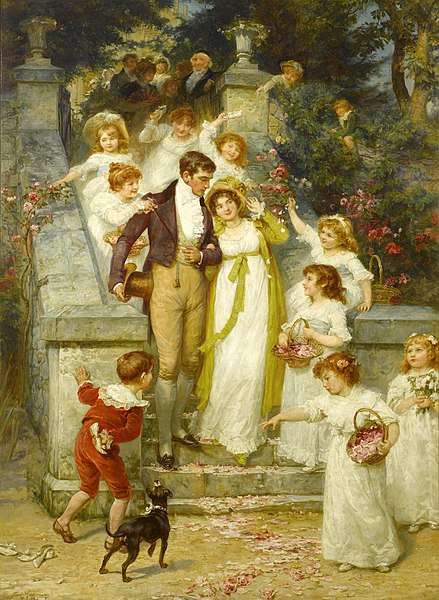
Frederick Morgan – Off for the Honeymoon (Wikicommons) Over the past 2,000 years, the British gene pool has shifted toward alleles that favor lighter hair, sunburn, and educational attainment. Was this because high-status men tended to mate with blonder, fairer women?


Have we evolved over the past two thousand years? Until recently, the answer was thought to be 'no.' Cultural evolution took over from genetic evolution around the time farming took over from hunting and gathering, some ten thousand years ago, thus putting our ancestors on a path to increasing social complexity: sedentary living, growth of towns and villages, formation of states, trade and specialization of labor, and so on. It was culture that changed during recorded history, not genes.

Well, things are not that simple. Genes and culture have coevolved with each other. Yes, culture has been changing rapidly over the past ten thousand years. But so have genes. During that time, our genetic evolution has been driven by adaptation not only to natural environments but also to cultural environments. Increasingly so. We live more and more in cultural environments of our making (Chen et al., 2016; Cochran and Harpending 2009; Hawks et al. 2007).

In what ways have we changed genetically during the past ten thousand years? In the ways we digest food. With the shift to dairy farming, and the resulting increase in milk consumption by adults, natural selection favored those who could digest milk sugar, an ability previously confined to infants.

We have also changed in the ways we think and behave. That kind of evolution is not difficult. A few point mutations may alter a behavior by changing its timing, its intensity, or its threshold of stimulation. Other alterations have been much more polygenic. Cognitive ability, for instance, seems to have increased through mutations at many genes, with each mutation causing only a tiny fraction of the increase.

Because recent evolutionary change has so often been polygenic, we need to examine it in relation to many genetic variants spread over the entire genome, i.e., by means of genome-wide association studies. Such studies can take many forms. A recent one, proposed by Stern et al. (2020), may be better than earlier versions, particularly in avoiding biases due to population structure and population stratification.

I nonetheless have a few reservation about this proposed method:

1. Population stratification can be a factor in evolutionary change. Let's take the work of Gregory Clark on the growth of the English middle class. He found it grew steadily from the twelfth century onward, its descendants not only growing in number but also replacing the lower classes through downward mobility. By the 1800s its lineages accounted for most of the English population. Parallel to that demographic growth, English society became more and more middle class in its values. "Thrift, prudence, negotiation, and hard work were becoming values for communities that previously had been spendthrift, impulsive, violent, and leisure loving" (Clark 2007, p. 166). Isn't that evolutionary change through population stratification? Or am I missing something?

2. The new method can reveal only evidence of directional selection. It thus fails to capture other interesting forms of selection, like diversifying selection.


How the British have evolved over the past 2,000 years

Stern et al. (2020) used their method to study how the British population has evolved over the past two thousand years. They found increases in the prevalence of lighter hair, in tanning and sunburn, in age at first birth, in bone mineral density, and in the risk of type 2 diabetes. They also found decreases in the risk of neuroticism and in the risk of high glycated hemoglobin levels.

Some of these changes correlate with each other. In such cases, we should step back and try to identify the common cause.

Lighter hair, more sunburn ... and higher educational attainment

Over the past 2,000 years, the British gene pool has shifted toward alleles that favor lighter hair, sunburn, and educational attainment. These changes in allele frequency correlate with each other, so what, exactly, was driving the overall change?

There is genetic linkage between light hair and pale skin, but it's weak. In fact, pale skin often coexists with dark hair. Moreover, we still have to explain the link to educational attainment. The common cause for all three changes may have been sexual selection mediated by social class. In other words, high-status men tended to mate with blonder, fairer women.

This form of sexual selection was observed in a Japanese study on social class and skin color. Upper-class men were shown to be fairer-skinned than lower-class men, even when the latter were factory workers and not farmers and even though the measurements were taken on unexposed skin. Wealthier men have a wider range of prospective brides and can thus choose the fairest women, for "skin color has long been regarded, by the Japanese, as one of the criteria for evaluating physical attractiveness, especially in young females" (Hulse 1967). Similarly, in India "[w]ealthy landowning families often have a tradition of seeking light-skinned brides among poorer members of their subcaste. It is very common to find a high concentration of lighter-skinned people among established land-owning families" (Béteille 1967).

Darwin discussed this sexual selection with reference to English social classes:

Many persons are convinced, as it appears to me with justice, that our aristocracy, including under this term all wealthy families in which primogeniture has long prevailed, from having chosen during many generations from all classes the more beautiful women as their wives, have become handsomer, according to the European standard, than the middle classes; yet the middle classes are placed under equally favorable conditions of life for the perfect development of the body. (Darwin 1936[1888], p. 892)

Until the 20th century, higher social status meant higher fertility (Clark 2007). Thus, the physical and mental characteristics of the upper and middle classes tended to displace those of the lower class.

Higher risk of Type 2 diabetes and glycated hemoglobin

Why would natural selection favor type 2 diabetes? Isn't diabetes harmful? It is, in a modern environment that lets you ingest calories almost without limit. That wasn't the case in Britain for most of the past two thousand years. During that time, food was scarce for most people, and natural selection favored the ability to get as many calories as possible out of our food.

Less neuroticism

This evolutionary change may be related to the demographic success of the middle class and associated mental and behavioral traits, particularly lower time preference and higher future orientation. The nascent English middle class valued being “calm, cool, and collected,” as opposed to reacting emotionally to negative outcomes.


References

Béteille, A. (1967). Race and descent as social categories in India. Daedalus 96(2): 444-463.

Chen, C., R.K. Moyzis, X. Lei, C. Chen, and Q. Dong. (2016). The encultured genome: Molecular evidence for recent divergent evolution in human neurotransmitter genes. In: J.Y. Chiao, S.-C. Li, R. Seligman, and R. Turner, Eds, The Oxford handbook of cultural neuroscience. New York, NY: Oxford University Press, 315-336.

Clark, G. (2007). A Farewell to Alms. A Brief Economic History of the World, 1st ed.; Princeton University Press: Princeton.

Cochran, G., and H. Harpending. (2009). The 10,000 Year Explosion: How Civilization Accelerated Human Evolution. Basic Books.

Darwin, C. (1936 [1888]). The Descent of Man and Selection in relation to Sex. reprint of 2nd edition, The Modern Library, New York: Random House.

Hawks, J., E.T. Wang, G.M. Cochran, H.C. Harpending, and R.K. Moyzis. (2007). Recent acceleration of human adaptive evolution. Proceedings of the National Academy of Sciences, 104(52), 20753-20758.

Hulse, F.S. (1967). Selection for skin color among the Japanese. American Journal of Physical Anthropology 27(2): 143-156.

Hysi, P.G., A.M. Valdes, F. Liu, N.A. Furlotte, D.M. Evans, V. Bataille, et al. (2018). Genome-wide association meta-analysis of individuals of European ancestry identifies new loci explaining a substantial fraction of hair color variation and heritability. Nature Genetics 50(5): 652-656.

Morgan, M.D., E. Pairo-Castineira, K. Rawlik, O. Canela-Xandri, J. Rees, D. Sims, A. Tenesa, and I.J. Jackson. (2018). Genome-wide study of hair colour in UK Biobank explains most of the SNP heritability. Nature Communications 9: 5271

Neel, J. V. (1962). Diabetes mellitus: a 'thrifty' genotype rendered detrimental by 'progress'? American Journal of Human Genetics 14: 353-362.

Stern, A.J., L. Speidel, N.A. Zaitlen, and R. Nielsen. (2020). Disentangling selection on genetically correlated polygenic traits using whole-genome genealogies
bioRxiv 2020.05.07.083402

Monday, April 23, 2018

Debate over recent human evolution: pros and cons


Acceleration of recent human evolution. Age distribution of alleles under selection (Hawks et al. 2007)


A decade has passed since a research team led by John Hawks published a strange finding: human genetic evolution accelerated more than a hundred-fold some 10,000 years ago. This was when hunting and gathering began to give way to farming, which in turn brought other changes, all of which required adjustments to mind and body. All in all, new cultural and natural environments have reshaped 7% of the human genome over the last 40,000 years:

Some of the most radical new selective pressures have been associated with the transition to agriculture. For example, genes related to disease resistance are among the inferred functional classes most likely to show evidence of recent positive selection. Virulent epidemic diseases, including smallpox, malaria, yellow fever, typhus, and cholera, became important causes of mortality after the origin and spread of agriculture. Likewise, subsistence and dietary changes have led to selection on genes such as lactase. (Hawks et al. 2007)

Instead of adapting only to the natural environment, humans have adapted to cultural creations of their own making, things like prepared food, clothing, shelter, way of life, social organization, sedentary versus nomadic living, religious strictures, and so on.

This finding may come as a surprise. As a university student I learned that culture has greatly reduced the importance of natural selection in our species. Instead of adapting genetically to our environment, we adapt culturally. That was, and still is, the normative view.


Debates in the scientific literature: 2008 to 2010

So what are we to believe? Perhaps there have been other findings over the last decade, either pro or con.

In 2008, a research team led by Matthieu Foll and Oscar Gaggiotti calculated a higher estimate of recent human evolution: over 23% of the human genome. By using an FST test and data from 53 human populations, they found evidence for selection at 131 out of 560 random loci. When this methodology was repeated with other random loci, the same estimate of 23% came up.

A review paper by Joshua Akey notes, however, that these genome-wide scans are problematic in two ways. On the one hand, they miss genes that are known to have contributed to recent human evolution. On the other, these different scans disagree on the regions of the human genome that have been evolving rapidly:

Strikingly, only 722 regions (14.1%) were identified in two or more studies, 271 regions (5.3%) were identified in three or more studies, and 129 regions (2.5%) were identified in four or more studies (Fig. 1). Furthermore, the integrated map of positive selection does not include several of the most compelling genes with well-substantiated claims of positive selection, such as G6PD and DARC. (Akey 2009)

A closer look at the data suggests that recent evolution is highly localized on the human genome. If the size of the region is decreased, the probability increases of that region containing either no genes at all under selection or several under selection. Making the regions smaller makes it easier, strangely enough, to find regions with multiple genes under selection. "This paradoxical observation [...] is due to the marked difference in the average size of regions identified in single versus multiple studies (~80 kb and 300 kb, respectively)" (Akey 2009).

So estimates of recent human evolution seem to range from a low of 7% of the genome (Hawks et al. 2007) to a high of 23% (Foll and Gaggiotti 2008). Even the 7% estimate, however, has been criticized in the literature, specifically by two papers. The first one was Pickrell et al. (2009):

We find that putatively selected haplotypes tend to be shared among geographically close populations. [...]. This suggests that distinguishing true cases of selection from the tails of the neutral distribution may be more difficult than sometimes assumed, and raises the possibility that many loci identified as being under selection in genome scans of this kind may be false positives. Reports of ubiquitous strong (s = 1 - 5%) positive selection in the human genome (Hawks et al. 2007) may be considerably overstated. (Pickrell et al. 2009)

The argument here is that a genetic variant with high selective value should spread beyond its area of origin, instead of remaining bottled up there. Yet this is unlikely for two reasons. First, recent variants, by definition, have little time to spread very far. Second, and more importantly, the selective value of a genetic variant is a function of its natural and cultural environment. A variant that succeeds in one environment will be less successful in another.

The criticism made by Pickrell et al. (2009) was repeated by Hermisson (2009). If the data are controlled for geographic region, the evidence for recent human evolution virtually disappears:

[...] introduction of hierarchical structure based on five previously established geographic regions reduces the frequency of selection candidates from 23% (Foll and Gaggiotti, 2008) to no more than expected by chance (that is, comparable with the 1% significance level applied). (Hermisson 2009)

The implication is that recent human evolution is largely due to founder effects and other forms of genetic drift. Genetic drift, however, would not produce the observed signatures of natural selection, as Nicholas Wade noted in a review of this research the following year:

One of the signatures of natural selection is that it disturbs the undergrowth of mutations that are always accumulating along the genome. As a favored version of a gene becomes more common in a population, genomes will look increasingly alike in and around the gene. Because variation is brushed away, the favored gene's rise in popularity is called a sweep. Geneticists have developed several statistical methods for detecting sweeps, and hence of natural selection in action. (Wade 2010).

Moreover, this signature is much stronger in some geographic regions than in others:

A new approach to identifying selected genes has been developed by Anna Di Rienzo at the University of Chicago. Instead of looking at the genome and seeing what turns up, Dr. Di Rienzo and colleagues have started with genes that would be likely to change as people adopted different environments, modes of subsistence and diets, and then checked to see if different populations have responded accordingly.

She found particularly strong signals of selection in populations that live in polar regions, in people who live by foraging, and in people whose diets are rich in roots and tubers. [..] The fewest signals of selection were seen among people who live in the humid tropics, the ecoregion where the ancestral human population evolved. [...] there seem to be more genes under recent selection in East Asians and Europeans than in Africans, possibly because the people who left Africa were then forced to adapt to different environments. "It's a reasonable inference that non-Africans were becoming exposed to a wide variety of novel climates," says Dr. Stoneking of the Max Planck Institute. (Wade 2010)

Joshua Akey remains cautious on this point:

A specific example of the difficulties in interpreting signatures of spatially varying selection is the observation that non-African populations tend to show more evidence for recent positive selection relative to African populations (Akey et al. 2004; Storz et al. 2004; Williamson et al. 2007; but see Voight et al. 2006). While this may be due to increased selection as humans migrated out of Africa and were confronted with new environmental pressures (such as novel climates, diets, and pathogens), differences in demographic history or rates of recombination and mutation between African and non-African populations may obscure the relationship between signatures of selection across populations. (Akey 2009)


Since 2010: consensus among some, skepticism and hostility among others

After 2010, Google Scholar turns up only brief references to the original paper by John Hawks et al., most of them favorable or neutral in tone. If one judges by the scientific literature alone, there seems to be broad support for the notion that recent evolution has accelerated in our species. And the original estimate of 7% recent evolutionary change may err on the low side

Yet many people remain unconvinced. Last week Razib Khan reproached me: "you take the accelerationist hypothesis as a given. it's not. at least at that magnitude (i think most ppl agree holocene resulted in faster rate of change)." Indeed, most people seem to view these findings with incredulity, to put it mildly, as a journalist from Discover magazine found:

Not surprisingly, the new findings have raised hackles. Some scientists are alarmed by claims of ethnic differences in temperament and intelligence, fearing that they will inflame racial sensitivities. Other researchers point to limitations in the data. Yet even skeptics now admit that some human traits, at least, are evolving rapidly, challenging yesterday's hallowed beliefs. (McAuliffe 2009)

A decade later, the barriers to acceptance are still considerable. Chen et al. (2016) identifies four sources of opposition:

- Evolutionary psychologists, who believe that human nature took shape in the Pleistocene. According to this view, genetic influences on behavior are too complex to have changed much since then.

- Cultural determinists, who believe that "once humans invented culture, natural selection was halted because humans could overcome nature through culture."

- People who point out that we are all 99.9% genetically alike. So there is little room for genetic differences within our species.

- People who believe that genetic differences are inconsequential to human behavior.

There are counter-arguments to the above. Genetic influences on existing behaviors can evolve very fast (Harpending and Cochran 2002). And that figure of 99.9% genetic identity is an over-estimate, the best estimate being 99%. Even if we assume that this 1% difference is spread evenly across the genome, that tiny difference could significantly alter the way each and every gene works.

Nonetheless, such counter-arguments would still leave many unconvinced. And others wouldn't even listen. Some beliefs are foundational, being difficult to challenge without seeming to attack an entire worldview. In such cases, reactions can be nasty.

That's normal. Strong disagreement is the stuff of scientific debate. What's less normal is that some people will seek not to debate but to judge and punish. That fate befell a coauthor of the 2007 paper on recent human evolution. In 2015, the Southern Poverty Law Center (SPLC) prepared and published a file on Henry Harpending ... under the heading "Extremist Info." The opening words sounded no less ominous:

Henry Harpending is a controversial anthropologist at the University of Utah who studies human evolution and, in his words, "genetic diversity within and between human populations."

The file went on to state:

Harpending is most famous for his book, co-authored with frequent collaborator Gregory Cochran, The 10,000 Year Explosion: How Civilization Accelerated Human Evolution, which argues that humans are evolving at an accelerating rate, and that this began when the ancestors of modern Europeans and Asians left Africa. (SPLC 2015)

One wonders what exactly is intended by this public naming and shaming. After all, the SPLC has no legal mandate to judge and punish, although it seems to think so. Indeed, it acts like a law-enforcement agency without being constrained by the law and without being answerable to an elected body.

Henry Harpending died scarcely a year later, yet his file is still there on the SPLC website. Even in death he's still a grave threat … as is apparently anyone else who believes in the evidence for recent human evolution.


References

Akey, J.M. (2009). Constructing genomic maps of positive selection in humans: Where do we go from here? Genome Research 19: 711-722.
https://pdfs.semanticscholar.org/9199/dab2542982e282eaf28fc303008c20583db7.pdf

Chen, C., R.K. Moyzis, X. Lei, C. Chen, and Q. Dong. (2016). "The enculturated genome: Molecular evidence for recent divergent evolution in human neurotransmitter genes." In Joan Y. Chiao, Shu-Chen Li, Rebecca Seligman, Robert Turner (eds). The Oxford Handbook of Cultural Neuroscience. Oxford.
https://books.google.ca/books?id=rtbiCgAAQBAJ&printsec=frontcover&hl=fr&source=gbs_ge_summary_r&cad=0#v=onepage&q&f=false

Cochran, G. and H. Harpending. (2010). The 10,000 Year Explosion: How Civilization Accelerated Human Evolution, New York: Basic Books.

Foll, M., and O. Gaggiotti. (2008). A Genome-Scan Method to Identify Selected Loci Appropriate for Both Dominant and Codominant Markers: A Bayesian Perspective. Genetics 180(2):977-993.
https://www.ncbi.nlm.nih.gov/pmc/articles/PMC2567396/

Harpending, H., and G. Cochran, (2002). In our genes, Proceedings of the National Academy of Science. USA. 99(1):10-12.
https://s3.amazonaws.com/academia.edu.documents/43528175/In_our_genes20160308-5744-8wzdxj.pdf?AWSAccessKeyId=AKIAIWOWYYGZ2Y53UL3A&Expires=1524495810&Signature=XEX4Jqbe%2FAD3Faud9Re0M1ECEys%3D&response-content-disposition=inline%3B%20filename%3DIn_our_genes.pdf

Hawks, J., E.T. Wang, G.M. Cochran, H.C. Harpending, and R.K. Moyzis. (2007). Recent acceleration of human adaptive evolution, Proceedings of the National Academy of Science USA 104:20753-20758.
https://www.ncbi.nlm.nih.gov/pmc/articles/PMC2410101/

Hermisson, J. (2009). Who believes in whole-genome scans for selection? Heredity 103, 283-284
https://www.nature.com/articles/hdy2009101  

McAuliffe K. (2009). They don't make Homo sapiens like they used to. Our species-and individual races-have recently made big evolutionary changes to adjust to new pressures. Discover February 9
http://discovermagazine.com/2009/mar/09-they-dont-make-homo-sapiens-like-they-used-to

Pickrell, J.K., G. Coop, J. Novembre, S. Kudaravalli, J.Z. Li, D. Absher, B.S. Srinivasan, G.S. Barsh, R.M. Myers, M.W. Feldman, and J.K. Pritchard. (2009). Signals of recent positive selection in a worldwide sample of human populations. Genome Research 19(5): 826-837
http://europepmc.org/articles/pmc2675971  

SPLC. (2015). Henry Harpending. Extremist Info
https://www.splcenter.org/fighting-hate/extremist-files/individual/henry-harpending

Wade, N. (2010). Adventures in very recent evolution. The New York Times, July 19
https://www.nytimes.com/2010/07/20/science/20adapt.html