Showing posts with label Gregory Clark. Show all posts

Tuesday, November 1, 2022

Looking beyond the data


General intelligence (g factor) as a function of alleles associated with educational attainment (Education polygenic score). (Fuerst et al. 2021, p. 165)


Among non-Hispanic European Americans, cognitive ability shows a positive correlation with Amerindian admixture. The reason is to be found in the history of European settlement.


We know that cognitive ability differs among human populations, but are those differences innate? Or are they purely cultural? The question is difficult to answer because a purely cultural difference can, over time, become innate. If you are better able to meet the demands of your culture, you will probably live longer, have more offspring, and pass on many of your characteristics. Thus, over succeeding generations, those heritable characteristics will become more and more widespread in the gene pool, and they will increasingly determine certain abilities that were initially created by culture.


This is a recurring problem when we try to distinguish between cultural and genetic determination. The two often run parallel to each other, and we can seemingly rule out the existence of genetic determination by showing that cultural determination runs in the same direction.


But there is another recurring problem in our efforts to distinguish between culture and genetics. We lack the proper tools. For a long time, we could only infer genetic influences by using twin studies or adoption studies. 


Things have changed with the advent of a new tool: genomic data. Specifically, we can now:


·         Measure ethnic ancestry in mixed populations, as opposed to using self-report or inferring from skin color.

·         Measure the genetic component of cognitive ability, by using genetic variants associated with educational attainment. Although these variants explain only 11-13% of the variance in educational attainment among individuals, they explain a much higher percentage of the variance among populations (Piffer 2019). This is because genetic variants within the same population are exposed to the same pressure of selection and will thus vary in the same direction. They act, so to speak, as “weathervanes” that tell us the strength and direction of selection in that population.

·         Measure skin color, by looking at the relevant genes. We can thus control for the effects of “colorism” in mixed populations, i.e., discrimination in favor of lighter-skinned individuals.


In my last post, I described how Bryan Pesta used these tools to understand differences in mean cognitive ability between African Americans and European Americans (Lasker et al. 2019). To that end, his research team looked at cognitive ability among African Americans in relation to European admixture and in relation to genetic variants associated with educational attainment.


They made several findings: 1) among African Americans, cognitive ability correlates with European admixture; 2) the correlation is modestly reduced, but not eliminated, when controlled for parental education; 3) controlling for skin color has no effect; and 4) the correlation seems to be largely explained by genetic variants associated with educational attainment.


The same data source was then used by Fuerst et al. (2021) to investigate cognitive ability not only in European Americans and African Americans but also in Hispanic Americans. The research team thus looked at cognitive ability in relation to Amerindian admixture, and not just in relation to European and African admixture.


Most of their findings are similar to those of the first study:


·         Among Hispanic Americans, cognitive ability shows a positive correlation with European admixture and a negative correlation with African admixture and Amerindian admixture.

·         Among Hispanic Americans, the correlations are reduced but not eliminated by controlling for parental education. Controlling for skin color has no effect.

·         The above correlations are partially explained by variants associated with educational attainment, but not by skin color.

·         Among non-Hispanic European Americans, cognitive ability shows a positive correlation with Amerindian admixture.


The last correlation may seem curious. Keep in mind that the data came from residents of Pittsburgh and that the native peoples of the Eastern U.S. intermixed mostly with early settlers of British, Dutch, or French origin. There is much less Amerindian admixture among the descendants of later immigrants from southern and eastern Europe. The correlation may thus be due not to Amerindian admixture per se but rather to variation in cognitive ability among Europeans.


Until the eleventh century, mean IQ was relatively low throughout Europe, perhaps hovering in the low 90s. It then rose during late medieval and post-medieval times through the expansion of the middle class. There was in fact a broad mental and behavioral change: "Thrift, prudence, negotiation, and hard work were becoming values for communities that previously had been spendthrift, impulsive, violent, and leisure loving" (Clark 2007, p. 166; see also Clark 2007, 2009a, 2009b). More people could better understand probability, cause and effect, and another person’s perspective, whether real or hypothetical (Rinderman 2018, pp. 49, 86-87; Oesterdiekhoff 2012). As the "smart fraction" grew in size, a point was reached when intellectuals were no longer voices crying in the wilderness. They were now numerous enough to form learned societies and collaborate in projects of various sorts (Frost 2019b, pp. 175-176).


Western Europe was where the middle class began to expand, and that was where the expansion would have its greatest impact, not only demographically but also behaviorally and cognitively. Gregory Clark (2009a) has shown that the English, even in the lower classes, are largely descended from people who were middle-class several generations earlier. The same is likely true elsewhere in Western Europe. We should therefore see a cognitive gradient between the Western European core and its periphery, as can indeed be seen between northern and southern Italy. When Piffer and Lynn (2022) looked at genomic data from that country, they found a north-south gradient in alleles associated with educational attainment. That difference corresponds to historical differences in economic development. By the 18th century, the South had already fallen behind the North; its middle class had remained small and economic relations were still structured by paternalism and familialism (De Rosa 1979).


All of that leads to an interesting corollary: the IQ gap used to be smaller between Europeans and sub-Saharan Africans. On the one hand, European mean IQ had probably remained in the low 90s until late medieval times. On the other hand, mean IQ may have been in the upper 80s among those Black African groups that Europeans had first encountered, particularly the Nubians. By the time of Classical Antiquity they had reached a high level of material culture, social complexity and State formation.


A smaller IQ gap would be in line with an observation by Jason Malloy. He noted that blacks were often described in the ancient world as having large penises but not as being less intelligent. Indeed, I have found only two Greco-Roman texts in which the writer disparaged Black Africans as being unintelligent. One of them is of doubtful authenticity, and both come from Late Antiquity (Frost 2019b). By then, blacks in the Roman world were increasingly slaves who came from farther within the African interior. Thereafter, a stereotype of low intelligence is regularly attested in Middle Eastern and European sources.


References


Clark, G. (2007). A Farewell to Alms. A Brief Economic History of the World. Princeton University Press: Princeton and Oxford.


Clark, G. (2009a). The indicted and the wealthy: surnames, reproductive success, genetic selection and social class in pre-industrial England.  http://www.econ.ucdavis.edu/faculty/gclark/Farewell%20to%20Alms/Clark%20-Surnames.pdf     


Clark, G. (2009b). The domestication of man: The social implications of Darwin. ArtefaCTos 2: 64-80. https://www.researchgate.net/publication/277275046_The_Domestication_of_Man_The_Social_Implications_of_Darwin


De Rosa, L. (1979). Property Rights, Institutional Change, and Economic Growth in Southern Italy in the XVIIIth and XIXth Centuries. Journal of European Economic History 8(3): 531-551.


Frost, P. (2019a). The Original Industrial Revolution. Did Cold Winters Select for Cognitive Ability? Psych 1(1): 166-181. https://doi.org/10.3390/psych1010012   


Frost, P. (2019b). Why that stereotype and not the other? Evo and Proud, July 28. https://evoandproud.blogspot.com/2019/07/why-that-stereotype-and-not-other.html


Frost, P. (2021). Commentary on Fuerst et al: Do Human Populations Differ in Their Mental Characteristics? Mankind Quarterly 62(2). http://doi.org/10.46469/mq.2021.62.2.9   


Fuerst, J., E.O.W. Kirkegaard and D. Piffer. (2021). More research needed: There is a robust causal vs. confounding problem for intelligence-associated polygenic scores in context to admixed American populations. Mankind Quarterly 62(1): 151-185. https://www.researchgate.net/profile/John-Fuerst/publication/354767141_More_Research_Needed_There_is_a_Robust_Causal_vs_Confounding_Problem_for_Intelligence-associated_Polygenic_Scores_in_Context_to_Admixed_American_Populations/links/614bc1dfa595d06017e4c017/More-Research-Needed-There-is-a-Robust-Causal-vs-Confounding-Problem-for-Intelligence-associated-Polygenic-Scores-in-Context-to-Admixed-American-Populations.pdf


Lasker, J., B.J. Pesta, J.G.R. Fuerst, and E.O.W. Kirkegaard. (2019). Global Ancestry and Cognitive Ability. Psych 1(1):431-459. https://doi.org/10.3390/psych1010034  


Oesterdiekhoff, G.W. (2012). Was pre-modern man a child? The quintessence of the psychometric and developmental approaches. Intelligence 40, 470–478. https://doi.org/10.1016/j.intell.2012.05.005


Piffer, D. (2019). Evidence for Recent Polygenic Selection on Educational Attainment and Intelligence Inferred from Gwas Hits: A Replication of Previous Findings Using Recent Data. Psych 1(1):55-75. https://doi.org/10.3390/psych1010005


Piffer, D., and R. Lynn. (2022). In Italy, North-South Differences in Student Performance Are Mirrored by Differences in Polygenic Scores for Educational Attainment. Mankind Quarterly 62(4), Article 2. https://doi.org/10.46469/mq.2022.62.4.2   


Rindermann, H. (2018). Cognitive Capitalism. Human Capital and the Wellbeing of Nations, 1st ed.; Cambridge University Press.

Monday, May 16, 2022

When did Europe pull ahead?


Medieval market – Nicole Oresme (15th century) (Wikicommons)


In terms of GDP per capita growth, northwest Europe began to surpass the rest of the world during the 14th century: before the conquest of the Americas, the invention of printing, the Atlantic slave trade, and the Protestant Reformation.


In a recent post, Steve Sailer asks why the European world pulled ahead of the non-European world between 1000 and 1500 AD:


[…] much of the non-European world entered a sort of cultural recession well before Europeans directly interfered with them. If you look at, say, Charles Murray’s 2003 book Human Achievement, several major non-European civilizations appear to have lost momentum in making progress in the arts and sciences over roughly the time period of 1000 or maybe 1250 to 1500. (Sailer 2022)


For Steve, the reason was the collapse of the Mongol Empire during the 14th century. That century was indeed a turning point for Europe, particularly for England and Holland:


These North Sea economies experienced sustained GDP per capita growth for six straight centuries. The North Sea begins to diverge from the rest of Europe long before the 'West' begins its more famous split from 'the rest.'


[...] we can pin point the beginning of this 'little divergence' with greater detail. In 1348 Holland's GDP per capita was $876. England's was $777. In less than 60 years time Holland's jumps to $1,245 and England's to 1090. The North Sea's revolutionary divergence started at this time. (Greer 2013b)


This process began before the European conquest of the Americas, the invention of printing, the creation of modern finance institutions, the Atlantic slave trade, or the Protestant Reformation. None of these can be proper explanations for this "little divergence." (Greer 2013a; see also Thompson 2012 and Hbd *chick 2013).


The divergence began within a part of Europe that was much less affected by the rise and fall of the Mongol Empire. Moreover, if we compare southern Europe with North Africa during the same period, we see the same divergence that we see more generally between Christian Europe and the rest of the world. Yet North Africa was never conquered by the Mongols.


It looks like internal causes were responsible for the divergence between Christian Europe and the rest of the world. Those causes seem to have their point of origin in northwest Europe during the long period from 500 to 1500 AD. In that region, the Western Church consolidated a pre-existing pattern of small, nuclear households, weak family ties, and residential mobility, thus strengthening a mindset of individualism and impersonal sociality (Frost 2020; Schulz et al. 2019). Then, from 1000 AD onward, the Western Church strove to pacify social relations (Frost and Harpending 2015). Those two factors—an individualistic mindset operating in a pacified social environment—allowed the market economy to expand into all areas of life and eventually replace kinship as the main organizing principle of society (Frost 2020; Macfarlane 1978; Weber 1930).


The expansion of the market economy went hand in hand with the expansion of the middle class. In England, this class began to expand in the twelfth century and would gradually replace the lower classes through downward mobility. By the 1800s, its lineages accounted for most of the English population. English society thus became more middle class in its values: "Thrift, prudence, negotiation, and hard work were becoming values for communities that previously had been spendthrift, impulsive, violent, and leisure loving" (Clark 2007, p. 166). The same process took place elsewhere in Western Europe and more generally throughout Europe to varying degrees and over different timescales (Frost 2019, p. 176).


In sum, between 500 and 1500 AD the Western Church created a system of social reproduction that would have far-reaching demographic, behavioral, and economic consequences. To understand that system, one must understand not only the Bible but also the writings of early and medieval Christianity, as well as the pagan Germanic elements it incorporated (Russell 1994). Finally, one must understand the preceding system, and its failings.


The pre-Christian world: demographic and cognitive decline


Ancient DNA from Greece suggests that mean cognitive ability began to decline at some point during Classical Antiquity (Woodley of Menie et al. 2019). A similar decline probably happened throughout the Mediterranean basin and the Middle East of that time.

There were three main causes:


·         A decline in fertility and family formation, particularly among the upper classes (Caldwell 2004; Hopkins 1965; Roetzel 2000, p. 234);

·         A corresponding increase in female hypergamy, often by freed slaves, which reduced the reproductive importance of upper-class women (Perry 2013);

·         An increase in the slave population, particularly foreign slaves (Harris 1999). This ongoing influx disrupted the process of local cognitive evolution. Even if there had been demographic overflow from the upper classes, that overflow could not have replaced the lower classes, since those classes were being replaced from external sources.


Christianity and Islam both tried to correct the ruinous demographic state of the ancient world. Islam succeeded in reversing negative population growth but failed to restart cognitive evolution. In some ways, it made such evolution more difficult. Islam increased female hypergamy by permitting male polygamy, thus further reducing the reproductive importance of upper-class women (van den Berghe 1960). Foreign slaves were also imported on a larger-scale than in antiquity, thus further disrupting local cognitive evolution (Lewis 1990). Finally, the upper classes tended to congregate in urban areas, where the death rate was higher.


Before the 20th century, population growth had been sluggish in the Muslim world. Wherever Muslims coexisted with Christians, the latter community was often the one that grew at a faster pace. This was the case in the Balkans:


By the end of the eighteenth century the Muslim population had entered a period of comparative economic and moral decline. Several explanations have been offered for this development. Certainly the fact that the Muslim population provided the soldiers contributed to its ultimate weakening. Their concentration in towns also made them more susceptible to the ravages of plague and other diseases. Turkish customs, particularly the practice of polygamy, played a part. This process of decay was clearly illustrated in the eighteenth century in the changing demography of the Balkan towns where Christian and national elements formed an increasingly larger proportion of the population (Jelavich and Jelavich, 1977, pp. 6-7)


Christianity, especially Western Christianity, succeeded not only in promoting population growth but also in restarting cognitive evolution, specifically by supporting the formation of monogamous families, by discouraging slavery, at least during the long period from 500 to 1500 AD, and eventually by creating the peace, order, and stability that allowed the middle class to expand and become dominant. The rise of Christian Europe actually began before its expansion into the Americas and Asia. The latter was, in fact, a consequence of the former.


References


Caldwell, J.C. (2004). Fertility control in the classical world: Was there an ancient fertility transition?  Journal of Population Research 21:1. https://doi.org/10.1007/BF03032208  


Clark, G. (2007). A Farewell to Alms. A Brief Economic History of the World. Princeton University Press: Princeton.


Frost, P. (2019). The Original Industrial Revolution. Did Cold Winters Select for Cognitive Ability? Psych 1(1): 166-181. https://doi.org/10.3390/psych1010012


Frost, P. (2020). The large society problem in Northwest Europe and East Asia. Advances in Anthropology 10(3): 214-134. https://doi.org/10.4236/aa.2020.103012   


Frost, P. and H. Harpending. (2015). Western Europe, state formation, and genetic pacification. Evolutionary Psychology 13(1): 230-243. https://doi.org/10.1177%2F147470491501300114


Greer, T. (2013a). The Rise of the West: Asking the Right Questions. July 7, The Scholar's Stage. https://scholars-stage.org/the-rise-of-the-west-asking-the-right-questions/


Greer, T. (2013b). Another look at the 'Rise of the West' - but with better numbers. November 20, The Scholar's Stage. https://scholars-stage.org/another-look-at-the-rise-of-the-west-but-with-better-numbers/


Harris, W. (1999). Demography, Geography and the Sources of Roman Slaves. Journal of Roman Studies 89, 62-75. https://doi.org/10.2307/300734  


Hbd *chick (2013). Going Dutch, November 29. https://hbdchick.wordpress.com/2013/11/29/going-dutch/


Hopkins, K. (1965). Contraception in the Roman Empire. Comparative Studies in Society and History 8(1): 124-151. https://doi.org/10.1017/S0010417500003935  


Jelavich, C. and B. Jelavich. (1977). The Establishment of the Balkan National States, 1804-1920. Seattle: University of Washington Press.


Lewis, B. (1990). Race and Slavery in the Middle East. New York: Oxford University Press.


Macfarlane, A. (1978). The Origins of English Individualism: The Family, Property and Social Transition. Oxford: Blackwell.


Perry, M.J. (2013). Gender, Manumission, and the Roman Freedwoman. Cambridge University Press.


Roetzel, C.J. (2000). Sex and the single god: celibacy as social deviancy in the Roman period. In: S.G. Wilson and M. Desjardins (eds). Text and Artefact in the Religions of Mediterranean Antiquity. Essays in Honour of Peter Richardson. Wilfrid Laurier University Press (pp. 231-248).


Russell, J.C. (1994). The Germanization of Early Medieval Christianity: A Sociohistorical Approach to Religious Transformation. New York; Oxford: Oxford University Press.


Sailer, S. (2022). Why was much of the non-European world stagnating well before 1492? The Unz Review, May 10 https://www.unz.com/isteve/why-was-much-of-the-non-european-world-stagnating-well-before-1492/#new_comments  


Schulz, J.F., D. Bahrami-Rad, J.P. Beauchamp, and J. Henrich. (2019). The Church, intensive kinship, and global psychological variation. Science 366(707), 1-12. https://doi.org/10.1126/science.aau5141  


Thompson, D. (2012). The Economic History of the Last 2000 Years: Part II, The Atlantic, June 20, http://www.theatlantic.com/business/archive/2012/06/the-economic-history-of-the-world-after-jesus-in-4-slides/258762/  


Van den Berghe, P.L. (1960). Hypergamy, Hypergenation, and Miscegenation. Human Relations 13(1):83-91. https://doi.org/10.1177%2F001872676001300106   


Weber, M. (1930). The Protestant Ethic and the Spirit of Capitalism. New York: Charles Scribner’s Sons.


Woodley of Menie, M.A., J. Delhez, M. Peñaherrera-Aguirre, and E.O.W. Kirkegaard. (2019). Cognitive archeogenetics of ancient and modern Greeks. London Conference on Intelligence. https://www.altcensored.com/watch?v=UES_tpDxz9A  

Saturday, July 4, 2020

Recent evolution of the British population


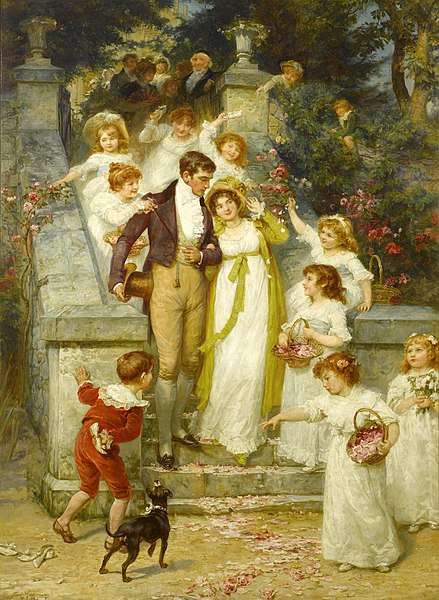
Frederick Morgan – Off for the Honeymoon (Wikicommons) Over the past 2,000 years, the British gene pool has shifted toward alleles that favor lighter hair, sunburn, and educational attainment. Was this because high-status men tended to mate with blonder, fairer women?


Have we evolved over the past two thousand years? Until recently, the answer was thought to be 'no.' Cultural evolution took over from genetic evolution around the time farming took over from hunting and gathering, some ten thousand years ago, thus putting our ancestors on a path to increasing social complexity: sedentary living, growth of towns and villages, formation of states, trade and specialization of labor, and so on. It was culture that changed during recorded history, not genes.

Well, things are not that simple. Genes and culture have coevolved with each other. Yes, culture has been changing rapidly over the past ten thousand years. But so have genes. During that time, our genetic evolution has been driven by adaptation not only to natural environments but also to cultural environments. Increasingly so. We live more and more in cultural environments of our making (Chen et al., 2016; Cochran and Harpending 2009; Hawks et al. 2007).

In what ways have we changed genetically during the past ten thousand years? In the ways we digest food. With the shift to dairy farming, and the resulting increase in milk consumption by adults, natural selection favored those who could digest milk sugar, an ability previously confined to infants.

We have also changed in the ways we think and behave. That kind of evolution is not difficult. A few point mutations may alter a behavior by changing its timing, its intensity, or its threshold of stimulation. Other alterations have been much more polygenic. Cognitive ability, for instance, seems to have increased through mutations at many genes, with each mutation causing only a tiny fraction of the increase.

Because recent evolutionary change has so often been polygenic, we need to examine it in relation to many genetic variants spread over the entire genome, i.e., by means of genome-wide association studies. Such studies can take many forms. A recent one, proposed by Stern et al. (2020), may be better than earlier versions, particularly in avoiding biases due to population structure and population stratification.

I nonetheless have a few reservation about this proposed method:

1. Population stratification can be a factor in evolutionary change. Let's take the work of Gregory Clark on the growth of the English middle class. He found it grew steadily from the twelfth century onward, its descendants not only growing in number but also replacing the lower classes through downward mobility. By the 1800s its lineages accounted for most of the English population. Parallel to that demographic growth, English society became more and more middle class in its values. "Thrift, prudence, negotiation, and hard work were becoming values for communities that previously had been spendthrift, impulsive, violent, and leisure loving" (Clark 2007, p. 166). Isn't that evolutionary change through population stratification? Or am I missing something?

2. The new method can reveal only evidence of directional selection. It thus fails to capture other interesting forms of selection, like diversifying selection.


How the British have evolved over the past 2,000 years

Stern et al. (2020) used their method to study how the British population has evolved over the past two thousand years. They found increases in the prevalence of lighter hair, in tanning and sunburn, in age at first birth, in bone mineral density, and in the risk of type 2 diabetes. They also found decreases in the risk of neuroticism and in the risk of high glycated hemoglobin levels.

Some of these changes correlate with each other. In such cases, we should step back and try to identify the common cause.

Lighter hair, more sunburn ... and higher educational attainment

Over the past 2,000 years, the British gene pool has shifted toward alleles that favor lighter hair, sunburn, and educational attainment. These changes in allele frequency correlate with each other, so what, exactly, was driving the overall change?

There is genetic linkage between light hair and pale skin, but it's weak. In fact, pale skin often coexists with dark hair. Moreover, we still have to explain the link to educational attainment. The common cause for all three changes may have been sexual selection mediated by social class. In other words, high-status men tended to mate with blonder, fairer women.

This form of sexual selection was observed in a Japanese study on social class and skin color. Upper-class men were shown to be fairer-skinned than lower-class men, even when the latter were factory workers and not farmers and even though the measurements were taken on unexposed skin. Wealthier men have a wider range of prospective brides and can thus choose the fairest women, for "skin color has long been regarded, by the Japanese, as one of the criteria for evaluating physical attractiveness, especially in young females" (Hulse 1967). Similarly, in India "[w]ealthy landowning families often have a tradition of seeking light-skinned brides among poorer members of their subcaste. It is very common to find a high concentration of lighter-skinned people among established land-owning families" (Béteille 1967).

Darwin discussed this sexual selection with reference to English social classes:

Many persons are convinced, as it appears to me with justice, that our aristocracy, including under this term all wealthy families in which primogeniture has long prevailed, from having chosen during many generations from all classes the more beautiful women as their wives, have become handsomer, according to the European standard, than the middle classes; yet the middle classes are placed under equally favorable conditions of life for the perfect development of the body. (Darwin 1936[1888], p. 892)

Until the 20th century, higher social status meant higher fertility (Clark 2007). Thus, the physical and mental characteristics of the upper and middle classes tended to displace those of the lower class.

Higher risk of Type 2 diabetes and glycated hemoglobin

Why would natural selection favor type 2 diabetes? Isn't diabetes harmful? It is, in a modern environment that lets you ingest calories almost without limit. That wasn't the case in Britain for most of the past two thousand years. During that time, food was scarce for most people, and natural selection favored the ability to get as many calories as possible out of our food.

Less neuroticism

This evolutionary change may be related to the demographic success of the middle class and associated mental and behavioral traits, particularly lower time preference and higher future orientation. The nascent English middle class valued being “calm, cool, and collected,” as opposed to reacting emotionally to negative outcomes.


References

Béteille, A. (1967). Race and descent as social categories in India. Daedalus 96(2): 444-463.

Chen, C., R.K. Moyzis, X. Lei, C. Chen, and Q. Dong. (2016). The encultured genome: Molecular evidence for recent divergent evolution in human neurotransmitter genes. In: J.Y. Chiao, S.-C. Li, R. Seligman, and R. Turner, Eds, The Oxford handbook of cultural neuroscience. New York, NY: Oxford University Press, 315-336.

Clark, G. (2007). A Farewell to Alms. A Brief Economic History of the World, 1st ed.; Princeton University Press: Princeton.

Cochran, G., and H. Harpending. (2009). The 10,000 Year Explosion: How Civilization Accelerated Human Evolution. Basic Books.

Darwin, C. (1936 [1888]). The Descent of Man and Selection in relation to Sex. reprint of 2nd edition, The Modern Library, New York: Random House.

Hawks, J., E.T. Wang, G.M. Cochran, H.C. Harpending, and R.K. Moyzis. (2007). Recent acceleration of human adaptive evolution. Proceedings of the National Academy of Sciences, 104(52), 20753-20758.

Hulse, F.S. (1967). Selection for skin color among the Japanese. American Journal of Physical Anthropology 27(2): 143-156.

Hysi, P.G., A.M. Valdes, F. Liu, N.A. Furlotte, D.M. Evans, V. Bataille, et al. (2018). Genome-wide association meta-analysis of individuals of European ancestry identifies new loci explaining a substantial fraction of hair color variation and heritability. Nature Genetics 50(5): 652-656.

Morgan, M.D., E. Pairo-Castineira, K. Rawlik, O. Canela-Xandri, J. Rees, D. Sims, A. Tenesa, and I.J. Jackson. (2018). Genome-wide study of hair colour in UK Biobank explains most of the SNP heritability. Nature Communications 9: 5271

Neel, J. V. (1962). Diabetes mellitus: a 'thrifty' genotype rendered detrimental by 'progress'? American Journal of Human Genetics 14: 353-362.

Stern, A.J., L. Speidel, N.A. Zaitlen, and R. Nielsen. (2020). Disentangling selection on genetically correlated polygenic traits using whole-genome genealogies
bioRxiv 2020.05.07.083402

Sunday, July 28, 2019

Why that stereotype and not the other?


Nubian Pyramids (Wikicommons - Petr Adam Dohnalek). In classical antiquity, contacts with black Africans were largely with Nubians, a people who already enjoyed a high level of material culture. 


A decade ago, Jason Malloy noted a curious fact: the ancient world did not see sub-Saharan Africans as less intelligent, despite the existence of other stereotypes, like macrophallia (Frost 2009, see comments; Thompson 1989). A stereotype of low intelligence is recorded in only two Greco-Roman texts, to the best of my knowledge. One is a reference by Ibn Khaldun (1332-1406 AD) to the Greek physician Galen (129-210 AD). The statement attributed to Galen does not appear in any of his works, at least not in those that have survived, and may be a false attribution.

We have seen that Negroes are in general characterized by levity, excitability, and great emotionalism. They are found to dance wherever they hear a melody. They are everywhere described as stupid. ... Al-Masfiüdi undertook to investigate the reason [for this]. However, he did no better than to report on the authority of ... al-Kindi and Jalinus [Galen] that the reason is a weakness of their brains which results in a weakness of their intellects. This is an inconclusive and unproven statement. ... The real reason is that ... joy and gladness are due to the expansion and diffusion of the animal spirit. Sadness is due to the opposite. (Hunwick 2005)

The other is the Christian parable of the Ethiopian woodcutter. The desert monk Arsenius (350-445 AD) recounted how an Ethiopian went out to gather wood. When the burden became too heavy, he put it down and continued to gather, but now his load was even heavier. So he put it down and gathered even more (Wallis Budge 1907). This parable is from late antiquity and may reflect the growing influx of black slaves into the Middle East during that period.

It seems, then, that low intelligence was not attributed to sub-Saharan Africans during classical antiquity, at least not often enough to become a stereotype. This stereotype would emerge later, during late antiquity and even more so during the Islamic period (Lewis 1990, pp. 46-47, 92-97).

I suspect there were two reasons:

- mean intelligence was probably lower in the Mediterranean world during classical antiquity, perhaps in the low 90s. This would be consistent with the apparently smaller size of its "smart fraction," in contrast not only to Western societies in later times but also to ancient Greece in earlier times (see July 13 post). In Roman society, intellectuals seem to have largely been isolated individuals. They did not come together to hold regular conferences or publish journals. While there were elementary schools, the ludus litterarius, there were no institutions of higher learning, only private tutors. The difference in mean intelligence with sub-Saharan Africa would have thus seemed smaller.

- contacts with dark-skinned Africans were initially most frequent with Nubians, who under Egyptian influence already enjoyed a high level of material culture and were thus already being selected for cognitive ability. Contacts with peoples farther south developed later, with development of the African slave trade. This trade seems to have slowly but steadily increased in volume during late antiquity and, subsequently, the Islamic period (Frost 2008).


Civilization and intelligence

So, beyond a certain point, does civilization actually select against intelligence? The short answer: yes, in some cases. 

Now for the long answer. First, increased intelligence comes at a cost:

The brain requires about 22 times as much energy to run as the equivalent in muscle tissue. The energy required to run every bodily process comes from the food we eat. Human brains are three times larger than our closest living relative, the chimpanzee, and use up to three times the energy, but the two species have the same metabolic rate. (Welsh 2011)

Because of that high energy cost, any excess intelligence is under strong negative selection and will decline noticeably—even over a few generations. Positive selection becomes confined to a minority of the population as a civilization develops and moves toward specialization of labor, i.e., the most difficult intellectual work is done by a minority while the majority performs menial tasks. 

Nonetheless, we have examples of advanced civilizations, notably in East Asia from ancient times and, later on, in Western Europe, where mean intelligence was and still is quite high. Those civilizations likewise had specialization of labor. So what made them different?

It seems to have been a process of internal demographic replacement that Gregory Clark described with respect to England and Ron Unz with respect to China. The mean intelligence of an entire population will steadily rise if two conditions are met:

1. Fertility is higher in higher social classes.

2. Class boundaries are sufficiently porous that the resulting demographic surplus of these classes can move downward and replace the lower classes.

Historically and cross-culturally, these two conditions were far from universal. In many societies, surplus members of the upper class preferred to remain unmarried and wait for a suitable high-status niche to open up. It was shameful to "lose caste" and enter a niche lower on the social ladder. Nor was fertility universally higher in higher social classes. In some cases, the rich and powerful had fewer children because they could count on other means of support for their old age. In other cases, they tended to congregate in towns and cities, where infant mortality was higher. Finally, greater sexual access to women often failed to translate into reproductive success because of infertility due to STDs or because of a culture of debauchery and indifference to married life.


Conclusion

With ancient DNA and polygenic cognitive scores, we can now understand history in a new light. Mean intelligence has risen and fallen during the time of recorded history, and not simply because of migrant influxes. The people may have been the same, and yet they really weren't:

Since it looks like there has been significant evolutionary change over historical time, we're going to have to rewrite every history book every written," said Gregory Cochran, a population geneticist at the University of Utah. "The distribution of genes influencing relevant psychological traits must have been different in Rome than it is today," he added. "The past is not just another country but an entirely different kind of people” (Wade 2006).


References

Clark, G. (2007). A Farewell to Alms. A Brief Economic History of the World, 1st ed.; Princeton University Press: Princeton,

Frost, P. (2008). The beginnings of black slavery. Evo and Proud, January 25
http://evoandproud.blogspot.com/2008/01/beginnings-of-black-slavery.html

Frost, P. (2009). Skin color and Egyptian/Nubian encounters. Evo and Proud, April 23
http://evoandproud.blogspot.com/2009/04/skin-color-and-egyptiannubian.html

Hunwick, J.O. (2005). A region of the mind: Medieval Arab views of African geography and ethnography and their legacy. Sudanic Africa 16: 103-136
https://org.uib.no/smi/sa/16/16Hunwick.pdf

Lewis, B. (1990). Race and Slavery in the Middle East. Oxford University Press.

Thompson, L.A.  (1989). Romans and Blacks. Norman: University of Oklahoma Press.

Unz, R. (2013). How Social Darwinism made modern China. The American Conservative, March/April, 16-27.
https://www.theamericanconservative.com/articles/how-social-darwinism-made-modern-china-248/

Wade, N. (2006). The twists and turns of history, and of DNA. The New York Times, March 12, Week in Review 14

Wallis Budge, E.A. (1907). The Paradise of the Holy Fathers. London: Chatto and Windus.
https://books.google.ca/books?id=LX_sCgAAQBAJ&printsec=frontcover&hl=fr&source=gbs_ge_summary_r&cad=0#v=onepage&q&f=false

Welsh, J. (2011). Still up for debate. LiveScience, November 9
https://www.livescience.com/16953-brain-body-size-expense.html 

Thursday, February 14, 2019

The Nurture of Nature


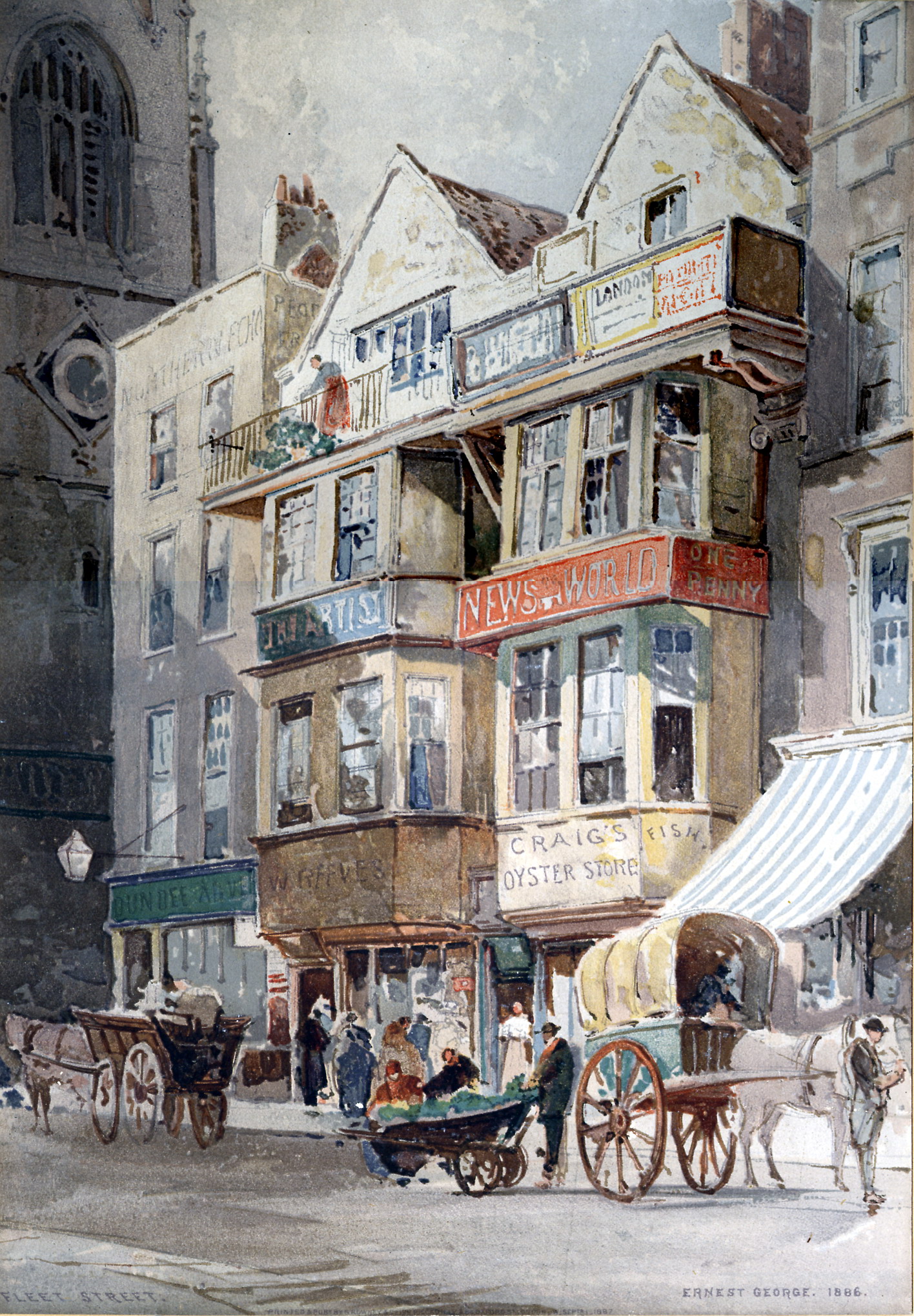
Fleet Street, watercolor by Ernest George (1839-1922). In England, middle-class families used to be so large that they overshot their niche and flooded the ranks of the lower class.


Until the last ten years it was widely believed that cultural evolution had taken over from genetic evolution in our species. When farming replaced hunting and gathering, something fundamentally changed in the relationship between us and our surroundings. We no longer had to change genetically to fit our environment. Instead, we could change our environment to make it fit us.

That view has been challenged by a research team led by anthropologist John Hawks. They found that genetic evolution actually speeded up 10,000 years ago, when hunting and gathering gave way to farming. In fact, it speeded up over a hundred-fold. Why? Humans were now adapting not only to slow-changing natural environments but also to faster-changing cultural environments, things like urban living, belief systems, and the State monopoly on violence. Far from slowing down, the pace of genetic change actually had to accelerate (Hawks et al. 2007).

These findings received a broader public hearing with the publication of The 10,000 Year Explosion: How Civilization Accelerated Human Evolution. More recently, they have been discussed in a review article by historian John Brooke and anthropologist Clark Spencer Larsen:


Are we essentially the same physical and biological beings as Ice Age hunter-gatherers or the early farming peoples of the warming early Holocene? How has the human body changed in response to nine or ten millennia of dramatic dietary change, a few centuries of public health interventions, and a few decades of toxic environmental exposures? In short, how has history shaped biology? 

[...] But very clearly human evolution did not stop with the rise of modern humanity in the Middle to Late Paleolithic. Climatic forces, dietary shifts, disease exposures, and perhaps the wider stresses and challenges of hierarchical, literate state societies appear to have been exerting selective pressure on human genetics.

In short, we have become participants in our evolution: we create more and more of our surroundings, and these surroundings influence the way we evolve. Culture is not simply a tool we use to control and direct our environment. It is a part of our environment, the most important part, and as such it now controls and directs us.

Brooke and Larsen nonetheless feel attached to older ways of evolutionary thinking, particularly the "essentialism" of pre-Darwinian biology. We see this when they assert that “the essential modeling of the genetic code ended sometime in the Paleolithic." Actually, there was no point in time when our ancestors became essentially "human"—whatever that means. A Paleolithic human 100,000 years ago would have had less in common with you or me than with someone living 100,000 years earlier or even a million years earlier. Human evolution has been logarithmic—the changes over the past 10,000 years exceed those over the previous 100,000 years, which in turn exceed those over the previous million.


Clark’s model

Brooke and Larsen discuss Gregory Clark's work on English demography. Clark found that the English middle class expanded steadily from the twelfth century onward, its descendants not only growing in number but also replacing the lower classes through downward mobility. By the 1800s, its lineages accounted for most of the English population. Parallel to this demographic expansion, English society shifted toward "middle class" culture and behavior: thrift, pleasure deferment, increased future orientation, and unwillingness to use violence to settle personal disputes (Clark, 2007). 

Clark’s work is criticized by Brooke and Larsen on two grounds:

[... ] there is no biological evidence to support an argument for English industrial transformation via natural selection. More importantly, this was a process that—hypothetically—had been at work around the world since the launch of social stratification in the Late Neolithic and the subsequent rise of state societies.

How valid are these criticisms? Let me deal with each of them.


Is social stratification the only precondition of Clark’s model?

First, it is true that many societies around the world are socially stratified, but social stratification is only one of the preconditions of Clark’s model. There are two others:

1. Differences in natural increase between social classes, with higher natural increase being associated with higher social status.

2. Porous class boundaries. The demographic surplus of the middle and upper classes must be free to move down into and replace the lower classes.

These preconditions are not met in most socially stratified societies. Brooke and Larsen are simply wrong when they say: "The poor died with few or no children everywhere in the world, and across vast stretches of human history." In reality, there have been many societies where fewer children were born on average to upper-class families than to lower-class families. A notable example is that of the Roman Empire, particularly during its last few centuries: upper-class Romans widely practiced abortion and contraception (Hopkins 1965). A similar situation seems to have prevailed in the Ottoman Empire. By the end of the eighteenth century, Turks were declining demographically in relation to their subject peoples, perhaps because they tended to congregate in towns and were more vulnerable to the ravages of plague and other diseases (Jelavich and Jelavich, 1977, pp. 6-7)

Nor are class boundaries always porous. Social classes often become endogamous castes. This can happen when a social class specializes in "unclean" work, like butchery, preparation of corpses for burial, etc. This was the case with the Burakumin of Japan, the Paekchong of Korea, and the Cagots of France (Frost 2014). Because of their monopoly over a despised occupation, they were free from outside competition and thus had the resources to get married and have enough children to replace themselves. This was not the case with the English lower classes, who faced competition from “surplus” middle-class individuals between the twelfth and nineteenth centuries. Such downward mobility is impossible in caste societies, where “surplus” higher-caste individuals are expected to remain unmarried until they can find an appropriate social situation. 

A caste society thus tends to be evolutionarily stagnant. Lower castes in particular tend to preserve mental and behavioral predispositions that would otherwise be removed from the gene pool in a more fluid social environment.

Why did class boundaries remain porous in England? The reason was probably the greater individualism of English society, particularly its expanding middle class. Sons were helped by their parents, but beyond a certain point they were expected to shift for themselves. My mother’s lineage used to be merchants on Fleet Street in London. They were successful and had such large families that they overshot their niche. By the nineteenth century, some of them had fallen to the level of shipbuilding laborers, and it was as such that they came to Canada.


Is biological evidence lacking for Clark's model?

Brooke and Larsen are on firmer ground when they say that Clark's model is unsupported by biological evidence. There is certainly a lack of hard evidence, but the only possible hard evidence would be ancient DNA. If we could retrieve DNA from the English population between the 12th and 19th centuries, would we see a shift toward alleles that support different mental and behavioral traits? That work has yet to be done. 

Nonetheless, a research team led by Michael Woodley has examined ancient DNA from sites in Europe and parts of southwest and central Asia over a time frame extending from 4,560 and 1,210 years ago. During that time frame, alleles associated with high educational attainment gradually became more and more frequent. The authors concluded: "This process likely continued until the Late Modern Era, where it has been noted that among Western populations living between the 15th and early 19th centuries, those with higher social status […] typically produced the most surviving offspring. These in turn tended toward downward social mobility due to intense competition, replacing the reproductively unsuccessful low-status stratum […] eventually leading to the Industrial Revolution in Europe" (Woodley et al. 2017).

Again, work remains to be done, particularly on the genetic profile of the English population between the twelfth and nineteenth centuries, but the existing data do seem to validate Clark's model for European societies in general. Indeed, psychologist Heiner Rindermann presents evidence that mean cognitive ability steadily rose throughout Western Europe during late medieval and post-medieval times. Previously, most people failed to develop mentally beyond the stage of preoperational thinking. They could learn language and social norms but their ability to reason was hindered by various impediments like cognitive egocentrism, anthropomorphism, finalism, and animism (Rindermann 2018, p. 49). From the sixteenth century onward, more and more people reached the stage of operational thinking. They could better understand probability and cause and effect and could see things from the perspective of another person, whether real or hypothetical (Rindermann 2018, pp. 86-87).

As the “smart fraction” became more numerous, it may have reached a threshold where intellectuals were no longer isolated individuals but rather communities of people who could interact and exchange ideas. This was one of the hallmarks of the Enlightenment: intellectuals were sufficiently large in number to meet in clubs, “salons,” coffeehouses, and debating societies.


References

Brooke, J.L. and C.S. Larsen. (2014).The Nurture of Nature: Genetics, Epigenetics, and Environment in Human Biohistory. The American Historical Review 119(5): 1500-1513

Clark, G. (2007). A Farewell to Alms. A Brief Economic History of the World. Princeton University Press: Princeton and Oxford.

Clark, G. (2009a). The indicted and the wealthy: surnames, reproductive success, genetic selection and social class in pre-industrial England.

Clark, G. (2009b). The domestication of man: The social implications of Darwin. ArtefaCTos 2: 64-80. 

Cochran, G. and H. Harpending. (2009). The 10,000 Year Explosion: How Civilization Accelerated Human Evolution. New York: Basic Books. 

Frost, P. (2014). Burakumin, Paekchong, and Cagots. ResearchGate

Hawks, J., E.T. Wang, G.M. Cochran, H.C. Harpending, and R.K. Moyzis. (2007). Recent acceleration of human adaptive evolution. Proceedings of the National Academy of Sciences (USA) 104: 20753-20758.

Hopkins, K. (1965). Contraception in the Roman Empire. Comparative Studies in Society and History 8(1): 124-151.

Jelavich, C. and B. Jelavich. (1977). The Establishment of the Balkan National States, 1804-1920. Seattle: University of Washington Press.

Rindermann, H. (2018). Cognitive Capitalism. Human Capital and the Wellbeing of Nations. Cambridge University Press.

Woodley, M.A., S. Younuskunju, B. Balan, and D. Piffer. (2017). Holocene selection for variants associated with general cognitive ability: comparing ancient and modern genomes. Twin Research and Human Genetics 20(4): 271-280.