Showing posts with label Ron Unz. Show all posts

Sunday, July 28, 2019

Why that stereotype and not the other?


Nubian Pyramids (Wikicommons - Petr Adam Dohnalek). In classical antiquity, contacts with black Africans were largely with Nubians, a people who already enjoyed a high level of material culture. 


A decade ago, Jason Malloy noted a curious fact: the ancient world did not see sub-Saharan Africans as less intelligent, despite the existence of other stereotypes, like macrophallia (Frost 2009, see comments; Thompson 1989). A stereotype of low intelligence is recorded in only two Greco-Roman texts, to the best of my knowledge. One is a reference by Ibn Khaldun (1332-1406 AD) to the Greek physician Galen (129-210 AD). The statement attributed to Galen does not appear in any of his works, at least not in those that have survived, and may be a false attribution.

We have seen that Negroes are in general characterized by levity, excitability, and great emotionalism. They are found to dance wherever they hear a melody. They are everywhere described as stupid. ... Al-Masfiüdi undertook to investigate the reason [for this]. However, he did no better than to report on the authority of ... al-Kindi and Jalinus [Galen] that the reason is a weakness of their brains which results in a weakness of their intellects. This is an inconclusive and unproven statement. ... The real reason is that ... joy and gladness are due to the expansion and diffusion of the animal spirit. Sadness is due to the opposite. (Hunwick 2005)

The other is the Christian parable of the Ethiopian woodcutter. The desert monk Arsenius (350-445 AD) recounted how an Ethiopian went out to gather wood. When the burden became too heavy, he put it down and continued to gather, but now his load was even heavier. So he put it down and gathered even more (Wallis Budge 1907). This parable is from late antiquity and may reflect the growing influx of black slaves into the Middle East during that period.

It seems, then, that low intelligence was not attributed to sub-Saharan Africans during classical antiquity, at least not often enough to become a stereotype. This stereotype would emerge later, during late antiquity and even more so during the Islamic period (Lewis 1990, pp. 46-47, 92-97).

I suspect there were two reasons:

- mean intelligence was probably lower in the Mediterranean world during classical antiquity, perhaps in the low 90s. This would be consistent with the apparently smaller size of its "smart fraction," in contrast not only to Western societies in later times but also to ancient Greece in earlier times (see July 13 post). In Roman society, intellectuals seem to have largely been isolated individuals. They did not come together to hold regular conferences or publish journals. While there were elementary schools, the ludus litterarius, there were no institutions of higher learning, only private tutors. The difference in mean intelligence with sub-Saharan Africa would have thus seemed smaller.

- contacts with dark-skinned Africans were initially most frequent with Nubians, who under Egyptian influence already enjoyed a high level of material culture and were thus already being selected for cognitive ability. Contacts with peoples farther south developed later, with development of the African slave trade. This trade seems to have slowly but steadily increased in volume during late antiquity and, subsequently, the Islamic period (Frost 2008).


Civilization and intelligence

So, beyond a certain point, does civilization actually select against intelligence? The short answer: yes, in some cases. 

Now for the long answer. First, increased intelligence comes at a cost:

The brain requires about 22 times as much energy to run as the equivalent in muscle tissue. The energy required to run every bodily process comes from the food we eat. Human brains are three times larger than our closest living relative, the chimpanzee, and use up to three times the energy, but the two species have the same metabolic rate. (Welsh 2011)

Because of that high energy cost, any excess intelligence is under strong negative selection and will decline noticeably—even over a few generations. Positive selection becomes confined to a minority of the population as a civilization develops and moves toward specialization of labor, i.e., the most difficult intellectual work is done by a minority while the majority performs menial tasks. 

Nonetheless, we have examples of advanced civilizations, notably in East Asia from ancient times and, later on, in Western Europe, where mean intelligence was and still is quite high. Those civilizations likewise had specialization of labor. So what made them different?

It seems to have been a process of internal demographic replacement that Gregory Clark described with respect to England and Ron Unz with respect to China. The mean intelligence of an entire population will steadily rise if two conditions are met:

1. Fertility is higher in higher social classes.

2. Class boundaries are sufficiently porous that the resulting demographic surplus of these classes can move downward and replace the lower classes.

Historically and cross-culturally, these two conditions were far from universal. In many societies, surplus members of the upper class preferred to remain unmarried and wait for a suitable high-status niche to open up. It was shameful to "lose caste" and enter a niche lower on the social ladder. Nor was fertility universally higher in higher social classes. In some cases, the rich and powerful had fewer children because they could count on other means of support for their old age. In other cases, they tended to congregate in towns and cities, where infant mortality was higher. Finally, greater sexual access to women often failed to translate into reproductive success because of infertility due to STDs or because of a culture of debauchery and indifference to married life.


Conclusion

With ancient DNA and polygenic cognitive scores, we can now understand history in a new light. Mean intelligence has risen and fallen during the time of recorded history, and not simply because of migrant influxes. The people may have been the same, and yet they really weren't:

Since it looks like there has been significant evolutionary change over historical time, we're going to have to rewrite every history book every written," said Gregory Cochran, a population geneticist at the University of Utah. "The distribution of genes influencing relevant psychological traits must have been different in Rome than it is today," he added. "The past is not just another country but an entirely different kind of people” (Wade 2006).


References

Clark, G. (2007). A Farewell to Alms. A Brief Economic History of the World, 1st ed.; Princeton University Press: Princeton,

Frost, P. (2008). The beginnings of black slavery. Evo and Proud, January 25
http://evoandproud.blogspot.com/2008/01/beginnings-of-black-slavery.html

Frost, P. (2009). Skin color and Egyptian/Nubian encounters. Evo and Proud, April 23
http://evoandproud.blogspot.com/2009/04/skin-color-and-egyptiannubian.html

Hunwick, J.O. (2005). A region of the mind: Medieval Arab views of African geography and ethnography and their legacy. Sudanic Africa 16: 103-136
https://org.uib.no/smi/sa/16/16Hunwick.pdf

Lewis, B. (1990). Race and Slavery in the Middle East. Oxford University Press.

Thompson, L.A.  (1989). Romans and Blacks. Norman: University of Oklahoma Press.

Unz, R. (2013). How Social Darwinism made modern China. The American Conservative, March/April, 16-27.
https://www.theamericanconservative.com/articles/how-social-darwinism-made-modern-china-248/

Wade, N. (2006). The twists and turns of history, and of DNA. The New York Times, March 12, Week in Review 14

Wallis Budge, E.A. (1907). The Paradise of the Holy Fathers. London: Chatto and Windus.
https://books.google.ca/books?id=LX_sCgAAQBAJ&printsec=frontcover&hl=fr&source=gbs_ge_summary_r&cad=0#v=onepage&q&f=false

Welsh, J. (2011). Still up for debate. LiveScience, November 9
https://www.livescience.com/16953-brain-body-size-expense.html 
Monday, April 1, 2019

They really are smart ... and other surprises


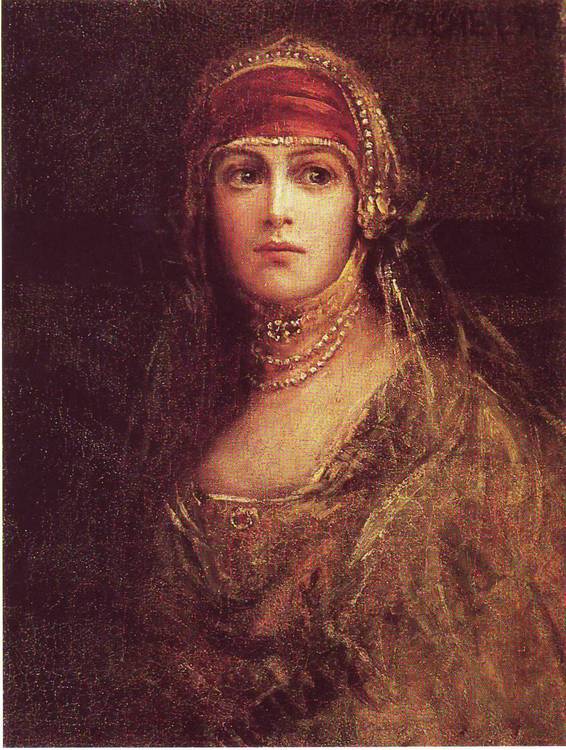
Rachela - Maurycy Gottlieb (1856-1879) (Wikicommons). Ashkenazi Jews have a higher incidence of genetic variants associated with high educational attainment.


Intelligence varies from one individual to the next, and most of this variance has genetic causes. But what, exactly, are these causes? Lots and lots of genes, it seems. To be precise, if we look at the genes that influence human intelligence, we find two things:

1. They are very numerous, numbering in the thousands.

2. In general, their variants differ slightly in their effects.

This shouldn't be surprising. Evolution proceeds by tinkering, i.e., by making little changes. Big changes tend to produce big side-effects, and most side-effects are deleterious. So the genetic capacity for intelligence differs among humans through small differences at thousands upon thousands of genes. Does it follow, then, that we cannot understand these differences by looking only at a few genes? Not necessarily. Each gene is like a weathervane. If you can get enough subjects from a human population, even a few genes will tell you the direction and strength of natural selection for intelligence. 

Davide Piffer began looking at these “weathervanes” six years ago. He gathered data from different human populations on ten SNPs (single nucleotide polymorphisms) whose genetic variants are associated with differences in intelligence, specifically differences in educational attainment. Then, for each population, he estimated its genetic capacity for intelligence by calculating a "polygenic score"—the number of genetic variants associated with higher educational attainment, out of a maximum of ten.

This score correlated with population IQ (r=0.90) and with PISA scores (r=0.84). It was highest in East Asians:

East Asians have the highest frequencies of alleles beneficial to educational attainment (39%) and consistently outperform other racial groups both within the US and around the world, in terms of educational variables such as completion of college degree or results on standardized tests of scholastic achievement. Europeans have slightly lower frequencies of educational attainment alleles (35.5%) and perform slightly worse in terms of educational attainment, compared to East Asians. On the other hand, Africans seem to be disadvantaged both with regards to their level of educational attainment in the US and around the world. Indeed, Africans have the lowest frequencies of alleles associated with educational attainment (16%). (Piffer 2013)

These results were considered preliminary. Thousands upon thousands of genes influence intelligence, and here we have only ten! Perhaps chance alone produced this geographic pattern. Over the next few years, as other researchers discovered more SNPs associated with educational attainment, Davide Piffer repeated his study with more of these weathervanes.

His latest study has just come out. It uses data on 2,411 SNPs, and the polygenic score correlates even higher with population IQ (r=0.98). The geographic pattern is the same, with East Asians scoring higher than Europeans, and with Africans scoring lower.


Yes, Jews really are smart

This time, however, the highest score was obtained for Ashkenazi Jews: 

This dataset included a sample of 145 Ashkenazi Jewish individuals. The IQ of Ashkenazi Jews has been estimated to be around 110 [34]. Remarkably, their EDU polygenic score was the highest in our sample, corresponding to a predicted score of about 108, mirroring preliminary results from a smaller (N = 53) sample (Dunkel et al., 2019) [34]. (Piffer 2019)

This finding vindicates the authors of a paper written more than a decade ago. Gregory Cochran, Jason Hardy, and Henry Harpending presented evidence that the mean IQ of Ashkenazi Jews exceeds not only that of non-Jewish Europeans but also that of other Jewish groups. The most striking piece of evidence is the high incidence among Ashkenazim of four genetic disorders: Tay-Sachs, Gaucher, Niemann-Pick, and mucolipidosis type IV (MLIV). All four affect the capacity to store sphingolipid compounds that promote the growth and branching of axons in the brain. These disorders are caused by alleles that are harmful in the homozygote state and beneficial in the much more common heterozygote state, i.e., the brain receives higher levels of sphingolipids without the adverse health effects.

Ironically, these facts are coming to light at a time when Ashkenazi Jews are disappearing through low fertility and high out-marriage. Meanwhile, and not coincidentally, they are disappearing from the ranks of top winners at the U.S. Math Olympiad, the Putnam Exam, the Computing Olympiad, and other academic competitions. This decline became noticeable in the 1980s and has accelerated since the turn of the millennium (Unz 2012; Frost 2018). Jews are still present in intellectual and cultural life, but this presence is losing its dynamism and becoming a mere legacy.


African American IQ is higher than predicted

The polygenic score seems to underpredict the IQ of African Americans:

Indeed, the IQ of African Americans appears to be higher than what is predicted by the PGS (Figure 2), which suggests this cannot be explained by European admixture alone, but it could be the result of enjoying better nutrition or education infrastructure compared to native Africans. Another explanation is heterosis ("hybrid vigor"), that is the increase in fitness observed in hybrid offspring thanks to the reduced expression of homozygous deleterious recessive alleles. (Piffer 2019)

I’d propose another possible explanation: higher intelligence in African Americans may be associated with a somewhat different basket of genetic variants. Some of these variants may come from our friends the Igbos, who seem to have followed their own evolutionary path toward higher intelligence (Frost 2015). Many notable African Americans are in fact of Igbo descent, including Forest Whitaker, Paul Robeson, and Blair Underwood (Wikipedia 2019).

Davide is skeptical about this explanation, pointing out that population IQ is in line with the polygenic score he calculated for sub-Saharan African groups (Esan, Gambians, Luhya, Mende, Yoruba). None of those groups, however, are Igbo, and it's really the Igbo who stand out among West Africans in measures of intellectual and educational attainment. If only for the sake of curiosity, we should find out their polygenic score. This score may underpredict their genetic capacity for intelligence, which to some degree would be boosted by genetic variants that exist only in sub-Saharan Africa, but it should still exceed what we see for other West Africans.


Conclusion

This latest study brings to 2,411 the number of SNPs that can inform us about the genetic capacity for intelligence in different human populations. This information was more dubious when only ten SNPs were available, and the geographic pattern could be put down to chance. That argument now seems weak. If chance is causing this pattern, why do we keep getting the same one?

Sure, we can wait until we get even more relevant SNPs, but the overall picture will probably remain the same. We will get finer geographic detail. In France, for example, we will probably understand why educational attainment is so much higher in Brittany (see:  http://www.targetmap.com/viewer.aspx?reportId=5987  H/T to Philippe Gouillou). There are probably several European regions and subregions where the genetic capacity for intelligence is on a par with what we see in Ashkenazi Jews and East Asians.

In sum, these findings deserve to be better known ... and more widely discussed.


Erratum

Initially, I wrote that Davide Piffer used 127 SNPs. In fact, 127 is the number of SNPs found in the HGDP (low coverage) dataset. In the other two datasets (1000 Genomes and GnomAd), those that the main analysis was based on, there were actually 2,411 SNPs.


****
Hiatus alert ****


I'll be unable to post for the near future, probably the next three months. 


References

Cochran, G., J. Hardy, and H. Harpending. (2006). Natural history of Ashkenazi intelligence, Journal of Biosocial Science 38: 659-693.
https://antville.org/static/sites/kratzbuerste/files/AshkenaziIQ.pdf   

Frost, P. (2018). The end of Jewish achievement? Evo and Proud, May 21
http://evoandproud.blogspot.com/2018/05/the-end-of-jewish-achievement.html

Frost, P. (2015). The Jews of West Africa, Evo and Proud, July 4
https://evoandproud.blogspot.com/2015/07/the-jews-of-west-africa.html

Piffer, D. (2019). Evidence for Recent Polygenic Selection on Educational Attainment and Intelligence Inferred from Gwas Hits: A Replication of Previous Findings Using Recent Data. Psych 1(1): 55-75
https://www.mdpi.com/2624-8611/1/1/5

Piffer, D. (2013). Factor analysis of population allele frequencies as a simple, novel method of detecting signals of recent polygenic selection: The example of educational attainment and IQ, Mankind Quarterly 54(2): 168-200
https://www.researchgate.net/profile/Davide_Piffer/publication/260436834_Factor_Analysis_of_Population_Allele_Frequencies_as_a_Simple_Novel_Method_of_Detecting_Signals_of_Recent_Polygenic_Selection_The_Example_of_Educational_Attainment_and_IQ/links/0c9605314d28dba7ea000000/Factor-Analysis-of-Population-Allele-Frequencies-as-a-Simple-Novel-Method-of-Detecting-Signals-of-Recent-Polygenic-Selection-The-Example-of-Educational-Attainment-and-IQ.pdf 

Unz, R. (2012). The myth of American meritocracy. The American Conservative, November 28
http://www.theamericanconservative.com/articles/the-myth-of-american-meritocracy/   

Wikipedia (2019). Igbo people.
https://en.wikipedia.org/wiki/Igbo_people#Diaspora

Monday, May 21, 2018

The end of Jewish achievement?


Neurons show more axonal growth when exposed to higher levels of sphingolipids (last figure) (Cochran et al. 2006)


Jewish achievement is a difficult topic. Recently, it has been addressed by Jordan Peterson, as in this interview with the Forward:

"You can assume that they [Jews] are intelligent and have a culture of learning, or you can think that there's some kind of cabal," Peterson told the Forward. "So if I'm gonna hit the hornets nest, I might as well hit it on the side that takes the wind out of the sails of far-righters and their idiot anti-Semitism." (Feldman 2018)

That quote appeared under the headline "Is Jordan Peterson Enabling Jew Hatred?" There was also a photo montage (since removed) juxtaposing his image with that of Hitler. It's hard to believe that this topic was freely discussed in the mainstream a mere decade ago. At that time Commentary ran an article by Charles Murray on "Jewish Genius":

From 1870 to 1950, Jewish representation in literature was four times the number one would expect. In music, five times. In the visual arts, five times. In biology, eight times. In chemistry, six times. In physics, nine times. In mathematics, twelve times. In philosophy, fourteen times.


[...] What accounts for this remarkable record? A full answer must call on many characteristics of Jewish culture, but intelligence has to be at the center of the answer. Jews have been found to have an unusually high mean intelligence as measured by IQ tests since the first Jewish samples were tested. (The widely repeated story that Jewish immigrants to this country in the early 20th century tested low on IQ is a canard.) Exactly how high has been difficult to pin down, because Jewish sub-samples in the available surveys are seldom perfectly representative. But it is currently accepted that the mean is somewhere in the range of 107 to 115, with 110 being a plausible compromise. (Murray 2007)

Murray then discussed a paper by Gregory Cochran, Jason Hardy, and Henry Harpending, likewise published in a mainstream journal. The authors argued that Ashkenazi Jews had historically worked in occupations that select for cognitive ability, i.e., sales, finance, and trade. Non-Jews usually worked in intellectually less demanding occupations, most often farming. Sephardic Jews were similarly selected, but not to the same extent. They tended to work in a wider range of occupations, with more emphasis on crafts than on finance. Furthermore, beginning in the 17th century, Ashkenazi craftsmen were more entrepreneurial than their Sephardic counterparts; they produced for a larger market, geographically and demographically, where the rewards for success were greater and where successful craftsmen had only one way of increasing their workforce to meet demand: marrying younger and having more children (Frost 2007).

This theory is supported by a striking piece of evidence: the high incidence among Ashkenazim of certain genetic disorders: Tay-Sachs, Gaucher, Niemann-Pick, and mucolipidosis type IV (MLIV). All four of these disorders affect the same metabolic pathway: the capacity to store sphingolipid compounds that promote the growth and branching of axons in the brain. Although these disorders are deleterious in the homozygote state, they're a net benefit in the much more frequent heterozygote state. They provide the brain with higher levels of sphingolipids without the adverse health effects (Cochran et al. 2006).

This is not to say that only these four disorders explain the higher mean IQ of Ashkenazim.  They're simply witnesses to a selection pressure that has probably acted on the many thousands of genes that in one way another influence cognitive ability.


A strange collapse

If Jewish achievement is genetically based, it should be relatively stable, shouldn't it? Yet it has been far from stable over the past forty years. Ron Unz (2012) has ably documented what he calls "the strange collapse of Jewish achievement":

- In the U.S. Math Olympiad, over 40% of the top students were Jewish during the 1970s. During the 1980s and 1990s, the percentage averaged about one-third. During the thirteen years since 2000, two names out of 78 or 2.5% appear to be Jewish. 

- On the Putnam Exam (a mathematics competition for American college students) over 40% of the winners were Jewish before 1950. Between that year and the 1990s, the percentage was 22-31%. Since 2000, it has been under 10%, without a single likely Jewish name between 2005 and 2012.

- Of the national finalists for the Science Talent Search, 22-23% were Jewish from the 1950s to the 1980s. The percentage was 17% in the 1990s, 15% in the 2000s, and 7% from 2010 to 2012. Of the thirty top students over the last period, only one seems to have been Jewish. 

- Jews were over one-quarter of the top students in the Physics Olympiad from 1986 to 1997. During the 2000s the percentage was 5%.

- From 2000 to 2012, only 8% of the top students in the Biology Olympiad were Jewish, with none from 2010 to 2012. 

- Between 1992 and 2012, only 11% of the winners of the Computing Olympiad had Jewish names, as did 8% of the Siemens AP Award winners. 

- From 2010 to 2012, none of the Chemistry Olympiad winners had a probable Jewish name.

A similar decline seems to be under way in Israel. Rindermann (2018, p. 148) cites student assessment studies that indicate a decrease in that country's IQ from 101 in the 1960s to 95 today. Yet the intervening years saw a large influx of Jewish immigrants from the former Soviet Union—about 979,000 between 1989 and 2006 (Wikipedia 2018b). The Ashkenazi proportion of Israel's population is consequently higher today than it was in the 1960s.

So what is driving this decline in academic performance? Ron Unz opts for a social/cultural cause: "today's overwhelmingly affluent Jewish students may be far less diligent in their work habits or driven in their studies than were their parents or grandparents, who lived much closer to the bracing challenges of the immigrant experience."

Hmm ...It's a bit of a stretch to say that most Jewish American kids were still the children or grandchildren of immigrants as late as the 1970s. In this, Ron is echoing the frequent claim that the immigrant experience has a transformative effect, turning slackers into strivers or at least encouraging the slackers to stay home. 

Let's take off the rose-tinted glasses and look reality in the face: most immigrants are not high achievers. Either today or back in the challenging 1970s. As for the minority who are, they typically come from groups that were already that way in their countries of origin. So the immigrant experience, in itself, has little explanatory value. The explanation is that certain cultures have selected for mental and behavioral traits that make high achievement possible.

Unz is on firmer ground when he says that over the last two decades up to half of the Jewish winners of the Math Olympiad were recent immigrants from the former Soviet Union. But why, then, did the mean IQ of Israel decline when that country took in a similar influx of Soviet Jews? That influx was much larger proportionately—almost a million in a country of eight and a half million. Today, Russian Jews number 1.2 million in Israel, if one includes non-Jewish household members (Wikipedia 2018a; Wikipedia 2018b). 

Perhaps Soviet Jews who went to the United States were somehow different from those who went to Israel.  In the U.S., about half of them arrived under the Lautenberg amendment (1990) which authorizes the entry of religious minorities "with a credible, but not necessarily individual, fear of persecution." In Israel, they arrived under the Law of Return, which lets in anyone with at least one Jewish grandparent or a Jewish spouse. 

Israel is thus more open to immigrants from the former Soviet Union ... as long as they have some sort of Jewish affiliation. The affiliation is often weak:

In 1988, a year before the immigration wave began, 58% of married Jewish men and 47% of married Jewish women in the Soviet Union had a non-Jewish spouse. Some 26%, or 240,000, of the immigrants had no Jewish mother, and were thus not considered Jewish under Halakha, or Jewish religious law, which stipulates one must have a Jewish mother to be considered Jewish. (Wikipedia 2018b)

Out-marriage has increased considerably in those countries that provide Israel with immigrants, not only the former Soviet Union but also the United States, Canada, and France. If Jews are becoming less and less Jewish by ancestry, it should be no surprise that anything specific to them genetically is likewise becoming less and less, whether they live in Israel or in the United States. This genetic change should be most noticeable on the right tail of the bell curve ... among the most gifted.


Conclusion

So the decline in Jewish achievement may be both an argument for and an argument against a genetic cause. Ron Unz sees an argument against: "the innate potential of a group is unlikely to drop so suddenly." Well, only if the group has a closed membership. According to a 2013 American survey, the intermarriage rate is now 58% among all Jews and 71% among non-Orthodox Jews. Yet 81% of all Jews still raise their children as Jewish (Goodstein 2013). It seems that "Jewishness" is increasingly self-defined and self-ascribed.

Besides out-marriage, something else may be going on. There are signs that fertility is sharply declining among the most intelligent women (Kanazawa 2014). Jewish Americans would be harder hit in this respect, but the problem may be a much larger one, as indicated by the recent slowing down and reversal of the Flynn Effect and by the steady increase in reaction time from about the year 1980 onward (Flynn 2007, pp. 143; Frost 2014; Madison 2014; Teasdale and Owen 2005).

In conclusion, the decline in Jewish achievement may have a genetic cause, a social/cultural one, or both. It nonetheless looks real. Much has been written about the bleak outlook for Jewish Americans due to their high out-marriage rate and their low fertility rate. But what if, on top of this numerical decline, there has also been a cognitive and intellectual one?

What will happen when Jewish millennials and post-millennials pick up the torch, move up in the world, and begin to make their mark? We may see another collapse: that of the remarkable Jewish presence in American life and culture.


References

Cochran, G., J. Hardy, and H. Harpending. (2006). Natural history of Ashkenazi intelligence, Journal of Biosocial Science 38: 659-693.
https://antville.org/static/sites/kratzbuerste/files/AshkenaziIQ.pdf   

Feldman, A. (2018). Is Jordan Peterson enabling Jew hatred? Forward. May 11
https://forward.com/news/national/400597/is-jordan-peterson-enabling-jew-hatred/

Flynn, J.R. (2007). What is Intelligence? Beyond the Flynn Effect. Cambridge University Press.
https://books.google.ca/books?id=qvBipuypYUkC&printsec=frontcover&hl=fr&source=gbs_ge_summary_r&cad=0#v=onepage&q&f=false

Frost, P. (2007). Natural selection in proto-industrial Europe. Evo and Proud, November 16.
http://evoandproud.blogspot.com/2007/11/natural-selection-in-proto-industrial.html

Frost, P. (2014). What happened in the 1980s to reaction time? Evo and Proud, May 3.
http://evoandproud.blogspot.ca/2014/05/what-happened-in-1980s-to-reaction-time.html

Goodstein, L. (2013). Poll shows major shift in identity of U.S. Jews. The New York Times, October 1.
https://www.nytimes.com/2013/10/01/us/poll-shows-major-shift-in-identity-of-us-jews.html  

Kanazawa, S. (2014). Intelligence and childlessness. Social Science Research 48: 157-170.
https://www.researchgate.net/profile/Satoshi_Kanazawa/publication/263666009_Intelligence_and_childlessness/links/59dc1174458515e9ab45299c/Intelligence-and-childlessness.pdf

Madison, G. (2014). Increasing simple reaction times demonstrate decreasing genetic intelligence in Scotland and Sweden, London Conference on Intelligence, Psychological comments, April 25,  #LCI14 Conference proceedings
http://www.unz.com/jthompson/lci14-questions-on-intelligence/

Murray, C. (2007). Jewish Genius. Commentary, April 1
https://www.commentarymagazine.com/articles/jewish-genius/  

Rindermann, H. (2018). Cognitive Capitalism. Human Capital and the Wellbeing of Nations. Cambridge University Press.

Teasdale, T.W., and D.R. Owen. (2005). A long-term rise and recent decline in intelligence test performance: The Flynn Effect in reverse. Personality and Individual Differences 39(4): 837-843.
https://doi.org/10.1016/j.paid.2005.01.029

Unz, R. (2012). The myth of American meritocracy. The American Conservative, November 28
http://www.theamericanconservative.com/articles/the-myth-of-american-meritocracy/  

Wikipedia (2018a). Russian Jews in Israel
https://en.wikipedia.org/wiki/Russian_Jews_in_Israel

Wikipedia (2018b). 1990s Post-Soviet Aliyah
https://en.wikipedia.org/wiki/1990s_Post-Soviet_aliyah

Saturday, December 20, 2014

Wishing you a merry ... something


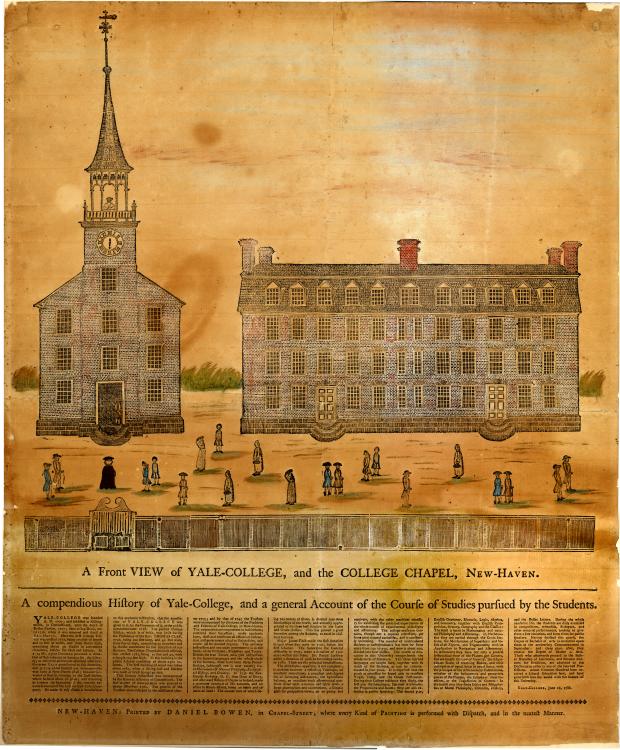
Yale was founded by English Congregationalist ministers. Today, only 22% of its student body has a Christian European background of any sort.


Last year, around this time, friends and acquaintances offered me all sorts of religiously neutral salutations: Seasons Greetings! Happy Holidays! Joyeuses fêtes! Meilleurs vœux! Only two people wished me Merry Christmas.

One was Muslim, the other was Jewish.

They meant well. After all, isn't that the culturally correct greeting? In theory, yes. In practice, most Christians feel uncomfortable affirming their identity. And this self-abnegation gets worse the closer you are to the cultural core of Anglo-America. Immigrants of Christian background enjoy being wished Merry Christmas. Black people likewise. Catholics seem to split half and half, depending on how traditional or nominal they are.

But the WASPs. Oh, the WASPs! With them, those two words are a faux pas. The response is usually polite but firm: "And a very happy holiday season to you!"

Things weren’t always that way. The situation calls to mind a Star Trek episode where Capt. Kirk persuades an alien robot to destroy itself. "That which excludes is evil. If you affirm your identity, you are excluding those who don't share your identity. You are therefore evil."

I could question this logic. What about other cultural groups? Why single out just one? But I’ve heard the answer already. WASPs and their culture dominate North America. The path to power, or simply a better life, runs through their institutions. Minorities can affirm their own identities without restricting the life choices of others, but the same does not hold true for WASPs. Their identity affects everyone and must belong to everyone.

I’m still not convinced. Yes, WASPs did create the institutions of Anglo-America, but their influence in them is now nominal at best. The U.S. Supreme Court used to be a very WASPy place. Now, there's not a single White Protestant on it. That's a huge underrepresentation for a group that is still close to 40% of the population. We see the same thing at the Ivy League universities, which originally trained Protestant clergy for the English colonists. Today, how many of their students have any kind of Christian European background? The proportions are estimated to be 20% at Harvard, 22% at Yale, and 15% at Columbia (Unz, 2012).

Sometimes reality is not what is commonly believed.  WASPs are not at all privileged. In fact, they have been largely pushed aside in a country that was once theirs.

Whenever this ethnic displacement comes up for discussion (it usually doesn't), it gets put down to meritocracy. In the past, WASPs were the best people for the job of running the country. Now it's a mix of Jews, Asians, and other high-performing groups. A cynic might ask whether merit is the only factor ... and whether the U.S. is better run today than it was a half-century ago. Indeed, the latest Supreme Court appointee had little experience as a solicitor general and a scanty record of academic scholarship.

Merit isn't the whole story. There is also networking. In most parts of the world, an individual gets ahead in life by forming bonds of reciprocal assistance with family and kinfolk. "You scratch my back, I'll scratch yours." That's how most of the world works.

But not all of the world. Northwest Europeans have diverged the most from this pattern, at least since the 12th century (Macfarlane, 1978a - 2012). Their kinship ties have been weaker and their sense of individualism correspondingly stronger. As a result, their cultural evolution has to a large degree been emancipated from the restraints of kinship, and this emancipation has facilitated other ways of organizing social relations: the nation-state, ideology, the market economy ... not to mention the strange idea of personal advancement through personal merit alone. This model of society has succeeded economically, militarily, and geopolitically, but it's vulnerable to people who don't play by the rules, since the threat of kin retaliation is insufficient to keep them in line. Societal survival is possible only to the extent that rule-breakers are ostracized and immigration restricted from cultures that play by other rules. 

This brings us to the dark side of traditional WASP culture: the busybodiness, the judgmentalism, the distrust of foreigners no matter how nice or refined they may seem. That mentality still exists, but it has been turned against itself. The people to be excluded are now those who exclude. The cultural programming for survival has been turned into a self-destruct mechanism ... as in that Star Trek episode.

Even if we could somehow abort this self-destruct sequence, it's hard to see how WASPs can survive on the current playing field. WASPs believe in getting ahead through rugged individualism. Most of the other groups believe in using family and ethnic connections. Guess who wins.

Anyway, I wish all of you a merry end of 2014! Far be it for me to exclude anyone from the merriment.
 

References
 

Unz, R. (2012). The myth of American meritocracy, The American Conservative, November 28
http://www.theamericanconservative.com/articles/the-myth-of-american-meritocracy/ 

Macfarlane, A. (2012). The invention of the modern world. Chapter 8: Family, friendship and population, The Fortnightly Review, Spring-Summer serial
http://fortnightlyreview.co.uk/2012/07/invention-8/ 

Macfarlane, A. (1992). On individualism, Proceedings of the British Academy, 82, 171-199.
http://www.alanmacfarlane.com/TEXTS/On_Individualism.pdf 

Macfarlane, A. (1978a). The origins of English individualism: Some surprises, Theory and society: renewal and critique in social theory, 6, 255-277.
http://www.alanmacfarlane.com/TEXTS/Origins_HI.pdf

Macfarlane, A. (1978b). The Origins of English Individualism: The Family, Property and Social Transition, Oxford: Blackwell.

Saturday, July 26, 2014

A new start


When geneticist Davide Piffer examined IQ-enhancing alleles at seven different genes, he found that their average prevalence differed among human populations, being highest in East Asians and lowest in Mbuti Pygmies (photo used with author's approval)


My weekly posts are now appearing on The Unz Review (http://www.unz.com/). By accepting Ron's invitation, I hope to reach a bigger audience and bring myself closer to other writers in the area of human biodiversity. When people work together, or simply alongside each other, minor differences can be ironed out and major differences narrowed or at least accepted good-naturedly. One thing I've learned is that academic debate can leave a legacy of hurt feelings. The impersonal can become personal, partly because people feel attached to their views and partly because views themselves can have personal impacts.

Working together also creates synergy. It becomes easier to identify research priorities, contact interested researchers, and end up with publishable findings. At present, most HBD research involves trawling through the literature and offering new interpretations. That's fine, but we need lab work as well. This point came up in a 2006 interview with geneticist Bruce Lahn:
 
A lot of researchers studying human population genetics and evolution are strictly data miners (i.e., they generate/publish no original data). There are limitations to such an approach, as it depends on the available data and prevents certain analyses from being performed. Do you expect to see more research groups turning into pure data mining labs in the future? Or will there still be a place for independent labs generating their own data (for example, resequencing a gene in multiple individuals to study the polymorphism)?

Given the explosion of genomic data in the last decade or so, which shows no sign of slowing down any time soon, there is likely to be a proliferation of pure data miners just because there is a niche for them. But I suspect that many interesting findings will still require the combination of data mining and wet experiments to provide key pieces of data not already available in public databases. In this regard, labs that can do both data mining and wet experiments can have an advantage over labs that can only do data mining. (Gene Expression, 2006)

Lab work will probably have to be offshored, not because it's cheaper to do elsewhere but because the "free world" is no longer the best place for unimpeded scientific inquiry.  A Hong Kong team is conducting a large-scale investigation into the genetics of intelligence, and nothing comparable is being done in either North America or Western Europe. Cost isn't the reason.

A few suggestions for research:
 

Human variation in IQ-enhancing alleles

We know that human intellectual capacity has risen through small incremental changes at very many genes, probably hundreds if not thousands. Have these changes been the same in all populations?

Davide Piffer (2013) has tried to answer this question by using a small subset of these genes. He began with seven SNPs whose different alleles are associated with differences in performance on PISA or IQ tests. Then, for fifty human populations, he looked up the prevalence of each allele that seems to increase performance. Finally, for each population, he calculated the average prevalence of these alleles at all seven genes.

The average prevalence was 39% among East Asians, 36% among Europeans, 32% among Amerindians, 24% among Melanesians and Papuan-New Guineans, and 16% among sub-Saharan Africans. The lowest scores were among San Bushmen (6%) and Mbuti Pygmies (5%). A related finding is that all but one of the alleles are specific to humans and not shared with ancestral primates.

Yes, he was using a small subset of genes that influence intellectual capacity. But you don't need a big number to get the big picture. If you dip your hand into a barrel of differently colored jelly beans, the colors you see in your hand will match well enough what's in the barrel. In any case, if the same trend holds up with a subset of 50 or so genes, it will be hard to say it's all due to chance.
 

Interaction between age and intellectual capacity

These population differences seem to widen after puberty, as Franz Boas noted a century ago (Boas, 1974, p. 234). It may be that general intelligence was largely confined to early childhood in ancestral humans, as a means to integrate information during the time of life when children become familiar with their surroundings. With increasing age, and familiarity, this learning capacity would shut down. When modern humans began to enter environments that had higher cognitive demands, natural selection may have favored retention of general intelligence in adulthood, just as it favored retention of the capacity to digest lactose wherever adults raised dairy cattle and drank milk.

After doing a principal component analysis on covariance between the above IQ-enhancing alleles and performance on IQ and Pisa tests, Piffer (2013) was able to identify three alleles that show the highest loading on the first component. Ward et al. (2014) have found that possession of these three alleles correlates with educational performance of 13 to 14 year old children. We now have a tool to measure the interaction between genes and age in the development of intellectual capacity, particularly during the critical period extending from pre-puberty to early adulthood.
 

Convergent evolution

Some human populations seem to have arrived at similar outcomes through different evolutionary trajectories. East Asians, for instance, resemble Western Europeans in their level of societal development, but this similar outcome has been achieved through a different mental and behavioral package, specifically lower levels of guilt and empathy with correspondingly higher levels of shame and prosocial behavior. In short, East Asians tend to enforce social rules more by external mediation (e.g., shaming, peer pressure, family discipline) than by internal control (e.g., guilt, empathy).

This difference probably reflects a mix of learned and innate predispositions, since natural selection favors whatever works, regardless of how hardwired it may or may not be. To the extent that these predispositions are hardwired, East Asians may be less able to cope with the sort of aloneness, anonymity, and individualism we take for granted.

It would be easy enough to study the neurological effects of social isolation on East Asians, and there is already suggestive evidence that such effects include unusual outbursts of psychotic behavior. It would be harder, however, to determine whether this malfunctioning has a heritable component.
 

Microcephalin - Why does its Eurasian allele increase brain volume?

Almost a decade ago, Bruce Lahn was among those who discovered that a gene involved in brain growth, Microcephalin, continued to evolve after modern humans had spread out of Africa. Its most recent allele arose some 37,000 years ago in Eurasia and is still largely confined to native Eurasians and Amerindians (Evans et al., 2005). Interest in this finding evaporated when no significant correlation was found between the Eurasian allele and higher scores on IQ tests (Mekel-Bobrov et al, 2007; Rushton et al., 2007). Nonetheless, a later study showed that this allele correlates with increased brain volume (Montgomery and Mundy, 2010).

The time of origin corresponds to the entry of modern humans into seasonal temperate environments. It also corresponds to the beginnings of Upper Paleolithic art—realistic 3D representations of game animals on stone, clay, bone, and ivory. The common denominator seems to be an increased capacity to store spatiotemporal information, i.e., the ability to imagine objects, particularly game animals, and how they move over space and time. If IQ tests fail to measure this capacity, it may be worthwhile to test carriers of this allele for artistic or map-reading skills.
 

ASPM - Does the Middle Eastern/West Eurasian allele assist processing of alphabetical script?

ASPM is another gene that regulates brain growth, and like Microcephalin it continued to evolve after modern humans had spread out of Africa, its latest allele arising about 6000 years ago somewhere in the Middle East. The new allele then proliferated within and outside this region, reaching higher incidences in the Middle East (37-52%) and in Europe (38-50%) than in East Asia (0-25%). Despite its apparent selective advantage, this allele does not seem to improve cognitive performance on standard IQ tests. On the other hand, there is evidence that it is associated with increased brain size (Montgomery and Mundy, 2010).

At present, we can only say that it probably assists performance on a task that exhibited the same geographic expansion from a Middle Eastern origin roughly 6000 years ago. The closest match seems to be the invention of alphabetical writing, specifically the task of transcribing speech and copying texts into alphabetical script. Though more easily learned than ideographs, alphabetical characters place higher demands on mental processing, especially under premodern conditions (continuous text with little or no punctuation, real-time stenography, absence of automated assistance for publishing or copying, etc.). This task was largely delegated to scribes of various sorts who enjoyed privileged status and probably superior reproductive success. Such individuals may have served as vectors for spreading the new ASPM allele (Frost, 2008; Frost, 2011).
 

Tay Sachs and IQ

Ashkenazi Jews have high incidences of certain neurological conditions, particularly Tay Sachs, Gaucher's disease, and Niemann-Pick disease. In the homozygous state these conditions are deleterious, but in the heterozygous state they may improve intellectual capacity by increasing neural axis length and branching. Cochran et al. (2006) argue that this improvement could amount to about 5 IQ points.

There was in fact a study in the 1980s to determine whether Tay-Sachs heterozygotes suffer from mental deficits (Kohn et al., 1988). The authors found no deficits but did not elaborate on whether performance was above-normal on the neuropsychological tests. They did mention that about two thirds of the Tay-Sachs heterozygotes had education beyond high school.

The raw data seem to be long gone, but it would not be difficult to repeat the study with a view to studying above-normal mental performance in heterozygotes and non-carriers.
 

References

Boas, F. (1974). A Franz Boas Reader. The Shaping of American Anthropology, 1883-1911, G.W. Stocking Jr. (ed.), Chicago: The University of Chicago Press. 

Cochran, G., J. Hardy, and H. Harpending. (2006). Natural history of Ashkenazi intelligence, Journal of Biosocial Science, 38, 659-693.
http://harpending.humanevo.utah.edu/trial.link/Ashkenazi.pdf  

Evans, P. D., Gilbert, S. L., Mekel-Bobrov, N., Vallender, E. J., Anderson, J. R., Vaez-Azizi, L. M., et al. (2005). Microcephalin, a gene regulating brain size, continues to evolve adaptively in humans, Science, 309, 1717-1720.
http://www.fed.cuhk.edu.hk/~lchang/material/Evolutionary/Brain%20gene%20and%20race.pdf 

Frost, P. (2008). The spread of alphabetical writing may have favored the latest variant of the ASPM gene, Medical Hypotheses, 70, 17-20.
http://www.sciencedirect.com/science/article/pii/S0306987707003234

Frost, P. (2011). Human nature or human natures? Futures, 43, 740-748. http://dx.doi.org/10.1016/j.futures.2011.05.017  

Gene Expression. (2006). 10 Questions for Bruce Lahn.
http://www.gnxp.com/blog/2006/10/10-questions-for-bruce-lahn_10.php

Kohn, H., P. Manowitz, M. Miller, and A. Kling. (1988). Neuropsychological deficits in obligatory heterozygotes for metachromatic leukodystrophy, Human Genetics, 79, 8-12. 

Mekel-Bobrov, N., Posthuma, D., Gilbert, S. L., Lind, P., Gosso, M. F., Luciano, M., et al. (2007). The ongoing adaptive evolution of ASPM and Microcephalin is not explained by increased intelligence, Human Molecular Genetics, 16, 600-608.
http://psych.colorado.edu/~carey/pdfFiles/ASPMMicrocephalin_Lahn.pdf  

Montgomery, S. H., and N.I. Mundy. (2010). Brain evolution: Microcephaly genes weigh in, Current Biology, 20, R244-R246.
http://www.sciencedirect.com/science/article/pii/S0960982210000862 

Piffer, D. (2013). Factor analysis of population allele frequencies as a simple, novel method of detecting signals of recent polygenic selection: The example of educational attainment and IQ, Mankind Quarterly, 54, 168-200.
http://emilkirkegaard.dk/en/wp-content/uploads/Factor-Analysis-of-Population-Allele-Frequencies-as-a-Simple-Novel-Method-of-Detecting-Signals-of-Recent-Polygenic-Selection-The-Example-of-Educational-Attainment-and-IQ.pdf  

Rushton, J. P., Vernon, P. A., and Bons, T. A. (2007). No evidence that polymorphisms of brain regulator genes Microcephalin and ASPM are associated with general mental ability, head circumference or altruism, Biology Letters, 3, 157-160.
http://semantico-scolaris.com/media/data/Luxid/Biol_Lett_2007_Apr_22_3(2)_157-160/rsbl20060586.pdf  

Ward, M.E., G. McMahon, B. St Pourcain, D.M. Evans, C.A. Rietveld, et al. (2014). Genetic variation associated with differential educational attainment in adults has anticipated associations with school performance in children. PLoS ONE 9(7): e100248. doi:10.1371/journal.pone.0100248
http://www.plosone.org/article/info%3Adoi%2F10.1371%2Fjournal.pone.0100248#pone-0100248-g002