Showing posts with label White Americans. Show all posts

Saturday, June 6, 2015

Imagining the future, imagining death


On Star Trek, African Americans were underrepresented among guest actors, who were just as likely to be part-Asian actresses like France Nuyen (Wikicommons)


Only six years separate the production of Logan's Run (1976) from that of Blade Runner (1982), yet those intervening years form a watershed in how science fiction imagined the future. The first movie depicts the year 2274. The setting is futuristic, and the people so beautiful that one significant detail may go unnoticed. Eventually, the penny drops—everyone is white! The future looks very different in the second movie. We’re only in the year 2019, and whites are already a minority in Los Angeles; indeed, if we exclude the replicants, there don't seem to be many left.

This change in our imagined future is especially noticeable if we compare pre-1980 movies with post-1980 remakes. In The Time Machine (1960), the future is inhabited by two races: the Eloi and the Morlocks. Both are descended from present-day humans, but only the Eloi still look human. Not only that, they have fair skin and blonde hair. It's the year 802701, and those folks are still around! The Eloi look a lot different in the 2002 remake: they are now a dark-skinned people of mixed Afro-Asian descent, in contrast to the pale Morlocks. This physical difference is absent from the original film and the book itself, which repeatedly describes the Eloi as fair-skinned: "[I was] surrounded by an eddying mass of bright, soft-colored robes and shining white limbs" (Wells, 1898, p. 24); "I would watch for [Weena’s] tiny figure of white and gold" (Wells, 1898, p.41); "I looked at little Weena sleeping beside me, her face white and starlike under the stars" (Wells, 1898, p. 57). In the remake, the only people who look approximately white are the Über-Morlocks ... and they feed on human flesh. A fair-skinned viewer would be torn between two conflicting responses: a desire to identify with the Über-Morlocks as People Who Look Like Me and a desire to hate them as morally worthless. This situation is almost the reverse of the original story line: the Time Traveller is misled by the familiar appearance of the Eloi and develops affection for them, even love, only to realize that they are as different from him as the hideous Morlocks.

Even before 1980, we see some awareness in sci-fi that whites would, one day, no longer have societies of their own. Star Trek (1966-1969) led the way in this direction; nonetheless, the ship’s crew looks overwhelmingly white, partly because the American population was still overwhelmingly white during those years and partly because of the small pool of African American actors. Very few of the latter appear in guest roles, which were just as often filled by part-Asian actresses like France Nuyen, born of a Vietnamese father and a Roma mother (Elaan of Troyius), or Barbara Luna, of mixed Filipino and European descent (Mirror, Mirror). This was the 1960s, when antiracism was still taking shape and partly driven, apparently, by a desire to see exotic-looking women.

All the same, those years saw a general tendency to raise the visibility of African Americans on both the big screen and the little screen. Sci-fi was no exception, particularly by the 1980s. In the Alien series (1979, 1986, 1992), the casts are multiracial, although whites still predominate. Just as significantly, the taboo against a non-white killing a white is broken, albeit in a seemingly acceptable way:

In Alien itself the representative of the company is an android named Ash (something white) - he is a white man who is not human. This is revealed when an African-American crew member pulls off Ash's head: the black man reveals the nothingness of the white man and destroys him by depriving him of his brain, the site of his spirit. The crew bring this severed head back to temporary electronic life to find out how the alien can be destroyed. He tells them that it is indestructible and one of the crew realizes that he admires it. 'I admire its purity', he says, adding in a cut to an extreme, intensifying close-up, 'unclouded by conscience, remorse or delusions of morality.' Purity and absence of affect, the essence of the aspiration of whiteness, said in a state of half-life by a white man who has never really been alive anyway. (Dyer, 2000)

It is really only with Blade Runner (1982) that popular culture began to acknowledge the imminence of white demise. We think of the 1980s as the Reagan Era, a time when White America pushed back after a long retreat during the previous two decades. In reality, the retreat picked up speed. The endgame was already apparent to anyone who gave it much thought, like Blade Runner's scriptwriters. Thus, in the year 2019, we see whites inhabiting a world that is no longer theirs, with some like Sebastian living alone within the decaying shell of their past—the grand but neglected building where most of the action takes place. The least pathetic white is Rachael, a replicant. She also seems the least WASP-looking with her dark hair and her family photos, which suggest a southern European, Armenian, or Jewish origin. The photos themselves are a lie—like the loner Deckard she has no real collective identity, but she does have an imagined one.

We now come to a common theme of love stories: how a fallen man is redeemed by the love of a woman. Here, the fallen man is Deckard—a remnant of a White America in terminal decline. The woman is Rachael, who wants to give him a future of love, marriage, and family, even though this prospect is no more viable than her own imaginary past.

Rachael offers the possibility of developing true emotions [...] The two dark 'whites' [Rachael and Gaff] offer something definite, real, physical to the nothingness of the indifferently fair white man. In the first version, Deckard and Rachael escape, the film ending with a lyrical (if naff) flight away from Los Angeles and perhaps Earth: the dark woman's discovery of true feeling (she weeps) redeems the fair - truly white - man's emptiness. This ending is absent from the 'director's cut'; the dark woman cannot redeem the fair man (Dyer, 2000)

Blade Runner is a film noir with no happy ending in the traditional sense. Even if the two of them did escape to build a life together, it's hard to see how this new life could evolve into anything more than two deracinated individuals with no past and no clear future. Can Rachael have children? Doubtful. It's also doubtful whether Deckard would want to settle down and become a family man. What would he do to support a family? Go back to hunting replicants?

The film does not address these questions. Nor should it. Whether you are for or against, white demise is something to be addressed collectively, and not at the level of individuals. This point is made in the writings of Richard Dyer and other postmodernists who welcome a future of collective death and feel that whites should come to terms with it:

Whites often seem to have a special relation with death, to yearn for it but also to bring it to others. [...] I have been wary of dwelling on the fearfulness - sometimes horrible, sometimes bleak - of the white association with death. To do so risks making whites look tragic and sad and thus comes perilously close to a 'me-too', 'we're oppressed', 'poor us' position that seems to equalise suffering, to ignore that active role of whites in promulgating inequality and suffering. It could easily be taken as giving us a let-out from acknowledging the privilege and effortless power of even the most lowly of those designated as white. Yet, if the white association with death is the logical outcome of the way in which whites have had power, then perhaps recognition of our deathliness may be the one thing that will make us relinquish it.

This sounds ominous. It strangely resembles what some people wrote in the 19th century about the disappearing American Indian and the disappearing Australian Aborigines. It was all for the best, some argued. As "savages" declined in numbers and disappeared, their lands would be resettled and better societies created. Today, whites are being seen in this light. Their departure from existence will purportedly bring an end to inequality and suffering, thus making the world a better place.

So goes the narrative, and few seem to be challenging it, no matter how outrageous it becomes.

Conclusion 

Imagined reality often foretells the real thing—not because the imaginers have a special knack for prediction, but because they end up playing an active role in shaping the future. The death of White America was already being imagined over three decades ago by people who, ultimately, had become reconciled to that fate and even looked forward to it. Moreover, this endgame seems to have struck a responsive chord among the public. As Dyer (2000) argues, "the death of whiteness is, as far as white identity goes, the cultural dominant of our times, that we really do feel we're played out."
 

References

King, C.R. and D.J. Leonard. (2004). Is neo white? Reading race, watching the trilogy, in M. Kapell and W.G. Doty (eds). Jacking in to the Matrix Franchise: cultural reception and interpretation, (pp. 32-46), A&C Black.
https://books.google.ca/books?id=ETf0her6UDgC&printsec=frontcover&hl=fr&source=gbs_ge_summary_r&cad=0#v=onepage&q&f=false 

Dyer, R. (2000). Whites are nothing: Whiteness, representation and death, in I. Santaolalla (ed.) "New" Exoticisms: Changing Patterns in the Construction of Otherness, (pp. 135-155), Rodopi
https://books.google.ca/books?id=ew0q5AxMfkEC&printsec=frontcover&hl=fr&source=gbs_ge_summary_r&cad=0#v=onepage&q&f=false 

Wells, H.G. (1898). The Time Machine, online edition
http://www.literaturepage.com/read/thetimemachine.html
Saturday, December 20, 2014

Wishing you a merry ... something


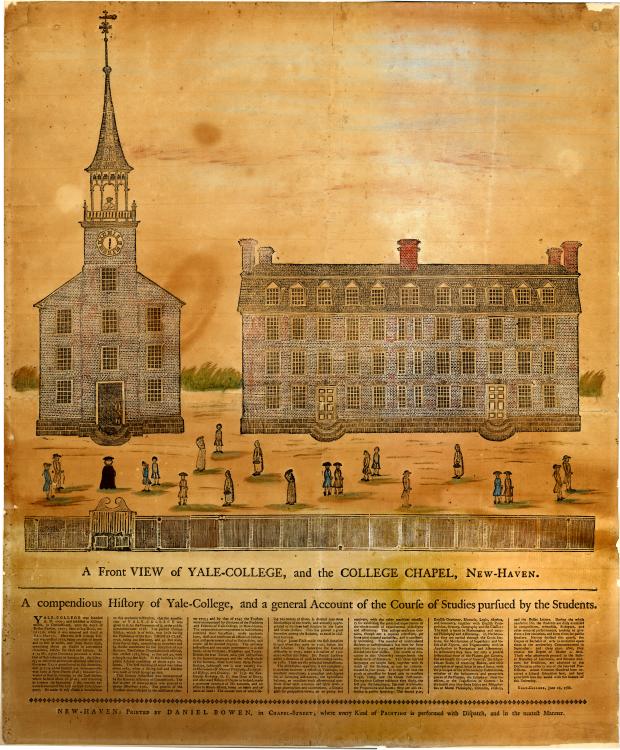
Yale was founded by English Congregationalist ministers. Today, only 22% of its student body has a Christian European background of any sort.


Last year, around this time, friends and acquaintances offered me all sorts of religiously neutral salutations: Seasons Greetings! Happy Holidays! Joyeuses fêtes! Meilleurs vœux! Only two people wished me Merry Christmas.

One was Muslim, the other was Jewish.

They meant well. After all, isn't that the culturally correct greeting? In theory, yes. In practice, most Christians feel uncomfortable affirming their identity. And this self-abnegation gets worse the closer you are to the cultural core of Anglo-America. Immigrants of Christian background enjoy being wished Merry Christmas. Black people likewise. Catholics seem to split half and half, depending on how traditional or nominal they are.

But the WASPs. Oh, the WASPs! With them, those two words are a faux pas. The response is usually polite but firm: "And a very happy holiday season to you!"

Things weren’t always that way. The situation calls to mind a Star Trek episode where Capt. Kirk persuades an alien robot to destroy itself. "That which excludes is evil. If you affirm your identity, you are excluding those who don't share your identity. You are therefore evil."

I could question this logic. What about other cultural groups? Why single out just one? But I’ve heard the answer already. WASPs and their culture dominate North America. The path to power, or simply a better life, runs through their institutions. Minorities can affirm their own identities without restricting the life choices of others, but the same does not hold true for WASPs. Their identity affects everyone and must belong to everyone.

I’m still not convinced. Yes, WASPs did create the institutions of Anglo-America, but their influence in them is now nominal at best. The U.S. Supreme Court used to be a very WASPy place. Now, there's not a single White Protestant on it. That's a huge underrepresentation for a group that is still close to 40% of the population. We see the same thing at the Ivy League universities, which originally trained Protestant clergy for the English colonists. Today, how many of their students have any kind of Christian European background? The proportions are estimated to be 20% at Harvard, 22% at Yale, and 15% at Columbia (Unz, 2012).

Sometimes reality is not what is commonly believed.  WASPs are not at all privileged. In fact, they have been largely pushed aside in a country that was once theirs.

Whenever this ethnic displacement comes up for discussion (it usually doesn't), it gets put down to meritocracy. In the past, WASPs were the best people for the job of running the country. Now it's a mix of Jews, Asians, and other high-performing groups. A cynic might ask whether merit is the only factor ... and whether the U.S. is better run today than it was a half-century ago. Indeed, the latest Supreme Court appointee had little experience as a solicitor general and a scanty record of academic scholarship.

Merit isn't the whole story. There is also networking. In most parts of the world, an individual gets ahead in life by forming bonds of reciprocal assistance with family and kinfolk. "You scratch my back, I'll scratch yours." That's how most of the world works.

But not all of the world. Northwest Europeans have diverged the most from this pattern, at least since the 12th century (Macfarlane, 1978a - 2012). Their kinship ties have been weaker and their sense of individualism correspondingly stronger. As a result, their cultural evolution has to a large degree been emancipated from the restraints of kinship, and this emancipation has facilitated other ways of organizing social relations: the nation-state, ideology, the market economy ... not to mention the strange idea of personal advancement through personal merit alone. This model of society has succeeded economically, militarily, and geopolitically, but it's vulnerable to people who don't play by the rules, since the threat of kin retaliation is insufficient to keep them in line. Societal survival is possible only to the extent that rule-breakers are ostracized and immigration restricted from cultures that play by other rules. 

This brings us to the dark side of traditional WASP culture: the busybodiness, the judgmentalism, the distrust of foreigners no matter how nice or refined they may seem. That mentality still exists, but it has been turned against itself. The people to be excluded are now those who exclude. The cultural programming for survival has been turned into a self-destruct mechanism ... as in that Star Trek episode.

Even if we could somehow abort this self-destruct sequence, it's hard to see how WASPs can survive on the current playing field. WASPs believe in getting ahead through rugged individualism. Most of the other groups believe in using family and ethnic connections. Guess who wins.

Anyway, I wish all of you a merry end of 2014! Far be it for me to exclude anyone from the merriment.
 

References
 

Unz, R. (2012). The myth of American meritocracy, The American Conservative, November 28
http://www.theamericanconservative.com/articles/the-myth-of-american-meritocracy/ 

Macfarlane, A. (2012). The invention of the modern world. Chapter 8: Family, friendship and population, The Fortnightly Review, Spring-Summer serial
http://fortnightlyreview.co.uk/2012/07/invention-8/ 

Macfarlane, A. (1992). On individualism, Proceedings of the British Academy, 82, 171-199.
http://www.alanmacfarlane.com/TEXTS/On_Individualism.pdf 

Macfarlane, A. (1978a). The origins of English individualism: Some surprises, Theory and society: renewal and critique in social theory, 6, 255-277.
http://www.alanmacfarlane.com/TEXTS/Origins_HI.pdf

Macfarlane, A. (1978b). The Origins of English Individualism: The Family, Property and Social Transition, Oxford: Blackwell.

Saturday, February 23, 2013

Regulation of emotions and gene-culture co-evolution


Facial expressions in Manga (Japanese) comics. East Asian culture strongly regulates the expression of emotions, particularly in their impact on other people. (source)


Humans have had to adapt not only to physical environments (climate, vegetation, wildlife) but also to cultural environments (diet, language, codes of behavior, class and family structure, etc.). A culture will thus select for those mental predispositions and personality types that are most compatible with it.

This point is made by a recent paper on emotion regulation in East Asian and Western cultures:

Culture influences the development of psychological tendencies by presenting specific norms, practices, and institutions for how to act properly and be a good person […] culture is not only constrained by genetics but also influences the behavioral expression of genes and can thus moderate the psychological and behavioral expressions of genotypes. We propose that genes may affect phenotypic expression in the form of underlying psychological tendencies, but how and whether these tendencies are manifested in actual behavioral patterns may be shaped by sociocultural factors. (Kim et al, 2011)

The authors studied a gene that influences the way we regulate emotions. This is the oxytocin receptor gene OXTR rs53576, which has two alleles ‘A’ and ‘G’. The GG genotype is associated with more sensitive parenting, greater sensitivity to infant crying, greater empathy, less loneliness, and a more prosocial temperament. These tendencies are less characteristic of the AA genotype, and the AG genotype produces outcomes that fall between the two.

The ‘A’ allele is more common among Koreans than among white Americans, perhaps because its negative effects are buffered by a culture that fosters empathy, specifically a keen interest in the possible adverse effects of one’s behavior on others:

[…] in more collectivistic cultures, the expression of emotions is practiced with concern for negatively affecting social relations, whereas in more individualistic cultures, the expression of thoughts and feelings is valued as a sign of an independent self (Kim et al., 2011)

A more individualistic culture, like the one that prevails in the U.S., would thus have a weaker capacity to offset the negative effects of the AA genotype.

Interestingly, culture also influences expression of the GG genotype, but in a different way. Because people with this genotype tend to be more attuned to rules of correct behavior, they’re more likely, in an American context, to express their emotions than are people with the AA genotype, apparently because white American culture today values the expression of emotions. Koreans, however, show the opposite pattern:

Emotional suppression was most clearly observable among Koreans with the OXTR GG genotype, those characterized as more socioemotionally sensitive, compared to those with AA genotype. Among Americans, the pattern was reversed, such that those with the GG genotype engaged in less emotional suppression, compared to those with the AA genotype. (Kim et al., 2011)

This is actually the reverse of the Baldwin effect. If white American culture exercises less control over emotions, particularly in their possible adverse effects on others, there should correspondingly be weaker genetic control. The same selection pressure should have produced similar cultural and genetic outcomes. Yet, paradoxically, the actual outcomes are almost poles apart. Although white Americans are less softwired for empathy and control of emotions, they seem to be more hardwired in this respect.

Of course, if we were to go back a hundred years, we would see that white Americans differed less, in this same respect, from East Asians. When I look at old family photos, I notice that the subjects never smiled for the camera. It was considered rude to smile at strangers, who might have taken such behavior the wrong way. Now smiling is normal, even mandatory. A century ago, white Americans controlled their emotions much more than they do now, especially with a view to minimizing their impact on other people.

There is another possible answer to the above paradox. Maybe weaker cultural control led to stronger genetic control, partly as a kind of compensatory action and partly because a less kin-based society requires more hardwiring of empathy. As Alan Macfarlane has argued in The Origins of English Individualism (and also hbd* chick), the English began to enter a freer and more individualistic cultural environment as far back as the 13th century (see earlier post). Because most social and economic relationships were no longer with close kin, it became necessary to extend the feelings of empathy one felt for immediate blood relations to a much larger circle of people. This psychological substrate would later make possible the rise of a market economy, i.e., the replacement of kinship by the market as the main organizing principle of society. 

References

Kim, H.S., D.K. Sherman, T. Mojaverian, J.Y. Sasaki, J. Park, E.M. Suh, & S.E. Taylor. (2011). Gene–Culture Interaction: Oxytocin Receptor Polymorphism (OXTR) and Emotion Regulation, Social Psychological and Personality Science, 2, 665-672
http://taylorlab.psych.ucla.edu/2011_Gene-Culture%20Interaction_OXTR%20and%20Emotion%20Regulation.pdf

Macfarlane, A. (1978a). The origins of English individualism: Some surprises, Theory and society: renewal and critique in social theory, 6, 255-277.
http://www.alanmacfarlane.com/TEXTS/Origins_HI.pdf

Macfarlane, A. (1978b). The Origins of English Individualism: The Family, Property and Social Transition, Oxford: Blackwell.
 

Saturday, January 5, 2013

First, sexual transmissibility and then ...?


Squamous cervix cells covered with rod-shaped bacteria, Gardnerella vaginalis (source)

Bacterial vaginosis is a common disease among reproductive-aged women:

[It] is characterized by the loss of normal vaginal flora, predominantly hydrogen peroxide-producing Lactobacillus spp., and the increase in the number and species of other bacteria in vaginal fluid. The decrease in lactobacilli and increase in numerous facultative and anaerobic bacteria, some of which have only been recently characterized, may lead to changes in the characteristics of vaginal fluid, such as thin discharge and odor. (Koumans etal., 2007)

Its incidence correlates with the number of lifetime sex partners, and this correlation holds true even when one controls for a series of socioeconomic variables: poverty, smoking, body mass index, douching frequency, education, and oral contraceptive use (Koumans et al., 2007). It thus seems to be sexually transmissible, with suspicions falling particularly on the bacterium Gardnerella vaginalis:

Sexual activity is a risk factor for BV, and most experts believe that BV does not occur in women who have never had vaginal intercourse [12,13]. Epidemiologic studies are strongly supportive of sexual transmission of BV pathogens. There is a high occurrence of BV and concordance of flora in women who have sex with women, further suggesting sexual transmission is important in this setting [14-16]. It is not clear, however, whether one type of sexual activity may be more important in the pathogenesis of infection than another. As an example, oral-genital sex may be a more important risk factor than penile intromission into the vagina. (Sobel, 2012)

The incidence of bacterial vaginosis also correlates with ethnicity, being 51.4% of non-Hispanic blacks, 31.9% of Mexican Americans, and 23.2% of non-Hispanic whites. This correlation likewise holds true when the above socioeconomic variables are held constant. High incidences have also been found in sub-Saharan Africa (Pepin et al., 2011).

After studying these ethnic differences in vaginal flora, Ravel et al. (2010) concluded that they were normal and not pathological:

From these data we conclude that vaginal bacterial communities not dominated by species of Lactobacillus are common and appear normal in black and Hispanic women. The data from this study are in accordance with the results of Zhou et al. (17, 18), who studied the vaginal bacterial communities of white, black, and Japanese women. The reasons for these differences among ethnic groups are unknown, but it is tempting to speculate that the species composition of vaginal communities could be governed by genetically determined differences between hosts. These might include differences in innate and adaptive immune systems, the composition and quantity of vaginal secretions, and ligands on epithelial cell surfaces, among others.

The ultimate cause may be vaginal pH, which is higher in blacks and Hispanics than in Asians and non-Hispanic whites (Ravel etal., 2010). Or it may be differences in cytokine concentrations, with differences in vaginal pH being due to the differences in vaginal flora (Nomelini et al., 2010).

There has thus been a co-evolution between the vaginal environment and certain strains of vaginal bacteria. This co-evolution would have followed different trajectories in different human populations. In a monogamous population, possibilities for sexual transmission would have been sporadic and difficult to sustain. The picture is different in a population with a high incidence of polygyny, especially if the males often inherit or steal some of their co-wives from other males. Such a context would have favored bacteria that can spread from one co-wife to another and then to other sets of co-wives when circumstance permit.

But why wait for the right circumstances? Why not make them by manipulating the host’s behavior? Such behavioral manipulation sounds like science-fiction, yet it has been demonstrated in a wide range of animal species, often in surprisingly precise ways. So how could our bacterium manipulate its host? It wants to hop from one set of co-wives to another, but the regular male partner is standing in its way. What should it do?

First, it should facilitate female-to-female transmission among the co-wives. Second, it should disable the male’s propensity for mate guarding. Better yet, it should reverse the polarity, causing him to feel not jealousy but pleasure at the idea of being cuckolded.

This kind of manipulation occurs in the isopod Caecidotea intermedius. A parasite, Acanthocephalus dirus, infects it as a temporary host before infecting one of several freshwater fishes. When the parasite is still soft and immature, it cannot survive a fish eating its isopod host. It thus seeks to reduce this risk by suppressing conspicuous host behaviors, like mate guarding. Later, when the parasite becomes hard and mature, it can survive consumption of its host and now stimulates mate guarding (Galipaud et al., 2011; Mormann, 2010).

Cuckoldry is fatal to reproductive success, so any such tendency would soon flush itself out of the gene pool. For example, the neural networks for mate guarding might become more insensitive to outside tampering. This change, however, would in turn favor those parasites that could maintain such tampering. The eventual outcome would be an evolutionary compromise where mate guarding is impaired, but not enough to prevent reproductive success. The situation is different, though, if the parasite spreads to another population that has never developed such immunity.

Many sexual fetishes have been around for a long time and are often traceable to the ancient Greco-Roman world. Cuckold envy, however, seems relatively recent, the oldest references dating back to 17th century England (Kuchar, 2011, pp. 18-19). We may thus be looking at a sexually transmitted parasite that entered England with the expansion of world trade in the 17th century. But from where? Probably from a highly polygynous culture area, like West Africa.

This parasite might be a vaginal bacterium that first acquired sexual transmissibility and then an ability to manipulate host behavior. It might alternately be a strain of vaginal yeast. Indeed, vaginal strains of Candida albicans show a similar adaptation to sexual transmission via the partner’s mouth, i.e., they adhere better to saliva-coated surfaces than do other strains (Schmid et al., 1995).

References

Gaulipaud, M., Z. Gauthey, and L. Bollache. (2011). Pairing success and sperm reserve of male Gammarus pulex infected by Cyathocephalus truncatus (Cestoda: Spathebothriidea), Parasitology, 138, 11, 1429-1435.

Koumans E.H., M. Sternberg, C. Bruce, G. McQuillan, J. Kendrick, et al. (2007). The prevalence of bacterial vaginosis in the United States, 2001–2004; associations with symptoms, sexual behaviors, and reproductive health, Sexually Transmitted Diseases, 34, 864–869.
http://journals.lww.com/stdjournal/Fulltext/2007/11000/The_Prevalence_of_Bacterial_Vaginosis_in_the.6.aspx

Kuchar, G. (2001). Rhetoric, Anxiety, and the Pleasures of Cuckoldry in the Drama of Ben Jonson and Thomas Middleton, Journal of Narrative Theory, 31 (1), Winter, pp. 1-30.

Mormann, K. (2010). Factors influencing parasite-related suppression of mating behavior in the isopod Caecidotea intermedius, Theses and Disserations, paper 48
http://via.library.depaul.edu/etd/48

Nomelini, R.S., A.P.B. Carrijo, S.J. Adad, A.A. Nunes, E.F.C. Murta. (2010). Relationship between infectious agents for vulvovaginitis and skin color, Sao Paulo Medical Journal, 128, 348-53
http://www.scielo.br/scielo.php?pid=S1516-31802010000600007&script=sci_arttext

Pépin J., S. Deslandes, G. Giroux, F. Sobéla, N. Khonde, et al. (2011). The Complex Vaginal Flora of West African Women with Bacterial Vaginosis. PLoS ONE, 6(9): e25082. doi:10.1371/journal.pone.0025082
http://www.plosone.org/article/info%3Adoi%2F10.1371%2Fjournal.pone.0025082

Ravel J, Gajer P, Abdo Z, Schneider GM, Sara S, et al. (2010). Vaginal microbiome of reproductive-age women. Proceedings of the National Academy of Sciences U SA, 108, 4680-4687.
http://www.pnas.org/content/108/suppl.1/4680.short

Schmid, J., P.R. Hunter, G.C. White, A.K. Nand, and R.D. Cannon. (1995). Physiological traits associated with success of Candida albicans strains as commensal colonizers and pathogens, Journal of Clinical Microbiology, 33, 2920–2926.

Sobel, J.D. (2012). Bacterial vaginosis, Wolters Kluwer, UpToDate
http://www.uptodate.com/contents/bacterial-vaginosis

Saturday, November 24, 2012

Obama: White America's bogeyman?


Total fertility by race, 1980-2010 (source). Is the end of White America being hastened by the Obama presidency? Or is it actually being postponed?

Both the right and the left are trumpeting the Obama presidency as marking the end of White America. In a harshly worded column, conservative Ann Coulter argues that Obama and the Democratic Party are deliberately changing America’s demographics: 

If the same country that voted in 1980 had voted in 2012, Romney would have won a bigger landslide than Reagan did.

Most Americans don’t realize that, decades ago, the Democrats instituted a long-term plan to gradually turn the United States into a Third World nation. The country would become poorer and less free, but Democrats would have an unbeatable majority!

Under Teddy Kennedy’s 1965 immigration act, our immigration policy changed from one that replicated the existing ethnic population to one that strictly favored unskilled immigrants from the Third World. Since 1968, 85 percent of legal immigrants have come from what is euphemistically called “developing countries.” (Coulter, 2012)

Clearly, the 1965 immigration act was key to this demographic revolution. Just as key, however, were successive legislative changes, and increasingly lax enforcement, that progressively raised the levels of both legal and illegal immigration. Also key were differences in fertility rates. Non-White fertility stayed high long after White fertility had fallen during the 1960s and 1970s.

This demographic revolution, however, had the backing of both parties. Yes, the 1965 immigration act was ratified by a Democrat president, but it won the votes of most Republican lawmakers. Supporters included then congressman Gerald Ford (R) and then congressman Robert Dole (R). In fact, there was more opposition from Democrat lawmakers:

The House of Representatives voted 326 to 70 (82.5%) in favor of the act, while the Senate passed the bill by a vote of 76 to 18. In the senate, 52 Democrats voted yes, 14 no, and 1 abstained. Of the Republicans 24 voted yes, 3 voted no, and 1 abstained. (Wikipedia, 2012a)

After 1965, there came successive moves to increase the overall intake, and these moves were likewise Republican-backed. In fact, they were signed into law by Republican presidents. In 1986, Reagan proclaimed an amnesty that not only provided about three million illegal immigrants with citizenship but also set off a baby boom: 

Between 1987 and 1991, total fertility rates for foreign-born Hispanics increased from 3.2 to 4.4. This dramatic rise was the primary force behind the overall increase in the state’s total fertility rate during this period. Were it not for the large increase in fertility among Hispanic immigrants, fertility rates in California would have increased very little between 1987 and 1991. (Hill, 2002, pp. 27-28)

Bush Sr. signed into law the Immigration Act of 1990, which raised the annual legal intake of immigrants from 500,000 to 700,000 (Wikipedia, 2012c). And like his son, he declined to enforce sanctions against employers of illegal immigrants. By the time of Bush Jr., total immigration, both legal and illegal, was running at over one and a half million a year (Camarota, 2007). Far from ending illegal immigration, Reagan’s amnesty had set off a new wave of “undocumented workers” from south of the border. By 2007, the U.S. was home to an estimated 12.5 million illegal immigrants—more than four times the number that Reagan had amnestied (Wikipedia, 2012d)

Throughout this period, fertility rates continued to be much higher among America’s non-white minorities than in the majority White population. For whatever reason, Blacks and Hispanics were not participating in the economic and cultural changes that had reduced White fertility.

The other Obama revolution

The collapse of the Bush Boom led not only to the election of Barack Obama in 2008 but also to a sharp downturn in illegal immigration. Net illegal immigration may now be negative (Passel et al., 2012). Total immigration has fallen to levels unseen since the 1980s.

Non-White fertility has likewise fallen. Hispanic fertility in particular fell from a high of 2.86 children per woman in 2006 to 2.35 in 2010. The same period saw fertility declines in other population groups, with White Americans showing the smallest decline (Martin et al., 2012, see above chart). Preliminary data indicate that this convergence is continuing. In 2011, Hispanic fertility fell to the replacement level of 2.2:

[Fertility rates were] down 6 percent for Hispanic women and 2 percent for non-Hispanic black, whereas the rate for non-Hispanic white women was essentially unchanged. The GFR for AIAN [American Indian and Alaskan native] women was down 2 percent in 2011, whereas the rate for API [Asian and Pacific Islander] women rose 1 percent. The 2011 rates for non-Hispanic black and Hispanic women in 2011 were the lowest ever reported for the United States. (Hamilton et al., 2012)

If current trends continue, all of the major population groups will have fallen to about the same fertility rate by the time Obama leaves office. White Americans may even hold first place, their fertility being buoyed up by groups like the Mormons, the Amish, and the Hassidic Jews. Such a situation will be unprecedented in U.S. history.

One might object that these trends reflect the current hard times. True, but good times aren’t coming back any day soon. American economic growth will be sluggish for at least the next decade and any attempt to do better will abort spectacularly, like the end of the Bush Boom. Because the U.S. is now a mature economy, it can no longer grow at the rates we once saw during the postwar era and now see in many developing countries.

In addition, the decline in non-White fertility doesn’t seem to reflect only economic factors. Black American fertility was already falling during the 1990s and 2000s when economic conditions were much better, aside from a rise when Bush Jr. was pushing to expand minority home ownership. The same cultural factors that previously affected White fertility are now affecting all Americans, specifically a growing desire by women to marry later and limit their number of children.

What if a Republican had been in office?

Is this demographic reversal Obama’s doing? Would it have happened anyway? We can best answer these questions by asking what a Republican president would have done, like McCain in 2008 or Romney in 2012.

First, the level of legal immigration would have been raised—that was in Romney’s platform. Second, there would have been some sort of amnesty, not the same as Obama’s proposal but very similar number-wise. Some 12 million illegal immigrants would have become eligible for an “earned path to citizenship” and any children born on American soil would have automatically gained U.S. citizenship.

Third, there would have been efforts to spur another round of high economic growth through easy credit and deregulation, like the Bush Boom of the past decade.  Such a boom would have done little to raise the average worker’s wage, while doing a lot to spur another influx of low-wage labor for work in construction, agriculture, and services … to mow the lawns of the rich and to build them ever more monster homes.

Finally, a Republican president would have sought to limit access to abortion, perhaps even seeking to overturn Roe vs Wade. There would almost certainly have been a move to cut off Medicaid funding for abortion and birth control.

Conclusion

Regardless of what happens, White Americans are headed for minority status, but that process now promises to be longer and more drawn out than previously thought … thanks to the Obama presidency. Is this a case of his party naively acting against its own interests? Not really. Most Democrats aren’t “anti-White.” That’s a trope that certain dog-whistling Republicans are pushing. Most Democrats just want to see all Americans get the same deal—the same standard of living, the same quality of life, and the same freedom, including reproductive freedom.

Is that a naïve goal? Perhaps. But is it more naïve than the Republican goal of unlimited economic and demographic growth? If pre-2009 trends had continued, the U.S. population would have soared to almost half a billion by mid-century (Beck, 2010; Camarota, 2007).

Political choices aren’t always clear-cut. Yes, Romney is light-skinned, but that’s no guarantee that he cares about the future of White Americans. His interests coincide more with those of the corporate donors who keep the Republican Party afloat.  Yes, Obama is dark-skinned, but he may still be a better choice for White folks worried about their future.  To be sure, the Democratic Party is likewise influenced by corporate donors both directly and indirectly (via NPOs that are nonetheless corporate-funded), but it also has internal factions, like the union movement, that oppose the globalist project of outsourcing to low-wage countries and insourcing low-wage labor. Other factions, notably the environmentalists, are critical of unlimited growth. Finally, the different ethnic factions within the party don’t form a monolithic bloc; infighting will happen, and one faction or another will make appeals for support from White Americans.

Clearly, both parties leave much to be desired. In politics, however, one sometimes has to choose between the terrible and the less terrible. As White Americans descend to minority status, they will have to learn to live by their wits.

References

Anon. (2012). The USA’s Total Fertility Rates by Race, 1980 to 2010, Hail to you, October 7
http://hailtoyou.wordpress.com/2012/10/07/the-usas-total-fertility-rates-by-race-1980-to-2010/

Beck, R. (2010). Immigration by the numbers – off the charts,
http://www.youtube.com/watch?v=muw22wTePqQ

Camarota, S.A. (2007). 100 million more projecting the impact of immigration on the U.S. population, 2007 to 2060, Centre for Immigration Studies
http://www.cis.org/articles/2007/back707.html

Coulter, A. (2012). Demography is destiny, Human Events, November 18, 2012
http://www.humanevents.com/2012/11/14/coulter-demography-is-destiny/

Hamilton, B.E., J.A. Martin, & S.J. Ventura. (2012).  Births: Preliminary Data for 2011, National Vital Statistics Reports, 61(5) October 3
http://www.cdc.gov/nchs/data/nvsr/nvsr61/nvsr61_05.pdf

Hill, L.E. (2002). Understanding the Future of Californians’ Fertility: The Role of Immigrants, Public Policy Institute of California, San Francisco
http://www.ppic.org/content/pubs/report/R_402LHR.pdf

Martin, J.A., B.E. Hamilton, S.J. Ventura, M.J.K. Osterman, E.C. Wilson, & T.J. Mathews. (2012). Births: Final Data for 2010, National Vital Statistics Reports, 61(1) August

Passel, J., D. Cohn, & A. Gonzalez-Barrera. (2012). Net Migration from Mexico Falls to Zero—and Perhaps Less, Pew Hispanic Center, April 23
http://www.pewhispanic.org/2012/04/23/net-migration-from-mexico-falls-to-zero-and-perhaps-less/

Wikipedia (2012a). Immigration and Nationality Act of 1965
http://en.wikipedia.org/wiki/Immigration_and_Nationality_Act_of_1965

Wikipedia (2012b). Immigration Reform and Control Act of 1986
http://en.wikipedia.org/wiki/Immigration_Reform_and_Control_Act_of_1986

Wikipedia (2012c). Immigration Act of 1990
http://en.wikipedia.org/wiki/Immigration_Act_of_1990

Wikipedia (2012d). Illegal immigrant population of the United States
http://en.wikipedia.org/wiki/Illegal_immigrant_population_of_the_United_States