Showing posts with label cuckold envy. Show all posts

Sunday, October 27, 2019

Behavioral manipulation: population differences in virulence


Helicobacter pylori (Wikicommons – NIH). Some human populations have become resistant to this bacterium; others have not. Could the same be true for pathogens that manipulate human behavior?


Humans are behavioral creatures par excellence. Our brains oversee a large repertoire of behaviors, each of which is vulnerable to manipulation. We can be manipulated by psychological means, like the parasite who lives off the altruism of others.  There's also ideological manipulation. 

And then there's hardwired manipulation—an organism enters your mind and rewires some of its circuitry. That kind of manipulation is poorly known. We know a lot about short-term infections that make you sick. We know much less about long-term infections where the pathogen hangs around in your body without triggering an immune response. There’s no fever, no rash, no abscess. Yet it may be doing something to the most important organ of your body, perhaps to increase its chances of spreading to another host. Not surprisingly, the adverse effects become worse when you're no longer of much help. It no longer has anything to lose from trashing its host.

So if a pathogen is screwing with your mind, the symptoms will be especially severe in two cases: 

- You’re approaching the end of your life. The pathogen has less incentive to keep you healthy. You’re also less active socially and sexually, and thus less useful as a vehicle for transmission to other hosts.

- The pathogen is spreading out of its original host population and into new hosts that have not had time to develop resistance to its worse effects

This post is about the second case. You pay a cost when a pathogen monkeys around with your mental circuitry. Over time, there will be selection for humans who better resist such manipulation. Eventually, an equilibrium is reached: the pathogen still screws around with your mind, but the negative consequences are kept to a minimum. In most cases. And until it spreads to people who have no resistance.

The latter situation has been covered by a recent review article:


[...] the effects of susceptibility and virulence alleles in the respective gene pools of humans and pathogens are often contingent upon each other. The evolution of virulence is a dynamic process, easily perturbed by extrinsic variables over space and time, and therefore unlikely to follow the same trajectory in every population. [...] Whether the result is a steady-state equilibrium due to a perpetual "arms race" or a commensal detente, the same genes and pathways are unlikely to be involved in every population. As a consequence, when humans and pathogens migrate to new environments or admix, the ensuing disruption of co-evolutionary equilibria and loss of complementarity between host and pathogen genotypes may yield unpredictable and potentially deleterious biomedical consequences. (Kodaman et al. 2014)

The authors cite the example of Helicobacter pylori, a bacterium that lives in the stomach lining. It is a risk factor for gastric cancer, but the level of risk varies according to the population it infects:

Studies of human or H. pylori genetics in isolation have generally failed to explain why populations with similar rates of H. pylori infection exhibit strikingly different susceptibilities to gastric cancer. For example, in many African and South Asian countries, the low incidences of gastric cancer in the presence of almost universal rates of H. pylori infection remain a source of much speculation, and have been referred to collectively as the "African enigma" and the "Asian enigma" [...] In Latin America, where H. pylori strains native to Amerindian populations have been largely displaced by European strains [...], the predominantly Amerindian populations living at high altitudes suffer disproportionately from gastric cancer relative to other populations with similar infection rates [...]. These and other points of evidence raise the possibility that the pathogenicity of a given H. pylori strain may vary with human genomic variation, and that some individuals may be better adapted to their infecting strains than others. (Kodaman et al. 2014)


Manipulating sexual behavior

Pathogens thus differ in their virulence from one human population to another. The same should be true for those pathogens that manipulate human behavior to improve their chances of spreading from one human to another. For them, our most interesting behavior is sex, and the most interesting human populations are "leaky" polygynous ones with high rates of infidelity. In that kind of context they can spread rapidly from one household to another.

Polygyny rates are highest among the tropical farming peoples of sub-Saharan Africa (Dalton and Leung 2011; Pebley and Mbugua 1989). Traditionally, 20 to 40% of all marriages are polygynous, and most women live in polygynous households. Not surprisingly, many men, particularly young men, are single. Their opportunities for sex are limited to rape, affairs with the wives of other men, or abduction of women during times of war:

Typically, the more men are polygynous in a given society, the greater the age difference between husbands and wives. [...] The temporary celibacy of young men in polygynous societies is rarely absolute, however. While it often postpones the establishment of a stable pair-bond and the procreation of children, it often does not preclude dalliance with unmarried girls, adultery with younger wives of older men, or the rape or seduction of women conquered in warfare. Thus, what sometimes looks like temporary celibacy is, in fact, temporary promiscuity. (van den Berghe 1979, pp. 50-51)

Cuckold envy: a case of behavioral manipulation?

This is the environment in which a sexually transmitted pathogen can leapfrog from one polygynous household to another. The main obstacle is male jealousy and male "guarding behavior." The pathogen can increase its chances of transmission by disabling mate guarding or, better yet, reversing it. This kind of host manipulation has been shown in a non-human species: male isopods no longer guard their mates when they get infected by a certain parasite (Mormann, 2010).

In a human context, a pathogen may reverse male jealousy and make its host want to be cuckolded, as a means to gain access to more hosts (Frost 2013). Many sexual fetishes are mentioned in ancient writings: pedophilia, cunnilingus, fellatio, and bestiality, but not cuckold envy. The oldest mentions go back to seventeenth-century England (Kuchar, 2011, pp. 18-19).

Perhaps a sexually transmitted pathogen came to England from West Africa during the early days of the slave trade. Such a pathogen would have evolved in a context where most women were in polygynous marriages and where cuckoldry was the main route for invading one set of wives after another. Meanwhile, the human hosts may have evolved some kind of resistance, perhaps through “overwiring.” Or perhaps a certain level of cuckoldry became socially accepted. No such resistance, however, had evolved in England or elsewhere in the Western world.

As time goes on, we will discover that many STDs have evolved a capacity for behavioral manipulation, specifically by making the host either more promiscuous or less jealous.


References

Dalton, J.T., and T.C. Leung. (2011). Why is Polygyny More Prevalent in Western Africa?
An African Slave Trade Perspective,
http://www.wfu.edu/~daltonjt/PolygynySlaveTrade.pdf

Frost, P. (2013). First, sexual transmissibility and then …? Evo and Proud, January 5
http://evoandproud.blogspot.com/2013/01/first-sexual-transmissibility-and-then.html 

Kodaman, N., R.S. Sobota, R. Mera, B.G. Schneider, and S.M. Williams. (2014). Disrupted human-pathogen co-evolution: a model for disease. Frontiers in Genetics 25 August
https://www.frontiersin.org/articles/10.3389/fgene.2014.00290/full

Kuchar, G. (2001). Rhetoric, Anxiety, and the Pleasures of Cuckoldry in the Drama of Ben Jonson and Thomas Middleton. Journal of Narrative Theory 31(1): 1-30.

Mormann, K. (2010). Factors influencing parasite-related suppression of mating behavior in the isopod Caecidotea intermedius, Theses and Dissertations, paper 48
http://via.library.depaul.edu/etd/48  

Pebley, A. R., and W. Mbugua. (1989). Polygyny and Fertility in Sub-Saharan Africa. In R. J. Lesthaeghe (ed.), Reproduction and Social Organization in Sub-Saharan Africa, Berkeley: University of California Press, pp. 338-364.

van den Berghe, P.L. (1979). Human Family Systems. An Evolutionary View. New York: Elsevier.
Saturday, October 11, 2014

Yes, demons do exist


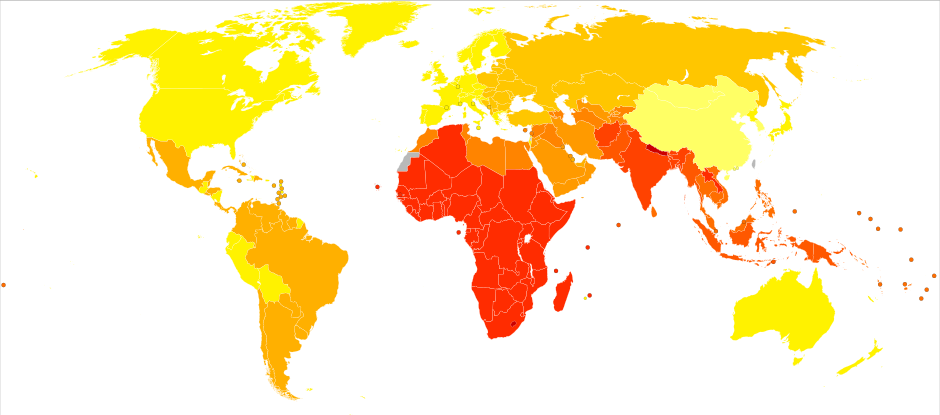
Chlamydia infection rate, by country (WHO 2004, Wikicommons). Sub-Saharan Africa has been a natural laboratory for the evolution of sexually transmitted pathogens, including strains that can manipulate their hosts.


Are we being manipulated by microbes? The idea is not so whacky. We know that a wide range of microscopic parasites have evolved the ability to manipulate their hosts, even to the point of making the host behave in strange ways. A well-known example is Toxoplasma gondii, a protozoan whose life cycle begins inside a cat. After being excreted in the cat's feces, it is picked up by a mouse and enters the new host's brain, where it neutralizes the fear response to the smell of cat urine. The mouse lets itself be eaten by a cat, and the protozoan returns to a cat's gut—the only place where it can reproduce (Flegr, 2013).

T. gondii can also infect us and alter our behavior. Infected individuals have longer reaction times, higher testosterone levels, and a greater risk of developing severe forms of schizophrenia (Flegr, 2013). But there is no reason to believe that T. gondii is the only such parasite we need to worry about. We study it in humans simply because we already know what it does in a non-human species.

Researchers are starting to look at manipulation by another human parasite, a sexually transmitted bacterium called Chlamydia trachomatis. Zhong et al. (2011) have found that it synthesizes proteins that manipulate the signalling pathways of its human host. These proteins seem to facilitate reinfection, although there may be other effects:

Despite the significant progresses made in the past decade, the precise mechanisms on what and how chlamydia-secreted proteins interact with host cells remain largely unknown, and will therefore still represent major research directions of the chlamydial field in the foreseeable future. (Zhong et al., 2011)

What else would a sexually transmitted pathogen do to its host? For one thing, it could cause infertility: 

While several nonsexually transmitted infections can also cause infertility (e.g., schistosomiasis, tuberculosis, leprosy), these infections are typically associated with high overall virulence. In contrast, STIs tend to cause little mortality and morbidity; thus, the effect on fertility seems to be more "targeted" and specific. In addition, several STI pathogens are also associated with an increased risk of miscarriage and infant mortality (Apari et al., 2014)

Chlamydia is a major cause of infertility, and this effect seems to be no accident. Its outer membrane contains a heat shock protein that induces cell death (apoptosis) in placenta cells that are vital for normal fetal development. The same protein exists in other bacteria but is located within the cytoplasm, where it can less easily affect the host's tissues. Furthermore, via this protein, Chlamydia triggers an autoimmune response that can damage the fallopian tubes and induce abortion. This response is not triggered by the common bacterium Escherichia coli. Finally, Chlamydia selectively up-regulates the expression of this protein while down-regulating the expression of most other proteins (Apari et al., 2014).

But how would infertility benefit Chlamydia and other sexually transmitted pathogens? Apari et al. (2011) argue that infertility causes the host and her partner to break up and seek new partners, thus multiplying the opportunities for the pathogen to spread to other hosts. A barren woman may pair up with a succession of partners in a desperate attempt to prove her fertility and, eventually, turn to prostitution as a means to support herself (Caldwell et al., 1989). This is not a minor phenomenon. STI-induced infertility has exceeded 40% in parts of sub-Saharan Africa (Apari et al., 2011).


It gets kinkier and kinkier

Does the manipulation stop there? We know, for instance, that sexual promiscuity correlates with the risk of contracting different STIs, but is this a simple relationship of cause and effect? Could an STI actually promote infidelity by stimulating sexual fantasizing about people other than one's current partner?

Let's look at another pathogen, Candida albicans, commonly known as vaginal yeast, which can cause an itchy rash called vulvovaginal candidiasis (VVC). Reed et al. (2003) found no significant association between VVC and the woman's frequency of vaginal sex, lifetime number of partners, or duration of current relationship. Nor was there any association with presence of C. albicans in her male partner. But there were significant associations with the woman masturbating or practicing cunnilingus in the past month.

VVC is thus more strongly associated with increased sexual fantasizing, as indicated by masturbation rate, than with a higher frequency of vaginal intercourse. This does look like host manipulation, although one might wonder why it doesn't translate into more sex with other men, this being presumably what the pathogen wants. Perhaps the development of masturbation as a lifestyle (through use of vibrators and pornography) is making this outcome harder to achieve.

A sexually transmitted pathogen can also increase its chances of transmission by disrupting mate guarding. This is the tendency of one mate, usually the male, to keep watch over the other mate. If mate guarding can be disabled or, better yet, reversed, the pathogen can spread more easily to other hosts. This kind of host manipulation has been shown in a non-human species (Mormann, 2010).

Do we see reversal of mate guarding in humans? Yes, it's called cuckold envy—the desire to see another man have sex with your wife—and it's become a common fetish. Yet it seems relatively recent. Greco-Roman texts don't mention it, despite abundant references to other forms of alternate sexual behavior, e.g., pedophilia, cunnilingus, fellatio, bestiality, etc. The earliest mentions appear in 17th century England (Kuchar, 2011, pp. 18-19). This was when England was opening up to world trade and, in particular, to the West African slave trade.

Sub-Saharan Africa has been especially conducive to sexually transmitted pathogens evolving a capacity for host manipulation. Polygyny rates are high, in the range of 20 to 40% of all adult males, and the polygynous male is typically an older man who cannot sexually satisfy all of his wives. There is thus an inevitable tendency toward multi-partner sex by both men and women, which sexually transmitted pathogens can exploit ... and manipulate.


What about sexual orientation?

A pathogen can also become more transmissible by giving its host a new sexual orientation. This strategy would disrupt the existing pair bond while opening up modes of transmission that may be more efficient than the penis/vagina one. Some vaginal strains of Candida albicans have adapted to oral sex by becoming better at adhering to saliva-coated surfaces (Schmid et al., 1995). Certain species that cause bacterial vaginosis, notably Gardnerella vaginalis and Prevotella, seem to specialize in female-female transmission (Muzny et al., 2013; Sobel, 2012).

Finally, there is the hypothesis that exclusive male homosexuality has a microbial origin (Cochran et al., 2000). Its main shortcomings are that (a) there is no candidate pathogen and that (b) exclusive male homosexuality has been observed in social environments with limited opportunities for pathogen transmission, such as small bands of hunter-gatherers across pre-Columbian North America (Callender & Kochems, 1983). On the other hand, there seems to have been a relatively recent shift in European societies from facultative to exclusive male homosexuality, so something may have happened in the environment, perhaps the introduction of a new pathogen (Frost, 2009).

Both male and female homosexuality seem to have multiple causes, but it’s likely that various pathogens have exploited this means of spreading to other hosts.


Conclusion

This is a fun subject when it concerns silly mice or zombie ants. But now it concerns us. And that's not so funny. Can microbes really develop such demonic abilities to change our private thoughts and feelings?

It does seem hard to believe. Perhaps this is an argument for intelligent design. After all, only an all-knowing designer could have made creatures that are so small and yet capable of so much ... things like inducing abortion, breaking up marriages, and altering normal sexual desires. Yes, such an argument could be made.

But I don't think anyone will bother.
 

References

Apari, P., J. Dinis de Sousa, and V. Muller. (2014). Why Sexually Transmitted Infections Tend to Cause Infertility: An Evolutionary Hypothesis. PLoS Pathog 10(8): e1004111.
http://www.plospathogens.org/article/info%3Adoi%2F10.1371%2Fjournal.ppat.1004111

Caldwell, J.C., P. Caldwell, and P. Quiggin. (1989). The social context of AIDS in sub-Saharan Africa, Population and Development Review, 15, 185-234.
https://www.soc.umn.edu/~meierann/Teaching/Population/Readings/Feb%209%20Caldwell.pdf

Callender, C. and L.M. Kochems. (1983). The North American Berdache, Current Anthropology, 24, 443-470.
http://www.jstor.org/discover/10.2307/2742448?uid=3739448&uid=2&uid=3737720&uid=4&sid=21104311299061 

Cochran, G.M., P.W. Ewald, and K.D. Cochran. (2000). Infection causation of disease: an evolutionary perspective, Perspectives in Biology and Medicine, 43, 406-448.
http://www.isteve.com/infectious_causation_of_disease.pdf

Flegr, J. (2013). Influence of latent Toxoplasma infection on human personality, physiology and morphology: pros and cons of the Toxoplasma-human model in studying the manipulation hypothesis, The Journal of Experimental Biology, 216, 127-133. http://jeb.biologists.org/content/216/1/127.full 

Frost, P. (2009). Has male homosexuality changed over time, Evo and Proud, March 5
http://evoandproud.blogspot.ca/2009/03/has-male-homosexuality-changed-over.html

Kuchar, G. (2001). Rhetoric, Anxiety, and the Pleasures of Cuckoldry in the Drama of Ben Jonson and Thomas Middleton, Journal of Narrative Theory, 31 (1), Winter, pp. 1-30. 

Mormann, K. (2010). Factors influencing parasite-related suppression of mating behavior in the isopod Caecidotea intermedius, Theses and Disserations, paper 48
http://via.library.depaul.edu/etd/48 

Muzny, C.A., I.R. Sunesara, R. Kumar, L.A. Mena, M.E. Griswold, et al. (2013). Correction: Characterization of the vaginal microbiota among sexual risk behavior groups of women with bacterial vaginosis. PLoS ONE 8(12):
http://www.plosone.org/article/info%3Adoi%2F10.1371%2Fjournal.pone.0080254 

Reed, B.D., P. Zazove, C.L. Pierson, D.W. Gorenflo, and J. Horrocks. (2003). Candida transmission and sexual behaviors as risks for a repeat episode of Candida vulvovaginitis, Journal of Women's Health, 12, 979-989.
http://online.liebertpub.com/doi/abs/10.1089/154099903322643901 

Schmid, J., P.R. Hunter, G.C. White, A.K. Nand, and R.D. Cannon. (1995). Physiological traits associated with success of Candida albicans strains as commensal colonizers and pathogens, Journal of Clinical Microbiology, 33, 2920-2926.
http://jcm.asm.org/content/33/11/2920.short 

Sobel, J.D. (2012). Bacterial vaginosis, Wolters Kluwer, UpToDate
http://www.uptodate.com/contents/bacterial-vaginosis 

Zhong, G., L. Lei, S. Gong, C. Lu, M. Qi, and D. Chen. (2011). Chlamydia-Secreted Proteins in Chlamydial Interactions with Host Cells, Current Chemical Biology, 5, 29-37
http://www.ingentaconnect.com/content/ben/ccb/2011/00000005/00000001/art00004

Saturday, January 5, 2013

First, sexual transmissibility and then ...?


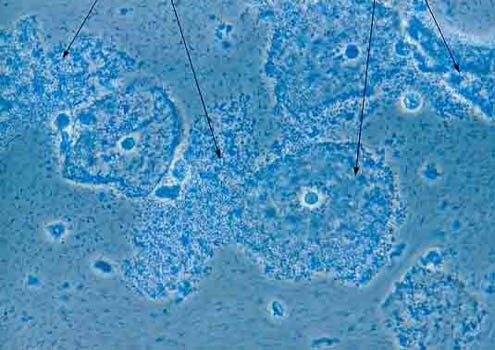
Squamous cervix cells covered with rod-shaped bacteria, Gardnerella vaginalis (source)

Bacterial vaginosis is a common disease among reproductive-aged women:

[It] is characterized by the loss of normal vaginal flora, predominantly hydrogen peroxide-producing Lactobacillus spp., and the increase in the number and species of other bacteria in vaginal fluid. The decrease in lactobacilli and increase in numerous facultative and anaerobic bacteria, some of which have only been recently characterized, may lead to changes in the characteristics of vaginal fluid, such as thin discharge and odor. (Koumans etal., 2007)

Its incidence correlates with the number of lifetime sex partners, and this correlation holds true even when one controls for a series of socioeconomic variables: poverty, smoking, body mass index, douching frequency, education, and oral contraceptive use (Koumans et al., 2007). It thus seems to be sexually transmissible, with suspicions falling particularly on the bacterium Gardnerella vaginalis:

Sexual activity is a risk factor for BV, and most experts believe that BV does not occur in women who have never had vaginal intercourse [12,13]. Epidemiologic studies are strongly supportive of sexual transmission of BV pathogens. There is a high occurrence of BV and concordance of flora in women who have sex with women, further suggesting sexual transmission is important in this setting [14-16]. It is not clear, however, whether one type of sexual activity may be more important in the pathogenesis of infection than another. As an example, oral-genital sex may be a more important risk factor than penile intromission into the vagina. (Sobel, 2012)

The incidence of bacterial vaginosis also correlates with ethnicity, being 51.4% of non-Hispanic blacks, 31.9% of Mexican Americans, and 23.2% of non-Hispanic whites. This correlation likewise holds true when the above socioeconomic variables are held constant. High incidences have also been found in sub-Saharan Africa (Pepin et al., 2011).

After studying these ethnic differences in vaginal flora, Ravel et al. (2010) concluded that they were normal and not pathological:

From these data we conclude that vaginal bacterial communities not dominated by species of Lactobacillus are common and appear normal in black and Hispanic women. The data from this study are in accordance with the results of Zhou et al. (17, 18), who studied the vaginal bacterial communities of white, black, and Japanese women. The reasons for these differences among ethnic groups are unknown, but it is tempting to speculate that the species composition of vaginal communities could be governed by genetically determined differences between hosts. These might include differences in innate and adaptive immune systems, the composition and quantity of vaginal secretions, and ligands on epithelial cell surfaces, among others.

The ultimate cause may be vaginal pH, which is higher in blacks and Hispanics than in Asians and non-Hispanic whites (Ravel etal., 2010). Or it may be differences in cytokine concentrations, with differences in vaginal pH being due to the differences in vaginal flora (Nomelini et al., 2010).

There has thus been a co-evolution between the vaginal environment and certain strains of vaginal bacteria. This co-evolution would have followed different trajectories in different human populations. In a monogamous population, possibilities for sexual transmission would have been sporadic and difficult to sustain. The picture is different in a population with a high incidence of polygyny, especially if the males often inherit or steal some of their co-wives from other males. Such a context would have favored bacteria that can spread from one co-wife to another and then to other sets of co-wives when circumstance permit.

But why wait for the right circumstances? Why not make them by manipulating the host’s behavior? Such behavioral manipulation sounds like science-fiction, yet it has been demonstrated in a wide range of animal species, often in surprisingly precise ways. So how could our bacterium manipulate its host? It wants to hop from one set of co-wives to another, but the regular male partner is standing in its way. What should it do?

First, it should facilitate female-to-female transmission among the co-wives. Second, it should disable the male’s propensity for mate guarding. Better yet, it should reverse the polarity, causing him to feel not jealousy but pleasure at the idea of being cuckolded.

This kind of manipulation occurs in the isopod Caecidotea intermedius. A parasite, Acanthocephalus dirus, infects it as a temporary host before infecting one of several freshwater fishes. When the parasite is still soft and immature, it cannot survive a fish eating its isopod host. It thus seeks to reduce this risk by suppressing conspicuous host behaviors, like mate guarding. Later, when the parasite becomes hard and mature, it can survive consumption of its host and now stimulates mate guarding (Galipaud et al., 2011; Mormann, 2010).

Cuckoldry is fatal to reproductive success, so any such tendency would soon flush itself out of the gene pool. For example, the neural networks for mate guarding might become more insensitive to outside tampering. This change, however, would in turn favor those parasites that could maintain such tampering. The eventual outcome would be an evolutionary compromise where mate guarding is impaired, but not enough to prevent reproductive success. The situation is different, though, if the parasite spreads to another population that has never developed such immunity.

Many sexual fetishes have been around for a long time and are often traceable to the ancient Greco-Roman world. Cuckold envy, however, seems relatively recent, the oldest references dating back to 17th century England (Kuchar, 2011, pp. 18-19). We may thus be looking at a sexually transmitted parasite that entered England with the expansion of world trade in the 17th century. But from where? Probably from a highly polygynous culture area, like West Africa.

This parasite might be a vaginal bacterium that first acquired sexual transmissibility and then an ability to manipulate host behavior. It might alternately be a strain of vaginal yeast. Indeed, vaginal strains of Candida albicans show a similar adaptation to sexual transmission via the partner’s mouth, i.e., they adhere better to saliva-coated surfaces than do other strains (Schmid et al., 1995).

References

Gaulipaud, M., Z. Gauthey, and L. Bollache. (2011). Pairing success and sperm reserve of male Gammarus pulex infected by Cyathocephalus truncatus (Cestoda: Spathebothriidea), Parasitology, 138, 11, 1429-1435.

Koumans E.H., M. Sternberg, C. Bruce, G. McQuillan, J. Kendrick, et al. (2007). The prevalence of bacterial vaginosis in the United States, 2001–2004; associations with symptoms, sexual behaviors, and reproductive health, Sexually Transmitted Diseases, 34, 864–869.
http://journals.lww.com/stdjournal/Fulltext/2007/11000/The_Prevalence_of_Bacterial_Vaginosis_in_the.6.aspx

Kuchar, G. (2001). Rhetoric, Anxiety, and the Pleasures of Cuckoldry in the Drama of Ben Jonson and Thomas Middleton, Journal of Narrative Theory, 31 (1), Winter, pp. 1-30.

Mormann, K. (2010). Factors influencing parasite-related suppression of mating behavior in the isopod Caecidotea intermedius, Theses and Disserations, paper 48
http://via.library.depaul.edu/etd/48

Nomelini, R.S., A.P.B. Carrijo, S.J. Adad, A.A. Nunes, E.F.C. Murta. (2010). Relationship between infectious agents for vulvovaginitis and skin color, Sao Paulo Medical Journal, 128, 348-53
http://www.scielo.br/scielo.php?pid=S1516-31802010000600007&script=sci_arttext

Pépin J., S. Deslandes, G. Giroux, F. Sobéla, N. Khonde, et al. (2011). The Complex Vaginal Flora of West African Women with Bacterial Vaginosis. PLoS ONE, 6(9): e25082. doi:10.1371/journal.pone.0025082
http://www.plosone.org/article/info%3Adoi%2F10.1371%2Fjournal.pone.0025082

Ravel J, Gajer P, Abdo Z, Schneider GM, Sara S, et al. (2010). Vaginal microbiome of reproductive-age women. Proceedings of the National Academy of Sciences U SA, 108, 4680-4687.
http://www.pnas.org/content/108/suppl.1/4680.short

Schmid, J., P.R. Hunter, G.C. White, A.K. Nand, and R.D. Cannon. (1995). Physiological traits associated with success of Candida albicans strains as commensal colonizers and pathogens, Journal of Clinical Microbiology, 33, 2920–2926.

Sobel, J.D. (2012). Bacterial vaginosis, Wolters Kluwer, UpToDate
http://www.uptodate.com/contents/bacterial-vaginosis

Friday, May 13, 2011

The demon within. Part II

Preferential binding by Candida albicans to various types of cells in a macaque brain (Denaro et al., 1995).

In my last post, I examined the relationship between sexual behavior and vulvovaginal candidiasis (VVC), a condition that occurs when certain strains of vaginal yeast (Candida albicans) become highly virulent. Clearly, the relationship is not a simple one of cause and effect. Occurrence of VVC correlates not with vaginal sex but rather with non-vaginal sex, i.e., fellatio, cunnilingus, and masturbation. There is also no significant association between VVC and the presence of C. albicans in the male partner, including his oral cavity.

The evidence suggests that the direction of causality runs in the opposite direction. These strains of C. albicans do not enter a woman’s vagina via fellatio, cunnilingus, or masturbation, at least not primarily. Instead, they may be manipulating the host’s behavior by weakening her sexual inhibitions and inciting her to maximize contact between vaginal fluids and colonizable sites on her partner’s body.

This scenario is all the more likely because vaginal yeast is common and thus provides a large pool of organisms for natural selection to act upon. Vaginal strains of C. albicans also show evidence of adaptation to saliva-based transmission, i.e., they adhere better to saliva-coated surfaces than do other strains (Schmid et al., 1995). In the male partner, they tend to displace non-vaginal strains (Schmid et al., 1993).

So these vaginal strains became better at spreading from a female host to a new male host. But what then?

Did they then evolve the capacity to make the male host more sexually promiscuous? Perhaps. But keep in mind that male-to-female transmission is much less effective than female-to-male transmission. Although VVC can develop on male body sites, the vagina is by far the primary site for C. albicans colonization and infection.

From the standpoint of C. albicans, the optimal scenario would be one where the female host goes on to infect other males. What can her regular male partner do to bring this about?

He could cease all mate-guarding behavior. In plain English, he could stop being jealous. He could even encourage her to have sex with other men.

This kind of parasite manipulation does occur in one organism, the isopod Caecidotea intermedius. A parasite, Acanthocephalus dirus, infects this isopod as an intermediate host in order to enter its final host, one of several freshwater fishes. When the parasite is still soft and immature, it cannot survive a fish eating its isopod host. It thus seeks to reduce this risk by suppressing conspicuous host behaviors, like mate guarding. Later, when the parasite becomes hard and mature, it can survive consumption of its host and, in fact, seeks this outcome. It now stimulates conspicuous behaviors, like mate guarding, and changes its host’s pigmentation to increase visibility (Mormann, 2010).

‘Cuckold envy’

In humans, suppression of mate guarding seems to match a behavior called “cuckold envy”—a sexual fetish where a man is not only indifferent to being cuckolded but actually derives pleasure from cuckoldry. How prevalent is this fetish? A Google search for the term “wife breeding” turned up 793,000 hits, many of which corresponded to videos that have been specially developed for this market.

Cuckold fetishists tend to center their fantasies on black men, perhaps because darker skin and heavier facial features help evoke the image of a rival male. In fact, some of these fetishists have rebranded themselves as members of the “interracial community,” presumably to gain social acceptance and to blend into the broader antiracist movement. Such individuals may be behind the apparent mainstreaming of interracial porn, as seen for example in the antiracist Swedish video Blanda Upp! (2010). One might draw parallels here between lesbian activists and the feminist movement …

This sexual fetish seems to be sufficiently common to foster speculation about a possible Darwinian (or pseudo-Darwinian) cause:


In his book Sperm Wars, biologist Robin Baker speculated that the excitement and stimulation of the cuckolding fetish emerges from the biology of sexuality and the effects of sexual arousal on the brain. According to his theory, when a man believes that his female mate may have been sexual with another man, he is prompted by biological urges to copulate with the female, in an effort to "compete" with the other man's sperm. (Cuckold – Wikipedia)


Baker’s theory fails to explain why most men have precisely the opposite emotional reaction, i.e., feelings of hurt, anger, and rage.

This seems to be true in all human societies. A search for the term ‘cuckold’ in the Human Relations Area Files (HRAF) turned up references to 32 cultures. All of the references indicated intensely negative feelings in the cuckolded men, as seen in the following examples:

Yanomamö (South America)
Discovery of liaisons by the cuckold inevitably leads to club fighting between the factions of the lover and the husband. The woman involved usually suffers more than either of the male principals in the fighting that follows, as women are severely punished by their husbands. The punishment usually consists of a beating with a club, but men frequently shoot their unfaithful wives with barbed arrows in a non-vital area of the body, such as the buttocks or leg. In one instance I witnessed, the enraged husband struck his wife in the face with a burning log, severely burning her mouth. Burning is a common punishment, and many women bear immense scars from wounds inflicted by enraged husbands. (Chagnon, 1967, pp. 91-92)

Tukano (South America)
Adultery or even flirting with a ceremonial friend’s spouse is a principal cause for a break in this otherwise very stable relationship. A ceremonial friend who has been wronged by his partner retaliates by entering the offender’s house to break or carry off everything belonging to him except the hammock. This act of vandalism declares the friendship broken. Eternal animosity succeeds it. (Goldman, 1963, p. 132).

Quechua (South America)
The two strongest insults that Saraguro males can fling at each other (or curse behind their backs) are maricón (homosexual) and cabrón (literally, he-goat, but meaning cuckold). (Belote, 1978, p. 79)

Pashtun (Asia)
[…] for daows (“cuckold” and by extension “dupe”) is the most serious curse and adultery rather than incest the crime of horror. Among the most serious offenses against Pakhtun social order, adultery causes more trouble, mobilizes more sanctions, and ramifies further than any other Pakhtun delict. (Anderson, 1982, p. 401)

Greeks (Europe)
Conversely, the act of disobedience by which she damages her husband most severely is adultery. In adultery she makes her husband a cuckold (κερατ□ς), one who wears a horn. ‘She puts horns on him’ (το□ βάζει κέρατα), it is said. The implication that the cuckold wears a horn may be an ironical allusion to the sexual potency which his wife's action suggests he does not possess (Campbell, 1964, p. 152)

Azande (Africa)
[…] he is certain that she has a lover and he broods in dark anger till he can discover who has made him a cuckold. (Evans-Pritchard, 1937, p. 268)


Men seem to tolerate cuckoldry the most in societies with low paternal investment, i.e., ‘female farming’ societies of sub-Saharan Africa and Papua-New Guinea. But I found no HRAF reference to men actually feeling pleasure at the idea of being cuckolded. The closest match was the custom of ‘wife exchange’ among the Inuit and some Amerindian peoples, like the Comanche:

In many cases, the levirate as practiced by the Comanches approximated polyandry, for brothers lent each other their wives. This “anticipatory levirate” reflected an attitude of camaraderie and denial of sexual jealousy between two brother-warriors.

[…] Women, however, were not free to initiate liaisons. Adulterous men could be sued for damages and customarily made payments in horses or other goods, but the women in question bore the brunt of the shame, and her punishment might include disfigurement (usually slitting of the nose) or death at the hands of her husband. When pressing his case, the cuckold would address his wife's lover as “brother,” an ironic reference to the proper conditions for wife sharing.
(Gelo, 1986, pp. 29-30)


When I switched from a cross-cultural search to a cross-historical one, the oldest references to cuckold envy seemed to be in plays from 17th-century England. In these plays, the cuckold anxiety of earlier periods gives way to cuckold envy:


In A Mad World, My Masters Middleton fully realizes some of the subtle psycho/social details that Jonson develops with the potential cuckold Kitely in Every Man in His Humor. The perverse pleasure that Jonson's acquiescent cuckold derives from his subject position is latent, as Martin Semour-Smith notes, in the etymology of Kitely's name: "Mr. Sale draws attention in his edition to the dialect word 'kittle', meaning 'ticklish' ie. 'hard to deal with, touchy'; but he has missed the verb 'to kittle': 'to stir, with feeling or emotion, usually pleasurable.'" Seymour-Smith continues, noting that it "was also clear to Jonson that Kitely perversely enjoyed his wife less as a direct sexual object than as the indirect object by which he might be cuckolded" (xii, xiii). (Kuchar, 2001, p. 18)


In Every Man in His Humor, the lead character notes the strangeness of his fetish:


Who will not judge him worthy to be robbed,
That sets his doors wide open to a thief,
And shows the felon, where his treasure lies?
(Kuchar, 2001, p. 19)


If 17th-century England is the ground zero for cuckold envy, where was it beforehand? In some yet unknown human population? Or was it in a nonhuman species? Perhaps we are looking at an evolutionary trajectory similar to that of the AIDS virus, i.e., a lengthy period of co-adaptation in a nonhuman population followed by transfer to a human population and increased virulence.

References

Anderson, J.W. (1982). Social structure and the veil: comportment and the composition of interaction in Afghanistan, Anthropos, 77 (3/4), 397.

Belote, L. (1978). Prejudice and pride: Indian-White relations in Saraguro, Ecuador,
Ann Arbor, Michigan: University Microfilms International.

Campbell, J.K. (1964). Honour, family and patronage: a study of institutions and moral values in a Greek mountain community, Oxford: Clarendon Press.

Chagnon, N. (1967). Yanomamö warfare, social organization and marriage alliances,
Ann Arbor, Mich.: University Microfilms.

Cuckold Wikipedia, http://en.wikipedia.org/wiki/Cuckold

Denaro, F.J., J.L. Lopez-Ribot, and W.L. Chaffin. (1995). Adhesion of Candida albicans to brain tissue of Macaca mulata in an ex vivo assay, Infection and Immunity, 63, 3438-3441.

Evans-Pritchard, E.E. (1937). Witchcraft, oracles and magic among the Azande,
Publisher: Oxford: Clarendon Press.

Gelo, D. (1986). Comanche belief and ritual, Ann Arbor, Mich.: University Microfilms International.

Goldman, I. (1963). The Cubeo: Indians of the Northwest Amazon, Urbana, Illinois: University of Illinois Press.

Kuchar, G. (2001). Rhetoric, Anxiety, and the Pleasures of Cuckoldry in the Drama
of Ben Jonson and Thomas Middleton, Journal of Narrative Theory, 31 (1), Winter, pp. 1-30.

Mormann, K. (2010). Factors influencing parasite-related suppression of mating behavior in the isopod Caecidotea intermedius, Theses and Disserations, paper 48
http://via.library.depaul.edu/etd/48

Schmid, J., P.R. Hunter, G.C. White, A.K. Nand, and R.D. Cannon. (1995). Physiological traits associated with success of Candida albicans strains as commensal colonizers and pathogens, Journal of Clinical Microbiology, 33, 2920–2926.

Schmid, J., M. Rotman, B. Reed, C.L. Pierson, and D.R. Soll. (1993). Genetic similarity of Candida albicans strains from vaginitis patients and their partners, Journal of Clinical Microbiology, 31, 39-46.