Showing posts with label male homosexuality. Show all posts

Monday, May 23, 2022

A virus that increases intelligence, and what else?


Caterpillar infected by baculovirus, before liquefaction (Wikicommons, Williams et al. 2017)


Higher IQ is associated with antibodies to cytomegalovirus, but only in adults whose IQ is already above a certain level. Which is the cause, and which is the effect?


Cytomegalovirus (CMV) belongs to the herpes family and is spread by contact with bodily fluids. Around 45 to 100% of the population may be infected, although most hosts are unaware that they are infected. It has one of the largest genomes among human viruses, a sign perhaps of its ability to manipulate its host:


With millions of years of coevolution within their hosts, CMVs, like other herpesviruses, encode numerous proteins that can broadly influence the magnitude and quality of both innate and adaptive immune responses. These viral proteins include both homologues of host proteins, such as MHC class I or chemokine homologues, and proteins with little similarity to any other known proteins, such as the chemokine binding protein. Although a strong immune response is launched against CMV, these virally encoded proteins can interfere with the host's ability to efficiently recognize and clear virus, while others induce or alter specific immune responses to benefit viral replication or spread within the host. (Miller-Kittreall and Sparer 2009)


CMV infection at birth leads to mental retardation (Andreou et al. 2021). Recently, however, it has been shown that infection later in life can lead to higher IQ. This is one of three findings from a Norwegian study on IQ and antibodies to CMV in adults. The study showed that CMV seropositivity was significantly associated with higher IQ in men who suffered from bipolar spectrum disorders and with lower IQ in women who suffered from schizophrenia spectrum disorders. CMV seropositivity was not associated with IQ in healthy controls (Andreou et al. 2021). The study’s authors were at a loss to explain the association between CMV seropositivity and higher IQ in bipolar men, all the more so because the number of bipolar men was small, only 35.


An association between CMV and IQ has now been found in healthy individuals. A Czech study has shown that IQ, especially verbal IQ, is higher in people with antibodies to CMV. Moreover, the IQ advantage decreases with decreasing levels of CMV antibodies, i.e., with increasing time since the CMV infection (Chvatálova et al. 2022).


Why do healthy Czechs show this association but not healthy Norwegians? It’s not because the Czechs were a larger sample. In fact, the Czech sample had 283 healthy individuals, and the Norwegian sample 474. The two samples did differ, however, in educational attainment. The Czechs were biology students at a university in Prague, whereas the Norwegians were randomly recruited from the Norwegian population register. The latter were also described as “Caucasians” living in Oslo. Oslo’s population is almost one third of immigrant origin, with Pakistanis forming the largest immigrant group. There are also large numbers of people from Sri Lanka, Turkey, Morocco, and Iraq (Wikipedia 2022). 


The last point would not be problematic if cognitive evolution had ended long ago among the common ancestors of Europeans, Middle Easterners, and South Asians. There is mounting evidence, however, for cognitive evolution in recent times. Ashkenazi Jews seem to have gained their cognitive advantage during the past 1,000 or so years, and the same seems to be true for the Parsis (Cochran et al. 2006; Dunkel et al. 2019; Frost 2021). There is even evidence for significant cognitive evolution in communities that are not normally thought of as ethnic groups, such as French Canadians in regions where British and American traders were historically few in number (Frost 2012).


Why does CMV seropositivity correlate with higher IQ?


The authors of the Czech study suggest that more intelligent people have more social contacts and are thus more likely to catch the virus: “we suggest that more intelligent subjects who have more social and sexual contacts—CMV is transmitted by close contacts, e.g. by kissing—might have a higher risk of encountering a CMV infection.” Yet there is no evidence that smarter people are more extraverted. In fact, they tend to be loners, if only because they have fewer people of their intellectual level to hang out with. The academic consensus seems to be that neither introversion nor extraversion correlates with intelligence (Saklofske and Kostura 1990).


Could the arrow of causality run in the other direction? Is it possible that CMV makes its host smarter? The authors reject that explanation because congenital CMV infection reduces intelligence. But maybe the effect is different in adults.


If CMV does increase the intelligence of adult hosts, the effect would be confined to those whose IQ is already above a certain level. The above two studies showed a significant increase only among university students, and not in a more mixed population with varying levels of educational attainment. But why did the latter study show significantly higher IQ in men with bipolar disorders and significantly lower IQ in women with schizophrenia? For the answer, we can turn to the results of a recent genome-wide association study: most of the alleles for schizophrenia are associated with lower intelligence, and most of the alleles for bipolar disorder are associated with higher intelligence (Smeland et al. 2020). Those results are partially confirmed by the findings of a prospective cohort study: “at least in men, high intelligence may indeed be a risk factor for bipolar disorder, but only in the minority of cases who have the disorder in a pure form with no psychiatric comorbidity” (Gale et al. 2013).


Behavior alteration?


Why would a virus try to make its host smarter? What would it gain? Perhaps the increase in intelligence is a side-effect. Perhaps the virus is trying to improve its chances of spreading to new hosts by altering the behavior of its current host (Cochran et al. 2000; Frost 2020).


Although behavior is more often altered by larger and more complex pathogens, particularly fungi, there are many viruses that engage in behavior alteration. For example, viruses from the baculoviridae family will infect a caterpillar and make it hyperactive to spread their viral progeny over a wider area. Or the caterpillar will be made to climb to the top of a plant and dissolve itself through overproduction of enzymes, thus becoming a mass of tasty goo for ingestion by potential hosts (Han et al. 2015; Williams et al. 2017). Rabies is another behavior-altering virus: it makes its host more aggressive and thus more likely to bite potential hosts.


Although CMV infects a wide range of people, it seems to target a smaller subgroup for behavior alteration, i.e., individuals with intelligence above a certain threshold, and men more than women. If we look at the epidemiological data, we see that male homosexuals are especially susceptible. A study at a venereal disease clinic found that antibodies to CMV were present in 94% of the male homosexual patients and 54% of the male heterosexual patients. “The data suggest that sexual transmission is an important mode of spread of CMV among adults and that homosexual men are at greater risk for CMV infections than are heterosexual men” (Drew et al. 1981). Another study has identified passive anal sex as the most effective means of transmission: “Of seven sexual practices investigated, only passive anal-genital intercourse correlated with the acquisition of cytomegalovirus infection (p =0.008)” (Mintz et al. 1983).


Which is the cause and which is the effect? Does passive anal sex facilitate CMV infection? Or does CMV infection facilitate the desire for passive anal sex? The answer may be ‘yes’ to both questions. Sometimes ‘the cause’ and ‘the effect’ are two sides of the same coin.


This virus may indeed be the ‘gay germ’ that Greg Cochran has written about. Or one of them. Male homosexuality probably has several causes, and the microbial cause probably involves more than one pathogen.


References


Andreou, D., K.N. Jørgensen, L.A. Wortinger, K. Engen, A. Vaskinn, T. Ueland, R.H. Yolken, O.A. Andreassen, and I. Agartz. (2021). Cytomegalovirus infection and IQ in patients with severe mental illness and healthy individuals. Psychiatry Research 300:113929. https://doi.org/10.1016/j.psychres.2021.113929  


Chvatálová, V., B. Šebánková, H. Hrbáčková, P. Tureček, L. Příplatová, and J. Flegr. (2022). Differences in cognitive performance between cytomegalovirus-infected and cytomegalovirus-free students. PsyArXiv, 5 May 2022. https://doi.org/10.31234/osf.io/jbvky  


Cochran, G.M., P.W. Ewald, and K.D. Cochran. (2000). Infectious Causation of Disease: An Evolutionary Perspective. Perspectives in Biology and Medicine 43 (3): 406-48.

https://doi.org/10.1353/pbm.2000.0016  


Cochran, G., J. Hardy, and H. Harpending. (2006). Natural history of Ashkenazi intelligence. Journal of Biosocial Science 38: 659-693, https://doi.org/10.1017/S0021932005027069  


Drew, W.L., L. Mintz, R.C. Miner, M. Sands, and B. Ketterer. (1981). Prevalence of Cytomegalovirus Infection in Homosexual Men. The Journal of Infectious Diseases 143(2): 188–192. https://doi.org/10.1093/infdis/143.2.188


Dunkel, C.S., M.A. Woodley of Menie, J. Pallesen, and E.O.W. Kirkegaard. (2019). Polygenic scores mediate the Jewish phenotypic advantage in educational attainment and cognitive ability compared with Catholics and Lutherans. Evolutionary Behavioral Sciences 13(4): 366-375. https://doi.org/10.1037/ebs0000158  


Frost, P. (2012). Tay-Sachs and French Canadians: A case of gene-culture co-evolution? Advances in Anthropology 2(3): 132-138. http://dx.doi.org/10.4236/aa.2012.23016  


Frost, P. (2020). Are Fungal Pathogens Manipulating Human Behavior? Perspectives in Biology and Medicine 63(4): 591-601. https://doi.org/10.1353/pbm.2020.0059   


Frost, P. (2021). Commentary on Fuerst et al: Do Human Populations Differ in Their Mental Characteristics? Mankind Quarterly 62(2). http://doi.org/10.46469/mq.2021.62.2.9  


Gale, C., G. Batty, A. McIntosh. et al. (2013). Is bipolar disorder more common in highly intelligent people? A cohort study of a million men. Molecular Psychiatry 18: 190–194. https://doi.org/10.1038/mp.2012.26  


Han, Y., S. van Houte, G.R. Drees, M.M. van Oers, and V.I. Ros. (2015). Parasitic Manipulation of Host Behaviour: Baculovirus SeMNPV EGT Facilitates Tree-Top Disease in Spodoptera exigua Larvae by Extending the Time to Death. Insects 6(3): 716–731. https://doi.org/10.3390/insects6030716  


Miller-Kittrell, M., and T.E. Sparer. (2009). Feeling manipulated: cytomegalovirus immune manipulation. Virology Journal 6: 4 (2009). https://doi.org/10.1186/1743-422X-6-4  


Mintz, L., W.L. Drew, R.C. Miner, and E.H. Braff. (1983). Cytomegalovirus infections in homosexual men. An epidemiological study. Annals of Internal Medicine 99(3):326-9. https://doi.org/10.7326/0003-4819-99-3-326


Saklofske, D. H., and D.D. Kostura. (1990). Extraversion-introversion and intelligence. Personality and Individual Differences 11(6): 547-551. https://doi.org/10.1016/0191-8869(90)90036-Q  


Smeland, O.B., S. Bahrami, O. Frei, A. Shadrin, K. O'Connell, J. Savage, K. Watanabe, F. Krull, F. Bettella, N.E. Steen, T. Ueland, D. Posthuma, S. Djurovic, A.M. Dale, and O.A. Andreassen. (2020). Genome-wide analysis reveals extensive genetic overlap between schizophrenia, bipolar disorder, and intelligence. Molecular Psychiatry 25(4):844-853. https://doi.org/10.1038/s41380-018-0332-x  


Williams, T., C. Virto, R. Murillo, and P. Caballero. (2017). Covert Infection of Insects by Baculoviruses. Frontiers in Microbiology 17(8): 1337. https://doi.org/10.3389/fmicb.2017.01337


Wikipedia (2022). Oslo – Demographics. https://en.wikipedia.org/wiki/Oslo#Demographics

Thursday, October 10, 2019

Is this the Gay Germ? Part II


Courtyard with Lunatics, Francisco Goya (1746-1828). Why is HIV much more likely to cause cognitive impairment in the body of a gay man than in the body of an intravenous drug user? Has an unknown pathogen been caught in the dragnet of AIDS studies?


My last post focused on certain discrepancies in data on AIDS victims: as antiretroviral therapy becomes more widespread, there has been a decline in opportunistic infections, but the decline hasn't been the same for all pathogens. In particular, some brain infections have shown modest declines or no change at all. 

Has an unknown pathogen been caught in the dragnet of AIDS studies? This pathogen would coexist with HIV only because it, too, is associated with the gay lifestyle. It would not be a "cofactor" that makes the HIV infection worse. In fact, it probably precedes the HIV infection by many years. This unknown pathogen may target certain sites in the brain of its host early in life in order to change his sexual orientation and thereby increase its chances of transmission to another host. It thereafter remains in the background until its host has reached an age when he ceases to be useful. The pathogen is then no longer penalized if it causes damage to surrounding neural tissues. Various neurocognitive disorders could therefore develop in its host from late middle age onward.


AIDS in gay men and intravenous drug users

This post will focus on discrepancies in data from two other papers. The first one is a study of AIDS victims in the Italian city of Bologna. Some of them contracted AIDS via homosexual/bisexual behavior, and some via intravenous drug use. One finding strikes me as unusual: "Compared with injecting drug users, homosexual/bisexual and heterosexual participants had ORs of 9.6 (95% CI, 2.2-42.7) and 6.3 (95% CI, 2.2-18.3), respectively, for cognitive impairment" (De Ronchi et al. 2002).

In other words, when the researchers looked at AIDS victims, they found that cognitive impairment was ten times more strongly associated with homosexuality/bisexuality than with intravenous drug use. That finding is curious because the ratio of ten to one doesn't correspond at all to the ratio of homosexuals/bisexuals to intravenous drug users among Italian AIDS cases. In fact, intravenous drug users made up about 60% of those cases in 1997 (Wikipedia 2019). The Bologna study took place between 1994 and 1997.

Why is HIV much more likely to cause cognitive impairment in the body of a gay man than in the body of an intravenous drug user? Do druggies take better care of their mental health? The evidence actually suggests the reverse: HIV-associated dementia seems to progress more rapidly in intravenous drug users (Bouwman et al. 1998). The latter finding also points to a qualitative difference between the two groups: dementia seems to develop more slowly in gay men.


HAND and HAART

The second paper is a review of studies on HAND [HIV-associated neurocognitive disorders]. It notes that HAND can develop even in individuals on HAART [Highly active antiretroviral therapy] with no detectable traces of HIV:

Furthermore, 21% [of individuals in the CHARTER study] developed HAND despite effective HAART (although the precise number who were aviremic is unclear). Similarly, in a cohort of individuals with AIDS, 21% of aviremic individuals (who also had undetectable CSF HIV RNA) progressed to HAD [HIV-associated dementia]. A third prospective study also identified HAND in 8-34% (depending on the time point of the assessment) of aviremic patients without comorbidities and with a nadir CD4 cell count less than 200 cells/µl (McArthur and Brew 2010)

The authors suggest that HIV can produce irreversible neural damage that becomes noticeable only much later in life. Well, perhaps. Nonetheless, it seems to me more parsimonious to postulate a second pathogen.


Parting thoughts

Clearly, HIV does cause cognitive impairment. The Bologna study showed a strong association between HAND and low white cell counts. But it looks like a certain proportion of HANDs are due to a cause that exists independently of HIV infection.

Please note: I'm not arguing that HIV is interacting with an unknown pathogen to cause cognitive impairment. I am arguing that these two pathogens impair cognition independently of each other and in different ways. They share only one thing in common: they have a much higher incidence among gay men than in the general population.

Finally, I'm not arguing that this unknown pathogen is the only cause of male homosexuality. There are likely multiple causes. In a nutshell, male homosexuality seems to be due to a genetic predisposition interacting with something in the environment. The genetic predisposition is a smaller-than-average neuronal population that promotes a heterosexual orientation. Normally, natural selection keeps it from falling below the threshold needed to sustain attraction to women. Certain environmental agents, however, can cause this neuronal population to fall below the threshold: fraternal birth order effects, stressful events during pregnancy, exposure to environmental estrogens during childhood, and, yes, a pathogen.

I don't know whether my views on the "gay germ theory" are consistent with Greg Cochran's. I hope he will deign to provide his comments.


References

Bouwman, F., R. Skolasky, D. Hes, O. Selnes, J. Glass, T. Nance-Sproson, W. Royal, G. Dal Pan,  and J. McArthur. (1998). Variable progression of HIV-associated dementia. Neurology 50(6): 1814-1820.
https://insights.ovid.com/article/00006114-199806000-00048 

Cochran, G.M., Ewald, P.W., and Cochran, K.D. (2000). Infectious causation of disease: an evolutionary perspective. Perspectives in Biology and Medicine 43: 406-448.
https://citeseerx.ist.psu.edu/viewdoc/download?doi=10.1.1.182.5521&rep=rep1&type=pdf 

De Ronchi, D., I. Faranca, D. Berardi, et al. (2002). Risk Factors for Cognitive Impairment in HIV-1-Infected Persons with Different Risk Behaviors. Archives of Neurology 59(5): 812-818.
https://jamanetwork.com/journals/jamaneurology/article-abstract/781960

McArthur, J.C., and B.J. Brew. (2010). HIV-associated neurocognitive disorders: is there a hidden epidemic? AIDS 24(9): 1367-1370
https://journals.lww.com/aidsonline/Fulltext/2010/06010/Circulating_proviral_HIV_DNA_and_HIV_associated.17.aspx?Ppt=Article|aidsonline:2010:06010:00017|| 

Wikipedia (2019). HIV/AIDS Public Health Campaigns in Italy
https://en.wikipedia.org/wiki/HIV/AIDS_Public_Health_Campaigns_in_Italy


Wednesday, October 2, 2019

Is this the Gay Germ?


Poster for 1997 World AIDS Day (Wikicommons - Neil Curtis, Christian Michelides). Antiretroviral therapy has reduced infections in AIDS victims, but the decline hasn't been the same for all pathogens. Some infections have shown modest declines or no change at all. Could they be due to the "gay germ"?


Male homosexuality has low to moderate heritability (30 to 45%). A recent study in the UK Biobank and 23andMe has identified a number of genetic variants associated with same-sex sexual behavior. Together, they account for 8 to 25% of variation in male and female same-sex behavior (Ganna et al. 2019). There is thus a genetic predisposition, but it's weak and may simply reflect a smaller population of neurons for heterosexual orientation.

So this genetic predisposition seems to be interacting with something in the environment. But what?

There may be different environmental factors. One possibility would be a pathogen that alters its host's sexual orientation in order to enhance its chances of spreading to other hosts. This is Greg Cochran's "gay germ" theory (Cochran et al. 2000).

With the introduction of antiretroviral therapy for AIDS, we may have a chance to identify candidates for the "gay germ." Over time this therapy should reduce the incidence of infections in AIDS victims. Indeed it has, but the decline has been uneven.  A retrospective study of AIDS autopsies in Vienna between 1984 and 1999 found a lower rate of decline for infections due to fungi and most bacteria than for infections due to protozoa, viruses, and mycobacteria:

Extracerebral protozoal (Pneumocystis carinii, toxoplasmosis), Mycobacterium avium complex, viral [e.g., cytomegalovirus (CMV)], multiple opportunistic organ and CNS infections, and Kaposi sarcoma significantly decreased over time. There was less decrease in fungal infections, while bacterial organ and CNS infections (except for mycobacteriosis), lymphomas, HIV-associated CNS lesions (around 30%), non HIV-associated changes (vascular, metabolic, etc.) and negative CNS findings (10-11%) remained unchanged. (Jellinger et al. 2000)

These findings are in line with those of a retrospective study of AIDS autopsies in San Diego between 1982 and 1998:

Pneumocystis carinii pneumonia and Mycobacterium avium complex decreased, whereas bacterial infections increased and the frequency of fungal infection remained unchanged over time. (Eliezer et al. 2000)

After the lungs, such pathogens most often target the brain:

This study suggests that despite the beneficial effects of antiretroviral and anti-opportunistic infection therapy, involvement of the brain by HIV continues to be a frequent autopsy finding. (Eliezer et al. 2000).


Similar to a recent autopsy study from San Diego, these data suggest that despite the beneficial effects of modern antiretroviral combination therapy, involvement of the brain in AIDS subjects continues to be a frequent autopsy finding. (Jellinger et al. 2000)

Subjects with brain alterations at an early stage otherwise seemed almost normal:

Of the cases with early brain alterations, systemic opportunistic infections were present in only 5.9% of the cases, neoplasms in 0.5%, and neoplasms and opportunistic infections in 1.7%. (Eliezer et al. 2000)


A few caveats

The change in incidence over time partly reflects differences between fast-developing infections and slow-developing ones. By definition, people succumb more quickly to the former than to the latter. When antiretroviral therapy was still unavailable those infections were the ones that generally killed people with AIDS. Better control of aggressive infections may have also created a better environment for the growth of less aggressive infections.


But ...

It is harder to explain why the brain should remain a major pathogenic target. It is especially hard to explain why subjects with brain alterations at an early stage otherwise seemed almost normal.

Eggers et al. (2017) pointed out another apparent contradiction: HIV-associated neurocognitive disorders (HAND) are continuing to develop in people whose HIV infection is under control.

Despite the brain infection taking place in the days after primary infection, the development of HAND takes years. As an explanation for this ostensible contradiction, it has been suggested that initially, the brain infection is relatively well controlled, while later, there is a quantitative and qualitative breakdown of immune control in the CNS (Eggers et al. 2017)

Some authors have suggested co-infection by the Hepatitis C virus, but Eggers et al. (2017) ruled this out:

While some authors implicated HCV co-infection in the pathogenesis of HAND, a recent large and well-controlled study found no evidence for worse cognitive function in HCV co-infected patients, at least in the absence of liver dysfunction. (Eggers et al. 2017)


Pathogen "X"

Could we be looking at an unknown pathogen that exists independently of HIV? Over the years some have suggested that HIV is not the only pathogen involved in AIDS. In this case, pathogen "X" may cause adverse effects that get blamed on HIV, but its relationship with HIV is incidental, the only common denominator being the gay lifestyle.

I would propose the following scenario. Pathogen "X" enters its host early in life, just in time to alter that person's psychosexual development. From then on it remains in the background and reaps whatever benefit it gets from its behavior manipulation. Past the age of 40 the host becomes less useful, and the pathogen begins to cause more adverse effects, including neurocognitive disorders that are wrongly attributed to HIV.

Pathogen "X" is most likely a fungus. If we go back to the two retrospective studies, the fungal infections were the ones that seemed the least influenced by the introduction of antiretroviral therapy.


References

Cochran, G.M., Ewald, P.W., and Cochran, K.D. (2000). Infectious causation of disease: an evolutionary perspective. Perspectives in Biology and Medicine 43: 406-448.
https://citeseerx.ist.psu.edu/viewdoc/download?doi=10.1.1.182.5521&rep=rep1&type=pdf 

Eggers, C., G. Arendt, K. Hahn, K., I.W. Husstedt, M. Mashke, et al. (2017). HIV-1-associated neurocognitive disorder: epidemiology, pathogenesis, diagnosis, and treatment. Journal of Neurology 264: 1715-1727
https://link.springer.com/article/10.1007/s00415-017-8503-2

Eliezer, M., R.M. DeTeresa, M.E. Mallory, and L.A. Hansen. (2000). Changes in pathological findings at autopsy in AIDS cases for the last 15 years. AIDS 14(1): 69-74.
https://journals.lww.com/aidsonline/Fulltext/2000/01070/HIV_associated_brain_pathology_in_the_United.8.aspx

Ganna, A., K.J.H. Verweij, M.C. Nivard, R. Maier, R. Weddow, et al. (2019). Large-scale GWAS reveals insights into the genetic architecture of same-sex sexual behavior. Science 365(6456)
https://science.sciencemag.org/content/365/6456/eaat7693 

Jellinger, K.A., U. Setinek, M. Drlicek, G. Böhm, A. Steurer, and F. Lintner. (2000). Neuropathology and general autopsy findings in AIDS during the last 15 years. Acta Neuropathologica 100(2): 213-220.
https://www.ncbi.nlm.nih.gov/pubmed/10963370

Saturday, August 29, 2015

Hiatus


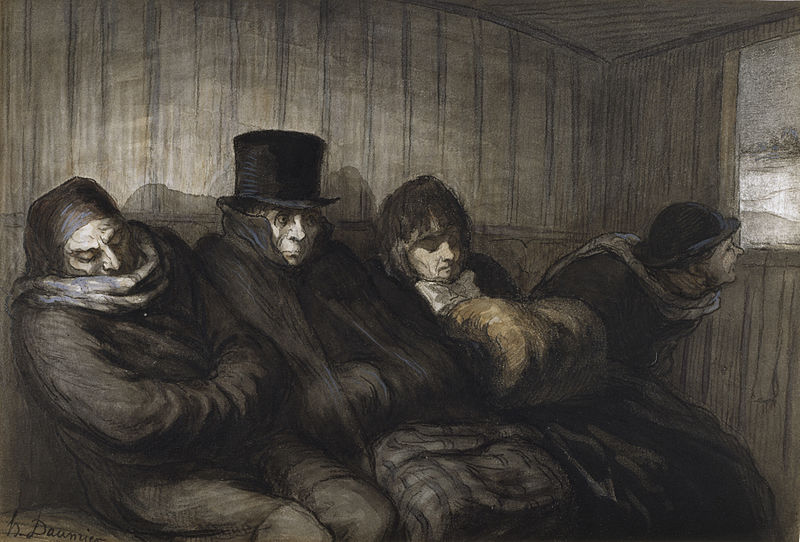
The Second Class Carriage, Honoré Daumier (1808-1879)


I'll be on vacation until October and will probably have little time for my weekly column. I hope to profit from this hiatus to rethink my priorities for the next twelve months.

That rethink will include this column. Is it reaching its target audience? Are changes needed? A recurring suggestion is that I should write more simply and in a less pedantic style. Yes, plain language is best. A lot of academic writing suffers from turgid jargon, not to mention silly attempts to imitate the syntax of French deconstructionists. But it’s not as if I write my columns first and later try to impress folks by inserting “organizing principle,” “evolutionary trajectory,” and other bafflegab. That’s how I think. Jargon also allows me to squeeze complex ideas into a few words. A certain amount is unavoidable, unless you want to read columns that are twice as long.

Russia, Russia, Russia ...

Another suggestion is that I should write more pieces about foreign politics, like "Impressions of Russia." In The Unz Review that column got me 246 comments (My score was higher with only one other column “The Jews of West Africa”). Yet I wrote it off the top of my head.

So why not write about Russia? To be honest I don't feel qualified. I remember my first impressions of that country and how so many turned out to be incomplete or dead wrong. Nonetheless, those same first impressions turn up again and again in pieces by journalists and other writers.

Like the ones who go on about "grim-faced Russians weighed down by centuries of oppression." I've read that refrain so often it's no longer funny. Russians dislike smiling at strangers because it’s considered rude—and also because a stranger with attitude might take it the wrong way. But among friends and family they laugh and smile like anyone else. This is changing, to be sure. On my last visit I noticed many store employees flashing American-style smiles at customers.

Then there's that travel writer who said he knew he was being spied upon because the hotel maid looked like a top model. Uh, that's just the local demographics, and the fact that many young women work in services to pay for their university education. In the West, students are supposed to work as unpaid "interns."

Finally, many journalists have been writing that Russia is hell on earth for gays and lesbians. The real situation is like that of the West in the 1970s: homosexuality is no longer illegal but most people still consider it wrong. So gays and lesbians get disowned by their parents and beaten up by young toughs. On the other hand, they form a large and very visible community with its own bars, magazines, and festivals. I remember going to a night club where about a third of the clientele were openly gay or lesbian. It was no hole-in-the wall either.

So if some journalists think Russia today is evil, they should also think the West in the 1970s was evil. Maybe they do.

Of course, there is a big difference between us in the 1970s and Russians today. We had to wait forty years to see how things would turn out. They don’t have to wait. They can just look at us. That cuts two ways. On the one hand, Russian gays and lesbians look at the West and feel frustrated. They want change to happen faster. On the other hand, traditional Russians look at the West and feel dismayed. They want no part of this change.

Can you blame them? In the 1980s I supported gay rights on the principle of "live and let live." Gays weren't asking to be accepted by people who didn't accept them, least of all religious conservatives. They just wanted to be left alone, as consenting adults, and who could be against what consenting adults do in private?

The next three decades then saw a ratcheting upward of gay rights. For example, since 2012 all Ontario schools have had to allow gay/lesbian clubs on their premises, even Catholic and elementary schools. So much for freedom of religion. So much for "consenting adults."  Gays and lesbians seem to be like any pressure group: they make whatever promises are necessary to get what they want and then forget them when they get what they want.

So Russia is a bit like our past. Only it's a past where people have a better idea of the future.

Punditry, left vs. right, and globalism

That's about all I have to say about Russia. If you want to know more, ask someone from that country.

What about punditry on other topics? Again, I don't feel qualified, and there are columnists far better at that than me.

I also have mixed feelings about punditry. It aims not so much to change how people think as to confirm what they think. So the net effect is to polarize public opinion. Liberals become more self-assured about their ideology and conservatives likewise. Yet, as I see it, both groups are equally wrong, and both have betrayed their original principles. 

As I see it (again), the worst threat comes from the right. It’s the right that best articulates globalism and is best able to persuade everyone that it's for their own good. And globalism will be much more far-reaching—and devastating—than communism ever was. It is literally the abolition of all barriers to the free flow of capital, trade, and labor. In the best scenario, wages and working conditions will be levelled downward throughout the West. In the worst scenario, the whole world will be worse off because the conditions most suitable to wealth creation are in the high-trust societies of the West.

Those societies are not high-trust because of laws, constitutions, or charters of rights. They are that way because of their cultural, behavioral, and psychological characteristics—low levels of personal violence, high levels of affective empathy and guilt proneness, strong orientation toward the future rather than the present, and so on. It was that mental package that made the rise of the West possible.

That mental package is now being dissolved, not so much by "cultural Marxists" as by business interests that want to cut labor costs and increase GDP. They feel no animosity toward the West and its national identities. They just feel those identities have had their day. In their opinion, this is how we'll all move into a better and more prosperous future.

People are entitled to their opinions, but this one—globalism—isn’t competing with the others on a level playing field. It dominates the media, the think tanks, and even the entertainment industry. And it dominates both the left and the right. It’s an opinion that has succeeded not on its own merits but because it has much more money behind it.

This has always been a problem in open, democratic societies. It has gotten worse, however. This is partly because the top 1% have proportionately more money nowadays and partly because they have less sense of national loyalty nowadays. They’ll say it out loud: “Why should I feel more loyal to someone who works here than to someone who works in another country?” This sort of view is promoted by eminently conservative groups, like the Fraser Institute here in Canada.

Punditry becomes part of the problem to the degree it shores up the false dichotomy of “left” versus “right.” Today, the real one is globalism versus the forces it opposes.

Reference 

Ostroff, J. (2015). How Canada got its first Catholic elementary school gay-straight alliance, Huffington Post, May 11
http://www.huffingtonpost.ca/2015/05/11/polly-quinn-gsa-catholic-elementary-school_n_7226896.html 

Saturday, October 11, 2014

Yes, demons do exist


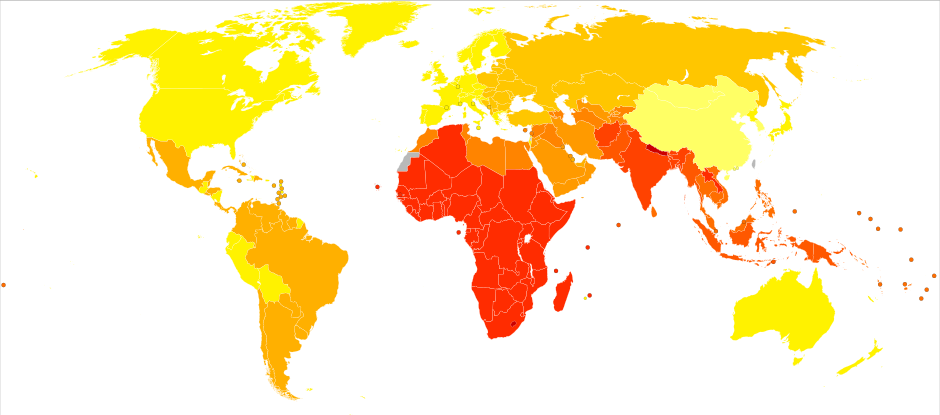
Chlamydia infection rate, by country (WHO 2004, Wikicommons). Sub-Saharan Africa has been a natural laboratory for the evolution of sexually transmitted pathogens, including strains that can manipulate their hosts.


Are we being manipulated by microbes? The idea is not so whacky. We know that a wide range of microscopic parasites have evolved the ability to manipulate their hosts, even to the point of making the host behave in strange ways. A well-known example is Toxoplasma gondii, a protozoan whose life cycle begins inside a cat. After being excreted in the cat's feces, it is picked up by a mouse and enters the new host's brain, where it neutralizes the fear response to the smell of cat urine. The mouse lets itself be eaten by a cat, and the protozoan returns to a cat's gut—the only place where it can reproduce (Flegr, 2013).

T. gondii can also infect us and alter our behavior. Infected individuals have longer reaction times, higher testosterone levels, and a greater risk of developing severe forms of schizophrenia (Flegr, 2013). But there is no reason to believe that T. gondii is the only such parasite we need to worry about. We study it in humans simply because we already know what it does in a non-human species.

Researchers are starting to look at manipulation by another human parasite, a sexually transmitted bacterium called Chlamydia trachomatis. Zhong et al. (2011) have found that it synthesizes proteins that manipulate the signalling pathways of its human host. These proteins seem to facilitate reinfection, although there may be other effects:

Despite the significant progresses made in the past decade, the precise mechanisms on what and how chlamydia-secreted proteins interact with host cells remain largely unknown, and will therefore still represent major research directions of the chlamydial field in the foreseeable future. (Zhong et al., 2011)

What else would a sexually transmitted pathogen do to its host? For one thing, it could cause infertility: 

While several nonsexually transmitted infections can also cause infertility (e.g., schistosomiasis, tuberculosis, leprosy), these infections are typically associated with high overall virulence. In contrast, STIs tend to cause little mortality and morbidity; thus, the effect on fertility seems to be more "targeted" and specific. In addition, several STI pathogens are also associated with an increased risk of miscarriage and infant mortality (Apari et al., 2014)

Chlamydia is a major cause of infertility, and this effect seems to be no accident. Its outer membrane contains a heat shock protein that induces cell death (apoptosis) in placenta cells that are vital for normal fetal development. The same protein exists in other bacteria but is located within the cytoplasm, where it can less easily affect the host's tissues. Furthermore, via this protein, Chlamydia triggers an autoimmune response that can damage the fallopian tubes and induce abortion. This response is not triggered by the common bacterium Escherichia coli. Finally, Chlamydia selectively up-regulates the expression of this protein while down-regulating the expression of most other proteins (Apari et al., 2014).

But how would infertility benefit Chlamydia and other sexually transmitted pathogens? Apari et al. (2011) argue that infertility causes the host and her partner to break up and seek new partners, thus multiplying the opportunities for the pathogen to spread to other hosts. A barren woman may pair up with a succession of partners in a desperate attempt to prove her fertility and, eventually, turn to prostitution as a means to support herself (Caldwell et al., 1989). This is not a minor phenomenon. STI-induced infertility has exceeded 40% in parts of sub-Saharan Africa (Apari et al., 2011).


It gets kinkier and kinkier

Does the manipulation stop there? We know, for instance, that sexual promiscuity correlates with the risk of contracting different STIs, but is this a simple relationship of cause and effect? Could an STI actually promote infidelity by stimulating sexual fantasizing about people other than one's current partner?

Let's look at another pathogen, Candida albicans, commonly known as vaginal yeast, which can cause an itchy rash called vulvovaginal candidiasis (VVC). Reed et al. (2003) found no significant association between VVC and the woman's frequency of vaginal sex, lifetime number of partners, or duration of current relationship. Nor was there any association with presence of C. albicans in her male partner. But there were significant associations with the woman masturbating or practicing cunnilingus in the past month.

VVC is thus more strongly associated with increased sexual fantasizing, as indicated by masturbation rate, than with a higher frequency of vaginal intercourse. This does look like host manipulation, although one might wonder why it doesn't translate into more sex with other men, this being presumably what the pathogen wants. Perhaps the development of masturbation as a lifestyle (through use of vibrators and pornography) is making this outcome harder to achieve.

A sexually transmitted pathogen can also increase its chances of transmission by disrupting mate guarding. This is the tendency of one mate, usually the male, to keep watch over the other mate. If mate guarding can be disabled or, better yet, reversed, the pathogen can spread more easily to other hosts. This kind of host manipulation has been shown in a non-human species (Mormann, 2010).

Do we see reversal of mate guarding in humans? Yes, it's called cuckold envy—the desire to see another man have sex with your wife—and it's become a common fetish. Yet it seems relatively recent. Greco-Roman texts don't mention it, despite abundant references to other forms of alternate sexual behavior, e.g., pedophilia, cunnilingus, fellatio, bestiality, etc. The earliest mentions appear in 17th century England (Kuchar, 2011, pp. 18-19). This was when England was opening up to world trade and, in particular, to the West African slave trade.

Sub-Saharan Africa has been especially conducive to sexually transmitted pathogens evolving a capacity for host manipulation. Polygyny rates are high, in the range of 20 to 40% of all adult males, and the polygynous male is typically an older man who cannot sexually satisfy all of his wives. There is thus an inevitable tendency toward multi-partner sex by both men and women, which sexually transmitted pathogens can exploit ... and manipulate.


What about sexual orientation?

A pathogen can also become more transmissible by giving its host a new sexual orientation. This strategy would disrupt the existing pair bond while opening up modes of transmission that may be more efficient than the penis/vagina one. Some vaginal strains of Candida albicans have adapted to oral sex by becoming better at adhering to saliva-coated surfaces (Schmid et al., 1995). Certain species that cause bacterial vaginosis, notably Gardnerella vaginalis and Prevotella, seem to specialize in female-female transmission (Muzny et al., 2013; Sobel, 2012).

Finally, there is the hypothesis that exclusive male homosexuality has a microbial origin (Cochran et al., 2000). Its main shortcomings are that (a) there is no candidate pathogen and that (b) exclusive male homosexuality has been observed in social environments with limited opportunities for pathogen transmission, such as small bands of hunter-gatherers across pre-Columbian North America (Callender & Kochems, 1983). On the other hand, there seems to have been a relatively recent shift in European societies from facultative to exclusive male homosexuality, so something may have happened in the environment, perhaps the introduction of a new pathogen (Frost, 2009).

Both male and female homosexuality seem to have multiple causes, but it’s likely that various pathogens have exploited this means of spreading to other hosts.


Conclusion

This is a fun subject when it concerns silly mice or zombie ants. But now it concerns us. And that's not so funny. Can microbes really develop such demonic abilities to change our private thoughts and feelings?

It does seem hard to believe. Perhaps this is an argument for intelligent design. After all, only an all-knowing designer could have made creatures that are so small and yet capable of so much ... things like inducing abortion, breaking up marriages, and altering normal sexual desires. Yes, such an argument could be made.

But I don't think anyone will bother.
 

References

Apari, P., J. Dinis de Sousa, and V. Muller. (2014). Why Sexually Transmitted Infections Tend to Cause Infertility: An Evolutionary Hypothesis. PLoS Pathog 10(8): e1004111.
http://www.plospathogens.org/article/info%3Adoi%2F10.1371%2Fjournal.ppat.1004111

Caldwell, J.C., P. Caldwell, and P. Quiggin. (1989). The social context of AIDS in sub-Saharan Africa, Population and Development Review, 15, 185-234.
https://www.soc.umn.edu/~meierann/Teaching/Population/Readings/Feb%209%20Caldwell.pdf

Callender, C. and L.M. Kochems. (1983). The North American Berdache, Current Anthropology, 24, 443-470.
http://www.jstor.org/discover/10.2307/2742448?uid=3739448&uid=2&uid=3737720&uid=4&sid=21104311299061 

Cochran, G.M., P.W. Ewald, and K.D. Cochran. (2000). Infection causation of disease: an evolutionary perspective, Perspectives in Biology and Medicine, 43, 406-448.
http://www.isteve.com/infectious_causation_of_disease.pdf

Flegr, J. (2013). Influence of latent Toxoplasma infection on human personality, physiology and morphology: pros and cons of the Toxoplasma-human model in studying the manipulation hypothesis, The Journal of Experimental Biology, 216, 127-133. http://jeb.biologists.org/content/216/1/127.full 

Frost, P. (2009). Has male homosexuality changed over time, Evo and Proud, March 5
http://evoandproud.blogspot.ca/2009/03/has-male-homosexuality-changed-over.html

Kuchar, G. (2001). Rhetoric, Anxiety, and the Pleasures of Cuckoldry in the Drama of Ben Jonson and Thomas Middleton, Journal of Narrative Theory, 31 (1), Winter, pp. 1-30. 

Mormann, K. (2010). Factors influencing parasite-related suppression of mating behavior in the isopod Caecidotea intermedius, Theses and Disserations, paper 48
http://via.library.depaul.edu/etd/48 

Muzny, C.A., I.R. Sunesara, R. Kumar, L.A. Mena, M.E. Griswold, et al. (2013). Correction: Characterization of the vaginal microbiota among sexual risk behavior groups of women with bacterial vaginosis. PLoS ONE 8(12):
http://www.plosone.org/article/info%3Adoi%2F10.1371%2Fjournal.pone.0080254 

Reed, B.D., P. Zazove, C.L. Pierson, D.W. Gorenflo, and J. Horrocks. (2003). Candida transmission and sexual behaviors as risks for a repeat episode of Candida vulvovaginitis, Journal of Women's Health, 12, 979-989.
http://online.liebertpub.com/doi/abs/10.1089/154099903322643901 

Schmid, J., P.R. Hunter, G.C. White, A.K. Nand, and R.D. Cannon. (1995). Physiological traits associated with success of Candida albicans strains as commensal colonizers and pathogens, Journal of Clinical Microbiology, 33, 2920-2926.
http://jcm.asm.org/content/33/11/2920.short 

Sobel, J.D. (2012). Bacterial vaginosis, Wolters Kluwer, UpToDate
http://www.uptodate.com/contents/bacterial-vaginosis 

Zhong, G., L. Lei, S. Gong, C. Lu, M. Qi, and D. Chen. (2011). Chlamydia-Secreted Proteins in Chlamydial Interactions with Host Cells, Current Chemical Biology, 5, 29-37
http://www.ingentaconnect.com/content/ben/ccb/2011/00000005/00000001/art00004

Saturday, April 20, 2013

The gay germ hypothesis


Incidence of chlamydia, a major cause of infertility. The high polygyny rate among the “female farming” peoples of sub-Saharan Africa may have favored the evolution of STDs. Is this where we should look for the precursor of the hypothetical “gay germ”? (source)


Heritability for male homosexuality is low to moderate (30 to 45%). There is thus some kind of genetic predisposition, but it’s weak and may simply be a low degree of pre-natal androgenization. All things being equal, such individuals would still develop a heterosexual orientation.

But all things aren’t equal. Something out there is tipping these individuals over the threshold that separates heterosexual from homosexual orientation. What is it? I suspect there are several causes, including the rising level of estrogens and estrogen-like substances in the environment over the past century (see previous post).

The cause may also be a pathogen that alters its host’s sexual orientation in order to enhance its chances of spreading to other hosts. This is the “gay germ” theory proposed by Greg Cochran (Cochran et al., 2000). It’s interesting, and there are certainly precedents for this kind of psychological manipulation … from zombie ants to rats losing their fear of cats.

But so far there’s no smoking gun. No candidate pathogens have been identified, although some STDs seem to have adapted to non-heterosexual modes of transmission, e.g., the bacterium responsible for bacterial vaginosis, particularly Gardnerella vaginalis, and some strains of vaginal yeast (see previous post).

Another objection is that natural selection should reduce host susceptibility. As Ron Unz (2013) has recently argued:

Cochran and others ridicule the gene model as absurd, arguing that strong selective pressure would have rapidly eliminated any such genes from the population, and this is not unreasonable. But similar criticism could applied to their own model, since genetic susceptibility to the germ would obviously be subject to equally powerful selective disadvantage.

A lot of pathogens seem undeterred by this argument. People die all the time from infections of one sort or another. One reason is that pathogens have shorter generation times and thus can evolve faster than their hosts can. An evolutionary equilibrium will eventually fall into place, but it will be heavily weighted in the pathogen’s favor. There are also limits to what a host can do. If the host’s defense system becomes too sensitive, it will attack not only possible pathogens but also host tissues.

Still, the most catastrophic epidemics tend to burn themselves out, largely because they destroy the pool of individuals they can most easily spread amongst. The Plague of Justinian of the 6th and 7th centuries may have wiped out half of Europe’s population. Then it disappeared. The Black Death of the 14th century killed between one and two thirds of all Europeans. It too disappeared, the last possible outbreaks being in the 18th century. This is not the case, however, with STDs, even in places where the consequences are dramatic, such as Africa’s “infertility belt”:

Africa shares the largest burden of infertility in the world. Estimates indicate that an average of 10.1% of couples experience infertility in Africa, with a high percentage of 32% in some countries and ethnic groups within Africa. An infertility belt” spreading through West Africa, through Central Africa to East Africa has been described. In some countries in this belt, up to one-third of women may be childless at the end of their reproductive lives. (Okonofu & Obi, 2009)

A pathogen would not sterilize one third of the population, generation after generation, unless it had something to gain, as Ron Unz notes. In sub-Saharan Africa, infertility can lead to abandonment of the wife, thus making her a better vehicle for pathogen transmission:

The high prevalence of untreated STD, resulting in increased infertility acts paradoxically to increase rather than decrease the fertility in Africa. Infertility is devastating for an African woman, resulting in divorce and diminished social status that often leads to prostitution. The fear of infertility results in refusal of contraception and early childbearing to demonstrate fertility. (O’Reilly, 1986)

Other separated women owe their status to infertility, which is a frequent reason for being driven from marriage and for being unable to marry […] Nadel […] identified such women as a major source of prostitutes: “Adultery and unchastity count less in her than other women. [The] paramount stigma [is] barrenness itself.” (Caldwell et al.,1989)

The existence of Africa’s infertility belt is generally attributed to a high prevalence of STDs, particularly gonorrhea and chlamydia (Collet et al., 1988), which in turn is related to a high polygyny rate (20 to 40% of all sexual unions throughout most of sub-Saharan Africa), which in turn is related to the low cost of maintaining a second or third wife, which in turn is related to year-round hoe farming and the ability of women to support themselves and their children with little male assistance.

We know that the AIDS virus evolved in sub-Saharan Africa, and it may be that syphilis evolved out of yaws, likewise endemic to sub-Saharan Africa. It may be that this region favors the evolution of STDs; if so, we might best look for the precursor of the “gay germ” there as well, assuming of course that it does exist.
 

References

Caldwell, J.C., P. Caldwell, and P. Quiggin. (1989). The social context of AIDS in sub-Saharan Africa, Population and Development Review, 15, 185-234.
https://www.soc.umn.edu/~meierann/Teaching/Population/Readings/Feb%209%20Caldwell.pdf

Collet, M., J. Reniers, E. Frost, R. Gass, F. Yvert, A. Leclerc, C. Roth-Meyer, B. Ivanoff, and A. Meheus. (1988). Infertility in Central Africa: Infection is the cause, International Journal of Gynecology & Obstetrics, 26, 423–428 http://dx.doi.org/10.1016/0020-7292(88)90340-2

Cochran, G.M., Ewald, P.W., and Cochran, K.D. (2000). Infectious causation of disease: an evolutionary perspective, Perspectives in Biology and Medicine, 43, 406-448.

Okonofu, F.E. and H. Obi. (2009). Specialized Versus Conventional Treatment of infertility in Africa: Time for a Pragmatic Approach, African Journal of Reproductive Health, 13, 9-11.
http://www.ajrh.info/vol13_no1/13_1_editorial_english.php

O’Reilly, K.R. (1986). Sexual behaviour, perceptions of infertility and family planning in sub-Saharan Africa, African Journal of Sexually Transmitted Diseases, 2, 47-49.

Unz, R. (2013). “Gay gene” vs. “gay germ”, April 16, The American Conservative,
http://www.theamericanconservative.com/gay-gene-vs-gay-germ/