Showing posts with label state formation. Show all posts

Saturday, March 22, 2014

Kinder, gentler speech


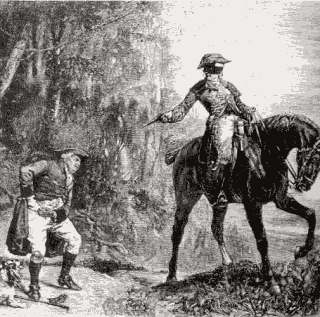
A highwayman - by Glen Campbell (source). Before the rise of the State, and its pacification of social relations, the top man was the one who dominated the local group through a mixture of violence, bombast, and charisma.
 

Before the State came into being, men were organized into small, loosely defined groups where authority was wielded through a mixture of violence, bombast, and charisma. The more you had of these qualities, the likelier you would become the leader, "the big man." But such leadership could easily slip out of your hands. Power was something that all men held, and it was only through the consensus of the moment that one man held more of it than the others.

Thus, in pre-State societies, power is not a permanent structure that transcends the lifetime of any one leader. Power is the leader. It is highly personal and ephemeral, and these qualities extend to the tools of power, like speech. When describing Amerindian tribes in Paraguay, Pierre Clastres (1989 pp. 151-153) says:


To speak is above all to possess the power to speak. [...] the question to ask is not: who is your chief? but rather: who among you is the one who speaks? The master of words is what many groups call their chief.

[...] Indian societies do not recognize the chief's right to speak because he is the chief: they require that the man destined to be chief prove his command over words. Speech is an imperative obligation for the chief. The tribe demands to hear him: a silent chief is no longer chief.

This situation changes with the rise of the State, in particular with its monopoly on the use of violence. Social relations become more pacified, more structured, and less changeable, thus creating a culture of deference to authority. Speech is still manipulative but subtly so, as Rosen (1987) describes in Ethiopia:


For people who grow up speaking Amharic and Tigrinya, the idea of being precise with language is a foreign one. Ethiopians, perhaps Amharas more than Tigreans, are always on guard with others, suspicious about the motives of almost everyone, and on the alert for verbal assaults of one sort or another. The Amhara does not assume good intentions—he expects people to harbor disruptive inclinations. He deals with authority cautiously, always seeking to perfect his verbal means for giving vent to his criticisms and frustrations, but without incurring the wrath of powerful superiors.

[...] One must live a long time in the midst of Ethiopians, speaking with them in Amharic (or Tigrinya), in order to begin to appreciate how much calculation is invested in each phrase, each answer to a question, each overt response to a situation. That he who desires to do harm may always be polite, or that he who wishes to deliver an insult may include it in a finely-wrought compliment, is part of a general understanding of human nature. When a person speaks, he wants to do so subtly, being able to make his point effectively, yet not so directly that he might find himself involved in an altercation or worse with some equally sensitive opponent.

Social relations are still incompletely pacified in Ethiopia. This is partly because of recurring conflicts between central and peripheral sources of authority, but also because many people chose until recent times to be outlaws, i.e., those outside the sphere of State-imposed law:


In Ethiopia, an exceptionally fierce warrior could not always restrict himself to serving the common cause, or to being subservient to a particular chieftain. His alternative was to rebel, flee from the constraints of society and become a shifta. The dictionary defines this term to mean "outlaw, bandit, brigand, rebel". It was applied to anyone who committed a crime and then fled to the wilderness, thereafter living by stealth and cunning, if not, as was more than likely, by killing and highway robbery. As often as not, the shifta was also admired for being guabäz: for his courage and manliness, and, perhaps, most of all, for his daring in flouting the norms of the society. (Rosen, 1987)

Incomplete pacification also appears in the persistence of disruptive forms of speech, "when language is made into a weapon to attack or disrupt others":


One form of this is an Ethiopian penchant for backbiting, known in Amharic as chiqechiq. This appears when personal interests are asserted in the midst of group undertakings, often leading to the downfall of the community plan or project, and the disruption of joint undertakings. Another form is the studied use of hyperbole in order to magnify a case, or to gain attention for one's cause, even if this requires wild exaggeration of the truth. (Rosen, 1987)

Emergence of a free marketplace of ideas

I have argued elsewhere that the State's monopoly on violence created a new cultural environment that favored the survival of meeker and more submissive individuals (Frost, 2010). This environment also improved the prospects for individuals who used speech less aggressively. Because other individuals no longer posed a threat to life and property, and because trust had become the rule and not the exception, people were now freer to use speech simply for communication. It became possible to exchange ideas in good faith and judge them on their own merits. 

This development is analogous to the rise of the market economy. In a low-trust society, buyers and sellers can securely make their transactions only in small protected areas that are limited in space and time, i.e., shops and marketplaces. In a high-trust society, the market mechanism can spread beyond these isolated points of exchange to encompass the entire economy. Increased trust emancipated the marketplace of goods and services, and it had a similar effect on the marketplace of ideas.


Cultural or genetic evolution?

Selection acts on phenotypes, and only indirectly on genotypes. When speech began to be used in new ways, the old ways became a handicap for survival and reproduction. There was thus cultural selection for new speech patterns. But were these new patterns passed on only through learning? Or was there also selection for certain genetic predispositions?

There are predispositions that selection can act upon. Loudness of speech seems to have a heritable basis (Carmelli et al., 1988; Matthews et al., 1984). The same is true for deceitful behavior (Barker et al., 2009). Heritability is particularly high for Attention-Deficit/Hyperactivity Disorder (ADHD), which is characterized by certain speech differences:


Analysis of speech parameters during conversation, such as voice rhythm (rate and duration of pauses and vocalization, response latency), intensity, and frequency, has revealed marked differences in the timing and modulation of speech between children with ADHD and those with and without specific learning disabilities. They speak louder, fail to modulate their voice volume, speak for much longer at a stretch with many short pause durations during their talk, but take much longer to respond to the conversational partner. (Tannock, 2005)

This is not to say that ADHD became less prevalent with the pacification of social relations, but rather that this new cultural environment selected for certain heritable aspects of speech that are impaired by ADHD. Like many other genetic disorders, ADHD sheds light on the heritable variability that selection can act upon.  

In sum, when the State imposed a monopoly on the use of violence, it set in motion a process of gene-culture co-evolution with many consequences. Among other things, this process may have favored not only learned ways of speaking but also unlearned ways as well.


References 

Barker, E.D., H. Larson, E. Viding, B. Maughan, F. Rijsdijk, N. Fontaine, and R. Plomin. (2009). Common genetic but specific environmental influences for aggressive and deceitful behaviors in preadolescent males, Journal of Psychopathology and Behavioral Assessment, 31, 299-308.
http://www.drru-research.org/data/resources/55/Barker-E.-et-al.-2009.PDF

Carmelli, D., R. Rosenman, M. Chesney, R. Fabsitz, M. Lee, and N. Borhani. (1988). Genetic heritability and shared environmental influences of type A measures in the NHLBI Twin Study, American Journal of Epidemiology, 127 (5), 1041-1052. 

Clastres, P. (1989). Society against the State, New York: Zone Books.

Frost, P. (2010). The Roman State and genetic pacification, Evolutionary Psychology, 8(3), 376-389. http://www.epjournal.net/filestore/EP08376389.pdf

Matthews, K.A., R.H. Rosenman, T.M. Dembroski, E.L. Harris, and J.M. MacDougall. (1984). Familial resemblance in components of the type A behavior pattern: a reanalysis of the California type A twin study, Psychosomatic Medicine, November, 46, 512-22.

Rosen, C. (1987). Core symbols of Ethiopian identity and their role in understanding the Beta Israel today, in M. Ashkenazi and A. Weingrod (eds.) Ethiopian Jews and Israel, pp. 55-62, New Brunswick (U.S.A.): Transaction Books. 

Tannock, R. (2005). Language and mental health disorders: the case of HDHD, in W. Ostreng (ed.) Convergence. Interdisciplinary Communications 2004/2005, 45-53.
http://www.cas.uio.no/Publications/Seminar/Convergence_Tannock.pdf

Saturday, December 8, 2012

Genetic pacification in medieval Europe


Homicide rates in England, 1200-2000 (Eisner, 2001)

States seek to pacify their territories by monopolizing the use of violence. With each passing generation, violent individuals are ostracized, imprisoned, or executed, their predispositions being thereby selected out of the gene pool. Has this “genetic pacification” made longtime State societies kinder and gentler places to live in?
 
The last millennium saw violence steadily decline in Western societies, and this trend has caught the attention of scholars like Manuel Eisner (2001), Gregory Clark (2007), Steven Pinker (2011), and our beloved hbd* chick (2012).

Clark attributes the decline to an underlying demographic, cultural, and even genetic change. With the end of the Dark Ages, states began reasserting their power throughout Western Europe and reestablishing their monopoly on the use of violence. The result was a new social landscape. The young violent male went from hero to zero, with success now going to the law-abiding man who bettered himself by peaceful means. And so the meek inherited the earth—or rather those portions of the earth under persistent State control.

But was this evolution cultural or genetic? Did the meek reproduce their meekness by teaching their children to behave likewise? Or were they passing on certain genetic predispositions?

Clark is hesitant on this point, and rightly so. How does one distinguish cultural from genetic inheritance? And is it possible for genetic evolution to work that fast?

We know that aggressive/antisocial male behavior is moderately to highly heritable. A meta-analysis of twin and adoption studies put forward a heritability of 40% (Rhee & Waldman, 2002). A later twin study found a heritability of 96%, where the subjects were 9-10 year-olds of diverse ethnic backgrounds (Baker et al., 2007). This higher figure reflected the narrow age range and the use of a panel of evaluators to rate each subject. In the latest twin study, the heritability was 40% when the twins had different evaluators and 69% when they had the same evaluator.

Is this heritability high enough, and the time span long enough, to account for the historical decline of violence? This question has been addressed by American anthropologist Henry Harpending at the blog West Hunter.  

He began by defining this heritable trait as a “propensity to violence.” The stronger the propensity, the lower would be the threshold for real violence. In the comments, Steve Sailer pointed out the need to distinguish between organized violence, i.e., war, and disorganized violence. In reply, Henry Harpending restricted his definition to violent acts by individuals with “high time preference and fast life history.”

He then calculated the speed of the hypothetical genetic change, and the corresponding strength of natural selection:

In 1300 the homicide rate was about 50 per 100,000 people, or 0.5 per thousand. Homicide must have caused on the order of 1 to 2 percent of all deaths and a much higher proportion of deaths of young adult males. [By the year 2000] the distribution is shifted so that the homicide threshold is surpassed by only 1 in 100,000 people rather than 1 in 2,000.

[…] What strength of natural selection would have been required to cause this amount of genetic change? […] Assuming an additive heritability of 0.5 (the true value is probably 0.8 or so from literature on the heritability of aggressive behavior in children) the selective differential must be about 1/14 or .07 standard deviations per generation. […] This would occur if the most homicidal 1.5% of the population were to fail to reproduce each generation (Harpending, 2012)

That figure of 1.5% sounds awfully high. Yet it’s close to historical reality. In 16th century England and Flanders:

Executions were carried out at the rate of one per ten thousand inhabitants per year, i.e., ten times more than under Louis XV. Women were, except during acute epidemics of witch-hunting, less executed than men. Life expectancy was shorter than today: probably around 40 years. Calculation shows that one man out of a hundred at most, or one man out of two hundred at least, ended his life following a judge’s decision! (Taccoen, 1982, p. 52; see also Savey-Casart, 1968).  

This is a figure between 0.5% and 1.0% of the population, which is still less than Henry Harpending’s calculation of 1.5%. But that first figure excludes extra-judicial executions, i.e., men who were killed before they could be brought to justice, typically at the time of the crime. Nor does it include the significant number of accused who died in jail while awaiting trial. When the records of one medieval English jail were examined, it was found that 25% of the inmates died before they could be tried. By comparison, only 25% of them were eventually convicted of their alleged crimes (Ireland, 1987).

Finally, violent predispositions were also being weeded out by a third factor: class differences in reproductive success, i.e., Clark’s model. A pacified society tends to marginalize violent men and confine them to the lower classes, which reproduce at a lower rate than do the middle and upper classes of premodern societies with unrestricted fertility (Clark, 2007, see also Frost, 2010). 

In the comments on Henry’s post, it was pointed out that murder cases were rarely solved during the Middle Ages. Executions were largely for more common and less serious crimes like highway robbery and horse theft (although such offences would have been difficult to commit without a willingness to kill).

Yes, medieval justice was worse than modern justice at solving specific murder cases. In general, it was less effective at finding the specific criminal behind any one crime. But it was more effective, and ruthlessly so, at profiling likely criminals. This explains the seemingly irrational harshness of medieval punishment for petty crimes. The punishment was aimed not so much at the crime but at the underlying criminal mindset. If someone had crossed the psychological barrier of committing one crime, however petty it might be, he or she would probably commit—or may have already committed— other crimes of greater importance. Qui vole un oeuf vole un bœuf.  

Final thoughts

My elementary school was one of the last to end corporal punishment. Once, I was strapped for talking in class without permission (the lunch hour bell had already sounded, but the teacher hadn’t formally dismissed us). The teacher was uncompromising: If I had broken one rule, I had probably broken others. If unpunished, I might go on to do something worse.

This old mentality may partly explain the historical decline of violence. Our ancestors were selected for their ability to learn “what to do and what not to do.” And this is how many think today. Once a given rule has the backing of perceived moral authority, we eagerly fall into line, despite any inner doubts we might have. That has been one of the strengths of our civilization. It may also be our undoing.  

References

Baker, L.A., K.C. Jacobson, A. Raine, D.I. Lozano, S. Bezdjian (2007). Genetic and environmental bases of childhood antisocial behavior: a multi-informant twin study, J Abnorm Psychol., 116, 219-235.  

Clark, G. (2007). A Farewell to Alms. A Brief Economic History of the World. Princeton and Oxford: Princeton University Press.

Eisner, M. (2001). Modernization, self-control and lethal violence. The long-term dynamics of European homicide rates in theoretical perspective, Br J Criminol., 41, 618-638. doi: 10.1093/bjc/41.4.618
http://bjc.oxfordjournals.org/content/41/4/618.abstract

Frost, P. (2010). The Roman State and genetic pacification, Evolutionary Psychology, 8(3), 376-389. http://www.epjournal.net/filestore/EP08376389.pdf
 
Harpending, H. (2012). Genetics and the historical decline of violence, November 25, West Hunter.
http://westhunt.wordpress.com/2012/11/25/genetics-and-the-historical-decline-of-violence/

hbd* chick (2012). What Pinker missed, hbd* chick, November 23,
http://hbdchick.wordpress.com/2012/11/23/what-pinker-missed/

Ireland, R.W. (1987). Theory and practice within the medieval English prison, The American Journal of Legal History, 31, 56-67.

Pinker, S. (2011). The Better Angels of Our Nature: Why Violence Has Declined, Viking. 

Rhee, S.H. & I.D. Waldman. (2002). Genetic and environmental influences on antisocial behavior: A meta-analysis of twin and adoption studies, Psychol Bull., 128, 490-529. 

Savey-Casart, P. (1968). La peine de mort, Geneva: Librairie Droz.

Taccoen, L. (1982). L’Occident est nu, Paris: Flammarion. 

Saturday, May 26, 2012

Constructing the Greek state - part 2


The Ioannis Metaxas regime (1936–1941) was the high-water mark of Greek nationalism. It sought to create an emotional bond between Greeks and their nation that they had previously felt only for their families and immediate kin. In this, Metaxas was trying to replicate a process of nation-building that had happened over a much longer time in Western Europe. (source)

Greece is a young nation. This statement may seem absurd, since the Greeks have a long history that goes back thousands of years. For most of that time, however, they existed as an ethnic community within larger multicultural states that were often ruled by non-Greeks. This was especially so during the centuries of Muslim rule under the Ottoman Empire.

The Ottoman Empire allowed its subject peoples much freedom to manage their affairs, but this self-government seldom rose above the local level. It was at this level that the Greeks were accustomed to running their lives—within the family, at the church, and among fellow villagers.

Above the local level, there was only a weak sense of common identity. And this broader identity was more religious than ethnic. While people were almost always sure of their religion, they were often less sure of their ethnicity. Many Orthodox Christians would alternately identify themselves to census takers as either Greeks or Macedonian Slavs (Jelavich & Jelavich, 1977, p. 208). Slavs became “Greek” by attaining a certain level of education, which typically was dispensed in that language (Jelavich & Jelavich, 1977, pp. 14-15).

In addition, a common ethnic identity could not easily develop in a land where Greeks had to live with other people. This was the case over most of present-day Greece. Almost half the population of Crete was Muslim, and the same was true for Western Thrace, and parts of Macedonia. Elsewhere, Christian Slavs or Albanians often predominated. Co-existence with Muslims was possible, but it came at a high cost. As Jelavich and Jelavich (1977, pp. 5-6) note:

In the decaying Ottoman Empire individual Muslims often suffered as much as their Christian counterparts did from bad government, but they still enjoyed important basic privileges, such as a far better chance in court, fewer taxes, and a recognized superior status. […] Christians, however, usually were supposed to observe certain prohibitions that were as galling to their personal pride as to their material interests. For instance, in theory they could not bear firearms, wear conspicuous or rich clothes, or don the color green, sacred to the Muslims. They were supposed to dismount when passing a Muslim on horseback; their houses could not be richer than or overlook those of their Muslim neighbors. Christian churches could not have bells or belltowers; new churches were not to be built, but old ones could be repaired.

Just as ethnic identity often extended no farther than the fields around one’s village, the same little world also circumscribed one's zone of relative peace and security. People disliked venturing too far from home, for fear of bandits. Many of these outlaws were Greeks, but the most powerful ones were Muslims—in general, discharged soldiers for whom banditry was little different from soldiering. Some of them ruled over large stretches of territory and commanded their own private armies. In time, especially during periods of weakness, the Ottoman Empire would regularize their existence by appointing them to official posts. There was thus no fine line between banditry and State power. The State itself ruled by virtue of force, and not by consent of the governed.

Constructing the Greek state


This old order ended with the War of Independence (1821-1829) and the creation of a Greek state. Nation-building would take place over a shorter time than it had in Western Europe. It would also be a more deliberate process. Finally, it would involve a more explicit rejection of the old order—a time when Greeks didn’t have their land all to themselves.

Initially, the new state was Greek only in name, being a protectorate of Great Britain, France, and Russia under a Bavarian king with a foreign-staffed civil service and army. Greeks would not run their own country until the late 1830s, and a democratically elected legislature would not be formed until 1844.

As citizens and as voters, the average Greek would now have to assume responsibility—especially financial responsibility—for a much larger circle of people who were neither family members nor neighbors. The only common denominator was a sense of shared citizenship. The result?

In 1838 Greek finances had been put under a French supervisor, Artemonis de Regny. By 1843 the entire financial situation of the country was disastrous. With the exception of a single year the state had been run on deficit spending. Payments on the loan had been suspended for four years. (Jelavich & Jelavich, 1977, p. 75)

Greece’s finances remained precarious. A second debt crisis occurred scarcely a half-century later:

The financial problem became increasingly serious. By 1892 the service on the debt took a third of the budget. In the next year Greece was bankrupt. (Jelavich & Jelavich, 1977, p. 173)

The problem wasn’t that Greeks were financially irresponsible. The problem was that they had previously exercised financial responsibility within the confines of a small community, or simply an extended family. A bad decision would primarily impact close relatives, who could easily retaliate. There was thus a system of checks and balances that just did not work in the new Greece.

Greeks were now interacting within a large social and economic environment while maintaining the mental reflexes of a much smaller one. People thought long and hard before dealing with strangers (and for good reason). They instead preferred to deal with other family members, even when a non-relative might be more competent. The worst part was that these family networks would conspire to plunder collectively owned goods, starting with the public treasury and extending to almost any space of social interaction. Beyond the world of one’s immediate kin, Greece was still a low-trust society, and a low-trust society is necessarily a poorer one.

To overcome this problem, Greek nationalists sought to strengthen national identity—to extend to the entire nation the sort of trust and emotional bonding that was normally felt towards one’s family. In short, they wanted to replicate the cultural evolution that the West had gone through. They wished to create a large nation-state with a correspondingly large society where one could easily interact with, and trust, complete strangers.

To this end, it was felt necessary to assimilate the country’s Christian minorities and expel its Muslim minority. This process had already begun during the War of Independence, with massacres of Muslim civilians being among the first acts of the Greek rebels (Jelavich & Jelavich, 1977, p. 440). It continued through a process of Turkish reprisals and Greek counter-reprisals, culminating in a mass exchange of populations between Greece and Turkey in 1922-1923.

Meanwhile, a national educational system was designed with a common curriculum. The Greek language was standardized, and steps taken to replace Turkish and Venetian loan-words with terms of Greek origin. Historic sites were made accessible to the public and used to instill national pride. In all this, Greece was following the example of Western nation-states.

Metaxas and the high tide of Greek nationalism

Greek nationalism reached its height under the Ioannis Metaxas regime (1936–1941). This period saw the use of organized youth activities, modern media, and popular art to promote national sentiment. By 1941, over one sixth of all Greeks were wearing the dark blue uniform of the national youth movement (EON). Metaxas himself became the focus of a personality cult that presented him as the “First Peasant,” the “First Worker,” and the “National Father.”

Metaxas blamed the failures of the past 100 years on Greeks pursuing narrowly defined self-interests at the expense of the nation as a whole. This pursuit of personal freedom impoverished Greek society and actually made everyone less free. His political philosophy is summarized by Sarandis (1994, pp. 151-152):

The individual must merge with the whole, and his own will was to be submitted to that of the nation. No one would be absolutely free and no individual could exist outside the state. Everything constituted part of the state, through which alone the will of the Greek people would be expressed. And this collective national will transcended the present and was independent of the living components of the nation, since it represented the volition not only of this era but also of the people of previous generations through thousands of years of history. Furthermore, individuals would subordinate their interests and suppress their own appetites and selfishness before the national collective welfare; only thus could they be powerful and consequently free.

This was clearly a Greek variant of fascism, even though Metaxas would later defend his country against fascist Italy. Today, such thinking might seem absurd, especially the notion of gaining freedom by suppressing freedom. Yet Metaxas was addressing a real problem. He wanted to stop the plundering of collective resources and turn Greece into the kind of high-trust society that older nation-states took for granted.

Metaxas’ legacy would last long after his untimely death in 1941. As growing numbers of tourists flocked to Greece during the postwar era, they were enchanted to find a nation with a strong sense of history and shared identity. They assumed this Greece was age-old, when in fact it had scarcely existed a half-century before. 

References

Jelavich, C. & B. Jelavich. (1977). The Establishment of the Balkan National States, 1804-1920, A History of East Central Europe, vol. VIII, Seattle: University of Washington Press.

Metaxas Project – Inside Fascist Greece
http://metaxas-project.com/

Sarandis, C. (1994). The ideology and character of the Metaxas regime, in R. Higham & T. Veremis (eds.) The Metaxas Dictatorship: Aspects of Greece, 1936-1940, (pages 156-157), Sunflower University Press.

Wikipedia. Ioannis Metaxas
http://en.wikipedia.org/wiki/Ioannis_Metaxas


Friday, January 21, 2011

Religiosity and the origins of civilization

Scenes of daily life from Sumer. The causes of civilization are not to be found in early art, writing, or architecture. These are merely the consequences of a preceding mental revolution.

Humans have gone through three stages of development: hunting/gathering, simple agricultural societies, and complex agricultural societies. The last stage brought us most of what we call “civilization”— state formation, class differentiation, urbanization, writing systems, literate culture, and so on.

What caused this transition from simple to complex agricultural societies? Was it simply the passage of time? Doubtful. Some societies have made this transition sooner than others. Others have never made it.

According to Atkinson and Whitehouse (2011), this debate has shifted away from technological causes and toward social and symbolic ones:

The main drivers of the great transition from small-scale hunter-gatherer societies in the pre-pottery Neolithic to the vast and complex civilizations of East Asia, MesoAmerica and the Fertile Crescent are still much debated […] Doubts have been growing with respect to the explanatory power of technological innovation, and attention has been focused increasingly on changes in social and symbolic worlds.

For the two authors, the change in the mode of subsistence (from hunting/gathering to agriculture) paved the way for a change in the mode of religiosity. It was this second transition that actually made the complexification of society possible. Humans became accustomed to a more systematized and accumulative form of thinking, and it was this new mental space that eventually became translated into a new physical space of buildings, roads, towns, and so forth.

Atkinson and Whitehouse argue that human societies seem to cluster into two modes of religiosity:

1. An “imagistic” mode associated with hunter-gatherers. Religiosity is focused on non-routine events that evoke an intense state of mental arousal (initiation, ordeals, bodily mutilation, etc).

2. A “doctrinal” mode associated with agricultural societies. Religiosity is more routine and is focused on frequently repeated teachings and rituals that generally evoke a less intense state of mental arousal.

Among hunter-gatherers, religiosity is meant to be traumatic. The aim is to create a vivid experience with long-lasting effects, such as an emotional bond that will keep men loyal to each other for hunting or war.

In agricultural societies, religiosity supports tasks that occur more often and more regularly:

Whereas the exploitation of wild resources requires only sporadic group co-operation (e.g., in hunting larger game), the domestication of animals and plants fosters increasingly routinized forms of collaborative labour (e.g., clearing, planting, harvesting and building). In traditional societies, such activities are typically punctuated by rituals.

There is thus selection for a new kind of mental space:

Put simply, the proposed doctrinal mode is seen as favouring high-frequency, low-arousal rituals, allowing large bodies of religious teachings to be stored in semantic memory, reproduced stably and spread efficiently as oral tradition.

[…] The doctrinal mode is based around frequently repeated teachings and rituals. High-frequency ritual performances allow complex networks of ideas to be transmitted and stored in semantic memory and give rise to generic identity markers ascribed to large-scale ‘imagined communities.’

It was this new mental space that made complex societies possible. Thus, the causes of civilization are not to be found in early art, writing, or architecture. These are merely the consequences of a preceding mental revolution. Atkinson and Whitehouse argue that the doctrinal mode of religiosity created a positive feedback loop of increasing cultural complexity:

If the emergence of agriculture drives an overall increase in the frequency of communal rituals, it also indirectly opens up opportunities for other features of the doctrinal mode to appear.

Other features might include organized priesthoods, ways to codify, transmit, and organize religious traditions (such as writing), and methods to enforce group cooperation and resource control.

Atkinson and Whitehouse do not ask why this mental revolution occurred in some agricultural societies and not in others. Tropical horticulturalists, for example, seem to have permanently stalled at the stage of simple societies. One reason may be that year-round agriculture enables women to provide for themselves and their offspring with limited male assistance. When agriculture is largely a female task, it is less likely to generate communal forms of religiosity that structure everyone’s mental space.

In addition, female reproductive autonomy reduces the costs of polygyny and thus increases male-male rivalry for mates. Such rivalry makes it harder to bring the men of a community together into stable communal structures. Yet such structures must be in place before rituals can become fully communalized on a regular basis, this being the first step toward complexification of mental space and, hence, society itself.

Reference

Atkinson, Q.D. & H. Whitehouse. (2011). The cultural morphospace of ritual form : Examining modes of religiosity cross-culturally, Evolution & Human Behavior, 32, 50-62.