Showing posts with label Gardnerella vaginalis. Show all posts

Saturday, October 11, 2014

Yes, demons do exist


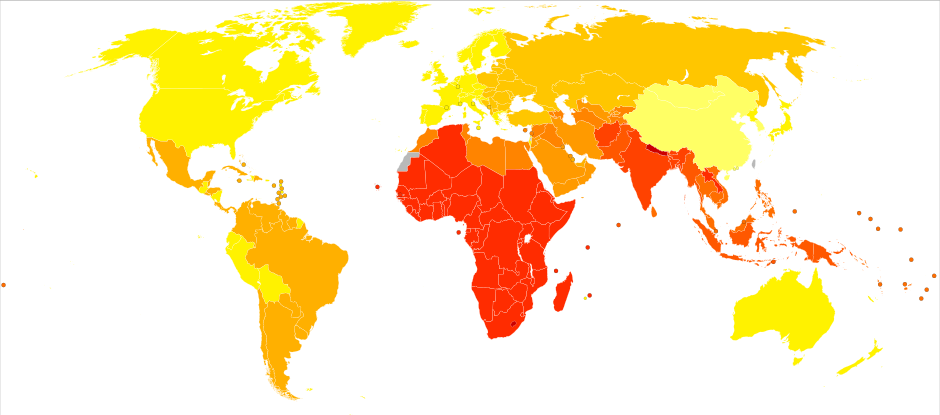
Chlamydia infection rate, by country (WHO 2004, Wikicommons). Sub-Saharan Africa has been a natural laboratory for the evolution of sexually transmitted pathogens, including strains that can manipulate their hosts.


Are we being manipulated by microbes? The idea is not so whacky. We know that a wide range of microscopic parasites have evolved the ability to manipulate their hosts, even to the point of making the host behave in strange ways. A well-known example is Toxoplasma gondii, a protozoan whose life cycle begins inside a cat. After being excreted in the cat's feces, it is picked up by a mouse and enters the new host's brain, where it neutralizes the fear response to the smell of cat urine. The mouse lets itself be eaten by a cat, and the protozoan returns to a cat's gut—the only place where it can reproduce (Flegr, 2013).

T. gondii can also infect us and alter our behavior. Infected individuals have longer reaction times, higher testosterone levels, and a greater risk of developing severe forms of schizophrenia (Flegr, 2013). But there is no reason to believe that T. gondii is the only such parasite we need to worry about. We study it in humans simply because we already know what it does in a non-human species.

Researchers are starting to look at manipulation by another human parasite, a sexually transmitted bacterium called Chlamydia trachomatis. Zhong et al. (2011) have found that it synthesizes proteins that manipulate the signalling pathways of its human host. These proteins seem to facilitate reinfection, although there may be other effects:

Despite the significant progresses made in the past decade, the precise mechanisms on what and how chlamydia-secreted proteins interact with host cells remain largely unknown, and will therefore still represent major research directions of the chlamydial field in the foreseeable future. (Zhong et al., 2011)

What else would a sexually transmitted pathogen do to its host? For one thing, it could cause infertility: 

While several nonsexually transmitted infections can also cause infertility (e.g., schistosomiasis, tuberculosis, leprosy), these infections are typically associated with high overall virulence. In contrast, STIs tend to cause little mortality and morbidity; thus, the effect on fertility seems to be more "targeted" and specific. In addition, several STI pathogens are also associated with an increased risk of miscarriage and infant mortality (Apari et al., 2014)

Chlamydia is a major cause of infertility, and this effect seems to be no accident. Its outer membrane contains a heat shock protein that induces cell death (apoptosis) in placenta cells that are vital for normal fetal development. The same protein exists in other bacteria but is located within the cytoplasm, where it can less easily affect the host's tissues. Furthermore, via this protein, Chlamydia triggers an autoimmune response that can damage the fallopian tubes and induce abortion. This response is not triggered by the common bacterium Escherichia coli. Finally, Chlamydia selectively up-regulates the expression of this protein while down-regulating the expression of most other proteins (Apari et al., 2014).

But how would infertility benefit Chlamydia and other sexually transmitted pathogens? Apari et al. (2011) argue that infertility causes the host and her partner to break up and seek new partners, thus multiplying the opportunities for the pathogen to spread to other hosts. A barren woman may pair up with a succession of partners in a desperate attempt to prove her fertility and, eventually, turn to prostitution as a means to support herself (Caldwell et al., 1989). This is not a minor phenomenon. STI-induced infertility has exceeded 40% in parts of sub-Saharan Africa (Apari et al., 2011).


It gets kinkier and kinkier

Does the manipulation stop there? We know, for instance, that sexual promiscuity correlates with the risk of contracting different STIs, but is this a simple relationship of cause and effect? Could an STI actually promote infidelity by stimulating sexual fantasizing about people other than one's current partner?

Let's look at another pathogen, Candida albicans, commonly known as vaginal yeast, which can cause an itchy rash called vulvovaginal candidiasis (VVC). Reed et al. (2003) found no significant association between VVC and the woman's frequency of vaginal sex, lifetime number of partners, or duration of current relationship. Nor was there any association with presence of C. albicans in her male partner. But there were significant associations with the woman masturbating or practicing cunnilingus in the past month.

VVC is thus more strongly associated with increased sexual fantasizing, as indicated by masturbation rate, than with a higher frequency of vaginal intercourse. This does look like host manipulation, although one might wonder why it doesn't translate into more sex with other men, this being presumably what the pathogen wants. Perhaps the development of masturbation as a lifestyle (through use of vibrators and pornography) is making this outcome harder to achieve.

A sexually transmitted pathogen can also increase its chances of transmission by disrupting mate guarding. This is the tendency of one mate, usually the male, to keep watch over the other mate. If mate guarding can be disabled or, better yet, reversed, the pathogen can spread more easily to other hosts. This kind of host manipulation has been shown in a non-human species (Mormann, 2010).

Do we see reversal of mate guarding in humans? Yes, it's called cuckold envy—the desire to see another man have sex with your wife—and it's become a common fetish. Yet it seems relatively recent. Greco-Roman texts don't mention it, despite abundant references to other forms of alternate sexual behavior, e.g., pedophilia, cunnilingus, fellatio, bestiality, etc. The earliest mentions appear in 17th century England (Kuchar, 2011, pp. 18-19). This was when England was opening up to world trade and, in particular, to the West African slave trade.

Sub-Saharan Africa has been especially conducive to sexually transmitted pathogens evolving a capacity for host manipulation. Polygyny rates are high, in the range of 20 to 40% of all adult males, and the polygynous male is typically an older man who cannot sexually satisfy all of his wives. There is thus an inevitable tendency toward multi-partner sex by both men and women, which sexually transmitted pathogens can exploit ... and manipulate.


What about sexual orientation?

A pathogen can also become more transmissible by giving its host a new sexual orientation. This strategy would disrupt the existing pair bond while opening up modes of transmission that may be more efficient than the penis/vagina one. Some vaginal strains of Candida albicans have adapted to oral sex by becoming better at adhering to saliva-coated surfaces (Schmid et al., 1995). Certain species that cause bacterial vaginosis, notably Gardnerella vaginalis and Prevotella, seem to specialize in female-female transmission (Muzny et al., 2013; Sobel, 2012).

Finally, there is the hypothesis that exclusive male homosexuality has a microbial origin (Cochran et al., 2000). Its main shortcomings are that (a) there is no candidate pathogen and that (b) exclusive male homosexuality has been observed in social environments with limited opportunities for pathogen transmission, such as small bands of hunter-gatherers across pre-Columbian North America (Callender & Kochems, 1983). On the other hand, there seems to have been a relatively recent shift in European societies from facultative to exclusive male homosexuality, so something may have happened in the environment, perhaps the introduction of a new pathogen (Frost, 2009).

Both male and female homosexuality seem to have multiple causes, but it’s likely that various pathogens have exploited this means of spreading to other hosts.


Conclusion

This is a fun subject when it concerns silly mice or zombie ants. But now it concerns us. And that's not so funny. Can microbes really develop such demonic abilities to change our private thoughts and feelings?

It does seem hard to believe. Perhaps this is an argument for intelligent design. After all, only an all-knowing designer could have made creatures that are so small and yet capable of so much ... things like inducing abortion, breaking up marriages, and altering normal sexual desires. Yes, such an argument could be made.

But I don't think anyone will bother.
 

References

Apari, P., J. Dinis de Sousa, and V. Muller. (2014). Why Sexually Transmitted Infections Tend to Cause Infertility: An Evolutionary Hypothesis. PLoS Pathog 10(8): e1004111.
http://www.plospathogens.org/article/info%3Adoi%2F10.1371%2Fjournal.ppat.1004111

Caldwell, J.C., P. Caldwell, and P. Quiggin. (1989). The social context of AIDS in sub-Saharan Africa, Population and Development Review, 15, 185-234.
https://www.soc.umn.edu/~meierann/Teaching/Population/Readings/Feb%209%20Caldwell.pdf

Callender, C. and L.M. Kochems. (1983). The North American Berdache, Current Anthropology, 24, 443-470.
http://www.jstor.org/discover/10.2307/2742448?uid=3739448&uid=2&uid=3737720&uid=4&sid=21104311299061 

Cochran, G.M., P.W. Ewald, and K.D. Cochran. (2000). Infection causation of disease: an evolutionary perspective, Perspectives in Biology and Medicine, 43, 406-448.
http://www.isteve.com/infectious_causation_of_disease.pdf

Flegr, J. (2013). Influence of latent Toxoplasma infection on human personality, physiology and morphology: pros and cons of the Toxoplasma-human model in studying the manipulation hypothesis, The Journal of Experimental Biology, 216, 127-133. http://jeb.biologists.org/content/216/1/127.full 

Frost, P. (2009). Has male homosexuality changed over time, Evo and Proud, March 5
http://evoandproud.blogspot.ca/2009/03/has-male-homosexuality-changed-over.html

Kuchar, G. (2001). Rhetoric, Anxiety, and the Pleasures of Cuckoldry in the Drama of Ben Jonson and Thomas Middleton, Journal of Narrative Theory, 31 (1), Winter, pp. 1-30. 

Mormann, K. (2010). Factors influencing parasite-related suppression of mating behavior in the isopod Caecidotea intermedius, Theses and Disserations, paper 48
http://via.library.depaul.edu/etd/48 

Muzny, C.A., I.R. Sunesara, R. Kumar, L.A. Mena, M.E. Griswold, et al. (2013). Correction: Characterization of the vaginal microbiota among sexual risk behavior groups of women with bacterial vaginosis. PLoS ONE 8(12):
http://www.plosone.org/article/info%3Adoi%2F10.1371%2Fjournal.pone.0080254 

Reed, B.D., P. Zazove, C.L. Pierson, D.W. Gorenflo, and J. Horrocks. (2003). Candida transmission and sexual behaviors as risks for a repeat episode of Candida vulvovaginitis, Journal of Women's Health, 12, 979-989.
http://online.liebertpub.com/doi/abs/10.1089/154099903322643901 

Schmid, J., P.R. Hunter, G.C. White, A.K. Nand, and R.D. Cannon. (1995). Physiological traits associated with success of Candida albicans strains as commensal colonizers and pathogens, Journal of Clinical Microbiology, 33, 2920-2926.
http://jcm.asm.org/content/33/11/2920.short 

Sobel, J.D. (2012). Bacterial vaginosis, Wolters Kluwer, UpToDate
http://www.uptodate.com/contents/bacterial-vaginosis 

Zhong, G., L. Lei, S. Gong, C. Lu, M. Qi, and D. Chen. (2011). Chlamydia-Secreted Proteins in Chlamydial Interactions with Host Cells, Current Chemical Biology, 5, 29-37
http://www.ingentaconnect.com/content/ben/ccb/2011/00000005/00000001/art00004
Saturday, April 20, 2013

The gay germ hypothesis


Incidence of chlamydia, a major cause of infertility. The high polygyny rate among the “female farming” peoples of sub-Saharan Africa may have favored the evolution of STDs. Is this where we should look for the precursor of the hypothetical “gay germ”? (source)


Heritability for male homosexuality is low to moderate (30 to 45%). There is thus some kind of genetic predisposition, but it’s weak and may simply be a low degree of pre-natal androgenization. All things being equal, such individuals would still develop a heterosexual orientation.

But all things aren’t equal. Something out there is tipping these individuals over the threshold that separates heterosexual from homosexual orientation. What is it? I suspect there are several causes, including the rising level of estrogens and estrogen-like substances in the environment over the past century (see previous post).

The cause may also be a pathogen that alters its host’s sexual orientation in order to enhance its chances of spreading to other hosts. This is the “gay germ” theory proposed by Greg Cochran (Cochran et al., 2000). It’s interesting, and there are certainly precedents for this kind of psychological manipulation … from zombie ants to rats losing their fear of cats.

But so far there’s no smoking gun. No candidate pathogens have been identified, although some STDs seem to have adapted to non-heterosexual modes of transmission, e.g., the bacterium responsible for bacterial vaginosis, particularly Gardnerella vaginalis, and some strains of vaginal yeast (see previous post).

Another objection is that natural selection should reduce host susceptibility. As Ron Unz (2013) has recently argued:

Cochran and others ridicule the gene model as absurd, arguing that strong selective pressure would have rapidly eliminated any such genes from the population, and this is not unreasonable. But similar criticism could applied to their own model, since genetic susceptibility to the germ would obviously be subject to equally powerful selective disadvantage.

A lot of pathogens seem undeterred by this argument. People die all the time from infections of one sort or another. One reason is that pathogens have shorter generation times and thus can evolve faster than their hosts can. An evolutionary equilibrium will eventually fall into place, but it will be heavily weighted in the pathogen’s favor. There are also limits to what a host can do. If the host’s defense system becomes too sensitive, it will attack not only possible pathogens but also host tissues.

Still, the most catastrophic epidemics tend to burn themselves out, largely because they destroy the pool of individuals they can most easily spread amongst. The Plague of Justinian of the 6th and 7th centuries may have wiped out half of Europe’s population. Then it disappeared. The Black Death of the 14th century killed between one and two thirds of all Europeans. It too disappeared, the last possible outbreaks being in the 18th century. This is not the case, however, with STDs, even in places where the consequences are dramatic, such as Africa’s “infertility belt”:

Africa shares the largest burden of infertility in the world. Estimates indicate that an average of 10.1% of couples experience infertility in Africa, with a high percentage of 32% in some countries and ethnic groups within Africa. An infertility belt” spreading through West Africa, through Central Africa to East Africa has been described. In some countries in this belt, up to one-third of women may be childless at the end of their reproductive lives. (Okonofu & Obi, 2009)

A pathogen would not sterilize one third of the population, generation after generation, unless it had something to gain, as Ron Unz notes. In sub-Saharan Africa, infertility can lead to abandonment of the wife, thus making her a better vehicle for pathogen transmission:

The high prevalence of untreated STD, resulting in increased infertility acts paradoxically to increase rather than decrease the fertility in Africa. Infertility is devastating for an African woman, resulting in divorce and diminished social status that often leads to prostitution. The fear of infertility results in refusal of contraception and early childbearing to demonstrate fertility. (O’Reilly, 1986)

Other separated women owe their status to infertility, which is a frequent reason for being driven from marriage and for being unable to marry […] Nadel […] identified such women as a major source of prostitutes: “Adultery and unchastity count less in her than other women. [The] paramount stigma [is] barrenness itself.” (Caldwell et al.,1989)

The existence of Africa’s infertility belt is generally attributed to a high prevalence of STDs, particularly gonorrhea and chlamydia (Collet et al., 1988), which in turn is related to a high polygyny rate (20 to 40% of all sexual unions throughout most of sub-Saharan Africa), which in turn is related to the low cost of maintaining a second or third wife, which in turn is related to year-round hoe farming and the ability of women to support themselves and their children with little male assistance.

We know that the AIDS virus evolved in sub-Saharan Africa, and it may be that syphilis evolved out of yaws, likewise endemic to sub-Saharan Africa. It may be that this region favors the evolution of STDs; if so, we might best look for the precursor of the “gay germ” there as well, assuming of course that it does exist.
 

References

Caldwell, J.C., P. Caldwell, and P. Quiggin. (1989). The social context of AIDS in sub-Saharan Africa, Population and Development Review, 15, 185-234.
https://www.soc.umn.edu/~meierann/Teaching/Population/Readings/Feb%209%20Caldwell.pdf

Collet, M., J. Reniers, E. Frost, R. Gass, F. Yvert, A. Leclerc, C. Roth-Meyer, B. Ivanoff, and A. Meheus. (1988). Infertility in Central Africa: Infection is the cause, International Journal of Gynecology & Obstetrics, 26, 423–428 http://dx.doi.org/10.1016/0020-7292(88)90340-2

Cochran, G.M., Ewald, P.W., and Cochran, K.D. (2000). Infectious causation of disease: an evolutionary perspective, Perspectives in Biology and Medicine, 43, 406-448.

Okonofu, F.E. and H. Obi. (2009). Specialized Versus Conventional Treatment of infertility in Africa: Time for a Pragmatic Approach, African Journal of Reproductive Health, 13, 9-11.
http://www.ajrh.info/vol13_no1/13_1_editorial_english.php

O’Reilly, K.R. (1986). Sexual behaviour, perceptions of infertility and family planning in sub-Saharan Africa, African Journal of Sexually Transmitted Diseases, 2, 47-49.

Unz, R. (2013). “Gay gene” vs. “gay germ”, April 16, The American Conservative,
http://www.theamericanconservative.com/gay-gene-vs-gay-germ/


Saturday, January 5, 2013

First, sexual transmissibility and then ...?


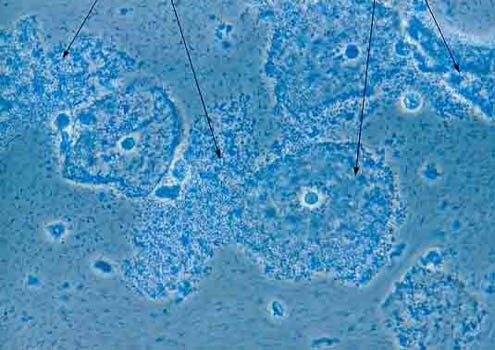
Squamous cervix cells covered with rod-shaped bacteria, Gardnerella vaginalis (source)

Bacterial vaginosis is a common disease among reproductive-aged women:

[It] is characterized by the loss of normal vaginal flora, predominantly hydrogen peroxide-producing Lactobacillus spp., and the increase in the number and species of other bacteria in vaginal fluid. The decrease in lactobacilli and increase in numerous facultative and anaerobic bacteria, some of which have only been recently characterized, may lead to changes in the characteristics of vaginal fluid, such as thin discharge and odor. (Koumans etal., 2007)

Its incidence correlates with the number of lifetime sex partners, and this correlation holds true even when one controls for a series of socioeconomic variables: poverty, smoking, body mass index, douching frequency, education, and oral contraceptive use (Koumans et al., 2007). It thus seems to be sexually transmissible, with suspicions falling particularly on the bacterium Gardnerella vaginalis:

Sexual activity is a risk factor for BV, and most experts believe that BV does not occur in women who have never had vaginal intercourse [12,13]. Epidemiologic studies are strongly supportive of sexual transmission of BV pathogens. There is a high occurrence of BV and concordance of flora in women who have sex with women, further suggesting sexual transmission is important in this setting [14-16]. It is not clear, however, whether one type of sexual activity may be more important in the pathogenesis of infection than another. As an example, oral-genital sex may be a more important risk factor than penile intromission into the vagina. (Sobel, 2012)

The incidence of bacterial vaginosis also correlates with ethnicity, being 51.4% of non-Hispanic blacks, 31.9% of Mexican Americans, and 23.2% of non-Hispanic whites. This correlation likewise holds true when the above socioeconomic variables are held constant. High incidences have also been found in sub-Saharan Africa (Pepin et al., 2011).

After studying these ethnic differences in vaginal flora, Ravel et al. (2010) concluded that they were normal and not pathological:

From these data we conclude that vaginal bacterial communities not dominated by species of Lactobacillus are common and appear normal in black and Hispanic women. The data from this study are in accordance with the results of Zhou et al. (17, 18), who studied the vaginal bacterial communities of white, black, and Japanese women. The reasons for these differences among ethnic groups are unknown, but it is tempting to speculate that the species composition of vaginal communities could be governed by genetically determined differences between hosts. These might include differences in innate and adaptive immune systems, the composition and quantity of vaginal secretions, and ligands on epithelial cell surfaces, among others.

The ultimate cause may be vaginal pH, which is higher in blacks and Hispanics than in Asians and non-Hispanic whites (Ravel etal., 2010). Or it may be differences in cytokine concentrations, with differences in vaginal pH being due to the differences in vaginal flora (Nomelini et al., 2010).

There has thus been a co-evolution between the vaginal environment and certain strains of vaginal bacteria. This co-evolution would have followed different trajectories in different human populations. In a monogamous population, possibilities for sexual transmission would have been sporadic and difficult to sustain. The picture is different in a population with a high incidence of polygyny, especially if the males often inherit or steal some of their co-wives from other males. Such a context would have favored bacteria that can spread from one co-wife to another and then to other sets of co-wives when circumstance permit.

But why wait for the right circumstances? Why not make them by manipulating the host’s behavior? Such behavioral manipulation sounds like science-fiction, yet it has been demonstrated in a wide range of animal species, often in surprisingly precise ways. So how could our bacterium manipulate its host? It wants to hop from one set of co-wives to another, but the regular male partner is standing in its way. What should it do?

First, it should facilitate female-to-female transmission among the co-wives. Second, it should disable the male’s propensity for mate guarding. Better yet, it should reverse the polarity, causing him to feel not jealousy but pleasure at the idea of being cuckolded.

This kind of manipulation occurs in the isopod Caecidotea intermedius. A parasite, Acanthocephalus dirus, infects it as a temporary host before infecting one of several freshwater fishes. When the parasite is still soft and immature, it cannot survive a fish eating its isopod host. It thus seeks to reduce this risk by suppressing conspicuous host behaviors, like mate guarding. Later, when the parasite becomes hard and mature, it can survive consumption of its host and now stimulates mate guarding (Galipaud et al., 2011; Mormann, 2010).

Cuckoldry is fatal to reproductive success, so any such tendency would soon flush itself out of the gene pool. For example, the neural networks for mate guarding might become more insensitive to outside tampering. This change, however, would in turn favor those parasites that could maintain such tampering. The eventual outcome would be an evolutionary compromise where mate guarding is impaired, but not enough to prevent reproductive success. The situation is different, though, if the parasite spreads to another population that has never developed such immunity.

Many sexual fetishes have been around for a long time and are often traceable to the ancient Greco-Roman world. Cuckold envy, however, seems relatively recent, the oldest references dating back to 17th century England (Kuchar, 2011, pp. 18-19). We may thus be looking at a sexually transmitted parasite that entered England with the expansion of world trade in the 17th century. But from where? Probably from a highly polygynous culture area, like West Africa.

This parasite might be a vaginal bacterium that first acquired sexual transmissibility and then an ability to manipulate host behavior. It might alternately be a strain of vaginal yeast. Indeed, vaginal strains of Candida albicans show a similar adaptation to sexual transmission via the partner’s mouth, i.e., they adhere better to saliva-coated surfaces than do other strains (Schmid et al., 1995).

References

Gaulipaud, M., Z. Gauthey, and L. Bollache. (2011). Pairing success and sperm reserve of male Gammarus pulex infected by Cyathocephalus truncatus (Cestoda: Spathebothriidea), Parasitology, 138, 11, 1429-1435.

Koumans E.H., M. Sternberg, C. Bruce, G. McQuillan, J. Kendrick, et al. (2007). The prevalence of bacterial vaginosis in the United States, 2001–2004; associations with symptoms, sexual behaviors, and reproductive health, Sexually Transmitted Diseases, 34, 864–869.
http://journals.lww.com/stdjournal/Fulltext/2007/11000/The_Prevalence_of_Bacterial_Vaginosis_in_the.6.aspx

Kuchar, G. (2001). Rhetoric, Anxiety, and the Pleasures of Cuckoldry in the Drama of Ben Jonson and Thomas Middleton, Journal of Narrative Theory, 31 (1), Winter, pp. 1-30.

Mormann, K. (2010). Factors influencing parasite-related suppression of mating behavior in the isopod Caecidotea intermedius, Theses and Disserations, paper 48
http://via.library.depaul.edu/etd/48

Nomelini, R.S., A.P.B. Carrijo, S.J. Adad, A.A. Nunes, E.F.C. Murta. (2010). Relationship between infectious agents for vulvovaginitis and skin color, Sao Paulo Medical Journal, 128, 348-53
http://www.scielo.br/scielo.php?pid=S1516-31802010000600007&script=sci_arttext

Pépin J., S. Deslandes, G. Giroux, F. Sobéla, N. Khonde, et al. (2011). The Complex Vaginal Flora of West African Women with Bacterial Vaginosis. PLoS ONE, 6(9): e25082. doi:10.1371/journal.pone.0025082
http://www.plosone.org/article/info%3Adoi%2F10.1371%2Fjournal.pone.0025082

Ravel J, Gajer P, Abdo Z, Schneider GM, Sara S, et al. (2010). Vaginal microbiome of reproductive-age women. Proceedings of the National Academy of Sciences U SA, 108, 4680-4687.
http://www.pnas.org/content/108/suppl.1/4680.short

Schmid, J., P.R. Hunter, G.C. White, A.K. Nand, and R.D. Cannon. (1995). Physiological traits associated with success of Candida albicans strains as commensal colonizers and pathogens, Journal of Clinical Microbiology, 33, 2920–2926.

Sobel, J.D. (2012). Bacterial vaginosis, Wolters Kluwer, UpToDate
http://www.uptodate.com/contents/bacterial-vaginosis