Skin
color differentiates between boys and girls after puberty. Before puberty,
girls are actually darker-skinned than boys (Kalla 1973; Mesa 1983)
Complexions
differ between the sexes: women are paler and men ruddier and browner. Today, this
sex difference seems hardly noticeable in Western societies, having been
overwhelmed by much larger differences of race and ethnicity and further
obscured since the 1920s by the tanning fad (Segrave 2005). Nonetheless, it was
noticed in earlier times. A lighter hue was traditionally given to female
figures and a darker hue to male figures in the visual arts of all early civilizations,
including those of Italy, Greece, Egypt, China, Japan, and Mesoamerica (Capart
1905, pp. 26-27; Eaverly 1999; Pallottino 1952, pp. 34, 45, 73, 76-77, 87, 93,
95, 105, 107, 115; Siepe 2004; Soustelle 1970, p. 130; Tegner 1992; Wagatsuma
1967). This sex difference also appears in ancient Greek poetry, where women
are described as “white” and men as “black” (Irwin 1974, pp. 121, 129-155). “White”
skin is still key to female identity in many non-Western societies, as shown by
interviews with Japanese men: "Whiteness is a symbol of women,
distinguishing them from men." "One's mother-image is white"
(Wagatsuma 1967, pp. 417-418).
Spectrophotometric
studies
With
the advent of the spectrophotometer, researchers could study skin color by
measuring the percentage of light reflected by the skin, most often at the
upper inner arm—where tanning is minimal. An American team thus attributed the
differing complexions of men and women to differing concentrations of the three
main skin pigments: melanin, hemoglobin, and carotene (Edwards and Duntley
1939). The same team showed that this sex difference was reduced by ovariectomy
and even more so by castration (Edwards and Duntley 1949; Edwards et al. 1941).
Later research identified puberty as the time when boys and girls diverge in
skin color (van den Berghe and Frost 1986). The best controlled studies are
those by Kalla (1973) and Kalla and Tiwari (1970) on South Asians and Tibetans
and by Mesa (1983) on Spanish participants. The samples are large enough to
measure this sexual differentiation by year and by sex. In addition to showing
that girls become progressively lighter-skinned than boys during adolescence,
these studies also show that girls are actually darker-skinned than boys just
before puberty.
These
sex and age differences thus seem to be innately programmed, specifically via
the sex hormones. This hypothesis is further supported by a study of skin color
in monozygotic and dizygotic twins from three age groups: 12 year olds; 13 to
15 year olds; and 16 to 18 year olds. Variance within the twin pairs differed
significantly on average between monozygotic and dizygotic twins, thus “indicating
a strong genetic component in the variability of skin lightness.” As in other
studies, puberty had a stronger effect on female skin color than on male skin
color, with girls becoming progressively lighter-skinned. For both sexes, mean
within-pair variance did not differ significantly from one age group to the
next, further indicating that these age changes are under genetic control
(Omoto 1965).
Nonetheless,
most people, including academics, have continued to ascribe the differing
complexions of men and women to differences in lifestyle (see for example Eaverly
1999 and Irwin 1974). Perhaps girls become lighter-skinned after puberty
because they are less free to go outside unaccompanied, as used to be the case
in many cultures. The sex difference in skin color should therefore disappear
as women come to resemble men in terms of lifestyle. This alternative hypothesis
is supported by a recent study of young adults from Ireland, Poland, Italy, and
Portugal, which found women to be darker-skinned than men on the upper inner
arm, the body site most often used to measure the color of untanned skin
(Candille et al. 2012). This finding contradicts findings from earlier studies on
Europeans or European-descended participants (van den Berghe and Frost 1986).
Digit ratio
studies (2D:4D)
Recently,
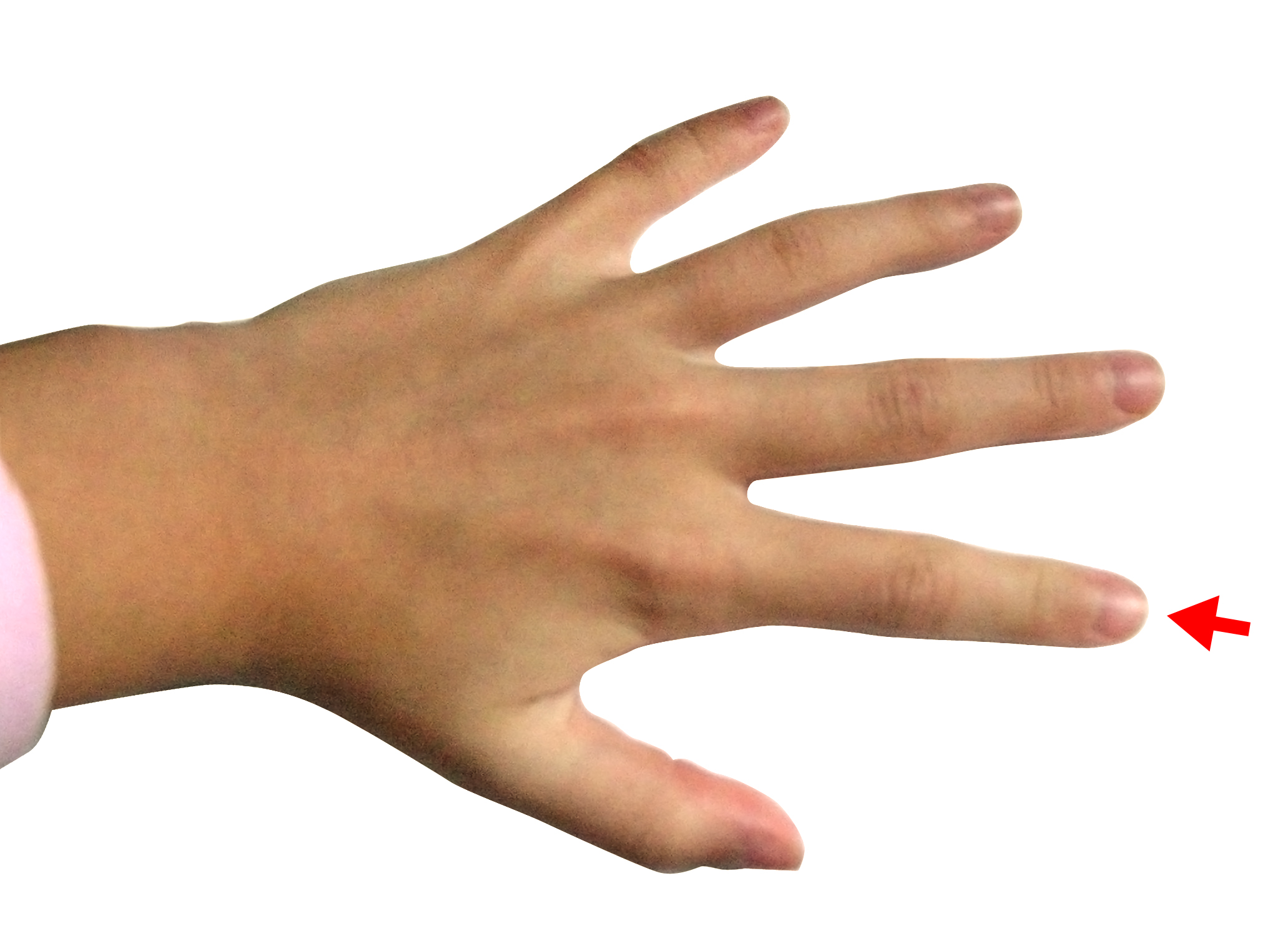
the innate causation hypothesis has received support from two "digit
ratio" studies. This ratio is index finger length divided by ring finger
length, and it corresponds to the ratio of androgens to estrogens in the fluids
of the developing fetus. A higher ratio indicates more feminization, and a
lower ratio more masculinization.
A
British team led by John Manning (2004) examined adults of both sexes. Lightness
of skin color was found to correlate in women but not in men with digit ratio,
i.e., women are lighter-skinned if their body tissues have been exposed to
higher estrogen levels. This finding was true for both the left hand and the
right hand, although the correlation was stronger for the left hand.
A
Polish team led by Aneta Sitek (2018) looked at children just before puberty,
when girls are actually darker-skinned than boys. Darkness of skin color was
found to correlate in girls but not in boys with digit ratio, i.e.,
pre-pubertal girls are darker-skinned if their body tissues have been exposed
to higher estrogen levels. This finding was true only for the right hand.
For
reasons still unclear, the digit ratio of the right hand is more responsive to
the sex hormones than the digit ratio of the left hand, as shown by a greater
sex difference in digit ratio for the right hand than for the left (Honekopp
and Watson 2010). In reviewing the literature, Honekopp and Watson (2010) argue
that right-hand digit ratio is a better indicator of prenatal exposure to the
sex hormones. Left-hand digit ratio seems to be more affected by hormonal
exposure later in life. This is suggested by the findings of a longitudinal
study: digit ratio increases in children with age, and this effect is greater
for the left hand than for the right hand (Trivers et al. 2006).
Discussion
Digit
ratio studies point to a hormonal cause, and not to differences in lifestyle,
as the reason why skin color differentiates between boys and girls at puberty.
This is consistent with earlier spectrophotometric studies on normal,
castrated, and ovariectomized individuals (Edwards and Duntley 1939; Edwards
and Duntley 1949; Edwards et al. 1941). Furthermore, most spectrophotometric
studies have shown that women are lighter-skinned than men even at the upper
inner arm—a body site normally unaffected by tanning (van den Berghe and Frost
1986).
But
why were women darker-skinned than men at this body site in a recent study of
young adults from Ireland, Poland, Italy, and Portugal? (Candille et al. 2012).
One can only conclude that the upper inner arm is no longer a reliable site for
measuring the color of untanned skin. Perhaps young Western women now make a
point of tanning their underarms because they increasingly shave this part of
their body and expose it to view.
References
Candille, S.I., D.M. Absher,
S. Beleza, M. Bauchet, B. McEvoy, N.A. Garrison, et al. (2012).
Genome-wide association studies of quantitatively measured skin, hair, and eye
pigmentation in four European populations. PLoS
One 7(10): e48294.
Capart,
J. (1905). Primitive Art in Egypt. London: H. Grevel.
Eaverly,
M.A. (1999). Color and gender in ancient painting: A pan-Mediterranean
approach. In N.L. Wicker and B. Arnold (Eds). From the Ground Up: Beyond Gender Theory in Archaeology.
Proceedings of the Fifth Gender and Archaeology Conference, University of
Wisconsin-Milwaukee, (pp. 5-10). Oxford (England): British Archaeological
Reports.
Edwards,
E.A., and S.Q. Duntley. (1939). The pigments and color of living human skin. American Journal of Anatomy 65(1): 1-33.
Edwards,
E.A., and S.Q. Duntley. (1949). Cutaneous vascular changes in women in
reference to the menstrual cycle and ovariectomy. American Journal of Obstetrics & Gynecology 57(3): 501-509.
Edwards,
E.A., J.B. Hamilton, S.Q. Duntley, and G. Hubert. (1941). Cutaneous vascular
and pigmentary changes in castrate and eunuchoid men. Endocrinology 28(1): 119-128. https://doi.org/10.1210/endo-28-1-119
Honekopp
J, S. Watson, (2010). Meta-analysis of digit ratio 2D:4D shows greater sex
difference in the right hand. American
Journal of Human Biology 22(5): 619-30. https://doi.org/10.1002/ajhb.21054
Irwin,
E. (1974). Colour Terms in Greek Poetry.
Toronto: Hakkert.
Kalla,
A.K. (1973). Ageing and sex differences in human skin pigmentation. Zeitschrift für Morphologie und
Anthropologie 65(1): 29-33.
Kalla,
A. K. and S.C. Tiwari. (1970). Sex differences in skin colour in man. Acta Geneticae Medicae et Gemellologiae
19(3): 472-476.
Manning,
J.T., P.E. Bundred, and F.M. Mather. (2004). Second to fourth digit ratio,
sexual selection, and skin colour. Evolution and Human Behavior 25: 38-50.
Mesa, M.S. (1983). Analyse de
la variabilité de la pigmentation de la peau durant la croissance. Bulletin et mémoires de la Société
d'Anthropologie de Paris, t. 10 série 13: 49-60.
Omoto,
K. (1965). Measurements of skin reflectance in a Japanese twin sample. Journal of the Anthropological Society of
Nippon (Jinruigaku Zassi) 73(4): 115-122.
Pallottino,
M. (1952). Etruscan Painting.
Lausanne: Skira.
Segrave,
K. (2005). Suntanning in 20th Century
America. Jefferson (North Carolina): McFarland & Company.
Siepe, F. (2004). Farben des Eros. Marginalien zur Kulturgeschichte der Liebes- und
Schönheitswahrnehmung in Antike und christlichem Abendland. Marburg: Kline.
Sitek,
A., S. Koziel, A. Kasielska-Trojan, and B. Antoszewski. (2018). Do skin and
hair pigmentation in prepubertal and early pubertal stages correlate with
2D:4D? American Journal of Human Biology,
early view
Soustelle,
J. (1970). The Daily Life of the Aztecs.
Stanford, California: Stanford University Press.
Tegner,
E. (1992). Sex differences in skin pigmentation illustrated in art. The American Journal of Dermatopathology 14(3):
283-87.
Trivers,
R., J. Manning, and A. Jacobson. (2006). A longitudinal study of digit ratio
(2D:4D) and other finger ratios in Jamaican children. Hormones and Behavior 49(2): 150-156. https://doi.org/10.1016/j.yhbeh.2005.05.023
van
den Berghe, P.L., and P. Frost. (1986). Skin color preference, sexual
dimorphism and sexual selection: A case of gene-culture co-evolution? Ethnic and Racial Studies 9(1): 87-113. https://doi.org/10.1080/01419870.1986.9993516
Wagatsuma,
H. (1967). The social perception of skin color in Japan. Daedalus 96(2): 407-443.