Showing posts with label testosterone. Show all posts

Tuesday, July 24, 2018

Does a fungus cause baldness?


Endgame for an ant (Wikicommons)


Is male pattern baldness (MPB) caused by a pathogen? The question may seem silly because the genetic causation is obvious. MPB is normally a male problem, and family background is important. If your male relatives go bald at an early age, the chances are good that you will too.

Genetic causation does not exclude environmental causation, however. I will argue here that a pathogen, specifically lipid-dependent yeasts of the Malassezia genus, has evolved the ability to accelerate the onset of MPB. I will also argue that this is not a side effect of infection. It is key, in fact, to the pathogen’s survival and reproduction.


The germ theory

MPB in young men was once widely blamed on a pathogen. This germ theory was first put forward by a French dermatologist, Raymond Sabouraud:

In recent years our knowledge of this subject has been much increased by the researches of Unna, Sabouraud, and others. These investigators would lead us to look upon all forms of baldness as parasitic in origin. They say that thinning of the hair, whether general or beginning on the crown or at the temples and forehead (alopecia pityrodes), can be produced by a micro- organism. [...] Sabouraud thinks the micro-bacillus of oily seborrhoea finds its way into the hair follicle and causes sebaceous hyper- secretion; then hypertrophy of the sebaceous glands; next, progressive papillary atrophy; finally, death of the hair. (Waldo 1883)

The identity of the pathogen was a matter of debate. Sabouraud attributed baldness to a bacterium and seborrhea to a yeast initially named Pityrosporum ovale and now classified as the genus Malassezia. Antimicrobials, particularly sulfur ointments and shampoos, became popular treatments for seborrhea and MPB.

This germ theory fell out of favor in the mid-20th century. Ainsworth (1956, p. 589), in his review of the literature, concluded that P. ovale was usually harmless:

During the nineteenth century it was widely held that P. ovale was responsible for the various disorders (and particularly seborrheic dermatitis) with which it is commonly associated. Sabouraud cautiously attributed pityriasis (dandruff) to P. ovale but modern opinion is even more sceptical and during the past two decades the view most generally accepted is that of Ota and Huang (1933) who after a careful experimental investigation and a study of the evidence obtained by others concluded that P. ovale is merely an inoffensive saprophyte of man.

Similarly, Ludwig (1968) wrote: "Due to a misinterpretation of the role of oil seborrhea, which so frequently accompanies the development of common baldness, Sabouraud came to the erroneous conclusion that common baldness results from a chronic infection of the scalp by his 'microbacilli'."

The medical community was in no mood to investigate Sabouraud’s germ theory any further. This was a time when causation of disease was increasingly framed in terms of genetics or lifestyle, rather than infection by a pathogen:

During the first half of the 20th century, researchers began to confront another major barrier of crypticity: long delays between the onset of infection and the onset of disease. Long delays make cause-effect linkages cryptic because other events that occur during the intervening time can form the basis of alternative causal explanations. As the delay in onset of symptoms increases, the number of such events and, hence, the number of alternative hypotheses of causation increases. The alternative hypotheses may focus on specific environmental insults, or may interpret delayed, persistent symptoms as natural wear and tear, particularly if infections are ubiquitous. (Cochran et al. 2000)

Since the turn of the millennium there has been a renewed interest in Malassezia and its role in seborrhea and MPB (Arash et al. 2002; Dawson 2007; Sastry 2004).


Going beyond the proximal cause

Today, there is a growing consensus that seborrhea is caused by the lipid-dependent yeast Malassezia, most likely the species M. globosa and M. restricta (Dawson 2007). The mode of action is less certain. Malassezia degrades sebum and releases unsaturated fatty acids, which may in turn stimulate sebum production (Dawson 2007). Alternatively, it may increase conversion of testosterone to the more active dihydrotestosterone (DHT), thus causing not only excessive sebum production but also MPB. This effect has been shown with acne, a skin condition that overlaps with seborrhea in many ways. When biopsies were taken from affected and unaffected areas in 32 subjects with acne, it was found that "acne bearing skin produced from 2 to 20 times more dihydrotestosterone than normal back skin" (Sansone and Reisner 1971).

What would Malassezia gain from DHT? We know that DHT boosts production of sebum, which contains the fat that this pathogen feeds on. Sebum may also help to shield it from the body's immune system.

There nonetheless remains one apparent flaw in this germ theory: Malassezia is common, yet only a minority of young men develop MPB. It seems, then, that some men are more genetically susceptible than others to MPB. This is part of the reason, but another reason is that some Malassezia species are better than others at altering the chemistry of the skin. The species most implicated in seborrhea are M. globosa and M. restricta (Dawson 2007). Studies of a related skin infection, Pityriasis versicolor, have found M. globosa to be more implicated than M. restricta (Saad et al 2013; Salah et al. 2005). In a review of the literature, Zarei-Mahmoudabadi et al. (2013) conclude that M. globosa is the main cause of seborrhea:

Different Malassezia species were reported as causative agents of SD in the different countries. Lee et al. (23) reported M. restricta as the most important species in Korean SD patients. In addition, Prohic (26) in a study from Bosnia and Herzegovina believes that M. restricta (27.5%) is the main agents of SD and M. globosa (17.5%) and M. slooffiae (15%) are the next agents. In a molecular study by Tajima et al. (11), M. restricta and M. globosa were detected as the predominate agents of SD. In contrast, in Hedayati et al. study in north of Iran M. globosa was reported as the most frequently agent on scalp and face lesions, whereas M. furfur had most frequency on trunk lesions (24). In the present study, out of the 110 scalp scales that were cultured on Dixons agar, 24.5% yielded Malassezia that the most frequently Malassezia species was M. globosa (40.7%), followed by M. pachydermatis (22.2%), M. furfur (11.1%) and M. restricta (7.4%).

Nine Malassezia species are found on human hosts (Dawson et al. 2018). It is likely that different species compete against each other for sites on the body surface. Colonization by an aggressively seborrheic species is thus probably impeded if another species is already present. Indeed, the relative distribution of these species varies from one ethnic group to another and from one geographical area to another (Dawson et al. 2018).


Is Malassezia sexually transmitted?

There may be another side to infection by Malassezia. It colonizes not only the scalp but also the male genital region, particularly if the man is uncircumcised:

Recently, several authors have noted Malassezia spp. as part of the microflora of healthy uncircumcised male genital regions in 49.2% of the population, in contrast to circumcised male patients, in which Malassezia spp. are identified in 22.4% of the population (2, 3). Mayser et al. assumed that Malassezia yeasts find favorable growth conditions in the lipid-rich milieu of the preputial area because of its free sebaceous glands (i.e., Tyson's glands seem to be important) (Khadar et al. 2008)

It is known that yeasts, like Malassezia, can spread from one person to another through sexual contact (Spinillo et al. 1992). The pathogen can thus enhance its own reproductive success by influencing its host's sexual behavior. Premature hair loss may therefore be one of its strategies for spreading to other hosts.

Keep in mind that men in pre-modern societies were divided into age classes, and the transition from one class to the next was determined by visible physical changes: the growth spurt of childhood, the appearance of body and facial hair in adolescence and, finally, the loss of head hair later in life. By making its host lose his head hair prematurely, the Malassezia pathogen reassigns him to a class of older men who, except for the rich and powerful, deal with sexual dissatisfaction not by divorcing and remarrying (or by finding a mistress) but rather by frequenting prostitutes. The possibilities for transmission to a new host are thus increased many times over.


Stranger things have happened

A fungal infection may actually cause sexual dissatisfaction. This kind of behavioral manipulation is not as fantastic as it may seem. Fungi are champions of such manipulation, both in overall prevalence and in sophistication:

The observation that, as a Kingdom, Fungi have many parasitic taxa [...] does not distinguish them from other major groups. Parasitism is a very common mode of life that has evolved repeatedly and probably more times than predation as a life history strategy [...]. What is notable is the apparently high frequency of parasitic fungi that have evolved not just to infect animals but also to adaptively manipulate animal behavior in ways that increase the fitness of the fungus. (Hughes et al. 2016)

You have probably heard about "zombie ants": a fungus infects an ant and reprograms its brain, causing it to leave its nest, climb up a plant, lock its jaws into the plant tissue, and die. A fruiting body then emerges from the ant's head and rains down spores on the forest floor below. There are other examples. In one case, the fungus keeps its host alive and controls its flight behavior so that the insect becomes a moving vehicle for spore release (Hughes et al. 2016).

What about humans? Greg Cochran has argued that an unknown pathogen can alter a man’s sexual orientation as a means to increase its opportunities for spreading to other hosts: "One possible route would be sexual, whereby homosexual behavior could facilitate spread because of the larger numbers of partners homosexual males may have on average, relative to heterosexual males" (Cochran et al. 2000).

Similarly, there may exist a pathogen that reverses male jealousy and makes its host desire cuckoldry, thereby gaining access to many more hosts (Frost 2013). Although many sexual fetishes are attested in the writings of ancient civilizations, cuckold envy does not seem to be one of them. The oldest references date back to 17th century England (Kuchar, 2011, pp. 18-19). The cause may thus be a sexually transmitted pathogen that entered England during the early days of the slave trade. Such a pathogen could have evolved in West Africa, where most women were in polygynous marriages, and where cuckoldry was the main route for transmission from one household to another.

We have never identified such pathogens largely because we have never bothered to look. They are also hard to find, given the delay between infection and behavioral change.


References

Ainsworth, G.C. (1958). Pathogenic yeasts. In A.H. Cook (Ed.) The Chemistry and Biology of Yeasts (pp. 587-602). New York: Academic Press.
http://krishikosh.egranth.ac.in/bitstream/1/23082/1/IVRI%20OB%201816.pdf#page=593

Arash, J., F. Sorour, and A.M. Mokhtari. (2002). Evaluation of the coincidence of Male Pattern Baldness and Pityrosporum group of fungus in Iran. Indian Journal of Dermatology 47(4): 224-226.
http://www.e-ijd.org/article.asp?issn=0019-5154;year=2002;volume=47;issue=4;spage=224;epage=226;aulast=Javanbakht;type=0

Cochran, G.M., P.W. Ewald, and K.D. Cochran. (2000). Infectious causation of disease: an evolutionary perspective. Perspectives in Biology and Medicine 43(3): 406-448.
https://doi.org/10.1353/pbm.2000.0016

Dawson, T.L. (2007).  Malassezia globosa and restricta: Breakthrough Understanding of the Etiology and Treatment of Dandruff and Seborrheic Dermatitis through Whole-Genome Analysis. Journal of Investigative Dermatology Symposium Proceedings 12(2): 15-19
https://doi.org/10.1038/sj.jidsymp.5650049 

Dawson, T.L., C. Leong, J. Goh, and A. Irudayaswamy. (2018). Geographical and ethnic differences in Malassezia species distribution on healthy skin. Congress of the International Society for Human and Animal Mycology
https://www.morressier.com/article/5ac39997d462b8028d89a224

Frost, P. (2013). First, sexual transmissibility and then ...? Evo and Proud, January 5
http://evoandproud.blogspot.com/2013/01/first-sexual-transmissibility-and-then.html

Hughes, D.P., J.P.M. Araujo, R.G. Loreto, L. Quevillon, C. de Bekker, and H.C. Evans. (2016). Chapter Eleven - From So Simple a Beginning: The Evolution of Behavioral Manipulation by Fungi. Advances in Genetics 94: 437-469.

Khadar, R.K., F. Cherif, R. Ben Hadid, M. Mokni, and A. Ben Osman. (2008). Penile shaft involvement in pityriasis versicolor. Acta Dermatovenerol Alp Pannonica Adriat. 17(2):86-9.
https://pdfs.semanticscholar.org/eaa2/e73dccf5b7cc31d8b0aa346e2d7b2db9837f.pdf

Kuchar, G. (2001). Rhetoric, Anxiety, and the Pleasures of Cuckoldry in the Drama of Ben Jonson and Thomas Middleton. Journal of Narrative Theory 31(1): 1-30.

Ludwig, E. (1968). The role of sexual hormones in pattern alopecia. In A. Baccaredda-Boy, G. Moretti G, and J.R. Frey (Eds). Biopathology of Pattern Alopecia. International Symposium, Rapallo, July 1967: Proceedings. Basel, Karger, pp 50-60.
https://doi.org/10.1159/000387745

Saad, M., T. Sugita, H. Saeed, and A. Ahmed. (2013). Molecular Epidemiology of Malassezia globosa and Malassezia restricta in Sudanese Patients with Pityriasis Versicolor. Mycopathologia 175(1-2): 69-74.
https://doi.org/10.1007/s11046-012-9587-y

Ben Salah, S., F. Makni, S. Marrakchi, H. Sellami, F. Cheikhrouhou, S. Bouassida, A. Zahaf, A. Ayadi (2005). Identification of Malassezia species from Tunisian patients with pityriasis versicolor and normal subjects. Mycoses 48(4): 242-245
https://doi.org/10.1111/j.1439-0507.2005.01091.x

Sansone, G., and R.M. Reisner. (1971). Differential Rates of Conversion of Testosterone to Dihydrotestosterone in Acne and in Normal Human Skin—a Possible Pathogenic Factor in Acne. Journal of Investigative Dermatology 56(5): 366-372.
https://doi.org/10.1111/1523-1747.ep12261252

Sastry, P.S.R.K. (2004). Occult fungal infection is the underlying pathogenic cause of atherogenesis. Medical Hypotheses 63(4): 671-674.

Spinillo, A., L. Carratta, G. Pizzoli, G. Lombardi, C. Cavanna, G. Michelone, and S. Guaschino. (1992). Recurrent vaginal candidiasis. Results of a cohort study of sexual transmission and intestinal reservoir. Journal of Reproductive Medicine 37(4): 343-347.

Szasz, T.S., and A.M. Robertson. (1950). A theory of the pathogenesis of ordinary human baldness. Archives of Dermatology and Syphilology 61(1):34-48. https://doi.org/10.1001/archderm.1950.01530080040004   

Waldo, H. (1883). The causes and treatment of baldness. Bristol Med. Chir. J. 23(88): 107-113.
https://www.ncbi.nlm.nih.gov/pmc/articles/PMC5043940/

Zarei-Mahmoudabadi, A., M. Zarrin, and F. Mehdinezhad (2013). Seborrheic dermatitis due to Malassezia species in Ahvaz, Iran. Iranian Journal of Microbiology 5(3): 268-271.
https://www.ncbi.nlm.nih.gov/pmc/articles/PMC3895566 

Tuesday, October 3, 2017

The canary in the coal mine?


Magazine rack in a Japanese store (Wikicommons - Corpse Reviver)


Hugh Hefner's death has ended an era that actually ended around the turn of the millennium. Gone are the days of porn in limited supply. During my teen years Playboy wasn’t sold in my town. You had to go to a drugstore 15 kilometers away and buy it in person, while hoping the cashier wouldn't blab to others. Then you had to find a place to hide it. Videocassettes were starting to come on market, but they had to be bought even farther away, and there was still the problem of finding a hiding place.

Fast-forward to the year 2017. From my computer I can access porn of almost any description in almost any quantity. And the access is fast, free, and anonymous. There is no comparison to the world of my youth, and even less to the world of 1953, when Playboy made its debut. That same year King Farouk of Egypt was described as a "self-indulgent playboy" with "carloads of erotica" (Gunther, 1953, p. 205). Carloads? That's nothing. Today, anyone with an Internet connection can stash away thousands upon thousands of erotic images.

This is a new sensory environment for humans. An analogy would be the increasing availability of food to native peoples in the far north. In the past their environment offered meat in limited amounts, and sometimes none was available. Hunters were thus highly motivated to seek out food and not let any go uneaten. Now fast-forward to the present. High-calorie snacks are available in any store, and they’re tasty with lots of salt, sugar, and fat—the very nutrients that were once in short supply. As a result, obesity is reaching epidemic proportions in the North.

No surprise really. And should we be surprised to learn that the increasing availability of porn today may have similarly adverse effects?

This question was addressed by a recent study on how porn consumption affects the male brain. Sixty-four men had their brains scanned, and the results were compared with the number of hours they spent viewing pornography per week. The results? Prolonged exposure to porn seemed to atrophy those portions of the brain that process erotic stimuli. The volume of gray matter was smaller in those subjects who viewed the most porn, and functional connectivity was likewise reduced. They seemed to require more porn (or harder porn) to achieve the same stimulation.

Taken together, one may be tempted to assume that the frequent brain activation caused by pornography exposure might lead to wearing and downregulation of the underlying brain structure, as well as function, and a higher need for external stimulation of the reward system and a tendency to search for novel and more extreme sexual material. This hypothesized self-perpetuating process could be interpreted in light of proposed mechanisms in drug addiction where individuals with lower striatal dopamine receptor availability are assumed to medicate themselves with drugs (Kühn and Gallinat 2014)

This interpretation is supported by a recent review of the literature:

Some internet activities, because of their power to deliver unending stimulation (and activation of the reward system), are thought to constitute supernormal stimuli, which helps to explain why users whose brains manifest addiction-related changes get caught in their pathological pursuit. [...] In short, generalized internet chronic overuse is highly stimulating. It recruits our natural reward system, but potentially activates it at higher levels than the levels of activation our ancestors typically encountered as our brains evolved, making it liable to switch into an addictive mode.

[...] previously established brain maps for "natural" sexuality cannot compare to the newly developed and continuously reinforced maps generated by continued compulsive watching of Internet pornography, and thus the addicted individual progresses to more explicit and graphic Internet pornography in order to maintain the higher level of excitement. (Love et al. 2015)

Of course, the arrow of causality might point the other way. Perhaps a man will seek out and view more porn if he already has less of the gray matter for sexual arousal. Only a longitudinal study can tell us which is causing what.

Let's suppose the first explanation is the right one. What can we do? Frankly, I'm pessimistic about legislative solutions. Give politicians the power to ban Internet porn (or Islamist extremism), and they'll use it to ban … the Alt-Right. Our political class lives in another age and sees reality through the lens of yesterday's issues and yesterday's priorities.

A second problem is that politicians try to ban child porn much more than the adult stuff. This is a classic case of going after a soft target that is secondarily important and perhaps not important at all. If porn has a desensitizing effect, it should cause pedophiles to lose interest in real children and focus on electronic images, since only the latter can be viewed in sufficient quantity to cause sexual arousal. So what’s the problem?

We should worry more about porn desensitization that disrupts relationships between adult men and women. A similar phenomenon has been noted with TV viewing: the more people watch TV, especially programming with romantic content, the more dissatisfied they feel with their marriages (Reizer and Hetsroni 2014). We may be becoming too good at creating virtual alternatives to reality.

The Japanese case

This desensitization may be most acute in Japan. In comparison to the United States, porn is more freely available there and less "compartmentalized":

Nudity is evident in both sexually identified and general circulation magazines. For instance, the weekly general-interest magazines will often include several photographs of nude women (plus ratings of local massage parlors). Although such magazines are oriented predominantly for businessmen, the inclusion of sexual photographs is also assumed to interest the business audience. In this regard, it is apparent that rigid boundaries do not exist for the publication of sexual material. In fact, nudity or sexual themes appear in Japanese teen magazines, sports magazines, fashion magazines, and so on. 

[...] Japanese public television is also different from its American counterpart. Overtly sexual material and nudity are permissible. For example, a Japanese television program known as the 11 P.M. Show can feature a strip tease, bare breasts and buttocks, reportage on massage parlors, expert authorities on sex, and so on. Similarly, the Japanese public-access movie channels can feature R-rated movies such as Emmanuelle (with some air-brushing). Finally, even Japanese commercials and advertisements have more flexibility in sexual content. (Abramson and Hayashi 2014, p. 179)


This ubiquitous porn is viewed by Japanese men, who are less polygynous than most human males and have lower blood levels of 5a-reductase—the enzyme that converts testosterone into the more physiologically active DHT (Ross et al. 1992). Lower testosterone activity seems to be an adaptation to monogamy and high paternal investment:

Numerous studies reveal a negative correlation between testosterone concentration and paternal care in diverse mammals including nonhuman primates and humans. Several researchers suggest that spousal investment accounts for the lower testosterone of married men compared to unmarried men, but findings that the lowest testosterone levels are observed in married men with children implicate paternal care as particularly relevant. Thus testosterone reduction may reflect a facultative shift in male reproductive strategy from intrasexual competition and copulation to care of young. (Shur et al. 2008)

Some Japanese authors have reached this sort of conclusion, seemingly echoing J. Philippe Rushton (although the book in question predates his publications by several years):

Finally, a number of Japanese authors (e.g., Komatsu, 1974) have also suggested that Asian populations are less sexualized than Caucasian or black populations. They cite secondary sex characteristics (less public hair, smaller breasts, etc.) as evidence. Unfortunately, the data on sexual frequencies (intercourse, etc.) are not particularly reliable, and it is not clear whether competing responses (such as nurturance) are mediating sexual expression. (Abramson and Hayashi 2014, p. 182)

Japanese men and women may thus be especially vulnerable to porn consumption. More and more couples no longer have sex, the percentage rising from 31.9% in 2004 to 36.5% in 2008 and to 47.2% in 2016 (McCurry 2017; Moriki 2012). The major reasons given are "tired from work," abstention from sex after a birth, and "sex is too troublesome" (Moriki 2012). These reasons are probably proximal, and in any case it is far from clear why they would be growing in importance.

There is some indication that the Japanese realize that porn is becoming a problem. But it’s not clear where this realization will lead. In this, as in many other things, they follow the lead of other Western countries, especially the United States. Concern about porn is thus limited to child porn.

References

Abramson, P.R. and H. Hayashi. (1984). Pornography in Japan: Cross-cultural and theoretical considerations, in N.M. Malamuth and E. Donnerstein (eds) Pornography and Sexual Aggression, pp. 173-184, Orlando: Academic Press.
https://books.google.ca/books?id=p1KLBQAAQBAJ&printsec=frontcover&hl=fr&source=gbs_ge_summary_r&cad=0#v=onepage&q&f=false

Gunther, J. (1953). Inside Africa, New York: Harper & Brothers.

Kühn, S. and J. Gallinat. (2014). Brain structure and functional connectivity associated with pornography consumption. The brain on porn, JAMA Psychiatry, 71(7), 827-834. http://jamanetwork.com/journals/jamapsychiatry/fullarticle/1874574?=

Love, T., C. Laier, M. Brand, L. Hatch, and R. Hajela. (2015). Neuroscience of Internet pornography addiction: a review and update, Behavioral Sciences, 5(3), 388-433.
http://www.mdpi.com/2076-328X/5/3/388/htm

McCurry, J. (2017). Record numbers of couples living in sexless marriages in Japan, says report, The Guardian, February 14
https://www.theguardian.com/world/2017/feb/14/record-numbers-of-couples-living-in-sexless-marriages-in-japan-says-report

Moriki, Y. (2012). Mothering, co-sleeping, and sexless marriages: implications for the Japanese population structure, The Journal of Social Science, 74, 27-45.
https://icu.repo.nii.ac.jp/?action=repository_action_common_download&item_id=1542&item_no=1&attribute_id=18&file_no=1  
Reizer, A. and A. Hetsroni (2014). Media exposure and romantic relationship quality: A slippery slope? Psychological Reports, 114(1), 231-249.
http://journals.sagepub.com/doi/abs/10.2466/21.07.PR0.114k11w6

Ross, R.K., Bernstein, L., Lobo, R.A., Shimizu, H., Stanczyk, F.Z., Pike, M.C., and Henderson, B.E. (1992). 5-apha-reductase activity and risk of prostate cancer among Japanese and US white and black males. Lancet, 339, 887-889.
http://www.sciencedirect.com/science/article/pii/014067369290927U

Shur, M.D., Palombit, R.A., and Whitten, P.L. (2008). Association between male testosterone and friendship formation with lactating females in wild olive baboons (Papio hamadryas anubis). Program of the 77th Annual Meeting of the American Association of Physical Anthropologists, p. 193.
http://onlinelibrary.wiley.com/doi/10.1002/ajpa.20806/epdf

Saturday, October 31, 2015

The contradictions of polygyny


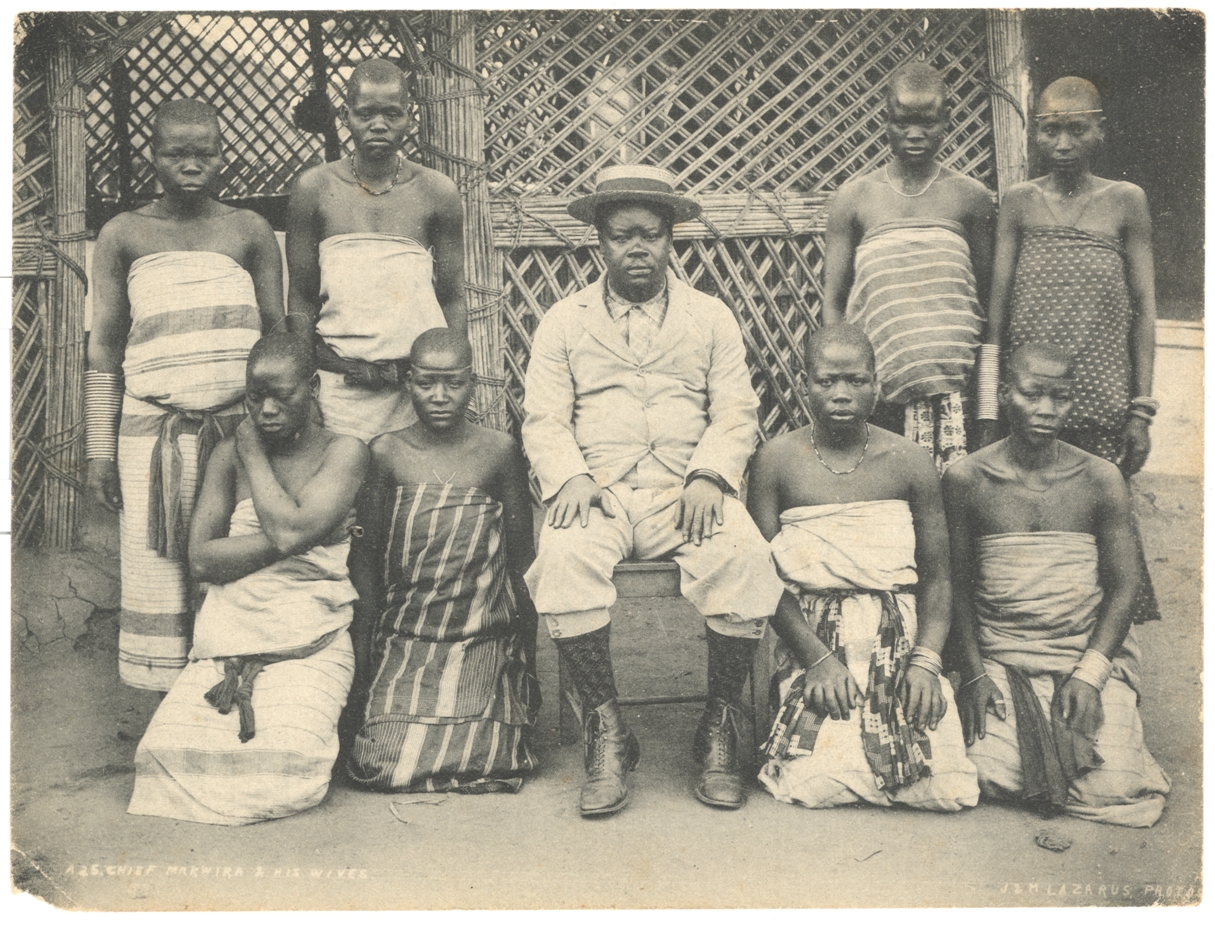
Chief Makwira and his wives, Malawi, 1903 (Wikicommons). Older men had first priority. Younger men could gain access to women only through war or adultery.


In my last column, I reviewed the findings of Butovskaya et al. (2015) on testosterone and polygyny in two East African peoples:

- Testosterone levels were higher in the polygynous Datoga than in the monogamous Hadza. This difference is innate.

- Datoga men were more aggressive than Hadza men on all measures used (physical aggression, verbal aggression, anger, and hostility)

- Datoga men were larger and more robust than Hadza men

- All of these characteristics seem to be adaptive under conditions when men have to compete against other men for access to women

Testosterone levels were not only higher in the Datoga but also more variable. Alvergne et al. (2009) studied this variability in Senegalese men, finding that the monogamous ones differed from the polygynous ones in the way testosterone levels changed with age. The levels were higher in the polygynous men than in the monogamous men between the ages of 15 and 30. After 45, this pattern reversed: the monogamous men had the higher levels. At all ages, the polygynous men were more extraverted than the monogamous ones, this quality being defined as "pro-social behavior which reflects sociability, assertiveness, activity, dominance and positive emotions." Extraversion may assist a reproductive strategy of seducing women, rather than providing for them.

Thus, when Africans gave up hunting and gathering for farming, there was selection for a new package of male traits. Some of these traits are physiological (higher testosterone levels), some anatomical (denser bones, greater arm and leg girth; changes to muscle fiber properties, etc.), and some behavioral (polygyny, aggressiveness, extraversion, etc.). But this selection didn't eliminate older genotypes, at least not wholly. There seems to be a balanced polymorphism that allows a minority of quieter, monogamous men to thrive in a high-polygyny society like Senegal. When polygynous men become too numerous, they may spend too much time looking for mating opportunities and not enough checking up on their current wives to avoid being cuckolded. It might be better for some to live continuously with one wife.

African Americans versus Euro Americans

The above differences within sub-Saharan Africa (Datoga vs. Hadza, polygynous Senegalese vs. monogamous Senegalese) are also seen between African Americans and Euro Americans. In all these cases, the differences are of degree and proportion, rather than absolute and non-overlapping.

Testosterone reaches high levels in young African American adults (Pettaway, 1999; Ross et al., 1986; Ross et al., 1992; Winters et al., 2001). African Americans are also likelier to have alleles for high androgen-receptor activity (Kittles et al.,2001). Lifetime exposure to testosterone is reflected in development of prostate cancer, with African American men having the world's highest incidences (Brawley and Kramer, 1996). It was once thought that lower incidences prevail among black West Indians and sub-Saharan Africans, but underreporting is now thought to be responsible (Glover et al., 1998; Ogunbiyi and Shittu, 1999; Osegbe, 1997).

In African Americans, blood testosterone levels peak during adolescence and early adulthood, being higher than those of Euro Americans of the same age. Levels decline after 24 years of age, and by the early 30s are similar to those of European Americans (Gapstur et al., 2002; Nyborg, 1994, pp. 111-113; Ross et al., 1986; Ross et al., 1992; Tsai et al., 2006; Winters et al., 2001). This is the same pattern we saw in polygynous Senegalese men versus monogamous Senegalese men. In short, polygyny seems associated with a more exaggerated pattern of variation with age.

The demographic contradictions of a high-polygyny society

Testosterone levels are normally higher in all young men, but why are they higher still when polygyny is common? The reason seems to be the scarcity of available women. High-polygyny societies generate a shortage of mateable women, and this shortage is managed by giving priority to men who are at least ten years past puberty. For instance, among the Nyakyusa: "[...] there is a difference of ten years or more in the average marriage-age of girls and men, and it is this differential marriage-age which makes polygyny possible" (Wilson, 1950, p. 112).

By concentrating celibacy among young men, this age rule compels them to seek sex through warfare or illicit means. According to Pierre van den Berghe (1979, pp. 50-51):

Typically, the more men are polygynous in a given society, the greater the age difference between husbands and wives. [...] The temporary celibacy of young men in polygynous societies is rarely absolute, however. While it often postpones the establishment of a stable pair-bond and the procreation of children, it often does not preclude dalliance with unmarried girls, adultery with younger wives of older men, or the rape or seduction of women conquered in warfare. Thus, what sometimes looks like temporary celibacy is, in fact, temporary promiscuity. These young men often devote themselves to warfare during their unmarried years and sometimes homosexuality is tolerated during that period.

For young men in a high-polygyny society, warfare—typically raids against neighboring communities—is the main way to gain access to women. In a sense, war becomes a means of resolving the demographic contradictions of a high-polygyny society. Polygyny creates a wife shortage among young men, and this contradiction is resolved by turning it outward. As warriors, young men are encouraged to satisfy their sexual urges through raids against neighboring peoples. Warfare thus becomes endemic.

This relationship between polygyny and war has often been noted in studies of African societies:

Dorjahn (1959) says African warfare emphasized taking captives, rather than killing the enemy. Kelly's discussion of Nuer warfare provides an interesting perspective on this phenomenon. In Nuer warfare the main casualties were younger men and older women, with male and female mortality being almost equal. Younger women and children were captured. Female captives were valued because they could be used to generate bridewealth when they were married to other Nuer, whereas captive boys were adopted into the lineage of their captor and would require bridewealth payment when they married. Consequently, few males were taken captive (Kelly 1985:56-57). (White and Burton, 1988)

In their cross-cultural study of the causes of polygyny, White and Burton (1988) conclude that "polygyny is associated with warfare for plunder and/or female captives":

[...] polygyny is seen as associated with the expansion of male-oriented kin groups through favorable environments, facilitated by capture of women or bridewealth via warfare. Following this analysis, it is difficult to see polygyny as having benign effects upon the lives of all women. Rather, polygyny produces benefits for senior wives, who have sons and can mobilize the labor of junior wives and children (Hartung 1982); it has negative effects on women who become slaves, captives, or junior wives, or who do not have sons.

We now come to a leading cause of the African slave trade. Polygyny led to warfare, which led to a surplus of unwanted male captives. These captives could be sold as slaves, but local markets would soon be saturated. The excess supply had to be sold farther away, with the result that slave trading networks began to reach the Middle East as early as the time of Christ (Frost, 2008).

While outsiders from the Middle East and Europe would later get more and more involved, becoming not only traders but also captors, it was Africans themselves who initially controlled the supply chain. In its early stages, and even later, this trade was driven by factors internal to Africa.

Contrary evidence

Whenever I discuss this subject, some people will counter that certain studies have shown an absence of racial/ethnic differences in testosterone levels. Let me discuss these studies at some length.


This meta-analysis concluded: "After adjustment for age, black men have a modestly but significantly 2.5 to 4.9% higher free testosterone level than white men." Here, “adjustment for age” means comparing black and white men of the same age. The conclusion isn't surprising, since African American men have a testosterone advantage only from puberty to their early 30s. At other ages, their testosterone levels are either equal to or less than those of Euro American men. 

This meta-analysis has two other flaws. First, it included only studies on "men," thus excluding studies on teenagers, among whom the race difference is greatest.

Second, it included Rohrmann et al. (2007). This study suffers from serious methodological problems, as I will now explain. 


This study concluded that "contrary to the postulated racial difference, testosterone concentrations did not differ notably between black and white men."

This study also found that 45-69 year old black men have higher testosterone levels (5.62 ng/ml) than do 20-44 year old black men (5.35 ng/ml). Such a finding is paradoxical and indicates a faulty dataset. The authors used serum samples from the National Center for Health Statistics that had been earlier collected for its Third National Health and Nutrition Examination Survey (NHANES III). The authors state they used 1,479 samples that remained out of an initial total of 1,998. Over 25% of the original samples were missing. The authors state that some samples were missing because they were being used for another study.

The same serum bank had in fact been used for research on a sexually transmitted disease. This was the study by Fleming et al. (1997), who reported that more than 25% of adults between 30 and 39 years of age were positive for HSV-2 (Herpes Simplex virus type 2). Those samples may have been set aside either for further testing or for legal reasons. The serum bank would have thus lost some of its most polygynous donors.


This study measured salivary testosterone in young men (15-30 years) from the United States, Congo, Nepal, and Paraguay. Americans had the highest levels (335 pmol/l), followed by Congolese (286 pmol/l), Nepalese (251 pmol/l), and Paraguayans (197 pmol/l).

Who were these Americans? They are simply identified as ... young Americans—a demographic that is now less than 60% of European descent. In Boston, where the study was conducted, public schools in 2005 were 46% black and 31% Latino (mainly Puerto Ricans and Dominicans). The authors also state that "the USA participants were recruited by public advertisement." The pool of participants may have therefore resembled that of people who give blood in exchange for payment, i.e., it may have been disproportionately poor and non-white. In any event, the results are unusable without any information on racial background.

The Congolese participants were likewise unrepresentative of Congolese in general. They were Lese who inhabit the Ituri forest in proximity to the Efe pygmies. Many Lese are, in fact, partly of pygmy ancestry. As such, their testosterone levels would be closer to that of hunter-gatherers with lowers levels of polygyny and less male-male competition for mates.


This study concluded that testosterone levels did not differ between African American and Euro American boys between the ages of 6 and 18. Such a finding is to be expected for the first few years of this age range, when no difference should exist between the two groups. The main flaw, however, is that the participants were compared not by age but by Tanner stage. Since African Americans enter puberty earlier, this study compared younger African American boys with older Euro American boys.

Testosterone levels may differ between the two groups because of earlier maturation by African American boys. But why would this difference persist beyond adolescence and into the mid-twenties? This question remains unresolved because none of the participants were older than 18.

Various African studies

Several studies have found lower testosterone levels in African populations than in North Americans. This difference might be partly due to the effects of malnutrition or infectious diseases, notably among the Zimbabwean subjects studied by Lukas et al. (2004). The main reason, however, is that these studies mostly had middle-aged or even elderly participants. Lukas et al. (2004) report a mean age of 42.18. The scatter plot (Fig. 2) suggests a logarithmic decline in testosterone with age, but there were too few participants below 25 for analysis of that age group. The same criticism applies to Campbell et al. (2003), a study of testosterone levels in Ariaal pastoralists from northern Kenya. The mean age was 46.8.

In addition, some of these studies concern hunter-gatherers, like the !Kung of Namibia and the Ituri Forest pygmies of the Congo, who have low polygyny rates and weak male-male competition for mates (e.g., Winkler and Christiansen, 1993). Their low testosterone levels are thus to be expected.

References

Alvergne, A., M. Jokela, C. Faurie, and V. Lummaa. (2010). Personality and testosterone in men from a high-fertility population, Personality and Individual Differences, 49, 840-844.
http://ww.evolutionhumaine.fr/pdf_articles/alvergne_2010_perso_indiv_dif.pdf

Alvergne, A., M. Jokela, and V. Lummaa. (2010). Personality and reproductive success in a high-fertility human population, Proceedings of the National Academy of Sciences, 107, 11745-11750.
http://www.ncbi.nlm.nih.gov/pmc/articles/PMC2900694/

Alvergne, A., C. Faurie, and M. Raymond. (2009). Variation in testosterone levels and male reproductive effort: Insight from a polygynous human population, Hormones and Behavior, 56, 491-497.
http://ww.evolutionhumaine.fr/pdf_articles/alvergne_2009_hormones_behavior.pdf

Brawley, O.W. and B.S. Kramer. (1996). Epidemiology of prostate cancer. In N.J. Volgelsang, P.T. Scardino, W.U. Shipley, and D.S. Coffey. (eds). Comprehensive textbook of genitourinary oncology. Baltimore: Williams and Wilkins.

Butovskaya M.L., O.E. Lazebny, V.A. Vasilyev, D.A. Dronova, D.V. Karelin, A.Z.P. Mabulla, et al. (2015). Androgen receptor gene polymorphism, aggression, and reproduction in Tanzanian foragers and pastoralists. PLoS ONE 10(8): e0136208.
https://www.researchgate.net/publication/281170838_Androgen_Receptor_Gene_Polymorphism_Aggression_and_Reproduction_in_Tanzanian_Foragers_and_Pastoralists

Campbell, B., O'Rourke, M.T., and Lipson, S.F. (2003). Salivary testosterone and body composition among Ariaal males, American Journal of Human Biology, 15, 697-708.
http://onlinelibrary.wiley.com/doi/10.1002/ajhb.10203/abstract;jsessionid=850A746CC305355216352318B03D5A19.f01t03

Ellison, P.T., Bribiescas, R.G., Bentley, G.R., Campbell, B.C., Lipson, S.F., Panter-Brick, C., and Hill, K. (2002). Population variation in age-related decline in male salivary testosterone. Human Reproduction, 17, 3251-3253.
https://www.researchgate.net/profile/Richard_Bribiescas/publication/11012787_Population_variation_in_age-related_decline_in_male_salivary_testosterone/links/0f317535c372e10c2b000000.pdf

Fleming D.T., G.M. McQuillan, R.E. Johnson, A.J. Nahmias, S.O. Aral, F.K. Lee, and M.E. St Louis. (1997). Herpes simplex virus type 2 in the United States, 1976 to 1994, New England Journal of Medicine, 337, 1105-11.
https://www.researchgate.net/profile/Michael_St_Louis/publication/13896911_Herpes_simplex_virus_type_2_in_the_United_States_1976_to_1994/links/0c96053a2e8032f86f000000.pdf

Frost, P. (2008). The beginnings of black slavery, Evo and Proud, January 25
http://evoandproud.blogspot.ca/2008/01/beginnings-of-black-slavery.html

Gapstur, S.M., P.H. Gann, P. Kopp, L. Colangelo, C. Longcope, and K. Liu. (2002). Serum androgen concentrations in young men: A longitudinal analysis of associations with age, obesity, and race. The CARDIA male hormone study, Cancer Epidemiology, Biomarkers & Prevention, 11, 1041-1047.
http://cebp.aacrjournals.org/content/11/10/1041.short

Glover, F.E. Jr., D.S. Coffey, L.L. Douglas, M. Cadogan, H. Russell, T. Tulloch, T.D. Baker, R.L. Wan, and P.C. Walsh. (1998).The epidemiology of prostate cancer in Jamaica, Journal of Urology, 159, 1984-1986.
http://www.sciencedirect.com/science/article/pii/S0022534701632208

Kittles, R.A., Young, D., Weinrich, S., Hudson, J., Argyropoulos, G., Ukoli, F., Adams-Campbell, L. and Dunston, G.M. (2001). Extent of linkage disequilibrium between the androgen receptor gene CAG and GGC repeats in human populations: implications for prostate cancer risk, Human Genetics, 109, 253-261.
http://link.springer.com/article/10.1007/s004390100576#page-1

Lukas, W.D., B.C. Campbell, and P.T. Ellison. (2004). Testosterone, aging, and body composition in men from Harare, Zimbabwe, American Journal of Human Biology, 16, 704-712.
https://www.researchgate.net/profile/Benjamin_Campbell3/publication/8222308_Testosterone_aging_and_body_composition_in_men_from_Harare_Zimbabwe/links/0c960519b870dd54b7000000.pdf
 
Nyborg, H. (1994). Hormones, Sex, and Society. The Science of Physiology. Westport (Conn.): Praeger.
https://books.google.ca/books?hl=fr&lr=&id=Et_nvmyZwXYC&oi=fnd&pg=PR11&ots=_qTx4DKr13&sig=833sbDE7rEdZ7jliL7cXNI-B9hg#v=onepage&q&f=false

Ogunbiyi, J. and O. Shittu. (1999). Increased incidence of prostate cancer in Nigerians. Journal of the National Medical Association, 3, 159-164.
https://www.researchgate.net/profile/Olufemi_Ogunbiyi/publication/13094150_Increased_incidence_of_prostate_cancer_in_Nigerians/links/541178900cf2b4da1bec4d5e.pdf

Osegbe, D.N. (1997). Prostate cancer in Nigerians: facts and non-facts, Journal of Urology, 157, 1340-1343.
http://www.sciencedirect.com/science/article/pii/S0022534701649668

Pettaway, C.A. 1999. Racial differences in the androgen/androgen receptor pathway in prostate cancer, Journal of the National Medical Association, 91, 653-660.
http://www.ncbi.nlm.nih.gov/pmc/articles/PMC2608588/

Richard, A., S. Rohrmann, L. Zhang, M. Eichholzer, S. Basaria, E. Selvin, A.S. Dobs, N. Kanarek, A. Menke, W.G. Nelson, and E.A. Platz. (2014). Racial variation in sex steroid hormone concentration in black and white men: a meta-analysis, Andrology, 2(3), 428-35
http://onlinelibrary.wiley.com/doi/10.1111/j.2047-2927.2014.00206.x/full

Richards, R.J., F. Svec, W. Bao, S.R. Srinivasan, and G.S. Berenson. (1992). Steroid hormones during puberty: racial (black-white) differences in androstrenedione and estradiol. The Bogalusa heart study, The Journal of Clinical Endocrinology & Metabolism, 75, 624-631.
http://press.endocrine.org/doi/abs/10.1210/jcem.75.2.1639961

Rohrmann, S., Nelson, W.G., Rifai, N., Brown, T.R., Dobs, A., Kanarek, N., Yager, J.D., Platz, E.A. (2007). Serum estrogen, but not testosterone levels differ between Black and White men in a nationally representative sample of Americans, The Journal of Clinical Endocrinology & Metabolism, 92, 2519-2525
https://www.researchgate.net/profile/Sabine_Rohrmann/publication/6371739_Serum_estrogen_but_not_testosterone_levels_differ_between_black_and_white_men_in_a_nationally_representative_sample_of_Americans/links/00b7d525d6d56201a3000000.pdf

Ross, R.K., Bernstein, L., Lobo, R.A., Shimizu, H., Stanczyk, F.Z., Pike, M.C. and Henderson, B.E. (1992). 5-apha-reductase activity and risk of prostate cancer among Japanese and US white and black males, Lancet, 339, 887-889.
http://www.sciencedirect.com/science/article/pii/014067369290927U 

Ross, R., Bernstein, L., Judd, H., Hanisch, R., Pike, M., & Henderson, B. (1986). Serum testosterone levels in healthy young black and white men, Journal of the National Cancer Institute, 76, 45-48.
http://jnci.oxfordjournals.org/content/76/1/45.short

Tsai, C.J., B.A. Cohn, P.M. Cirillo, D. Feldman, F.Z. Stanczyk, A.S. Whittemore. (2006). Sex steroid hormones in young manhood and the risk of subsequent prostate cancer: a longitudinal study in African-Americans and Caucasians (United States), Cancer Causes Control, 17, 1237-1244.
http://link.springer.com/article/10.1007/s10552-006-0052-4#/page-1

van den Berghe, P.L. (1979). Human Family Systems. An Evolutionary View. New York: Elsevier.

White, D.R., and M.L. Burton. (1988). Causes of polygyny: ecology, economy, kinship, and warfare, American Anthropologist, 90, 871-887.
http://eclectic.ss.uci.edu/~drwhite/pw/AA88num4.pdf

Wilson, M. (1950). Nyakyusa kinship. In Radcliffe-Brown, A.R., & Forde, D. (eds). African Systems of Kinship and Marriage, pp. 111-139, London: Oxford University Press.

Winkler, E-M., and Christiansen, K. (1993). Sex hormone levels and body hair growth in !Kung San and Kavango men from Namibia. American Journal of Physical Anthropology, 92, 155-164.
http://onlinelibrary.wiley.com/doi/10.1002/ajpa.1330920205/abstract

Winters, S.J., Brufsky, A., Weissfeld, J., Trump, D.L., Dyky, M.A. & Hadeed, V. (2001). Testosterone, sex hormone-binding globulin, and body composition in young adult African American and Caucasian men, Metabolism, 50, 1242-1247.
http://www.sciencedirect.com/science/article/pii/S0026049501738905

Saturday, October 24, 2015

Polygyny makes men bigger, tougher ... and meaner


Hadza men are smaller, less robust, and less aggressive than the more polygynous Datoga (Wikicommons - Idobi).


Humans differ in paternal investment—the degree to which fathers help mothers care for their offspring. They differ in this way between individuals, between populations, and between stages of cultural evolution.

During the earliest stage, when all humans were hunter-gatherers, men invested more in their offspring with increasing distance from the equator. Longer, colder winters made it harder for women to gather food for themselves and their children. They had to rely on meat from their hunting spouses. Conversely, paternal investment was lower in the tropics, where women could gather food year-round and provide for themselves and their children with little male assistance.

This sexual division of labor influenced the transition to farming. In the tropics, women were the main providers for their families as gatherers of fruits, berries, roots, and other wild plant foods. They were the ones who developed farming, thereby biasing it toward domestication of wild plants.

This may be seen in sub-Saharan Africa, where farming arose near the Niger's headwaters and gave rise to the Sudanic food complex—a wide range of native crops now found throughout the continent (sorghum, pearl millet, cow pea, etc.) and only one form of livestock, the guinea fowl (Murdock, 1959, pp. 44, 64-68). Many wild animal species could have been domesticated for meat production, but women were much less familiar with them. Men knew these species as hunters but had little motivation to domesticate them. Why should they? Women were the main providers. 

And so women shouldered even more the burden of providing for themselves and their offspring. Men in turn found it easier to go back on the mate market and get second or third wives. Finally, men had to compete against each other much more for fewer unmated women.
 
There was thus a causal chain: female dominance of farming => female reproductive autonomy => male polygyny => male-male rivalry for access to women. Jack Goody (1973) in his review of the literature says: "The desire of men to attract wives is seen as correlated with the degree of women's participation in the basic productive process." The more women produce, the lower the cost of polygyny.

In sub-Saharan Africa, the cost was often negative. Goody quotes a 17th century traveler on the Gold Coast: the women till the ground "whilst the man only idly spends his time in impertinent tattling (the woman's business in our country) and drinking of palm-wine, which the poor wives are frequently obliged to raise money to pay for, and by their hard labour maintain and satisfie these lazy wretches their greedy thirst after wines."

Goody cites data from southern Africa showing that the polygyny rate fell when the cost of polygyny rose:

In Basutoland one in nine husbands had more than one wife in 1936; in 1912, it was one in 5.5 (Mair 1953: 10). Hunter calculates that in 1911 12 per cent of Pondo men were plurally married and the figure was slightly lower in 1921. In 1946, the Tswana rate was 11 per cent; according to a small sample collected by Livingstone in 1850 it was 43 per cent. The figures appear to have changed drastically over time and the reasons are interesting. 'The large household is now not a source of wealth, but a burden which only the rich can bear' (Mair 1953: 19). Not only is there a specific tax for each additional wife, but a man's wives now no longer give the same help in agriculture that they did before. One reason for this is that the fields are ploughed rather than hoed. Among the Pondo, 'the use of the plough means that the amount of grain cultivated no longer depends on women's labour' (Goody, 1973)

Although polygynous marriage has become less common in southern Africa, polygynous behavior seems as frequent as ever. To a large degree, polygynous marriage has given way to more transient forms of polygyny: prostitution and other informal arrangements.

Goody also notes that women are much less self-reliant in the northern savannah of West Africa:

In savannah regions where water is scarce and trees scattered, their collection may make great demands on a woman’s time. So too does the grinding of hard grain, in the absence of mills. In all these domestic pursuits the savannah is more demanding on a woman’s time than the forest and consequently she can often make less contribution to agriculture. (Goody, 1973)

Yet polygyny rates have remained high. Goody gives the example of Ghana. Polygyny rates are about the same in the north and the south, yet in the north men participate much more in farming.


So what is going on? Goody concludes that "female farming and polygyny are clearly associated in a general way" but ultimately the "reasons behind polygyny are sexual and reproductive rather than economic and productive." It would be more parsimonious to say that the polygyny rate increases when the cost of providing for a woman and her children decreases for men. Over time, low-cost polygyny selects for men who are more motivated to exploit sexual opportunities. This new mindset influences the subsequent course of gene-culture coevolution.

Such gene-culture coevolution has gone through four stages in the evolutionary history of sub-Saharan Africans:

First stage

Tropical hunter-gatherers were already oriented toward low paternal investment. Men had a lesser role in child rearing because year-round food gathering provided women with a high degree of food autonomy. Women were thus selected for self-reliance and men for polygyny. Pair bonding was correspondingly weak in both sexes.

Second stage

This mindset guided tropical hunter-gatherers in their transition to farming. In short, female-dominated food gathering gave way to female-dominated horticulture—hoe farming of various crops with almost no livestock raising. Women became even more autonomous, and men even more polygynous. There was thus further selection for a mindset of female self-reliance, male polygyny, and weak pair bonding.

Third stage

A similar process occurred with the development of trade. Female-dominated horticulture tended to orient women, much more than men, toward the market economy. This has particularly been so in West Africa, where markets are overwhelmingly run by women. Trade has thus become another means by which African women provide for themselves and their children.

Fourth stage

Female-dominated horticulture has given way to male-dominated farming (pastoralism, cereal crops) in some regions, such as the northern savannah regions of West Africa. Despite higher male participation in farming, the pre-existing mindset has tended to maintain high polygyny rates. We see a similar tendency in southern Africa, where polygyny rates have fallen over the past century, and yet polygynous behavior persists in the form of prostitution and less formal sexual arrangements.

The Hadza and the Datoga

Mode of subsistence, mating system, and mindset are thus interrelated. These interrelationships are discussed by Butovskaya et al. (2015) in their study of two peoples in Tanzania: the largely monogamous Hadza (hunter-gatherers) and the highly polygynous Datoga (pastoralists). In their review of previous studies, the authors note:

In hunter-gatherer societies, such as the monogamous Hadza of Tanzania (Africa), men invest more in offspring than in small-scale pastoralist societies, such as the polygynous Datoga of Tanzania [12-14]. Polygyny and between-group aggression redirect men's efforts from childcare toward investment in male-male relationships and the pursuit of additional mates [15]. When men participate in childcare, their testosterone (T) level decreases [15-18]. Muller et al. [19] found that, among the monogamous, high paternally investing Hadza, T levels were lower for fathers than for non-fathers. This effect was not observed among the polygynous, low paternally investing Datoga. (Butovskaya et al., 2015).

Butovskaya et al. (2015) confirmed these previous findings in their own study:

Datoga males reported greater aggression than Hadza men—a finding in line with previous reports [29,30]. It is important to mention several striking differences between these two cultures. There is a negative attitude toward aggression among the Hadza but not among the Datoga. In situations of potential aggression, the Hadza prefer to leave [30]. In contrast, aggression is an instrument of social control—both within the family and in outgroup relations in Datoga society. Datoga men are trained to compete with each other and to act aggressively in particular circumstances [30]

The authors also confirmed differences in reproductive behavior between the two groups: 

Our research indicates a difference in the number of children in Hadza and Datoga men achieved after the age of 50. This may be interpreted as differences attributable to different life trajectories and marriage patterns. Beginning in early childhood, boys in the two societies are subjected to different social and environmental pressures (e.g., it is typical for Datoga parents to punish children for misbehavior, while parental violence is much less typical for Hadza parents). Hadza men start reproducing in the early 20s, but their reproductive success later in life is associated with their hunting skills [15]. In the Datoga, men marry later, typically in their 30s. Male status and, consequently, social and reproductive success in the Datoga are positively correlated with fighting abilities and risk-taking in raiding expeditions among younger men, and with wealth, dominance, and social skills among older men. In the Datoga, as in other patrilineal societies, fathers do not invest directly in child care, but children do benefit from their father's investment in the form of wealth and social protection, as well as various services provided by father's patrilineal male relatives [56]. In polygynous societies, spending resources on attracting additional wives may be more beneficial [40,57,58]. It would be difficult for some men to invest directly in providing for all their children, given that men with multiple wives can father a considerable number of children, and that households with wives may be located at substantial distance from one another.

This behavioral difference seems to be mediated by differing levels of androgens, such as testosterone:

The effect of androgens, such as T, operates through stimulation of androgen receptors [21-23]. The androgen receptor (AR) gene contains a polymorphic and functional locus in exon 1, comprising two triplets (CAG and GGN). This locus supports a regulatory function that responds to T, with fewer CAG repeat clusters being more effective in transmitting the T signal [22]. Moreover, the length of the GGN repeat predicts circulating and free T in men.

At the androgen receptor gene, the authors found fewer CAG repeats in the Datoga than in the Hadza. The number of repeats was also more variable in the Datoga. The Datoga's higher and more variable polygyny rates thus seem to correlate with higher and more variable levels of testosterone.

The authors also wished to see whether these differing levels of testosterone correlate with differing levels of aggressiveness. To this end, they interviewed the Hadza and Datoga participants:

They were asked to provide information including their age, sex, marital status, number of children, ethnicity and aggression history (especially fights with other tribal members). All questions were read aloud in one-to-one dialogues and further explanations were provided, if necessary. Self-reported aggression was assessed with the Buss-Perry Aggression Questionnaire (BPAQ; [48]). The BPAQ includes 29 statements, grouped into four subscales—physical aggression (9 items), verbal aggression (5 items), anger (7 items), and hostility (8 items)—answered on aLikert scale anchored by 1 (extremely uncharacteristic of me) and 5 (extremely characteristic of me).

Total aggression was found to correlate negatively with CAG repeat number. Age group did not predict aggression.

More polygyny = stronger sexual selection of men

Finally, the authors suggest that Datoga men, with their higher polygyny rate and fiercer competition for access to women, have undergone greater sexual selection. They have thus become bigger and more masculine than Hadza men. Although this selection pressure also exists among the Hadza, the driving force of sexual selection has been weaker because Hadza men are more monogamous and less sexually competitive:

Our findings are in concordance with other research, demonstrating that even among the relatively egalitarian Hadza there is selection pressure in favor of more masculine men [59-62]. At the same time, preference for more masculine partners, with greater height and body size, is culturally variable and influenced by the degree of polygyny, local ecology, and other economic and social factors [59-62]. Many Datoga women commented that they would like to avoid taller and larger men as marriage partners, as they may be dangerously violent [44,62]. Only 2% of Hadza women listed large body size as an attractive mate characteristic [63]. Hadza marriages in which the wife is taller than the husband are common, and as frequent as would be expected by chance [64]. (Butovskaya et al., 2015)

This is consistent with what we see in nonhuman polygynous species. Successful males tend to be the ones that are better not only at attracting the opposite sex but also at fighting off rivals. They thus become bigger, tougher, and meaner.

This is also consistent with what we see generally in the highly polygynous farming peoples of sub-Saharan Africa. They and their African-American descendants exceed European-descended subjects in weight, chest size, arm girth, leg girth, muscle fiber properties, and bone density (Ama et al., 1986; Ettinger et al.,1997; Himes, 1988; Hui et al., 2003; Pollitzer and Anderson, 1989; Todd and Lindala, 1928; Wagner and Heyward, 2000; Wolff and Steggerda, 1943; Wright et al., 1995).

References 

Ama, P.F.M., J.A. Simoneau, M.R. Boulay, O. Serresse, G. Thériault, and C. Bouchard. (1986). Skeletal muscle characteristics in sedentary Black and Caucasian males, Journal of Applied Physiology, 61, 1758-1761.
http://www.educadorfisicoadinis.com.br/download/artigos/Skeletal%20muscle%20characteristics%20in%20sedentary%20black%20and%20Caucasian%20males.pdf  

Butovskaya M.L., O.E. Lazebny, V.A. Vasilyev, D.A. Dronova, D.V. Karelin, A.Z.P. Mabulla, et al. (2015). Androgen receptor gene polymorphism, aggression, and reproduction in Tanzanian foragers and pastoralists. PLoS ONE 10(8): e0136208. 
https://www.researchgate.net/publication/281170838_Androgen_Receptor_Gene_Polymorphism_Aggression_and_Reproduction_in_Tanzanian_Foragers_and_Pastoralists  

Ettinger, B., S. Sidney, S.R. Cummings, C. Libanati, D.D. Bikle, I.S. Tekawa, K. Tolan, and P. Steiger. (1997). Racial differences in bone density between young adult black and white subjects persist after adjustment for anthropometric, lifestyle, and biochemical differences, Journal of Clinical Endocrinology & Metabolism, 82, 429-434.
http://press.endocrine.org/doi/abs/10.1210/jcem.82.2.3732  

Goody, J. (1973). Polygyny, economy and the role of women, in J. Goody (ed.) The Character of Kinship, Cambridge: Cambridge University Press.
https://books.google.ca/books?hl=fr&lr=&id=TFjf4mUHqv4C&oi=fnd&pg=PA175&dq=Polygyny,+economy+and+the+role+of+women&ots=Lf9w6wxY9D&sig=3d0RBnoMbGUd2OYqghzhwdsO3BA#v=onepage&q&f=false

Himes, J. H. (1988). Racial variation in physique and body composition, Canadian Journal of Sport Sciences, 13, 117-126.
http://europepmc.org/abstract/med/3293730  

Hui, S.L., L.A. DiMeglio, C. Longcope, M. Peacock, R. McClintock, A.J. Perkins, and C.C. Johnston Jr. (2003). Difference in bone mass between Black and White American children: Attributable to body build, sex hormone levels, or bone turnover? Journal of Clinical Endocrinology & Metabolism, 88, 642-649. 
https://www.researchgate.net/profile/Conrad_Johnston/publication/10911942_Difference_in_bone_mass_between_black_and_white_American_children_attributable_to_body_build_sex_hormone_levels_or_bone_turnover/links/548f36af0cf225bf66a7fdc1.pdf

Murdock, G.P. (1959). Africa. Its Peoples and Their Culture History, New York: McGraw-Hill. 

Pollitzer, W.S. and J.J. Anderson. (1989). Ethnic and genetic differences in bone mass: a review with a hereditary vs environmental perspective, American Journal of Clinical Nutrition, 50, 1244-1259
http://ajcn.nutrition.org/content/50/6/1244.short 

Todd, T.W., and A. Lindala. (1928). Dimensions of the body: Whites and American Negroes of both sexes, American Journal of Physical Anthropology, 12, 35-101.
http://onlinelibrary.wiley.com/doi/10.1002/ajpa.1330120104/abstract  

Wagner, D.R. and V.H. Heyward. (2000). Measures of body composition in blacks and whites: a comparative review, American Journal of Clinical Nutrition, 71, 1392-1402.
http://ajcn.nutrition.org/content/71/6/1392.short

Wolff, G. and M. Steggerda. (1943). Female-male index of body build in Negroes and Whites: An interpretation of anatomical sex differences, Human Biology, 15, 127-152.

Wright, N.M., J. Renault, S. Willi, J.D. Veldhuis, J.P. Pandey, L. Gordon, L.L. Key, and N.H. Bell. (1995). Greater secretion of growth hormone in black than in white men: possible factor in greater bone mineral density-a clinical research center study, Journal of Clinical Endocrinology & Metabolism, 80, 2291-2297.
http://press.endocrine.org/doi/abs/10.1210/jcem.80.8.7543111