Saturday, January 26, 2013

When was the split?


Genetic data suggest that ancestral East Asians diverged from ancestral Europeans long after the African/non-African split (source). This timeline, however, seems to be challenged by archaic DNA that is reputed to be 40,000 years old.

 
When did the ancestors of Europeans and East Asians part company? In my opinion, the divergence must have happened long after the time (c. 50,000 BP) when modern humans began to spread out of Africa. It probably occurred near the onset of the last ice age (25,000 – 10,000 BP), when advancing ice sheets and glacial lakes restricted gene flow between the western and eastern ends of Eurasia (Rogers, 1986).

This timeline is supported by several pieces of evidence:

1. Human skin began to lighten some 30,000 years ago in a population that was ancestral to both Europeans and East Asians (Beleza et al., 2012). A second phase of skin lightening, which affected only Europeans, occurred between 19,000 and 13,000 years ago. Proto-Eurasians must have therefore begun to diverge into two groups somewhere between 30,000 BP and 19,000 BP.

2. A Y-chromosome study suggests that all North Eurasian peoples descend from a common ancestral population dated to about 15,000 BP (Stepanov & Puzyrev, 2000; see also Armour et al., 1996; Santos et al., 1999; Zerjal et al., 1997).

3. The language families of northern Eurasia, particularly Uralic and Yukaghir and more generally Uralic-Yukaghir, Eskimo-Aleut, Chukotko-Kamchatkan and Altaic, share deep structural affinities that point to a common origin and not simply to word borrowing (Cavalli-Sforza, 1994, pp. 97-99; Fortescue, 1998; Rogers, 1986).

4. Archeological evidence (characteristic lithic technology, grave goods with red ocher, and sites with small shallow basins) shows the presence of a common cultural tradition throughout Europe and Siberia 20,000 to 15,000 years ago (Goebel, 1999; Haynes, 1980; Haynes, 1982).

5. Dental and cranial remains from Mal’ta (23,000-20,000 BP) in southern Siberia indicate strong affinities with Upper Paleolithic Europeans (Alexeyev & Gokhman, 1994; Goebel, 1999).

Back to the drawing board?

Nonetheless, this timeline now seems disproved by a recent study of archaic DNA:

We have extracted DNA from a 40,000-y-old anatomically modern human from Tianyuan Cave outside Beijing, China. […] The nuclear DNA sequences determined from this early modern human reveal that the Tianyuan individual derived from a population that was ancestral to many present-day Asians and Native Americans but postdated the divergence of Asians from Europeans. (Fu et al., 2013)

So ancestral Europeans and East Asians had already begun to diverge from each other by 40,000 BP. Considering that modern humans entered the Middle East around 46-47,000 BP, the time of divergence must have been close to the initial split between Africans and non-Africans (Schwarcz et al., 1979). Yet the genetic data argue otherwise.

When a new finding seems inconsistent with other data, one should take a second look. Do those human remains from Tianyuan Cave really date back to 40,000 years ago? Actually, they were initially dated to 25,000 BP, by means of uranium series dating of deer teeth from the same cave layer (Tong et al., 2004). Because this dating method is considered problematic when applied to organic remains, radiocarbon dating was later used to get a firmer date, which turned out to be 39,000 – 42,000 BP (Shang et al., 2007).

The two dating methods differed by 15,000 years. That’s a big discrepancy, and it may be why Shang et al. (2007) repeated their radiocarbon dating on several organic remains from the same layer. Such an approach, however, doesn’t rule out the possibility of a shared source of error, either in the remains themselves or in the testing laboratory.

There are two other reasons for doubting the estimate of 40,000 BP:

Associated faunal remains

The modern human remains from layer III were associated with the remains of other fauna. In general, the faunal assemblage indicates a significantly colder climate than the one that now prevails around Beijing. On the one hand, layer III had remains of the Siberian musk deer (Moschus moschiferus), which now lives farther north in the taiga of southern Siberia and northern Manchuria. On the other hand, layer III had no remains of warm climate species, i.e., the rhesus macaque (Macaca mulatta) and the masked palm civet (Paguma larvata), even though these species were present in the uppermost Holocene layer (Shang et al., 2007). The faunal evidence is thus consistent with the colder climate that existed when the last ice age began 25,000 years ago. It is not consistent with the warmer climate that prevailed 40,000 years ago in southern Siberia and northern China during the Malokheta Interstade of the Karga Interglacial (33,000 - 43,000 BP). At that time, average annual temperatures were as much as 2-3° C warmer than they are today (Goebel, 2004).

An outlier among finds of early East Asians

With a dating of 40,000 BP, these remains are much older than all other known finds that might be ancestral to present-day East Asians. The oldest rivals to Tianyuan Cave are Yamashita-cho, Okinawa (≈32,000 BP), Zhoukoudian Upper Cave, China (24,000 – 29,000 BP), Pinza-Abu, Okinawa ( ≈26,000 BP), and Minatogawa, Okinawa (≈18,000 BP) (Shang et al., 2007).

Conclusion

Archaic DNA promises to revolutionize our understanding of human origins. Unfortunately, it may also confer an aura of false certainty on new findings, thereby discouraging the healthy skepticism that makes good science possible. The Tianyuan Cave remains are undoubtedly those of an early East Asian and thus promise to shed much light on the beginnings of this branch of humanity. There are, however, reasons for doubting the date of 40,000 BP, and such doubts will probably become more insistent as we retrieve archaic DNA from other East Asian remains.

References

Alexeyev, V.P., & I.I. Gokhman. (1994). Skeletal remains of infants from a burial on the Mal'ta Upper Paleolithic site, Homo, 45, 119‑126.

Armour, J.A.L., T. Anttinen, C.A. May, E.E. Vega, A. Sajantila, J.R. Kidd, K.K. Kidd, J. Bertranpetit, S. Paabo, A.J. & Jeffreys. (1996). Minisatellite diversity supports a recent African origin for modern humans, Nature Genetics, 13, 154‑160.

Beleza, S., A. Múrias dos Santos, B. McEvoy, I. Alves, C. Martinho, E. Cameron, M.D. Shriver, E.J. Parra, & J. Rocha. (2012). The timing of pigmentation lightening in Europeans, Molecular Biology and Evolution, 20, online

Cavalli-Sforza, L.L., P. Menozzi, & A. Piazza. (1994). The History and Geography of Human Genes, Princeton: Princeton University Press.

Fortescue, M.D. (1998). Language Relations across Bering Strait. Reappraising the Archaeological and Linguistic Evidence, Cassell: London.

Fu, Q., M. Meyer, X. Gao, U. Stenzel, H. A. Burbano, J. Kelso, & S. Pääbo. (2013). DNA analysis of an early modern human from Tianyuan Cave, China, Proceedings of the National Academy of Sciences U.S.A., published ahead of print January 22, 2013, doi:10.1073/pnas.1221359110
http://intl.pnas.org/content/early/2013/01/17/1221359110.abstract

Goebel, T. (2004) “The early Upper Paleolithic of Siberia” (pp. 162-195) in S.L. Kuhn, K.W. Kerry (eds). The Early Upper Paleolithic beyond Western Europe, University of California Press.

Goebel, T. (1999). Pleistocene human colonization of Siberia and peopling of the Americas: An ecological approach, Evolutionary Anthropology, 8, 208‑227.

Haynes, C.V. (1982). Were Clovis progenitors in Beringia? In D.M. Hopkins (ed). Paleoecology of Beringia, New York: Academic Press, pp. 383‑398.

Haynes, C.V. (1980). The Clovis culture, Canadian Journal of Anthropology, 1, 115‑121.

Rogers, R.A. (1986). Language, human subspeciation, and Ice Age barriers in Northern Siberia, Canadian Journal of Anthropology, 5, 11‑22. 

Santos, F.R., A. Pandya, C. Tyler‑Smith, S.D.J. Pena, M. Schanfield, W.R. Leonard, L. Osipova, M.H. Crawford, & R.J. Mitchell. (1999). The Central Siberian origin for Native American Y chromosomes, American Journal of Human Genetics, 64, 619‑628.

Schwarcz, H.P., B. Blackwell, P. Goldberg, & A.E. Marks. (1979). Uranium series dating of travertine from archaeological sites, Nahal Zin, Israel, Nature, 277, 558-560.

Shang, H., H. Tong, S. Zhang, F. Chen, & E. Trinkaus. (2007). An early modern human from Tianyuan Cave, Zhoukoudian, China, Proceedings of the National Academy of Sciences U.S.A., 104, 6573-6578.
http://www.pnas.org/content/104/16/6573.full

Stepanov, V.A., & V.P. Puzyrev. (2000). Evolution of Y‑chromosome haplotypes in populations of North Eurasia, American Journal of Human Genetics, 67, 220.

Tong, H., H. Shang, S. Zhang, & F. Chen. (2004). A preliminary report on the newly found Tianyuan Cave, a Late Pleistocene human fossil site near Zhoukoudian, Chinese Science Bulletin, 49, 853-857.
http://link.springer.com/article/10.1007%2FBF02889760?LI=true

Zerjal, T., B. Dashnyam, A. Pandya, M. Kayser, L. Roewer, F.R. Santos, W. Scheifenhövel, N. Fretwell, M.A. Jobling, S. Harihara, K. Shimizu, D. Semjidmaa, A. Sajantila, P. Salo, M.H. Crawford, E.K. Ginter, O.V. Evgrafov, & C. Tyler‑Smith. (1997). Genetic relationships of Asians and Northern Europeans, revealed by Y‑chromosomal DNA analysis, American Journal of Human Genetics, 60, 1174‑1183.


Saturday, January 19, 2013

The Visual Word Form Area


Codex Suprasliensis (source). Texts were less reader-friendly in the past. An ability to read and write meant not only a good livelihood but also reproductive success.

 
The Visual Word Form Area (VWFA) is a brain region that specializes in recognizing written words and letters. Though not essential to reading and writing, it makes these tasks much easier. It plays no role in other mental tasks, as shown when a case of epilepsy was treated by a surgical lesion to the VWFA:

[…] our patient presented a clear-cut reading impairment following surgery, while his performance remained flawless in object recognition and naming, face processing, and general language abilities. (Gaillard et al, 2006).

Some improvement was observed six months afterwards, but reading still took twice as long as it had before surgery.

The VWFA seems to function differently in different human populations, particularly between users of alphabetical script, where symbols represent sounds, and users of logographic script, where symbols represent ideas. Chinese subjects, for instance, process their idea-based symbols with assistance from other brain regions, whereas Westerners process their sound-based symbols only in the VWFA (Liu et al., 2008). Similarly, dyslexics activate this brain region in ways that differ by linguistic background, apparently because of differences in spelling and writing (Paulesu et al., 2001).

Evolutionarily speaking, these population differences seem paradoxical, as does the very existence of the VWFA. As Dehaene and Cohen (2011) note, natural selection could not have created a specialized mental organ for reading because “the invention of writing is too recent and, until the last century, concerned too small a fraction of humanity to have influenced the human genome.” Writing emerged in the Middle East only six thousand years ago, and some societies adopted writing only within the past century. Even in societies that have long been literate, reading and writing were confined to a minority until recent times.

To resolve this paradox, Dehaene and Cohen (2011) argue that our brains deal with word recognition by recycling neurons that were originally meant for face recognition:

Thus, learning to read must involve a ‘neuronal recycling’ process whereby pre-existing cortical systems are harnessed for the novel task of recognizing written words. […] reading acquisition should ‘encroach’ on particular areas of the cortex – those that possess the appropriate receptive fields to recognize the small contrasted shapes that are used as characters, and the appropriate connections to send this information to temporal lobe language areas. […] We have proposed that writing evolved as a recycling of the ventral visual cortex’s competence for extracting configurations of object contours (Dehaene & Cohen, 2011)

For Dehaene and Cohen, the VWFA is not hardwired in our genes. It always takes up the same area of the brain because that is where we can most easily recruit neurons when learning to recognize words. But why then does this recruitment happen so fast in young children and illiterate adults? A study on kindergarten children found that their VWFAs preferentially responded to pictures of letter strings after the subjects had played a grapheme/phoneme correspondence game for a total of 3.6 hours over an 8-week period. This finding is all the more strange because only a few of the children could actually read, and even then only at a rudimentary level (Brem et al., 2010; Dehaene et al., 2010).

So are we born with a ready-to-activate VWFA? And has this mental organ evolved out of an assortment of face-recognition neurons through generations of natural selection? But we’re now back to our evolutionary paradox. How could the VWFA have arisen in no more than six thousand years? The time constraint seems all the more paradoxical if we remember that literacy was confined until recent times to a privileged minority.

But maybe the paradox is only apparent. First, we estimate the literacy rate of past societies from signed documents of one sort or another: wills, court depositions, marriage certificates, etc. (Barr & Kamil, 1996, p. 52). If the “signature” is an ‘X’, the person is deemed to have been illiterate. We can thus measure the admittedly small proportion of people who could read and write cursive script. But a larger proportion could read and write texts of block letters, and even more could read short texts of block letters, e.g., storefront signs and graffiti, while not being able to write. Current historical methods thus underestimate the total proportion of people who had some reading ability.

Second, as Clark (2007) has shown, a selection pressure can affect an entire population even though it acts only on a minority of better-off individuals. As late as the 19th century, the English lower class did not replace itself demographically and was continually replenished by downwardly mobile individuals from the middle and upper classes. The average English man or woman, however poor, was largely descended from yesteryear’s kings, merchants, and scribes.

Finally, new mental organs can arise through natural selection over a fairly short time, especially if they evolve out of pre-existing structures. As Henry Harpending and Gregory Cochran point out:

Even if 40 or 50 thousand years were too short a time for the evolutionary development of a truly new and highly complex mental adaptation, which is by no means certain, it is certainly long enough for some groups to lose such an adaptation, for some groups to develop a highly exaggerated version of an adaptation, or for changes in the triggers or timing of that adaptation to evolve. That is what we see in domesticated dogs, for example, who have entirely lost certain key behavioral adaptations of wolves such as paternal investment. Other wolf behaviors have been exaggerated or distorted (Harpending & Cochran, 2002)

So who needs a VWFA?

Still, is the VWFA really vital to survival? Is it something that natural selection could have favored? As our epileptic patient showed, one can read without a functioning VWFA—admittedly at only half the normal speed.

Keep in mind that texts were a lot less reader-friendly in the past. Because parchment was expensive, writing usually took the form of a continuous stream of characters with little or no punctuation. It was a rare person who could read and write such texts on a sustained basis, so it is no surprise that scribes enjoyed not only good livelihoods but also reproductive success. According to the Book of Sirach [39: 11], “If [a scribe] lives long, he will leave a name greater than a thousand” (Frost, 2011).

When people began to read and write some six thousand years ago, they made use of neurons and neural networks that had served other purposes. It was a make-do solution that nonetheless paved the way for later improvements. If you had a knack for reading and writing, you now had an edge over those who did not, and that knack would be better represented in the next generation. Such mental characteristics would have become more and more widespread with the growing need for people who could process large volumes of textual information on a daily basis.

In this, as in many other ways, humans have directed their own evolution. After creating a new behavior by pushing their envelope of phenotypic plasticity, they gradually acquire a genetic basis for the new phenotype through natural selection for genetic characteristics that make it work better. Humans shape their cultural environment, and this cultural environment in turn shapes humans.

Indeed, there is a suspicious resemblance between the spread of alphabetical writing and the spread of the most recent variant of ASPM, a gene implicated in the regulation of primate brain growth. In humans, a new variant arose some six thousand years ago, apparently somewhere in the Middle East. It then spread outward, becoming more prevalent in the Middle East (37-52% incidence) and Europe (38-50%) than in East Asia (0-25%) (Frost, 2011; Mekel-Bobrov et al., 2005).

References

Barr, R. & M.L. Kamil. (1996). Handbook of Reading Research vol. 2, Routledge.

Brem, S., S. Bach, K. Kucian, T.K. Guttorm, E. Martin, H. Lyytinen, D. Brandeis, & U. Richardson. (2010). Brain sensitivity to print emerges when children learn letter-speech sound correspondences, Proceedings of the National Academy of Sciences U.S.A., 107, 7939–7944.

Clark, G. (2007). A Farewell to Alms. A Brief Economic History of the World, Princeton University Press, Princeton and Oxford.

Dehaene, S. & L. Cohen. (2011). The unique role of the visual word form area in reading, Trends in Cognitive Sciences, 15, 254-262.

Dehaene, S. et al. (2010) How learning to read changes the cortical networks for vision and language, Science, 330, 1359–1364.

Frost, P. (2011). Human nature or human natures? Futures, 43, 740-748.
http://dx.doi.org/10.1016/j.futures.2011.05.017

Gaillard, R., Naccache, L., P. Pinel, S. Clémenceau, E. Volle, D. Hasboun, S. Dupont, M. Baulac, S. Dehaene, C. Adam, & L. Cohen. (2006). Direct intracranial, fMRI, and lesion evidence for the causal role of left inferotemporal cortex in reading. Neuron, 50, 191-204.

Harpending, H., & G. Cochran. (2002). In our genes, Proceedings of the National Academy of Sciences U.S.A., 99(1), 10-12.

Liu, C., W-T. Zhang, Y-Y Tang, X-Q. Mai, H-C. Chen, T. Tardif, & Y-J. Luo. (2008). The visual word form area: evidence from an fMRI study of implicit processing of Chinese characters. NeuroImage, 40, 1350-1361.

Mekel-Bobrov, N., S.L. Gilbert, P.D. Evans, E.J. Vallender, J.R. Anderson, R.R. Hudson, S.A. Tishkoff, & B.T. Lahn. (2005). Ongoing adaptive evolution of ASPM, a brain size determinant in Homo sapiens, Science, 309, 1720-1722.

Paulesu E., J.F. Démonet, F. Fazio, E. McCrory, V. Chanoine, N. Brunswick et al (2001). Dyslexia: cultural diversity and biological unity, Science, 291, 2165–2167.

Saturday, January 12, 2013

Eye color, face shape, and perceived personality traits


Averaged face of blue-eyed male subjects (left). Averaged face of brown-eyed male subjects (right). Czech population. (Kleisner et al., 2010)

Karel Kleisner’s team is continuing its work on eye color, face shape, and perceived personality traits:

We tested whether eye color influences perception of trustworthiness. Facial photographs of 40 female and 40 male students were rated for perceived trustworthiness. Eye color had a significant effect, the brown-eyed faces being perceived as more trustworthy than the blue-eyed ones. Geometric morphometrics, however, revealed significant correlations between eye color and face shape. Thus, face shape likewise had a significant effect on perceived trustworthiness but only for male faces, the effect for female faces not being significant. To determine whether perception of trustworthiness was being influenced primarily by eye color or by face shape, we recolored the eyes on the same male facial photos and repeated the test procedure. Eye color now had no effect on perceived trustworthiness. We concluded that although the brown-eyed faces were perceived as more trustworthy than the blue-eyed ones, it was not brown eye color per se that caused the stronger perception of trustworthiness but rather the facial features associated with brown eyes. (Kleisner et al., 2013)

Eye color is thus associated in males with a specific face shape, even when the men are of the same ethnic background, i.e., Czechs in this study. Face shape is more robust if eye color is brown and less so if eye color is blue. Furthermore, a robust male face seems to evoke an image of dominance and trustworthiness, whereas a less robust one is perceived as being less dominant and less trustworthy.
When the first study came out, in 2010, I thought this association between eye color and face shape was due to ethnic admixture, i.e., some of the brown-eyed participants had Jewish or Roma ancestry. If this were so, however, face shape would vary to a greater degree among the brown-eyed participants than among the blue-eyed ones, yet the current study found no such difference. The “ethnic admixture” explanation also fails to explain why blue eyes are associated with a less robust face in men but not in women.

Are European facial features actually female facial features?
There thus seems to be a linkage between eye color and face shape. This finding is consistent with findings for other European physical traits, especially bright or colorful facial features. These European traits—white skin, multi-colored hair, multi-colored eyes, and a less robust face shape—are actually female traits. They seem to be due to a selection pressure that first acted on early European women and then spilled over on to early European men. This phenotypic change affected both sexes because the traits in question are at most mildly sex-linked.

The direction of sex linkage is consistent with the above model of selection. Hair color became polymorphic in Europeans through the emergence of brighter hues, but this evolutionary change is most pronounced in European women. According to a twin study, hair is lighter in women than in men, with red hair being especially more common. Women also show more variation in hair color (Shekar et al., 2008). Again, this evolutionary trend seems to have been driven by European women with European men tagging along.

There is also unpublished evidence that “European” hair and eye colors (i.e., non-black hair and non-brown eyes) are associated with a higher degree of estrogenization before birth, as indicated by digit ratio. This prenatal estrogenization might also favor a more feminine face shape. Face shape would thus correlate with eye color because of a shared determining factor: the degree to which the fetus is estrogenized or androgenized in the womb. Such a correlation would have been stronger in the male participants than in the female participants because estrogenization is overdetermined in females, i.e., almost all girls are exposed to enough estrogen in the womb to feminize their face shape, whereas this level of estrogenization would be reached only in blue-eyed boys.

In one respect, however, the blue-eyed face looks less feminized, the chin being relatively narrower and longer. It might be that this is what happens when the trajectory of facial development is initially programmed for a feminine appearance before birth but is not supported by circulating estrogen later in life.

References
Frost, P. (2008). Sexual selection and human geographic variation, Special Issue: Proceedings of the 2nd Annual Meeting of the NorthEastern Evolutionary Psychology Society. Journal of Social, Evolutionary, and Cultural Psychology, 2(4),169-191. http://137.140.1.71/jsec/articles/volume2/issue4/NEEPSfrost.pdf

Frost, P. (2006). European hair and eye color - A case of frequency-dependent sexual selection? Evolution and Human Behavior, 27, 85-103 http://www.sciencedirect.com/science/journal/10905138

Kleisner, K., L. Priplatova, P. Frost, & J. Flegr. (2013). Trustworthy-looking face meets brown eyes, PLoS One,  8(1): e53285. doi:10.1371/journal.pone.0053285
http://www.plosone.org/article/info:doi/10.1371/journal.pone.0053285

Kleisner, K., T. Kočnar, A. Rubešova, and J. Flegr. (2010). Eye color predicts but does not directly influence perceived dominance in men, Personality and Individual Differences, 49, 59–64.

Shekar, S.N., D.L. Duffy, T. Frudakis, G.W. Montgomery, M.R. James, R.A. Sturm, & N.G. Martin. (2008). Spectrophotometric methods for quantifying pigmentation in human hair—Influence of MC1R genotype and environment. Photochemistry and Photobiology, 84, 719–726.


Saturday, January 5, 2013

First, sexual transmissibility and then ...?


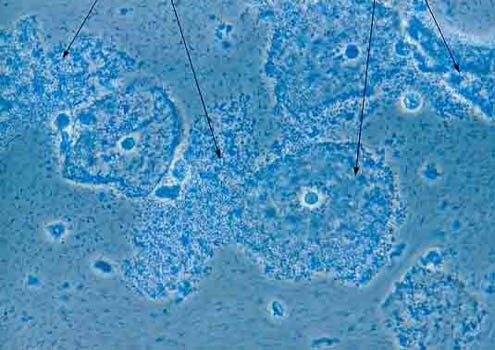
Squamous cervix cells covered with rod-shaped bacteria, Gardnerella vaginalis (source)

Bacterial vaginosis is a common disease among reproductive-aged women:

[It] is characterized by the loss of normal vaginal flora, predominantly hydrogen peroxide-producing Lactobacillus spp., and the increase in the number and species of other bacteria in vaginal fluid. The decrease in lactobacilli and increase in numerous facultative and anaerobic bacteria, some of which have only been recently characterized, may lead to changes in the characteristics of vaginal fluid, such as thin discharge and odor. (Koumans etal., 2007)

Its incidence correlates with the number of lifetime sex partners, and this correlation holds true even when one controls for a series of socioeconomic variables: poverty, smoking, body mass index, douching frequency, education, and oral contraceptive use (Koumans et al., 2007). It thus seems to be sexually transmissible, with suspicions falling particularly on the bacterium Gardnerella vaginalis:

Sexual activity is a risk factor for BV, and most experts believe that BV does not occur in women who have never had vaginal intercourse [12,13]. Epidemiologic studies are strongly supportive of sexual transmission of BV pathogens. There is a high occurrence of BV and concordance of flora in women who have sex with women, further suggesting sexual transmission is important in this setting [14-16]. It is not clear, however, whether one type of sexual activity may be more important in the pathogenesis of infection than another. As an example, oral-genital sex may be a more important risk factor than penile intromission into the vagina. (Sobel, 2012)

The incidence of bacterial vaginosis also correlates with ethnicity, being 51.4% of non-Hispanic blacks, 31.9% of Mexican Americans, and 23.2% of non-Hispanic whites. This correlation likewise holds true when the above socioeconomic variables are held constant. High incidences have also been found in sub-Saharan Africa (Pepin et al., 2011).

After studying these ethnic differences in vaginal flora, Ravel et al. (2010) concluded that they were normal and not pathological:

From these data we conclude that vaginal bacterial communities not dominated by species of Lactobacillus are common and appear normal in black and Hispanic women. The data from this study are in accordance with the results of Zhou et al. (17, 18), who studied the vaginal bacterial communities of white, black, and Japanese women. The reasons for these differences among ethnic groups are unknown, but it is tempting to speculate that the species composition of vaginal communities could be governed by genetically determined differences between hosts. These might include differences in innate and adaptive immune systems, the composition and quantity of vaginal secretions, and ligands on epithelial cell surfaces, among others.

The ultimate cause may be vaginal pH, which is higher in blacks and Hispanics than in Asians and non-Hispanic whites (Ravel etal., 2010). Or it may be differences in cytokine concentrations, with differences in vaginal pH being due to the differences in vaginal flora (Nomelini et al., 2010).

There has thus been a co-evolution between the vaginal environment and certain strains of vaginal bacteria. This co-evolution would have followed different trajectories in different human populations. In a monogamous population, possibilities for sexual transmission would have been sporadic and difficult to sustain. The picture is different in a population with a high incidence of polygyny, especially if the males often inherit or steal some of their co-wives from other males. Such a context would have favored bacteria that can spread from one co-wife to another and then to other sets of co-wives when circumstance permit.

But why wait for the right circumstances? Why not make them by manipulating the host’s behavior? Such behavioral manipulation sounds like science-fiction, yet it has been demonstrated in a wide range of animal species, often in surprisingly precise ways. So how could our bacterium manipulate its host? It wants to hop from one set of co-wives to another, but the regular male partner is standing in its way. What should it do?

First, it should facilitate female-to-female transmission among the co-wives. Second, it should disable the male’s propensity for mate guarding. Better yet, it should reverse the polarity, causing him to feel not jealousy but pleasure at the idea of being cuckolded.

This kind of manipulation occurs in the isopod Caecidotea intermedius. A parasite, Acanthocephalus dirus, infects it as a temporary host before infecting one of several freshwater fishes. When the parasite is still soft and immature, it cannot survive a fish eating its isopod host. It thus seeks to reduce this risk by suppressing conspicuous host behaviors, like mate guarding. Later, when the parasite becomes hard and mature, it can survive consumption of its host and now stimulates mate guarding (Galipaud et al., 2011; Mormann, 2010).

Cuckoldry is fatal to reproductive success, so any such tendency would soon flush itself out of the gene pool. For example, the neural networks for mate guarding might become more insensitive to outside tampering. This change, however, would in turn favor those parasites that could maintain such tampering. The eventual outcome would be an evolutionary compromise where mate guarding is impaired, but not enough to prevent reproductive success. The situation is different, though, if the parasite spreads to another population that has never developed such immunity.

Many sexual fetishes have been around for a long time and are often traceable to the ancient Greco-Roman world. Cuckold envy, however, seems relatively recent, the oldest references dating back to 17th century England (Kuchar, 2011, pp. 18-19). We may thus be looking at a sexually transmitted parasite that entered England with the expansion of world trade in the 17th century. But from where? Probably from a highly polygynous culture area, like West Africa.

This parasite might be a vaginal bacterium that first acquired sexual transmissibility and then an ability to manipulate host behavior. It might alternately be a strain of vaginal yeast. Indeed, vaginal strains of Candida albicans show a similar adaptation to sexual transmission via the partner’s mouth, i.e., they adhere better to saliva-coated surfaces than do other strains (Schmid et al., 1995).

References

Gaulipaud, M., Z. Gauthey, and L. Bollache. (2011). Pairing success and sperm reserve of male Gammarus pulex infected by Cyathocephalus truncatus (Cestoda: Spathebothriidea), Parasitology, 138, 11, 1429-1435.

Koumans E.H., M. Sternberg, C. Bruce, G. McQuillan, J. Kendrick, et al. (2007). The prevalence of bacterial vaginosis in the United States, 2001–2004; associations with symptoms, sexual behaviors, and reproductive health, Sexually Transmitted Diseases, 34, 864–869.
http://journals.lww.com/stdjournal/Fulltext/2007/11000/The_Prevalence_of_Bacterial_Vaginosis_in_the.6.aspx

Kuchar, G. (2001). Rhetoric, Anxiety, and the Pleasures of Cuckoldry in the Drama of Ben Jonson and Thomas Middleton, Journal of Narrative Theory, 31 (1), Winter, pp. 1-30.

Mormann, K. (2010). Factors influencing parasite-related suppression of mating behavior in the isopod Caecidotea intermedius, Theses and Disserations, paper 48
http://via.library.depaul.edu/etd/48

Nomelini, R.S., A.P.B. Carrijo, S.J. Adad, A.A. Nunes, E.F.C. Murta. (2010). Relationship between infectious agents for vulvovaginitis and skin color, Sao Paulo Medical Journal, 128, 348-53
http://www.scielo.br/scielo.php?pid=S1516-31802010000600007&script=sci_arttext

Pépin J., S. Deslandes, G. Giroux, F. Sobéla, N. Khonde, et al. (2011). The Complex Vaginal Flora of West African Women with Bacterial Vaginosis. PLoS ONE, 6(9): e25082. doi:10.1371/journal.pone.0025082
http://www.plosone.org/article/info%3Adoi%2F10.1371%2Fjournal.pone.0025082

Ravel J, Gajer P, Abdo Z, Schneider GM, Sara S, et al. (2010). Vaginal microbiome of reproductive-age women. Proceedings of the National Academy of Sciences U SA, 108, 4680-4687.
http://www.pnas.org/content/108/suppl.1/4680.short

Schmid, J., P.R. Hunter, G.C. White, A.K. Nand, and R.D. Cannon. (1995). Physiological traits associated with success of Candida albicans strains as commensal colonizers and pathogens, Journal of Clinical Microbiology, 33, 2920–2926.

Sobel, J.D. (2012). Bacterial vaginosis, Wolters Kluwer, UpToDate
http://www.uptodate.com/contents/bacterial-vaginosis

Saturday, December 29, 2012

Looking back and ahead


Was the scientific revolution (1540-1700) due to an increase in trade and the discovery of the New World? Or were there just more people around who could understand and appreciate new ideas? (source)

The past year has seen the deaths of two scholars who tackled the thorny issue of IQ and race, first Philippe Rushton (October 2) and then Arthur Jensen (October 22). The coming year may see more departures. Most of the remaining HBD scholars are retired or getting on in years.

Some see this as proof of the issue’s irrelevance. Rushton and Jensen were too old to understand that “race” and “intelligence” are outdated concepts. In reality, they were old because they had earned tenure before the campaign against “racist academics” had gotten into full swing … back in the 1980s.

I use quotation marks because that campaign cast a very wide net. It targeted anyone who might believe in race differences, or heritable differences of any sort. A good example would be John Tooby and Leda Cosmides, who founded evolutionary psychology in the 1980s and have authored publications that are now required reading in undergrad psychology. Yet they had to wander in the wilderness for years before getting secure academic positions. Their sin? They believed that many human behaviors have a sizeable heritable component, although they repeatedly denied the existence of any heritable differences among human populations. But that wasn’t good enough. They had taken the first step in a chain of reasoning that could lead God knows where. They weren’t guilty of something they actually thought. They were guilty of something they might end up thinking.

The climate in academia today, especially in the social sciences, eerily resembles that of Eastern Europe a half-century ago. In private, many academics make fun of the idea that every aspect of human behavior is “socially constructed.” In public, they say nothing. Even the ones with tenure are terrified to speak out. It just isn’t worth it. Even if your position is secure, you’ll still see funding and publishing opportunities disappear, and your acquaintances will treat you as a horrible person. At best, you’ll be considered an oddball.

With little new blood entering the pipeline, and with its leading scholars growing old and dying off, the HBD community seems destined to disappear within academia and the larger community of intellectuals. Game over.

I’m less pessimistic. Individuals may die, but ideas don’t die so easily, especially if they make sense. The HBD idea may lose certain aspects and gain new ones, but the idea itself will be much more tenacious. And the false academic consensus can be shattered with a bit of effort. All it takes is a few people who can make their case calmly and lucidly. The basic facts are already in and beyond dispute.

We know, for instance, that at least 7% of the human genome has changed over the past 40,000 years, with most of the change being squeezed into the last 10,000. In fact, human genetic evolution speeded up by over a hundred-fold about 10,000 years ago (Hawks et al., 2007). By then, however, humans had spread over the earth’s entire surface from the equator to the Arctic Circle. They weren’t adapting to new physical environments. They were adapting to new cultural and behavioral environments. They were adapting to differences in diet, in mating systems, in family and communal structure, in notions of morality, in forms of language, in systems of writing, in modes of subsistence, in means of production, in networks of exchange, and so on. This genetic evolution involved changes to digestion, metabolism, and … mental processing.

Another fact. By 10,000 years ago, modern humans were no longer a small founder group. They were already splitting up into different geographic populations. So the acceleration of human genetic evolution did not affect all humans the same way. Yes, we are different, and the differences aren’t skin deep.

Undoubtedly, these differences are statistical, and many weakly so. But even a statistical difference can affect the way a society develops. I once believed that the scientific revolution of the 16th century onward was due to the increase in trade and the discovery of the New World. I’ve now come to the conclusion that it was driven by an increase in the smart fraction of northwestern European societies, and this increase was in turn driven by the demographic processes described by Clark (2007). That revolution didn’t happen just because new ideas were being discovered (actually, many of them had been around for some time). It happened because more people could now understand those ideas and appreciate their significance.

But enough digression. You can bury a person but not an idea.

References

Anon. (2012). Unit 12 – The Scientific Revolution, MrGrayHistory
http://mrgrayhistory.wikispaces.com/UNIT+12+-+THE+SCIENTIFIC+REVOLUTION

Clark, G. (2007). A Farewell to Alms. A Brief Economic History of the World, Princeton University Press, Princeton and Oxford.

Hawks, J., E.T. Wang, G.M. Cochran, H.C. Harpending, and R.K. Moyzis. (2007). Recent acceleration of human adaptive evolution, Proceedings of the National Academy of Sciences USA, 104, 20753-20758.

Friday, December 14, 2012

Year's end


Just horsing around? Or is there also a political message?

It’s year’s end, and to date I’ve written nothing on the three themes I promised to blog about back in January. One reason was the need to comment on certain unforeseen events, like Phil Rushton’s death and the confirmation that Europeans became white-skinned long after their ancestors had arrived in Europe. Another reason was the difficulty in finding relevant data, particularly with respect to the Burakumin of Japan.

So, before the clock runs out, I’ll post my thoughts on all three themes:

Archaic admixture

There is growing evidence that a Neanderthal-like archaic population once inhabited parts of Africa. Lachance et al. (2012) studied the genomes of three hunter-gatherer peoples from sub-Saharan Africa: Pygmy, Hadza, and Sandawe. All three of them showed introgression from an unknown archaic group whose ancestors had separated from ancestral modern humans at about the same time as ancestral Neanderthals had.

Africa is probably the continent where modern humans have the most archaic admixture, since it is where they were in contact with archaic hominins for the longest time. In addition, it’s also where modern humans were in contact with “almost-moderns” who offered weaker barriers to intermixture because they were so similar behaviorally and physically.

But what does all this mean? If a human population has a lot of archaic admixture, is it therefore more primitive anatomically and mentally? Not really. The “modern” gene variants are still present in the gene pool, and if they’re any better they will progressively displace their archaic counterparts through natural selection. Over time, archaic admixture will thus be confined to junk DNA of little or no selective value. Mallards, for instance, have outbred so much that only a minority of them cluster together on an mtDNA tree, the rest being scattered among black ducks (Avise et al., 1990). Yet each and every one of them looks, quacks, and waddles like a mallard.

Indeed, if we follow Greg Cochran’s reasoning, an admixed population provides natural selection with a wider range of interesting variants, some of which might even be better than the ones in the original genetic toolkit.

The Korean tinderbox

In late capitalism, the elites are no longer restrained by ties of national identity and are thus freer to enrich themselves at the expense of their host society. This clash of interests lies at the heart of the globalist project: on the one hand, jobs are outsourced to low-wage countries; on the other, low-wage labor is insourced for jobs that cannot be relocated, such as in the construction and service industries.

This two-way movement redistributes wealth from owners of labor to owners of capital. Business people benefit from access to lower-paid workers and weaker labor and environmental standards. Working people are meanwhile thrown into competition with these other workers. As a result, the top 10% of society is pulling farther and farther ahead of everyone else, and this trend is taking place throughout the developed world. The rich are getting richer … not by making a better product but by making the same product with cheaper and less troublesome inputs of labor.

In the United States, globalism is being pushed by a contrived bipartisan consensus. As Jeff Faux (2012) notes:

But the national discourse is silent on the tacit agreement both parties have already made on the future that lies ahead for the majority of working Americans: a dramatic drop in their living standards. […] Even before the financial crash, real wages for the typical American worker had been stagnant for 30 years as a result of: 1) trade and investment deregulation that shoved American workers into a brutally competitive global labor market for which they were unprepared; 2) the relentless war on unions that began with the election of Ronald Reagan in 1980; and 3) more recently, the erosion of the social safety net for low wage workers and the unemployed.

In East Asia, South Korea has gone the furthest in embracing the globalist project, as one observer recently summarized in comparing that country with Ireland and the U.S.:

[…] lesser skilled jobs are moving from advanced markets to developing nations. Companies recovering from the financial shocks of 2008 have discovered more cost-effective processes than older, more labor-intensive means through technology and outsourcing. Consequently, the recent economic rebounds have not been matched with expected re-employment.

Independent “knowledge professionals” represent more and more of the labor force. Decreasing numbers of “permanent” employees mean more reliance on multi-skilled, independent specialists on a plug-in and plug-out basis for short- and medium-term projects. This major development is becoming an increasingly common aspect of this new paradigm.

[…] I have seen an erosion of the middle classes, and a strengthening of the upper-middle classes and upper classes, while the lower classes are growing in size. At the same time, I have seen the middle class getting by on less, and becoming much less aggressive consumers. (Coyner, 2012)

South Korea has also gone global by opening its borders to immigration. Officially, there are about 1.4 million foreigners (2011), but this figure excludes illegal immigrants (estimated to be 30-50% of the legal total) and foreigners who have acquired South Korean citizenship. Also excluded are their Korean-born children (Anon, 2011).

This influx of foreign labor is framed as a positive development that will make South Korea a more open society:

In order to sustain its development, the country has increasingly turned to foreign labor and selective immigration as countermeasures for its economic and demographic problems. The state manages the influx of foreigners under a framework of “multiculturalism” that professes openness towards becoming a “multicultural society” despite resistance rooted in ethno-nationalism and a history of homogeneity. (Kim & Kwon, 2012).

The veneer of official discourse conceals the stresses and strains that are building among ordinary South Koreans. With conditions of life deteriorating for the majority, animosity is growing toward the top 10% whose lives are steadily improving. The latter are satirized in the hit video “Gangnam style” by Korean rapper Psy:

Gangnam is a wealthy neighborhood in the South Korean city of Seoul where young people go to party. In the song, Psy describes the kind of guy he is and the kind of girl he wants, painting caricatures of the ostentatious culture of people who hang out in Gangnam. 

As The Atlantic pointed out in an in-depth article last month, behind the flashy costumes and killer dance moves in Psy's video, there's a subtle commentary on class in South Korea. 

WHAT DOES THE CHORUS, 'OPPAN GANGNAM STYLE,' MEAN?

It roughly means something like 'Your man has Gangnam Style.' 'Oppa,' which literally means 'older brother,' is an affectionate term girls use to address older guy friends or a boyfriend. It can also be used as a first-person pronoun, as PSY does here — in this case, he's telling a woman that he has Gangnam style.

WHAT'S THE DEAL WITH HIS SIGNATURE DANCE?

"It's a horse-riding dance," PSY explained in an interview with NY1 anchor Michelle Park. "So there is an invisible horse, and you're on it. (Goyette, 2012)

No, that’s not the whole story. The dance is also a parody of an American cowboy. (Twirling a lasso is not a usual feature of horseback riding). There is in fact a streak of anti-Americanism in all of this, as recent revelations about Psy’s past have shown. Something is going on beneath the apparent calm of South Korean society, and it won’t be pretty when it finally comes to a head …

Places like South Korea and Greece, which lie on the periphery of the current world-system, will be the first to push back against globalism. In such countries, national identity is still strong and the elites use little imagination in adapting their approach to local circumstances, preferring to “copy and paste” from elsewhere. There too, the failure of globalism will be the most obvious.

The Burakumin

In pre-modern Japanese society, the Burakumin specialized in jobs that required contact with dead flesh, e.g., butchery, leather making, and preparation of corpses for burial. They were and still are socially stigmatized, and marriage with them was forbidden. Because of their endogamy and their reserved occupations, they may have thus escaped the process of demographic replacement that Gregory Clark (2007) described for English society, i.e., they were not gradually replaced by downwardly moving members of the middle class. As such, they might provide a glimpse into the genetic predispositions that characterized the Japanese several centuries ago—at a time when the State was largely absent and when social relations were quite different.

In this earlier social environment, adult males were expected to use force on a regular basis to defend themselves and their families. Law courts did exist, but their rulings were enforced by the aggrieved party, not by the State. Young men preferred to socialize with other young men in small loosely hierarchical groups that sought to control local territory while engaging in raids to plunder neighboring territories. Literacy was rare, with less importance being given to creation, processing, and storage of abstract information. Finally, time orientation was focused much more on the present. This reflected the uncertainty over one’s own future, including life expectancy, and also the difficulty in converting oral agreements into long-term enforceable contracts.

These behavior patterns seem to describe the Burakumin. Modern Japanese society is alienating to them, not because of discrimination but because of its high level of domesticity, social discipline, and nerdish devotion to intellectual pursuits. Male Burakumin, in particular, prefer alternate forms of social affiliation and expression, such as the Yakuza (Japanese mafia), the largest Yakuza syndicate being over 70% Burakumin.  At school, their achievement scores have remained nearly one standard deviation below those of other Japanese regardless of the time and place of the research (BLHRRI, 1997). The persistent gap may reflect a lack of either ability or interest, or a lack of both.

This topic unfortunately suffers from insufficient good data. The American literature often asserts that IQ scores have risen dramatically among Burakumin immigrants to the U.S., but Jason Malloy has shown that this claim is an academic legend:

I often see media assertions like Steve Olson in The Atlantic: “Yet when the Buraku emigrate to the United States, the IQ gap between them and other Japanese vanishes.” This claim is somewhat apocryphal. There is no data for Burakumin in the US. False claims about US IQ data have mutated second-hand from John Ogbu who claimed a study showed that the Buraku immigrants here “do slightly better in school than the other Japanese immigrants”. The book chapter Ogbu references for this claim (Ito 1966) however, is by a pseudonymous author who relied strictly on gossip from non-outcast Japanese communities in California to surmise how the outcasts here might be performing. The author’s informants believed the US outcasts were more attractive, more fair-skinned, and made more money. Though– as a testament to Ogbu’s immaculate scholarship– the author reported no gossip about how these Burakumin performed in school. (Cochran, 2011)

The Japanese literature doesn’t seem much better. It generally admits the existence of negative stereotypes about the Burakumin but provides little information on the content of these stereotypes. 

References

Anon. (2011). Foreigners make up 3% of Korea’s population, December 19, Gusts of Popular Feeling
http://populargusts.blogspot.ca/2011/12/foreigners-make-up-3-of-koreas.html

Avise, J.C., C.D. Ankney, W.S. Nelson. (1990). Mitochondrial gene trees and the evolutionary relationship of mallard and black ducks, Evolution, 44, 1109-1119.

BLHRRI (1997). Practice of Dowa Education Today, Buraku Liberation and Human Rights Institute.
http://blhrri.org/blhrri_e/dowaeducation/de_0006.htm

Clark, G. (2007). A Farewell to Alms. A Brief Economic History of the World, Princeton University Press, Princeton and Oxford.

Cochran, G. (2011). Risch’s conjecture, December 28, West Hunter
http://westhunt.wordpress.com/2011/12/28/rischs-conjecture/

Coyner, T. (2012). Learning to move with the tide, Korea Joongang Daily, September 12
http://koreajoongangdaily.joinsmsn.com/news/article/article.aspx?aid=2959517 

Faux, J. (2012). The elites are unanimous: Lower everyone’s wages and standard of living, Jeff Faux
http://jefffaux.com/?p=345

Goyette, B. (2012). Psy’s ‘Gangam Style,’ explained! NY Daily News, September 7,
http://articles.nydailynews.com/2012-09-07/news/33682557_1_gangnam-psy-dance

Ito, H. (1966). Japan’s outcastes in the United States. In G.A. deVos and H. Wagatsuma (eds.), Japan’s Invisible Race. Berkeley: University of California Press.

Kim, J. & Y-S. Kwon. (2012). Economic development, the evolution of foreign labor and immigration policy, and the shift to multiculturalism in South Korea, Philippine Political Science Journal, 33, 178-201.

Lachance, J., B. Vernot, C.C. Elbers, B. Ferwerda, A. Froment, J-M Bodo, G. Lema, W. Fu, T.B. Nyambo, T.R. Rebbeck, K. Zhang, J.M. Akey, S.A. Tishkoff. (2012). Evolutionary history and adaptation from high-coverage whole-genome sequences of diverse African hunter-gatherers, Cell, 150, 457-469.
http://211.144.68.84:9998/91keshi/Public/File/42/150-3/pdf/1-s2.0-S0092867412008318-main.pdf

Wikipedia. (2012). PSY (entertainer).
http://en.wikipedia.org/wiki/PSY_(entertainer)