Showing posts with label The Enlightenment. Show all posts

Thursday, February 14, 2019

The Nurture of Nature


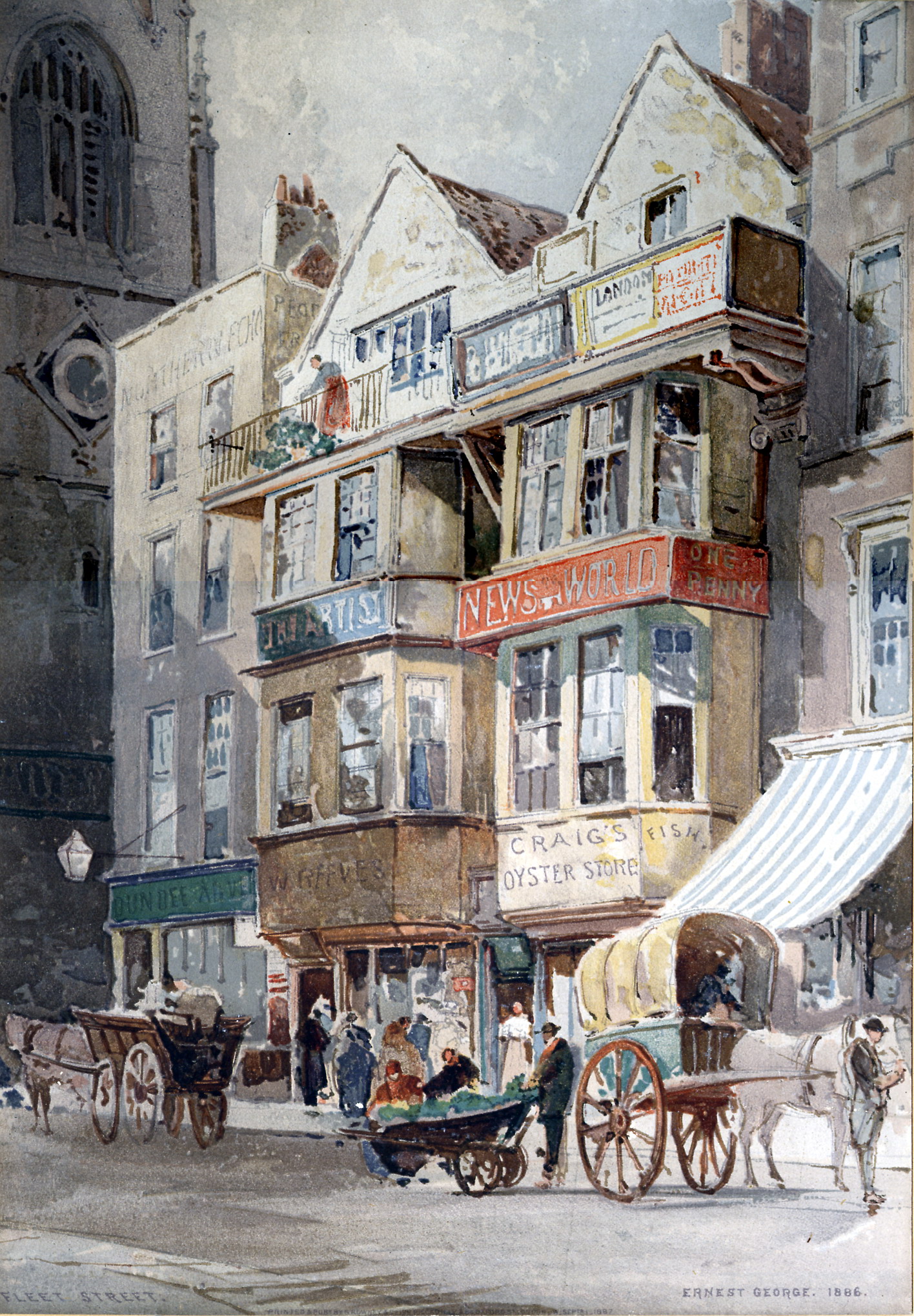
Fleet Street, watercolor by Ernest George (1839-1922). In England, middle-class families used to be so large that they overshot their niche and flooded the ranks of the lower class.


Until the last ten years it was widely believed that cultural evolution had taken over from genetic evolution in our species. When farming replaced hunting and gathering, something fundamentally changed in the relationship between us and our surroundings. We no longer had to change genetically to fit our environment. Instead, we could change our environment to make it fit us.

That view has been challenged by a research team led by anthropologist John Hawks. They found that genetic evolution actually speeded up 10,000 years ago, when hunting and gathering gave way to farming. In fact, it speeded up over a hundred-fold. Why? Humans were now adapting not only to slow-changing natural environments but also to faster-changing cultural environments, things like urban living, belief systems, and the State monopoly on violence. Far from slowing down, the pace of genetic change actually had to accelerate (Hawks et al. 2007).

These findings received a broader public hearing with the publication of The 10,000 Year Explosion: How Civilization Accelerated Human Evolution. More recently, they have been discussed in a review article by historian John Brooke and anthropologist Clark Spencer Larsen:


Are we essentially the same physical and biological beings as Ice Age hunter-gatherers or the early farming peoples of the warming early Holocene? How has the human body changed in response to nine or ten millennia of dramatic dietary change, a few centuries of public health interventions, and a few decades of toxic environmental exposures? In short, how has history shaped biology? 

[...] But very clearly human evolution did not stop with the rise of modern humanity in the Middle to Late Paleolithic. Climatic forces, dietary shifts, disease exposures, and perhaps the wider stresses and challenges of hierarchical, literate state societies appear to have been exerting selective pressure on human genetics.

In short, we have become participants in our evolution: we create more and more of our surroundings, and these surroundings influence the way we evolve. Culture is not simply a tool we use to control and direct our environment. It is a part of our environment, the most important part, and as such it now controls and directs us.

Brooke and Larsen nonetheless feel attached to older ways of evolutionary thinking, particularly the "essentialism" of pre-Darwinian biology. We see this when they assert that “the essential modeling of the genetic code ended sometime in the Paleolithic." Actually, there was no point in time when our ancestors became essentially "human"—whatever that means. A Paleolithic human 100,000 years ago would have had less in common with you or me than with someone living 100,000 years earlier or even a million years earlier. Human evolution has been logarithmic—the changes over the past 10,000 years exceed those over the previous 100,000 years, which in turn exceed those over the previous million.


Clark’s model

Brooke and Larsen discuss Gregory Clark's work on English demography. Clark found that the English middle class expanded steadily from the twelfth century onward, its descendants not only growing in number but also replacing the lower classes through downward mobility. By the 1800s, its lineages accounted for most of the English population. Parallel to this demographic expansion, English society shifted toward "middle class" culture and behavior: thrift, pleasure deferment, increased future orientation, and unwillingness to use violence to settle personal disputes (Clark, 2007). 

Clark’s work is criticized by Brooke and Larsen on two grounds:

[... ] there is no biological evidence to support an argument for English industrial transformation via natural selection. More importantly, this was a process that—hypothetically—had been at work around the world since the launch of social stratification in the Late Neolithic and the subsequent rise of state societies.

How valid are these criticisms? Let me deal with each of them.


Is social stratification the only precondition of Clark’s model?

First, it is true that many societies around the world are socially stratified, but social stratification is only one of the preconditions of Clark’s model. There are two others:

1. Differences in natural increase between social classes, with higher natural increase being associated with higher social status.

2. Porous class boundaries. The demographic surplus of the middle and upper classes must be free to move down into and replace the lower classes.

These preconditions are not met in most socially stratified societies. Brooke and Larsen are simply wrong when they say: "The poor died with few or no children everywhere in the world, and across vast stretches of human history." In reality, there have been many societies where fewer children were born on average to upper-class families than to lower-class families. A notable example is that of the Roman Empire, particularly during its last few centuries: upper-class Romans widely practiced abortion and contraception (Hopkins 1965). A similar situation seems to have prevailed in the Ottoman Empire. By the end of the eighteenth century, Turks were declining demographically in relation to their subject peoples, perhaps because they tended to congregate in towns and were more vulnerable to the ravages of plague and other diseases (Jelavich and Jelavich, 1977, pp. 6-7)

Nor are class boundaries always porous. Social classes often become endogamous castes. This can happen when a social class specializes in "unclean" work, like butchery, preparation of corpses for burial, etc. This was the case with the Burakumin of Japan, the Paekchong of Korea, and the Cagots of France (Frost 2014). Because of their monopoly over a despised occupation, they were free from outside competition and thus had the resources to get married and have enough children to replace themselves. This was not the case with the English lower classes, who faced competition from “surplus” middle-class individuals between the twelfth and nineteenth centuries. Such downward mobility is impossible in caste societies, where “surplus” higher-caste individuals are expected to remain unmarried until they can find an appropriate social situation. 

A caste society thus tends to be evolutionarily stagnant. Lower castes in particular tend to preserve mental and behavioral predispositions that would otherwise be removed from the gene pool in a more fluid social environment.

Why did class boundaries remain porous in England? The reason was probably the greater individualism of English society, particularly its expanding middle class. Sons were helped by their parents, but beyond a certain point they were expected to shift for themselves. My mother’s lineage used to be merchants on Fleet Street in London. They were successful and had such large families that they overshot their niche. By the nineteenth century, some of them had fallen to the level of shipbuilding laborers, and it was as such that they came to Canada.


Is biological evidence lacking for Clark's model?

Brooke and Larsen are on firmer ground when they say that Clark's model is unsupported by biological evidence. There is certainly a lack of hard evidence, but the only possible hard evidence would be ancient DNA. If we could retrieve DNA from the English population between the 12th and 19th centuries, would we see a shift toward alleles that support different mental and behavioral traits? That work has yet to be done. 

Nonetheless, a research team led by Michael Woodley has examined ancient DNA from sites in Europe and parts of southwest and central Asia over a time frame extending from 4,560 and 1,210 years ago. During that time frame, alleles associated with high educational attainment gradually became more and more frequent. The authors concluded: "This process likely continued until the Late Modern Era, where it has been noted that among Western populations living between the 15th and early 19th centuries, those with higher social status […] typically produced the most surviving offspring. These in turn tended toward downward social mobility due to intense competition, replacing the reproductively unsuccessful low-status stratum […] eventually leading to the Industrial Revolution in Europe" (Woodley et al. 2017).

Again, work remains to be done, particularly on the genetic profile of the English population between the twelfth and nineteenth centuries, but the existing data do seem to validate Clark's model for European societies in general. Indeed, psychologist Heiner Rindermann presents evidence that mean cognitive ability steadily rose throughout Western Europe during late medieval and post-medieval times. Previously, most people failed to develop mentally beyond the stage of preoperational thinking. They could learn language and social norms but their ability to reason was hindered by various impediments like cognitive egocentrism, anthropomorphism, finalism, and animism (Rindermann 2018, p. 49). From the sixteenth century onward, more and more people reached the stage of operational thinking. They could better understand probability and cause and effect and could see things from the perspective of another person, whether real or hypothetical (Rindermann 2018, pp. 86-87).

As the “smart fraction” became more numerous, it may have reached a threshold where intellectuals were no longer isolated individuals but rather communities of people who could interact and exchange ideas. This was one of the hallmarks of the Enlightenment: intellectuals were sufficiently large in number to meet in clubs, “salons,” coffeehouses, and debating societies.


References

Brooke, J.L. and C.S. Larsen. (2014).The Nurture of Nature: Genetics, Epigenetics, and Environment in Human Biohistory. The American Historical Review 119(5): 1500-1513

Clark, G. (2007). A Farewell to Alms. A Brief Economic History of the World. Princeton University Press: Princeton and Oxford.

Clark, G. (2009a). The indicted and the wealthy: surnames, reproductive success, genetic selection and social class in pre-industrial England.

Clark, G. (2009b). The domestication of man: The social implications of Darwin. ArtefaCTos 2: 64-80. 

Cochran, G. and H. Harpending. (2009). The 10,000 Year Explosion: How Civilization Accelerated Human Evolution. New York: Basic Books. 

Frost, P. (2014). Burakumin, Paekchong, and Cagots. ResearchGate

Hawks, J., E.T. Wang, G.M. Cochran, H.C. Harpending, and R.K. Moyzis. (2007). Recent acceleration of human adaptive evolution. Proceedings of the National Academy of Sciences (USA) 104: 20753-20758.

Hopkins, K. (1965). Contraception in the Roman Empire. Comparative Studies in Society and History 8(1): 124-151.

Jelavich, C. and B. Jelavich. (1977). The Establishment of the Balkan National States, 1804-1920. Seattle: University of Washington Press.

Rindermann, H. (2018). Cognitive Capitalism. Human Capital and the Wellbeing of Nations. Cambridge University Press.

Woodley, M.A., S. Younuskunju, B. Balan, and D. Piffer. (2017). Holocene selection for variants associated with general cognitive ability: comparing ancient and modern genomes. Twin Research and Human Genetics 20(4): 271-280.
Monday, June 4, 2018

Evolution of the market economy


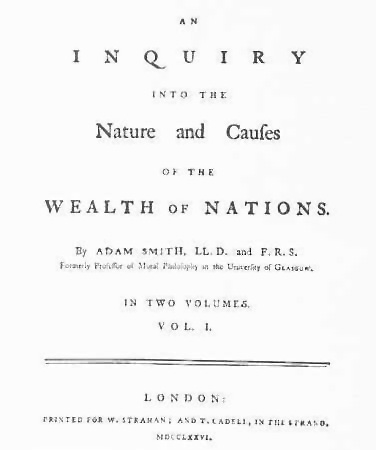
First page of The Wealth of Nations (1776) (Wikicommons). Adam Smith mainly wished to understand why the market economy worked in his time, not why it didn't work in earlier times.


In his newly published book, Cognitive Capitalism, Heiner Rindermann argues that the market economy requires a population that thinks and behaves in certain ways. Without these mental and behavioral qualities, the production and exchange of wealth is handicapped. This factor, argues Rindermann, best explains why some countries are poor and others rich ... even when both share the same economic and legal system.

This argument would have seemed self-evident half a century ago. Since then, however, the trend on both the left and the right has been to treat humans as entities who can be freely substituted for each other. 

Yet this was not the view of Adam Smith, the founder of economics. In The Theory of Moral Sentiments, he noted that people do differ mentally and behaviorally, particularly in two key qualities:

The qualities most useful to ourselves are, first of all, superior reason and understanding, by which we are capable of discerning the remote consequences of all our actions, and of foreseeing the advantage or detriment which is likely to result from them: and secondly, self-command, by which we are enabled to abstain from present pleasure or to endure present pain, in order to obtain a greater pleasure or to avoid a greater pain in some future time. In the union of those two qualities consists the virtue of prudence, of all the virtues that which is most useful to the individual. The Theory of Moral Sentiments, Part IV, Chapter I

Today, these two qualities are called "intelligence" and "time preference." A third one, mentioned in The Wealth of Nations (1776), is the willingness to refrain from using violence as a means to gain wealth or status:

In those unfortunate countries, indeed, where men are continually afraid of the violence of their superiors, they frequently bury and conceal a great part of their stock, in order to have it always at hand to carry with them to some place of safety, in case of their being threatened with any of those disasters to which they consider themselves as at all times exposed. This is said to be a common practice in Turkey, in Indostan, and, I believe, in most other governments of Asia. It seems to have been a common practice among our ancestors during the violence of the feudal government. The Wealth of Nations, Book I, Chapter I

When the German and Scythian nations overran the western provinces of the Roman empire, the confusions which followed so great a revolution lasted for several centuries. The rapine and violence which the barbarians exercised against the ancient inhabitants interrupted the commerce between the towns and the country. The towns were deserted, and the country was left uncultivated, and the western provinces of Europe, which had enjoyed a considerable degree of opulence under the Roman empire, sunk into the lowest state of poverty and barbarism. The Wealth of Nations, Book III, Chapter II

This theme runs through The Wealth of Nations, albeit peripherally. The author repeatedly uses the terms "savage" (18 times), "barbarous" (36 times), and "civilized" (58 times). This theme also comes up in his private correspondence when he discusses Western Europe in an earlier and more barbarous age. The threat to life and property had a chilling effect on trade:

Travelling, from the disorders of the Country, must have been extremely dangerous, and consequently very rare. Few people, therefor, could propose to live by entertaining travellers; and consequently there would be few or no inns. Travellers would have be obliged to have recourse to the hospitality of private families: in the same manner as in all other barbarous Countries. The Correspondence of Adam Smith, p. 142

Adam Smith studied the workings of a market economy in its full flowering. Centuries earlier it had been much more rudimentary, and elsewhere it was still nonexistent. He knew this but failed to mention these constraints in his model of a self-generating, self-regulating market. Nor did he explain the long and painful evolution of a peaceful society where people understand the future consequences of their actions and prefer long-term gain even at the price of short-term pain.

Why this oversight? One reason is that he mainly wished to understand why the market economy worked in his time, not why it didn't in earlier times. A second reason was more ideological. He believed that this kind of economy had taken so long to develop in his country and was still nonexistent elsewhere because of ignorance: most people misunderstood how markets work and their benefits. If only they could be made to understand …

In reality, people had understood markets and their benefits since the dawn of history, even to the point of protecting them with walls and armed guards. Nonetheless, these islands of economic activity remained limited in space and time; there were plenty of markets but no market economy. Most economic activity was non-monetized and done within the family or for the local lord. The average person simply didn’t think and behave in a way that would let the market mechanism encompass the production and exchange of all wealth.

Adam Smith understood that certain qualities of mind and behavior had kept the market economy from developing, especially low foresight, high time preference, and high propensity for violence. But he attributed these qualities to lack of education. Like other Enlightenment thinkers, he believed that education would level all differences:

The difference of natural talents in different men is, in reality, much less than we are aware of; and the very different genius which appears to distinguish men of different professions, when grown up to maturity, is not upon many occasions so much the cause as the effect of the division of labour. The difference between the most dissimilar characters, between a philosopher and a common street porter, for example, seems to arise not so much from nature as from habit, custom, and education. The Wealth of Nations, Book I, Chapter II

Adam Smith lived in a society where the lower classes largely failed to reproduce and were steadily replaced, generation after generation, by the downwardly mobile cast-offs of the middle and upper classes (Clark 2007). The result was a shift toward middle-class values: thrift, foresight, and a rational mindset. By his time, most of the people he met were either middle class or impoverished descendants of the middle class.

This demographic shift may have caused the Enlightenment itself, which was not so much a time of new ideas as one of existing ideas being understood and appreciated by more people, as if the "smart fraction" of society had increased. Such an increase is possible even with a modest increase in mean IQ because the relationship between the two is nonlinear: "constant increments in mean IQ will not produce constant increments in the smart fraction" (La Griffe du Lion 2002). If mean IQ increases, the smart fraction will initially increase at a faster pace. If the level defining the smart fraction remains the same, this trend will reverse once mean IQ reaches a certain level. The same increase in mean IQ will then produce a smaller increase in the smart fraction.

The most intelligent members of society have a disproportionate impact on its development. Rindermann and Thompson (2011) summarize the literature on this subject, including their own research. Patent rates, GDP, and average annual GDP growth correlate much more with the smart fraction of a population than with the mean IQ of a population. "In concrete numbers, an increase of 1 IQ point in the intellectual class raises the average GDP by $468 U.S., whereas an increase of 1 IQ point in the cognitive ability of the mean raises average GDP by $229 U.S."

The Enlightenment may thus have been the most visible sign of a less dramatic change in the general population. Using soft data and Jean Piaget's theory of cognitive development, Rindermann (2018) argues that mean IQ was steadily rising in Western Europe throughout late medieval and post-medieval times. Previously, the average person had never developed beyond the preoperational mental stage, i.e., good ability to learn language and norms but limited ability to reason because of cognitive egocentrism, anthropomorphism, finalism, and animism (Rindermann 2018, p. 49). From the sixteenth century onward, more and more people reached the stage of operational thinking, i.e., the average person was better able to understand probability, cause and effect, and the perspective of another person, whether real or hypothetical (Rindermann 2018, pp. 86-87).

This cognitive shift seems to have been driven by the nascent middle class, essentially artisans who produced for a growing and increasingly dynamic market. A similar but stronger trend may also explain the rise in Ashkenazi intelligence during the same period (Frost 2007)


Conclusion

Adam Smith lived in a society where most people, whatever their station in life, had more or less the same genetic potential because they shared the same origins of ethnicity and class. He could be forgiven for thinking that a philosopher and a common street porter had the same inborn talents. But what's our excuse?

Heiner Rindermann has picked up where Adam Smith left off by seeking to describe the market economy as more than a mathematical model. It is in fact a radically new way of organizing society that has largely replaced the older one of family, kinfolk, and community. Going from one to the other required profound changes to mind and behavior:

Wealth in modern times is the result of cognitive capitalism. Cognitive capitalism refers to the idea that the cognitive ability of society as a whole, and of its cognitive elite in particular, is the prerequisite for the development of technological progress, for the historic development of modern society with its increasing cognitive demands and complexity, and for the wealth-furthering norms and institutions that form the core of the capitalist system (economic freedom, free markets, rule of law, property rights). (Rindermann and Thompson 2011)


References

Clark, G. (2007). A Farewell to Alms. A Brief Economic History of the World, Princeton University Press, Princeton and Oxford.

Frost, P. (2007). Natural selection in proto-industrial Europe. Evo and Proud, November 16

La Griffe du Lion. (2002). The Smart Fraction Theory of IQ and the Wealth of Nations, March, 4(1)
http://www.lagriffedulion.f2s.com/sft.htm  

Rindermann, H. (2018). Cognitive Capitalism. Human Capital and the Wellbeing of Nations. Cambridge University Press.

Rindermann, H. and J. Thompson. (2011). Cognitive Capitalism: The Effect of Cognitive Ability on Wealth, as Mediated Through Scientific Achievement and Economic Freedom, Psychological Science 22(6) 754 -763.
http://alphanmanas.com/wp-content/uploads/alphanmanas_post_1863_754.full.pdf

Smith, A. (1759). The Theory of Moral Sentiments.

Smith, A. (1776). An Inquiry into the Nature and Causes of the Wealth of Nations.
https://en.wikipedia.org/wiki/The_Theory_of_Moral_Sentiments

Smith, A. (1987). The Correspondence of Adam Smith, edited by E.C. Mossner and I.S. Ross, Oxford: Clarendon Press
https://books.google.ca/books?id=NFoubpls2NIC&dq=adam+smith+critics&lr=&source=gbs_navlinks_s

Saturday, June 15, 2013

How the pacification of Europe came to an end


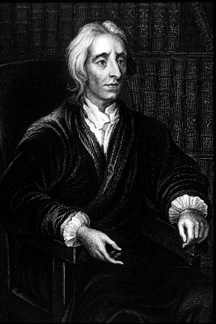
John Locke: “every man, in the state of nature, has a power to kill a murderer […] such men are not under the ties of the common law of reason, have no other rule, but that of force and violence, and so may be treated as beasts of prey (source of picture)
 

The last millennium has seen three overlapping trends in Western societies with respect to unlawful violence.

The first one began in the 12th century with the rise of strong States and a growing determination, with the consent of the Church, to punish the “wicked” so that the “good” may live in peace. By the late Middle Ages, the courts were condemning to death between 0.5 and 1.0 % of all men of each generation, with an equal number dying while awaiting trial. There was correspondingly a shift in the cultural environment. The violent male went from hero to zero; even if he didn’t pay the ultimate penalty, his opportunities for social advancement were now much more constrained.

The second trend was a steady drop in the homicide rate throughout most of Western Europe. In England, this rate fell by over a hundred-fold between the 12th and 19th centuries (Eisner, 2001).

The third trend began in the 17th century with a growing unwillingness by the courts to impose the death penalty. Then, from the mid-18th century onward, one country after another began to limit the death penalty or abolish it altogether.

These three trends were interrelated. The first one—the “war on murder”—succeeded all too well. The pool of violent men dried up to the point that most murders occurred only under conditions of extreme stress, jealousy, or intoxication. Violence ceased to be a socially approved way to gain prestige and advance personal interests. It became a mark of shame, condemning those guilty of it to the margins of society, if not to the gallows. Thus, the longer the death penalty was used, the less necessary it became.

The ideological background

But there was another reason, an ideological one. At all levels of society, people began to see the death penalty as being inherently wrong. In the early 19th century, for instance, English law still required hanging for thefts equal to or greater than forty shillings. To get around the law, and save a condemned man, a jury decided that a stolen 10-pound note was worth only thirty-nine shillings. Another jury came to the same decision for a theft of a hundred pounds! (Savey-Casard, 1968).

What caused this change of heart? The usual answer is liberalism, specifically “the Enlightenment”—a philosophical movement of the 18th century that sought to base public policy on reason and science. For many traditionalists today, this is one example among many of how the Enlightenment replaced the old faith in proven tradition with a new faith in unproven ideals.

Yet most philosophers of the Enlightenment accepted the death penalty. This was the case with John Locke (1632-1704), the Father of Classical Liberalism:

[…] every man, in the state of nature, has a power to kill a murderer, both to deter others from doing the like injury, which no reparation can compensate, by the example of the punishment that attends it from every body, and also to secure men from the attempts of a criminal, who having renounced reason, the common rule and measure God hath given to mankind, hath, by the unjust violence and slaughter he hath committed upon one, declared war against all mankind, and therefore may be destroyed as a lion or a tyger, one of those wild savage beasts, with whom men can have no society nor security: and upon this is grounded that great law of nature, Whoso sheddeth man's blood, by man shall his blood be shed. (Second Treatise of Government, 2, 11)

[…] one may destroy a man who makes war upon him, or has discovered an enmity to his being, for the same reason that he may kill a wolf or a lion; because such men are not under the ties of the common law of reason, have no other rule, but that of force and violence, and so may be treated as beasts of prey, those dangerous and noxious creatures, that will be sure to destroy him whenever he falls into their power. (3, 16)

This is the idea of the “Social Contract.” In modern societies, people forego the use of violence for personal ends so that they may enjoy the benefits of a peaceful society. If a man commits unlawful violence, he repudiates this implicit contract and thus loses his immunity from violence. Interestingly, Locke supported the death penalty not just for murder but for lesser offences as well: “each transgression may be punished to that degree [with death], and with so much severity, as will suffice to make it an ill bargain to the offender, give him cause to repent, and terrify others from doing the like” (2, 12). 

The Social Contract was central to an essay by Jean-Jacques Rousseau (1712-1778):

The death-penalty inflicted upon criminals may be looked on in much the same light: it is in order that we may not fall victims to an assassin that we consent to die if we ourselves turn assassins. […]

Again, every malefactor, by attacking social rights, becomes on forfeit a rebel and a traitor to his country; by violating its laws he ceases to be a member of it; he even makes war upon it. In such a case the preservation of the State is inconsistent with his own, and one or the other must perish; in putting the guilty to death, we slay not so much the citizen as an enemy. (Du contrat social, 2, 5)

Among the philosophers of the Enlightenment, Cesare Beccaria (1738-1794) was the only major one to argue against the death penalty:

[…] the laws, which are intended to moderate the ferocity of mankind, should not increase it by examples of barbarity the most horrible, as this punishment is usually attended with formal pageantry. Is it not absurd that the laws, which detest and punish homicide, should, in order to prevent murder, publicly commit murder themselves? (On crimes and punishments, 28)

But Beccaria’s opinion was a minority one. After the French Revolution, his arguments for abolition were presented to the Assembly by several deputies, but the majority remained opposed (Carbasse, 2011, p. 76-77).

Was abolitionism liberal?

The French Revolution actually reversed an abolitionist trend that had developed under the Ancien Régime. From 1750 onward, the courts had become increasingly reluctant to condemn people to death. In Dijon, the death penalty accounted for 13 to 14.5% of all sentences before 1750, 8.5% in 1758-1760, 6% in 1764-1766, and less than 5% after 1770. By 1788, on the eve of the revolution, no executions at all were being carried out in Paris (Carbasse, 2011, p. 70).

Elsewhere, abolitionism made the most progress where liberalism was the weakest. In Russia, the death penalty was unofficially abolished during the reign of Elizaveta Petrovna (1741-1762), apparently out of Christian piety. It was then reestablished by Ekaterina II (Catherine the Great), who corresponded with Voltaire and professed Enlightenment ideals (Carbasse, 2011, pp. 74-75). Under the influence of Beccaria, the death penalty was abolished in countries that were nonetheless illiberal by any other standard, notably Tuscany in 1786 and the Hapsburg dominions in 1787. The least progress was made in England, the very epicenter of liberalism:

The only European country where the ideas of penal reform had almost no effect was finally England. English criminal law, whose particular ferocity we have pointed out, remained just as repressive. In the late 18th century, nearly 300 infractions were still punishable by death (Carbasse, 2011, p. 75).  

Who was breaking with the past?

Thus, when debating the rightness or wrongness of the death penalty, most philosophers of the Enlightenment did not break with the past. Medieval views similarly prevailed in secondary debates, like whether this penalty should be motivated by retribution or by the need to maintain public order. The latter, more utilitarian view is often associated with the Enlightenment, yet it had been earlier expressed by medieval thinkers, such as Thomas Aquinas (1225-1274):

[…] it is lawful to kill an evildoer in so far as it is directed to the welfare of the whole community, so that it belongs to him alone who has charge of the community's welfare. Thus it belongs to a physician to cut off a decayed limb, when he has been entrusted with the care of the health of the whole body. Now the care of the common good is entrusted to persons of rank having public authority: wherefore they alone, and not private individuals, can lawfully put evildoers to death.  (IlaIlae, q. 64)

Another secondary debate was whether murderers act out of free will and, if not, whether it is fair to execute them. On this, the philosophers of the Enlightenment denied the existence of free will. All behavior is channeled through constraints that exist either within oneself or in one’s environment, and these constraints are stronger in those murderers who act on impulse and not after sober reflection. Nonetheless, lack of free will is no excuse for a condemned murderer, any more than for a mad dog. He isn’t sentenced to be executed because he “deserves” it and will know better next time. There will be no next time. He is simply removed, permanently, from the community of peace-loving citizens. In this, the Enlightenment was reiterating views held by Thomas Aquinas and other medieval scholars. (Carbasse, 2011, pp. 62-63).

The Enlightenment thus refined ideas that had already taken shape during the late Middle Ages. It was really the 12th century that had broken with prior thinking. Previously, the death penalty had been reserved for exceptional cases, partly because the Church considered it inherently wrong and partly because the State preferred to be an honest broker in personal conflicts that did not challenge its authority. It was only from the 12th century onward that the death penalty came to be seen as a force for good, and this consensus still prevailed among most philosophers of the Enlightenment.

So how did this consensus come to an end? The Enlightenment was paralleled by an ideological change within Christianity itself. The same processes that made the Enlightenment possible—invention of printing, mass distribution of books, rising level of literacy—also allowed more and more Christians to discover the Bible. They soon discovered that this book did not contain the overlay of correction, interpretation, and commentary that had been added during the Middle Ages. Why, they wondered, was this overlay absent from the Holy Scriptures? Surely it must be a sham! And so they discarded the hard lessons that had been learned at much cost. The clock was literally turned back to the Dark Ages—when the Church provided murderers with sanctuary and when the State preferred to be an arbiter between the murderer and the victim’s family.

We associate this rejection of medieval teachings with Protestantism, but it has also been present in Catholicism. In both, there has been a move towards a truncated kind of Christianity … towards “Jesusism.”

It is this Jesus-centered Christianity, much more so than the Enlightenment, that has shaped modern liberalism. For every copy of John Locke’s works, there have been millions more of the Bible, and millions more of writings by people who spurn medieval Christianity as one would an imposter.

Conclusion

Some people have called me a thinker of the “Dark Enlightenment.” Actually, the original one seems fine enough to me. We have not been failed by science and reason. Rather, we have been failed by an ideological change within Christianity that has become secularized and now dominates the modern world view. One might call it “secularized Christianity” or perhaps “Christian atheism,” but neither is really appropriate. It is a changeling. It claims descent from our rich traditions of the Middle Ages and the Enlightenment … while actually owing little to either.
 

References

Beccaria, C. (1767). An Essay on Crimes and Punishments, transl. from the Italian
http://archive.org/details/anessayoncrimes00beccgoog

Carbasse, J-M. (2011). La peine de mort, Que sais-je ?, Paris.

Eisner, M. (2001). Modernization, self-control and lethal violence. The long-term dynamics of European homicide rates in theoretical perspective, British Journal of Criminology, 41, 618-638.

Locke, J. (1690). Second Treatise of Government,
http://www.gutenberg.org/files/7370/7370-h/7370-h.htm

Rousseau, J-J. (1762). The Social Contract or Principles of Political Right, transl. from the French
http://www.constitution.org/jjr/socon.htm

Savey-Casard, P. (1968). La peine de mort, Librairie Droz, Geneva.

Thomas Aquinas. Ila Ilae, The Summa Theologica, Benziger Bros (transl. 19474)
http://dhspriory.org/thomas/summa/SS/SS064.html#SSQ64A3THEP1