Showing posts with label Jean Piaget. Show all posts

Monday, August 5, 2019

Classical antiquity was a low point of human intelligence


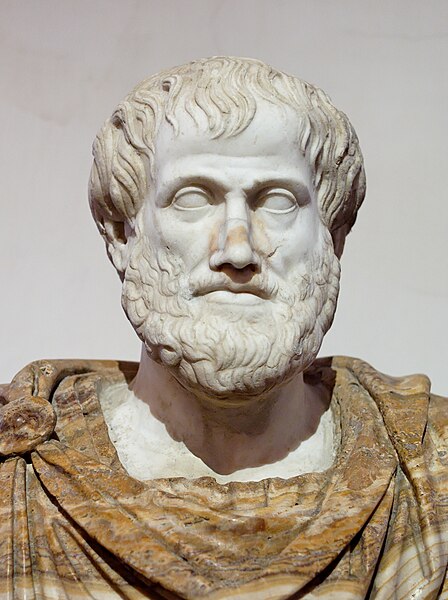
Aristotle discussed adaptation by natural selection long before Darwin, yet despite his fame this theory remained ignored throughout antiquity. (Wikicommons)


Gabriel Andrade and Maria Campo Redondo have come out with a paper on the ancient Greeks and how they saw differences between human groups:

Critics of Rushton and Jensen, and of the very category of race, claim that race is a social construct that only came up in the 16th century, as a result of overseas voyages and the Atlantic slave trade. The goal of this article is to refute that particular claim, by documenting how, long before the 16th century, in classical antiquity race was already a meaningful concept, and how some Greek authors even developed ideas that bear some resemblance to Rushton and Jensen's theory. The article documents how ancient Egyptians already had keen awareness of race differences amongst various populations. Likewise, the article documents passages from the Hippocratic and Aristotelian corpus, which attests that already in antiquity, there was a conception that climatic differences had an influence on intelligence, and that these differences eventually become enshrined in fixed biological traits. (Andrade and Redondo 2019)

The ancients knew about psychological differences between human groups but usually put them down to the direct action of the climate. This environmental explanation seemed disproved by black Africans, or "Ethiopians" as they were called, because they and their descendants remained just as dark-skinned at northern latitudes. But this example of heritability didn't lead to a theory of genetics. Instead, black skin was seen as an indelible stain, perhaps due to divine punishment of Ham (or Cham), the ancestor of the Egyptians and black Africans, for seeing the nakedness of his father Noah (Goldenberg 2003). This view appears in a homily by the third-century Christian writer Origen: 


But Pharao easily reduced the Egyptian people to bondage to himself, nor is it written that he did this by force. For the Egyptians are prone to a degenerate life and quickly sink to every slavery of the vices. Look at the origin of the race and you will discover that their father Cham, who had laughed at his father's nakedness, deserved a judgment of this kind, that his son Chanaan should be a servant to his brothers, in which case the condition of bondage would prove the wickedness of his conduct. Not without merit, therefore, does the discolored posterity imitate the ignobility of the race.   Homily on Genesis XVI (Origen 2010)

In general, human differences were attributed to direct action by the environment:

Greek authors to a large extent believed that acquired characteristics were inherited. For example, the text On Airs, Waters and Places considers the people of Trapezus, who had the custom of artificially elongating their children's heads. The author of this text believed that this particular practice would make elongated heads in the future generations, without parents having to artificially do the procedure: "Thus, at first, usage operated, so that this constitution was the result of force: but, in the course of time, it was formed naturally; so that usage had nothing to do with it... If, then, children with bald heads are born to parents with bald heads; and children with blue eyes to parents who have blue eyes; and if the children of parents having distorted eyes squint also for the most part; and if the same may be said of other forms of the body, what is to prevent it from happening that a child with a long head should be produced by a parent having a long head?". Aristotle had similar ideas: "Mutilated young are born of mutilated parents".


Why wasn’t natural selection understood?

Ironically, and long before Darwin, the Greek philosopher Empedocles (494-434 BC) came up with another explanation: adaptation through natural selection. Change initially occurs by accident. If the change is good, the changed life-form will survive and reproduce; if not, it will perish. Good changes are therefore kept and bad changes lost. Thus, all aspects of living matter look "as if they were made for the sake of something," but this is only illusion. There is no conscious "maker" of all things. 

This idea was summarized by Aristotle (384-322 BC):


So what hinders the different parts (of the body) from having this merely accidental relation in nature? as the teeth, for example, grow by necessity, the front ones sharp, adapted for dividing, and the grinders flat, and serviceable for masticating the food; since they were not made for the sake of this, but it was the result of accident. And in like manner as to other parts in which there appears to exist an adaptation to an end. Wheresoever, therefore, all things together (that is all the parts of one whole) happened like as if they were made for the sake of something, these were preserved, having been appropriately constituted by an internal spontaneity; and whatsoever things were not thus constituted, perished and still perish. Physicae Auscultationes 2:8, 2 (Darwin 1936 [1888], p. 3)

Aristotle's fame, as well as Empedocles', ensured that this idea would be read and passed on for generations, and yet it failed to take root in the minds of classical antiquity. It fell on barren ground. Aristotle himself rejected it, saying that all things must be for an end. Only much later, and independently, would natural selection be rediscovered.

The difficulty was not in understanding that humans, like other animals, are adapted to their environment. That part was obvious. The difficulty was in understanding adaptation as an indirect process. People more easily understood direct processes: something changed some people, and that change was passed on to their descendants. Aristotle himself fell for that idea when he mused that mutilated young are born to mutilated parents. 

This was the mentality of classical antiquity, and indeed of many people today. Change implies the existence of a changer, just as creation implies the existence of a creator. Few people rose above that level of thinking.


Did most people in classical antiquity think like children?

A Swiss psychologist, Jean Piaget (1896-1980), studied children in his country and concluded that all individuals go through stages of mental development. Children go through a "pre-operational stage" when causality is understood only in terms of conscious intent, specifically animism, artificialism, and transductive reasoning:

Animism is the belief that inanimate objects are capable of actions and have lifelike qualities. An example could be a child believing that the sidewalk was mad and made them fall down, or that the stars twinkle in the sky because they are happy. Artificialism refers to the belief that environmental characteristics can be attributed to human actions or interventions. For example, a child might say that it is windy outside because someone is blowing very hard, or the clouds are white because someone painted them that color. Finally, precausal thinking is categorized by transductive reasoning. Transductive reasoning is when a child fails to understand the true relationships between cause and effect. Unlike deductive or inductive reasoning (general to specific, or specific to general), transductive reasoning refers to when a child reasons from specific to specific, drawing a relationship between two separate events that are otherwise unrelated. For example, if a child hears the dog bark and then a balloon popped, the child would conclude that because the dog barked, the balloon popped. (Wikipedia 2019)

Piaget correctly observed Swiss children in the mid-20th century. He incorrectly concluded that the mind develops at the same pace in all humans (Oesterdiekhoff 2012). Indeed, you need not go far back to reach a time when most individuals never developed beyond the pre-operational stage. Just go back to classical antiquity.

At that time, the smart fraction was relatively small. Most intellectuals seemed to be loners. There were no academic societies, no academic journals, and no indications that large numbers of scholars did, or could, interact with each other. This point is made in an article on Roman science:

According to Sarton, who is the foremost living historian of science, "Roman science at its best was but a pale imitation of the Greek." "The Romans," he continues, "were so afraid of disinterested research that they discouraged any investigation the utilitarian value of which was not obvious."


Reymond remarked in his "History of Science" that the Romans were never distinguished for any love or even interest in pure science or abstract thinking. Virtually the same conclusion was reached by Heiberg, and Fowler made the interesting observation that even their literature and their philosophy had a practical object.


[...] historians of the economic life of ancient Rome have shown that there was a surprising paucity of inventions. They were not only few in number, but they lacked originality and were unimportant. (Salant 1938)

The Roman Empire was organizationally strong but intellectually weak. It depended on a store of knowledge that had been laid up in earlier times, notably by the ancient Greeks. This was the prevailing opinion among Roman writers, an opinion today dismissed as nostalgia for a mythical golden age.


The evidence of ancient DNA

"Cognitive archaeology" is a new field that has been made possible by retrieval of DNA from human remains and by calculation of polygenic cognitive scores from this DNA (based on alleles associated with educational attainment).

To date, two studies have used these research tools to chart changes in mean intelligence. The first study used ancient DNA from Europe and central Asia and found that the polygenic cognitive score gradually increased between 4,560 and 1,210 years ago (Woodley of Menie et al 2017).

This finding has been nuanced by a second study, using a sample of ancient DNA that was much larger and only from ancient Greece. It found that mean intelligence was initially high in ancient Greece and then began to decline after the end of the Mycenaean period in 1100 BC (Woodley of Menie et al. 2019). It looks like intelligence was at first strongly advantageous as humans adapted to increasing social complexity: farming, sedentism, literacy … Then something made it much less advantageous.

Mean intelligence was therefore lower during Roman times in comparison both to Greece in earlier periods and to Europe in later periods. 


Conclusion

So was Aristotle the Gregor Mendel of natural selection? Not really. Aristotle was much more famous than Mendel, and his works were read over a much longer span of time. Furthermore, Mendel's findings had to wait only 35 years before getting their due recognition. Aristotle's thoughts on natural selection lay dormant for more than two millennia before their significance was pointed out to Charles Darwin.

Aristotle didn't suffer from being insufficiently known. He had a worse handicap, especially in this case: not enough people could understand his line of reasoning. He was a lone voice in the wilderness over the many centuries separating him from Darwin. By Darwin’s time, many more people could understand natural selection, both in absolute numbers and as a proportion of the population. Even before The Origin of Species Darwin had a large audience of thinking people who could answer his questions and comment on his ideas. Earlier thinkers were not so lucky.

In the final analysis, the people of classical antiquity failed to understand natural selection for the same reason they failed to understand economics. They preferred to imagine cause and effect in simple terms: a person or personified thing producing a big change over a short time, and not impersonal forces producing an accumulation of small changes over a long time. They thought like children.


References

Andrade, G. and M.C. Redondo. 2019. Rushton and Jensen's Work Has Parallels with Some Concepts of Race Awareness in Ancient Greece. Psych 1 (1): 391-402.
https://www.mdpi.com/2624-8611/1/1/28/htm

Aristotle. Physics
http://classics.mit.edu/Aristotle/physics.2.ii.html

Darwin, C. (1936) [1888]. The Origin of Species and The Descent of Man. reprint of 2nd ed., The Modern Library, New York: Random House.

Goldenberg, D.M. (2003). The Curse of Ham. Race and Slavery in Early Judaism, Christianity, and Islam. Princeton: Princeton University Press.

Oesterdiekhoff, G.W. (2012). Was pre-modern man a child? The quintessence of the psychometric and developmental approaches. Intelligence 40: 470-478.
http://www.iapsych.com/iqmr/fe/LinkedDocuments/oesterdiekhoff2012.pdf

Origen (2010). Homilies on Genesis and Exodus, transl. by R.E. Heine., Washington D.C.: Catholic University of America Press
https://books.google.ca/books?id=X_mSBavPcq4C&pg=PA214&source=gbs_toc_r&cad=2#v=onepage&q&f=false 

Salant, W. (1938). Science and Society in Ancient Rome. The Scientific Monthly 47(6): 525-535.
https://www.jstor.org/stable/16625?seq=1#page_scan_tab_contents 

Woodley, M.A., S. Younuskunju, B. Balan, and D. Piffer. (2017). Holocene selection for variants associated with general cognitive ability: comparing ancient and modern genomes. Twin Res Hum Genet 20: 271-280.
https://www.cambridge.org/core/journals/twin-research-and-human-genetics/article/holocene-selection-for-variants-associated-with-general-cognitive-ability-comparing-ancient-and-modern-genomes/BF2A35F0D4F565757875287E59A1F534

Woodley of Menie, M.A., J. Delhez, M. Peñaherrera-Aguirre, and E.O.W. Kirkegaard. (2019). Cognitive archeogenetics of ancient and modern Greeks. London Conference on Intelligence 
https://www.youtube.com/watch?v=UES_tpDxz9A 

Wikipedia (2019). Piaget's theory of cognitive development. https://en.wikipedia.org/wiki/Piaget%27s_theory_of_cognitive_development#Concrete_operational_stage

Tuesday, March 6, 2018

Why universal human rights aren't universal


Jean Piaget (1896-1980). A renowned Swiss psychologist, he argued that moral development is linked to cognitive development.


Are intelligence and morality interlinked? This was what Swiss psychologist Jean Piaget concluded from his studies of child development. With increasing age, children develop not only intellectually but also morally, growing out of infantile self-centredness and into adult decentered-ness:

According to Piaget, moral development — the ability to judge ethical problems in an impartial and unbiased way — relies on prior cognitive development. Indeed, cognitive and moral development are structurally similar. In both is acquired a well-founded, reasonable structure. As Jean Piaget (1948/1932, p. 404) stated: "Parallelism exists between moral and intellectual development: ... Logic is the morality of thought just as morality is the logic of action." And this parallelism is based on the cognitive nature of morality, e.g. to behave ethically one has to take the perspective of third parties. (Rindermann and Carl 2018, p. 32)

This view has become popular and is even central to much of present-day thinking. If people are better educated, they will presumably become not only smarter but also more empathic and, thus, more considerate of their fellow humans. This view, as popular as it is, doesn't seem quite true. Many of us have known people who are intelligent and yet lacking in empathy. We call them psychopaths. Usually, they're explained away as aberrations. They're sick, aren't they? In reality, the line between 'normal' and 'psychopath' is arbitrary—like most mental traits, the capacity for empathy is distributed continuously along a bell curve. Lots of seemingly normal people have little empathy.

Nor does Piaget's view seem true if we look farther afield. Many moral systems attach little importance to empathy. Indeed, of all the world religions, Christianity seems unique in advocating the moral duty not only to help others but also to feel their pain, even when they aren't fellow Christians. Yes, most Christians fail to meet this standard of universal selflessness, but other religions don't set the bar so high. 

Indeed, the ideal of universal selflessness isn’t at all universal. It developed essentially within a single cultural context, the Christian world:

In Judaism and Christianity, "God created man in his own image" (Gen1:27 ESV). Humans being the image of God, "God-likeness", implies treating humans in a respectful way. Of course, at first blush, history reveals large discrepancies between the message of Christianity and the actual behavior of Christians. However, this does not mean that such behavior was consistent with the Christian message, and in many cases it was criticized by prominent Christians at the time. The Christian message had a corrective function. For instance, the inhumane treatment of American Indians by Spanish colonists was criticized by the Dominican priest Bartholomé de Las Casas (as mentioned above). The abolitionist movement was organized by Protestants and led by the Evangelical Christian William Wilberforce. The horrors of war were mitigated by charities such as the Red Cross, which was founded by the evangelical Christian, Henry Dunant. (Rindermann and Carl 2018, p. 34)

The Muslim world imported as many slaves as did the Christian world, yet a Muslim abolitionist movement never arose, and the trade was ultimately abolished worldwide through the intervention of Christian nations, particularly Great Britain. Today, the slave trade has left no legacy of guilt among Muslims, while it definitely has in those nations that strove to bring it to an end.

This apparent paradox has led Heiner Rindermann—a well-known psychologist in HBD circles—to challenge the Piagetian idea that moral development is linked to intellectual development. These two mental traits are distinct and have followed their own trajectories in different moral traditions.

To prove his point, he teamed up with sociologist Noah Carl to study how respect for human rights is related, cross-culturally, to cognitive ability and religion. They found a stronger relationship with religion than with cognitive ability. Specifically, the percentage of Christians in a society had a stronger positive impact (r = .62) on respect for human rights (Rindermann and Carl 2018) than did educational level (r = .54) or cognitive ability (r = .50 to .51).

One can quibble about the methodology. The study defines human rights largely as the right to make choices on one's own, regardless of existing social norms. Freedom of religion, for instance, is defined as the freedom not only to practice one's religion but also to convert to another. As the authors themselves note, this is not a legitimate freedom in much of the world, unless one is converting to the majority religion. Freedom doesn’t mean that a minority is free to become the majority.

Nonetheless, there does seem to be a correlation between Christianity and respect for human rights as long as we define the latter, at least in part, as maximization of personal choice and autonomy. 


Is Christianity confounded with European ancestry?

Correlation isn't causation. Couldn't Christianity be a proxy for "European-ness"? Indeed, most Christians are at least partly of European ancestry, and even more live in societies founded and still largely run by people of European origin.

To control for this confounding factor, one could compare Christian and non-Christian societies within a region where European ancestry is minimal. Sub-Saharan Africa comes to mind. Even in South Africa, the European minority is down to the single digits.

Rindermann and Carl (2018, p. 60) did make that comparison:


Within sub-Saharan Africa [...] the percentage of Christians is still positively (but weakly) related to human rights (r = .10; N = 48), and the percentage of Muslims is still negatively (but weakly) related to human rights (r = -.12).


Those correlations are indeed weak. Moreover, the one between Christianity and respect for human rights is largely due to the relatively stable societies of southern Africa, i.e., South Africa itself, Namibia, Botswana, Lesotho, and Swaziland. Those societies enjoy a judicial and administrative legacy that may not last much longer, given recent events and the example of Zimbabwe.

To be honest, I feel little in common with fellow Christians like Jacob Zuma and Robert Mugabe. Ironically, both of them have a better claim to being Christian than I do, since I refused to be confirmed after attending my confirmation classes.


Is European ancestry confounded with a genetically influenced trait?

If European ancestry is a confounding factor, could it be a proxy for some unknown genetically influenced trait? Rindermann and Carl tried to answer this question by estimating the average "skin brightness" of each country.

Skin brightness is more highly correlated with human rights than is cranial capacity (r = .25 vs. .18). Of course, skin color itself is unlikely to exert any effect; it constitutes a marker for evolutionary pressures that may be associated with culture. (Rindermann and Carl 2018, p. 53)

This is, I suspect, a reference to Arthur Schopenhauer (1788-1860) and his belief that humans had to become more intelligent as they spread into harsher northern climates: "those tribes that emigrated early to the north, and there gradually became white, had to develop all their intellectual powers, and invent and perfect all the arts in their struggle with need, want, and misery, which, in their many forms, were brought about by the climate. This they had to do in order to make up for the parsimony of nature, and out of it all came their high civilization" Parerga and Paralipomena, Volume II, Section 92.

Rindermann and Carl seem to be assuming that European skin became white solely as an adaptation to the northern natural environment. They also seem to be assuming that moral development is linked to cognitive development—the very hypothesis they want to test.

A better genetic marker would be the long allele for the 5-HTTLPR serotonin transporter gene. It's less frequent in collectivistic cultures than in individualistic cultures, the latter being the cultures of western and northern Europe—the same cultures that value so much the rights of the individual (Chiao and Blizinsky 2010). In a study of American toddlers, carriers of the short allele were more likely to imitate the way other people behaved (Schroeder et al. 2016).

The study provides additional evidence for the view that Christianity, in itself, doesn't explain why Europeans, and especially northwest Europeans, see all individuals as being endowed with the same rights. Of the three branches of Christianity, Protestantism has the strongest correlation with respect for human rights (r = .48), followed by Catholicism (r = .42), and finally Orthodoxy (r = -.07) (Rindermann and Carl 2018, p. 52). This suggests that Christianity changed as its geocenter progressively moved from the Middle East to southern Europe and then to northwest Europe, along the way becoming more focused on the individual and on individual responsibility. 

Within Christianity, Protestantism stresses conscience, individual guilt, internal control, autonomy and self-responsibility (Weber, 2008/1904). All these traits are conducive for liberty, the rule of law, democracy and human rights (Rindermann and Carl 2018, p. 34)

[...] in Protestant countries, trust is higher, corruption is lower and levels of social and economic freedom are higher (Delhey & Newton, 2005; Harrison, 2013). People tend to be more self-controlled, having internalized social rules, meaning that harsh and violent control by the state is not needed. (Rindermann and Carl 2018, p. 37)

The two authors are aware of the Hajnal Line and its relationship to a suite of psychological and behavioral traits. In societies north and west of a line running approximately from Trieste to St. Petersburg, social relations have long shown a certain pattern:

- men and women marry relatively late

- many people never marry

- children usually leave the nuclear family to form new households

- households often have non-kin members

This is the Western European Marriage Pattern (WEMP). Everyone is single for at least part of adulthood, many stay single their entire lives, and a significant proportion of households have members not belonging to the immediate family or even to kin. In short, an individual is less fettered by the bonds of kinship even within his or her household (Frost 2017).

This led to late marriage, high rates of childlessness (of about half of the cohort), more rights for women, and large investments in education. Going further than Hajnal himself did, it arguably also enhanced delay of gratification, self-control (especially of sexuality), conscientiousness, frugality, industry and cognitive ability. The causes of this marriage pattern can be traced to Roman, Germanic and Christian traditions, to the interests of the church, and to the interests of landlords and guilds. (Rindermann and Carl 2018, p. 39)

The above view is also the one held by *hbd chick, i.e., the WEMP developed after the introduction of Christianity and was, at least in part, a consequence of medieval Christian practices and institutions. Yet there is good evidence for the existence of the WEMP as early as ninth-century France and fragmentary evidence even earlier (Frost 2017). I have argued that the arrow of causality points in the other direction: a pre-existing mindset in northwest Europe was carried over into Christianity, much like the Christmas tree and other pagan traditions. Later, as the center of Christendom moved west and north, this mindset gained importance within Western Christianity and pushed it more and more toward the idea of individual salvation and an individual relationship with God. 

The northwest European mindset is characterized essentially by four interrelated mental traits:

Independent social orientation - independence of the self from others, including stronger motivation toward self-expression, self-esteem, and self-efficacy and emphasis on personal happiness rather than social happiness. 

Universal rule adherence - capacity to obey universal and absolute moral rules, i.e., moral universalism and moral absolutism, as opposed to situational morality based on kinship. These rules are enforced by monitoring not only others but also oneself. Rule-breakers may be branded as morally worthless and expelled.

Affective empathy - capacity to experience the emotional states of other people in order to prevent harm and to provide help if needed. Help is conditional on the other person being judged morally worthy.

Guilt proneness - capacity to self-monitor thoughts and behavior for rule adherence in order to self-judge and, if necessary, to self-punish.


Conclusion

Are universal human rights truly universal? If we look at cultures across space and time, we find that the notion of human rights was nonexistent in most cultures and historical periods. Not until the 18th and 19th centuries did some countries codify this notion in law, although it clearly has antecedents that go farther back, at least to the formulation of canon law by the Catholic Church and perhaps farther. Northwest Europeans seem to have long been predisposed to think in terms of individual rights and universal moral rules.

Since the early 19th century, we in the West have tried to impose these rights on the entire world, initially through the suppression of the slave trade and then through the efforts of missionaries and colonial authorities to ban certain practices, like the custom of sati in India. Such efforts became an integral part of Western imperialism and "the white man's burden."

Although this burden has since been taken up by truly international bodies, like the U.N., the notion of universal human rights still reflects a Western view of people as atomized individuals who mainly seek to maximize their wealth, happiness, and personal autonomy. This is not how most humans view the purpose of existence. For that matter, this view was not originally held by northwest Europeans, whose understanding of moral universalism has steadily radicalized and expanded in scope over time.


References

Chiao, J.Y. and Blizinsky, K.D. (2010). Culture-gene coevolution of individualism-collectivism and the serotonin transporter gene. Proceedings of the Royal Society B 277: 529-537.
http://rspb.royalsocietypublishing.org/content/277/1681/529.short

Frost, P. (2017). The Hajnal line and gene-culture coevolution in northwest Europe, Advances in Anthropology 7: 154-174.
http://file.scirp.org/pdf/AA_2017082915090955.pdf

Rindermann, H. and N. Carl. (2018). Human rights: Why countries differ, Comparative Sociology 17: 29-69.

Schopenhauer, A. (1974)[1851]. Parerga and Paralipomena, English translation by E. F. J. Payne, Clarendon Press, Oxford, 2 volumes.

Schroeder, K.B., Asherson, P., Blake, P.R., Fenstermacher, S.K., and Saudino, K.J. (2016). Variant at serotonin transporter gene predicts increased imitation in toddlers: relevance to the human capacity for cumulative culture. Biology Letters 12(4).
http://europepmc.org/articles/pmc4881356