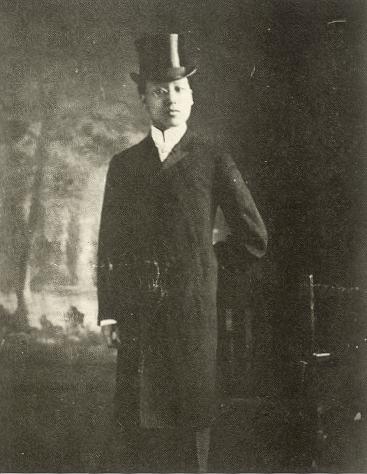
An outdoor play where a Paekchong is about to kill a
bull. In pre-modern Korea, the Paekchong were outcastes whose occupations
tended to involve the taking of life, like butchery, leather making, and
capital punishment. (source: Jon Dunbar, link)
Like Japan with its Burakumin, Korea used to have
its own outcastes: the Paekchong (or Baekjeong). Today, they no longer exist as
an identifiable group, and even their name is largely unknown to younger Koreans
(Rhim, 1974). As late as the mid-20th century, however, they still numbered
over 50,000, with most living in segregated ghettoes (Passin, 1956).
The Paekchong were considered behaviorally
different. This was in fact the original reason for segregating them:
The Paekchong had to live in
segregated communities not only by popular custom, but also by law, since the
15th century. According to the provisions of the Compilations of National Laws
known as the Kyongguk-taejon, the Paekchong were limited to residence in only
certain areas of the capital as well as in certain areas throughout the
provinces. The rationale for these laws was that the Paekchong were originally
vicious and uncivilized, and they enjoyed killing animals. They were,
therefore, kept apart from the ordinary people in order to maintain public
peace and public morals. (Rhim, 1974)
This view appears in the recollections of a Korean
from a small farming town:
I remember very well," he
told me, "that when our parents scolded us for improper behavior, they
used to call us 'paekchong’. […] We
thought of them as vulgar, unrefined. Not many of them went to school however,
because even though there was no law against it, somehow they didn't seem to
have ambitions of that kind, or else they were afraid [of being insulted or
beaten up]. […] "One of the things I remember especially is that they used
to kill stray dogs. These were the people who would catch your favorite pet dog
if you weren't careful and cut him up. I remember one of them used to carry a
long curved knife, rather than a straight one, and I was always afraid of it.
He used to steal around the streets carrying a heavy stick and searching for
dogs. When he caught one, he would beat it to death on the spot, its blood
dripping right in front of our eyes. You can imagine how we felt about that. I
still cannot get over the feeling that a man who kills dogs is the worst kind
of human being there is. Killing cattle may be unpleasant, but it is a
necessary profession. (Passin, 1956)
Today, such deviancy is put down to the effects of
discrimination. Because the Paekchong were segregated, they ended up developing
atypical and often dysfunctional behaviors. Because they were confined to
‘unclean’ professions that involved the taking of life, like butchery, they
became insensitive to the shedding of blood and no longer felt revulsion at the
idea of killing.
If we look at the historical record, however, the
arrow of causality seems to point in the other direction. Ancestral Paekchong
were already behaving differently at a time when they had not yet been
segregated and when, in fact, much was being done to integrate them into Korean
society.
Historical
outline
When the Paekchong first enter history, they seem to
have been a nomadic hunting people called by such names as Kolisuchae or Yangsuchuk:
In an entry in the annals of the
Koryo dynasty for the year 1217, there appears an important new term—the kolisuchae—referring to the outcastes of
the Silla period "The kolisuchae,"
it says, "are the remnants of the Paekche tribes that T'aejoe (the founder
of the Koryo dynasty in 918) found it hard to subdue. They have always been
unregistered and exempt from tribute, and they like the nomadic life, changing
their residence frequently. They engage only in hunting or in the making and
selling of willow baskets. Also dancing girls come from these families."
(Passin, 1956)
[…] before the 13th century, the kolisuchae had specialized in
basketmaking, hunting, and what might be called "entertaining", that
is acting, prostitution, etc. But by the beginning of the 13th century, hunting
becomes less important, and slaughtering comes to the fore as a distinctive
occupation of theirs. (Passin, 1956)
Being an alien people from
Tartar, the Yangsuchuk were hardly assimilated into the general population.
Consequently, they wandered through the marshlands along the northwest coast.
They were engaged in the making and selling of willow baskets. They were also
proficient in slaughtering animals and had a liking for hunting. Selling their
wives and daughters was part of their way of life. (Rhim, 1974)
This population may have later absorbed other
nomadic groups that drifted into the Korean Peninsula, particularly during the
Mongol invasions:
[…] even these scholars who see
the connection between the Paekchong and the Hangsuchuk of Koryo period do not
argue that all of today's Paekchong are descendants of the Yangsuchuk. They
maintain that the alien tribe known as the Yangsuchuk is part of today's
Paekchong. Since the Koryo period, other alien peoples, such as the Manchurian
Kitans and foreign captives taken during the wars, might have entered the
Yangsuchuk. (Rhim, 1974)
Beginning in the 14th century, the authorities tried
to integrate these nomads by forbidding them to wander, by making them take up
farming, and by forcing them to intermarry. It was at this time that they were
renamed Paekchong (‘common people’)
with a view to making their integration easier:
Some time in the reign of King
Sejong (1419-1450), it is ordered that the outcastes be called paekchong, that is "common
people", and that they be registered, settled down into fixed communities,
transformed into agriculturalists, and even made to intermarry with the common
people. But in spite of the efforts of the authorities, the outcastes themselves
fail to cooperate—we read constant complaints of their backsliding, refusal to
engage in farming, thievery, nomadism, etc.—and the common people and officials
both refuse to accept them into their ranks. An extremely revealing entry of
1442 notes: "... it has been ordered that the name of the hwachae-chaein be changed to the paekchong, but officials and the people
call them the 'new paekchong' and
look down upon them, saying that they engage in hunting. (Passin, 1956)
[…] But all along there are
disquieting signs that the new policy is not working. The people will not
accept them, they do not intermarry, they do not give up their bad habits of
wandering, thieving, and illegal slaughtering. In 1435, we read that "most
of the thefts in Kyonggyib are committed by the new paekchong. They rely on their horses and do no agriculture."
The Governor (Kamsa) of Ch'ungch'ong
requests in 1437 that the "new paekchong",
who are causing a great deal of disturbance in his locality, be restrained.
They enter the capital illegally and commit robberies, and they also slaughter
cattle illegally. […] By 1451, we learn from the statement of a prison official
that of the 380-some thieves and murderers held in all the provinces, half are chaein-paekchong (Passin, 1956)
By the end of the 15th century, this attempt at
integration was recognized as a failure. Through official ordinances and popular
custom, the Paekchong became confined to certain areas, usually on the
outskirts of towns. They were now systematically shunned and spoken to as one would
speak to children (Rhim, 1974). On the other hand, “they were left pretty much
to their own devices, just so long as they did not disturb outsiders” (Passin, 1956). They were allowed to run their own communities and resolve internal
disputes, except for serious crimes. They were also exempt from taxation,
compulsory labor, and military service. Finally, they were given a monopoly
over occupations that involved the taking of life (and which were considered
‘unclean’ by Buddhists), like butchery, leather making, dog catching, and
capital punishment (Passin, 1956). These occupations often paid well, as one
observer noted in the 1960s: “The Paekchong were not necessarily poor, and the
butchers especially, maintaining good price controls and profit margins, are
today comparatively well-off" (Henderson, 1968, pp. 53-54).
Conclusion
In contemporary social science, the Paekchong are
seen through the lens of the discrimination paradigm. Discrimination excluded
them from normal Korean life and thus kept them from becoming ‘normal.’
But normality wasn’t so wonderful in pre-modern
Korea. It typically meant living in the same place year-round, doing the same
kind of laborious farm work, and using violence only in self-defense or on
behalf of the king. Although such an arrangement does bring some tangible
benefits, it wouldn’t necessarily interest all humans, particularly those from
a nomadic hunting background. Hunters have to move around continually because
the land can support only so much wildlife. Hunters must also kill and get
their hands bloody on a regular basis, be it the blood of animals or the blood
of fellow humans. Indeed, each adult male is expected to defend himself and his
kinfolk, since no police and no army exist for that task.
Such a social arrangement is very different from the
one that had developed in Korea by the early Middle Ages. The shift to
agriculture, serfdom, and a State-pacified society had created a new cultural
environment that selected for a new type of human, one who was willing to stay
put in one location, perform repetitive work, and forego violence.
This behavioral change can be understood in purely culturalist
terms, i.e., the acquisition of a new personality type through learning and
social conditioning. On the other hand, all of the relevant behavioral traits
are highly heritable, e.g., monotony avoidance, time orientation, and ideation
of violence (Horn et al., 1976; Jang et al., 2006; Saudino et al., 1999; see
also JayMan, 2012). This is what gene-culture co-evolution is all about. We
make new cultural environments, and these environments remake us. Culture has
made us participants in the evolutionary process. Our manmade environment has
thus been no less important than our natural environment in determining how
we’ve evolved.
Indeed, it may have been even more important. We
know that human genetic evolution began to accelerate 40,000 years ago, with the
fastest evolutionary change taking place during the last 10,000 years (Hawks et al., 2007). This was not a time when our ancestors were adapting to new
climates, landscapes, and ecosystems. Humans had already spread over the entire
surface of the earth, from the tropics to the polar regions. Now they were
moving into niches of their own making and having to adapt to new technologies,
social structures, and behavioral norms.
References
Hawks J., E.T. Wang, G.M. Cochran, H. Harpending,
& R.K. Moyzis. (2007). Recent acceleration of human adaptive evolution, Proceedings of the National Academy of
Sciences (USA), 104, 20753-20758.
http://www.ts-si.org/files/RecentAccelerationHumanAdaptiveEvolutionPnas.pdf
Henderson, G. (1968). Korea, the Politics of the Vortex, Cambridge: Harvard University
Press.
Horn, J.M., R. Plomin, and R. Rosenman. (1976).
Heritability of personality traits in adult male twins, Behavior Genetics, 6,
17-30.
http://link.springer.com/article/10.1007/BF01065675
Jang, K.L., W.J. Livesley, and P.A. Vemon. (2006).
Heritability of the big five personality dimensions and their facets: a twin
study, Journal of Personality, 64, 577-592.
http://onlinelibrary.wiley.com/doi/10.1111/j.1467-6494.1996.tb00522.x/abstract?deniedAccessCustomisedMessage=&userIsAuthenticated=false
JayMan (2012). All human behavioral traits are
heritable, December 31, JayMan’s Blog
http://jaymans.wordpress.com/2012/12/31/all-human-behavioral-traits-are-heritable/
Passin, H. (1956). The Paekchong of Korea. A brief
social history, Monumenta Nipponica, 12 (3/4), 195-240.
http://www.jstor.org/discover/10.2307/2382752?uid=3737720&uid=2&uid=4&sid=21102740088661
Rhim, S.M. (1974). The Paekchong: “Untouchables” of
Korea, Asian Studies, 12, 137-158.
http://www.asj.upd.edu.ph/mediabox/archive/ASJ-12-1-1974/rhim-paekchong%20untouchables%20of%20korea.pdf
Saudino, K.J., J.R. Gagne, J. Grant, A. Ibatoulina,
T. Marytuina, I. Ravich-Scherbo, and K. Whitfield. (1999). Genetic and
environmental influences on personality in adult Russian twins, International Journal of Behavioral
Development, 23, 375-389.
http://jbd.sagepub.com/content/23/2/375.short