Saturday, February 9, 2013

Why are girls and boys maturing earlier?


For girls, the age of puberty has been falling since the 19th century. The same period has seen a similar decline for boys (source)


In the United States and other Western countries, girls have been reaching puberty at earlier and earlier ages. A recent longitudinal study has examined this trend in white Americans born between 1928 and 1992. Its conclusion? Girls are reaching puberty earlier because of an interaction between a lifestyle factor and a pre-existing genetic predisposition:

Our data also show, for the first time, that the effect of menarche SNPs on prepubertal BMI was stronger in children born more recently compared to those born earlier in the century, thereby suggesting that the developmental genetic susceptibility to elevated BMI may have only been ''uncovered'' in the more obesogenic environments of the recent past. (Johnson et al., 2013)

For the study's authors, the lifestyle factor is that girls are eating more, exercising less, and accumulating more body fat. Because fatty tissue is a significant source of estrogen, an increasing percentage of body fat tends to hasten puberty in young girls (Frisch & Revelle, 1970; Frisch & McArthur, 1974; Kaplowitz et al., 2001; Siiteri & MacDonald, 1973). This effect is stronger in girls with a certain genetic background:

It is possible that over the examined time period, individuals with higher genetic burden for accelerated sexual development are for the first time ''allowed'' by liberalization of the environment to alter dietary intake and energy expenditure to support their genetic potential for rapid weight gain and earlier sexual development. (Johnson et al., 2013)

But why are boys too maturing earlier?

In boys, body fat is not linked to early puberty. In fact, there seems to be a negative correlation, perhaps because fatty tissue is a significant source of estrogen (Wang, 2002). Overweight boys often present signs of disrupted male sexual development, e.g., breast budding, higher voice pitch, etc.

Yet boys likewise are reaching puberty at an earlier age. This is the conclusion of a recent American study:

We observed that onset of secondary sexual characteristics in US boys as seen in office practice appears to occur earlier than in previous US studies and the 1969 British study commonly used for pubertal norms. […] White boys in our study entered stage 2 genital growth 1.5 years earlier than the British boys (10.14 vs 11.60 years of age).

[…] These data are consistent with recent trends from other countries, such as Denmark, Sweden, Great Britain, Italy, and China. For example, urban Han Chinese boys achieve a testicular volume of ≥4 mL (13% by age 9) and spermarche earlier than studies conducted several decades ago; Danish boys achieve a testicular volume >3 mL more than 3 months earlier now than 15 years ago. (Herman-Giddens, 2012)

This trend has also been observed in the age when a boy's voice begins to change:

According to records kept by the Leipzig choir, the most common period of voice breaking for male singers in the mid-18th century was between 17.5 and 18.5 years of age (Daw, 1970); in contrast, children enrolled in the Copenhagen Municipal Choir School from 1994-2003 had a median age of voice breaking of 10.4 years (Juul, Magnusdottir, Scheike, Prytz, & Skakkebæk, 2007), which is consistent with the choir's subjective reports of difficulty retaining children as singers past the age of 12 or 13 years. (Mendle & Ferrero, 2012).

This is a challenge for Occam's Razor, and the task is no easier if we look at other possible causes. If the cause isn’t a higher proportion of body fat, could it be a higher level of estrogens and estrogen-like substances in the environment? (see earlier post). Yes, that might hasten puberty in girls and increase accumulation of body fat. But in boys it would delay puberty by offsetting the rising level of male hormones.

In trying to figure out the causal chain of events, we should keep in mind that the relationship between body fat and age of puberty runs in both directions. On the one hand, estrogen from body fat lowers the age of puberty in girls. On the other hand, earlier puberty increases ovarian production of estrogen, which in turn stimulates deposition of body fat, particularly on the hips, buttocks, and breasts (Van Lenthe et al., 1996). So perhaps some unknown factor is causing earlier sexual development in both sexes and thus greater deposition of body fat in girls.

A response to social cues?

This unknown factor might be something in the social environment. As Hawley (2011) argues, humans unconsciously monitor their social environment for reproductive opportunities and accordingly speed up or slow down their pace of sexual development:

[...] human children, especially girls, may be sensitive to their early socioecological conditions in ways that entrain development toward either a faster (earlier pubertal maturation, more sexual partners, less stable relationships) or slower (later pubertal maturation, fewer sexual partners, more stable relationships) life history strategy.

With the transition to post-traditional societies, there has been an increase in the erotic stimuli that preteens encounter in their surroundings:

Common in traditional societies are adult-supervised adolescent initiation ceremonies (Schlegel & Barry, 1980) that are designed to commemorate the transition from childhood to adulthood and inculcate the adolescent with adult values, duties, behaviors, and sex roles associated with the culture (Schlegel, 1973). That is, these adolescents are taught adult sex roles by adults. We now appear to have a complete turnaround. In modern, Western cultures, adolescents derive sexual relationship expectations from television, cable, music, purveyors of racy lingerie (who target teenage girls), and pornography that they can now access on the Internet and thereby carry around on their cell phones. (Hawley, 2011)

Erotic imagery in particular is today available to a degree that was impossible not so long ago. Young boys and girls have virtual access to an endless supply of picture-perfect sexual partners. Whatever the media—films, TV, magazines, the Internet—we're exposed to images that can stimulate sexual desire as efficiently as what normally exists in the real world. More so, in fact. These images are ‘supernormal’ stimuli.

To date, only one study has looked into possible relationships between erotic imagery and pubertal timing:

The aim of this study was to investigate associations between pubertal timing and boys' Internet use, particularly their viewing of pornography. We used a sample comprising of 97 boys in grade 8 (M age, 14.22 years) from two schools in a medium-sized Swedish town. This age should be optimal for differentiating early, on-time, and later-maturing boys. Boys responded to self-report questionnaires on their Internet use and pubertal timing. Early, on-time, and late-maturing boys did not differ in terms of most Internet activities. However, early maturers reported downloading and viewing pornography more often than the other boys did (p<.001). (Skoog et al.,2009)

Admittedly, the arrow of causality might point in the other direction, i.e., early maturing boys have a stronger sex drive and thus a greater interest in porn. This was, in fact, the authors' explanation. We should also remember the well established correlation between early puberty in girls and the absence of a father in the home. It was long thought that father absence triggers early puberty in girls. In fact, a twin study has shown a genetic cause: absent fathers tend to have genes that favor earlier sexual development in their progeny (Mendle et al., 2006).

One might also object that the decline in the age of puberty began long before the Internet. Before the Internet, however, there were porn magazines. And before them, there were pictures garnered from art books, fashion magazines, or the lingerie sections of mail-order catalogues. One could also bring erotic images to mind by reading certain novels. Thus, modern pornography is merely the latest stage of a lengthy co-evolution between, on the one hand, improvements in photography and other imaging technologies and, on the other hand, a weakening of taboos against masturbation. At the beginning of this co-evolution, in the 19th century, masturbation was much less developed among young boys and girls as a sexual lifestyle. Visual aids were scarce and of poor quality, religious injunctions were strong, and adult supervision inside and outside the home was omnipresent.

Conclusion

The age of puberty might be declining because boys and girls are being exposed to ever more and ever better erotic imagery, but this hypothesis needs confirmation by longitudinal studies to determine which is the cause and which is the effect. Another drawback with current research is its focus on the most extreme forms of pornography, such as child porn. Yet the usual stuff is the kind that most people consume ... and in unparalleled quantities. As the authors of a recent Dutch study remarked:

[...] we can only emphasize that Dutch youth are confronted with and expose themselves to an unprecedented amount of R-rated and Xrated material in the media. Research on its consequences for adolescents' sexual socialization is largely missing but, as this study has shown, is urgently needed. (Peter & Valkenberg, 2006)

And erotic imagery isn't confined to X-rated websites or magazines. It is in fact ubiquitous in modern social environments. Girls might accelerate their sexual development by leafing through fashion magazines just as boys might accelerate theirs by viewing porn.

The erotic imagery hypothesis will have to fit the data better than rival hypotheses. Two of these, the body fat and environmental estrogen hypotheses, can explain the decline in the age of puberty for girls but not for boys. Another possible cause is better nutrition. Yet, among white Americans at least, much of this decline has happened since the 1950s—when nutrient levels were already adequate for this population. Finally, there is the possibility that puberty is happening earlier because genes that favor that developmental trajectory are spreading within the population. Modern social environments favor a reproductive strategy of early puberty, low parental investment and, especially, low paternal investment—in short, the ‘cads’ are outbreeding the ‘dads’ (see earlier post).

References

Frisch, R.E., R. Revelle. (1970). Height and weight at menarche and a hypothesis of critical body weights and adolescent events, Science, 169, 397-399.

Frisch, R.E. & J.W. McArthur. (1974). Menstrual cycles: fatness as a determinant of minimum weight necessary for maintenance or onset, Science, 185, 949-951.

Hawley, P.H. (2011). The evolution of adolescence and the adolescence of evolution: The coming of age of humans and the theory about the forces that made them, Journal of Research on Adolescence, 21, 307-316.
http://www.people.ku.edu/~phawley/Publications/Hawley%202011%20JRA%20Evo%20of%20Adol.pdf

Herman-Giddens, M.E., J. Steffes, D. Harris, E. Slora, M. Hussey, S.A. Dowshen, R. Wasserman, J.R. Serwint, L. Smitherman, & E.O. Reiter. (2012). Secondary sexual characteristics in boys: Data from the Pediatric Research in Office Settings Network, Pediatrics, 130, e1058-e1068.
http://pediatrics.aappublications.org/content/130/5/e1058.full.pdf+html

Johnson, W., A.C. Choh, J.E. Curran, S.A. Czerwinski, C. Bellis, T.D. Dyer, J. Blangero, B. Towne, & E.W. Demerath. (2013). Genetic risk for earlier menarche also influences peripubertal body mass index, American Journal of Physical Anthropology, 150, 10-20

Kaplowitz, P.B., E.J. Slora, R.C. Wasserman, S.E. Pedlow & M.E. Herman-Giddens. (2001). Earlier onset of puberty in girls: relation to increased body mass index and race, Pediatrics, 108, 347-353.

Mendle, J. & J. Ferrero. (2012). Detrimental psychological outcomes associated with pubertal timing in adolescent boys, Developmental Review, 32, 49-66.

Mendle, J., E. Turkheimer, B.M. D'Onofrio, S.K. Lynch, R.E. Emery, W.S. Slutske, N.G. Martin. (2006). Family structure and age at menarche: a children-of-twins approach, Developmental Psycholpgy, 42, 533-542.

Peter, J. & P.M. Valkenberg. (2006). Adolescents' exposure to sexually explicit material on the Internet, Communication Research, 33, 178-204.

Siiteri, P.K. & P.C. MacDonald. (1973). Role of extraglandular estrogen in human endocrinology. In S.R. Geiger (ed.), Handbook of Physiology, Washington D.C. American Physiology Society, sect. 7, vol. 2, part 1, pp. 615-629.

Skoog, T., H. Stattin, & M. Kerr. (2009). The role of pubertal timing in what adolescent boys do online, Journal of Research on Adolescence, 19, 1-7.

Van Lenthe, F.J., C.G. Kemper & W. van Mechelen. (1996). Rapid maturation in adolescence results in greater obesity in adulthood: the Amsterdam Growth and Health Study, American Journal of Clinical Nutrition, 64, 18-24.

Wang, Y. (2002).Is obesity associated with early sexual maturation? A comparison of the association in American boys versus girls, Pediatrics, 110, 903-910.

Saturday, February 2, 2013

Seeing China plain


China's working-age population is now declining. As labor becomes scarcer, the business community will either take on the challenge of moving to a higher-wage, more capital-intensive economy ... or lobby hard for immigration. (source)


We like to compare ourselves with others, often seeing them as an alter ego who had gone to the right university, found the right job, or married the right person.

The same principle applies to countries. For a long time, many believed that if their country had done whatever the United States had done, they too would be powerful and prosperous. Today, this role of "Big Other" is increasingly being assigned to China.
 
An example is a recent article about "Chinese eugenics":
 
China has been running the world's largest and most successful eugenics program for more than thirty years, driving China's ever-faster rise as the global superpower. I worry that this poses some existential threat to Western civilization. Yet the most likely result is that America and Europe linger around a few hundred more years as also-rans on the world-historical stage, nursing our anti-hereditarian political correctness to the bitter end. (Miller, 2013)
 
The author, evolutionary psychologist Geoffrey Miller, sees this eugenics program in the one-child policy, which serves “partly to curtail China’s population explosion, but also to reduce dysgenic fertility among rural peasants,” presumably because the best and the brightest migrate to the cities. Furthermore, to the extent that the best and the brightest are wealthier, they’re also better able to pay the fine for having a second child.
 
But Miller overlooks the weaker enforcement of this policy in rural areas. If the first-born in a farming family is a girl, they’re allowed to have another child. This might be why the fertility rate is higher in China’s rural areas, although it’s questionable whether the one-child policy has much effect at all. The fertility rate is actually higher in China (1.55) than in Taiwan (1.06) or Singapore (1.2), neither of which tries to limit family size.

Miller is on firmer ground when discussing the 1995 “Eugenic Law”:
 
With the 1995 Maternal and Infant Health Law (known as the Eugenic Law until Western opposition forced a name change), China forbade people carrying heritable mental or physical disorders from marrying, and promoted mass prenatal ultrasound testing for birth defects. (Miller, 2013)
 
As he notes further on, the word "eugenic" corresponds here to the Chinese term yousheng, literally "good birth." The idea here, however, is not to create a new superhuman, but rather to maintain the current quality of the gene pool. A better English translation would be "anti-dysgenic."

This idea is not specific to China. It was, in fact, widespread in the Western world until a little over thirty years ago, as seen in a widely used undergrad textbook from the 1970s:
 
Perhaps it is not unreasonable to assume that a person with a good record of achievement in certain areas of human endeavor has on the average a more desirable gene combination than a person whose achievements are less spectacular. In our present society, the superior person is punished by the government in numerous ways, by taxes and otherwise, which make it more difficult for him to raise a large family. Why, for instance, should tax exemption for children be a fixed sum rather than a percentage of earned income? Why should tuition in school be based, in large part, on the ability of the father to pay rather than inversely on the achievement of the student? Innumerable administrative rules and laws of the government discriminate inadvertently against the most gifted members of the community. (Mayr, 1970, pp. 408-409)
 
An analogy can be made here with the current view that East Asian societies are "ultranationalistic"—a view seldom expressed a half-century ago when national sentiment was thought to be normal and even healthy. Since then, they haven't diverged from us. We've diverged from them. Remember, we observe other human societies from a moving frame of reference, and this perspective creates the illusion that some societies are becoming more extreme, more religious, or more xenophobic.
 
In reality, China has no eugenics program. It has a population program that may have anti-dysgenic effects. Moreover, a truly anti-dysgenic program would apply to everyone, yet the one-child policy is applied only in part to peasants and not at all to non-Han Chinese.
 
The best and the brightest?

And then there's immigration. In official discourse, China carefully screens its newcomers, letting in only the best and the brightest (Pieke, 2012). In reality, most immigrants enter the country illegally or on visitor visas to fill low-paying jobs:
 
In the short to medium term, the rise of China as a major immigration country is mostly predicated on the continued growth of its economy and its gradual transition to an urban, service-based economy. The role, and especially the timing, of demographic factors is less clear. In 2003, for the first time China began to experience shortages of internal migrant labor. There are only few people left in rural China younger than 30 years-the cohort most predisposed to out-migration-who still work in agriculture. (Pieke, 2012, p. 41)
 
The looming scarcity of labor could lead to higher wages and greater reliance on automation and robotization. Or it could lead to a growing influx of cheaply paid immigrant labor. To date, China seems to be moving down the second path:
 
In contrast to the influx of skilled foreigners stands the recent arrival of a large number of Southeast Asian workers, mainly Vietnamese, Laotian and Cambodian, who have been "smuggled" into the Pearl River Delta to take low pay work and this is believed helpful to alleviate the pressure of shortage of labour force in the region. (Zhu & Price, 2012, p. 8)
 
As usual, the term "labor shortage" needs qualifying. There is only a shortage of people who will work for less than the going market rate:
 
"They are hard workers and obedient employees," Zeng Xiangbiao, a shoe factory owner in Dongguan, told a Chinese reporter in a familiar refrain on immigrant labor. He has more than 200 workers from Cambodia and Laos, a quarter of his workforce. "They could work 15 to 16 hours a day and work for a month without any break. Few of the domestic workers, especially those born in the 1980s and after, could take this." (Epstein, 2010)
 
There has also been an influx of sub-Saharan Africans, who number an estimated 200,000 in Guangzhou alone, in addition to a growing presence in Hong Kong, Macao, Yiwu, Shanghai, and Beijing (Bodomo, 2012; Li etal., 2007). Most come to China as immigrants, and not as transients:
 
A distinctive feature of Africans in China, which differentiates them from other foreign nationals, is their expressed intention to settle in China for a long period [...] Most Africans are actually seeking a life in China if the local situation permits them to remain. Moreover, a significant part of African immigrants are relatively poor when they arrive at China. (Zhu & Price, 2012, p. 4)
 
The African influx will probably continue to "happen" through irregular means. Eventually, it will be regularized as a fait accompli. Indeed, some are already arguing that such immigration must be legally recognized in order to manage it better:
 
The failure to manage the African immigration wave is indicated by the absence of a concerted system of national laws and regulations on the legal protection of foreigners' basic rights and interests, and also by the non-recognition of minimal social rights to immigrants in China. (Zhu & Price, 2012, p. 19)
 
Conclusion

For Geoffrey Miller, China acts with a view to the longer term, especially when deciding the future of its population, i.e., the basis of its society and economy. In contrast, the West acts "stupidly and shortsightedly."

The real picture is less flattering to the Chinese and is, in fact, depressingly familiar. As in the West, population policy is dominated by short and medium term needs, even though today's decisions have long-term consequences that will be hard to reverse.

Like its Western counterparts, the Chinese business community feels entitled to cheap labor and will lobby hard to preserve this "right" as the pool of homegrown labor shrinks. Although the average Chinese worker would gain from higher wages and a more capital-intensive economy, such a change would be costly for existing businesses, many of which would lose market share or go bankrupt. A tempting solution will be to keep wages low by letting in people who will work at those wages.

And keeping such people out will be diplomatically difficult. Their home countries are usually the same ones that increasingly supply China with food and valuable raw materials. Fear of economic reprisals will force policy-makers to treat this issue with kid gloves.

Unlike its Western counterparts, however, the Chinese business community is less effective at lobbying the upper echelons of the Chinese state. These two worlds are distinct with little overlap. State officials move up through the ranks of the Communist Party, and there is none of the to and fro of businessmen running for public office and later retiring to the private sector as consultants. Businessmen do try to get their way through bribery, but such behavior is punished more harshly than it is in the West, as seen in the government's reaction to the infant formula scandal of 2008:
 
[...] they quickly launched a national police investigation which led to a series of arrests and uncovered evidence that this widespread system of food adulteration had been protected by bribe-taking government officials. Long prison sentences were freely handed out and a couple of the guiltiest culprits were eventually tried and executed for their role, measures that gradually assuaged popular anger. Indeed, the former head of the Chinese FDA had been executed for corruption in late 2007 under similar circumstances.  (Unz, 2012)

It is thus easier in China to make population policy with a view to long-term national goals. But will this actually be the case? Only time will tell ...
 
References

Bodomo, A. (2012). Africans in China: A Sociological Study and Its Implications on Africa-China Relations, Cambria Press.

Epstein, G. (2010). China's immigration problem, July 19, Forbes.com
http://www.forbes.com/forbes/2010/0719/opinions-china-immigration-illegal-aliens-heads-up.html
Li, Z, D. Xue, M. Lyons, A. Brown. (2007). Ethnic Enclave of Transnational Migrants in Guangzhou: A Case Study of Xiaobei
http://asiandrivers.open.ac.uk/lyons%20brown%20zhigang%20li%20ethnic%20enclaves%20china%20(2).pdf
Mayr, E. (1970). Populations, Species, and Evolution, Belknap Press of Harvard University Press, Cambridge (Mass.)

Miller, G. (2013). Chinese eugenics, 2013 : What *should* we be worried about? Edge
http://www.edge.org/response-detail/23838
Pieke, F.N. (2012). Immigrant China, Modern China, 38, 40-77.

Unz, R. (2012). Chinese Melamine and American Vioxx: A Comparison, The American Conservative, April 17
http://www.theamericanconservative.com/articles/chinese-melamine-and-american-vioxx-a-comparison/
Zhu, G., & R. Price (2012). Chinese Immigration Law and Policy: A Case of 'Change Your Direction or End Up Where You are Heading'? Columbia Journal of Asian Law, forthcoming.
http://papers.ssrn.com/sol3/papers.cfm?abstract_id=2088683

Saturday, January 26, 2013

When was the split?


Genetic data suggest that ancestral East Asians diverged from ancestral Europeans long after the African/non-African split (source). This timeline, however, seems to be challenged by archaic DNA that is reputed to be 40,000 years old.

 
When did the ancestors of Europeans and East Asians part company? In my opinion, the divergence must have happened long after the time (c. 50,000 BP) when modern humans began to spread out of Africa. It probably occurred near the onset of the last ice age (25,000 – 10,000 BP), when advancing ice sheets and glacial lakes restricted gene flow between the western and eastern ends of Eurasia (Rogers, 1986).

This timeline is supported by several pieces of evidence:

1. Human skin began to lighten some 30,000 years ago in a population that was ancestral to both Europeans and East Asians (Beleza et al., 2012). A second phase of skin lightening, which affected only Europeans, occurred between 19,000 and 13,000 years ago. Proto-Eurasians must have therefore begun to diverge into two groups somewhere between 30,000 BP and 19,000 BP.

2. A Y-chromosome study suggests that all North Eurasian peoples descend from a common ancestral population dated to about 15,000 BP (Stepanov & Puzyrev, 2000; see also Armour et al., 1996; Santos et al., 1999; Zerjal et al., 1997).

3. The language families of northern Eurasia, particularly Uralic and Yukaghir and more generally Uralic-Yukaghir, Eskimo-Aleut, Chukotko-Kamchatkan and Altaic, share deep structural affinities that point to a common origin and not simply to word borrowing (Cavalli-Sforza, 1994, pp. 97-99; Fortescue, 1998; Rogers, 1986).

4. Archeological evidence (characteristic lithic technology, grave goods with red ocher, and sites with small shallow basins) shows the presence of a common cultural tradition throughout Europe and Siberia 20,000 to 15,000 years ago (Goebel, 1999; Haynes, 1980; Haynes, 1982).

5. Dental and cranial remains from Mal’ta (23,000-20,000 BP) in southern Siberia indicate strong affinities with Upper Paleolithic Europeans (Alexeyev & Gokhman, 1994; Goebel, 1999).

Back to the drawing board?

Nonetheless, this timeline now seems disproved by a recent study of archaic DNA:

We have extracted DNA from a 40,000-y-old anatomically modern human from Tianyuan Cave outside Beijing, China. […] The nuclear DNA sequences determined from this early modern human reveal that the Tianyuan individual derived from a population that was ancestral to many present-day Asians and Native Americans but postdated the divergence of Asians from Europeans. (Fu et al., 2013)

So ancestral Europeans and East Asians had already begun to diverge from each other by 40,000 BP. Considering that modern humans entered the Middle East around 46-47,000 BP, the time of divergence must have been close to the initial split between Africans and non-Africans (Schwarcz et al., 1979). Yet the genetic data argue otherwise.

When a new finding seems inconsistent with other data, one should take a second look. Do those human remains from Tianyuan Cave really date back to 40,000 years ago? Actually, they were initially dated to 25,000 BP, by means of uranium series dating of deer teeth from the same cave layer (Tong et al., 2004). Because this dating method is considered problematic when applied to organic remains, radiocarbon dating was later used to get a firmer date, which turned out to be 39,000 – 42,000 BP (Shang et al., 2007).

The two dating methods differed by 15,000 years. That’s a big discrepancy, and it may be why Shang et al. (2007) repeated their radiocarbon dating on several organic remains from the same layer. Such an approach, however, doesn’t rule out the possibility of a shared source of error, either in the remains themselves or in the testing laboratory.

There are two other reasons for doubting the estimate of 40,000 BP:

Associated faunal remains

The modern human remains from layer III were associated with the remains of other fauna. In general, the faunal assemblage indicates a significantly colder climate than the one that now prevails around Beijing. On the one hand, layer III had remains of the Siberian musk deer (Moschus moschiferus), which now lives farther north in the taiga of southern Siberia and northern Manchuria. On the other hand, layer III had no remains of warm climate species, i.e., the rhesus macaque (Macaca mulatta) and the masked palm civet (Paguma larvata), even though these species were present in the uppermost Holocene layer (Shang et al., 2007). The faunal evidence is thus consistent with the colder climate that existed when the last ice age began 25,000 years ago. It is not consistent with the warmer climate that prevailed 40,000 years ago in southern Siberia and northern China during the Malokheta Interstade of the Karga Interglacial (33,000 - 43,000 BP). At that time, average annual temperatures were as much as 2-3° C warmer than they are today (Goebel, 2004).

An outlier among finds of early East Asians

With a dating of 40,000 BP, these remains are much older than all other known finds that might be ancestral to present-day East Asians. The oldest rivals to Tianyuan Cave are Yamashita-cho, Okinawa (≈32,000 BP), Zhoukoudian Upper Cave, China (24,000 – 29,000 BP), Pinza-Abu, Okinawa ( ≈26,000 BP), and Minatogawa, Okinawa (≈18,000 BP) (Shang et al., 2007).

Conclusion

Archaic DNA promises to revolutionize our understanding of human origins. Unfortunately, it may also confer an aura of false certainty on new findings, thereby discouraging the healthy skepticism that makes good science possible. The Tianyuan Cave remains are undoubtedly those of an early East Asian and thus promise to shed much light on the beginnings of this branch of humanity. There are, however, reasons for doubting the date of 40,000 BP, and such doubts will probably become more insistent as we retrieve archaic DNA from other East Asian remains.

References

Alexeyev, V.P., & I.I. Gokhman. (1994). Skeletal remains of infants from a burial on the Mal'ta Upper Paleolithic site, Homo, 45, 119‑126.

Armour, J.A.L., T. Anttinen, C.A. May, E.E. Vega, A. Sajantila, J.R. Kidd, K.K. Kidd, J. Bertranpetit, S. Paabo, A.J. & Jeffreys. (1996). Minisatellite diversity supports a recent African origin for modern humans, Nature Genetics, 13, 154‑160.

Beleza, S., A. Múrias dos Santos, B. McEvoy, I. Alves, C. Martinho, E. Cameron, M.D. Shriver, E.J. Parra, & J. Rocha. (2012). The timing of pigmentation lightening in Europeans, Molecular Biology and Evolution, 20, online

Cavalli-Sforza, L.L., P. Menozzi, & A. Piazza. (1994). The History and Geography of Human Genes, Princeton: Princeton University Press.

Fortescue, M.D. (1998). Language Relations across Bering Strait. Reappraising the Archaeological and Linguistic Evidence, Cassell: London.

Fu, Q., M. Meyer, X. Gao, U. Stenzel, H. A. Burbano, J. Kelso, & S. Pääbo. (2013). DNA analysis of an early modern human from Tianyuan Cave, China, Proceedings of the National Academy of Sciences U.S.A., published ahead of print January 22, 2013, doi:10.1073/pnas.1221359110
http://intl.pnas.org/content/early/2013/01/17/1221359110.abstract

Goebel, T. (2004) “The early Upper Paleolithic of Siberia” (pp. 162-195) in S.L. Kuhn, K.W. Kerry (eds). The Early Upper Paleolithic beyond Western Europe, University of California Press.

Goebel, T. (1999). Pleistocene human colonization of Siberia and peopling of the Americas: An ecological approach, Evolutionary Anthropology, 8, 208‑227.

Haynes, C.V. (1982). Were Clovis progenitors in Beringia? In D.M. Hopkins (ed). Paleoecology of Beringia, New York: Academic Press, pp. 383‑398.

Haynes, C.V. (1980). The Clovis culture, Canadian Journal of Anthropology, 1, 115‑121.

Rogers, R.A. (1986). Language, human subspeciation, and Ice Age barriers in Northern Siberia, Canadian Journal of Anthropology, 5, 11‑22. 

Santos, F.R., A. Pandya, C. Tyler‑Smith, S.D.J. Pena, M. Schanfield, W.R. Leonard, L. Osipova, M.H. Crawford, & R.J. Mitchell. (1999). The Central Siberian origin for Native American Y chromosomes, American Journal of Human Genetics, 64, 619‑628.

Schwarcz, H.P., B. Blackwell, P. Goldberg, & A.E. Marks. (1979). Uranium series dating of travertine from archaeological sites, Nahal Zin, Israel, Nature, 277, 558-560.

Shang, H., H. Tong, S. Zhang, F. Chen, & E. Trinkaus. (2007). An early modern human from Tianyuan Cave, Zhoukoudian, China, Proceedings of the National Academy of Sciences U.S.A., 104, 6573-6578.
http://www.pnas.org/content/104/16/6573.full

Stepanov, V.A., & V.P. Puzyrev. (2000). Evolution of Y‑chromosome haplotypes in populations of North Eurasia, American Journal of Human Genetics, 67, 220.

Tong, H., H. Shang, S. Zhang, & F. Chen. (2004). A preliminary report on the newly found Tianyuan Cave, a Late Pleistocene human fossil site near Zhoukoudian, Chinese Science Bulletin, 49, 853-857.
http://link.springer.com/article/10.1007%2FBF02889760?LI=true

Zerjal, T., B. Dashnyam, A. Pandya, M. Kayser, L. Roewer, F.R. Santos, W. Scheifenhövel, N. Fretwell, M.A. Jobling, S. Harihara, K. Shimizu, D. Semjidmaa, A. Sajantila, P. Salo, M.H. Crawford, E.K. Ginter, O.V. Evgrafov, & C. Tyler‑Smith. (1997). Genetic relationships of Asians and Northern Europeans, revealed by Y‑chromosomal DNA analysis, American Journal of Human Genetics, 60, 1174‑1183.


Saturday, January 19, 2013

The Visual Word Form Area


Codex Suprasliensis (source). Texts were less reader-friendly in the past. An ability to read and write meant not only a good livelihood but also reproductive success.

 
The Visual Word Form Area (VWFA) is a brain region that specializes in recognizing written words and letters. Though not essential to reading and writing, it makes these tasks much easier. It plays no role in other mental tasks, as shown when a case of epilepsy was treated by a surgical lesion to the VWFA:

[…] our patient presented a clear-cut reading impairment following surgery, while his performance remained flawless in object recognition and naming, face processing, and general language abilities. (Gaillard et al, 2006).

Some improvement was observed six months afterwards, but reading still took twice as long as it had before surgery.

The VWFA seems to function differently in different human populations, particularly between users of alphabetical script, where symbols represent sounds, and users of logographic script, where symbols represent ideas. Chinese subjects, for instance, process their idea-based symbols with assistance from other brain regions, whereas Westerners process their sound-based symbols only in the VWFA (Liu et al., 2008). Similarly, dyslexics activate this brain region in ways that differ by linguistic background, apparently because of differences in spelling and writing (Paulesu et al., 2001).

Evolutionarily speaking, these population differences seem paradoxical, as does the very existence of the VWFA. As Dehaene and Cohen (2011) note, natural selection could not have created a specialized mental organ for reading because “the invention of writing is too recent and, until the last century, concerned too small a fraction of humanity to have influenced the human genome.” Writing emerged in the Middle East only six thousand years ago, and some societies adopted writing only within the past century. Even in societies that have long been literate, reading and writing were confined to a minority until recent times.

To resolve this paradox, Dehaene and Cohen (2011) argue that our brains deal with word recognition by recycling neurons that were originally meant for face recognition:

Thus, learning to read must involve a ‘neuronal recycling’ process whereby pre-existing cortical systems are harnessed for the novel task of recognizing written words. […] reading acquisition should ‘encroach’ on particular areas of the cortex – those that possess the appropriate receptive fields to recognize the small contrasted shapes that are used as characters, and the appropriate connections to send this information to temporal lobe language areas. […] We have proposed that writing evolved as a recycling of the ventral visual cortex’s competence for extracting configurations of object contours (Dehaene & Cohen, 2011)

For Dehaene and Cohen, the VWFA is not hardwired in our genes. It always takes up the same area of the brain because that is where we can most easily recruit neurons when learning to recognize words. But why then does this recruitment happen so fast in young children and illiterate adults? A study on kindergarten children found that their VWFAs preferentially responded to pictures of letter strings after the subjects had played a grapheme/phoneme correspondence game for a total of 3.6 hours over an 8-week period. This finding is all the more strange because only a few of the children could actually read, and even then only at a rudimentary level (Brem et al., 2010; Dehaene et al., 2010).

So are we born with a ready-to-activate VWFA? And has this mental organ evolved out of an assortment of face-recognition neurons through generations of natural selection? But we’re now back to our evolutionary paradox. How could the VWFA have arisen in no more than six thousand years? The time constraint seems all the more paradoxical if we remember that literacy was confined until recent times to a privileged minority.

But maybe the paradox is only apparent. First, we estimate the literacy rate of past societies from signed documents of one sort or another: wills, court depositions, marriage certificates, etc. (Barr & Kamil, 1996, p. 52). If the “signature” is an ‘X’, the person is deemed to have been illiterate. We can thus measure the admittedly small proportion of people who could read and write cursive script. But a larger proportion could read and write texts of block letters, and even more could read short texts of block letters, e.g., storefront signs and graffiti, while not being able to write. Current historical methods thus underestimate the total proportion of people who had some reading ability.

Second, as Clark (2007) has shown, a selection pressure can affect an entire population even though it acts only on a minority of better-off individuals. As late as the 19th century, the English lower class did not replace itself demographically and was continually replenished by downwardly mobile individuals from the middle and upper classes. The average English man or woman, however poor, was largely descended from yesteryear’s kings, merchants, and scribes.

Finally, new mental organs can arise through natural selection over a fairly short time, especially if they evolve out of pre-existing structures. As Henry Harpending and Gregory Cochran point out:

Even if 40 or 50 thousand years were too short a time for the evolutionary development of a truly new and highly complex mental adaptation, which is by no means certain, it is certainly long enough for some groups to lose such an adaptation, for some groups to develop a highly exaggerated version of an adaptation, or for changes in the triggers or timing of that adaptation to evolve. That is what we see in domesticated dogs, for example, who have entirely lost certain key behavioral adaptations of wolves such as paternal investment. Other wolf behaviors have been exaggerated or distorted (Harpending & Cochran, 2002)

So who needs a VWFA?

Still, is the VWFA really vital to survival? Is it something that natural selection could have favored? As our epileptic patient showed, one can read without a functioning VWFA—admittedly at only half the normal speed.

Keep in mind that texts were a lot less reader-friendly in the past. Because parchment was expensive, writing usually took the form of a continuous stream of characters with little or no punctuation. It was a rare person who could read and write such texts on a sustained basis, so it is no surprise that scribes enjoyed not only good livelihoods but also reproductive success. According to the Book of Sirach [39: 11], “If [a scribe] lives long, he will leave a name greater than a thousand” (Frost, 2011).

When people began to read and write some six thousand years ago, they made use of neurons and neural networks that had served other purposes. It was a make-do solution that nonetheless paved the way for later improvements. If you had a knack for reading and writing, you now had an edge over those who did not, and that knack would be better represented in the next generation. Such mental characteristics would have become more and more widespread with the growing need for people who could process large volumes of textual information on a daily basis.

In this, as in many other ways, humans have directed their own evolution. After creating a new behavior by pushing their envelope of phenotypic plasticity, they gradually acquire a genetic basis for the new phenotype through natural selection for genetic characteristics that make it work better. Humans shape their cultural environment, and this cultural environment in turn shapes humans.

Indeed, there is a suspicious resemblance between the spread of alphabetical writing and the spread of the most recent variant of ASPM, a gene implicated in the regulation of primate brain growth. In humans, a new variant arose some six thousand years ago, apparently somewhere in the Middle East. It then spread outward, becoming more prevalent in the Middle East (37-52% incidence) and Europe (38-50%) than in East Asia (0-25%) (Frost, 2011; Mekel-Bobrov et al., 2005).

References

Barr, R. & M.L. Kamil. (1996). Handbook of Reading Research vol. 2, Routledge.

Brem, S., S. Bach, K. Kucian, T.K. Guttorm, E. Martin, H. Lyytinen, D. Brandeis, & U. Richardson. (2010). Brain sensitivity to print emerges when children learn letter-speech sound correspondences, Proceedings of the National Academy of Sciences U.S.A., 107, 7939–7944.

Clark, G. (2007). A Farewell to Alms. A Brief Economic History of the World, Princeton University Press, Princeton and Oxford.

Dehaene, S. & L. Cohen. (2011). The unique role of the visual word form area in reading, Trends in Cognitive Sciences, 15, 254-262.

Dehaene, S. et al. (2010) How learning to read changes the cortical networks for vision and language, Science, 330, 1359–1364.

Frost, P. (2011). Human nature or human natures? Futures, 43, 740-748.
http://dx.doi.org/10.1016/j.futures.2011.05.017

Gaillard, R., Naccache, L., P. Pinel, S. Clémenceau, E. Volle, D. Hasboun, S. Dupont, M. Baulac, S. Dehaene, C. Adam, & L. Cohen. (2006). Direct intracranial, fMRI, and lesion evidence for the causal role of left inferotemporal cortex in reading. Neuron, 50, 191-204.

Harpending, H., & G. Cochran. (2002). In our genes, Proceedings of the National Academy of Sciences U.S.A., 99(1), 10-12.

Liu, C., W-T. Zhang, Y-Y Tang, X-Q. Mai, H-C. Chen, T. Tardif, & Y-J. Luo. (2008). The visual word form area: evidence from an fMRI study of implicit processing of Chinese characters. NeuroImage, 40, 1350-1361.

Mekel-Bobrov, N., S.L. Gilbert, P.D. Evans, E.J. Vallender, J.R. Anderson, R.R. Hudson, S.A. Tishkoff, & B.T. Lahn. (2005). Ongoing adaptive evolution of ASPM, a brain size determinant in Homo sapiens, Science, 309, 1720-1722.

Paulesu E., J.F. Démonet, F. Fazio, E. McCrory, V. Chanoine, N. Brunswick et al (2001). Dyslexia: cultural diversity and biological unity, Science, 291, 2165–2167.

Saturday, January 12, 2013

Eye color, face shape, and perceived personality traits


Averaged face of blue-eyed male subjects (left). Averaged face of brown-eyed male subjects (right). Czech population. (Kleisner et al., 2010)

Karel Kleisner’s team is continuing its work on eye color, face shape, and perceived personality traits:

We tested whether eye color influences perception of trustworthiness. Facial photographs of 40 female and 40 male students were rated for perceived trustworthiness. Eye color had a significant effect, the brown-eyed faces being perceived as more trustworthy than the blue-eyed ones. Geometric morphometrics, however, revealed significant correlations between eye color and face shape. Thus, face shape likewise had a significant effect on perceived trustworthiness but only for male faces, the effect for female faces not being significant. To determine whether perception of trustworthiness was being influenced primarily by eye color or by face shape, we recolored the eyes on the same male facial photos and repeated the test procedure. Eye color now had no effect on perceived trustworthiness. We concluded that although the brown-eyed faces were perceived as more trustworthy than the blue-eyed ones, it was not brown eye color per se that caused the stronger perception of trustworthiness but rather the facial features associated with brown eyes. (Kleisner et al., 2013)

Eye color is thus associated in males with a specific face shape, even when the men are of the same ethnic background, i.e., Czechs in this study. Face shape is more robust if eye color is brown and less so if eye color is blue. Furthermore, a robust male face seems to evoke an image of dominance and trustworthiness, whereas a less robust one is perceived as being less dominant and less trustworthy.
When the first study came out, in 2010, I thought this association between eye color and face shape was due to ethnic admixture, i.e., some of the brown-eyed participants had Jewish or Roma ancestry. If this were so, however, face shape would vary to a greater degree among the brown-eyed participants than among the blue-eyed ones, yet the current study found no such difference. The “ethnic admixture” explanation also fails to explain why blue eyes are associated with a less robust face in men but not in women.

Are European facial features actually female facial features?
There thus seems to be a linkage between eye color and face shape. This finding is consistent with findings for other European physical traits, especially bright or colorful facial features. These European traits—white skin, multi-colored hair, multi-colored eyes, and a less robust face shape—are actually female traits. They seem to be due to a selection pressure that first acted on early European women and then spilled over on to early European men. This phenotypic change affected both sexes because the traits in question are at most mildly sex-linked.

The direction of sex linkage is consistent with the above model of selection. Hair color became polymorphic in Europeans through the emergence of brighter hues, but this evolutionary change is most pronounced in European women. According to a twin study, hair is lighter in women than in men, with red hair being especially more common. Women also show more variation in hair color (Shekar et al., 2008). Again, this evolutionary trend seems to have been driven by European women with European men tagging along.

There is also unpublished evidence that “European” hair and eye colors (i.e., non-black hair and non-brown eyes) are associated with a higher degree of estrogenization before birth, as indicated by digit ratio. This prenatal estrogenization might also favor a more feminine face shape. Face shape would thus correlate with eye color because of a shared determining factor: the degree to which the fetus is estrogenized or androgenized in the womb. Such a correlation would have been stronger in the male participants than in the female participants because estrogenization is overdetermined in females, i.e., almost all girls are exposed to enough estrogen in the womb to feminize their face shape, whereas this level of estrogenization would be reached only in blue-eyed boys.

In one respect, however, the blue-eyed face looks less feminized, the chin being relatively narrower and longer. It might be that this is what happens when the trajectory of facial development is initially programmed for a feminine appearance before birth but is not supported by circulating estrogen later in life.

References
Frost, P. (2008). Sexual selection and human geographic variation, Special Issue: Proceedings of the 2nd Annual Meeting of the NorthEastern Evolutionary Psychology Society. Journal of Social, Evolutionary, and Cultural Psychology, 2(4),169-191. http://137.140.1.71/jsec/articles/volume2/issue4/NEEPSfrost.pdf

Frost, P. (2006). European hair and eye color - A case of frequency-dependent sexual selection? Evolution and Human Behavior, 27, 85-103 http://www.sciencedirect.com/science/journal/10905138

Kleisner, K., L. Priplatova, P. Frost, & J. Flegr. (2013). Trustworthy-looking face meets brown eyes, PLoS One,  8(1): e53285. doi:10.1371/journal.pone.0053285
http://www.plosone.org/article/info:doi/10.1371/journal.pone.0053285

Kleisner, K., T. Kočnar, A. Rubešova, and J. Flegr. (2010). Eye color predicts but does not directly influence perceived dominance in men, Personality and Individual Differences, 49, 59–64.

Shekar, S.N., D.L. Duffy, T. Frudakis, G.W. Montgomery, M.R. James, R.A. Sturm, & N.G. Martin. (2008). Spectrophotometric methods for quantifying pigmentation in human hair—Influence of MC1R genotype and environment. Photochemistry and Photobiology, 84, 719–726.


Saturday, January 5, 2013

First, sexual transmissibility and then ...?


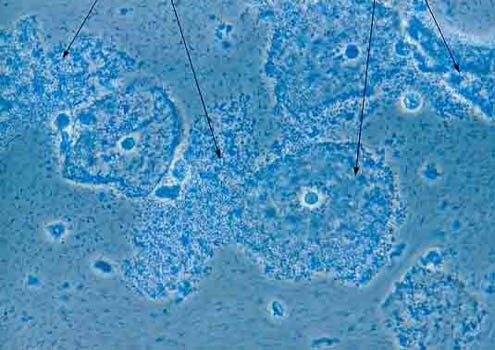
Squamous cervix cells covered with rod-shaped bacteria, Gardnerella vaginalis (source)

Bacterial vaginosis is a common disease among reproductive-aged women:

[It] is characterized by the loss of normal vaginal flora, predominantly hydrogen peroxide-producing Lactobacillus spp., and the increase in the number and species of other bacteria in vaginal fluid. The decrease in lactobacilli and increase in numerous facultative and anaerobic bacteria, some of which have only been recently characterized, may lead to changes in the characteristics of vaginal fluid, such as thin discharge and odor. (Koumans etal., 2007)

Its incidence correlates with the number of lifetime sex partners, and this correlation holds true even when one controls for a series of socioeconomic variables: poverty, smoking, body mass index, douching frequency, education, and oral contraceptive use (Koumans et al., 2007). It thus seems to be sexually transmissible, with suspicions falling particularly on the bacterium Gardnerella vaginalis:

Sexual activity is a risk factor for BV, and most experts believe that BV does not occur in women who have never had vaginal intercourse [12,13]. Epidemiologic studies are strongly supportive of sexual transmission of BV pathogens. There is a high occurrence of BV and concordance of flora in women who have sex with women, further suggesting sexual transmission is important in this setting [14-16]. It is not clear, however, whether one type of sexual activity may be more important in the pathogenesis of infection than another. As an example, oral-genital sex may be a more important risk factor than penile intromission into the vagina. (Sobel, 2012)

The incidence of bacterial vaginosis also correlates with ethnicity, being 51.4% of non-Hispanic blacks, 31.9% of Mexican Americans, and 23.2% of non-Hispanic whites. This correlation likewise holds true when the above socioeconomic variables are held constant. High incidences have also been found in sub-Saharan Africa (Pepin et al., 2011).

After studying these ethnic differences in vaginal flora, Ravel et al. (2010) concluded that they were normal and not pathological:

From these data we conclude that vaginal bacterial communities not dominated by species of Lactobacillus are common and appear normal in black and Hispanic women. The data from this study are in accordance with the results of Zhou et al. (17, 18), who studied the vaginal bacterial communities of white, black, and Japanese women. The reasons for these differences among ethnic groups are unknown, but it is tempting to speculate that the species composition of vaginal communities could be governed by genetically determined differences between hosts. These might include differences in innate and adaptive immune systems, the composition and quantity of vaginal secretions, and ligands on epithelial cell surfaces, among others.

The ultimate cause may be vaginal pH, which is higher in blacks and Hispanics than in Asians and non-Hispanic whites (Ravel etal., 2010). Or it may be differences in cytokine concentrations, with differences in vaginal pH being due to the differences in vaginal flora (Nomelini et al., 2010).

There has thus been a co-evolution between the vaginal environment and certain strains of vaginal bacteria. This co-evolution would have followed different trajectories in different human populations. In a monogamous population, possibilities for sexual transmission would have been sporadic and difficult to sustain. The picture is different in a population with a high incidence of polygyny, especially if the males often inherit or steal some of their co-wives from other males. Such a context would have favored bacteria that can spread from one co-wife to another and then to other sets of co-wives when circumstance permit.

But why wait for the right circumstances? Why not make them by manipulating the host’s behavior? Such behavioral manipulation sounds like science-fiction, yet it has been demonstrated in a wide range of animal species, often in surprisingly precise ways. So how could our bacterium manipulate its host? It wants to hop from one set of co-wives to another, but the regular male partner is standing in its way. What should it do?

First, it should facilitate female-to-female transmission among the co-wives. Second, it should disable the male’s propensity for mate guarding. Better yet, it should reverse the polarity, causing him to feel not jealousy but pleasure at the idea of being cuckolded.

This kind of manipulation occurs in the isopod Caecidotea intermedius. A parasite, Acanthocephalus dirus, infects it as a temporary host before infecting one of several freshwater fishes. When the parasite is still soft and immature, it cannot survive a fish eating its isopod host. It thus seeks to reduce this risk by suppressing conspicuous host behaviors, like mate guarding. Later, when the parasite becomes hard and mature, it can survive consumption of its host and now stimulates mate guarding (Galipaud et al., 2011; Mormann, 2010).

Cuckoldry is fatal to reproductive success, so any such tendency would soon flush itself out of the gene pool. For example, the neural networks for mate guarding might become more insensitive to outside tampering. This change, however, would in turn favor those parasites that could maintain such tampering. The eventual outcome would be an evolutionary compromise where mate guarding is impaired, but not enough to prevent reproductive success. The situation is different, though, if the parasite spreads to another population that has never developed such immunity.

Many sexual fetishes have been around for a long time and are often traceable to the ancient Greco-Roman world. Cuckold envy, however, seems relatively recent, the oldest references dating back to 17th century England (Kuchar, 2011, pp. 18-19). We may thus be looking at a sexually transmitted parasite that entered England with the expansion of world trade in the 17th century. But from where? Probably from a highly polygynous culture area, like West Africa.

This parasite might be a vaginal bacterium that first acquired sexual transmissibility and then an ability to manipulate host behavior. It might alternately be a strain of vaginal yeast. Indeed, vaginal strains of Candida albicans show a similar adaptation to sexual transmission via the partner’s mouth, i.e., they adhere better to saliva-coated surfaces than do other strains (Schmid et al., 1995).

References

Gaulipaud, M., Z. Gauthey, and L. Bollache. (2011). Pairing success and sperm reserve of male Gammarus pulex infected by Cyathocephalus truncatus (Cestoda: Spathebothriidea), Parasitology, 138, 11, 1429-1435.

Koumans E.H., M. Sternberg, C. Bruce, G. McQuillan, J. Kendrick, et al. (2007). The prevalence of bacterial vaginosis in the United States, 2001–2004; associations with symptoms, sexual behaviors, and reproductive health, Sexually Transmitted Diseases, 34, 864–869.
http://journals.lww.com/stdjournal/Fulltext/2007/11000/The_Prevalence_of_Bacterial_Vaginosis_in_the.6.aspx

Kuchar, G. (2001). Rhetoric, Anxiety, and the Pleasures of Cuckoldry in the Drama of Ben Jonson and Thomas Middleton, Journal of Narrative Theory, 31 (1), Winter, pp. 1-30.

Mormann, K. (2010). Factors influencing parasite-related suppression of mating behavior in the isopod Caecidotea intermedius, Theses and Disserations, paper 48
http://via.library.depaul.edu/etd/48

Nomelini, R.S., A.P.B. Carrijo, S.J. Adad, A.A. Nunes, E.F.C. Murta. (2010). Relationship between infectious agents for vulvovaginitis and skin color, Sao Paulo Medical Journal, 128, 348-53
http://www.scielo.br/scielo.php?pid=S1516-31802010000600007&script=sci_arttext

Pépin J., S. Deslandes, G. Giroux, F. Sobéla, N. Khonde, et al. (2011). The Complex Vaginal Flora of West African Women with Bacterial Vaginosis. PLoS ONE, 6(9): e25082. doi:10.1371/journal.pone.0025082
http://www.plosone.org/article/info%3Adoi%2F10.1371%2Fjournal.pone.0025082

Ravel J, Gajer P, Abdo Z, Schneider GM, Sara S, et al. (2010). Vaginal microbiome of reproductive-age women. Proceedings of the National Academy of Sciences U SA, 108, 4680-4687.
http://www.pnas.org/content/108/suppl.1/4680.short

Schmid, J., P.R. Hunter, G.C. White, A.K. Nand, and R.D. Cannon. (1995). Physiological traits associated with success of Candida albicans strains as commensal colonizers and pathogens, Journal of Clinical Microbiology, 33, 2920–2926.

Sobel, J.D. (2012). Bacterial vaginosis, Wolters Kluwer, UpToDate
http://www.uptodate.com/contents/bacterial-vaginosis