Showing posts with label sexual selection. Show all posts

Tuesday, January 9, 2024

My wish list for research in 2024: Why does estrogen make my brown eyes blue? Sex linkage of hair and eye colors


Eye colors (R.A. Sturm, University of Queensland)


Estrogen seems to favor the expression of non-black hair and non-brown eyes during fetal development. The “new” hair and eye colors are not only more frequent among women but also associated, in the case of blue eyes, with feminization of male face shape, female shoulder width, and female waist-to-hip ratio ... and with shyness in young boys.


Europeans have a surprising variety of hair and eye colors. Their hair is not only black but also brown, flaxen, golden, or red. Their eyes are not only brown but also blue, gray, hazel, or green (Frost, 2006; Frost, 2022). This differentiation from the original black hair and brown eyes seems to have begun among women and gone farther among them.


Hair color - Women more often have the new hair colors, particularly red and blond. Conversely, their hair is less often black—three to five times less often. This sex difference is natural (Hysi et al., 2018; Shekar et al., 2008). Among Czechs, 19% of women and 11% of men have the highest gradation of hair redness (Frost et al., 2017).


Eye color - Women more often have the new eye colors, particularly green and hazel (Frost et al., 2017). Conversely, their eyes are less often brown. The first new eye color seems to have been blue, which then differentiated to create gray, green, and hazel. Thus, “blue” in its narrow sense has lost ground among women to the derived variants of green and hazel.


Population frequencies of eye colors, for men and women (Frost et al., 2017)


The new hair and eye colors are unusual in two ways. First, they are brighter than the original black and brown. They thus reflect more light and have a higher chance of standing out against the visual landscape. Second, they are “purer”—they occupy thinner slices of the visible spectrum than the original black and brown. In nature, pure colors are typically found in situations where an animal or a plant has to catch attention, such as to get pollinated, to warn predators, or to attract a mate.


This need for attention may explain how a single hair or eye color evolved into a diverse palette of hues. A color gets noticed not only for its brightness and purity but also for its novelty. The last quality is frequency-dependent. If a noticeable color becomes too frequent in a population, it thereby becomes less noticeable and, hence, less novel. The desire for novelty is now reoriented toward less frequent colors, including those that have recently appeared through mutation. Thus, over successive generations, the population will accumulate more and more color variants. This is likely how hair and eye color became polymorphic (see Note #1).


Again, the evidence seems to point to women being the main target of this selection for brighter, purer, and more novel colors. One piece of evidence is the higher frequency of the new hair and eye colors in the female population. Another is the role of estrogen in this sex-linkage. The female hormone seems to favor the expression of non-black hair and non-brown eyes during fetal development.


Red is the hair color that differs the most in frequency between women and men. Red hair should therefore be most clearly associated with increased exposure to estrogen during fetal development. This hypothesis is supported by the higher incidence of estrogen-dependent diseases in redhaired women. According to a health survey of over seven thousand people, male redheads are as healthy as other men, doing better on average in three categories and worse in three. Female redheads, however, do worse on average than other women in ten categories and better in only three. They are especially prone to four types of cancer: colorectal, cervical, uterine, and ovarian—three of which are estrogen-dependent (Frost et al., 2017). Being both female and red-haired therefore generates the highest level of risk for estrogen-dependent diseases, probably because of the combined effect of these two risk factors.


In sum, the new hair and eye colors were favored by a selection pressure that acted primarily on European women, with European men acquiring them as a side-effect (since the new alleles are only partly sex-linked). The selection was specifically for eye-catching qualities—brightness, spectral purity, and relative novelty.


This looks like sexual selection, but why would women have a greater need to get noticed on the mate market? Usually, it is the other way around, both for humans and for mammals in general. Females are less available for mating because of the limitations of pregnancy, lactation, and early infant care. Conversely, males are more available, and thus often have more than one mate at any one time. That was, in fact, the situation of most humans in prehistory. But that situation changed as they expanded their range out of the tropics and into more seasonal environments. At higher latitudes, proportionately fewer men were available for mating at any one time. There were two reasons:


·         Polygyny was more costly for men. With men specializing in hunting and women in gathering, women became dependent on men during winter—since there was little food to be gathered. Men thus had to bear a greater share of food provisioning, with the result that polygyny became impossible for all but the ablest hunters.


·         Death rates were higher for men than for women. Because men had to hunt for more food and over longer distances, they suffered a higher death rate at younger ages. They were thus fewer in number overall.


Male scarcity was most acute in an environment that no longer exists: the steppe-tundra of the last ice age, essentially the vast plains stretching from the Baltic to western Siberia. That environment supported large herds of reindeer and other herbivores, which could in turn support a large human population. But at a cost: women depended almost entirely on their hunting husbands for food, and those hunters had to cover long distances without alternative food sources, thus risking death from starvation or exposure. The result was an imbalance in the operational sex ratio: too many women for too few men, and strong selection for women with eye-catching features (Frost, 2006; Frost, 2022; Frost, 2023).


Proposed study


The aim here is to determine whether the ratio of estrogens to androgens in fetal tissues influences the development of hair and eye color. One way would be to measure the “digit ratio”—the length of the index finger divided by the length of the ring finger. This measure of fetal exposure to the sex hormones is relatively inexpensive, though disputed by some researchers. The lower your digit ratio, the more you have been masculinized by androgens during fetal development; the higher your digit ratio, the more you have been feminized by estrogens during fetal development. The left-hand digit ratio is associated with prenatal and postnatal exposure to the sex hormones. The right-hand ratio is associated much more with prenatal exposure (see Note #2).


An unpublished study, using a sample of 644 British participants, found that the left-hand digit ratio was significantly higher on average among individuals with blond hair than among those with brown, red, or other hair colors. For eye color, there was a similar but weaker relationship: the left-hand digit ratio was higher on average among individuals with blue eyes than among those with other eye colors.


That study was not published because of two objections from the referees: hair dyeing could not be excluded as a possible factor; and identification of hair and eye color was too subjective. Yet it is difficult to see how hair dyeing or misidentification can explain the digit ratio differences. Such methodological problems would introduce more noise into the data and make any differences less significant.


I wish to see that study replicated with a more rigorous experimental design, specifically a larger sample and narrower age range. Age interacts with the effects of the sex hormones, i.e., prenatal effects on hair color are the opposite of pubertal effects. Whereas women are lighter-haired than men from 17 onward, they are actually darker-haired up to the age of 14 (Steggerda, 1941). The right-hand digit ratio should thus be better at predicting the darkening of hair color before puberty, and the left-hand digit ratio better at predicting the lightening of hair color after puberty.


In addition, I wish to see whether the relationship between fetal estrogenization and eye color explains three other relationships between non-brown eyes and certain behavioral/physical traits:


·         Blue-eyed boys tend to be shy. This is the “little boy blue” effect. A study of preschoolers found more social wariness in blue-eyed boys than in brown-eyed boys. The difference was greatest at the extremes of wariness. Among the very inhibited boys, 13 out of 14 were blue-eyed. Among the very uninhibited, only 4 out of 10 were. There was no such relationship among the girls, whose eyes were blue in 5 out of 9 among the very inhibited and in 6 out of 11 among the very uninhibited (Coplan et al., 1988).


·         Blue-eyed women tend to have narrower shoulders and lower waist-to-hip ratios. A Latvian study found small but significant correlations between female eye color and certain sexually dimorphic features. Shoulders were narrower and waist-to-hip ratios lower in blue-eyed women than in brown-eyed women (Kažoka and Vetra, 2011).


·         Blue-eyed men tend to have more feminine faces. This was an unintended finding of two Czech studies whose participants were asked to rate male and female facial photos. Initially, the brown-eyed male faces were rated as more dominant than the blue-eyed male faces. When, as a control, the brown-eyed faces were photoshopped to make them blue-eyed, they were still rated as more dominant. On careful examination, the originally brown-eyed faces were found to be more masculine with broader and more massive chins, broader mouths, larger noses, larger eyebrows, and closer-set eyes. The originally blue-eyed faces had smaller and sharper chins, narrower mouths, smaller noses, and greater distance between the eyes. Blue eyes were associated with a more feminine face shape only in male participants. This is perhaps because a male fetus normally does not have enough estrogen to feminize the face. If enough estrogen is present to feminize the face, there is probably enough to influence the development of eye color (Kleisner et al., 2010; Kleisner et al., 2013).


      Were brown eyes associated with a different face shape because some of the brown-eyed men were partly Jewish or Roma and had a more Mediterranean appearance? In that case, face shape would have been more variable in the brown-eyed men. It was not. This explanation also fails to explain the effect of gender: why were blue eyes associated with facial feminization in men but not in women?


Averaged faces: blue-eyed men (left), brown-eyed men (right), Czech population (Kleisner et al., 2010). 


The above studies suggest that the association between the "new" colors and physical/behavioral feminization is largely confined to men. (There is only a weak association between them and shoulder breadth or waist-to-hip ratio). This is probably because the feminization effects are triggered when the estrogen level has risen above a certain threshold. That threshold would already be surpassed by almost all female fetuses.


Notes


1. Preference for rare hair colors was demonstrated by Thelen (1983), who showed pictures of attractive women to male participants and then asked them to choose the one they most wanted to marry. There were three series of pictures: the first had equal numbers of brunettes and blondes; the second had one brunette for every five blondes; and the third had one brunette for every eleven blondes. The scarcer the brunettes were in a series, the more attractive they seemed, i.e., each brunette had a better chance of being chosen.


Thelen’s findings were not replicated by Janif et al. (2015), whose male participants made their choices online, i.e., in private and on their home computers. There was thus no control over the female images they may have previously viewed on the same computer screen or might still be viewing on an alternate screen or split screen. This source of unwanted female imagery introduces noise into the data, thus increasing the minimum number of online raters to produce replicable ratings of female facial attractiveness. Devcic et al. (2010) report that their mean ratings of facial attractiveness did not become stable until they had recruited 857 online raters. Popenko et al. (2012) state that they needed a minimum of 992 online raters to achieve stable ratings. By comparison, Janif et al. (2015) used 658 male raters, while making their data even noisier by recruiting an ethnically diverse pool of raters, i.e., over a third were of non-European descent. Those raters would have tended to perceive female faces with black hair as ethnic insiders and female faces with non-black hair as ethnic outsiders.


2. Using a meta-study, Sorokowski and Kowal, 2023) concluded that the digit ratio indicates only an individual’s prenatal exposure to testosterone (and only in amniotic fluid, not in core blood). The authors, however, did not look at the ratio of estrogens to androgens. Their exclusion of data on estrogen levels is puzzling, since fetal exposure to estrogens is no less important than fetal exposure to androgens.


References


Coplan, R., B. Coleman, and K. Rubin. (1998). Shyness and little boy blue: Iris pigmentation, gender, and social wariness in preschoolers. Developmental Psychobiology 32(1): 37-44. https://doi.org/10.1002/(SICI)1098-2302(199801)32:1<37::AID-DEV4>3.0.CO;2-U


Devcic, Z., Karimi, K., Popenko, N., and Wong, B.J.F. (2010). A web-based method for rating facial attractiveness. Laryngoscope 120(5), 902-906. https://doi.org/10.1002/lary.20857


Frost, P. (2006). European hair and eye color - A case of frequency-dependent sexual selection? Evolution and Human Behavior 27(2): 85-103. https://doi.org/10.1016/j.evolhumbehav.2005.07.002


Frost, P. (2022). European Hair, Eye, and Skin Color: Solving the Puzzle. Washington: Academica Press, 169 pp., ISBN 9781680538724 https://www.academicapress.com/node/549


Frost, P. (2023). A people of many colors. Peter Frost’s Newsletter. January 24. https://peterfrost.substack.com/p/a-people-of-many-colors


Frost, P., K. Kleisner, and J. Flegr. (2017). Health status by gender, hair color, and eye color: Red-haired women are the most divergent. PLoS One 12(12): e0190238. https://doi.org/10.1371/journal.pone.0190238   


Hysi, P.G., A.M. Valdes, F. Liu, N.A. Furlotte, D.M. Evans, V. Bataille, et al. (2018). Genome-wide association meta-analysis of individuals of European ancestry identifies new loci explaining a substantial fraction of hair color variation and heritability. Nature Genetics 50(5): 652-656. https://doi.org/10.1038/s41588-018-0100-5


Janif, Z.J., R.C. Brooks, and B.J. Dixson. (2015). Are preferences for women's hair color frequency-dependent? Adaptive Human Behavior and Physiology 1(1): 54-71. https://doi.org/10.1007/s40750-014-0008-y


Kažoka, D. and J. Vetra. (2011). Variations in some anthropometrical parameters of the women with the different iris color in Latvia. Papers on Anthropology XX: 160-170. https://doi.org/10.12697/poa.2011.20.17


Kleisner, K., T. Kocnar, A. Rubešová, and J. Flegr. (2010). Eye color predicts but does not directly influence perceived dominance in men. Personality and Individual Differences 49(1): 59-64. https://doi.org/10.1016/j.paid.2010.03.011


Kleisner, K., L. Priplatova, P. Frost, and J. Flegr. (2013). Trustworthy-looking face meets brown eyes. PLoS One 8(1): e53285. https://doi.org/10.1371/journal.pone.0053285

Popenko, N.A., Devcic, Z., Karimi, K., and Wong, B.J.F. (2012). The virtual focus group. A modern methodology for facial attractiveness rating. Plastic and Reconstructive Surgery 130(3), 455e-461e. https://doi.org/10.1097/PRS.0b013e31825dcb48


Shekar, S.N., D.L. Duffy, T. Frudakis, G.W. Montgomery, M.R. James, R.A. Sturm, and N.G. Martin. (2008). Spectrophotometric methods for quantifying pigmentation in human hair-Influence of MC1R genotype and environment. Photochemistry and Photobiology 84(3): 719-726. https://doi.org/10.1111/j.1751-1097.2007.00237.x   


Sorokowski, P., and M. Kowal. (2023). Relationship between the 2D:4D and prenatal testosterone, adult level testosterone, and testosterone change: Meta-analysis of 54 studies. American Journal of Biological Anthropology. 183(1): 20-38. https://doi.org/10.1002/ajpa.24852


Steggerda, M. (1941). Change in hair color with age. Journal of Heredity 32(11): 402-403. https://doi.org/10.1093/oxfordjournals.jhered.a104977


Thelen, T.H. (1983). Minority type human mate preference. Social Biology 30(2): 162-180. https://doi.org/10.1080/19485565.1983.9988531


Tuesday, October 18, 2022

Sex differences in the whites of the eyes


Women have sclera (whites of the eyes) that are less yellow and less red. Although this sex difference is unknown to almost everyone, people nonetheless perceive a female face with redder and yellower sclera as less feminine.


A recent study has shown that men and women differ in the color of their sclera—the whites of their eyes (Kramer and Russell 2022). Sclera are less yellow and less red in women. In both sexes, they become yellower, redder, and slightly darker with age.


Although this sex difference is unknown to almost everyone, it does influence perceptions of masculinity and femininity. When subjects were shown pairs of androgynous young or middle-aged faces that differed only in sclera color, they perceived the one with redder and yellower sclera as being more masculine. When shown pairs of male or female faces, they perceived the female faces with redder and yellower sclera as being less feminine. Sclera color did not affect perceptions of male or elderly faces.


The authors concluded that “people have learned the natural image statistics associated with male and female sclera, thereby representing males as having redder and yellower sclera than females.” Such learning would presumably be unconscious. What about other factors? Could perception of sclera color be hardwired?


We see a similar situation with the sex difference in skin color. Today, it’s largely unknown to people in the Western world, partly because many women have reduced it through deliberate tanning and partly because ethnic differences in skin color have become more visible in daily life. Yet several studies have shown that people associate women with light colors and men with dark colors. This was the case in three experiments with Dutch, Portuguese, and Turkish subjects:


·         The subjects identified personal names by gender faster when male names were presented in black and female names in white than when the gender/color combinations were reversed.

·         When asked to classify briefly appearing black and white blobs by gender, they usually classified the black blobs as male and the white ones as female.

·         In an eye-tracking experiment, their eyes showed longer observation and more frequent fixation when a dark object was associated with a male character and a light object with a female character (Semin et al. 2018).


Parallels with eye morphology and eye colors


Another recent study has shown that women have rounder eyes. This sex difference exists because the exposed sclera is more horizontally exposed in men. In addition, eye fissures are narrower and less rectangular in women than in men (Danel et al. 2020, see also Danel et al. 2018).


The same study also showed that this sex difference is confined to Europeans: women don’t have rounder eyes in other human populations. A similar situation exists with eye colors, which have diversified only in Europeans and more so in women than in men. Specifically, the range of eye colors is more evenly distributed among women: they have the less frequent colors more often and the more frequent ones less often (Frost 2022, pp. 9, 10, 13).


Is the sex difference in sclera color likewise confined to Europeans? For now, we don’t know. The sclera images were taken only from German faces (Kramer and Russell 2022).


Parallels with facial skin color


The natural colors of a woman’s face seem to interact with each other. The white of the eye serves to accentuate the color of the iris, and the lighter color of the facial skin serves to accentuate the darker colors of the eye and lip areas. If we consider the natural colors of the face in both sexes, a female face has a greater contrast in luminosity between the lighter-colored facial skin and the darker-colored lip and eye area (Russell 2003; Russell 2009; Russell 2010). A rating study has shown that faces with greater facial contrast are perceived as being more feminine:


Facial contrast was positively correlated with rated femininity of female faces but negatively correlated with rated masculinity of male faces. After controlling for skin luminance (which is also sexually dimorphic) and ethnicity (there were both Caucasian and East Asian faces), facial contrast was still positively correlated with rated femininity of female faces and negatively correlated with rated masculinity of male faces, though the relationship was very weak for male faces. In summary, greater facial contrast was considered more feminine in female faces and less masculine in male faces. (Russell 2010, p. 10).


In different cultures and geographic areas, women have developed cosmetics to accentuate the sex difference in facial contrast:


The received style of cosmetics involves darkening the eyes and lips while leaving the rest of the face largely unchanged. This is one of two patterns of cosmetic application that could increase facial contrast (the other being to significantly lighten the entire face, except for the eyes and lips). To confirm that cosmetic application increases facial contrast, we measured the facial contrast of the set of 12 Caucasian faces that were photographed with and without cosmetics (Russell 2009). On average, facial contrast was much larger with cosmetics than without cosmetics, and greater facial contrast was found in each of the 12 faces when they were wearing cosmetics than when they were not. Both eye contrast and mouth contrast were increased by cosmetics. The large and consistent increase in facial contrast achieved with cosmetics more clearly differentiates male and female faces. (Russell 2010, p. 13)


Conclusion


Europeans, and European women in particular, have followed an unusual evolutionary trajectory. Some kind of selection made their outward features more colorful, more accentuated, and more visually striking, particularly the features on or near the face.


Was it sexual selection? The authors of the eye morphology study considered that possibility but rejected it because female eye morphology does not correlate with two other aspects of female attractiveness: face shape and facial averageness (Danel et al. 2020). The lack of correlation, however, may simply mean that these three aspects impose different constraints on sexual selection. Making a face more average-looking is not at all the same process as increasing its visual contrast or adding bright colors.


References


Danel, D.P., S. Wacewicz, Z. Lewandowski, P. Zywiczynski, and J.O. Perea-Garcia. (2018). Humans do not perceive conspecifics with a greater exposed sclera as more trustworthy: a preliminary cross-ethnic study of the function of the overexposed human sclera. Acta Ethologica 21: 203-208. https://doi.org/10.1007/s10211-018-0296-5  


Danel, D.P., S. Wacewicz, K. Kleisner, Z. Lewandowski, M.E. Kret, P. Zywiczynski, and J.O. Perea-Garcia. (2020). Sex differences in ocular morphology in Caucasian people: a dubious role of sexual selection in the evolution of sexual dimorphism of the human eye. Behavioral Ecology and Sociobiology 74(115) https://doi.org/10.1007/s00265-020-02894-1


Frost, P. (2022). European Hair, Eye, and Skin Color: Solving the Puzzle. Washington: Academica Press. ISBN 9781680538724


Kramer, S.S., and R. Russell. (2022). A Novel Human Sex Difference: Male Sclera Are Redder and Yellower than Female Sclera. Archives of Sexual Behavior 51, 2733–2740. https://doi.org/10.1007/s10508-022-02304-9


Russell, R. (2003). Sex, beauty, and the relative luminance of facial features. Perception 32(9): 1093-1107. http://dx.doi.org/10.1068/p5101


Russell, R. (2009). A sex difference in facial pigmentation and its exaggeration by cosmetics. Perception 38(8): 1211-1219. https://doi.org/10.1068/p6331


Russell, R. (2010). Why cosmetics work. In R.B. Adams Jr., N. Ambady, K. Nakayama, and S. Shimojo (Eds.) The Science of Social Vision, (pp. 186-203). New York: Oxford.


Semin, G.R., T. Palma, C. Acartürk, and A. Dziuba. (2018). Gender is not simply a matter of black and white, or is it? Philosophical Transactions of the Royal Society B Biological Sciences 373(1752):20170126. https://doi.org/10.1098/rstb.2017.0126

Monday, October 3, 2022

European Hair, Eye, and Skin Color: Solving the Puzzle


The distinguishing physical features of Europeans began as female features.


I’ve published a book through Academica Press. It’s titled: European Hair, Eye, and Skin Color: Solving the Puzzle. It can be ordered at: https://www.academicapress.com/node/549  


Here is a summary:


Europeans are strangely colored, particularly in the north and east. Hair is not only black but also brown, flaxen, golden, or red. Eyes are not only brown but also blue, gray, hazel, or green. Finally, skin is white, almost like that of an albino.


That color scheme is strange for several reasons:


·        It arose through new alleles at unrelated genes: hair color diversified through a proliferation of new alleles at MC1R, and eye color through a proliferation of new alleles in the HERC2-OCA2 region. Skin color became fair through new alleles at SLC45A2, SLC24A5, and TYRP1. All three changes occurred in parallel at different loci on the genome.


·        The new hair and eye color alleles are too numerous and too recent to be due to anything but strong selection. Among Europeans, the various hair colors are produced by new alleles at over 200 loci (SNPs), and the various eye colors by new alleles at over 124. Those alleles arose over a relatively short span of time, certainly less than the 50,000 years that modern humans have been in Europe. Only some kind of selection, and very strong selection at that, could have caused such a proliferation of new alleles over such a short time.


·        The selection was aimed primarily at women. Even today, women naturally have a higher incidence of red hair, blonde hair, and green eyes. Hair and eye colors are more evenly distributed among women: the less frequent colors are more common, and the more frequent ones less common. Skin is also fairer in women.


·        The new colors are mostly on or near the face, the focus of visual attention. When compared with the original black and brown, they are brighter and “purer” (they occupy thinner slices of the visible spectrum). Brightness and purity are characteristic of colors favored by sexual selection. A third characteristic is novelty: the relative rarity of a color. Novelty improves mating success by attracting attention and interest, but that success is eventually its undoing. As each generation passes, it becomes more common and less novel. Other colors attract more interest, particularly new ones that arise through mutation, with the result that a growing number of color variants accumulate in the gene pool. Such color polymorphisms are a frequent outcome of sexual selection.


·        Unlike the hair and the eyes, the skin did not develop a color polymorphism among Europeans, instead becoming unusually pale. The reason may be that sexual selection was guided by a pre-existing dimorphism. In all populations, men are browner and ruddier than women, who by comparison are fairer. Fairer-skinned women were seen as more feminine in traditional cultures and preferred as mates. Sexual selection, if sufficiently strong, would have drained the European gene pool of alleles for dark skin.


Sexual selection is not the preferred explanation among writers on this subject. Most lean toward one of two scenarios that involve natural selection:


·        Relaxation of selection for dark skin: when modern humans entered Europe, natural selection stopped favoring dark skin because UV protection was less necessary at northern latitudes. Defective alleles for skin pigmentation began to accumulate in the gene pool, and some of them had effects on hair and eye color.


That scenario has two weak points:


o   Relaxation of selection would take more than a million years to produce the current diversity of hair and eye colors. Yet modern humans have been in Europe for only 50,000 years. In fact, it was only around 20,000 years ago that some Europeans began to acquire pale skin and diverse hair and eye colors, and that phenotype would not become fully established throughout Europe until 10,000 to 5,000 years ago.


o   Skin color is weakly linked to hair color and eye color. Light skin often coexists with dark hair and dark eyes.


·        Selection for light skin: natural selection reduced skin pigmentation in order to maintain sufficient production of vitamin D. The hair and the eyes underwent a similar reduction in pigmentation because a change to one pigmentary trait presumably affects the others.


That scenario has two weak points:


o   Again, skin color is weakly linked to hair color and eye color. Yet the changes to the latter have been as profound as those to skin color. Moreover, the changes to hair and eye color have not been so much a reduction in pigmentation as a non-random creation of new hues that emit more light within narrower slices of the spectrum.


o   Analysis of ancient DNA and present-day DNA indicates that modern humans were dark-skinned for tens of thousands of years after their entry into Europe. Why wasn’t vitamin D a problem then? If we consider the indigenous inhabitants of North and South America, we see that natural selection has created very little latitudinal variation in their skin color, even though they have lived in the Americas for some 12,000 years. Natural selection, by itself, appears to change skin color rather slowly.


The current physical features of Europeans seem to have arisen on the steppe-tundra of eastern Europe and western Siberia during the last ice age, between 10,000 and 20,000 years ago, when nomadic humans subsisted almost entirely on meat from reindeer and other migratory game. Long-distance hunting increased the death rate among men and decreased the polygyny rate—only the ablest hunters could provide for more than one woman and her children because women had almost no food autonomy. 


The result: a surplus of women on the mate market; intense rivalry among them for male attention; and strong selection for eye-catching female features. Such features became more frequent with succeeding generations, eventually forming what is now seen as the “European” phenotype.


Frost, P. (2022). European Hair, Eye, and Skin Color: Solving the Puzzle. Washington: Academica Press, 169 pp., hardcover, ISBN 9781680538724


If you wish to buy a less expensive paperback edition, please make your preference known to Academica Press by emailing to:

academicapress.editorial@gmail.com


Monday, February 1, 2021

White Skin Privilege: Modern Myth, Forgotten Past


Cairo Slave Market, Maurycy Gottlieb, 1877 (Wikicommons)


I've published a paper "White Skin Privilege: Modern Myth, Forgotten Past" in the journal Evolutionary Studies in Imaginative Culture. Here is the abstract:


European women dominate images of beauty, presumably because Europe has dominated the world for the past few centuries. Yet this presumed cause poorly explains "white slavery"—the commodification of European women for export at a time when their continent was much less dominant. Actually, there has long been a cross-cultural preference for lighter-skinned women, with the notable exception of modern Western culture. This cultural norm mirrors a physical norm: skin sexually differentiates at puberty, becoming fairer in girls, and browner and ruddier in boys. Europeans are also distinguished by a palette of hair and eye colors that likewise differs between the sexes, with women more often having the brighter hues. In general, the European phenotype, especially its brightly colored features, seems to be due to a selection pressure that targeted women, apparently sexual selection. Female beauty is thus a product of social relations, but not solely those of recent times.


Please feel free to comment.


Reference


Frost, P. (2020). White Skin Privilege: Modern Myth, Forgotten Past. Evolutionary Studies in Imaginative Culture 4(2): 63-82.

https://doi.org/10.26613/esic/4.2.190

https://www.jstor.org/stable/10.26613/esic.4.2.190

Monday, January 25, 2021

Sex differences in human eye morphology


Women have rounder-looking eyes with narrower fissures, but only in Europeans. Eyes are not sexually dimorphic in other human populations. (Petr Novak, Wikicommons)


The exposed white of the eye is larger in men than in women among Europeans but not in other human groups. This sexual dimorphism is due to the white of the eye being more horizontally exposed in men, with the result that female eyes look rounder. In addition, eye fissures are narrower and less rectangular in women (Danel et al. 2018; Danel et al. 2020).


This is analogous to what we see with eye color and hair color. Eyes are brown in most humans with the exception of Europeans, whose eyes may also be blue, gray, or green. Hair is black in most humans with the exception of Europeans, whose hair may also be blonde, red, or brown. In both cases, the palette of colors is more evenly balanced in women than in men. Women are less likely to have the more common hues, like blue or brown eyes and black hair. Conversely, they are more likely to have the less common hues, like green eyes and red hair.


There is no common genetic cause of these sex differences in eye morphology, eye color, and hair color. The genes are different in each case. The common cause seems to be some kind of selection among ancestral Europeans. Something favored the reproduction of women with rounder-looking eyes and less common eye and hair colors.


Was that "something" a someone? Were men selecting women through a process of sexual selection? That has been my explanation: in northern Eurasia until the end of the last ice age, women outnumbered men and had to compete for them, as a result of high male mortality and the high cost of polygyny. There was thus strong selection for women with an eye-catching appearance, and this selection ultimately changed the appearance of both sexes. The new phenotype eventually died out in northern Asia but survived in parts of Europe, which had a larger and more continuous human presence. It then spread throughout the rest of Europe almost at the dawn of history (Frost 2006; Frost 2014; Frost et al. 2017).


Danel et al. (2020) consider this explanation but reject it because female eye morphology does not correlate with two other aspects of female attractiveness: face shape and facial averageness. That lack of correlation, however, simply shows that each of these aspects has different constraints on the direction of sexual selection:


Eye morphology - the direction of sexual selection seems open-ended. Women are more attractive if they have rounder eyes.


Face shape - the direction of sexual selection goes into reverse beyond a certain point. Women are more attractive if they have smaller chins and smaller noses, but only up to a certain point. Excessively small chins and noses are not attractive either.


Facial averageness - the constraints are again different. Women become less attractive on each side of a narrow median.


References


Danel, D.P., S. Wacewicz, Z. Lewandowski, P. Zywiczynski, and J.O. Perea-Garcia. (2018). Humans do not perceive conspecifics with a greater exposed sclera as more trustworthy: a preliminary cross-ethnic study of the function of the overexposed human sclera. Acta Ethologica 21: 203-208.

https://doi.org/10.1007/s10211-018-0296-5


Danel, D.P., S. Wacewicz, K. Kleisner, Z. Lewandowski, M.E. Kret, P. Zywiczynski, and J.O. Perea-Garcia. (2020). Sex differences in ocular morphology in Caucasian people: a dubious role of sexual selection in the evolution of sexual dimorphism of the human eye. Behavioral Ecology and Sociobiology 74(115)

https://doi.org/10.1007/s00265-020-02894-1


Frost, P. (2006). European hair and eye color - A case of frequency-dependent sexual selection? Evolution and Human Behavior 27(2): 85-103.

https://doi.org/10.1016/j.evolhumbehav.2005.07.002


Frost, P. (2014). The puzzle of European hair, eye, and skin color. Advances in Anthropology 4(2): 78-88.

https://doi.org/10.4236/aa.2014.42011


Frost, P., K. Kleisner, and J. Flegr. (2017). Health status by gender, hair color, and eye color: Red-haired women are the most divergent. PLoS One 12(12): e0190238.

https://doi.org/10.1371/journal.pone.0190238


Saturday, July 4, 2020

Recent evolution of the British population


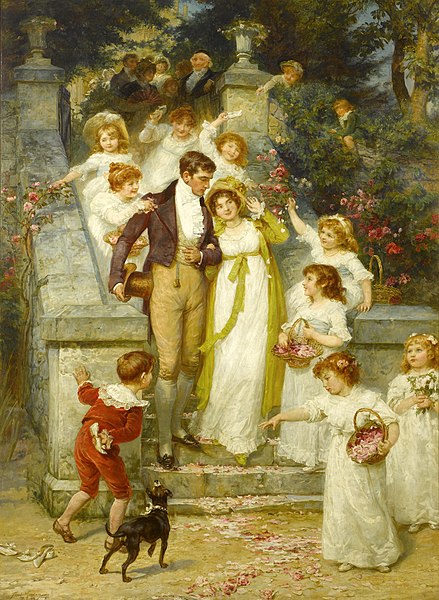
Frederick Morgan – Off for the Honeymoon (Wikicommons) Over the past 2,000 years, the British gene pool has shifted toward alleles that favor lighter hair, sunburn, and educational attainment. Was this because high-status men tended to mate with blonder, fairer women?


Have we evolved over the past two thousand years? Until recently, the answer was thought to be 'no.' Cultural evolution took over from genetic evolution around the time farming took over from hunting and gathering, some ten thousand years ago, thus putting our ancestors on a path to increasing social complexity: sedentary living, growth of towns and villages, formation of states, trade and specialization of labor, and so on. It was culture that changed during recorded history, not genes.

Well, things are not that simple. Genes and culture have coevolved with each other. Yes, culture has been changing rapidly over the past ten thousand years. But so have genes. During that time, our genetic evolution has been driven by adaptation not only to natural environments but also to cultural environments. Increasingly so. We live more and more in cultural environments of our making (Chen et al., 2016; Cochran and Harpending 2009; Hawks et al. 2007).

In what ways have we changed genetically during the past ten thousand years? In the ways we digest food. With the shift to dairy farming, and the resulting increase in milk consumption by adults, natural selection favored those who could digest milk sugar, an ability previously confined to infants.

We have also changed in the ways we think and behave. That kind of evolution is not difficult. A few point mutations may alter a behavior by changing its timing, its intensity, or its threshold of stimulation. Other alterations have been much more polygenic. Cognitive ability, for instance, seems to have increased through mutations at many genes, with each mutation causing only a tiny fraction of the increase.

Because recent evolutionary change has so often been polygenic, we need to examine it in relation to many genetic variants spread over the entire genome, i.e., by means of genome-wide association studies. Such studies can take many forms. A recent one, proposed by Stern et al. (2020), may be better than earlier versions, particularly in avoiding biases due to population structure and population stratification.

I nonetheless have a few reservation about this proposed method:

1. Population stratification can be a factor in evolutionary change. Let's take the work of Gregory Clark on the growth of the English middle class. He found it grew steadily from the twelfth century onward, its descendants not only growing in number but also replacing the lower classes through downward mobility. By the 1800s its lineages accounted for most of the English population. Parallel to that demographic growth, English society became more and more middle class in its values. "Thrift, prudence, negotiation, and hard work were becoming values for communities that previously had been spendthrift, impulsive, violent, and leisure loving" (Clark 2007, p. 166). Isn't that evolutionary change through population stratification? Or am I missing something?

2. The new method can reveal only evidence of directional selection. It thus fails to capture other interesting forms of selection, like diversifying selection.


How the British have evolved over the past 2,000 years

Stern et al. (2020) used their method to study how the British population has evolved over the past two thousand years. They found increases in the prevalence of lighter hair, in tanning and sunburn, in age at first birth, in bone mineral density, and in the risk of type 2 diabetes. They also found decreases in the risk of neuroticism and in the risk of high glycated hemoglobin levels.

Some of these changes correlate with each other. In such cases, we should step back and try to identify the common cause.

Lighter hair, more sunburn ... and higher educational attainment

Over the past 2,000 years, the British gene pool has shifted toward alleles that favor lighter hair, sunburn, and educational attainment. These changes in allele frequency correlate with each other, so what, exactly, was driving the overall change?

There is genetic linkage between light hair and pale skin, but it's weak. In fact, pale skin often coexists with dark hair. Moreover, we still have to explain the link to educational attainment. The common cause for all three changes may have been sexual selection mediated by social class. In other words, high-status men tended to mate with blonder, fairer women.

This form of sexual selection was observed in a Japanese study on social class and skin color. Upper-class men were shown to be fairer-skinned than lower-class men, even when the latter were factory workers and not farmers and even though the measurements were taken on unexposed skin. Wealthier men have a wider range of prospective brides and can thus choose the fairest women, for "skin color has long been regarded, by the Japanese, as one of the criteria for evaluating physical attractiveness, especially in young females" (Hulse 1967). Similarly, in India "[w]ealthy landowning families often have a tradition of seeking light-skinned brides among poorer members of their subcaste. It is very common to find a high concentration of lighter-skinned people among established land-owning families" (Béteille 1967).

Darwin discussed this sexual selection with reference to English social classes:

Many persons are convinced, as it appears to me with justice, that our aristocracy, including under this term all wealthy families in which primogeniture has long prevailed, from having chosen during many generations from all classes the more beautiful women as their wives, have become handsomer, according to the European standard, than the middle classes; yet the middle classes are placed under equally favorable conditions of life for the perfect development of the body. (Darwin 1936[1888], p. 892)

Until the 20th century, higher social status meant higher fertility (Clark 2007). Thus, the physical and mental characteristics of the upper and middle classes tended to displace those of the lower class.

Higher risk of Type 2 diabetes and glycated hemoglobin

Why would natural selection favor type 2 diabetes? Isn't diabetes harmful? It is, in a modern environment that lets you ingest calories almost without limit. That wasn't the case in Britain for most of the past two thousand years. During that time, food was scarce for most people, and natural selection favored the ability to get as many calories as possible out of our food.

Less neuroticism

This evolutionary change may be related to the demographic success of the middle class and associated mental and behavioral traits, particularly lower time preference and higher future orientation. The nascent English middle class valued being “calm, cool, and collected,” as opposed to reacting emotionally to negative outcomes.


References

Béteille, A. (1967). Race and descent as social categories in India. Daedalus 96(2): 444-463.

Chen, C., R.K. Moyzis, X. Lei, C. Chen, and Q. Dong. (2016). The encultured genome: Molecular evidence for recent divergent evolution in human neurotransmitter genes. In: J.Y. Chiao, S.-C. Li, R. Seligman, and R. Turner, Eds, The Oxford handbook of cultural neuroscience. New York, NY: Oxford University Press, 315-336.

Clark, G. (2007). A Farewell to Alms. A Brief Economic History of the World, 1st ed.; Princeton University Press: Princeton.

Cochran, G., and H. Harpending. (2009). The 10,000 Year Explosion: How Civilization Accelerated Human Evolution. Basic Books.

Darwin, C. (1936 [1888]). The Descent of Man and Selection in relation to Sex. reprint of 2nd edition, The Modern Library, New York: Random House.

Hawks, J., E.T. Wang, G.M. Cochran, H.C. Harpending, and R.K. Moyzis. (2007). Recent acceleration of human adaptive evolution. Proceedings of the National Academy of Sciences, 104(52), 20753-20758.

Hulse, F.S. (1967). Selection for skin color among the Japanese. American Journal of Physical Anthropology 27(2): 143-156.

Hysi, P.G., A.M. Valdes, F. Liu, N.A. Furlotte, D.M. Evans, V. Bataille, et al. (2018). Genome-wide association meta-analysis of individuals of European ancestry identifies new loci explaining a substantial fraction of hair color variation and heritability. Nature Genetics 50(5): 652-656.

Morgan, M.D., E. Pairo-Castineira, K. Rawlik, O. Canela-Xandri, J. Rees, D. Sims, A. Tenesa, and I.J. Jackson. (2018). Genome-wide study of hair colour in UK Biobank explains most of the SNP heritability. Nature Communications 9: 5271

Neel, J. V. (1962). Diabetes mellitus: a 'thrifty' genotype rendered detrimental by 'progress'? American Journal of Human Genetics 14: 353-362.

Stern, A.J., L. Speidel, N.A. Zaitlen, and R. Nielsen. (2020). Disentangling selection on genetically correlated polygenic traits using whole-genome genealogies
bioRxiv 2020.05.07.083402