Showing posts with label slave trade. Show all posts

Monday, February 1, 2021

White Skin Privilege: Modern Myth, Forgotten Past


Cairo Slave Market, Maurycy Gottlieb, 1877 (Wikicommons)


I've published a paper "White Skin Privilege: Modern Myth, Forgotten Past" in the journal Evolutionary Studies in Imaginative Culture. Here is the abstract:


European women dominate images of beauty, presumably because Europe has dominated the world for the past few centuries. Yet this presumed cause poorly explains "white slavery"—the commodification of European women for export at a time when their continent was much less dominant. Actually, there has long been a cross-cultural preference for lighter-skinned women, with the notable exception of modern Western culture. This cultural norm mirrors a physical norm: skin sexually differentiates at puberty, becoming fairer in girls, and browner and ruddier in boys. Europeans are also distinguished by a palette of hair and eye colors that likewise differs between the sexes, with women more often having the brighter hues. In general, the European phenotype, especially its brightly colored features, seems to be due to a selection pressure that targeted women, apparently sexual selection. Female beauty is thus a product of social relations, but not solely those of recent times.


Please feel free to comment.


Reference


Frost, P. (2020). White Skin Privilege: Modern Myth, Forgotten Past. Evolutionary Studies in Imaginative Culture 4(2): 63-82.

https://doi.org/10.26613/esic/4.2.190

https://www.jstor.org/stable/10.26613/esic.4.2.190

Saturday, October 31, 2015

The contradictions of polygyny


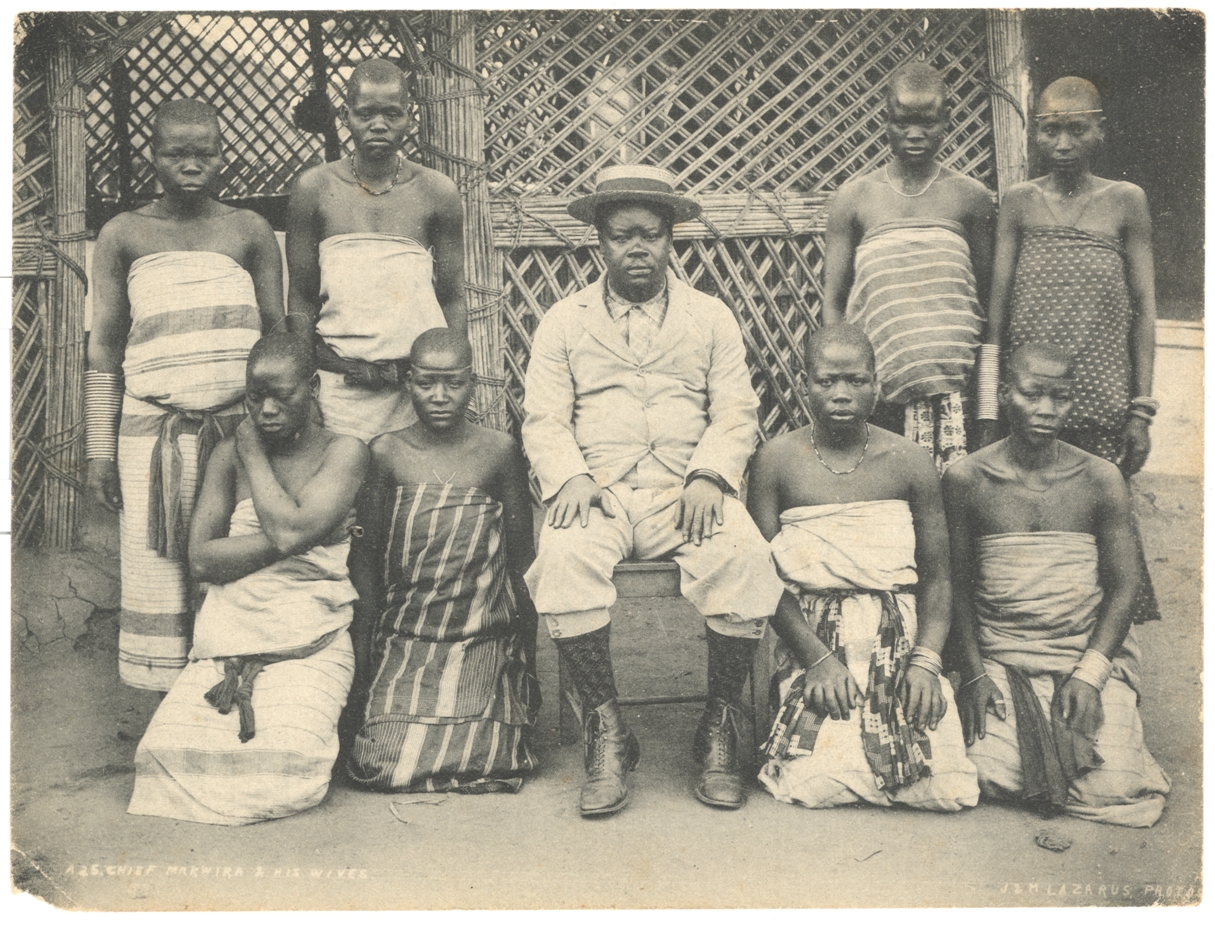
Chief Makwira and his wives, Malawi, 1903 (Wikicommons). Older men had first priority. Younger men could gain access to women only through war or adultery.


In my last column, I reviewed the findings of Butovskaya et al. (2015) on testosterone and polygyny in two East African peoples:

- Testosterone levels were higher in the polygynous Datoga than in the monogamous Hadza. This difference is innate.

- Datoga men were more aggressive than Hadza men on all measures used (physical aggression, verbal aggression, anger, and hostility)

- Datoga men were larger and more robust than Hadza men

- All of these characteristics seem to be adaptive under conditions when men have to compete against other men for access to women

Testosterone levels were not only higher in the Datoga but also more variable. Alvergne et al. (2009) studied this variability in Senegalese men, finding that the monogamous ones differed from the polygynous ones in the way testosterone levels changed with age. The levels were higher in the polygynous men than in the monogamous men between the ages of 15 and 30. After 45, this pattern reversed: the monogamous men had the higher levels. At all ages, the polygynous men were more extraverted than the monogamous ones, this quality being defined as "pro-social behavior which reflects sociability, assertiveness, activity, dominance and positive emotions." Extraversion may assist a reproductive strategy of seducing women, rather than providing for them.

Thus, when Africans gave up hunting and gathering for farming, there was selection for a new package of male traits. Some of these traits are physiological (higher testosterone levels), some anatomical (denser bones, greater arm and leg girth; changes to muscle fiber properties, etc.), and some behavioral (polygyny, aggressiveness, extraversion, etc.). But this selection didn't eliminate older genotypes, at least not wholly. There seems to be a balanced polymorphism that allows a minority of quieter, monogamous men to thrive in a high-polygyny society like Senegal. When polygynous men become too numerous, they may spend too much time looking for mating opportunities and not enough checking up on their current wives to avoid being cuckolded. It might be better for some to live continuously with one wife.

African Americans versus Euro Americans

The above differences within sub-Saharan Africa (Datoga vs. Hadza, polygynous Senegalese vs. monogamous Senegalese) are also seen between African Americans and Euro Americans. In all these cases, the differences are of degree and proportion, rather than absolute and non-overlapping.

Testosterone reaches high levels in young African American adults (Pettaway, 1999; Ross et al., 1986; Ross et al., 1992; Winters et al., 2001). African Americans are also likelier to have alleles for high androgen-receptor activity (Kittles et al.,2001). Lifetime exposure to testosterone is reflected in development of prostate cancer, with African American men having the world's highest incidences (Brawley and Kramer, 1996). It was once thought that lower incidences prevail among black West Indians and sub-Saharan Africans, but underreporting is now thought to be responsible (Glover et al., 1998; Ogunbiyi and Shittu, 1999; Osegbe, 1997).

In African Americans, blood testosterone levels peak during adolescence and early adulthood, being higher than those of Euro Americans of the same age. Levels decline after 24 years of age, and by the early 30s are similar to those of European Americans (Gapstur et al., 2002; Nyborg, 1994, pp. 111-113; Ross et al., 1986; Ross et al., 1992; Tsai et al., 2006; Winters et al., 2001). This is the same pattern we saw in polygynous Senegalese men versus monogamous Senegalese men. In short, polygyny seems associated with a more exaggerated pattern of variation with age.

The demographic contradictions of a high-polygyny society

Testosterone levels are normally higher in all young men, but why are they higher still when polygyny is common? The reason seems to be the scarcity of available women. High-polygyny societies generate a shortage of mateable women, and this shortage is managed by giving priority to men who are at least ten years past puberty. For instance, among the Nyakyusa: "[...] there is a difference of ten years or more in the average marriage-age of girls and men, and it is this differential marriage-age which makes polygyny possible" (Wilson, 1950, p. 112).

By concentrating celibacy among young men, this age rule compels them to seek sex through warfare or illicit means. According to Pierre van den Berghe (1979, pp. 50-51):

Typically, the more men are polygynous in a given society, the greater the age difference between husbands and wives. [...] The temporary celibacy of young men in polygynous societies is rarely absolute, however. While it often postpones the establishment of a stable pair-bond and the procreation of children, it often does not preclude dalliance with unmarried girls, adultery with younger wives of older men, or the rape or seduction of women conquered in warfare. Thus, what sometimes looks like temporary celibacy is, in fact, temporary promiscuity. These young men often devote themselves to warfare during their unmarried years and sometimes homosexuality is tolerated during that period.

For young men in a high-polygyny society, warfare—typically raids against neighboring communities—is the main way to gain access to women. In a sense, war becomes a means of resolving the demographic contradictions of a high-polygyny society. Polygyny creates a wife shortage among young men, and this contradiction is resolved by turning it outward. As warriors, young men are encouraged to satisfy their sexual urges through raids against neighboring peoples. Warfare thus becomes endemic.

This relationship between polygyny and war has often been noted in studies of African societies:

Dorjahn (1959) says African warfare emphasized taking captives, rather than killing the enemy. Kelly's discussion of Nuer warfare provides an interesting perspective on this phenomenon. In Nuer warfare the main casualties were younger men and older women, with male and female mortality being almost equal. Younger women and children were captured. Female captives were valued because they could be used to generate bridewealth when they were married to other Nuer, whereas captive boys were adopted into the lineage of their captor and would require bridewealth payment when they married. Consequently, few males were taken captive (Kelly 1985:56-57). (White and Burton, 1988)

In their cross-cultural study of the causes of polygyny, White and Burton (1988) conclude that "polygyny is associated with warfare for plunder and/or female captives":

[...] polygyny is seen as associated with the expansion of male-oriented kin groups through favorable environments, facilitated by capture of women or bridewealth via warfare. Following this analysis, it is difficult to see polygyny as having benign effects upon the lives of all women. Rather, polygyny produces benefits for senior wives, who have sons and can mobilize the labor of junior wives and children (Hartung 1982); it has negative effects on women who become slaves, captives, or junior wives, or who do not have sons.

We now come to a leading cause of the African slave trade. Polygyny led to warfare, which led to a surplus of unwanted male captives. These captives could be sold as slaves, but local markets would soon be saturated. The excess supply had to be sold farther away, with the result that slave trading networks began to reach the Middle East as early as the time of Christ (Frost, 2008).

While outsiders from the Middle East and Europe would later get more and more involved, becoming not only traders but also captors, it was Africans themselves who initially controlled the supply chain. In its early stages, and even later, this trade was driven by factors internal to Africa.

Contrary evidence

Whenever I discuss this subject, some people will counter that certain studies have shown an absence of racial/ethnic differences in testosterone levels. Let me discuss these studies at some length.


This meta-analysis concluded: "After adjustment for age, black men have a modestly but significantly 2.5 to 4.9% higher free testosterone level than white men." Here, “adjustment for age” means comparing black and white men of the same age. The conclusion isn't surprising, since African American men have a testosterone advantage only from puberty to their early 30s. At other ages, their testosterone levels are either equal to or less than those of Euro American men. 

This meta-analysis has two other flaws. First, it included only studies on "men," thus excluding studies on teenagers, among whom the race difference is greatest.

Second, it included Rohrmann et al. (2007). This study suffers from serious methodological problems, as I will now explain. 


This study concluded that "contrary to the postulated racial difference, testosterone concentrations did not differ notably between black and white men."

This study also found that 45-69 year old black men have higher testosterone levels (5.62 ng/ml) than do 20-44 year old black men (5.35 ng/ml). Such a finding is paradoxical and indicates a faulty dataset. The authors used serum samples from the National Center for Health Statistics that had been earlier collected for its Third National Health and Nutrition Examination Survey (NHANES III). The authors state they used 1,479 samples that remained out of an initial total of 1,998. Over 25% of the original samples were missing. The authors state that some samples were missing because they were being used for another study.

The same serum bank had in fact been used for research on a sexually transmitted disease. This was the study by Fleming et al. (1997), who reported that more than 25% of adults between 30 and 39 years of age were positive for HSV-2 (Herpes Simplex virus type 2). Those samples may have been set aside either for further testing or for legal reasons. The serum bank would have thus lost some of its most polygynous donors.


This study measured salivary testosterone in young men (15-30 years) from the United States, Congo, Nepal, and Paraguay. Americans had the highest levels (335 pmol/l), followed by Congolese (286 pmol/l), Nepalese (251 pmol/l), and Paraguayans (197 pmol/l).

Who were these Americans? They are simply identified as ... young Americans—a demographic that is now less than 60% of European descent. In Boston, where the study was conducted, public schools in 2005 were 46% black and 31% Latino (mainly Puerto Ricans and Dominicans). The authors also state that "the USA participants were recruited by public advertisement." The pool of participants may have therefore resembled that of people who give blood in exchange for payment, i.e., it may have been disproportionately poor and non-white. In any event, the results are unusable without any information on racial background.

The Congolese participants were likewise unrepresentative of Congolese in general. They were Lese who inhabit the Ituri forest in proximity to the Efe pygmies. Many Lese are, in fact, partly of pygmy ancestry. As such, their testosterone levels would be closer to that of hunter-gatherers with lowers levels of polygyny and less male-male competition for mates.


This study concluded that testosterone levels did not differ between African American and Euro American boys between the ages of 6 and 18. Such a finding is to be expected for the first few years of this age range, when no difference should exist between the two groups. The main flaw, however, is that the participants were compared not by age but by Tanner stage. Since African Americans enter puberty earlier, this study compared younger African American boys with older Euro American boys.

Testosterone levels may differ between the two groups because of earlier maturation by African American boys. But why would this difference persist beyond adolescence and into the mid-twenties? This question remains unresolved because none of the participants were older than 18.

Various African studies

Several studies have found lower testosterone levels in African populations than in North Americans. This difference might be partly due to the effects of malnutrition or infectious diseases, notably among the Zimbabwean subjects studied by Lukas et al. (2004). The main reason, however, is that these studies mostly had middle-aged or even elderly participants. Lukas et al. (2004) report a mean age of 42.18. The scatter plot (Fig. 2) suggests a logarithmic decline in testosterone with age, but there were too few participants below 25 for analysis of that age group. The same criticism applies to Campbell et al. (2003), a study of testosterone levels in Ariaal pastoralists from northern Kenya. The mean age was 46.8.

In addition, some of these studies concern hunter-gatherers, like the !Kung of Namibia and the Ituri Forest pygmies of the Congo, who have low polygyny rates and weak male-male competition for mates (e.g., Winkler and Christiansen, 1993). Their low testosterone levels are thus to be expected.

References

Alvergne, A., M. Jokela, C. Faurie, and V. Lummaa. (2010). Personality and testosterone in men from a high-fertility population, Personality and Individual Differences, 49, 840-844.
http://ww.evolutionhumaine.fr/pdf_articles/alvergne_2010_perso_indiv_dif.pdf

Alvergne, A., M. Jokela, and V. Lummaa. (2010). Personality and reproductive success in a high-fertility human population, Proceedings of the National Academy of Sciences, 107, 11745-11750.
http://www.ncbi.nlm.nih.gov/pmc/articles/PMC2900694/

Alvergne, A., C. Faurie, and M. Raymond. (2009). Variation in testosterone levels and male reproductive effort: Insight from a polygynous human population, Hormones and Behavior, 56, 491-497.
http://ww.evolutionhumaine.fr/pdf_articles/alvergne_2009_hormones_behavior.pdf

Brawley, O.W. and B.S. Kramer. (1996). Epidemiology of prostate cancer. In N.J. Volgelsang, P.T. Scardino, W.U. Shipley, and D.S. Coffey. (eds). Comprehensive textbook of genitourinary oncology. Baltimore: Williams and Wilkins.

Butovskaya M.L., O.E. Lazebny, V.A. Vasilyev, D.A. Dronova, D.V. Karelin, A.Z.P. Mabulla, et al. (2015). Androgen receptor gene polymorphism, aggression, and reproduction in Tanzanian foragers and pastoralists. PLoS ONE 10(8): e0136208.
https://www.researchgate.net/publication/281170838_Androgen_Receptor_Gene_Polymorphism_Aggression_and_Reproduction_in_Tanzanian_Foragers_and_Pastoralists

Campbell, B., O'Rourke, M.T., and Lipson, S.F. (2003). Salivary testosterone and body composition among Ariaal males, American Journal of Human Biology, 15, 697-708.
http://onlinelibrary.wiley.com/doi/10.1002/ajhb.10203/abstract;jsessionid=850A746CC305355216352318B03D5A19.f01t03

Ellison, P.T., Bribiescas, R.G., Bentley, G.R., Campbell, B.C., Lipson, S.F., Panter-Brick, C., and Hill, K. (2002). Population variation in age-related decline in male salivary testosterone. Human Reproduction, 17, 3251-3253.
https://www.researchgate.net/profile/Richard_Bribiescas/publication/11012787_Population_variation_in_age-related_decline_in_male_salivary_testosterone/links/0f317535c372e10c2b000000.pdf

Fleming D.T., G.M. McQuillan, R.E. Johnson, A.J. Nahmias, S.O. Aral, F.K. Lee, and M.E. St Louis. (1997). Herpes simplex virus type 2 in the United States, 1976 to 1994, New England Journal of Medicine, 337, 1105-11.
https://www.researchgate.net/profile/Michael_St_Louis/publication/13896911_Herpes_simplex_virus_type_2_in_the_United_States_1976_to_1994/links/0c96053a2e8032f86f000000.pdf

Frost, P. (2008). The beginnings of black slavery, Evo and Proud, January 25
http://evoandproud.blogspot.ca/2008/01/beginnings-of-black-slavery.html

Gapstur, S.M., P.H. Gann, P. Kopp, L. Colangelo, C. Longcope, and K. Liu. (2002). Serum androgen concentrations in young men: A longitudinal analysis of associations with age, obesity, and race. The CARDIA male hormone study, Cancer Epidemiology, Biomarkers & Prevention, 11, 1041-1047.
http://cebp.aacrjournals.org/content/11/10/1041.short

Glover, F.E. Jr., D.S. Coffey, L.L. Douglas, M. Cadogan, H. Russell, T. Tulloch, T.D. Baker, R.L. Wan, and P.C. Walsh. (1998).The epidemiology of prostate cancer in Jamaica, Journal of Urology, 159, 1984-1986.
http://www.sciencedirect.com/science/article/pii/S0022534701632208

Kittles, R.A., Young, D., Weinrich, S., Hudson, J., Argyropoulos, G., Ukoli, F., Adams-Campbell, L. and Dunston, G.M. (2001). Extent of linkage disequilibrium between the androgen receptor gene CAG and GGC repeats in human populations: implications for prostate cancer risk, Human Genetics, 109, 253-261.
http://link.springer.com/article/10.1007/s004390100576#page-1

Lukas, W.D., B.C. Campbell, and P.T. Ellison. (2004). Testosterone, aging, and body composition in men from Harare, Zimbabwe, American Journal of Human Biology, 16, 704-712.
https://www.researchgate.net/profile/Benjamin_Campbell3/publication/8222308_Testosterone_aging_and_body_composition_in_men_from_Harare_Zimbabwe/links/0c960519b870dd54b7000000.pdf
 
Nyborg, H. (1994). Hormones, Sex, and Society. The Science of Physiology. Westport (Conn.): Praeger.
https://books.google.ca/books?hl=fr&lr=&id=Et_nvmyZwXYC&oi=fnd&pg=PR11&ots=_qTx4DKr13&sig=833sbDE7rEdZ7jliL7cXNI-B9hg#v=onepage&q&f=false

Ogunbiyi, J. and O. Shittu. (1999). Increased incidence of prostate cancer in Nigerians. Journal of the National Medical Association, 3, 159-164.
https://www.researchgate.net/profile/Olufemi_Ogunbiyi/publication/13094150_Increased_incidence_of_prostate_cancer_in_Nigerians/links/541178900cf2b4da1bec4d5e.pdf

Osegbe, D.N. (1997). Prostate cancer in Nigerians: facts and non-facts, Journal of Urology, 157, 1340-1343.
http://www.sciencedirect.com/science/article/pii/S0022534701649668

Pettaway, C.A. 1999. Racial differences in the androgen/androgen receptor pathway in prostate cancer, Journal of the National Medical Association, 91, 653-660.
http://www.ncbi.nlm.nih.gov/pmc/articles/PMC2608588/

Richard, A., S. Rohrmann, L. Zhang, M. Eichholzer, S. Basaria, E. Selvin, A.S. Dobs, N. Kanarek, A. Menke, W.G. Nelson, and E.A. Platz. (2014). Racial variation in sex steroid hormone concentration in black and white men: a meta-analysis, Andrology, 2(3), 428-35
http://onlinelibrary.wiley.com/doi/10.1111/j.2047-2927.2014.00206.x/full

Richards, R.J., F. Svec, W. Bao, S.R. Srinivasan, and G.S. Berenson. (1992). Steroid hormones during puberty: racial (black-white) differences in androstrenedione and estradiol. The Bogalusa heart study, The Journal of Clinical Endocrinology & Metabolism, 75, 624-631.
http://press.endocrine.org/doi/abs/10.1210/jcem.75.2.1639961

Rohrmann, S., Nelson, W.G., Rifai, N., Brown, T.R., Dobs, A., Kanarek, N., Yager, J.D., Platz, E.A. (2007). Serum estrogen, but not testosterone levels differ between Black and White men in a nationally representative sample of Americans, The Journal of Clinical Endocrinology & Metabolism, 92, 2519-2525
https://www.researchgate.net/profile/Sabine_Rohrmann/publication/6371739_Serum_estrogen_but_not_testosterone_levels_differ_between_black_and_white_men_in_a_nationally_representative_sample_of_Americans/links/00b7d525d6d56201a3000000.pdf

Ross, R.K., Bernstein, L., Lobo, R.A., Shimizu, H., Stanczyk, F.Z., Pike, M.C. and Henderson, B.E. (1992). 5-apha-reductase activity and risk of prostate cancer among Japanese and US white and black males, Lancet, 339, 887-889.
http://www.sciencedirect.com/science/article/pii/014067369290927U 

Ross, R., Bernstein, L., Judd, H., Hanisch, R., Pike, M., & Henderson, B. (1986). Serum testosterone levels in healthy young black and white men, Journal of the National Cancer Institute, 76, 45-48.
http://jnci.oxfordjournals.org/content/76/1/45.short

Tsai, C.J., B.A. Cohn, P.M. Cirillo, D. Feldman, F.Z. Stanczyk, A.S. Whittemore. (2006). Sex steroid hormones in young manhood and the risk of subsequent prostate cancer: a longitudinal study in African-Americans and Caucasians (United States), Cancer Causes Control, 17, 1237-1244.
http://link.springer.com/article/10.1007/s10552-006-0052-4#/page-1

van den Berghe, P.L. (1979). Human Family Systems. An Evolutionary View. New York: Elsevier.

White, D.R., and M.L. Burton. (1988). Causes of polygyny: ecology, economy, kinship, and warfare, American Anthropologist, 90, 871-887.
http://eclectic.ss.uci.edu/~drwhite/pw/AA88num4.pdf

Wilson, M. (1950). Nyakyusa kinship. In Radcliffe-Brown, A.R., & Forde, D. (eds). African Systems of Kinship and Marriage, pp. 111-139, London: Oxford University Press.

Winkler, E-M., and Christiansen, K. (1993). Sex hormone levels and body hair growth in !Kung San and Kavango men from Namibia. American Journal of Physical Anthropology, 92, 155-164.
http://onlinelibrary.wiley.com/doi/10.1002/ajpa.1330920205/abstract

Winters, S.J., Brufsky, A., Weissfeld, J., Trump, D.L., Dyky, M.A. & Hadeed, V. (2001). Testosterone, sex hormone-binding globulin, and body composition in young adult African American and Caucasian men, Metabolism, 50, 1242-1247.
http://www.sciencedirect.com/science/article/pii/S0026049501738905

Saturday, November 1, 2014

The evolution of antiracism


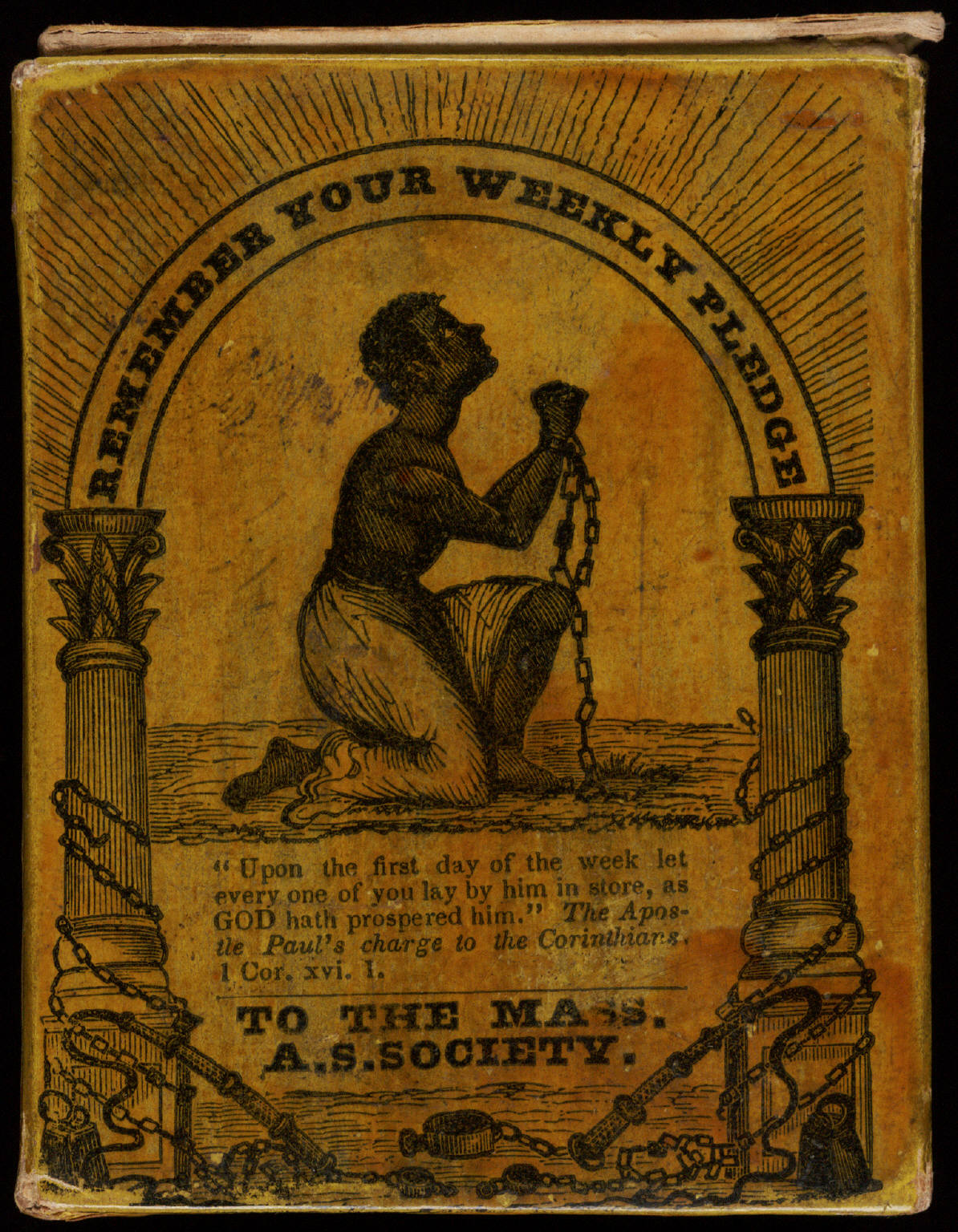
Collection box for the Massachusetts Anti-Slavery Society, circa 1850 (Wikicommons).


Throughout the world, kinship used to define the limits of morality. The less related you were to someone, the less moral you had to be with him or her. We see this in the Ten Commandments. The phrase "against thy neighbor" qualifies the commandment against bearing false witness and, implicitly, the preceding ones against killing, adultery, and stealing. For the modern reader, "thy neighbor" is helpfully explained as meaning "the children of thy people" (Leviticus 19:18).

In some cases, this kin-based morality gradually ceased to apply the farther away one went from home and from immediate kith and kin. Usually, however, the limits of one's moral community coincided with some kind of boundary: a geographic barrier, a political border, and/or an ethnic frontier. Beyond lay the world of "strangers."

Toward a universal morality

The first efforts to universalize morality—to create a single moral system that could apply to everyone—"arose simultaneously around 500 BCE in various parts of the world, from China in the Far East to Southern Italy in the West" (Assmann and Conrad, 2010, p. 121). These efforts were initially driven by the need to form alliances between different peoples:

Alliance - the formation of treaties - proved the most important instrument of internationalism. Forming an alliance required mutual recognition of the deities which served as patrons. The treaties which these empires formed with each other and with their vassals had to be sealed by solemn oaths invoking the gods of both parties. The list of these gods conventionally closes the treaty [...]. They had to be equal in their function and rank. Intercultural theology became a concern of international law. (Assmann and Conrad, 2010, p. 125) 

As ancient empires expanded and absorbed different peoples, this intercultural theology became useful for internal peace, notably with the Hellenistic empires that arose in the wake of Alexander the Great's conquests. By affirming that different religions are interchangeable, it became possible to create a common civic culture for diverse peoples:

Hellenization had two faces. On the one hand, it referred to the diffusion of Greek language, ideas and customs all over the Ancient World; on the other hand, it appeared to be more of a construction of a 'common culture', suggesting a similar change in Greece as in the other cultures. Flavius Josephus did not speak of 'Greek' but of 'common culture', ho koinos bios, as the goal of Jewish assimilation or reform in the Hellenistic age. (Assmann and Conrad, 2010, p.  127) 

One result would be the emergence of a universal religion. We like to associate this development with the teachings of Jesus, but a kind of proto-Christianity was already emerging near the end of the pre-Christian era.  At that time, many Jews were adapting their belief in one God to the universal worldview of Hellenistic culture:

Thus, while biblical universalism was founded on a notion of the mission of Israel to save all of humanity and bring them to the true worship of the only God, Hellenistic notions of universalism involved the assumption that all the gods were really different names for one God. (Boyarin, 1994, chap. 3). 

The two belief-systems merged among the increasingly Hellenized Jews of the eastern Mediterranean, thus setting the stage for Jesus and making it easier for his movement to succeed.


The Christian impulse

This new religion became a vehicle not only for moral universalism but also for belief in human equality. For if morality is universal, all humans must have the same capacity to follow its rules. In Christ, asserted Paul, there is neither Jew nor Greek, neither slave nor free, neither male nor female (Galatians 3:28).

While Christianity would steer people in the direction of universalism, there were limits to how far it could go. Theologians sometimes spoke of the need to set lower aims for average people and higher aims for saintly men and women. We see this realism in Augustine's position on prostitution: "If you do away with harlots, the world will be convulsed with lust" (De Ordine ii, 4). The same could be said for the Church's position on war, slavery, prejudice, and other manifestations of human inequality. These were the realities of an imperfect world. 

Such imperfections nonetheless became harder to accept over the following centuries. First, there was "mission creep." Once the Church had established certain ideals, there was continual pressure to bring human behavior into line with them. Second, the geocenter of the Church was shifting away from the eastern Mediterranean, where the absolute morality of Christianity had been constrained by the relative morality of kinship. Farther north and west, beyond the Hajnal Line, kinship ties were weaker and people more receptive to universal principles. There was thus a "fruitful encounter" between the Christian faith and these northwest Europeans who were more willing to internalize such principles and apply them more thoroughly (Frost, 2014a). 

Within this region, Catholicism would radicalize to the point of splitting away and becoming Protestantism. Here, too, Christian ideals would increasingly be taken to their logical conclusion.


The Abolitionist movement

Abolitionism began in the 17th century among English Quakers as a movement to abolish the slave trade. Over time, it grew more radical, seeking not only to free black slaves but also to extirpate racial and ethnic prejudice. Although "antiracism" did not yet exist as a word, its form and substance were already recognizable by the early 19th century. This was particularly so in the American northeast, where radical abolitionists denounced not only slavery but also fellow abolitionists who wanted to settle freed slaves in Africa. "In the 1830s, for the first time in American history an articulate and significant minority of Americans embraced racial equality as both a concept and a commitment" (Goodman, 1998, p. 1). This militant minority wanted more than simply an end to slavery: 

Believing that racial prejudice underpinned slavery, abolitionists committed themselves not just to emancipation [...] "Our prejudice against the blacks is founded in sheer pride; and it originates in the circumstance that people of their color, only, are universally allowed to be slaves," Child argued. "We made slavery, and slavery makes the prejudice." Color phobia, abolitionists contended, is irrational, wicked, preposterous, and unmanly. It is contrary to natural rights and Christian teaching, which recognizes no distinctions based on color. Race prejudice, Elizur Wright Jr. exploded, is "a narrow, bitter, selfish, swinish absurdity." (Goodman, 1998, p.58)


Decline ... and resurgence

That first wave of antiracism subsided in the late 19th century, partly because of the rise of Social Darwinism and partly because of disillusionment with the Civil War's aftermath. Radical abolitionists had long set their sights on ending slavery and crushing the American South, yet achievement of both goals failed to bring the final goal of human equality any closer. In the face of growing self-doubt, they lacked the ideological stamina to keep the faith and push forward, come what may. The movement thus fell into decline, remaining dominant only in the American northeast.

This first wave did not die, however. It was resuscitated in the early 1930s and would give rise to a much more dynamic second wave. The rise of Nazism convinced many Jewish intellectuals, notably the anthropologist Franz Boas, of the need to fight "racism" in all its forms, this word being initially a synonym for Nazism (Frost, 2014b). The war on racism would outlive the defeat of Nazi Germany, as a result of continuing fears of anti-Semitism in the postwar era. Moreover, it had now taken on a life of its own, much like its 19th-century predecessor. 

Today, some eighty years later, that war is still being fought. What began as a reaction to Nazism has become a permanent cultural revolution.


References 

Assmann, A., and S. Conrad. (2010). Memory in a Global Age. Discourses, Practices and Trajectories, Palgrave Macmillan Memory Studies, New York
http://archiv.ub.uni-heidelberg.de/propylaeumdok/1831/1/Assmann_Globalization_2010.pdf  

Boyarin, D. (1994). A Radical Jew. Paul and the Politics of Identity, Berkeley: University of California Press.
http://publishing.cdlib.org/ucpressebooks/view?docId=ft7w10086w;brand=ucpress  

Frost, P. (2014a). A fruitful encounter, Evo and Proud, September 26
http://evoandproud.blogspot.ca/2014/09/a-fruitful-encounter.html  

Frost, P. (2014b). From Nazi Germany to Middletown: ratcheting up the war on racism, Evo and Proud, July 19
http://evoandproud.blogspot.ca/2014/07/from-nazi-germany-to-middletown.html  

Goodman, P. (1998). Of One Blood. Abolitionism and the Origins of Racial Equality, Berkeley: University of California Press.
http://books.google.ca/books?hl=fr&lr=&id=Zy47hp0QjFQC&oi=fnd&pg=PR9&ots=f0ONCiUl-T&sig=TDfjRtlGuGRd-kxwZ8fXlL8OpCU#v=onepage&q&f=false

Sunday, September 22, 2013

From Slavs to slaves. Part II


St. Adalbert freeing Slavic slaves (source). With the Christianization of Eastern Europe, the trade in fair-skinned women and boys came to an end.


The white slave trade played a key role in ending the Dark Ages—this seemingly unending downward spiral that followed the collapse of the Roman Empire. By the 8th century, the elites of Western Europe had run out of gold and possessed very little else that could be traded for luxury Oriental goods. It was at that point in time that the possibility arose of selling fellow Europeans into slavery, particularly Slavs from the lands between the Elbe and the Volga.

Yet this historical episode is relatively unknown. One reason was its semi-illegality. Involuntary servitude wasn’t unlawful in itself. In fact, most Europeans were bound by long-term ties of submission, like the serfs who farmed the land. This was an accepted part of life. Enslavement was even seen as a humane way of dealing with criminals, prisoners of war, and other people who would otherwise be killed. But this particular form of enslavement meant more than just inferior status. Some of its aspects contravened both secular law and Christian morality, notably castration, the breaking up of families, and the abandonment of individuals who were too old or too young. There was also the exporting of fellow Europeans to the Muslim world and the prohibition against letting them learn about the Christian faith. It was for this reason that the existing term for involuntary servitude—servus—was felt to be inappropriate. The ethnonym ‘Slav’ thus came to mean a particularly degraded kind of servant—a slave.

This leads to another reason why this trade is little talked about. It sheds an unflattering light on our early history. The end of the Dark Ages was bought at a high moral price, even by medieval standards. After selling off the family heirlooms, our ancestors began to sell eunuchs, concubines, and toy boys—all this to get gold and precious fabrics to adorn their palaces … and churches.

This same price would also make possible the rise of states in Eastern Europe. When we read that early Polish and Russian kings had hundreds of wives or concubines, we smile and assume that this sort of thing was normal in those days. Yet it wasn’t. The slave trade initiated a cultural revolution that radically transformed social relations throughout pre-Christian Slavic Europe. Chieftains were previously elected and ruled over small territories through consensus; now, with Arab gold and silver, some of them had the means to assert their power unilaterally over much larger territories. A primitive form of democracy gave way to despotic rule.

Finally, this historical episode sheds an unflattering light on a group of Jews based in Spain and France who came to be called Radhanites. Being neither Christian nor Muslim, they were ideal middlemen for the overland trade route to Muslim Spain. At the other end of this route, there arose between the 8th and 12th centuries a network of trading posts across the Slavic lands that stretched from the Elbe in the West to the Volga in the East.

These trading posts may have eventually given rise to the Ashkenazi community of Eastern Europe. Admittedly, the usual explanation is that Jews emigrated to Poland in the wake of 12th-century persecutions in Western Europe. Yet there are earlier references to the presence of Jewish traders in what is now eastern and central Europe:

The appearance of Jews in central and eastern Europe occurred, it seems, only in the eighth century. It was linked to two important facts, the first of which was the establishment of a Jewish cultural and political center in Khazaria, a great Turkish empire whose center was on the lower Volga. […] The second fact that favored the formation of Jewish colonies in central and eastern Europe (located east of the Elbe) was the role played by Jewish merchants in the trade between Western Europe and the Muslim East.

[…] The Jews of Bohemia are cited for the first time in the 10th century; the Jews of Prague, in particular, are mentioned in the biographies of St. Adalbert. The existence of Jewish colonies in Poland go back only to the early 11th century.

[…] Jewish trade with central and eastern Europe was from the beginning closely linked to the fact that the Western Jews, especially the Spanish, French, and Rhineland Jews, played a major role in the international trade of Western Europe with the Muslim East. This trade began in the late 8th century at the initiative of Arab and Muslim traders. Many colonies of Jewish merchants formed along the trading routes that linked Western Europe to the countries of the Abbasid Caliphate. 

[…] We have already mentioned the existence of Jewish traders in Prague in the late 10th century. The biographies of St. Adalbert tell us that they trafficked in slaves. There was also in the early 11th century, we will discuss further, a Jewish establishment at Przemysl, a town at the crossroads of two trading routes: Prague-Krakow-Kiev and Hungary-Kiev. The importance of this center is confirmed by the discovery, made in the mid 19th century of a great treasure of dirhams (Arab silver money) from the Iranian dynasty of the Samanids, dating from the first half of the 10th century (Lewicki, 1960)

This settlement model is also consistent with the genetic evidence that Ashkenazi Jews descend from a small founder group of only 300 to 400 individuals who lived about 800 years ago (Carmi et al., 2013).

We should keep in mind that that these merchants were only a small group within a much larger Jewish community. Moreover, this trade was shared with at least two other groups: the Vikings, who dominated the trading routes via the Baltic and the Dnieper, the Don, and the Volga, and the Khazars, who controlled the Volga trading route. Indeed, the sudden eruption of Viking raids into Western and Eastern Europe at this time was, to a large degree, motivated by a desire to cash in on the white slave trade. Captives from both western and eastern Europe were taken to the trading center at Hedeby (in present-day Denmark) for sale to Muslim traders (Skirda, 2010, pp. 143-146). 

The world was a very different place in the 8th century and should not be seen through the lens of more recent times. Back then, Western Europe was a ruined civilization with memories of former grandeur. The white slave trade offered the ruling classes a way out, either indirectly through taxation or through direct sale of prisoners of war from the Elbe frontier. Had Jewish merchants not been available as go-betweens, there would have been other middlemen. The Vikings and the Khazars, for instance, who dominated this trade at the eastern and northern ends, would have eventually developed the overland route through Germany and France to Muslim Spain.

References 

Carmi, S., E. Kochav, K. Hui, X. Liu, J. Xue, F. Grady, S. Guha, K. Upadhyay, S. Mukherjee, B.M. Bowen, V. Joseph, A. Darvasi, K. Offit, L. Ozelius, I. Peter, J. Cho, H. Ostrer, G. Atzmon, L. Clark, T. Lencz, and I. Pe'er. (2013). The Ashkenazi Jewish genome, American Society of Human Genetics, Annual Meeting
http://www.ashg.org/2013meeting/abstracts/fulltext/f130120972.htm 

Lewicki, T. (1961). Les sources hébraïques consacrées a l'histoire de l'Europe centrale et Orientale et particulièrement a celle des pays slaves de la fin du IXe au milieu du XIIIe siècle, Cahiers du Monde russe et soviétique, 2, 228-241.
http://www.persee.fr/web/revues/home/prescript/article/cmr_0008-0160_1961_num_2_2_1466

Skirda, A. (2010). La traite des Slaves. L’esclavage des Blancs du VIIIe au XVIIIe siècle, Paris, Les Éditions de Paris Max Chaleil.

Saturday, September 14, 2013

From Slavs to Slaves


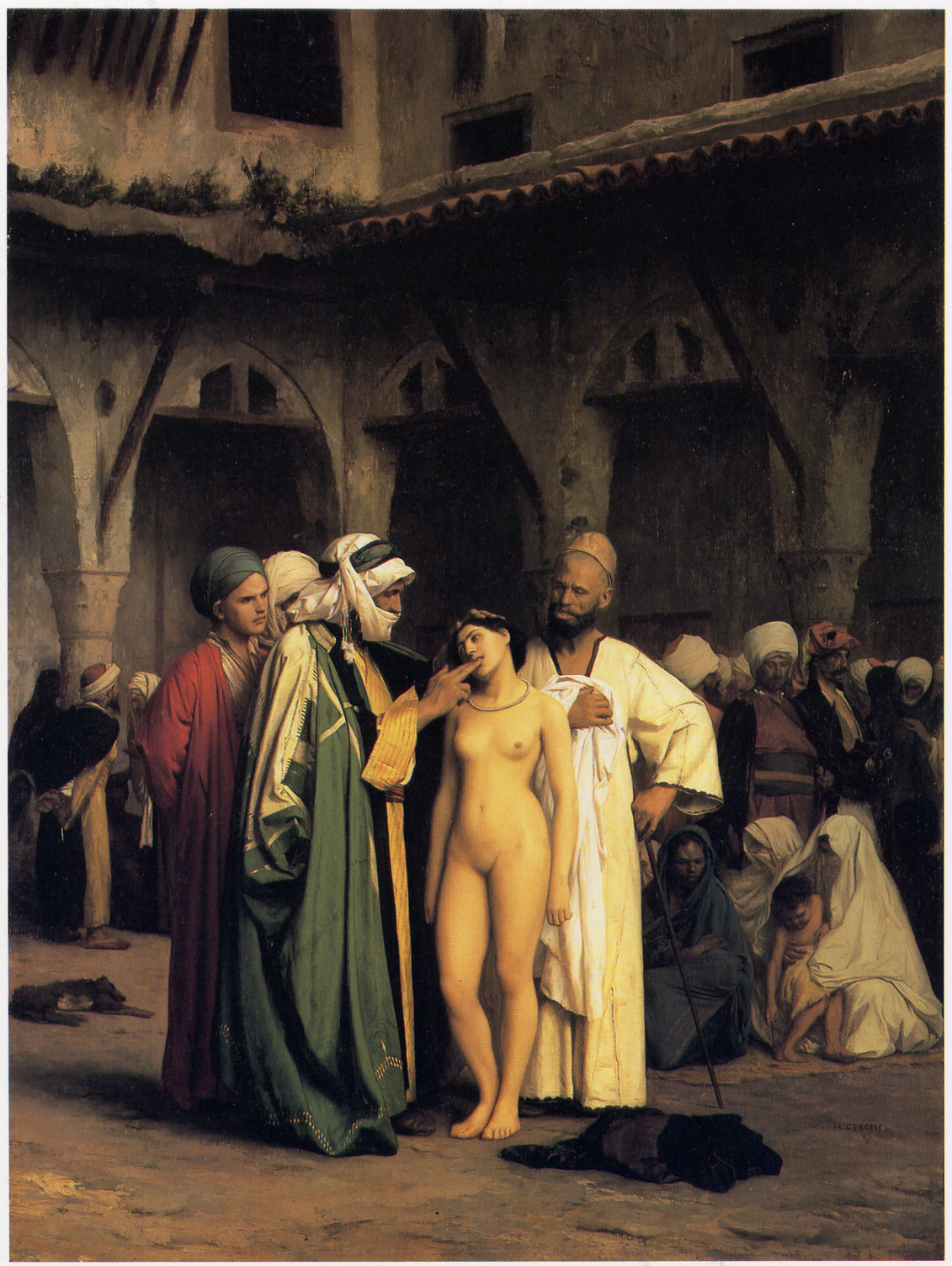
The Slave Market, painting (c. 1884) by Jean-Léon Gérôme (source)

Can Europeans, and European women in particular, become objects of trade? The idea seems laughable, since the term ‘slave trade’ almost always brings Africans to mind. Yet there was a time not so long ago when Europe exported slaves on a large scale. Between 1500 and 1650, Eastern Europe exported 1.5 million slaves to North Africa, the Middle East, and South Asia (Fisher, 1972; Kolodziejczyk, 2006). Western Europe exported a little over a million between 1530 and 1780 (Davis, 2004).

These slaves were taken during hit-and-run raids by either Crimean Tatar horsemen or North African corsairs. A raiding party would typically descend on an isolated village and carry away its inhabitants—or rather those who were commercially useful, particularly young women and young boys.

There was a time farther back, however, when Europeans were accomplices in this trade and when it provided most of their foreign exchange. This was during the Dark Ages and the early Middle Ages, specifically the 8th to 12th centuries.

The slave trade was a godsend for the elites of France, Germany, and Italy. With the collapse of the Western Roman Empire in the 5th century, they had to dip into their gold reserves to buy foreign luxury goods from the Middle East, generally clothing, upholstery, tapestries, carpets, and other precious fabrics (Skirda, 2010, pp. 56-57). By the 8th century, these reserves had been almost completely exhausted. Gold was giving way to silver, and even that medium of exchange was being debased. Western Europe had largely reverted to an economy of autarky, its shrunken towns and cities no longer major centers of trade. Most people produced everything they needed within their local village or manor.

Would Western Europe have eventually returned on its own to an international trading economy? Perhaps, although revival of trade would have become more difficult once the elites had become accustomed to autarky. As things turned out, they found the means to buy foreign luxury goods almost at the same time their gold reserves ran out. The 8th century brought the rapid expansion of a new civilization, Islam, into the Middle East, North Africa, and Spain. Its Arab elite was darker-skinned than the Greco-Roman or Visigothic elites it displaced. It was also more polygynous. A new market had come into being, a market for wives and concubines. European women were especially sought after, not because they were exotic but because their fair skin and fine facial features corresponded to notions of beauty that were indigenous to Arab culture (see previous post).

And so began the commodification of European women. Initially, this trade involved prisoners of war captured during the Islamic wars of expansion. Soon, however, a peaceful trading relationship developed. It was officially prohibited by Christian emperors and popes alike, but “in reality, people closed their eyes and everything was tolerated in exchange for good gold dinars” (Skirda, 2010, p. 75).

The women came from a belt of territory stretching from the Elbe in the West to the Volga in the East. This territory was inhabited by Slavic tribes—the ancestors of today’s Poles, Czechs, Slovaks, Byelorussians, Ukrainians, and Russians. They were typically prisoners of war who had been taken during fighting either between Germans and Slavs or among different Slavic tribes:

Only the adolescent boys and girls—the Slavonici—were spared, enslaved, and immediately sold to the merchants accompanying the armies. The Barbarian-ruled West, abandoned by major international trade and bereft of gold, was able to get gold by trading in slaves, who were almost exclusively Slavs. These objects of servile trade and commerce would be integrated into harems and used as military slaves or eunuchs. Adults and children were eliminated for obvious reasons. They did not correspond to the Muslim demand for young virgin girls and beardless boys and it was out of the question to gather children and raise them. The traders had neither the time nor the willingness and more importantly it would not have been cost-effective. Later, they would spare the lives of more captives, by selecting them according to their capacities for productive work and by using them to the limit of their strength at laborious physical tasks (Skirda, 2010, pp. 85-86).

The captives were taken overland by various routes: through Germany and France to Muslim Spain; through Venice and by ship to the Middle East; or down the Dniepr, the Don, or the Volga to the Middle East via the Black Sea or the Caspian. How many were traded? It’s difficult to say, but Skirda (2010, p. 6) advances a figure between several tens of thousands and several hundreds of thousands for the period extending from the 8th to 12th centuries.

It was this trade, more than any other, that revived the old trading networks not only between Europe and the Middle East, but also within Europe itself. The balance of foreign exchange also shifted in Europe’s favor, thus giving the elites of France, Germany, and Italy the means to buy not only foreign goods but also local products, thereby stimulating a long economic recovery that would take Europe out of the Dark Ages. As Skirda notes ironically:

The Italians who […] were the “great initiators of Europe” […] became the promoters of trading companies, creators of credit, restorers of currency. The only major oversight [of historians]: all of that was accomplished through the trade in Slavs. It is easier to understand why almost all historians and commentators have silently observed this phenomenon. It is difficult for them to acknowledge that the economic renaissance of the West of the 10th and 11th centuries was achieved through human trafficking! (Skirda, 2010, p. 112)

References

Davis, R. (2004). Christian Slaves, Muslim Masters: White Slavery in the Mediterranean, the Barbary Coast, and Italy, 1500-1800, Palgrave-Macmillan.

Fisher, A. (1972). Muscovy and the Black Sea slave trade, Canadian American Slavic Studies, 6, 575-594.

Kolodziejczyk, D. (2006). Slave hunting and slave redemption as a business enterprise: The northern Black Sea region in the sixteenth to seventeenth centuries, Oriente Moderno, 86, 1, The Ottomans and Trade, pp. 149-159.

Skirda, A. (2010). La traite des Slaves. L’esclavage des Blancs du VIIIe au XVIIIe siècle, Paris, Les Éditions de Paris Max Chaleil.

Saturday, July 13, 2013

The other slave trade


Although the slave raiders usually left infants behind, older girls and boys could be taken, if suitable for immediate sale (Selling a child-slave, painting by Vasily Vereshchagin – source).


Europe used to export slaves to the non-European world. Such a statement would astonish most people today, even among the university-educated. Surely, those slaves were few in number, certainly fewer than the African slaves taken across the Atlantic.  And surely all of that happened long before the Atlantic slave trade. 

Well, no and no. The numbers were huge. At the height of that trade, over 10,000 Eastern Europeans were enslaved each year between 1500 and 1650 for export to North Africa, the Middle East, and South Asia … a total of 1.5 million. By comparison, the Americas received fewer than 300,000 African slaves before 1600 and another 1.5 million between 1600 and 1700 (Fisher, 1972; Kolodziejczyk, 2006). Western Europeans were likewise enslaved and taken abroad, mainly to North Africa. How many? More than 1 million between 1530 and 1780 (Davis, 2004).

And, yes, those European slaves were going across the Mediterranean while African slaves were going across the Atlantic. Officially, the “harvest” ended with the Treaty of Carlowitz (1699), which called on the Ottoman Empire to stop all slave raiding (Abou-el-Haj, 1969). Unofficially, it did not end on a large scale until Russia annexed the Khanate of the Crimea in 1783—a quarter-century before the abolition of the slave trade in the British Empire. Fair-skinned women were thereafter exported on a smaller scale until the late 19th century, mainly from the Caucasus.  

Differences from the African Slave Trade

The white slave trade differed from its black counterpart in a few key ways. In Africa, a slave-trader typically purchased prisoners of war who had already lost their freedom through local conflicts. In Europe, he played a more active role.  

This was the case with the Crimean Tatars who lived under Ottoman protection in the Black Sea region. Beginning in the mid-15th century, they would fan out each year on raids into what is now Ukraine and southern Russia. These raids served no military purpose, being driven by the profits to be made in the slave trade:

[…] most of these raids do not appear to have had any military purpose and, moreover, had little or no relationship to Ottoman policy. They were an integral part of the Crimean economy, a "harvesting of the steppe" as the Tatars explained it. (Fisher, 1973)

In a royal [Polish] document dated 1555 we read: “There are many Turks who send Tatars supplied with their horses and armour into our domains, and later share the profits in the fields”, this last expression referring to the fact that the division took place far from the eyes of the Ottoman police and customs officers who might have viewed negatively the breaking of the peace treaty or the failure to pay taxes due by those involved in the slave trade.  

Notwithstanding such efforts to escape the tax duties, the Ottoman state was among the principal share holders in the Black Sea slave trade. According to Pretwicz, the sultan's income from the slave trade in Akkerman and Ocakiv (Turkish Özü ) amounted to a few 100,000 akçe a year. Strikingly similar are the numbers for Caffa established by Inalcik on the basis of Ottoman tax registers. The slave tax collected in Caffa amounted to 620,000 akçe in 1520 and 650,000 akçe in 1529.26 The same author estimates the total state revenue from the slave trade as approaching 100,000 gold florins (i.e. circa 6,000,000 akçe) in the mid 16th century. (Kolodziejczyk, 2006)

The white slave trade was different in a second way. Most black slaves were destined for physical labor on plantations. There was thus a stronger preference for men over women. In contrast, white slaves were used more for domestic service, particularly concubinage and marriage. There was thus a stronger preference for women, as reflected in the sex ratio of the slave population: black slaves were predominantly male, and white slaves predominantly female. Furthermore, while blacks of both sexes sold for the same price, Russian and Circassian women fetched 50% more than men of the same nationality. (Verlinden, 1977, pp. 211, 224, 306, 315, 330-331, 460, 517; see also Frost, 1990). This price differential continued until the end of white slavery. A mid-19th century report from Turkey states that a “trained, strong, black slave” would cost 4,000 to 5,000 piasters, whereas “white slave girls of special beauty” were worth 50,000 piasters or more (Lewis, 1990, p. 13).  

Conclusion

Slave trading existed in many parts of the world and during many historical periods. Trading in fair-skinned women, however, was much more limited in space and time. There is no evidence of it during Roman times, at least not on a large scale. If a Roman notable wanted a bride with milk-white skin, he would look among the families in his entourage and not among the slaves at the local market. After all, a native-born woman of good family would bring a dowry and valuable family connections.

All of this changed in the 7th century with the dramatic expansion of the Arab world into the Middle East and thence into North Africa and Spain. The new elites were darker in skin tone and, also, more polygynous. It was these two factors that would fuel demand for fair-skinned brides and concubines. 

A third factor was of course the relative weakness of European societies, particularly during the Dark Ages that followed the collapse of the Roman Empire. With the gradual strengthening of European states, this trade increasingly took the form of hit-and-run raids that focused on poorly defended areas, such as the plains north of the Black Sea. This raiding would finally end only with European annexation of those “states” that earned most of their income from the slave trade, such as the Khanate of the Crimea and the Beyliks of North Africa.

Would this trade have continued if Europe had remained weak? Probably. Would it have eventually become more humane and sustainable? Doubtful. Though often described as “harvesting,” there never was any effort to make it sustainable. A Tatar raid typically left behind the old and the very young, as a Polish report noted: “In the fields and forests they [i.e. the Tatars] left behind over 200 poor children whom they could not take along since everyone preferred to take horses and oxen rather than children” (Kolodziejczyk, 2006).

The result was widespread depopulation of much of Ukraine and southern Russia, which in turn forced the Tatars to raid farther and farther afield, even as far as present-day Poland. Demographic wastage was considerable: 

The Crimean Tatar society was based on raiding the neighbouring Slavic and Caucasian sedentary societies and selling the captives into the slave markets of Eurasia. Approximately 75 percent of the Crimean population consisted of slaves or freedmen, and much of the free population was highly predatory, engaged either in the gathering of slaves or in the selling of them. It is known that for every slave the Crimeans sold in the market, they killed outright several other people during their raids, and a couple more died on the way to the slave market. (Britannica, 2013)

There was no resource management, only resource depletion (Wikipedia, 2013). As Kolodziejczyk (2006) notes:

We should not close our eyes to the consequences of depopulation, affecting large Slavic territories in Eastern Europe. If an "alternative" history of Ukraine were imaginable, perhaps the country's historical development would have looked different had it not been for the slave trade.

Ukraine is considered to be part of ‘Old Europe’ yet the plains north of the Black Sea were finally opened for settlement at about the same time as the plains of the United States and Canada. 

References

Abou-el-Haj, R.A. (1969). The Formal Closure of the Ottoman Frontier in Europe: 1699-1703, Journal of the American Oriental Society, 89(3), 467-475. 

Britannica. (2012). “Slavery” in Encyclopedia Britannica’s Guide to Black History.
http://www.britannica.com/blackhistory/article-24157 

Davis, R. (2004). Christian Slaves, Muslim Masters: White Slavery in the Mediterranean, the Barbary Coast, and Italy, 1500-1800, Palgrave-Macmillan.

Fisher, A.W. (1973). Azov in the sixteenth and seventeenth centuries, Jahrbücher für Geschichte Osteuropas, Neue Folge, 21(2), 161-174. 

Fisher, A. (1972). Muscovy and the Black Sea slave trade, Canadian American Slavic Studies, 6, 575-594.

Frost, P. (1990). Fair women, dark men: the forgotten roots of colour prejudice, History of European Ideas, 12, 669-679.

Kolodziejczyk, D. (2006). Slave hunting and slave redemption as a business enterprise: The northern Black Sea region in the sixteenth to seventeenth centuries, Oriente Moderno, 86, 1, The Ottomans and Trade, pp. 149-159.

Lewis, B. (1990). Race and Slavery in the Middle East, New York: Oxford University Press. 

Verlinden, C. (1977). L’Esclavage dans l’Europe médiévale, vol. II, Ghent.

Wikipedia (2013). Crimean-Nogai Raids,
http://en.wikipedia.org/wiki/Crimean-Nogai_Raids