A
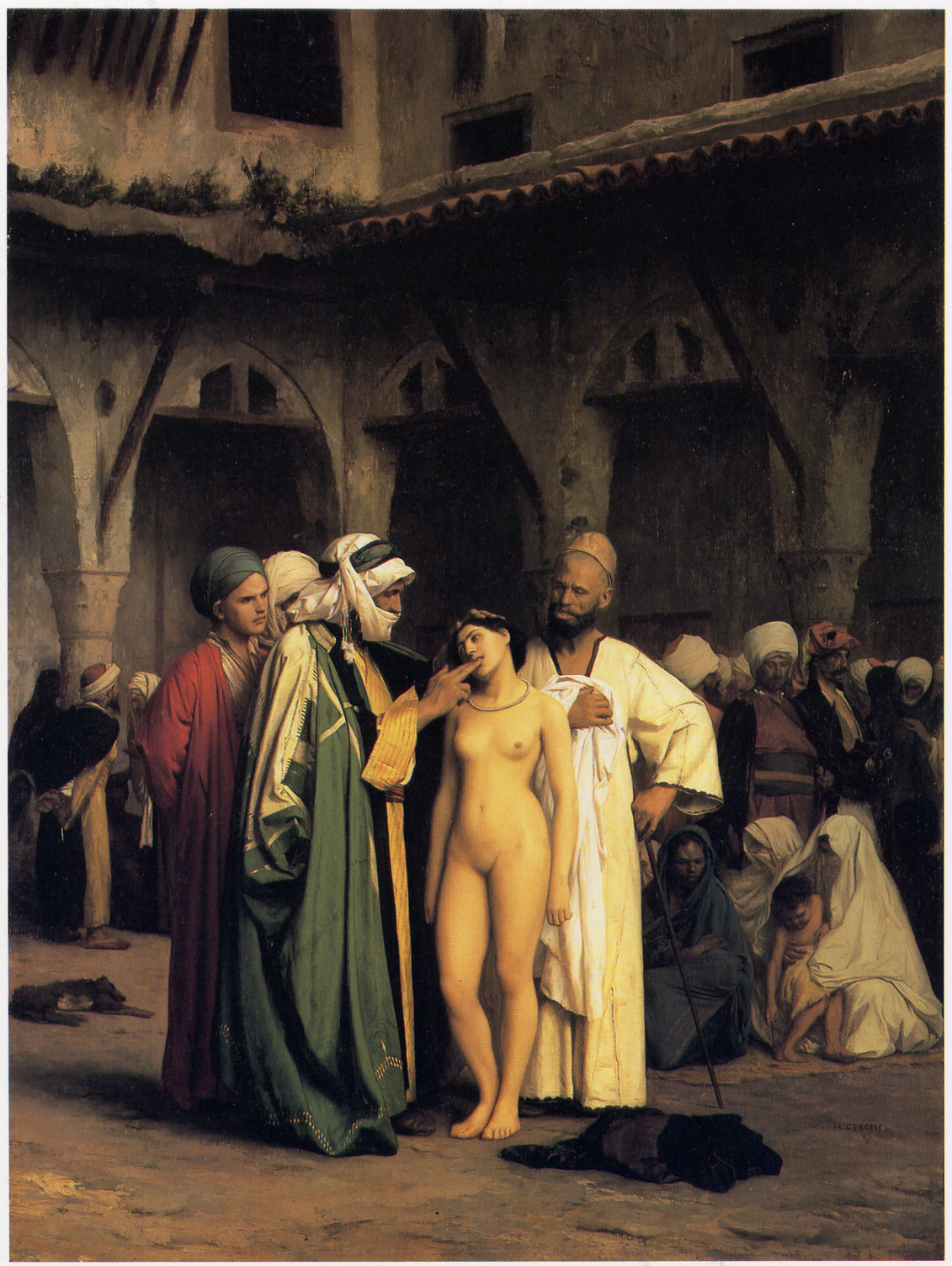
Bangladeshi youth gang in Tower Hamlets, London. (Source: Wikimedia Commons,
Bangali71). Is this the kind of assimilation you had in mind?
In
my last post, I discussed the revelations from Rotherham, England. In a town of
some 250,000 people, at least 1,400 school-age girls have been
"groomed" for prostitution by organized gangs. Grooming begins with
seduction by "lover boys" and ends in abduction, trafficking, and
confinement. It is this final stage that apparently explains why some 500 girls
were missing from the 15 to 19 age group at the last census.
Two
more points. All of the girls are white, and all of the groomers are Pakistani,
except for a few Afghans and Roma.
Even
before the latest revelations, and even in antiracist circles, there was a growing
(though reluctant) awareness that this social problem is disproportionately
"Asian," a term that increasingly means Muslim South Asian. The cause,
however, seems elusive:
[...]
this disparity begs further exploration and, if possible, explanation.
Admittedly, this is not an easy job. Complex social issues can rarely be
explained in terms of a single factor and moving from correlation to causality
is particularly challenging. Nonetheless, in CSE [child sexual exploitation],
as with other crimes, observed relationships between race and offending may
well be mediated by social, structural or situational factors. Asians, like
whites or blacks, do not commit CSE offences because they are Asian, white or black. This lazy, circular logic,
verging on quasi-geneticism, would label every Asian adult equally a
groomer-in-waiting and fails to address the immediate precipitates of CSE, such
as ready access to children and low levels of formal or informal surveillance
to constrain deviant behaviour. (Cockbain, 2013)
But
if we wish to understand constraints on deviancy, one key variable may be
ethnicity, particularly if an ethnic boundary separates the victim from the
victimizer. It is precisely within this underdetermined space that such
constraints are most likely to break down.
The limits to
shame
In
most of the world's cultures, deviant behavior is kept in check by shaming. A
wrongdoing is witnessed by other people, who spread the word to others. The
wrongdoers feel shame, knowing that their reputation is now tarnished. In cases
of severe wrongdoing, they may have to leave their community.
As
a means to keep deviancy in check, shaming has three limitations:
-
It cannot control behavior that is not witnessed by anyone other than the
wrongdoers themselves.
-
It cannot control behavior that is aimed at someone outside one's community.
-
Because shame is socially mediated, it is less effective in modern Western
societies, where people generally interact as anonymous individuals.
A
minority of world cultures supplement shame with another means of behavior
control. These cultures, essentially those of Western Europe, rely much more on
internal mental mechanisms—guilt and affective empathy—to enforce social rules
that have the perceived backing of moral authority. You feel guilt when you break
a rule or even merely think about breaking it. No witnesses are necessary,
other than the imaginary one inside your mind (Benedict, (1946 [2005]).
Similarly, no one tells you to feel empathy when you see another person
unjustly suffering. Refusal to act on these feelings can lead to anguish, depression and, ultimately, suicidal ideation (Jadhav, 1996; O'Connor et al.,2007). Guilt and empathy are thus more effective than shame as means to control
behavior.
The
capacity to feel guilt and empathy varies from one individual to another, the
heritability being moderate to high (Chakrabarti and Baron-Cohen, 2013; Daviset al., 1994). There has thus been a potential for gene-culture co-evolution,
i.e., guilt cultures may have selected for individuals with a higher capacity
for guilt and empathy. Even if the behavioral differences between guilt
cultures and shame cultures are entirely softwired, the consequences are
nonetheless real.
From shame
culture to guilt culture
Immigration
is not just a movement from one place to another. It is also a movement from
one culture to another. In Britain in general, it has largely involved people
coming to a guilt culture from various shame cultures in South Asia, the
Caribbean, and elsewhere.
In
South Asia, be it Hindu India or Muslim Pakistan and Bangladesh, shaming
provides a woman with no protection from unwanted sexual advances once she
ventures beyond her own neighborhood:
The
prime danger is from male strangers who are seen as liable to take advantage of
an unescorted woman. Such strangers, as a category, are presumed to be sexually
predatory and always ready to pounce. Some young men (and some not so young)
reinforce that notion in town streets and in buses through the common practice
known in Indian English as "eve-teasing." In the anonymity of the
streets, some men who would spring fiercely to the defense of the women of
their own families, leer, hoot, pinch, and make sexually pointed remarks at
passing women whom they do not know and who do not know them [...]. However,
they rarely act that way in their own mohalla,
neighbourhood. (Mandelbaum, 1993, pp. 9-10)
In
a shame culture, a wrongdoing is not shameful if the witnesses are from outside
one's "moral community." Often, there is no clear boundary between
outside and inside; the moral community simply fades away as one goes farther
away from the people one knows. The boundary is much more clear-cut if it
coincides with a difference in religion. When Moroccan and Turkish "lover
boys" were interviewed in Amsterdam, it was found that their identity as
Muslims strongly influenced how they perceived their victims:
One
pimp told us that it was not only easier to get Dutch girls into prostitution,
but that they were worth less than other girls and therefore deserved to end up
as prostitutes. 'Culturally and religiously, a Dutch girl is little more than a
pig to a loverboy. She's nothing, she's of no value. When that's what you're
thinking, you can completely block out your emotions.' As mentioned, most
loverboys were reluctant to manipulate the daughters of immigrants into
prostitution, especially when it came to girls leading a pious life. 'We are
obligated to treat Moroccan girls as we would treat our own sisters; we can't
treat them as rags. You can't just make a Moroccan girl work for you. (...)
Listen, when a Moroccan girl wants to do it, that's different. But if she goes
to school and wears a headscarf, it's just not right'. (Van San and Bovenkerk,2013)
Muslim
girls were not avoided, however, solely out of loyalty to Islam.
They
[lover boys] had a lot more trouble with the daughters of immigrants, 'because
those families have respect for each other.' In their view, this was not the
case with Dutch girls: 'Dutch girls really are the easiest. (...) Nowadays,
there are girls of thirteen or fourteen years old who have already lost their
virginity. They go to clubs and discos and stay away from home for a whole
weekend. They want to go out, they want new clothes, but they don't have the
money. When a loverboy comes along and the girl spots him and he seems like a
nice boy, things happen... Meeting a loverboy is like hitting the jackpot, you
know what I mean?' (Van San and Bovenkerk, 2013)
The lover boy,
an adaptation to female mate scarcity?
Keep
in mind that Muslims are not the only group to be overrepresented in this
social niche. Among the lover boys interviewed by Van San and Bovenkerk (2013),
half were Muslims (Moroccans, Turks) and half were from the Dutch West Indies.
In the British OCCE study on child sexual exploitation in gangs and groups,
around 24% of the suspects were neither white nor Asian, being probably blacks
of Caribbean or African origin (Cockbain, 2013).
Thus,
in addition to the difference of religion, and the resulting moral boundary
between victim and victimizer, there seems to be another factor in the genesis
of lover boys. This factor is nonreligious and would apply not only to the
Muslim world but also to sub-Saharan Africa and its diaspora. In both culture
areas, many young men are inevitably shut out of the marriage market because of
excess female mortality and high polygyny rates (5-10% in the Muslim world and
20-40% in sub-Saharan Africa) (D'Souza and Chen, 1980; Fuse and Crenshaw, 2006;
Goody, 1973, pp. 175-190; Pebley and Mbugua, 1989). There may have therefore
been selection for young men who can exploit sexual opportunities, if and when
they arise, via specific personality traits.
Alvergne
et al. (2009, 2010a, 2010b) explored the relationship between male personality
and sexual competition in the high-polygyny environment of Senegal. There was
no correlation among Senegalese men between mating success and most personality
traits, i.e., neuroticism, openness, and agreeableness. There was a strong correlation,
however, with extraversion, defined as "pro-social behavior which reflects
sociability, assertiveness, activity, dominance and positive emotions."
Men with above-medium extraversion were 40% more likely to have more than one
wife than those with below-medium extraversion, after controlling for age.
Furthermore, this personality trait correlated with higher testosterone levels.
It thus seems to be part of the male toolkit for mating success in a
high-polygyny environment.
From antiracism
to anti-Islamism
It’s
one thing to look for answers. In this, anthropology can offer some insights.
It’s quite another to translate the explanation into applicable solutions. To
go from one to the other may involve surmounting mental and political
obstacles.
First,
most Britons have been living in denial. Few wish to believe, at least openly,
that organized gangs are preying on school-age girls. Fewer wish to believe
that the gangs are overwhelmingly non-white and largely Muslim. And even fewer
wish to believe the extent of the problem: perhaps one in ten of Rotherham's
white families, if not more. It all sounds like vicious propaganda that only
ugly hate-filled people could believe.
Yet
it's true. So what comes next? Many disillusioned antiracists will likely end
up seeing Islam, and not racism, as the problem. The solution will therefore be
to secularize Muslim culture and replace it with an assimilated, Westernized
version, like modern Christianity.
Politically,
anti-Islamism is attractive. It has the merit of framing the problem in
ideological and not racial terms. It is also likely to win over much of the
political elite, particularly those who have backed previous military
interventions in the Muslim world and would like to see more.
But
will it work? Let's assume anti-Islamists are not sidetracked into cheerleading
a new round of foreign interventions "to get to the root of the
problem." Let's also assume the focus is on assimilating Muslims living in
Britain. Unfortunately, not only will this approach fail to solve the problem,
it will actually make things worse.
In
a Western context, assimilation does not mean giving up the restraints of one
culture and taking on those of another. It means the first but not the second.
Immigrants leave an environment where behavior is restrained mainly by external
controls (shaming, family discipline, community surveillance) and they enter
one where behavior is restrained mainly by internal controls (guilt, empathy).
To the extent that assimilation happens, external social controls will weaken
and may even disappear, but they will not be replaced by internal mental
controls. There is no known way to give people a greater capacity for guilt and
empathy than what they already have. No such psychotherapy exists. This is true
even if we assume that population differences in these two traits are due
solely to cultural conditioning, and not to inborn tendencies.
Assimilation
is already making things worse by dissolving traditional restraints on behavior
and leaving nothing in their place. Keep in mind that grooming is largely
absent from the 1st generation of Britain's Pakistani community. It's much more
present among young men of the 2nd and 3rd generations. They are very much into
contemporary Western culture and are freely borrowing those elements that
appeal to them the most:
Taj
refers to '. . . the growing popularity of the "gangsta" fashion
affected by local youths as they adopt the clothing and elements of the
attitudes of disenchanted urban American youth gangs' (1996, p.4). Khan
describes 'This new youth Pakistani "street culture" [as] male
dominated and highly macho' (1997, p.18), linking drug dependency among young
Pakistani men with their involvement in violent crime, including prostitution. (Macey, 1999)
Accusations
of "racism" likewise reflect an insider's view of Western society and
its weak points:
When
I asked about racial harassment by the police, the women reacted with
amusement. One of them said: 'Well, they would, wouldn't they? After all, they
know it's these lads who're doing the dealing'. Another stated that 'the lads'
had planned to accuse the police of racism because they had found this an
effective weapon against authority in the past. In sum, while it seems unlikely
that the Bradford police force contains no racists in its ranks, to 'explain'
Pakistani male violence solely, or even mainly, as a reaction to police racism
might well be over-simplified. (Macey, 1999)
The
result is an unstable hybrid culture that is as foreign to 1st generation
immigrants as it is to native Britons:
These
young men have constructed an ethnic and religious identity which goes beyond
hybridity in containing a high level of contradiction — a contradiction which
is highly functional in its facilitation of dual standards, hypocrisy and
legitimation, which are used as resources to maintain power over women. These
aspects of male behaviour and their control function are clearly recognized,
and resented, by young Pakistani women. One example quoted to me is the men's
involvement in 'discos, drink, drugs and white women', while simultaneously
putting pressure (to the point of harassment and threatened violence) on
Pakistani women to stay at home and behave as 'good' Muslim women. (Macey,1999)
Conclusion
Yes,
the whole issue is a messy ball of wax. The worst part is the reluctance not
just to discuss it but even to think it through, the result being that the
proposed solutions have only a vague connection to the actual problem, which is
neither "racism" nor "Islamism."
What
then is the problem? It's the mass migration of certain communities from an
environment where behavior is subject to certain checks and balances to one
where these are virtually absent.
Why
do you think Pakistani parents want their daughters to wear headscarves or at
least dress modestly? Are they being slaves to hidebound custom? Or is it
because they come from a society where many single men are, in fact, sexual
predators?
And
that’s just one aspect of a much larger problem. Humans have adapted to local
circumstances in many different ways, and these adaptations involve mental
traits with moderate to high heritability. Things like time orientation,
monotony avoidance, anger threshold, strength and nature of the sexual bond,
and so forth. Such differences keep us from becoming interchangeable units in a
global community. Each human and each community is a product of adaptations to
specific circumstances, and what works in one set of circumstances may not work
so well in another.
References
Alvergne, A., M. Jokela, C.
Faurie, and V. Lummaa. (2010a).
Personality and testosterone in men from a high-fertility population, Personality and Individual Differences, 49, 840-844.
http://www.huli.group.shef.ac.uk/alvergne2010persinddiff.pdf
Alvergne, A., M. Jokela, and
V. Lummaa. (2010b).
Personality and reproductive success in a high-fertility human population, Proceedings of the National Academy of
Sciences, 107, 11745-11750.
http://huli.group.shef.ac.uk/alvergne_PNAS.pdf
Alvergne,
A., C. Faurie, and M. Raymond. (2009). Variation in testosterone levels and
male reproductive effort: Insight from a polygynous human population, Hormones and Behavior, 56, 491-497.
http://evolutionhumaine.fr/michel/publis/pdf/alvergne_2009_hormones_behavior.pdf
Benedict,
R. (1946 [2005]). The Chrysanthemum and
the Sword. Patterns of Japanese Culture, First Mariner Books.
Chakrabarti,
B. and S. Baron-Cohen. (2013). Understanding the genetics of empathy and the
autistic spectrum, in S. Baron-Cohen, H. Tager-Flusberg, M. Lombardo. (eds). Understanding Other Minds: Perspectives from
Developmental Social Neuroscience, Oxford: Oxford University Press.
http://books.google.ca/books?hl=fr&lr=&id=eTdLAAAAQBAJ&oi=fnd&pg=PA326&ots=fHpygaxaMQ&sig=_sJsVgdoe0hc-fFbzaW3GMEslZU#v=onepage&q&f=false
Cockbain,
E. (2013). Grooming and the 'Asian sex gang predator': the construction of a
racial crime threat, Race & Class,
54, 22-32.
http://rac.sagepub.com/content/54/4/22.short
Davis,
M.H., C. Luce, and S.J. Kraus. (1994).The heritability of characteristics
associated with dispositional empathy, Journal
of Personality, 62, 369-391.
http://onlinelibrary.wiley.com/doi/10.1111/j.1467-6494.1994.tb00302.x/abstract
D'Souza,
S. and L.C. Chen. (1980). Sex differentials in mortality in rural Bangladesh, Population and Development Review, 6, 257-270.
http://www.jstor.org/discover/10.2307/1972730?uid=3739448&uid=2&uid=3737720&uid=4&sid=21104683180073
Fuse
K. and E.M. Crenshaw. (2006). Gender imbalance in infant mortality: a
cross-national study of social structure and female infanticide, Social Science and Medicine, 62, 360-374.
http://www.sciencedirect.com/science/article/pii/S0277953605002881
Goody,
J. (1973). The Character of Kinship,
Cambridge: Cambridge University Press.
Jay,
A. (2014). Independent Inquiry into Child
Sexual Exploitation in Rotherham 1997-2013
http://www.rotherham.gov.uk/downloads/file/1407/independent_inquiry_cse_in_rotherham
Jadhav,
S. (1996). The cultural origins of Western depression, International Journal of Social Psychiatry, 42, 269-286.
http://isp.sagepub.com/content/42/4/269.short
Macey,
M. (1999). Class, gender and religious influences on changing patterns of
Pakistani Muslim male violence in Bradford, Ethnic
and Racial Studies, 22, 5,
845-866
http://www.tandfonline.com/doi/abs/10.1080/014198799329288#.VBOnH-kg_cs
Mandelbaum,
D.G. (1993). Women's Seclusion and Men's
Honor: Sex Roles in North India, Bangladesh, and Pakistan, University of
Arizona Press.
O'Connor,
L.E., J.W. Berry, T. Lewis, K. Mulherin, and P.S. Crisostomo. (2007). Empathy
and depression: the moral system in overdrive, in: T.F.D. Farrow and P.W.R.
Woodruff (eds). Empathy in Mental Illness,
(pp. 49-75). Cambridge: Cambridge University Press.
http://www.eparg.org/publications/empathy-chapter-web.pdf
Pebley,
A. R., and W. Mbugua. (1989). Polygyny and Fertility in Sub-Saharan Africa. In
R. J. Lesthaeghe (ed.), Reproduction and
Social Organization in Sub-Saharan Africa, Berkeley: University of
California Press, pp. 338-364.
http://www.popline.org/node/359257
Van
San, M. and F. Bovenkerk. (2013). Secret seducers. True tale of pimps in the
red light district of Amsterdam, Crime,
Law and Social Change, 60, 67-80.
http://link.springer.com/article/10.1007/s10611-013-9436-z
.png?uselang=en-ca)