Showing posts with label pneumonia. Show all posts

Thursday, June 23, 2022

Ancestral East Asians and adaptation to coronaviruses


Early farming village in China (Wikicommons – Xinyang City Museum, Gary Todd)


Respiratory viruses began to propagate more easily when hunting and gathering gave way to farming and as settlements grew larger. Humans may have then evolved to use coronaviruses as a natural vaccine against deadlier respiratory diseases, like tuberculosis and pneumonia.


A new genomic study has found that East Asians had to adapt to epidemics of coronaviruses some 25,000 years ago. The authors looked at gene variants for proteins that interact with coronaviruses in five East Asian populations: Han Chinese (Beijing); Han Chinese (South China); Dai (Yunnan, China); Japanese; and Vietnamese. There were three main findings:


·         Ancestral East Asians had to adapt to coronavirus epidemics around 25,000 years ago

·         They adapted by acquiring mutations that are close to genes that regulate the development of lung tissue and other tissues affected by COVID-19

·         Those mutations either promote or block infection by coronaviruses (Souilmi et al. 2021, p. 3505).


The last finding is puzzling. Did those ancestral East Asians become more vulnerable or less vulnerable to coronaviruses? The authors simply say that half of those mutations from 25,000 years ago have “anti- or proviral effects” versus 29% of all proteins that interact with coronaviruses (Souilmi et al. 2021, p. 3509). Fine. But how many of those mutations were antiviral and how many proviral?


It might seem strange that natural selection would actually make people more susceptible to coronavirus infections. Yet such susceptibility could be beneficial. A viral infection can boost immunity to other pathogens, including deadly ones that cause tuberculosis, pneumonia, or pneumonic plague. Until recently, coronaviruses were typically mild in their effects, producing what we call the “common cold.” They may thus act as a natural vaccine against deadlier respiratory diseases (Frost 2020).


Respiratory diseases are believed to have become serious for humans when hunting and gathering gave way to farming. People became sedentary and their settlements grew larger with time, thus providing respiratory viruses with better conditions for propagation (Comas et al. 2013). This theoretical model is in conflict, however, with the above finding that ancestral East Asians began adapting to coronaviruses some 25,000 years ago, long before they adopted farming and became sedentary. We’re thus left with the unlikely conclusion that coronavirus epidemics began among scattered bands of hunter-gatherers.


The estimate of 25,000 years ago is probably wrong. The authors arrived at that figure by calculating the latest date when the ancestors of the four East Asian groups were still a single population. But East Asians are not descended from a single population. Their origins are best described by the "Two-Layer" (TL) hypothesis:


·         Modern humans spread into East Asia through a northern route and a southern route.

·         The southerners were then replaced to varying degrees by northerners who spread out of northeast Asia and successively occupied northern China, southern China, and Southeast Asia (Oxenham and Buckley 2016; Xu et al. 2006).

·         Thus, as you go farther south in East Asia, the population has a greater admixture from the earlier southern “layer”—from hunter-gatherers who closely resemble the relic groups that still exist in parts of Southeast Asia, i.e., the Andaman Islanders, the Aeta of the Philippines and the Maniq and Semang of the Malayan Peninsula.


Admixture from that older southern substrate pushes back in time the latest common ancestors, who never existed. Adaptation to coronaviruses therefore happened at a later date, probably when the “northerners” pushed into what is now northern China and adopted farming. They then grew in population, pushed farther south, and intermixed with the hunter-gatherers who lived there. 


References


Comas, I., M. Coscolla, T. Luo, et al. (2013). Out-of-Africa migration and Neolithic coexpansion of Mycobacterium tuberculosis with modern humans. Nature Genetics 45: 1176–1182. https://doi.org/10.1038/ng.2744


Frost, P. (2020). Does a commensal relationship exist between coronaviruses and some human populations? Journal of Molecular Genetics 3(2): 1-2. https://researchopenworld.com/does-a-commensal-relationship-exist-between-coronaviruses-and-some-human-populations/


Frost, P. (2022). A natural vaccine. Evo and Proud, February 21 http://evoandproud.blogspot.com/2022/02/a-natural-vaccine.html


Oxenham, M., and H.R. Buckley. (2016). The population history of mainland and island Southeast Asia, in M. Oxenham and H.R. Buckley (eds) The Routledge Handbook of Bioarchaeology in Southeast Asia and the Pacific Islands. Routledge.


Souilmi, Y., M.E. Lauterbur, R. Tobler, C.D. Huber, A.S. Johar, S.V. Moradi, W.A. Johnston, N.J. Krogan, K. Alexandrov, and D. Enard. (2021). An ancient viral epidemic involving host coronavirus interacting genes more than 20,000 years ago in East Asia. Current Biology 31(16), 3504–3514.e9. https://doi.org/10.1016/j.cub.2021.05.067


Xue, Y., T. Zerjal, W. Bao, S. Zhu, Q. Shu, J. Xu, R. Du, S. Fu., P. Li, M.E. Hurles, H. Yang, C. Tyler-Smith. (2006). Male demography in East Asia: A north-south contrast in human population expansion times. Genetics 172: 2431-2439, https://doi.org/10.1534/genetics.105.054270
Monday, February 21, 2022

A natural vaccine?


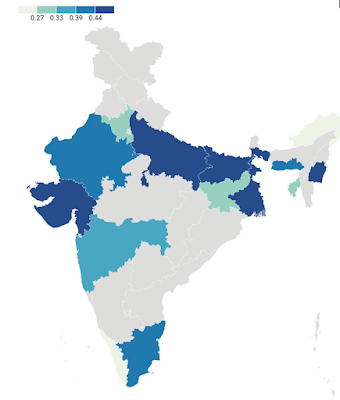
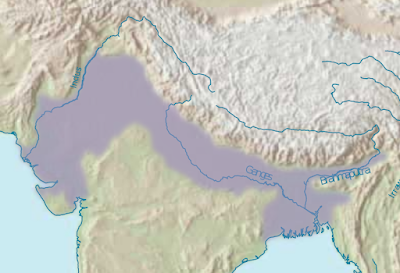
Geographic distribution of the G allele (TIMPRSS2), which is associated with a higher death rate from COVID-19. It’s most frequent on the Indo-Gangetic Plain, which has the longest continuous history of urban settlement in South Asia. Did that environment select for susceptibility to coronaviruses as a way to boost resistance to deadlier respiratory viruses?


The common cold is caused by over 200 strains of rhinoviruses, coronaviruses, adenoviruses, and enteroviruses. Coronaviruses differ from other respiratory viruses in one key respect: they can enter lung tissue via the ACE2 receptor. So if that receptor is altered to allow easier entry, the host would become more susceptible to the common cold but not to other respiratory diseases, including much deadlier ones that cause tuberculosis, pneumonia, or pneumonic plague.


The last point is important because there is evidence that a viral infection can protect against subsequent infection by respiratory viruses. When mice are infected with γherpesvirus 68, which is similar to Epstein-Barr virus, there is production of large quantities of IFN-γ and activation of macrophages that protect against Listeria monocytogenes (which causes listeriosis), Mycobacterium tuberculosis (which causes tuberculosis), and Yersinia pestis (which causes bubonic and pneumonic plague) (Barton et al., 2007; Miller et al., 2019). A cytomegalovirus infection likewise protects against Listeria monocytogenes and Yersinia pestis (Barton et al., 2007).


Coevolution between coronaviruses and early urban settlement


Beginning some 10,000 years ago, hunting and gathering gave way to farming, and nomadism to sedentism. People began to live in progressively larger settlements along the Nile in Egypt, the Tigris and the Euphrates in Mesopotamia, the Indus and the Ganges in northern India, and the Yellow and the Yangtze in China. That is where large numbers of humans first lived in close proximity to each other, and they were particularly vulnerable to the spread of respiratory diseases from one person to another. There may thus have been selection among them for increased susceptibility to coronaviruses, which are normally mild in their effects, as a means to increase resistance to deadlier respiratory viruses.


A recent Indian study by Pandey et al. (2022) suggests that coronavirus susceptibility may have coevolved with risk of infection by life-threatening respiratory viruses like tuberculosis, pneumonia, and pneumonic plague, at least in South Asia. People are more susceptible to infection by coronaviruses if they have the G allele of the TMPRSS2 gene. The research team found that the G allele is significantly associated with a higher fatality rate for COVID-19, apparently because it helps coronaviruses enter lung tissue via the ACE2 receptor.


Pandey et al. (2022) also charted the geographic distribution of the G allele in South Asia. This allele is most frequent among inhabitants of the Indo-Gangetic Plain, i.e., the fertile lowlands that border the Indus and Ganges rivers of northern India and Pakistan. This is also where urbanization has existed for the longest continuous time in South Asia, specifically since the early first millennium BCE. The Indo-Gangetic Plain has had "an uninterrupted sequence of economic development, state formation, and cultural expansion affecting the entire subcontinent as well as Central, East and Southeast Asia" (Heitzman 2008, pp. 12-13).


These findings are roughly consistent with an earlier finding by the same research team. Srivastava et al. (2020) found that an ACE2 allele, at rs2258666, has a negative relationship with the fatality rate for COVID-19. It is also most frequent in the northeast of India, which until recent times was sparsely populated, and whose inhabitants lived in dispersed rural settlements.


References


Barton, E.S., D.W. White, J.S. Cathelyn, K.A. Brett-McClellan, M. Engle, et al. (2007). Herpesvirus latency confers symbiotic protection from bacterial infection. Nature

447: 326-329.

https://doi.org/10.1038/nature05762


Frost, P. (2020). Does a commensal relationship exist between coronaviruses and some human populations? Journal of Molecular Genetics 3(2): 1-2.

https://researchopenworld.com/does-a-commensal-relationship-exist-between-coronaviruses-and-some-human-populations/


Heitzman, J. (2008). The City in South Asia. London: Routledge


Miller, H.E., K.E. Johnson, V.L. Tarakanova, and R.T. Robinson. (2019). γ-herpesvirus latency attenuates Mycobacterium tuberculosis infection in mice. Tuberculosis 116: 56-60.

https://doi.org/10.1016/j.tube.2019.04.022


Pandey, R.K., A. Srivastava, P.P. Singh, and G. Chaubey. (2022). Genetic association of TMPRSS2 rs2070788 polymorphism with COVID-19 case fatality rate among Indian populations. Infection, Genetics and Evolution 98 https://doi.org/10.1016/j.meegid.2022.105206


Shirato, K., M. Kawase, and S. Matsuyama. (2018). Wild-type human coronaviruses prefer cell-surface TMPRSS2 to endosomal cathepsins for cell entry. Virology 517: 9-15.

https://doi.org/10.1016/j.virol.2017.11.012


Srivastava, A., A. Bandopadhyay, D. Das, R.K. Pandey, V. Singh, N. Khanam, N. Srivastava, P.P. Singh, P.K. Dubey, A. Pathak, P. Gupta, N. Rai, G.N.N. Sultana, and G. Chaubey. (2020). Genetic Association of ACE2 rs2285666 Polymorphism with COVID-19 Spatial Distribution in India. Frontiers in Genetics. September 25

https://doi.org/10.3389/fgene.2020.564741


Monday, March 2, 2020

Coevolution with the plague


Houses being burned during an outbreak of pneumonic plague in China (Wikicommons). In China, large urban populations coevolved with deadly pulmonary infections, like tuberculosis, pneumonia, and pneumonic plague. Because resistance was boosted by regular exposure to normally mild infections by coronaviruses, there was natural selection for more susceptibility to them.


Two posts ago I argued that coronaviruses have coevolved with the Chinese population, to the point of developing a commensal relationship. A few points:

-  Such viruses include the common cold and are normally mild in their effects.

- Repeated coronaviral infections of lung tissue may actually help increase resistance to more serious pulmonary infections, like tuberculosis, pneumonia, and the Spanish flu of 1918—which curiously spared China. 

- Chinese lung tissue would thus facilitate coronaviral infections as a sort of routine vaccination. 

- If this is true, modern medicine has inadvertently made the Chinese population particularly vulnerable to deadly diseases like the Wuhan coronavirus by reducing the prevalence of milder pulmonary infections.


The examples of herpesvirus and cytomegalovirus

This cross-immunity is seen with other viruses. In mice, gammaherpesvirus 68 (similar to Epstein-Barr virus) provides immunity against much deadlier bacterial pathogens: Listeria monocytogenes; Yersinia pestis, which has caused plagues like the Black Death; and Mycobacterium tuberculosis, i.e. tuberculosis (Barton et al. 2007; Miller et al. 2019). Infection with cytomegalovirus likewise immunizes against Listeria monocytogenes and Yersinia pestis (Barton et al. 2007).

Quite a few writers have argued that many common pathogens are actually allies that help us fight more serious diseases: 

The microbial communities of humans are characteristic and complex mixtures of microorganisms that have co-evolved with their human hosts. The species that make up these communities vary between hosts as a result of restricted migration of microorganisms between hosts and strong ecological interactions within hosts, as well as host variability in terms of diet, genotype and colonization history. The shared evolutionary fate of humans and their symbiotic bacteria has selected for mutualistic interactions that are essential for human health, and ecological or genetic changes that uncouple this shared fate can result in disease. (Dethlefsen et al. 2007)

So it’s possible that humans have coevolved with mildly acting viruses as a means to ward off pathogens that cause more serious pulmonary infections, such as pneumonic plague and tuberculosis. Moreover, this coevolution may have taken different forms in different human populations, a possibility raised by Miller et al. (2019): "our results suggest human γHV-infection may be an important but unrecognized factor which modifies TB outcome, particularly in high TB burden countries where most children acquire EBV [Epstein-Barr virus] by 3 years of age."

Comas et al. (2013) describe the evolution of tuberculosis in our species and how it became more common in certain human environments, particularly "crowded" ones:

Crowd diseases are generally highly virulent and depend on high host population densities to maximize pathogen transmission and reduce the risk of pathogen extinction through exhaustion of susceptible hosts. Many crowd diseases emerged during the Neolithic Demographic Transition (NDT) starting around ten thousand years ago (kya), as the development of animal domestication increased the likelihood of zoonotic transfer of novel pathogens to humans, and agricultural innovations supported increased population densities that helped sustain the infectious cycle. The marked expansion of MTBC [Mycobacterium tuberculosis complex] during the NTD, but not during earlier human expansion events, suggests that the success of this pathogen was primarily driven by increases in human host density, which is typical of crowd diseases.

Perry et al. (2010) have shown that Helicobacter pylori, a bacterium that lives in the stomach lining, greatly reduces the risk of tuberculosis infection. Again, less serious infections help ward off much more serious ones, like tuberculosis:

Why only 10% of infected individuals succumb to tuberculosis remains one of the most vexing public health questions—one which the one-pathogen-one-disease paradigm is ill-equipped to answer. While preliminary, our work suggests that one factor contributing to the clinical outcome of TB infection may be a concurrent chronic infection. The hypothesis that the human microbiome has evolved to provide context-specific competitive risk advantages to the host also raises the intriguing possibility that our microbiota can be manipulated to modulate disease risk from M. tuberculosis, as well as other common human pathogens. (Perry et al. 2010)


Have the Chinese coevolved with coronaviruses?

Common viral infections may have a similar protective effect. If we go back to the Barton et al. study, we find that it was criticized by Yager et al. (2009) on the grounds that the cross-immunity seems to last only five months after acute infection. To benefit from this cross-immunity, lung tissue should therefore be regularly infected with a virus whose adverse effects are both mild and temporary, like most coronaviruses.

Are the Chinese innately more susceptible to coronaviruses? Attention has focused on a study by Zhao et al. (2020), who, using lung tissue from several donors, studied a receptor, ACE2, that acts as the point of entry for some coronaviruses, including the one responsible for the outbreak in Wuhan. They found that the receptor was concentrated in certain cells and that the number of such cells in lung tissue was five times greater in the Asian donor. Yes, there was only one Chinese donor, but the chances are very low that the same normal distribution would produce such an extreme outlier.

This finding is also consistent with those of previous studies. Cheng et al. (2007) looked at other receptors for viral infections and found differences between Chinese and other human populations. In the specific case of pulmonary diseases, Seitz et al. (2012) studied the prevalence of bronchiectasis in the United States and found a prevalence 2.5 to 3.9 times higher among Asian Americans than among Euro Americans or African Americans. Kwak et al. (2010) likewise found a high prevalence of bronchiectasis in Korean adults.

Since my last post on the subject, two more studies have come out.


The Cai study

Cai (2020) failed to find significant differences in ACE2 receptor gene expression between Asian and Caucasian lung tissue but did find an interaction between smoking history and ethnicity: "we found ACE2 is most actively expressed in AT2-reformed cells in former Asian smokers but not in Caucasian current smokers and African American non-smokers." However, this difference wasn’t significant. 

This study has an adequate sample size (n=345) but uses a questionable classification by ethnicity. The lung tissue samples were from a U.S. company, Gene Expression Omnibus, which classifies its samples as "Caucasian," "African American," or "Asian." Although most Asian Americans are of East Asian descent, many have roots in Southeast Asia or South Asia. As we will see, there are probably significant differences in the ACE2 receptor even between Asian groups.


The Cao et al. study 

Cao et al. (2020) looked at the different alleles for the ACE2 receptor gene in two databases: the China Metabolic Analytics Project and the 1000 Genomes Project. They found large differences in allele frequencies among human populations, not only between Asians and other human groups but also between different Asian groups. "These data suggested that there was a lack of natural resistant mutations for coronavirus S-protein binding in [some] populations."

Their conclusion more or less sums up current knowledge:

Recent reports of the ACE2 expression analysis in lung tissues from Asian and Caucasian populations are still controversial. The single-cell RNA-seq analysis reported that the Asian donor had much higher ACE2 expression cell ratio than white and African-American donors. In contrast, the ACE2 expression analysis using the RNA-seq and microarray datasets from control lung tissues indicated there were no significant differences between Asian and Caucasian, or male and female. The ACE2-expressing cells are a very small part of cells in lung tissues. The sample size and the purity of ACE2-positive cells in the selected samples would influence the conclusions. Our analysis showed the differences in distribution and AFs [allele frequencies] of eQTLs for ACE2 in different populations, indicating the diversity of ACE2 expression pattern in populations. […] In addition, our data showed the moderate difference in AFs of eQTLs between South Asian and EAS [East Asians], which suggests the potential difference of ACE2 expression in different populations and ethnics in Asia. (Cao et al. 2020)


Conclusion

Without knowing what these alleles actually do, we can only say that the ACE2 receptor has coevolved differently with different human populations and, presumably, different natural and social environments. In particular, crowded environments, with high rates of life-threatening pulmonary infections, notably tuberculosis, pneumonia, and pneumonic plague, should have favored individuals who are more susceptible to infection by coronaviruses. 

Historically, such environments would encompass not only China but also other areas that have long had large urban populations and a correspondingly long coevolution with pulmonary infections. These areas would notably include the Indo-Gangetic Plain in India and the Fertile Crescent of the Middle East.


References

Barton, E.S., D.W. White, J.S. Cathelyn, K.A. Brett-McClellan, M. Engle, M.S. Diamond, V.L. Miller. H.W. Virgin IV. (2007). Herpesvirus latency confers symbiotic protection from bacterial infection. Nature 447:326-9.
https://www.nature.com/articles/nature05762

Cai, G. (2020).  Bulk and single-cell transcriptomics identify tobacco-use disparity in lung gene expression of ACE2, the receptor of 2019-nCov. medRxiv February 17
https://www.medrxiv.org/content/10.1101/2020.02.05.20020107v2

Cao, Y., L. Li, Z. Feng, et al. (2020). Comparative genetic analysis of the novel coronavirus (2019-nCoV/SARS-CoV-2) receptor ACE2 in different populations. Cell Discovery 6: 11.
https://www.nature.com/articles/s41421-020-0147-1

Cheng, P-L, H-L. Eng, M-H. Chou, H-L. You, T-M. Lin, (2007). Genetic polymorphisms of viral infection-associated Toll-like receptors in Chinese population. Translational Research 150(5): 311-318
https://www.sciencedirect.com/science/article/pii/S1931524407000953

Comas, I., M. Coscolla, T. Luo, S. Borrell, K.E. Holt, M. Kato-Maeda, et al. (2013). Out-of-Africa migration and Neolithic coexpansion of Mycobacterium tuberculosis with modern humans. Nature genetics 45(10): 1176-1182.
https://www.ncbi.nlm.nih.gov/pmc/articles/PMC3800747/

Dethlefsen, L., M. McFall-Ngai, and D. Relman. (2007). An ecological and evolutionary perspective on human-microbe mutualism and disease. Nature 449: 811-818.
https://www.researchgate.net/profile/David_Relman/publication/5902740_Dethlefsen_L_McFall-Ngai_M_Relman_DA_An_ecological_and_evolutionary_perspective_on_human-microbe_mutualism_and_disease_Nature_449_811-818/links/0deec5278790b8a5be000000.pdf

Kwak, H.J., J.Y. Moon, Y.W. Choi, T.H. Kim, J.W. Sohn, H.J. Yoon, D.H. Shin, S.S. Park, and S.H. Kim. (2010). High prevalence of bronchiectasis in adults: analysis of CT findings in a health screening program. Tohoku Journal of Experimental Medicine 222: 237-242.
https://pdfs.semanticscholar.org/dd5d/c5d64f82c84277b74024af0671c8ec070fa6.pdf  

Miller, H. E., K.E. Johnson, V.L. Tarakanova, and R.T. Robinson. (2019). γ-herpesvirus latency attenuates Mycobacterium tuberculosis infection in mice. Tuberculosis (Edinburgh, Scotland) 116: 56-60.
https://www.ncbi.nlm.nih.gov/pmc/articles/PMC6876742/

Perry, S., B.C. de Jong, J.V. Solnick, M. de la Luz Sanchez, S. Yang, P.L. Lin, et al. (2010). Infection with Helicobacter pylori is associated with protection against tuberculosis. PloS one 5(1), e8804.
https://www.ncbi.nlm.nih.gov/pmc/articles/PMC2808360/

Seitz, A.E., K.N. Olivier, J. Adjemian, S.M. Holland, and D.R. Prevots. (2012). Trends in bronchiectasis among medicare beneficiaries in the United States, 2000 to 2007. Chest 142(2): 432-439.
https://www.ncbi.nlm.nih.gov/pmc/articles/PMC3425339/  

Yager, E.J., F.M. Szaba, L.W. Kummer, K.G. Lanzer, C.E. Burkum, S.T. Smiley, and M.A. Blackman. (2009). γ-Herpesvirus-induced protection against bacterial infection is transient. Viral immunology 22(1): 67-72.
https://www.ncbi.nlm.nih.gov/pmc/articles/PMC2952138/

Zhao, Y., Z. Zhao, Y. Wang, Y. Zhou, Y. Ma, and W. Zuo. (2020). Single-cell RNA expression profiling of ACE2, the putative receptor of Wuhan 2019-nCov. bioRxiv January 26
https://www.biorxiv.org/content/10.1101/2020.01.26.919985v1.full