Showing posts with label India. Show all posts

Monday, February 21, 2022

A natural vaccine?


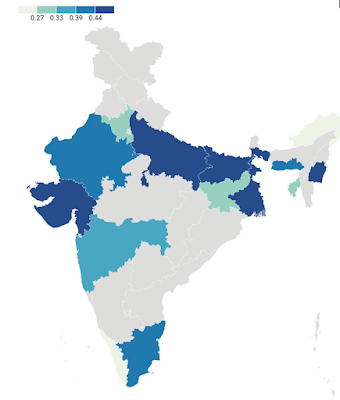
Geographic distribution of the G allele (TIMPRSS2), which is associated with a higher death rate from COVID-19. It’s most frequent on the Indo-Gangetic Plain, which has the longest continuous history of urban settlement in South Asia. Did that environment select for susceptibility to coronaviruses as a way to boost resistance to deadlier respiratory viruses?


The common cold is caused by over 200 strains of rhinoviruses, coronaviruses, adenoviruses, and enteroviruses. Coronaviruses differ from other respiratory viruses in one key respect: they can enter lung tissue via the ACE2 receptor. So if that receptor is altered to allow easier entry, the host would become more susceptible to the common cold but not to other respiratory diseases, including much deadlier ones that cause tuberculosis, pneumonia, or pneumonic plague.


The last point is important because there is evidence that a viral infection can protect against subsequent infection by respiratory viruses. When mice are infected with γherpesvirus 68, which is similar to Epstein-Barr virus, there is production of large quantities of IFN-γ and activation of macrophages that protect against Listeria monocytogenes (which causes listeriosis), Mycobacterium tuberculosis (which causes tuberculosis), and Yersinia pestis (which causes bubonic and pneumonic plague) (Barton et al., 2007; Miller et al., 2019). A cytomegalovirus infection likewise protects against Listeria monocytogenes and Yersinia pestis (Barton et al., 2007).


Coevolution between coronaviruses and early urban settlement


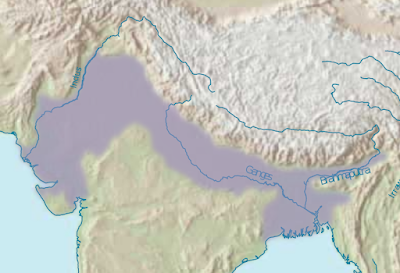
Beginning some 10,000 years ago, hunting and gathering gave way to farming, and nomadism to sedentism. People began to live in progressively larger settlements along the Nile in Egypt, the Tigris and the Euphrates in Mesopotamia, the Indus and the Ganges in northern India, and the Yellow and the Yangtze in China. That is where large numbers of humans first lived in close proximity to each other, and they were particularly vulnerable to the spread of respiratory diseases from one person to another. There may thus have been selection among them for increased susceptibility to coronaviruses, which are normally mild in their effects, as a means to increase resistance to deadlier respiratory viruses.


A recent Indian study by Pandey et al. (2022) suggests that coronavirus susceptibility may have coevolved with risk of infection by life-threatening respiratory viruses like tuberculosis, pneumonia, and pneumonic plague, at least in South Asia. People are more susceptible to infection by coronaviruses if they have the G allele of the TMPRSS2 gene. The research team found that the G allele is significantly associated with a higher fatality rate for COVID-19, apparently because it helps coronaviruses enter lung tissue via the ACE2 receptor.


Pandey et al. (2022) also charted the geographic distribution of the G allele in South Asia. This allele is most frequent among inhabitants of the Indo-Gangetic Plain, i.e., the fertile lowlands that border the Indus and Ganges rivers of northern India and Pakistan. This is also where urbanization has existed for the longest continuous time in South Asia, specifically since the early first millennium BCE. The Indo-Gangetic Plain has had "an uninterrupted sequence of economic development, state formation, and cultural expansion affecting the entire subcontinent as well as Central, East and Southeast Asia" (Heitzman 2008, pp. 12-13).


These findings are roughly consistent with an earlier finding by the same research team. Srivastava et al. (2020) found that an ACE2 allele, at rs2258666, has a negative relationship with the fatality rate for COVID-19. It is also most frequent in the northeast of India, which until recent times was sparsely populated, and whose inhabitants lived in dispersed rural settlements.


References


Barton, E.S., D.W. White, J.S. Cathelyn, K.A. Brett-McClellan, M. Engle, et al. (2007). Herpesvirus latency confers symbiotic protection from bacterial infection. Nature

447: 326-329.

https://doi.org/10.1038/nature05762


Frost, P. (2020). Does a commensal relationship exist between coronaviruses and some human populations? Journal of Molecular Genetics 3(2): 1-2.

https://researchopenworld.com/does-a-commensal-relationship-exist-between-coronaviruses-and-some-human-populations/


Heitzman, J. (2008). The City in South Asia. London: Routledge


Miller, H.E., K.E. Johnson, V.L. Tarakanova, and R.T. Robinson. (2019). γ-herpesvirus latency attenuates Mycobacterium tuberculosis infection in mice. Tuberculosis 116: 56-60.

https://doi.org/10.1016/j.tube.2019.04.022


Pandey, R.K., A. Srivastava, P.P. Singh, and G. Chaubey. (2022). Genetic association of TMPRSS2 rs2070788 polymorphism with COVID-19 case fatality rate among Indian populations. Infection, Genetics and Evolution 98 https://doi.org/10.1016/j.meegid.2022.105206


Shirato, K., M. Kawase, and S. Matsuyama. (2018). Wild-type human coronaviruses prefer cell-surface TMPRSS2 to endosomal cathepsins for cell entry. Virology 517: 9-15.

https://doi.org/10.1016/j.virol.2017.11.012


Srivastava, A., A. Bandopadhyay, D. Das, R.K. Pandey, V. Singh, N. Khanam, N. Srivastava, P.P. Singh, P.K. Dubey, A. Pathak, P. Gupta, N. Rai, G.N.N. Sultana, and G. Chaubey. (2020). Genetic Association of ACE2 rs2285666 Polymorphism with COVID-19 Spatial Distribution in India. Frontiers in Genetics. September 25

https://doi.org/10.3389/fgene.2020.564741
 

Monday, November 30, 2020

The genetics of susceptibility to COVID-19

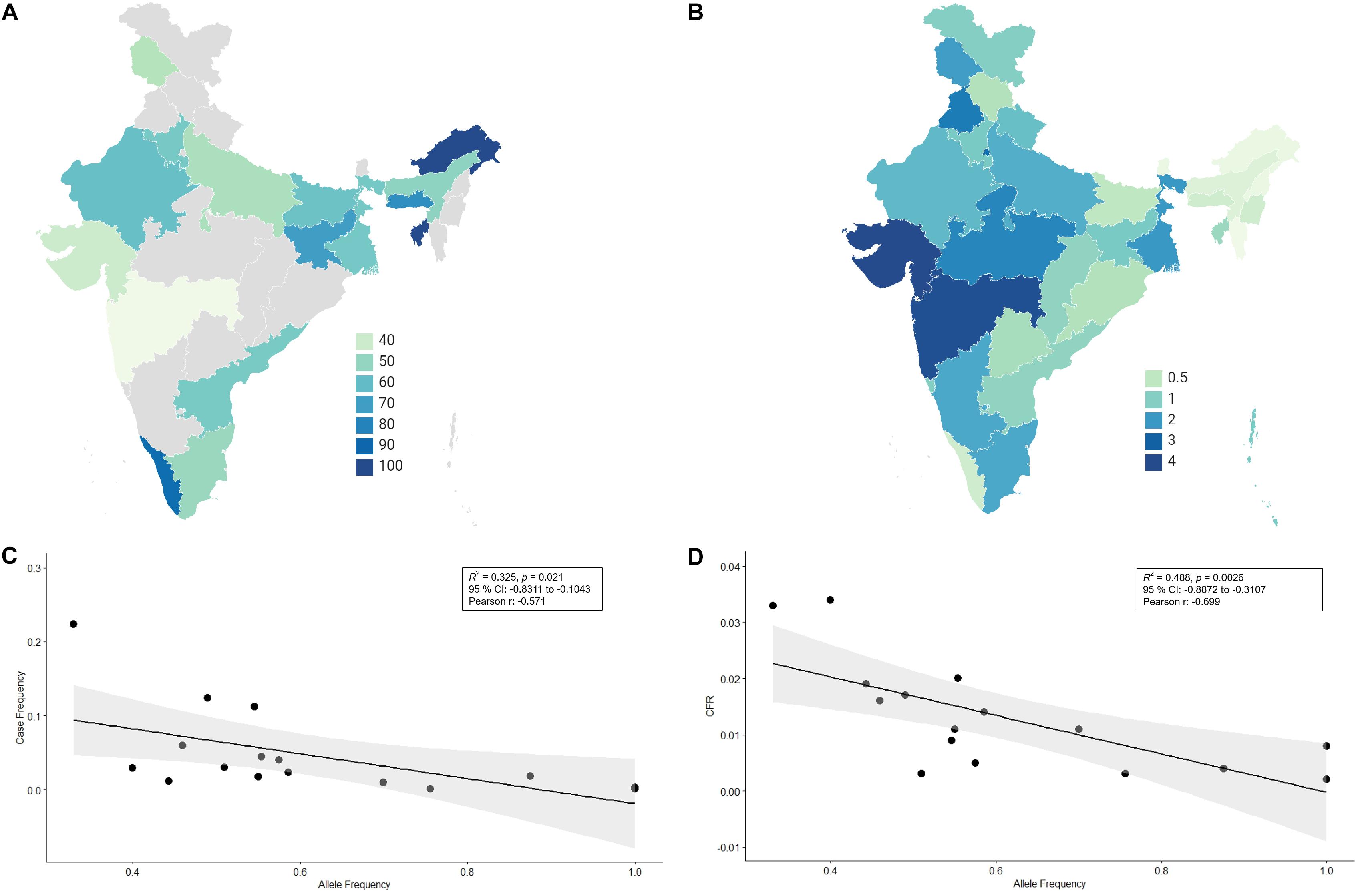
Left: Frequency of an rs2258666 allele in Indian populations (TT-plus strand or AA-minus strand). Right: COVID-19 case-fatality rate (August 2020).


ACE2 is a cell receptor that mediates the infection of lung tissue by coronaviruses, either the one that causes COVID-19 or others that cause the common cold. The ACE2 gene has 1,700 alleles, some of which are associated with increased susceptibility to coronavirus infection (Frost 2020).


This difference in susceptibility has been shown in a recent Indian study (Srivastava et al. 2020). COVID-19 is most fatal in the western states of Gujarat, Maharashtra, Madhya Pradesh, and Punjab. Conversely, it is least fatal in the northeast states of Assam, Arunachal Pradesh, and Nagaland. This pattern closely correlates with genetic variation at the rs2285666 locus of ACE2. The presence or absence of a single allele explains 35% of the variation in the COVID-19 case-fatality rate.


The authors conclude that some kind of selection has been acting on rs2285666. If we look at the map, susceptibility to COVID-19 seems to be strongest in those regions with the longest history of sedentary living and large urban centers. Conversely, it seems to be weakest in the Northeast, which is home to people who, until recent times, belonged to small communities that routinely moved from one cultivable area to another.


These findings are consistent with the hypothesis that the ACE2 receptor has coevolved with human environments. Because respiratory viruses boost the immune response of lung tissue and thereby prevent more serious pulmonary diseases (e.g., tuberculosis, pneumonia, pneumonic plague), some human populations may have gained protection from severe respiratory infections by becoming more susceptible to mild respiratory infections, such as those normally caused by coronaviruses. This commensal relationship would have been especially adaptive where respiratory pathogens could easily propagate, that is, in crowded environments where many people live in proximity not only to each other but also to livestock. In regions that have long had crowded environments, natural selection may have favored susceptibility to infection by coronaviruses, which are normally mild in their effects, as a means to maintain a strong immune response to deadly pulmonary diseases (Frost 2020).


****************************************************


I'm sorry for the break in my posting. When the pandemic first struck, I expected to have a lot of time on my hands, so I began a series of writing projects: four articles and a manuscript for a book. Unfortunately, my free time dried up over the summer, and my workload became overwhelming. I hope I've now found the right balance between my writing projects and my regular work.


References


Frost, P. (2020). Does a commensal relationship exist between coronaviruses and some human populations? Journal of Molecular Genetics 3(2): 1-2.

https://researchopenworld.com/does-a-commensal-relationship-exist-between-coronaviruses-and-some-human-populations/


Srivastava, A., A. Bandopadhyay, D. Das, R.K. Pandey, V. Singh, N. Khanam, N. Srivastava, P.P. Singh, P.K. Dubey, A. Pathak, P. Gupta, N. Rai, G.N.N. Sultana, and G. Chaubey. (2020). Genetic Association of ACE2 rs2285666 Polymorphism with COVID-19 Spatial Distribution in India. Frontiers in Genetics. September 25

https://doi.org/10.3389/fgene.2020.564741


Saturday, April 6, 2013

The Parsis


A Parsi woman in traditional costume, painted by Raja Ravi Varma (source)

The Parsis are renowned for achievement in many areas of life—trade, education, philanthropy, and popular culture. Yet they number only about 100,000 in the entire world (Wikipedia, 2013). What qualities made them so successful? The most often-cited ones are their thrift, foresight, skillfulness, and sense of initiative. The Wikipedia entry notes:

While the British saw the other Indians, "as passive, ignorant, irrational, outwardly submissive but inwardly guileful" (Luhrmann 1994, p. 333), the Parsis were seen to have the traits that the colonial authorities tended to ascribe to themselves. Mandelslo (1638) saw them as "diligent", "conscientious" and "skillful" in their mercantile pursuits.

But why do they have these qualities? Before the British arrived in the early 17th century, the Parsis were living in farming communities in western India, apparently like many other Indians. Centuries earlier they may have been merchants and traders, but by the time the British came there was little in the cultural environment to support a mercantile lifestyle, at least no more than for other Indians in similar communities.

Did these qualities become embedded through gene-culture evolution? This possibility is evoked, in passing, by anthropologists Greg Cochran, John Hardy, and Henry Harpending while discussing the intellectual performance of Ashkenazi Jews:

Since strong selection for IQ seems to be unusual in humans (few populations have had most members performing high-complexity jobs) and since near-total reproductive isolation is also unusual, the Ashkenazim may be the only extant human population with polymorphic frequencies of IQ-boosting disease mutations, although another place to look for a similar phenomenon is in India. In particular, the Parsi are an endogamous group with high levels of economic achievement, a history of long-distance trading, business and management, and who suffer high prevalences of Parkinson disease, breast cancer and tremor disorders, diseases not present in their neighbours. (Cochran et al., 2006)

Parsi-specific neurologic diseases are listed in a screening study:

We designed a questionnaire to rapidly screen a community of 851 people (Parsis living in a colony in Bombay, India) for possible neurologic diseases. […] One hundred and sixty-three people were identified by this questionnaire as possibly having neurologic disease. Neurologists later examined these 163 people and found that 80 of them actually suffered from at least one of the neurologic diseases of interest (positive predictive value = 48 percent). The most common neurologic disorders were peripheral neuropathy (32 cases), essential tremor (13 cases), stroke (12 cases), Parkinson's disease (six cases), and epilepsy (four cases). (Bharucha et al., 1987)

Although some of these genetic diseases, especially Parkinson’s, greatly reduce life expectancy, mean longevity is actually higher among the Parsis than in most human populations (Ravindran, 2011).

Cochran, Hardy, and Harpending explain the presence of these diseases as a side effect of strong natural selection over a relatively short time scale. Selection was for “rough-and-ready” solutions that came with a cost. Over a longer time scale, and with continuing selection, these bugs would have eventually been ironed out.

The conventional explanation attributes these diseases to a founder effect, i.e., the Parsis are descended from a small group of individuals and are thus more likely to diverge, genetically, from other humans. In short, the smaller the founder group, the less it will genetically represent the source population, and the higher will be the incidence of certain genetic diseases. By way of illustration, if you pick five Smarties from a box of Smarties, they’re much less likely to be a representative cross-section than if you empty out half the box.

But are the Parsis descended from a small founder group? According to tradition, their ancestors fled from Persia to western India when Muslim Arabs invaded their native land in the 7th century. Once settled in India, they had no further contacts with their fellow Persians for several centuries. Meanwhile, they married only amongst themselves and avoided intermarriage with the local Indians.

This narrative is incorrect, however, on two points. Although the Parsis have been endogamous for some time, there was at first intermarriage with the local population, essentially between Persian men and Gujarati women. Y-chromosome and mtDNA studies indicate that paternal lineages are largely Persian and maternal lineages largely Gujarati (Qamar et al., 2002; Quintana-Murci et al., 2004).

It’s also questionable whether the Parsis are descended from a single wave of refugees. The Persians ruled Sindh in western India for several centuries before the Islamic conquest, and their traders had probably already become established in ports along India’s west coast. This initial community may have later taken in waves of refugees fleeing the Islamic conquest of Persia (Wikipedia, 2013).

The historical record is clearer when the British arrived in the early 17th century. At that time, the Parsis were living in farming communities across Gujarat, and it was only then that many moved to Bombay to seek opportunities for trade and work with the British East India Company. Their economic ascension was rapid. While in 1700, "fewer than a handful of individuals appear as merchants in any records; by mid-century, Parsis engaged in commerce constituted one of the important commercial groups in Bombay" (White 1991, p. 312).

It’s possible that the Parsis had been merchants several centuries earlier. They may have then been stripped of their mercantile livelihood as punishment for supporting local Hindu rulers when the Muslims overran western India in the 11th to 13th centuries:

For years and years, the Parsis lived in perfect peace and harmony; they increased in number and dispersed in small knots over the whole of Guzarat [Gujarat]. The Mohammedan conquest at first did them harm. They had sided with the Rana against the Sultan of Ahmedabad; after the storming of Sanjan , they had much to suffer from their new rulers, and the Sacred Fire was moved from place to place. (Menant, 1901, p.134)

At present, we simply don’t know enough about Parsi history to understand what social and psychological characteristics may have been favored during the long centuries between the arrival of this community in India and its encounter with the British from the 17th century onward. We might be able to reconstruct this history from genetic data. Indeed, a “Parsi Genome Project” was launched with much fanfare a few years ago, but it now seems to be stalled for lack of funds (Phadnis, 2012).

Whatever eventually happens, such research may become a race against time. You see, the Parsis are dying out. They have long had high rates of late marriage and non-marriage, and both trends have worsened in recent decades. By 1980-82, their total fertility rate was already down to 1.12, i.e., half the replacement rate. By 2000, it was 0.94. The latest data, from 2001-2006, indicate a total fertility rate of 0.88 (Patel, 2011).

That’s even lower than Japan’s fertility rate. And, unlike Japan, the Parsi community cannot afford to lose a few million people. A recent Parsi novel, Family Matters, highlights the growing sense of foreboding:

“Demographics show we’ll be extinct in fifty years. Maybe it’s the best thing. What’s the use of having spineless weaklings walking around, Parsi in name only.”

[…] Extinct, like dinosaurs. They’ll have to study our bones, that’s all.

[..] “If, if, if,” said Dr. Fitter. “If we are meant to die out, nothing will save us.”
“Yes,” said Inspector Masalavala. “But it will be a loss to the whole world. When a culture vanishes, humanity is the loser.” (Mistry, 2002, pp. 46, 385, 388)

And when a people vanishes, the loss is even greater. A culture can at least be preserved in books, videos, and the like.

References

Bharucha, N.E., E.P. Bharucha, H.D. Dastur, and B.S. Schoenberg. (1987). Pilot survey of the prevalence of neurologic disorders in the Parsi community of Bombay, Am. J. Prev. Med., 3, 293-299.

Cochran, G., J. Hardy, and H. Harpending. (2006). Natural history of Ashkenazi intelligence, Journal of Biosocial Science, 38, 659-693

Menant, D. (1901). Zoroastrianism and the Parsis, The North American Review, 172, 132-147.
http://www.jstor.org/stable/10.2307/25105117

Mistry, R. (2002). Family Matters. Toronto: McClelland & Stewart.

Patel, D. (2011). Understanding Parsi population decline in India: A historical perspective, Jawaharlal Nehru Centre, Mumbai.
http://zoroastriansnet.files.wordpress.com/2011/05/2011-05-understanding-parsi-population-decline-in-india-nehru-centre.pdf

Phadnis, S. (2012). Avesthagen in a freeze as funds dry up, May 29, The Times of India,
http://articles.timesofindia.indiatimes.com/2012-05-29/india-business/31886941_1_villoo-morawala-patell-salary-avesta-good-earth/2

Qamar, R., Ayub, Q., Mohyuddin, A., Helgason, A., Mazhar, K., Mansoor, A., Zerjal, T., Tyler-Smith, C. et al. (2002). Y-chromosomal DNA variation in Pakistan, American Journal of Human Genetics, 70, 1107–1124.

Quintana-Murci, L., Chaix, R., Wells, R., Spencer, B., Doron M., Sayar, H., Scozzari, R., Rengo, C., Al-Zahery, N. et al. (2004). Where West Meets East: The Complex mtDNA Landscape of the Southwest and Central Asian Corridor, American Journal of Human Genetics, 74, 827–845.

Ravindran, N. (2011). The art of longevity, April 5, India Today
http://indiatoday.intoday.in/story/reasons-why-parsis-live-longer-than-indians/1/134703.html

White, D. (1991). From Crisis to Community Definition:The Dynamics of Eighteenth-Century Parsi Philanthropy, Modern Asian Studies, 25, 303–320

Wikipedia. (2013). Parsi
http://en.wikipedia.org/wiki/Parsi


Thursday, November 19, 2009

Skin bleaching

Since the mid-20th century, ‘skin bleaching’ has become more and more common among dark-skinned populations. It involves lightening skin color by means of topical preparations that contain hydroquinone, cortisone, or mercury. These products are effective, but prolonged use may damage the skin by making the epidermis thinner and by breaking down collagen fibers. Despite being condemned by the medical profession and increasingly restricted by governments, they can easily be obtained in various places: hair-stylist salons, subway stations, African public markets, etc.

Skin bleachers seem to be used the most in South Asia and its diaspora. Next come sub-Saharan Africa and its diaspora (West Indies, Brazil, United States, Western Europe, etc.), the Philippines and elsewhere in Asia. The market is mainly young and female. Thus, rate of use is 61.4% among Surinamese women of Indian origin less than 26 years old, as compared to 13.1% among young Surinamese of other origins (Javanese, African, etc.) (Menke, 2002).

In Africa, rate of use is 25% in Bamako, Mali, up to 52% in Dakar, Senegal, up to 35% in Pretoria, South Africa, and up to 77% in Lagos, Nigeria (Ntambwe, 2004). The practice has become so widespread that it has been nicknamed maquillage – ‘make-up’ (Ondongo, 1984). According to one African specialist, men encourage it by considering light-skinned women to be more attractive, intelligent, moral, desirable, and chaste. In contrast, dark-skinned women are said to look mean, evil, stupid, and untrustworthy (Ntambwe, 2004). This opinion is consistent with the results of a survey among Ghanaian women. Most of the respondents thought that men prefer light skin in a woman: “Sometimes if you really want to marry a particular man, you have to bleach” (Fokuo, 2009)

In Jamaica, users do not seem motivated by shame of their Black identity. Surveys show them having as much racial self-esteem as non-users. The motivation is more to make one’s face ‘cool’, to imitate one’s peers, to look pretty and attract a partner, and to feel good about oneself. There is also the influence of popular culture, such as Eurocentric beauty contests and singers who glorify women with light brown skin. In the dance-hall song Browning, Buju Banton says he loves his light-skinned girlfriend, his ‘browning’, more than his car, his motorbike, and his money. In Bleach On, Captain Barkey tells girls to keep on bleaching their skin (Charles, 2009).

Strangely, these products have become increasingly popular among South Asians, Africans, and West Indians for the past half-century, yet the same period has also seen these peoples regain much of their cultural independence. In advertising, magazines, or TV serials, one sees many more women from the local population than there were before.

Actually, it’s not so strange. Back when the local media recycled images of women from Western sources, the female audience had trouble identifying with them; there was a gap between the two. Because these images are now adapted to the local reality, they project a stronger normative influence on local women, who are keener to imitate them. These women, however, are still darker-skinned than the somatic norm being projected. This is especially so with Indian ‘Bollywood’ films but is also the case with serial dramas in Latin America and the Arab world.

References

Charles, C.A.D. (2009). Skin bleachers’ representations of skin color in Jamaica, Journal of Black Studies, 40, 153-170.

Charles, C.A.D. (2003). Skin bleaching, self-hate, and Black identity in Jamaica, Journal of Black Studies, 33, 711-728.

Fokuo, J. Konadu. (2009). The lighter side of marriage: Skin bleaching in post-colonial Ghana, Research Review NS, 25(1), 47-66.

Menke, J. (2002). Skin bleaching in multi-ethnic and multicolored societies. The case of Suriname, paper presented to the CSA Conference, Nassau, Bahamas, May 27 – June 1, 2002, Coping with Challenges, Contending with Change.
http://www.colorfoundation.org/pdf/skin%20bleach%20Sur%20CSA%20220502.doc

Ntambwe, M. (2004), 'Mirror mirror on the wall, who is the FAIREST of them all?' Science in Africa, March.
http://www.scienceinafrica.co.za/2004/march/skinlightening.htm

Ondongo, J. (1984), Noir ou blanc ? Le vécu du double dans la pratique du « maquillage » chez les Noirs, Nouvelle Revue d’Ethnopsychiatrie, 2, 37-65.