Showing posts with label shame culture. Show all posts

Wednesday, August 12, 2020

The large society problem in Northwest Europe and East Asia


Allegory of Justice punishing Injustice – Jean-Marc Nattier (Wikicommons). Initially, economic and social activity was organized among closely related individuals, a limitation that kept societies from realizing their full potential as they grew larger. Northwest Europeans and East Asians overcame this limitation through behavioral and mental changes.


I have published an article on "the large society problem in Northwest Europe and East Asia." Comments are welcome.


Abstract


Kinship was the organizing principle of early societies, defining how people should behave toward each other. Social and economic activity was thus organized mostly among closely related individuals, a limitation that would keep societies from realizing their full potential as they grew larger. The "large society problem" has not been fully solved anywhere, but Northwest Europeans and East Asians have gone the farthest toward a solution. In general, the solution has been to weaken the relative importance of kinship and strengthen forms of sociality that can include everyone, and not just close kin. In particular, one must think and feel in certain ways, i.e., be susceptible to social norms that are absolute, universal, and independent of kinship; feel guilty after breaking social norms; feel empathy for non-kin; and orient oneself toward society. This mindset shows similarities and differences between Northwest Europeans and East Asians. Both groups adapted to a larger social environment by becoming more empathetic toward non-kin and more susceptible to universal social norms. Northwest Europeans became more individualistic while acquiring stronger internal controls of behavior (affective empathy, guilt proneness). East Asians became more collectivistic while acquiring stronger internal controls (cognitive empathy) and stronger external controls (shaming, family-community surveillance, inculcation of normative behavior).


Reference


Frost, P. (2020). The large society problem in Northwest Europe and East Asia. Advances in Anthropology 10(3): 214-134.

https://doi.org/10.4236/aa.2020.103012

Monday, January 21, 2019

The evolution of empathy


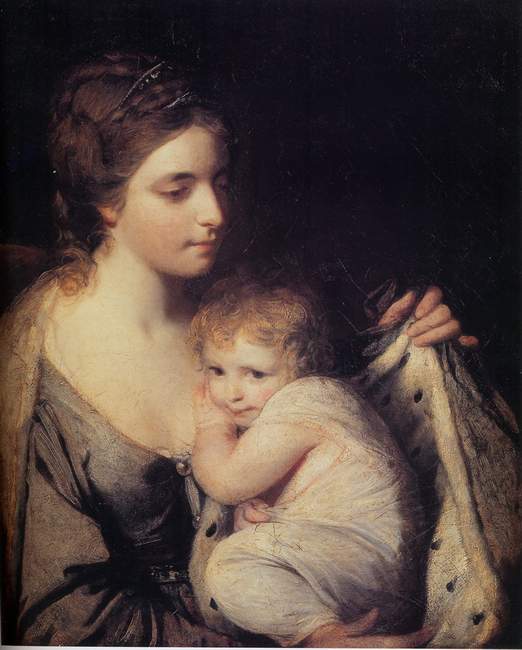
Maria Walpole and her daughter Elisabeth Laura (1762), by Joshua Reynolds. Affective empathy may have initially evolved to facilitate the mother-child relationship. 


Empathy is key to the functioning of high-trust cultures. If everyone is empathic toward each other, there is no need to waste energy on self-protection or on double-checking every single transaction. Just as importantly, you can make transactions that would otherwise be uneconomical.

Empathy, however, has to be reciprocated. Otherwise, it will divert your limited resources to people who will never reciprocate and who will, in fact, bleed you dry.  

The adaptiveness of empathy therefore depends on the cultural environment. Some cultures will favor it but not others. Does it follow, then, that some human populations have become more empathic than others? Can this mental trait undergo gene-culture coevolution?

It can, if three pre-conditions are met:

1. The trait varies in adaptiveness from one culture to another.

2. The trait is genetically heritable.

3. The trait can easily evolve out of pre-existing traits, i.e., only a few genetic changes are needed.

Evolutionary psychologists will argue that modern humans have not existed long enough to evolve new mental adaptations, particularly since their expansion out of Africa and into new natural and cultural environments. There has only been fine-tuning of existing adaptations (Tooby, Cosmides, and Barkow 1992). This argument is debatable:

Even if 40 or 50 thousand years were too short a time for the evolutionary development of a truly new and highly complex mental adaptation, which is by no means certain, it is certainly long enough for some groups to lose such an adaptation, for some groups to develop a highly exaggerated version of an adaptation, or for changes in the triggers or timing of that adaptation to evolve. That is what we see in domesticated dogs, for example, who have entirely lost certain key behavioral adaptations of wolves such as paternal investment. Other wolf behaviors have been exaggerated or distorted. (Harpending and Cochran 2002)

Empathy can thus differ between human populations if the differences arise from simple changes to an existing mechanism.

So does empathy meet the above preconditions?


Differences in adaptiveness

All cultures have rules of one sort or another. These rules are enforced by external sanctions (shaming by the community, especially by family members) and internal sanctions (feelings of guilt). Most cultures rely primarily on shaming. Some cultures, particularly in Europe, rely much more on feelings of guilt. Guilt is a subset of empathy. As the wrongdoer, you transfer to yourself the feelings of the person you have wronged. You feel the pain you have inflicted, and you will now mentally punish yourself.

The anthropologist Ruth Benedict described the differences between shame and guilt:

True shame cultures rely on external sanctions for good behavior, not, as true guilt cultures do, on an internalized conviction of sin. Shame is a reaction to other people's criticism. A man is shamed either by being openly ridiculed and rejected or by fantasying to himself that he has been made ridiculous. In either case, it is a potent sanction. But it requires an audience or at least a man's fantasy of an audience. Guilt does not. In a nation where honor means living up to one's own picture of oneself, a man may suffer from guilt though no man knows of his misdeed and a man's feeling of guilt may actually be relieved by confessing his sin. (Benedict 1946, p. 223)

Shame seems to be evolutionarily older than guilt. Sigmund Freud speculated that feelings of guilt arose as a mechanism to punish misbehavior in larger communities where paternal authority is insufficient: 

When an attempt is made to widen the community, the same conflict is continued in forms which are dependent on the past; and it is strengthened and results in a further intensification of the sense of guilt. [...]. What began in relation to the father is completed in relation to the group. If civilization is a necessary course of development from the family to humanity as a whole, then [...] there is inextricably bound up with it an increase of the sense of guilt, which will perhaps reach heights that the individual finds hard to tolerate. (Freud 1962, pp. 79-80)

East Asians might seem to be an exception to this evolutionary trend. They generally live in large communities where paternal authority is insufficient to enforce social rules. This problem seems to have been resolved through a stronger sense of social duty, rather than a greater propensity for empathy and guilt.

We see this in a study of young Chinese adults. The participants could see things from another person's perspective and understand how that person felt, but they did not seem to internalize those feelings and experience them vicariously. They were motivated to obey social rules by a sense of duty, rather than by empathy and feelings of guilt: "taking the views of others is an essential duty, and the lack of consideration to others' perspectives is generally regarded as a lack of virtue in the Chinese culture" (Siu and Shek 2005).


Heritability

First, we should keep in mind that empathy is not a unitary construct. It has different components:

Pro-social behavior: willingness to help others

Cognitive empathy:  capacity to understand how others feel

Affective or emotional empathy: involuntary transference of another person's feelings to yourself, i.e., feeling that person's pain or joy.

The last component is usually what we mean by empathy. Nonetheless, a person can be low in affective empathy while being high in cognitive empathy; this is in fact the hallmark of the sociopath, i.e., a person who understands how others feel and knows how to exploit those feelings for personal gain. Of the three kinds of empathy, pro-social behavior seems the most divergent and shares the least mental circuitry with the other two. Cognitive and affective empathy share circuits that specialize in representing another person's thoughts and intensions; affective empathy seems to be an additional step where these representations are relayed to brain regions that produce the corresponding emotional responses (Carr et al. 2003; Krishnan et al. 2016).

The latest review of the literature concluded that all three components of empathy have moderate to high heritability (Chakrabarti and Baron-Cohen 2013). Since then, an adult twin study has estimated the heritability of affective empathy at 52-57% and that of cognitive empathy at 27%. The rest of the variance was largely due to non-shared environment (Melchers et al. 2016). 

These findings are in line with those of a longitudinal twin study of children from 7 to 12 years of age. Genetic influences accounted for most of the variance in callousness/unemotionality, and environmental influences were entirely non-shared (Henry et al. 2018). Other studies have shown that the capacity for affective empathy remains stable as a child develops, while cognitive empathy progressively increases (Decety et al. 2017):

Finally, men and women seem to differ in affective empathy but not in cognitive empathy: “females do indeed appear to be more empathic than males [but] [t]hey do not appear to be more adept at assessing another person's affective, cognitive, or spatial perspective” (Hoffman 1977). This sex difference has been confirmed by recent studies, notably a British study (Baron-Cohen and Wheelwright 2004), a largely Argentinean study (Baez et al. 2017), an Italian twin study (Toccaceli et al. 2018), and a Chinese study (Liu et al. 2018). The size of the sex difference varied, however, being slight in the British and Argentinean studies, large but not significant in the Italian study, and significant in the Chinese study. 


Evolution in Homo sapiens

Affective empathy seems to be universal in our species. Differences do exist, however, between individuals, and these differences are distributed along a Bell curve in a human population (Baron-Cohen 2011; McGregor 2018). Any distinction between “normal people” and “sociopaths” is therefore arbitrary. There is simply a continuum of decreasing capacity for affective empathy.

Affective empathy also differs between men and women, and this sex difference seems, in turn, to differ from one population to another. This last point suggests an evolutionary pathway. Affective empathy may have initially evolved in ancestral humans as a means to facilitate the mother-child relationship. "Guilt cultures" then favored extension of affective empathy to a wider range of social interactions, as well as increased expression in men. One consequence would be a smaller sex difference in this mental trait.

How do guilt cultures ensure that affective empathy is reciprocated? They seem to resolve this problem by defining themselves much more as moral communities than as communities of related individuals. Adherence to social rules defines community membership, and these rules are perceived as being universal and absolute, as opposed to the situational morality of communities defined solely by kinship. Guilt cultures are also highly ideological. Community members monitor not only outward behavior for compliance but also inward thoughts—and this monitoring can target not just the thoughts of other members but also one’s own. Non-compliance can lead to a member being branded as morally worthless and expelled from the community (Frost 2017).

The current evidence is suggestive but not conclusive. As Baez et al. (2017) point out, most of our evidence on sex differences in empathy comes from self-report, i.e., questionnaires that men and women fill out. Many studies also fail to distinguish between cognitive empathy (understanding what others feel) and affective empathy (feeling what others feel). To measure affective empathy objectively, especially when comparing people from different cultural backgrounds, it would be best to use brain fMRIs (Krishnan et al. 2016).


To be cont'd


References

Baez, S., Flichtentrei, D., Prats, M., Mastandueno, R., García, A.M., Cetkovich, M., et al. (2017). Men, women...who cares? A population-based study on sex differences and gender roles in empathy and moral cognition. PLoS ONE 12(6): e0179336. https://doi.org/10.1371/journal.pone.0179336

Baron-Cohen, S. (2011). The Empathy Bell Curve. Phi Kappa Phi Forum; Baton Rouge 91(1): 10-12.

Baron-Cohen, S. and S. Wheelwright. (2004).The Empathy Quotient: An investigation of adults with Asperger Syndrome or high functioning autism, and normal sex differences. Journal of Autism and Developmental Disorders 34: 163-175.

Benedict, R. (1946 [2005]). The Chrysanthemum and the Sword. Patterns of Japanese Culture, First Mariner Books.

Carr, L., M. Iacoboni, M-C. Dubeau, J.C. Mazziotta, and G.L. Lenzi. (2003). Neural mechanisms of empathy in humans: A relay from neural systems for imitation to limbic areas. Proceedings of the National Academy of Sciences (USA) 100: 5497-5502.

Chakrabarti, B. and S. Baron-Cohen. (2013). Understanding the genetics of empathy and the autistic spectrum, in S. Baron-Cohen, H. Tager-Flusberg, M. Lombardo. (eds). Understanding Other Minds: Perspectives from Developmental Social Neuroscience. Oxford: Oxford University Press.

Davis, M.H., C. Luce, and S.J. Kraus. (1994). The heritability of characteristics associated with dispositional empathy. Journal of Personality 62: 369-391.

Decety, J., K.L. Meidenbauer, and J.M. Cowell. (2017). The development of cognitive empathy and concern in preschool children: A behavioral neuroscience investigation. Developmental Science 2018;21:e12570. 

Freud, S. (1962[1930]). Civilization and Its Discontents. New York: W.W. Norton

Frost, P. (2017). The Hajnal line and gene-culture coevolution in northwest Europe. Advances in Anthropology 7: 154-174.

Harpending, H., and G. Cochran. (2002). In our genes. Proceedings of the National Academy of Sciences (USA) 99(1): 10-12.

Henry, J., G. Dionne, E. Viding, A. Petitclerc, B. Feng, F. Vitaro, M. Brendgen, R.E. Tremblay, and M. Boivin. (2018). A longitudinal twin study of callous-unemotional traits during childhood. Journal of Abnormal Psychology 127(4): 374-384. 

Hoffman, M. L. (1977). Sex differences in empathy and related behaviors. Psychological Bulletin 84(4): 712-722. 

Krishnan, A., C.W. Woo, L.J. Chang, L. Ruzic, X. Gu, M. López-Solà, P.L Jackson, J. Pujol, J. Fan, and T.D. Wager. (2016). Somatic and vicarious pain are represented by dissociable multivariate brain patterns. eLife 2016;5:e15166 

Liu, J., X. Qiao, F. Dong, and A. Raine. (2018). The Chinese version of the cognitive, affective, and somatic empathy scale for children: Validation, gender invariance and associated factors. PLoS ONE 13(5): e0195268. 

McGregor, J. (2018). The highly empathic. SoRECS – The Society for Research into Empathy, Cruelty & Sociopathy. May

Melchers, M., C. Montag, M. Reuter, F.M. Spinath, and E. Hahn. (2016). How heritable is empathy? Differential effects of measurement and subcomponents. Motivation and Emotion 40(5): 720-730. 

Siu, A.M.H. and D.T. L. Shek. (2005). Validation of the Interpersonal Reactivity Index in a Chinese Context. Research on Social Work Practice 15: 118-126.

Toccaceli, V., C. Fagnani, N. Eisenberg, G. Alessandri, A. Vitale and M.A. Stazi. (2018). Adult Empathy: Possible Gender Differences in Gene-Environment Architecture for Cognitive and Emotional Components in a Large Italian Twin Sample. Twin Research and Human Genetics 21(3): 214-226

Tooby J, L. Cosmides, and J. Barkow. (1992). Introduction: Evolutionary Psychology and Conceptual Integration. In J. Barkow, L. Cosmides, and L. Tooby (eds.) The Adapted Mind: Evolutionary Psychology and the Generation of Culture, pp. 3-16, New York: Oxford Univ. Press; 1992.

Friday, September 26, 2014

A fruitful encounter


Original Sin, by Michiel Coxie (1499-1592). Did the Christian doctrine of original sin create the guilt cultures of Northwest Europe? Or did the arrow of causality run the other way? (source: Wikicommons)


By definition, gene-culture co-evolution is reciprocal. Genes and culture are both in the driver's seat. This point is crucial because there is a tendency to overreact to cultural determinism and to forget that culture does matter, even to the point of influencing the makeup of our gene pool. Through culture, humans have directed their own evolution.

Take the ability to digest lactose, commonly called milk sugar. Among early humans, only babies could digest it because only they made the enzyme that breaks it down. This enzyme was lost as one grew up, with the result that milk consumption would cause indigestion, abdominal gas, and diarrhea. This is still the case in humans from much of Africa and Asia.

Then some cultures began to domesticate cattle, initially for meat. In times of famine, they turned to milk, and those who could better tolerate it had better chances of survival. So there was now natural selection for individuals who could produce the necessary enzyme not only in childhood but in adulthood as well.

The resulting evolutionary change was both genetic and cultural. With more and more adults being able to digest milk, it became possible to develop various dairy products, like cheese, and use milk as an ingredient in a wide range of foods. It also became possible to select for cattle that produce more and better milk (Beja-Pereira et al., 2003). A new way of life developed and thus brought about even more selection for this enzyme.

In sum, a genetic change can open up new paths for culture to follow and thereby create new paths for genes to follow. But that isn't all. The same situation can develop even when no genetic change has taken place, at least not initially. We see this, for instance, when a culture spreads out of one population and into another. The gene-culture interaction is new even though neither party to the interaction is new.
 

A fruitful encounter

One specific example is the encounter between Christianity and the guilt cultures of Northwest Europe, which differ from the shame cultures that prevail elsewhere. The difference is a major one. In a shame culture, your wrongdoings are punished only when witnessed by someone from your community. In a guilt culture, they are punished even when there is no witness, other than the one inside your head.

Guilt culture is commonly attributed to the Christian doctrine of original sin, and more specifically to the radicalization of this doctrine under Protestantism (see Note 1). Yet neither of these presumed causes really lines up with the presumed effect.

For one thing, it's doubtful whether this doctrine was even known to early Christians in the Middle East. True, Paul did write that humans had lost their immortality because of Adam's sin:

Therefore, just as through one man sin entered into the world, and death through sin, and so death spread to all men, because all sinned. Romans 5.12

This belief also appears in the Talmud, but it was never understood there as meaning that people are sinful because they inherit Adam's burden of sin. The Jewish view, like the later Muslim one, has been that people are sinful because they are imperfect beings. This was probably also the view of early Christians. Even today, Eastern Christians reject the doctrine of original sin, preferring the term "ancestral sin":

In the Orthodox Christian understanding, they explicitly deny that humanity inherited guilt from anyone. Rather, they maintain that we inherit our fallen nature. While humanity does bear the consequences of the original, or first, sin, humanity does not bear the personal guilt associated with this sin. (Original sin, 2014)

It was among Western Christians—Roman Catholics and, later, Protestants—that original sin developed into a doctrine. We see this in the writings of Irenaeus (2nd century) and Augustine (354-430), who identified the original sin as concupiscence, i.e., ardent, sensual longing. Protestantism is then said to have radicalized this doctrine, as seen in the Augsburg Confession of Lutheranism:

It is also taught among us that since the fall of Adam all men who are born according to the course of nature are conceived and born in sin. That is, all men are full of evil lust and inclinations from their mothers' wombs and are unable by nature to have true fear of God and true faith in God. Moreover, this inborn sickness and hereditary sin is truly sin and condemns to the eternal wrath of God all those who are not born again through Baptism and the Holy Spirit. 

But this radicalization was already under way before Protestantism. An English Catholic, Anselm of Canterbury (1033-1109), was the one who first separated original sin from concupiscence and defined it as "privation of the righteousness that every man ought to possess" (Original sin, 2014). Within Western Christendom, pre-Protestant England was likewise the epicenter of an intense penitential tradition that dated back at least to Anglo-Saxon times (Frantzen 1983). This tradition can be summed up as follows: "it is better to be shamed for one's sins before one man (the confessor) in this life than to be shamed before God and before all angels and before all men and before all devils at the Last Judgement" (Godden, 1973). The English abbot Aelfric of Eynsham (955-1010) described the need to do penance for all shameful acts, even those that are witnessed solely by spirits of the dead: 

He who cannot because of shame confess his faults to one man, then it must shame him before the heaven-dwellers and the earth-dwellers and the hell-dwellers, and the shame for him will be endless. (Bedingfield, 2002, p. 80)


Conclusion

As evidenced by the doctrine of original sin and the penitential tradition, Northwest European guilt culture was not a product of Christianity in general or of Protestantism in particular. It seems to have its origins in pre-existing tendencies that were absorbed into the new spiritual environment, much like the Christmas tree and other formerly pagan traditions. It thus grew steadily more important as the geocenter of Christianity moved steadily west and north.

This is not to belittle Christianity’s role. The new faith created ideological, social, and physical structures that were better at enforcing moral norms than anything beforehand. These norms may have had pagan antecedents, but they were now being enforced much more thoroughly.

We see this in the Medieval Synthesis that took hold from the 11th century onward, when Church and State joined forces to defend the Christian world: externally, through military campaigns against Muslims in the Iberian Peninsula, southern Italy, and the Middle East; and internally, through vigorous efforts to pacify social relations, either by increased use of capital punishment or by the Pax Dei—a Church-led movement to limit the scope of war in feudal society (Peace and Truce of God, 2014). Finally, guilt culture was strengthened through confession of one's sins, particularly after this practice became mandatory with the Fourth Lateran Council (1215). All wrongdoings had to be atoned at least once a year, however private or personal they might be (Sacrament of Penance, 2014).

Medieval Christian culture favored the survival and reproduction of people who previously would not have survived and reproduced. Conversely, by criminalizing personal violence, particularly in cases where the offender felt no guilt or remorse, this culture was now eliminating people for behavior that had once been admired.

It is often believed that Europe took off from the 15th century onward, when it expanded into Africa, the Americas, and Asia. Actually, the takeoff began earlier, particularly during this period when Church and State teamed up to lay a new basis for social relations. It was this new moral order that enabled Europe to get ahead (Frost, 2012). As Thomas Hobbes (1588-1679) wrote, no advanced society can develop where men have no "other security than what their own strength and their own invention shall furnish them withal." 

In such condition there is no place for industry, because the fruit thereof is uncertain: and consequently no culture of the earth; no navigation, nor use of the commodities that may be imported by sea; no commodious building; no instruments of moving and removing such things as require much force; no knowledge of the face of the earth; no account of time; no arts; no letters; no society; and which is worst of all, continual fear, and danger of violent death; and the life of man, solitary, poor, nasty, brutish, and short. [The Leviathan, 13]


Note

Missionaries, for example, point to the relationship between Christianity and guilt culture:

There is a lack of a sense of sin in African thinking for many reasons: (1) there is a belief that God and the ancestors are unconcerned about private and public morality. People believe more in this life than the next life; (2) there is more of a shame-culture than a guilt-culture. People are more afraid of public opinion than of God; and (3) there is a focus on communal living where people look at who caused a problem. (Tittley, 2001)


References

Bedingfield, M.D. (2002). The Dramatic Liturgy of Anglo-Saxon England, The Boydell Press. 

Beja-Pereira A., G. Luikart, P.R. England, et al. (2003). Gene-culture coevolution between cattle milk protein genes and human lactase genes, Nature Genetics, 35, 311-313.
http://www.bioquest.org/summer2007/sessionA/ng1263.pdf 

Carroll, J. (1981). The role of guilt in the formation of modern society: England 1350-1800, The British Journal of Sociology, 32, 459-503.
http://www.jstor.org/discover/10.2307/590129?uid=3739448&uid=2&uid=3737720&uid=4&sid=21104745207513 

Frost, P. (2012). On global inequality, Evo and Proud, August 25
http://evoandproud.blogspot.ca/2012/08/on-global-inequality.html

Frantzen, A.J. (1983). The literature of penance in Anglo-Saxon England, New Brunswick (N.J.): Rutgers University Press.

Godden, M.R. (1973). An Old English penitential motif, Anglo-Saxon England, 2, 221-239.

Hobbes, T. (2010). The Leviathan. Peterborough: Broadview Press. 

Lebra, T.S. (1971). The social mechanism of guilt and shame: the Japanese case, Anthropological Quarterly, 44, 241-255.
http://www.jstor.org/discover/10.2307/3316971?uid=3739448&uid=2&uid=3737720&uid=4&sid=21104745207513 

Original Sin. (2014). Wikipedia
http://en.wikipedia.org/wiki/Original_sin 

Peace and Truce of God. (2014). Wikipedia
http://en.wikipedia.org/wiki/Peace_and_Truce_of_God 

Sacrament of Penance. (2014). Wikipedia
http://en.wikipedia.org/wiki/Sacrament_of_Penance_(Catholic_Church)  

Tittley, M. (2001). Book summary of The Primal Vision: Christian Presence amid African Religion, by John V. Taylor, SCM Press, 1963.
http://www.ymresourcer.com/Summaries.php

Saturday, September 20, 2014

Affective empathy, an evolutionary mistake?


The Classic of Filial Piety, Ma Hezhi, 12th century (Wikicommons). In China, empathy is experienced primarily as a moral duty, rather than as an involuntary emotional response.


In a previous post, I asked, "How universal is empathy?" The question is tricky because empathy has three components:

1. pro-social behavior - willingness to help people out, hospitality to strangers, acts of compassion.

2. cognitive empathy - capacity to see things from another person's perspective and to understand how he or she feels.

3. affective or emotional empathy - capacity not only to understand how another person feels but also to experience those feelings involuntarily and to respond appropriately. Failure to help a person in distress can trigger a self-destructive sequence: anguish, depression, suicidal ideation.

Pro-social behavior is very widespread among humans and may even be universal. It isn't unconditional, however. It can be used strategically and is often influenced by previous experiences with the person in question.

Cognitive empathy seems much less universal. In Oceanic cultures, for instance, there is both an unwillingness and an inability to know what other people feel. A person's inner feelings are said to be private and unknowable (Lepowski, 2011).

Affective empathy has an even more restricted range. If the range of empathic guilt is indicative, it may reach its highest incidences in the "guilt cultures" of northwestern Europe. In these cultures, guilt outweighs shame as a way to enforce social rules. What's the difference between the two? You feel shame when someone from your community sees you breaking a rule. With guilt, no witnesses are needed. You feel guilty when no else is watching or even when you merely think of breaking the rule.

Until recently, empathy has been studied only in Western populations, with the result that it is often assumed to have the same characteristics everywhere, at least potentially. This shortcoming was noted in a Hong Kong study: "A limitation of the existing literature on empathy in the social work context is that most of the existing studies on empathy are Western studies, and there are very few empirical studies of empathy in Chinese populations" (Siu and Shek, 2005)

When Siu and Shek (2005) studied empathy in a Chinese sample ranging from 18 to 29 years of age, they found that the participants made little distinction between cognitive empathy and affective (emotional) empathy. These two components seemed to be weakly differentiated from each other. The authors attributed this finding to "cultural differences" "Chinese people might not perceive the items from the two dimensions as too different in nature." The authors went on to note that "there are still debates concerning the boundaries of emotional and cognitive processes underlying empathy" and that "the causal relationships between cognitive and emotional processing underlying empathy are not simple or unidirectional."

In short, the Chinese participants could see things from another person's perspective and understand how that person felt. There is much less indication, however, that they involuntarily experienced the feelings of other people, especially feelings of distress. This is not to say they were incapable of such emotion transference, but rather that it seems limited in scope, perhaps being confined to family members and not extended to strangers.

In general, empathy is perceived in China as a moral duty and not as an involuntary emotional response. The authors underline this point when they discuss relevant beliefs in their culture:

These include the cultural beliefs of "qi suo bu yu, wu shi yu ren" (do not do unto others that you would not wish others to do on you), "jiang xin bi ji" (compare people's hearts with your own), "she shen chu di" (put yourself into other people's position), and "shen tong gan shou" (experiencing the experience of other people). With the emphases on collectivism and familism (Yang, 1981), taking the views of others is an essential duty, and the lack of consideration to others' perspectives is generally regarded as a lack of virtue in the Chinese culture (Wong, 1998). (Siu and Shek, 2005)
 

From cognitive empathy to affective empathy: the how and why

In humans, empathy seems to have differentiated progressively into its three components, with pro-social behavior being the oldest and most widespread one, followed by cognitive empathy and, finally, affective empathy.
 
This kind of mental evolution has been certainly possible in our species:

First, all three components display moderate to high heritability, especially the last one, i.e., 68% (Chakrabarti and Baron-Cohen, 2013). There has thus been a potential for gene-culture co-evolution.

Second, gene-culture co-evolution seems to have been widespread. About 10,000 years ago, human genetic evolution accelerated by over a hundred-fold, yet by that time our ancestors had colonized this planet from the tropics to the arctic (Hawks et al., 2007). They were evolving primarily in response to different cultural environments, and only secondarily to different physical environments.

Third, people have thus been selected for their ability to function in a certain cultural environment, just as they have been selected for their ability to function in heat or cold.

That answers the "how" question, but what about the "why"? Why was affective empathy more advantageous at the northwestern end of Eurasia? Together with empathic guilt, it may be part of a larger behavioral adaptation called the Western European Marriage Pattern, which seems to reflect a culture where kinship ties are relatively weak and thus insufficient to enforce rules of correct behavior.

The WEMP predominates north and west of an imaginary line running from Trieste to St. Petersburg and has the following general characteristics:

 - men and women tend to marry relatively late and many never marry

- children usually leave the family to form new households

- a high proportion of non-kin circulate among different households (Hajnal, 1965)

This zone of relatively weak kinship existed before the Black Death of the 14th century and is attested by fragmentary evidence going back to the 9th century and even earlier (Hallam, 1985; Seccombe, 1992, p. 94). I suspect its origins go back to a unique Mesolithic culture that once existed along the North Sea and the Baltic (Price, 1991). At that time, an abundance of marine resources drew people to the coast each year for fishing, sealing, and shellfish collecting, thus creating large but fluid settlements unlike anything seen in other hunter-gatherers. Social interactions would have largely involved non-kin, and there would have thus been strong selection for mechanisms that could enforce social rules in the absence of kin obligations.
 

Conclusion

Through their high capacity for affective empathy and empathic guilt, these Northwest Europeans had an edge in adapting to later cultural environments that would be structured not by kinship but by other ways of organizing social relations: the State, ideology, and the market economy.

This has been one path that leads to advanced societies, but it is not the only one. East Asian societies have pursued a similar path of cultural evolution while having relatively low levels of affective empathy and empathic guilt. They seem to have done so by relying more on external means of behavior control (shaming, family discipline, community surveillance) and by building on cognitive empathy through learned notions of moral duty.

Meanwhile, Northwest European societies have had their capacity for empathy pushed to the limit, as seen in the commonly heard term "aid fatigue." And there is no easy way to turn it off. The only real way is to convince oneself that the object of empathy is morally worthless.

Was it all an evolutionary mistake? Time will tell.
 

References

Chakrabarti, B. and S. Baron-Cohen. (2013). Understanding the genetics of empathy and the autistic spectrum, in S. Baron-Cohen, H. Tager-Flusberg, M. Lombardo. (eds). Understanding Other Minds: Perspectives from Developmental Social Neuroscience, Oxford: Oxford University Press.
http://books.google.ca/books?hl=fr&lr=&id=eTdLAAAAQBAJ&oi=fnd&pg=PA326&ots=fHpygaxaMQ&sig=_sJsVgdoe0hc-fFbzaW3GMEslZU#v=onepage&q&f=false  

Hajnal, J. (1965). European marriage pattern in historical perspective. In D.V. Glass and D.E.C. Eversley (eds). Population in History, Arnold, London.

Hallam, H.E. (1985). Age at first marriage and age at death in the Lincolnshire Fenland, 1252-1478, Population Studies, 39, 55-69.

Hawks, J., E.T. Wang, G.M. Cochran, H.C. Harpending,& R.K. Moyzis. (2007). Recent acceleration of human adaptive evolution. Proceedings of the National Academy of Sciences (USA), 104, 20753-20758.
http://harpending.humanevo.utah.edu/Documents/accel_pnas_submit.pdf

Lepowsky, M. (2011). The boundaries of personhood, the problem of empathy, and "the native's point of view" in the outer islands, in D.W. Hollan, C. J. Throop (eds).The Anthropology of Empathy: Experiencing the Lives of Others in Pacific Societies, (pp. 43-68), New York: Berghahn.

Price, T.D. (1991). The Mesolithic of Northern Europe, Annual Review of Anthropology, 20, 211-233.
http://www.cas.umt.edu/departments/anthropology/courses/anth254/documents/annurev.an.TDouglasPrice1991MseolithicNEurope.pdf  
 
Seccombe, W. (1992). A Millennium of Family Change. Feudalism to Capitalism in Northwestern Europe, London: Verso.

Siu, A.M.H. and D.T. L. Shek. (2005). Validation of the Interpersonal Reactivity Index in a Chinese Context, Research on Social Work Practice, 15, 118-126.

Saturday, September 13, 2014

Rotherham: The search for answers


A Bangladeshi youth gang in Tower Hamlets, London. (Source: Wikimedia Commons, Bangali71). Is this the kind of assimilation you had in mind?


In my last post, I discussed the revelations from Rotherham, England. In a town of some 250,000 people, at least 1,400 school-age girls have been "groomed" for prostitution by organized gangs. Grooming begins with seduction by "lover boys" and ends in abduction, trafficking, and confinement. It is this final stage that apparently explains why some 500 girls were missing from the 15 to 19 age group at the last census.

Two more points. All of the girls are white, and all of the groomers are Pakistani, except for a few Afghans and Roma.

Even before the latest revelations, and even in antiracist circles, there was a growing (though reluctant) awareness that this social problem is disproportionately "Asian," a term that increasingly means Muslim South Asian. The cause, however, seems elusive:

[...] this disparity begs further exploration and, if possible, explanation. Admittedly, this is not an easy job. Complex social issues can rarely be explained in terms of a single factor and moving from correlation to causality is particularly challenging. Nonetheless, in CSE [child sexual exploitation], as with other crimes, observed relationships between race and offending may well be mediated by social, structural or situational factors. Asians, like whites or blacks, do not commit CSE offences because they are Asian, white or black. This lazy, circular logic, verging on quasi-geneticism, would label every Asian adult equally a groomer-in-waiting and fails to address the immediate precipitates of CSE, such as ready access to children and low levels of formal or informal surveillance to constrain deviant behaviour. (Cockbain, 2013)

But if we wish to understand constraints on deviancy, one key variable may be ethnicity, particularly if an ethnic boundary separates the victim from the victimizer. It is precisely within this underdetermined space that such constraints are most likely to break down.
 

The limits to shame

In most of the world's cultures, deviant behavior is kept in check by shaming. A wrongdoing is witnessed by other people, who spread the word to others. The wrongdoers feel shame, knowing that their reputation is now tarnished. In cases of severe wrongdoing, they may have to leave their community.

As a means to keep deviancy in check, shaming has three limitations:

- It cannot control behavior that is not witnessed by anyone other than the wrongdoers themselves.

- It cannot control behavior that is aimed at someone outside one's community.

- Because shame is socially mediated, it is less effective in modern Western societies, where people generally interact as anonymous individuals.

A minority of world cultures supplement shame with another means of behavior control. These cultures, essentially those of Western Europe, rely much more on internal mental mechanisms—guilt and affective empathy—to enforce social rules that have the perceived backing of moral authority. You feel guilt when you break a rule or even merely think about breaking it. No witnesses are necessary, other than the imaginary one inside your mind (Benedict, (1946 [2005]). Similarly, no one tells you to feel empathy when you see another person unjustly suffering. Refusal to act on these feelings can lead to anguish, depression and, ultimately, suicidal ideation (Jadhav, 1996; O'Connor et al.,2007). Guilt and empathy are thus more effective than shame as means to control behavior.

The capacity to feel guilt and empathy varies from one individual to another, the heritability being moderate to high (Chakrabarti and Baron-Cohen, 2013; Daviset al., 1994). There has thus been a potential for gene-culture co-evolution, i.e., guilt cultures may have selected for individuals with a higher capacity for guilt and empathy. Even if the behavioral differences between guilt cultures and shame cultures are entirely softwired, the consequences are nonetheless real.
 

From shame culture to guilt culture

Immigration is not just a movement from one place to another. It is also a movement from one culture to another. In Britain in general, it has largely involved people coming to a guilt culture from various shame cultures in South Asia, the Caribbean, and elsewhere. 

In South Asia, be it Hindu India or Muslim Pakistan and Bangladesh, shaming provides a woman with no protection from unwanted sexual advances once she ventures beyond her own neighborhood:

The prime danger is from male strangers who are seen as liable to take advantage of an unescorted woman. Such strangers, as a category, are presumed to be sexually predatory and always ready to pounce. Some young men (and some not so young) reinforce that notion in town streets and in buses through the common practice known in Indian English as "eve-teasing." In the anonymity of the streets, some men who would spring fiercely to the defense of the women of their own families, leer, hoot, pinch, and make sexually pointed remarks at passing women whom they do not know and who do not know them [...]. However, they rarely act that way in their own mohalla, neighbourhood. (Mandelbaum, 1993, pp. 9-10)
 
In a shame culture, a wrongdoing is not shameful if the witnesses are from outside one's "moral community." Often, there is no clear boundary between outside and inside; the moral community simply fades away as one goes farther away from the people one knows. The boundary is much more clear-cut if it coincides with a difference in religion. When Moroccan and Turkish "lover boys" were interviewed in Amsterdam, it was found that their identity as Muslims strongly influenced how they perceived their victims:

One pimp told us that it was not only easier to get Dutch girls into prostitution, but that they were worth less than other girls and therefore deserved to end up as prostitutes. 'Culturally and religiously, a Dutch girl is little more than a pig to a loverboy. She's nothing, she's of no value. When that's what you're thinking, you can completely block out your emotions.' As mentioned, most loverboys were reluctant to manipulate the daughters of immigrants into prostitution, especially when it came to girls leading a pious life. 'We are obligated to treat Moroccan girls as we would treat our own sisters; we can't treat them as rags. You can't just make a Moroccan girl work for you. (...) Listen, when a Moroccan girl wants to do it, that's different. But if she goes to school and wears a headscarf, it's just not right'. (Van San and Bovenkerk,2013)

Muslim girls were not avoided, however, solely out of loyalty to Islam.

They [lover boys] had a lot more trouble with the daughters of immigrants, 'because those families have respect for each other.' In their view, this was not the case with Dutch girls: 'Dutch girls really are the easiest. (...) Nowadays, there are girls of thirteen or fourteen years old who have already lost their virginity. They go to clubs and discos and stay away from home for a whole weekend. They want to go out, they want new clothes, but they don't have the money. When a loverboy comes along and the girl spots him and he seems like a nice boy, things happen... Meeting a loverboy is like hitting the jackpot, you know what I mean?' (Van San and Bovenkerk, 2013)
 

The lover boy, an adaptation to female mate scarcity?

Keep in mind that Muslims are not the only group to be overrepresented in this social niche. Among the lover boys interviewed by Van San and Bovenkerk (2013), half were Muslims (Moroccans, Turks) and half were from the Dutch West Indies. In the British OCCE study on child sexual exploitation in gangs and groups, around 24% of the suspects were neither white nor Asian, being probably blacks of Caribbean or African origin (Cockbain, 2013).

Thus, in addition to the difference of religion, and the resulting moral boundary between victim and victimizer, there seems to be another factor in the genesis of lover boys. This factor is nonreligious and would apply not only to the Muslim world but also to sub-Saharan Africa and its diaspora. In both culture areas, many young men are inevitably shut out of the marriage market because of excess female mortality and high polygyny rates (5-10% in the Muslim world and 20-40% in sub-Saharan Africa) (D'Souza and Chen, 1980; Fuse and Crenshaw, 2006; Goody, 1973, pp. 175-190; Pebley and Mbugua, 1989). There may have therefore been selection for young men who can exploit sexual opportunities, if and when they arise, via specific personality traits.

Alvergne et al. (2009, 2010a, 2010b) explored the relationship between male personality and sexual competition in the high-polygyny environment of Senegal. There was no correlation among Senegalese men between mating success and most personality traits, i.e., neuroticism, openness, and agreeableness. There was a strong correlation, however, with extraversion, defined as "pro-social behavior which reflects sociability, assertiveness, activity, dominance and positive emotions." Men with above-medium extraversion were 40% more likely to have more than one wife than those with below-medium extraversion, after controlling for age. Furthermore, this personality trait correlated with higher testosterone levels. It thus seems to be part of the male toolkit for mating success in a high-polygyny environment.


From antiracism to anti-Islamism

It’s one thing to look for answers. In this, anthropology can offer some insights. It’s quite another to translate the explanation into applicable solutions. To go from one to the other may involve surmounting mental and political obstacles.

First, most Britons have been living in denial. Few wish to believe, at least openly, that organized gangs are preying on school-age girls. Fewer wish to believe that the gangs are overwhelmingly non-white and largely Muslim. And even fewer wish to believe the extent of the problem: perhaps one in ten of Rotherham's white families, if not more. It all sounds like vicious propaganda that only ugly hate-filled people could believe.

Yet it's true. So what comes next? Many disillusioned antiracists will likely end up seeing Islam, and not racism, as the problem. The solution will therefore be to secularize Muslim culture and replace it with an assimilated, Westernized version, like modern Christianity.

Politically, anti-Islamism is attractive. It has the merit of framing the problem in ideological and not racial terms. It is also likely to win over much of the political elite, particularly those who have backed previous military interventions in the Muslim world and would like to see more.

But will it work? Let's assume anti-Islamists are not sidetracked into cheerleading a new round of foreign interventions "to get to the root of the problem." Let's also assume the focus is on assimilating Muslims living in Britain. Unfortunately, not only will this approach fail to solve the problem, it will actually make things worse.

In a Western context, assimilation does not mean giving up the restraints of one culture and taking on those of another. It means the first but not the second. Immigrants leave an environment where behavior is restrained mainly by external controls (shaming, family discipline, community surveillance) and they enter one where behavior is restrained mainly by internal controls (guilt, empathy). To the extent that assimilation happens, external social controls will weaken and may even disappear, but they will not be replaced by internal mental controls. There is no known way to give people a greater capacity for guilt and empathy than what they already have. No such psychotherapy exists. This is true even if we assume that population differences in these two traits are due solely to cultural conditioning, and not to inborn tendencies.

Assimilation is already making things worse by dissolving traditional restraints on behavior and leaving nothing in their place. Keep in mind that grooming is largely absent from the 1st generation of Britain's Pakistani community. It's much more present among young men of the 2nd and 3rd generations. They are very much into contemporary Western culture and are freely borrowing those elements that appeal to them the most:

Taj refers to '. . . the growing popularity of the "gangsta" fashion affected by local youths as they adopt the clothing and elements of the attitudes of disenchanted urban American youth gangs' (1996, p.4). Khan describes 'This new youth Pakistani "street culture" [as] male dominated and highly macho' (1997, p.18), linking drug dependency among young Pakistani men with their involvement in violent crime, including prostitution. (Macey, 1999)

Accusations of "racism" likewise reflect an insider's view of Western society and its weak points:

When I asked about racial harassment by the police, the women reacted with amusement. One of them said: 'Well, they would, wouldn't they? After all, they know it's these lads who're doing the dealing'. Another stated that 'the lads' had planned to accuse the police of racism because they had found this an effective weapon against authority in the past. In sum, while it seems unlikely that the Bradford police force contains no racists in its ranks, to 'explain' Pakistani male violence solely, or even mainly, as a reaction to police racism might well be over-simplified. (Macey, 1999)

The result is an unstable hybrid culture that is as foreign to 1st generation immigrants as it is to native Britons:

These young men have constructed an ethnic and religious identity which goes beyond hybridity in containing a high level of contradiction — a contradiction which is highly functional in its facilitation of dual standards, hypocrisy and legitimation, which are used as resources to maintain power over women. These aspects of male behaviour and their control function are clearly recognized, and resented, by young Pakistani women. One example quoted to me is the men's involvement in 'discos, drink, drugs and white women', while simultaneously putting pressure (to the point of harassment and threatened violence) on Pakistani women to stay at home and behave as 'good' Muslim women. (Macey,1999)
 

Conclusion

Yes, the whole issue is a messy ball of wax. The worst part is the reluctance not just to discuss it but even to think it through, the result being that the proposed solutions have only a vague connection to the actual problem, which is neither "racism" nor "Islamism."

What then is the problem? It's the mass migration of certain communities from an environment where behavior is subject to certain checks and balances to one where these are virtually absent.

Why do you think Pakistani parents want their daughters to wear headscarves or at least dress modestly? Are they being slaves to hidebound custom? Or is it because they come from a society where many single men are, in fact, sexual predators?

And that’s just one aspect of a much larger problem. Humans have adapted to local circumstances in many different ways, and these adaptations involve mental traits with moderate to high heritability. Things like time orientation, monotony avoidance, anger threshold, strength and nature of the sexual bond, and so forth. Such differences keep us from becoming interchangeable units in a global community. Each human and each community is a product of adaptations to specific circumstances, and what works in one set of circumstances may not work so well in another.


References 

Alvergne, A., M. Jokela, C. Faurie, and V. Lummaa. (2010a). Personality and testosterone in men from a high-fertility population, Personality and Individual Differences, 49, 840-844.
http://www.huli.group.shef.ac.uk/alvergne2010persinddiff.pdf 

Alvergne, A., M. Jokela, and V. Lummaa. (2010b). Personality and reproductive success in a high-fertility human population, Proceedings of the National Academy of Sciences, 107, 11745-11750.
http://huli.group.shef.ac.uk/alvergne_PNAS.pdf 

Alvergne, A., C. Faurie, and M. Raymond. (2009). Variation in testosterone levels and male reproductive effort: Insight from a polygynous human population, Hormones and Behavior, 56, 491-497.
http://evolutionhumaine.fr/michel/publis/pdf/alvergne_2009_hormones_behavior.pdf

Benedict, R. (1946 [2005]). The Chrysanthemum and the Sword. Patterns of Japanese Culture, First Mariner Books. 

Chakrabarti, B. and S. Baron-Cohen. (2013). Understanding the genetics of empathy and the autistic spectrum, in S. Baron-Cohen, H. Tager-Flusberg, M. Lombardo. (eds). Understanding Other Minds: Perspectives from Developmental Social Neuroscience, Oxford: Oxford University Press.
http://books.google.ca/books?hl=fr&lr=&id=eTdLAAAAQBAJ&oi=fnd&pg=PA326&ots=fHpygaxaMQ&sig=_sJsVgdoe0hc-fFbzaW3GMEslZU#v=onepage&q&f=false  

Cockbain, E. (2013). Grooming and the 'Asian sex gang predator': the construction of a racial crime threat, Race & Class, 54, 22-32.
http://rac.sagepub.com/content/54/4/22.short  

Davis, M.H., C. Luce, and S.J. Kraus. (1994).The heritability of characteristics associated with dispositional empathy, Journal of Personality, 62, 369-391.
http://onlinelibrary.wiley.com/doi/10.1111/j.1467-6494.1994.tb00302.x/abstract 

D'Souza, S. and L.C. Chen. (1980). Sex differentials in mortality in rural Bangladesh, Population and Development Review, 6, 257-270.
http://www.jstor.org/discover/10.2307/1972730?uid=3739448&uid=2&uid=3737720&uid=4&sid=21104683180073  

Fuse K. and E.M. Crenshaw. (2006). Gender imbalance in infant mortality: a cross-national study of social structure and female infanticide, Social Science and Medicine, 62, 360-374.
http://www.sciencedirect.com/science/article/pii/S0277953605002881

Goody, J. (1973). The Character of Kinship, Cambridge: Cambridge University Press. 

Jay, A. (2014). Independent Inquiry into Child Sexual Exploitation in Rotherham 1997-2013
http://www.rotherham.gov.uk/downloads/file/1407/independent_inquiry_cse_in_rotherham  

Jadhav, S. (1996). The cultural origins of Western depression, International Journal of Social Psychiatry, 42, 269-286.
http://isp.sagepub.com/content/42/4/269.short 

Macey, M. (1999). Class, gender and religious influences on changing patterns of Pakistani Muslim male violence in Bradford, Ethnic and Racial Studies, 22, 5, 845-866
http://www.tandfonline.com/doi/abs/10.1080/014198799329288#.VBOnH-kg_cs

Mandelbaum, D.G. (1993). Women's Seclusion and Men's Honor: Sex Roles in North India, Bangladesh, and Pakistan, University of Arizona Press. 

O'Connor, L.E., J.W. Berry, T. Lewis, K. Mulherin, and P.S. Crisostomo. (2007). Empathy and depression: the moral system in overdrive, in: T.F.D. Farrow and P.W.R. Woodruff (eds). Empathy in Mental Illness, (pp. 49-75). Cambridge: Cambridge University Press.
http://www.eparg.org/publications/empathy-chapter-web.pdf  

Pebley, A. R., and W. Mbugua. (1989). Polygyny and Fertility in Sub-Saharan Africa. In R. J. Lesthaeghe (ed.), Reproduction and Social Organization in Sub-Saharan Africa, Berkeley: University of California Press, pp. 338-364.
http://www.popline.org/node/359257 

Van San, M. and F. Bovenkerk. (2013). Secret seducers. True tale of pimps in the red light district of Amsterdam, Crime, Law and Social Change, 60, 67-80.
http://link.springer.com/article/10.1007/s10611-013-9436-z