Showing posts with label pro-social behavior. Show all posts

Monday, January 21, 2019

The evolution of empathy


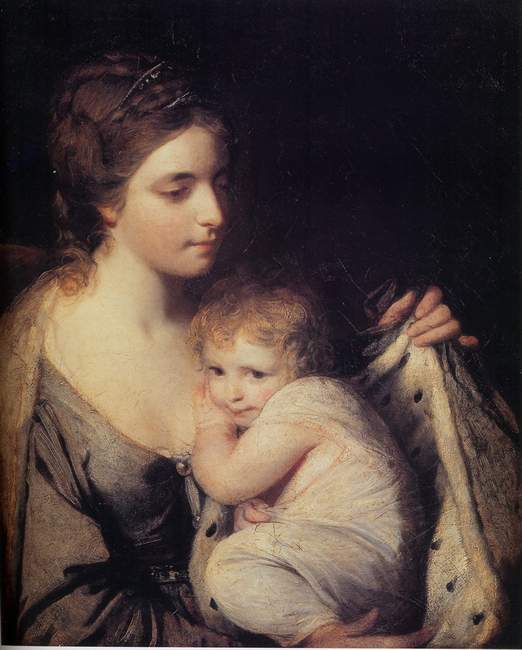
Maria Walpole and her daughter Elisabeth Laura (1762), by Joshua Reynolds. Affective empathy may have initially evolved to facilitate the mother-child relationship. 


Empathy is key to the functioning of high-trust cultures. If everyone is empathic toward each other, there is no need to waste energy on self-protection or on double-checking every single transaction. Just as importantly, you can make transactions that would otherwise be uneconomical.

Empathy, however, has to be reciprocated. Otherwise, it will divert your limited resources to people who will never reciprocate and who will, in fact, bleed you dry.  

The adaptiveness of empathy therefore depends on the cultural environment. Some cultures will favor it but not others. Does it follow, then, that some human populations have become more empathic than others? Can this mental trait undergo gene-culture coevolution?

It can, if three pre-conditions are met:

1. The trait varies in adaptiveness from one culture to another.

2. The trait is genetically heritable.

3. The trait can easily evolve out of pre-existing traits, i.e., only a few genetic changes are needed.

Evolutionary psychologists will argue that modern humans have not existed long enough to evolve new mental adaptations, particularly since their expansion out of Africa and into new natural and cultural environments. There has only been fine-tuning of existing adaptations (Tooby, Cosmides, and Barkow 1992). This argument is debatable:

Even if 40 or 50 thousand years were too short a time for the evolutionary development of a truly new and highly complex mental adaptation, which is by no means certain, it is certainly long enough for some groups to lose such an adaptation, for some groups to develop a highly exaggerated version of an adaptation, or for changes in the triggers or timing of that adaptation to evolve. That is what we see in domesticated dogs, for example, who have entirely lost certain key behavioral adaptations of wolves such as paternal investment. Other wolf behaviors have been exaggerated or distorted. (Harpending and Cochran 2002)

Empathy can thus differ between human populations if the differences arise from simple changes to an existing mechanism.

So does empathy meet the above preconditions?


Differences in adaptiveness

All cultures have rules of one sort or another. These rules are enforced by external sanctions (shaming by the community, especially by family members) and internal sanctions (feelings of guilt). Most cultures rely primarily on shaming. Some cultures, particularly in Europe, rely much more on feelings of guilt. Guilt is a subset of empathy. As the wrongdoer, you transfer to yourself the feelings of the person you have wronged. You feel the pain you have inflicted, and you will now mentally punish yourself.

The anthropologist Ruth Benedict described the differences between shame and guilt:

True shame cultures rely on external sanctions for good behavior, not, as true guilt cultures do, on an internalized conviction of sin. Shame is a reaction to other people's criticism. A man is shamed either by being openly ridiculed and rejected or by fantasying to himself that he has been made ridiculous. In either case, it is a potent sanction. But it requires an audience or at least a man's fantasy of an audience. Guilt does not. In a nation where honor means living up to one's own picture of oneself, a man may suffer from guilt though no man knows of his misdeed and a man's feeling of guilt may actually be relieved by confessing his sin. (Benedict 1946, p. 223)

Shame seems to be evolutionarily older than guilt. Sigmund Freud speculated that feelings of guilt arose as a mechanism to punish misbehavior in larger communities where paternal authority is insufficient: 

When an attempt is made to widen the community, the same conflict is continued in forms which are dependent on the past; and it is strengthened and results in a further intensification of the sense of guilt. [...]. What began in relation to the father is completed in relation to the group. If civilization is a necessary course of development from the family to humanity as a whole, then [...] there is inextricably bound up with it an increase of the sense of guilt, which will perhaps reach heights that the individual finds hard to tolerate. (Freud 1962, pp. 79-80)

East Asians might seem to be an exception to this evolutionary trend. They generally live in large communities where paternal authority is insufficient to enforce social rules. This problem seems to have been resolved through a stronger sense of social duty, rather than a greater propensity for empathy and guilt.

We see this in a study of young Chinese adults. The participants could see things from another person's perspective and understand how that person felt, but they did not seem to internalize those feelings and experience them vicariously. They were motivated to obey social rules by a sense of duty, rather than by empathy and feelings of guilt: "taking the views of others is an essential duty, and the lack of consideration to others' perspectives is generally regarded as a lack of virtue in the Chinese culture" (Siu and Shek 2005).


Heritability

First, we should keep in mind that empathy is not a unitary construct. It has different components:

Pro-social behavior: willingness to help others

Cognitive empathy:  capacity to understand how others feel

Affective or emotional empathy: involuntary transference of another person's feelings to yourself, i.e., feeling that person's pain or joy.

The last component is usually what we mean by empathy. Nonetheless, a person can be low in affective empathy while being high in cognitive empathy; this is in fact the hallmark of the sociopath, i.e., a person who understands how others feel and knows how to exploit those feelings for personal gain. Of the three kinds of empathy, pro-social behavior seems the most divergent and shares the least mental circuitry with the other two. Cognitive and affective empathy share circuits that specialize in representing another person's thoughts and intensions; affective empathy seems to be an additional step where these representations are relayed to brain regions that produce the corresponding emotional responses (Carr et al. 2003; Krishnan et al. 2016).

The latest review of the literature concluded that all three components of empathy have moderate to high heritability (Chakrabarti and Baron-Cohen 2013). Since then, an adult twin study has estimated the heritability of affective empathy at 52-57% and that of cognitive empathy at 27%. The rest of the variance was largely due to non-shared environment (Melchers et al. 2016). 

These findings are in line with those of a longitudinal twin study of children from 7 to 12 years of age. Genetic influences accounted for most of the variance in callousness/unemotionality, and environmental influences were entirely non-shared (Henry et al. 2018). Other studies have shown that the capacity for affective empathy remains stable as a child develops, while cognitive empathy progressively increases (Decety et al. 2017):

Finally, men and women seem to differ in affective empathy but not in cognitive empathy: “females do indeed appear to be more empathic than males [but] [t]hey do not appear to be more adept at assessing another person's affective, cognitive, or spatial perspective” (Hoffman 1977). This sex difference has been confirmed by recent studies, notably a British study (Baron-Cohen and Wheelwright 2004), a largely Argentinean study (Baez et al. 2017), an Italian twin study (Toccaceli et al. 2018), and a Chinese study (Liu et al. 2018). The size of the sex difference varied, however, being slight in the British and Argentinean studies, large but not significant in the Italian study, and significant in the Chinese study. 


Evolution in Homo sapiens

Affective empathy seems to be universal in our species. Differences do exist, however, between individuals, and these differences are distributed along a Bell curve in a human population (Baron-Cohen 2011; McGregor 2018). Any distinction between “normal people” and “sociopaths” is therefore arbitrary. There is simply a continuum of decreasing capacity for affective empathy.

Affective empathy also differs between men and women, and this sex difference seems, in turn, to differ from one population to another. This last point suggests an evolutionary pathway. Affective empathy may have initially evolved in ancestral humans as a means to facilitate the mother-child relationship. "Guilt cultures" then favored extension of affective empathy to a wider range of social interactions, as well as increased expression in men. One consequence would be a smaller sex difference in this mental trait.

How do guilt cultures ensure that affective empathy is reciprocated? They seem to resolve this problem by defining themselves much more as moral communities than as communities of related individuals. Adherence to social rules defines community membership, and these rules are perceived as being universal and absolute, as opposed to the situational morality of communities defined solely by kinship. Guilt cultures are also highly ideological. Community members monitor not only outward behavior for compliance but also inward thoughts—and this monitoring can target not just the thoughts of other members but also one’s own. Non-compliance can lead to a member being branded as morally worthless and expelled from the community (Frost 2017).

The current evidence is suggestive but not conclusive. As Baez et al. (2017) point out, most of our evidence on sex differences in empathy comes from self-report, i.e., questionnaires that men and women fill out. Many studies also fail to distinguish between cognitive empathy (understanding what others feel) and affective empathy (feeling what others feel). To measure affective empathy objectively, especially when comparing people from different cultural backgrounds, it would be best to use brain fMRIs (Krishnan et al. 2016).


To be cont'd


References

Baez, S., Flichtentrei, D., Prats, M., Mastandueno, R., García, A.M., Cetkovich, M., et al. (2017). Men, women...who cares? A population-based study on sex differences and gender roles in empathy and moral cognition. PLoS ONE 12(6): e0179336. https://doi.org/10.1371/journal.pone.0179336

Baron-Cohen, S. (2011). The Empathy Bell Curve. Phi Kappa Phi Forum; Baton Rouge 91(1): 10-12.

Baron-Cohen, S. and S. Wheelwright. (2004).The Empathy Quotient: An investigation of adults with Asperger Syndrome or high functioning autism, and normal sex differences. Journal of Autism and Developmental Disorders 34: 163-175.

Benedict, R. (1946 [2005]). The Chrysanthemum and the Sword. Patterns of Japanese Culture, First Mariner Books.

Carr, L., M. Iacoboni, M-C. Dubeau, J.C. Mazziotta, and G.L. Lenzi. (2003). Neural mechanisms of empathy in humans: A relay from neural systems for imitation to limbic areas. Proceedings of the National Academy of Sciences (USA) 100: 5497-5502.

Chakrabarti, B. and S. Baron-Cohen. (2013). Understanding the genetics of empathy and the autistic spectrum, in S. Baron-Cohen, H. Tager-Flusberg, M. Lombardo. (eds). Understanding Other Minds: Perspectives from Developmental Social Neuroscience. Oxford: Oxford University Press.

Davis, M.H., C. Luce, and S.J. Kraus. (1994). The heritability of characteristics associated with dispositional empathy. Journal of Personality 62: 369-391.

Decety, J., K.L. Meidenbauer, and J.M. Cowell. (2017). The development of cognitive empathy and concern in preschool children: A behavioral neuroscience investigation. Developmental Science 2018;21:e12570. 

Freud, S. (1962[1930]). Civilization and Its Discontents. New York: W.W. Norton

Frost, P. (2017). The Hajnal line and gene-culture coevolution in northwest Europe. Advances in Anthropology 7: 154-174.

Harpending, H., and G. Cochran. (2002). In our genes. Proceedings of the National Academy of Sciences (USA) 99(1): 10-12.

Henry, J., G. Dionne, E. Viding, A. Petitclerc, B. Feng, F. Vitaro, M. Brendgen, R.E. Tremblay, and M. Boivin. (2018). A longitudinal twin study of callous-unemotional traits during childhood. Journal of Abnormal Psychology 127(4): 374-384. 

Hoffman, M. L. (1977). Sex differences in empathy and related behaviors. Psychological Bulletin 84(4): 712-722. 

Krishnan, A., C.W. Woo, L.J. Chang, L. Ruzic, X. Gu, M. López-Solà, P.L Jackson, J. Pujol, J. Fan, and T.D. Wager. (2016). Somatic and vicarious pain are represented by dissociable multivariate brain patterns. eLife 2016;5:e15166 

Liu, J., X. Qiao, F. Dong, and A. Raine. (2018). The Chinese version of the cognitive, affective, and somatic empathy scale for children: Validation, gender invariance and associated factors. PLoS ONE 13(5): e0195268. 

McGregor, J. (2018). The highly empathic. SoRECS – The Society for Research into Empathy, Cruelty & Sociopathy. May

Melchers, M., C. Montag, M. Reuter, F.M. Spinath, and E. Hahn. (2016). How heritable is empathy? Differential effects of measurement and subcomponents. Motivation and Emotion 40(5): 720-730. 

Siu, A.M.H. and D.T. L. Shek. (2005). Validation of the Interpersonal Reactivity Index in a Chinese Context. Research on Social Work Practice 15: 118-126.

Toccaceli, V., C. Fagnani, N. Eisenberg, G. Alessandri, A. Vitale and M.A. Stazi. (2018). Adult Empathy: Possible Gender Differences in Gene-Environment Architecture for Cognitive and Emotional Components in a Large Italian Twin Sample. Twin Research and Human Genetics 21(3): 214-226

Tooby J, L. Cosmides, and J. Barkow. (1992). Introduction: Evolutionary Psychology and Conceptual Integration. In J. Barkow, L. Cosmides, and L. Tooby (eds.) The Adapted Mind: Evolutionary Psychology and the Generation of Culture, pp. 3-16, New York: Oxford Univ. Press; 1992.

Saturday, June 28, 2014

How universal is empathy?


Bronislaw Malinowski with natives on the Trobriand Islands (1918 - source). Pro-social behavior seems to be a human universal, but is the same true for full empathy?
 

What is empathy? It has at least three components:

- pro-social behavior, i.e., actions of compassion to help others

- cognitive empathy, i.e., capacity to understand another person's mental state

- affective or emotional empathy, i.e., capacity to respond with the appropriate emotion to another person's mental state (Chakrabarti and Baron-Cohen, 2013)

In their review of the literature, Chakrabarti and Baron-Cohen (2013) conclude that all three components are moderately to highly heritable, although the affective component seems to show the highest heritability (68%). This is in line with Davis et al. (1994), who found significant heritability for the affective facets of empathy (empathic concern and personal distress) but not for non-affective perspective taking.

All three components can vary from one individual to another, although studies to date have focused on pathological variation:

For example, it is suggested that people with psychopathic personality disorder may have intact cognitive empathy (hence being able to deceive others), but impaired affective empathy (hence being able to hurt others), whilst people with autism may show the opposite profile (hence finding the social world confusing because of their deficit in cognitive empathy, but not being over-represented among criminal offenders, having no wish to hurt others, suggesting their affective empathy may be intact) (Chakrabarti and Baron-Cohen, 2013)


People with depression may suffer from too much empathy, i.e., being too sensitive to the needs or distress of others (O'Connor et al., 2007). In short, these disorders seem to be the tail ends of a normal distribution. By focusing on these extremes, we forget that most of the genetic variability in empathy occurs among healthy individuals (Gillberg, 2007). 

Using research findings on autism and Asperger syndrome, Chakrabarti and Baron-Cohen (2013) have identified nine candidate genes that seem to promote empathy. They fall into three functional categories: sex-steroid synthesis and metabolism; neural development and connectivity; and social-emotional responsivity. The first category includes the degree to which a fetus is androgenized or estrogenized before birth, as shown by digit ratio (Frost, 2014).
 

Variation among human populations

If the genes associated with empathy vary among healthy individuals, do they also vary among human populations? This would be expected because populations have differed in their needs for different components of empathy, particularly since hunting and gathering gave way to farming some 10,000 years ago—when genetic change speeded up over a hundred-fold. At that time, humans were no longer adapting to new physical environments. They were adapting to new cultural environments that differed in social structure, in division of labor, in means of subsistence, in norms of conduct, in future time orientation, in degree of sedentary living, and so on. Our ancestors were now reshaping their environments, and these human-made environments were now reshaping them—in other words, gene-culture co-evolution (Hawks et al., 2007).

Humans have been transformed especially by the shift from small bands of hunter-gatherers to larger and more complex groups of farmers and townsfolk. With social relations expanding beyond the circle of close kin, kinship obligations were no longer enough to ensure mutual assistance and stop free riding. There was thus selection for pro-social behavior, i.e., a spontaneous willingness to help not only kin but also non-kin.

Pro-social behavior is attested across a wide range of cultures. It is the subject of a recent book about the nature and limits of empathy in Oceanic cultures. The Banabans of Fiji for instance express the idea of pro-sociality through the term nanoanga, which they normally translate into English by "compassion" or "pity."

[...] compassion is the basis for their capacity to bond socially with others, even compassion to the point of readiness to take strangers into their community. Their empathy therefore relates causally to how they act socially toward others. Here compassion or pity embraces both understanding and fellow feeling: the islanders understand that the stranded mariner is at the end of his strength, which is why they succor him and treat him as one of their own. They understand him because he, like them, is a human being, a person. [...] Thus, for example, when someone passing by a house does not belong to the immediate family of those inside, it is customary to welcome the passer-by by calling out the words mai rin! (Come in!), which carry the implication that food and drink will not be found wanting inside. (Hermann, 2011, p. 31)


This desire to help non-kin is not unconditional. The author notes that prior experiences with an individual in distress can determine whether compassion will be given or withheld. Moreover, Barnabans can "proceed strategically when deciding whether to extend trust to others or to keep thoughts and feelings to themselves" (Hermann, 2011, p. 31). This is not the affective empathy of entering another person's mind to feel his or her pain.
 
When the Barnabans compare themselves with others, and when by their behavior toward the stranger they show that they understand him and feel with him, they do not, however, equate themselves fully and entirely with him. (Hermann, 2011, p. 32)

 
Another contributor to the same book writes similarly about the inhabitants of Vanatinai, in the Trobriand Islands.
 
On the island of Vanatinai, when someone, including an ethnographer, privately asks a trusted confidant, "Why did she/he act like that?" "What was she/he thinking?" the common answer, often uttered in tones of puzzlement and despair, or anxiety and fear, expresses one of the islanders' core epistemological principles: "We cannot know their renuanga." Renuanga is a word that refers to a person's inner experiences, both and inseparably thought and emotion.

 
[...] And their psychic states, their inner thought and feelings, are inherently unknowable. It may never be clear why they were angry or sympathetic, and what caused them to act and influence an event in someone's life [...] (Lepowsky, 2011, p. 44)

 
In short, Oceanic cultures display hospitality but not full empathy, which would be considered undesirable anyway:

The philosophical principle of personal opacity, the interiority of others' thoughts/feelings (renuanga), is closely bound to the islanders' fierce insistence on personal autonomy, both as cultural ideology and as daily social practice (Lepowsky, 2011, p. 47)


From pro-sociality to full empathy

Whereas pro-sociality is attested across a wide range of cultures, full cognitive/affective empathy is more localized. The difference is like the one we see between shame and guilt. Most cultures primarily use shame to enforce correct behavior, i.e., if other people see you breaking a rule, you feel ashamed and this feeling is reinforced by social disapproval. In contrast, only a minority of cultures—largely those of Northwest Europe—rely primarily on guilt, which operates even when only you see yourself breaking a rule or merely think about breaking a rule (Benedict, 1946; Creighton, 1990).

Northwest Europeans have thus undergone two parallel changes in behavioral control: 1) a shift from pro-sociality to full cognitive/affective empathy; and 2) a shift from shame to guilt. Indeed, full empathy and guilt may be two sides of the same coin. Both are the consequences of a mental model that is used to simulate how another person thinks or feels (an imaginary witness to a wrongful act, a person in distress) and to ensure correct behavior by inducing the appropriate feelings (anguish, pity).

Finally, full empathy and guilt are most adaptive where kinship ties are relatively weak and where rules of correct behavior require a leveling of the playing field between kin and non-kin. This has long been the case in Northwest Europe. There seems to be a longstanding pattern of weak kinship ties west of a line running from Trieste to St. Petersburg, as shown by several culture traits that are rare or absent elsewhere:

- relatively late marriage for men and women

- many people who never marry

- neolocality (children leave the family household to form new households)

- high circulation of non-kin among different households (typically young people sent out as servants) (Hajnal, 1965)

Commonly called the Western European Marriage Pattern, this geographic zone of relatively weak kinship was thought to have arisen after the Black Death of the 14th century. There is now good evidence for its existence before the Black Death and fragmentary evidence going back to 9th century France and even earlier (Hallam, 1985; Seccombe, 1992, p. 94). Historian Alan Macfarlane likewise sees an English tendency toward weaker kinship ties before the 13th century and even during Anglo-Saxon times (Macfarlane, 2012; Macfarlane, 1992, pp. 173-174).

This weak kinship zone may have arisen in prehistory along the coasts of the North Sea and the Baltic, which were once home to a unique Mesolithic culture (Price, 1991). An abundance of marine resources enabled hunter-fisher-gatherers to achieve high population densities by congregating each year in large coastal agglomerations for fishing, sealing, and shellfish collecting. Population densities were comparable in fact to those of farming societies, but unlike the latter there was much "churning" because these agglomerations formed and reformed on a yearly basis. Kinship obligations would have been insufficient to resolve disputes peaceably, to manage shared resources, and to ensure respect for social rules. Initially, peer pressure was probably used to get people to see things from the other person's perspective. Over time, however, the pressure of natural selection would have favored individuals who more readily felt this equivalence of perspectives, the result being a progressive hardwiring of compassion and shame and their gradual transformation into empathy and guilt (Frost, 2013a; Frost, 2013b).

Empathy and guilt are brutally effective ways to enforce social rules. If one disobeys these internal overseers, the result is self-punishment that passes through three stages: anguish, depression and, ultimately, suicidal ideation.

People suffering from depression are looking at both others and themselves with suspicion, often believing whatever they have was obtained by cheating, and that it is more than they deserve. Depressives, burdened by moralistic standards, are harsh evaluators of both themselves and others. The self-punishment meted out by depressives is a common if disturbing symptom; while thinking 'I deserve this', they may engage in altruistic punishment turned upon the self. Just as altruistic punishers experience a neuronally based reward from punishing defectors, despite material costs, depressed patients report a sense of relief upon inflicting self-punishment. Patients who are 'cutters', describe relief from tension after cutting and depressives with suicidal ideation may describe the relief they felt when on the verge of attempting a suicidal action. (O'Connor et al., 2007, p. 67)


This pathology is progressively less common in populations farther south and east, not so much because each stage is less common but rather because depression is much less likely to result from empathic guilt and much less likely to lead to suicide (Stompe et al., 2001). This 3-stage sequence does not seem to be a human universal, at least not to the same extent as in Northwest Europeans, a reality that Frantz Fanon noted when describing clinical depression in Algerians: 

French psychiatrists in Algeria found themselves faced with a difficult problem. When treating a melancholic patient, they were accustomed to being afraid of suicide. The melancholic Algerian kills, however. This disease of the moral conscience that is always accompanied by self-accusation and self-destructive tendencies assumes hetero-destructive forms in the Algerian. The melancholic Algerian does not commit suicide. He kills. (Fanon, 1970, pp. 219-220)


References

Benedict, R. (1946 [2005]). The Chrysanthemum and the Sword. Patterns of Japanese Culture, First Mariner Books. 

Chakrabarti, B. and S. Baron-Cohen. (2013). Understanding the genetics of empathy and the autistic spectrum, in S. Baron-Cohen, H. Tager-Flusberg, M. Lombardo. (eds). Understanding Other Minds: Perspectives from Developmental Social Neuroscience, Oxford: Oxford University Press.
http://books.google.ca/books?hl=fr&lr=&id=eTdLAAAAQBAJ&oi=fnd&pg=PA326&ots=fHpygaxaMQ&sig=_sJsVgdoe0hc-fFbzaW3GMEslZU#v=onepage&q&f=false  

Creighton, M.R. (1990). Revisiting shame and guilt cultures: A forty-year pilgrimage, Ethos, 18, 279-307.
http://sfprg.org/control_mastery/docs/revisitshameguilt.pdf

Davis, M.H., C. Luce, and S.J. Kraus. (1994). The heritability of characteristics associated with dispositional empathy, Journal of Personality, 62, 369-391.

Fanon, F. (1970). Les damnés de la terre, Paris: Maspero. 

Frost, P. (2013a). The origins of Northwest European guilt culture, Evo and Proud, December 7
http://evoandproud.blogspot.ca/2013/12/the-origins-of-northwest-european-guilt.html 

Frost, P. (2013b). Origins of Northwest European guilt culture, Part II, Evo and Proud, December 14
http://evoandproud.blogspot.ca/2013/12/origins-of-northwest-european-guilt.html  

Frost, P. (2014). A pathway to pro-social behavior, Evo and Proud, May 10.
http://evoandproud.blogspot.ca/2014/05/a-pathway-to-pro-social-behavior.html

Gillberg, C. (2007). Non-autism childhood personality disorders, in: T.F.D. Farrow and P.W.R. Woodruff (eds). Empathy in Mental Illness, (pp. 111-125). Cambridge: Cambridge University Press.

Hajnal, J. (1965). European marriage pattern in historical perspective. In D.V. Glass and D.E.C. Eversley (eds). Population in History, Arnold, London.

Hallam, H.E. (1985). Age at first marriage and age at death in the Lincolnshire Fenland, 1252-1478, Population Studies, 39, 55-69. 

Hawks, J., E.T. Wang, G.M. Cochran, H.C. Harpending, & R.K. Moyzis. (2007). Recent acceleration of human adaptive evolution. Proceedings of the National Academy of Sciences (USA), 104, 20753-20758.
http://harpending.humanevo.utah.edu/Documents/accel_pnas_submit.pdf

Hermann, E. (2011). Empathy, ethnicity, and the self among the Barnabans in Fiji, in D.W. Hollan, C. J. Throop (eds).The Anthropology of Empathy: Experiencing the Lives of Others in Pacific Societies, (pp. 25-42), New York: Berghahn.

Lepowsky, M. (2011). The boundaries of personhood, the problem of empathy, and "the native's point of view" in the outer islands, in D.W. Hollan, C. J. Throop (eds).The Anthropology of Empathy: Experiencing the Lives of Others in Pacific Societies, (pp. 43-68), New York: Berghahn. 

Macfarlane, A. (1992). On individualism, Proceedings of the British Academy, 82, 171-199.
http://www.alanmacfarlane.com/TEXTS/On_Individualism.pdf  

Macfarlane, A. (2012). The invention of the modern world. Chapter 8: Family, friendship and population, The Fortnightly Review, Spring-Summer serial
http://fortnightlyreview.co.uk/2012/07/invention-8/

O'Connor, L.E., J.W. Berry, T. Lewis, K. Mulherin, and P.S. Crisostomo. (2007). Empathy and depression: the moral system in overdrive, in: T.F.D. Farrow and P.W.R. Woodruff (eds). Empathy in Mental Illness, (pp. 49-75). Cambridge: Cambridge University Press. 
http://www.eparg.org/publications/empathy-chapter-web.pdf

Price, T.D. (1991). The Mesolithic of Northern Europe, Annual Review of Anthropology, 20, 211-233.
http://www.cas.umt.edu/departments/anthropology/courses/anth254/documents/annurev.an.TDouglasPrice1991MseolithicNEurope.pdf

Seccombe, W. (1992). A Millennium of Family Change. Feudalism to Capitalism in Northwestern Europe, London: Verso.

Stompe, T., G. Ortwein-Swoboda, H.R. Chaudhry, A. Friedmann, T. Wenzel, and H. Schanda. (2001). Guilt and depression: a cross-cultural comparative study, Psychopathology, 34, 289-298.

Saturday, May 10, 2014

A pathway to pro-social behavior


The digit ratio is the length of the index finger (2nd finger) divided by the ring finger (4th finger). It correlates with the degree of androgenization or estrogenization of fetal tissues, including the fetal brain. (source)


As small bands of hunter-gatherers gave way to larger and more complex societies of farmers and townsfolk, trusting relationships had to expand beyond the circle of close kin. This larger social environment posed a two-fold problem:

For trust to evolve our ancestors must have 1) overcome the incentive to defect when involved in cooperative activity, and 2) suppressed the proclivity to use violence to take resources from conspecifics, as is seen in nonhuman primates. (Gifford, 2013)


This in turn required "social rules of governance and implicit institutions that suppressed free riding, provided rules of orderly behavior that increased cooperation by making individual behavior predictable, and also protected the property rights of individuals" (Gifford, 2013).

But what, exactly, does one do with free riders and sociopaths? Traditionally, such people were excluded from society, either by ostracism or, in more serious cases, by execution. There was thus strong selection for pro-social behavior, i.e., acting honorably and peacefully with other members of society. This selection operated even when ostracism was far from permanent or total. Shunning, public shaming, or simply a bad reputation would hurt one's chances for survival and reproduction in many ways: reduced access to community goods, discrimination on the marriage market, reluctance by others to provide assistance, and so forth.

This process of selection had genetic consequences, since nearly all behavioral traits have a heritability of 40% plus or minus 20%. There was thus removal not only of antisocial individuals from society but also of antisocial predispositions from the gene pool. The corollary was that the gene pool became dominated by pro-social predispositions, particularly empathy, compliance with social rules, and high thresholds for expression of anger.

This evolution probably occurred incrementally through small changes at many genes. This is what we see with increases in human intellectual capacity, and it is probably a general rule for the evolution of complex traits. Big changes at single genes tend to have nasty side-effects elsewhere on the genome.

A recent paper has highlighted one possible evolutionary pathway: the relative degree of androgenization or estrogenization of the developing fetus (Branas-Garza et al., 2013). By varying the ratio of one to the other, it's possible to alter a wide range of behavioral tendencies. This prenatal priming of fetal tissues can be easily measured by the "digit ratio," i.e., the length of the index finger (2nd finger) divided by the length of the ring finger (4th finger). The lower your digit ratio, the more you have been androgenized before birth. The higher your digit ratio, the more you have been estrogenized before birth.

Branas-Garza et al. (2013) found that altruistic behavior is strongest among men with intermediate digit ratios:

We analyze the association between altruism in adults and the exposure to prenatal sex hormones, using the second-to-fourth digit ratio. We find an inverted U-shaped relation for left and right hands, which is very consistent for men and less systematic for women. Subjects with both high and low digit ratios give less than individuals with intermediate digit ratios. We repeat the exercise with the same subjects seven months later and find a similar association, even though subjects' behavior differs the second time they play the game.


Different environments favor different degrees of altruism. In one setting, an altruist may be admired and enjoy preferential access to community goods. In another, the same person may be ridiculed and ruthlessly exploited. Thus, according to the context, the right balance has to be struck between altruism and selfishness:

One possible interpretation of the above findings comes from stabilizing selection. Since sharing with others is socially beneficial, selfish individuals are socially excluded and their fitness affected negatively. If individuals who are exposed too much or too little do not share with others, there is an evolutionary pressure on these non-altruistic individuals, which in turn generates an indirect evolutionary pressures on the degree of exposure to prenatal sex hormones by raising survival probabilities of individuals with intermediate levels of exposure. This hypothesis is supported by observed distributions of 2D:4D in the literature, which are universally concentrated around the median values. (Branas-Garza et al., 2013)


From one population to the next, digit ratios tend to cluster around different means, perhaps because altruism has been favored or disfavored to different degrees. This social selection may have targeted other behavioral traits, notably thrill-seeking. Kornhuber et al. (2013) have found that low digit ratios are associated with video game addition. This kind of addiction may tap into a male need for risk and adventure, which may likewise have been more adaptive in some environments than in others.


References 

Brañas-Garza, P., J. Kovárík, L. Neyse (2013). Second-to-fourth digit ratio has a non-monotonic impact on altruism. PLoS ONE 8(4): e60419.
http://www.plosone.org/article/info%3Adoi%2F10.1371%2Fjournal.pone.0060419 

Gifford Jr., A. (2013). Sociality, trust, kinship and cultural evolution, The Journal of Socio-Economics, 47, 218-227
http://www.csun.edu/~hceco001/Researchpapers/Researchpapers/socialityandtrust.pdf 

Kornhuber, J., E-M. Zenses, B. Lenz, C. Stoessel, P. Bouna-Pyrrou, et al. (2013). Low 2D:4D Values are associated with video game addiction. PLoS ONE 8(11): e79539.
http://www.plosone.org/article/info%3Adoi%2F10.1371%2Fjournal.pone.0079539#pone-0079539-g002