Showing posts with label United States. Show all posts

Monday, May 28, 2018

Outsourcing torture and execution


Member of an American prison gang (Wikicommons: Border Brothers). A jail sentence is no longer just a jail sentence.


When my scholarship was cancelled I began looking for short-term contracts to support myself. At that time Quebec City offered little in the way of long-term employment, but demand was strong for bilingual contractuels who knew software packages like WordPerfect (which was not at all user-friendly in the late 1980s). 

One day I got a call from a maximum security prison west of Quebec City. A renewable six-month clerical position. Good pay. But I'd have to get vaccinated for hepatitis B. "You never know. There's always a risk of rape in these places." I politely declined. Later someone else phoned to reassure me that the risk was "minimal" and nothing to worry about. I still declined.

Rape and assault are frequent in prisons. This is no surprise. More surprisingly, prison violence is becoming a deliberate form of punishment—a way to make the original sentence a lot worse. This punitive function has been discussed in a recent paper:

To what extent are rapes, beatings, and other assaults essential to the punitive function of the modern prison? Officially, violence of this sort is unlawful and clearly outside the bounds of legitimate punishment. The United States Supreme Court has declared more than once that being assaulted is not "part of the penalty that criminal offenders pay for their offenses against society."

[...] In reality, violence thoroughly defines the prison experience. Prisoners face a substantial risk of being beaten, raped, and even killed at the hands of their fellow inmates or keepers. In a way that is sometimes difficult for those who are unfamiliar with prison to appreciate, prisoners inhabit a world comprehensively defined by this kind of violence. Such violence is the dominant arbiter of social status in prison. It is the means by which authority, hierarchy, and privilege are articulated among prisoners and between prisoners and their keepers. And it is, paradoxically, the most reliable protection against being the victim of violence. (White 2008, pp. 737-738)

When did this punitive function come to be? To some extent it has always existed, but it began to gain much more importance during the "demographic shift" of the 1960s and 1970s (White 2008, pp. 745-746). The baby boom was invading all spheres of life, and this dramatic growth in the number of young people coincided with a weakening of informal social controls by family and church. People were also moving from rural communities (where these informal controls were strong) to big cities (where they were weak). All of these factors facilitated an explosion of criminal behavior, especially the violent sort that young males specialize in. American prisons were overwhelmed, "and by the mid 1970s the correctional model had totally collapsed, superseded by a very different regime" (White 2008, p. 745).


Male violence: pathological in some societies, normal in others

This surge of violent crime happened in all racial groups, but much more in African Americans. Why? The usual explanation is social deprivation. Young men turn to violence when denied full access to education, employment, and social acceptance. Such behavior is abnormal and will disappear in normal circumstances.

That view of “normal” behavior applies only to some societies. Elsewhere, young men are supposed to fight. And not simply as a last resort. They're expected to fight proactively, as a means to gain status, to impress women, and to strike terror in potential enemies (Frost 2010; Frost and Harpending 2015). 

This is in contrast to pacified societies, where the State has imposed a monopoly on violence, and where even self-defense is not always a sufficient excuse. In such societies, violent behavior is criminalized and pathologized. The ideal young man goes to "school" and "work" without ever using violence to defend himself and his family, or even to impress women. Sheesh!

Pacified societies exist throughout much of Europe and East Asia, with interesting exceptions. The strong arm of the State has historically been weak in mountainous regions, like Albania and the Caucasus, and this is also where men are most willing to act violently on their own behalf. In England, endemic violence persisted until the 18th century in the northern border regions, where any encounter with non-kin, however innocent, could turn violent. Disputes would grow into long-running feuds if not settled through payment of blood money (Fischer 1989, pp. 621-632).

These two kinds of society can work fairly well ... if kept apart. In non-pacified societies, the level of personal violence is not as high as one might expect. A sort of dynamic equilibrium makes young men think twice before acting violently, since any violence will be repaid in kind by the victim, his brothers, and his male kin. So violence tends to target people who cannot retaliate, either because they're physically weak or because they have no kinfolk to stand up for them. 

Problems begin when these two kinds of society co-exist on the same territory. When the non-pacified society becomes sufficiently numerous, but not necessarily the majority, it can impose its rules, and everyone will have to play by them. If you cannot fight back and have no "brothers" to defend you, there remains only one option: submit. This is now the case in American prisons and, increasingly, in prisons throughout the Western world.

Indeed, the demographic profile of prisons has changed a lot even in Western Europe, where native Europeans make up fewer and fewer of the inmates. More and more are from societies where State control of personal violence is recent and widely perceived as being illegitimate. They come mostly from North Africa, West Africa, Somalia, Southwest Asia, and South Asia. They are predominantly Muslim, and the Muslim proportion of the prison population gives a rough idea of the demographic shift. This proportion is 60 to 70% in France (Moore 2008), 45% in Belgium (Sudinfo.be 2013), and 15% in the United Kingdom (Allen and Watson 2017, p. 14). Furthermore, Muslim inmates have power beyond their numbers because they are willing to fight for each other. This is a recurring theme in interviews with prisoners:

“there's no gangs in Rochester it's just Muslims stick together”, Muslims “walk around the wings in tens” and 'people will say that the only gang in here are the Muslims they always stick up for each other”. For many Muslim prisoners the solidarity engendered by sharing a faith was viewed as presenting certain obligations just as area allegiances required mutual defensive protection for prisoners: “I see Muslims will stay closer together so ...obviously you have to look out for your brother, help his brother, it's a Muslim's duty. And it's like whatever, whatever I want for myself I should want for my brother.” (Phillips 2012, p. 60)

Some prisoners even convert to Islam as a way to get protection (Phillips 2012, p. 62).


Prison violence as an instrument of law enforcement

Beginning in the 1970s, American law-enforcement began to turn this situation to its own advantage, initially to assert control over prisoners:

In some circumstances, it is clear that rape is used by prison officials as a means of control in its own right—as a means of punishing inmates who are (by the officials' reckoning) especially troublesome, of breaking the will of defiant inmates, and of rewarding (by accommodating their victimization of others) inmates who are in some way helpful to the institution's interests. Where rape is sanctioned in this fashion, a victimized inmate has little hope of gaining the institution's protection from further abuse. Even where it is not so sanctioned, victims of rape often encounter considerable indifference on the part of administrators and staff who would rather not antagonize powerful rapists, who anticipate difficulties with successful investigation, or who for some other reason cannot be bothered. Many staff simply may take the position that defense against rapes and other assaults are an inmate's own obligation. (White 2008, p. 757)

This punitive function has since been extended to people currently outside prison. Initially, it helped to keep juvenile delinquents in line by sending them a crude but simple message: if you're not careful, we'll send you to a place where you'll be raped, assaulted, and perhaps killed. 

Today, that message is no longer aimed solely at juvenile delinquents. Every American knows that a prison sentence is a lot more than time behind bars. In theory, the State no longer maims or tortures. In practice, it does … and on a scale not seen since medieval times:

That such violence is so thoroughly unlawful allows it to serve the state as a mode of punishment without the state ever confessing the true extent of its resort to such barbarity and without thereby surrendering much in the way of its legal and political legitimacy. Indeed, by deeming prison violence illegal, the state in its various manifestations can actually condemn the phenomenon, while yet relying on it as part of [the] regime of control. (White 2008, p. 740)


Toward a new regime of control

This regime of control has developed in an atmosphere of "They’ve got it coming to them anyway!" Prison sentences are normally handed down for serious crimes, like murder or gang rape, and there is still a widespread feeling that such people are not being punished enough. In recent years, however, prison sentences have begun to be imposed for minor offenses, especially in the United Kingdom. 

Last year, an English man was found guilty of placing two bacon sandwiches outside the door of a mosque. He was sentenced to a year in jail, and halfway through the sentence he was found dead in his cell (Curtis 2018). The prison sentence is itself incredible. This was a first-time offense that would have been considered a misdemeanor scarcely a decade ago.

A similar sentence was handed down to Tommy Robinson, the founder of the English Defence League. Not long into his sentence, the inevitable happened:

"They gave him a pasting. He was being taken for a legal visit and was then put in a room with these guys. The door was locked and the warders all disappeared. He has quite a few injuries to his face and neck and needed two visits to the medical wing." The source said his attackers were Muslim prisoners but that could not be verified. Robinson suspects the situation was engineered by the warders because of the obvious threat posed to him by opponents of the EDL. He fears he is a marked man inside the category A prison. (Gover 2014)

The official reason for the sentence? Making an incorrect statement on a mortgage application—a misdemeanor normally punished by a fine. And for this Tommy Robinson was sent to a category A prison. 

This past week, he was again sentenced to jail:

At 14h00 on 25 May 2018 Judge Denise Marson QC summarily sentenced Robinson and issued a notice under Section 4(2) of the Contempt of Court Act 1981 banning any reporting of the hearing, sentence, evidence offered or any other matter relating to the proceedings against Robinson indefinitely until the conclusion of a series of child grooming trials in Leeds Crown Court. (Wikipedia 2018)

This time, Tommy Robinson was sentenced to jail for broadcasting information that might influence the outcome of a rape gang trial (he was livestreaming outside the courthouse). Yet that information had already been published in a local newspaper. Even more strangely, the judge extended the reporting ban to the outcome of Robinson’s trial. That trial had no jurors to influence. It was a trial by judge and was completed in four hours. One final point: some reports state that the judge simply reactivated an existing suspended sentence, hence the speedy trial. But only a few months remained on that sentence, and this one seems to be much longer. For a new sentence a defendant is normally given time to prepare a defense, find witnesses, and choose a lawyer, rather than having a court-appointed one (as was actually the case).

Because of the reporting ban, news reports on this story have either been pulled or modified. Fox News states that he was sentenced to 13 months in prison despite protests from his lawyer, who said this measure would be tantamount to a death sentence, “given his profile and previous credible threats” (Fox News 2018).

One might wonder about these jail sentences for misdemeanors that hardly justify such punishment. And is the punishment really the time spent behind bars? Or is it something else? Like something in the prison environment that can “finish the job”? A strange collusion seems to be developing between the UK justice system and the vilest elements of prison society.


References

Allen, G. and C. Watson (2017). UK Prison Population Statistics. Briefing Paper. House of Commons Library.
http://researchbriefings.files.parliament.uk/documents/SN04334/SN04334.pdf

Fischer, D.H. (1989). Albion's Seed. Four British Folkways in America, Oxford University Press, New York and Oxford, pp. 621-632.

Curtis, J. (2018). Man jailed for leaving a bacon sandwich outside a mosque is found dead in prison halfway through his 12-month sentence. Daily Mail, May 27, 2018
http://www.dailymail.co.uk/news/article-4075328/Man-jailed-leaving-bacon-sandwiched-outside-mosque-dead-prison-half-way-12-month-sentence.html

Fox News (2018). Right-wing activist Tommy Robinson reportedly jailed after filming outside child grooming trial.
http://www.foxnews.com/world/2018/05/26/right-wing-activist-tommy-robinson-reportedly-jailed-after-filming-outside-child-grooming-trial.html

Frost, P. (2010). The Roman State and genetic pacification, Evolutionary Psychology 8(3): 376-389. http://www.epjournal.net/filestore/EP08376389.pdf  

Frost, P. and H. Harpending. (2015). Western Europe, state formation, and genetic pacification, Evolutionary Psychology 13: 230-243.
http://journals.sagepub.com/doi/abs/10.1177/147470491501300114

Gover, D. (2014). Fear of Muslim Attack Beaten up in Woodhill Prison. International Business Times, February 5
https://www.ibtimes.co.uk/edl-founder-tommy-robinson-fear-muslim-attack-beaten-woodhill-prison-1435264

Moore, M. (2008). In France, prisons filled with Muslims, The Washington Post, April 29
http://www.washingtonpost.com/wp-dyn/content/article/2008/04/28/AR2008042802560.html?hpid=topnews

Phillips, C. (2012). 'It ain't nothing like America with the Bloods and the Crips': Gang narratives inside two English prisons. Punishment & Society 14(1): 51-68.
http://citeseerx.ist.psu.edu/viewdoc/download?doi=10.1.1.893.3021&rep=rep1&type=pdf

Sudinfo.be (2013). 45% des détenus des prisons belges sont de confession musulmane, Sudinfo.be, May 23
http://www.sudinfo.be/726092/article/actualite/belgique/2013-05-17/45-des-detenus-des-prisons-belges-sont-de-confession-musulmane

White, A.A. (2008). The Concept of "Less Eligibility" and the Social Function of Prison Violence in Class Society. Buffalo Law Review 56: 737-820.
http://scholar.law.colorado.edu/cgi/viewcontent.cgi?article=1310&context=articles

Wikipedia. (2018). Tommy Robinson (activist).
https://en.wikipedia.org/wiki/Tommy_Robinson_%28activist%29#cite_note-79

Saturday, December 19, 2015

A look back over 2015


Marion-Maréchal Le Pen (Wikicommons - Remi JDN). This year, she received 45% of the popular vote in one of France's regions, as a Front National candidate.


We must act now to bring anti-globalist parties to power: the UKIP in Britain, the Front national in France, the Partij voor de Vrijheid in the Netherlands, the Alternative für Deutschland in Germany, and the Sverigedemokraterna in Sweden. How, you may ask? It's not too complicated. Just go into the voting booth and vote. You don't even have to talk about your dirty deed afterwards.

I wrote the above last January, fearing that Europe would see an acceleration of the massive demographic change already under away—the Great Replacement, to use a term coined by Renaud Camus:

Oh, the Great Replacement needs no definition. It isn't a concept. It's a phenomenon, as obvious as the nose on your face. To observe it, you need only go out into the street or just look out the window. A people used to be there, stable, occupying the same territory for fifteen or twenty centuries. And all of a sudden, very quickly, in one or two generations, one or more other peoples have substituted themselves for it. It's been replaced. It's no longer itself.  We should note that the tendency to consider individuals, things, objects, and peoples replaceable or interchangeable is fairly widespread and in line with a threefold movement whereby people have become industrialized, deprived of their spirituality, and dumbed down. Call it a later and more generalized stage of Taylorism. At first, we replace only the parts of manufactured goods. Then, we replace workers. Finally, we replace entire peoples. (Camus, 2012)

Two breaches have been made in the dike that used to hold back this process of replacement: one in Libya and the other in Syria. Through them is pouring the demographic overflow that has been building up in Africa and the Middle East. Meanwhile, there has been an incredible loss of will among Europe's leaders to do anything, other than hectoring recalcitrant nations like Hungary for not taking their "fair share."

I'm not using the word "incredible" lightly. This wave of immigrants won't be a one-time-only thing. It won't come to an end when conditions improve in their home countries. Indeed, once it gets under way it can only increase in magnitude, and spreading it over a wider area will do nothing to stop the increase. Instead of being confined to Western and Southern Europe, the Great Replacement will be extended to Eastern Europe. Swell. You call that a solution?

Instead of replacing native Europeans, why not replace their leaders? Why not vote them out of office? That was the solution I advocated back in January and still do. Political change is more certain when done by peaceful means at the ballot box, as opposed to being imposed by coercion and illegal acts. Unfortunately, this option faces a number of obstacles.

The obstacles are threefold:

Unwillingness to play by the rules

In this, the problem lies not so much with Europe's nationalist parties as with their opponents. It's the latter who are not willing to play by the rules.

This was the case in Belgium, where in 2004 a court ruling shut down the Vlaams Blok, a party that had won 24% of the popular vote for the Flemish parliament the same year.

In October 2000, the Centre for Equal Opportunities and Opposition to Racism, together with the Dutch-speaking Human Rights League in Belgium registered a complaint at the Correctional Court, in which they claimed that three non-profit organisations connected to the Vlaams Blok (its education and research office and the "National Broadcasting Corporation") had violated the 1981 anti-racism law. The publications which were referred to included its 1999 election agenda and 1997 party platform. The challenged passages included those where the party called for a separate education system for foreign children, a special tax for employers employing non-European foreigners, and a restriction of unemployment benefits and child allowances for non-European foreigners. (Wikipedia - Vlaams Blok, 2015)

Elsewhere, nationalist parties have faced a combination of judicial and extrajudicial harassment. Indeed, when antifas commit brazen acts of violence that go unpunished, one cannot help but wonder whether the correct term is "quasi-judicial." The antifas are functioning as a kind of secret police that is allowed to do what the regular police cannot do.

Even without the antifas, the level of harassment is considerable. In 2013, for example, the European Parliament stripped Marine Le Pen of her parliamentary immunity for having denounced the illegal blocking of French streets for Muslim prayers:

For those who want to talk a lot about World War II, if it's about occupation, then we could also talk about it (Muslim prayers in the streets), because that is occupation of territory. ...It is an occupation of sections of the territory, of districts in which religious laws apply. ... There are of course no tanks, there are no soldiers, but it is nevertheless an occupation and it weighs heavily on local residents (Wikipedia - Marine Le Pen, 2015)

For that comment, she was dragged before the courts, being finally acquitted this year. Compare that with the indulgence reserved for the magazine Le Nouvel Observateur when it featured a tweet on its twitter page that called for the mass rape of women who vote FN. The tweet was removed but there was no apology, and there certainly won't be any prosecution by the Minister of Justice—as was the case with Marine's comment.

This is the reality of political debate in Western Europe. One side can speak with impunity, whereas the other has to watch what it says.

Extremist image of nationalism

In 2015, the progress of nationalist parties was not uniform. In Greece, Chrysí Avgí (Golden Dawn) seems to have stalled at 7% of the popular vote. In Norway, Fremskrittspartiet (Progress Party) lost support in local elections, this being part of a decline that began in 2011 … with Breivik's terrorist attacks.

In Norway, it is now difficult to be a nationalist without being associated with Anders Breivik or church burnings by black metallists. In Greece, nationalism is tarred with Nazi-like rhetoric and imagery—this, in a country that Nazi Germany had occupied during the last war. It is a sign of just how bad things are that so many Greeks are still willing to vote for a party that revels in an extremist image.

This problem is inevitable with any movement that begins on the fringes among people who feel alienated. As nonconformists they tend to be lone wolves, and as lone wolves they tend to act without restraint, sometimes mindlessly. Such people are both a help and a hindrance for any new political movement.

Assimilation into the dominant political culture

There is also the reverse problem. In the Venice state election, the Liga Veneta received 41% of the popular vote. This might seem to be good news, since the Liga Veneta is part of the Lega Nord, which in turn is allied with the Front National in France.

Unfortunately, things are not as they might seem. When a new party comes closer to power, it tends to assimilate mainstream values because its leaders now have to navigate within that culture—daily encounters with the media, meetings with campaign donors, invitations to wine and cheese parties ... The result may be seen in the Liga Veneta’s political platform for 2010-2015:

The challenges that Veneto should face in the next decades, said the party, were to enhance "internationalization" in the era of globalization, to overcome the traditional Venetian policentrism and interpret Veneto as a united and cohesive region: a "European region in Italian land". The program stressed also concepts such as "Europe of the regions", "Europe of citizens", "global Veneto", "openness toward the world", "green economy", "urban planning" in respect of the environment, "respect for diversity" and "integration" of immigrants, along with the more traditional "think globally, act locally". (Wikipedia - Liga Veneta)

It is not enough for nationalist parties to gain power. They must also have confidence in their ideas and change the way other people think. Otherwise, they'll end up assimilating into the dominant political culture.

But there was progress in 2015

Despite these problems—harassment, lack of discipline, ideological assimilation—most nationalist parties are moving forward. In the first round of France's recent regional elections, the Front National took first place in six of the thirteen regions in Europe (four others are overseas). Yes, it was shut out in the second round, when left-wing parties threw their support behind the main right-wing party, but this defeat was only a partial one. While not securing the office of president in any region, the FN is now represented on all regional councils of European France, ranging from a high of 34% of council seats in Provence-Alpes-Côte d'Azur to a low of 8% in Corsica. Imagine a similar situation in the United States: a nationalist party with at least 8% of the seats in every state legislature.

This year saw gains for nationalist parties elsewhere. In Poland, Prawo i Sprawiedliwosc (Law and Justice) took power with 38% of the vote, in large part because of its opposition to immigration. In Switzerland, Schweizerische Volkspartei (Swiss People's Party) became the leading party, receiving 29% of the popular vote, up from 27%. In Denmark, Dansk Folkeparti (Danish People's Party) earned 21% of the popular vote, up from 12%.

Outside Europe, in other European-descended societies, the picture is more mixed. In the United States, Donald Trump has shattered the phoney consensus on massive demographic change, but even if elected he will face a long uphill battle against opposition from the bureaucracy and from entrenched factions in society at large, particularly the business community—which has long been a source of funding for the Republican Party.

In Canada, the Conservative Party lost power in Ottawa and the Parti Québécois lost power in Quebec City. To be honest, I feel little regret for either loss. In their earlier incarnation, as the Reform Party, the Conservatives were committed to a sharp reduction in immigration. But that promise fell by the wayside once they took power, and they instead chose a neo-con policy of "Invade the world! Invite the world!" They followed that recipe to the letter and—Surprise! Surprise!—it wasn’t what their own voters wanted, let alone the rest of the electorate. Well, good riddance.

As for the Parti Québécois, it began in the 1960s as an alliance of the traditional left and the traditional right. Over time, both factions withered away, being replaced by the new synthesis of globalism and post-nationalism. The PQ became an anti-nationalist nationalist party. They lost power largely because they could no longer energize their natural constituency while failing to make inroads into others. Well, good riddance.

*****************************************************

This will be my last column for 2015, and I wish all of you a very Merry Christmas! Although I no longer go to church, I still consider Christmas to be a very important time of year when we can spend more time with our loved ones and enjoy the traditions of this mid-winter celebration.

I don't know whether I will resume my column in the new year. The legal environment in Canada has changed over the past few months, especially with the adoption of Bill 59. If need be, I will concentrate on writing papers for academic journals.

References 

Camus, R. (2012). " Renaud Camus à L'AF : " J'ai une conception lazaréenne de la patrie " ", L'Action française, no 2832,
http://www.actionfrancaise.net/craf/?Entretien-Renaud-Camus-a-L-AF-J-ai 

Wikipedia - Liga Veneta. (2015)
https://en.wikipedia.org/wiki/Liga_Veneta 

Wikipedia - Marine Le Pen (2005).
https://en.wikipedia.org/wiki/Marine_Le_Pen 

Wikipedia - Vlaams Blok. (2015).
https://en.wikipedia.org/wiki/Vlaams_Blok#Court_of_Cassation_ruling_.282004.29 

Saturday, November 1, 2014

The evolution of antiracism


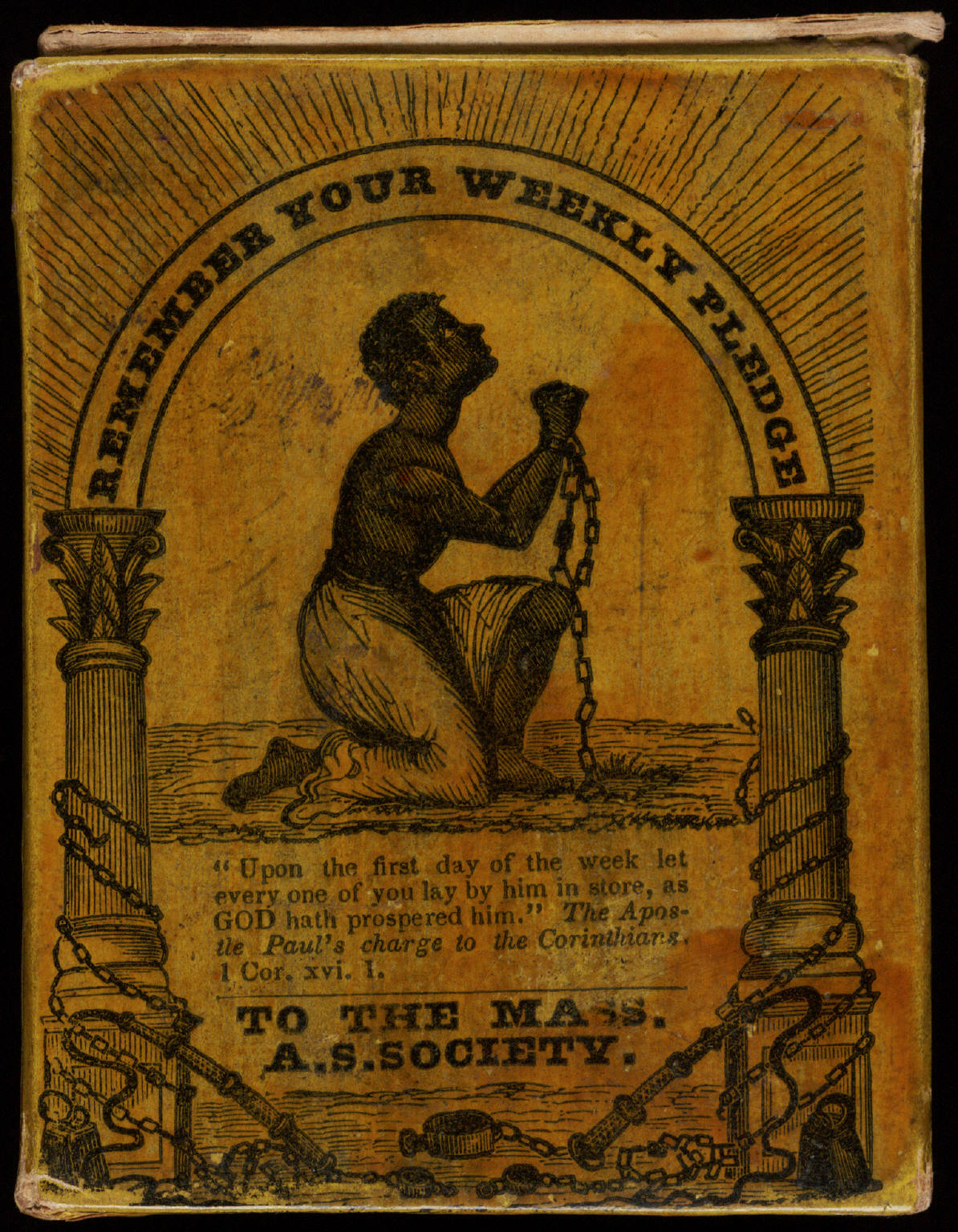
Collection box for the Massachusetts Anti-Slavery Society, circa 1850 (Wikicommons).


Throughout the world, kinship used to define the limits of morality. The less related you were to someone, the less moral you had to be with him or her. We see this in the Ten Commandments. The phrase "against thy neighbor" qualifies the commandment against bearing false witness and, implicitly, the preceding ones against killing, adultery, and stealing. For the modern reader, "thy neighbor" is helpfully explained as meaning "the children of thy people" (Leviticus 19:18).

In some cases, this kin-based morality gradually ceased to apply the farther away one went from home and from immediate kith and kin. Usually, however, the limits of one's moral community coincided with some kind of boundary: a geographic barrier, a political border, and/or an ethnic frontier. Beyond lay the world of "strangers."

Toward a universal morality

The first efforts to universalize morality—to create a single moral system that could apply to everyone—"arose simultaneously around 500 BCE in various parts of the world, from China in the Far East to Southern Italy in the West" (Assmann and Conrad, 2010, p. 121). These efforts were initially driven by the need to form alliances between different peoples:

Alliance - the formation of treaties - proved the most important instrument of internationalism. Forming an alliance required mutual recognition of the deities which served as patrons. The treaties which these empires formed with each other and with their vassals had to be sealed by solemn oaths invoking the gods of both parties. The list of these gods conventionally closes the treaty [...]. They had to be equal in their function and rank. Intercultural theology became a concern of international law. (Assmann and Conrad, 2010, p. 125) 

As ancient empires expanded and absorbed different peoples, this intercultural theology became useful for internal peace, notably with the Hellenistic empires that arose in the wake of Alexander the Great's conquests. By affirming that different religions are interchangeable, it became possible to create a common civic culture for diverse peoples:

Hellenization had two faces. On the one hand, it referred to the diffusion of Greek language, ideas and customs all over the Ancient World; on the other hand, it appeared to be more of a construction of a 'common culture', suggesting a similar change in Greece as in the other cultures. Flavius Josephus did not speak of 'Greek' but of 'common culture', ho koinos bios, as the goal of Jewish assimilation or reform in the Hellenistic age. (Assmann and Conrad, 2010, p.  127) 

One result would be the emergence of a universal religion. We like to associate this development with the teachings of Jesus, but a kind of proto-Christianity was already emerging near the end of the pre-Christian era.  At that time, many Jews were adapting their belief in one God to the universal worldview of Hellenistic culture:

Thus, while biblical universalism was founded on a notion of the mission of Israel to save all of humanity and bring them to the true worship of the only God, Hellenistic notions of universalism involved the assumption that all the gods were really different names for one God. (Boyarin, 1994, chap. 3). 

The two belief-systems merged among the increasingly Hellenized Jews of the eastern Mediterranean, thus setting the stage for Jesus and making it easier for his movement to succeed.


The Christian impulse

This new religion became a vehicle not only for moral universalism but also for belief in human equality. For if morality is universal, all humans must have the same capacity to follow its rules. In Christ, asserted Paul, there is neither Jew nor Greek, neither slave nor free, neither male nor female (Galatians 3:28).

While Christianity would steer people in the direction of universalism, there were limits to how far it could go. Theologians sometimes spoke of the need to set lower aims for average people and higher aims for saintly men and women. We see this realism in Augustine's position on prostitution: "If you do away with harlots, the world will be convulsed with lust" (De Ordine ii, 4). The same could be said for the Church's position on war, slavery, prejudice, and other manifestations of human inequality. These were the realities of an imperfect world. 

Such imperfections nonetheless became harder to accept over the following centuries. First, there was "mission creep." Once the Church had established certain ideals, there was continual pressure to bring human behavior into line with them. Second, the geocenter of the Church was shifting away from the eastern Mediterranean, where the absolute morality of Christianity had been constrained by the relative morality of kinship. Farther north and west, beyond the Hajnal Line, kinship ties were weaker and people more receptive to universal principles. There was thus a "fruitful encounter" between the Christian faith and these northwest Europeans who were more willing to internalize such principles and apply them more thoroughly (Frost, 2014a). 

Within this region, Catholicism would radicalize to the point of splitting away and becoming Protestantism. Here, too, Christian ideals would increasingly be taken to their logical conclusion.


The Abolitionist movement

Abolitionism began in the 17th century among English Quakers as a movement to abolish the slave trade. Over time, it grew more radical, seeking not only to free black slaves but also to extirpate racial and ethnic prejudice. Although "antiracism" did not yet exist as a word, its form and substance were already recognizable by the early 19th century. This was particularly so in the American northeast, where radical abolitionists denounced not only slavery but also fellow abolitionists who wanted to settle freed slaves in Africa. "In the 1830s, for the first time in American history an articulate and significant minority of Americans embraced racial equality as both a concept and a commitment" (Goodman, 1998, p. 1). This militant minority wanted more than simply an end to slavery: 

Believing that racial prejudice underpinned slavery, abolitionists committed themselves not just to emancipation [...] "Our prejudice against the blacks is founded in sheer pride; and it originates in the circumstance that people of their color, only, are universally allowed to be slaves," Child argued. "We made slavery, and slavery makes the prejudice." Color phobia, abolitionists contended, is irrational, wicked, preposterous, and unmanly. It is contrary to natural rights and Christian teaching, which recognizes no distinctions based on color. Race prejudice, Elizur Wright Jr. exploded, is "a narrow, bitter, selfish, swinish absurdity." (Goodman, 1998, p.58)


Decline ... and resurgence

That first wave of antiracism subsided in the late 19th century, partly because of the rise of Social Darwinism and partly because of disillusionment with the Civil War's aftermath. Radical abolitionists had long set their sights on ending slavery and crushing the American South, yet achievement of both goals failed to bring the final goal of human equality any closer. In the face of growing self-doubt, they lacked the ideological stamina to keep the faith and push forward, come what may. The movement thus fell into decline, remaining dominant only in the American northeast.

This first wave did not die, however. It was resuscitated in the early 1930s and would give rise to a much more dynamic second wave. The rise of Nazism convinced many Jewish intellectuals, notably the anthropologist Franz Boas, of the need to fight "racism" in all its forms, this word being initially a synonym for Nazism (Frost, 2014b). The war on racism would outlive the defeat of Nazi Germany, as a result of continuing fears of anti-Semitism in the postwar era. Moreover, it had now taken on a life of its own, much like its 19th-century predecessor. 

Today, some eighty years later, that war is still being fought. What began as a reaction to Nazism has become a permanent cultural revolution.


References 

Assmann, A., and S. Conrad. (2010). Memory in a Global Age. Discourses, Practices and Trajectories, Palgrave Macmillan Memory Studies, New York
http://archiv.ub.uni-heidelberg.de/propylaeumdok/1831/1/Assmann_Globalization_2010.pdf  

Boyarin, D. (1994). A Radical Jew. Paul and the Politics of Identity, Berkeley: University of California Press.
http://publishing.cdlib.org/ucpressebooks/view?docId=ft7w10086w;brand=ucpress  

Frost, P. (2014a). A fruitful encounter, Evo and Proud, September 26
http://evoandproud.blogspot.ca/2014/09/a-fruitful-encounter.html  

Frost, P. (2014b). From Nazi Germany to Middletown: ratcheting up the war on racism, Evo and Proud, July 19
http://evoandproud.blogspot.ca/2014/07/from-nazi-germany-to-middletown.html  

Goodman, P. (1998). Of One Blood. Abolitionism and the Origins of Racial Equality, Berkeley: University of California Press.
http://books.google.ca/books?hl=fr&lr=&id=Zy47hp0QjFQC&oi=fnd&pg=PR9&ots=f0ONCiUl-T&sig=TDfjRtlGuGRd-kxwZ8fXlL8OpCU#v=onepage&q&f=false

Saturday, May 3, 2014

What happened in the 1980s to reaction time?


A steady increase in reaction time seems to begin circa 1980 in Sweden, Great Britain, and the United States (h/t to hbd* chick)
 

Has reaction time been steadily increasing from generation to generation? This was the finding of a paper last year, which argued that mean IQ had fallen in Britain by 13 points since Victorian times (Woodley et al., 2013). The problem here was not the extrapolation from reaction time to IQ, which in any case should not have changed over the past century. The problem was the possibility of sampling bias. The early samples (from the Victorian age) were slanted toward people of elite origin. In one case, they were University of Chicago students; in the other, museum visitors who had paid to take the reaction test. In contrast, the recent samples were much more representative, largely because the educational system had become more universal. Thus, the drop in reaction time over time may be largely, if not wholly, an artefact of better sampling of the general population (hbd* chick, 2013).

This criticism seems less applicable to a study of this drop in more recent times. This study was presented as a conference paper and only the abstract is available. But it does seem interesting:

Here, we show that change in genetic intelligence can be estimated, independently of the Flynn effect, by way of simple reaction time (RT). Data from three studies with different samples from Sweden, UK, and USA converge at an RT increase of 0.7-0.9 ms per year, which corresponds to a decrease in intelligence of between 4 and 5 IQ points per generation, or 1.3-1.7 points per decade in these countries. (Madison, 2014)


That’s a big jump in reaction time. Moreover, most of the increase seems to be squeezed into the last six years of the study, from 1980 to 1985 (see above chart). No selection pressure could have produced such a change over such a short time. So what could possibly be going on here?

Keep in mind that Sweden, the United Kingdom, and the United States are not closed systems. All three countries are open to the world, and the early 1980s corresponded to a time when they became much more open. Consequently, we are not looking at change within a population, but rather the replacement of one population by another, and this change would have been most noticeable in the school classrooms where these tests were conducted.

The other finding of this study is that the Flynn Effect has been masking a decline in intellectual capacity. Yes, we’re getting better at giving standardized answers to standardized questions, but this change doesn’t reflect an actual increase in intelligence. We’re just allocating more and more mental resources to the task of test-taking. The reaction time data suggest that real intellectual capacity has been declining since circa 1980.

At the same conference, Armstrong (2014) likewise argues that the Flynn Effect may be illusory for the most part:

However, "general intelligence", the biological substrata which cause the positive manifold amongst different IQ tests, has not increased, since the sizes of Flynn effects on different tests are inversely related to those tests' g loadings. The same pattern holds amongst items. Thus, for example, vocabulary size (generally the most or among the most g loaded tests) has shown a small Flynn effect, and by some measures even a decline. However, the "Coding" test (from the Wechsler) or the "Draw-a-Man" test both have low g loadings and have shown very large Flynn effects.


To date, Madison’s paper is unavailable. All we have is an abstract that raises more questions than it answers. We will have to wait for the full paper before a thorough assessment can be made.
 

References
 

Armstrong, E. (2014). LCI14 Elijah Armstrong on Rule Dependence, London Conference on Intelligence, Psychological comments, May 1
http://drjamesthompson.blogspot.co.uk/2014/05/lci14-elijah-armstrong-on-rule.html  

Hbd* chick (2013). a response to a response to two critical commentaries on woodley, te nijenhuis & murphy (2013), hbd* chick, May 27
http://hbdchick.wordpress.com/2013/05/27/a-response-to-a-response-to-two-critical-commentaries-on-woodley-te-nijenhuis-murphy-2013/  

Madison, G. (2014). Increasing simple reaction times demonstrate decreasing genetic intelligence in Scotland and Sweden, London Conference on Intelligence, Psychological comments, April 25
#LCI14 Conference proceedings
http://drjamesthompson.blogspot.co.uk/2014/04/lci14-questions-on-intelligence.html  

Woodley, M.A., J. Nijenhuis, and R. Murphy. (2013). Were the Victorians cleverer than us? The decline in general intelligence estimated from a meta-analysis of the slowing of simple reaction time, Intelligence, 41, 843-850.
http://lezgetreal.com/wp-content/uploads/2013/05/were-the-victorians-smarter-than-us.pdf   

Saturday, November 24, 2012

Obama: White America's bogeyman?


Total fertility by race, 1980-2010 (source). Is the end of White America being hastened by the Obama presidency? Or is it actually being postponed?

Both the right and the left are trumpeting the Obama presidency as marking the end of White America. In a harshly worded column, conservative Ann Coulter argues that Obama and the Democratic Party are deliberately changing America’s demographics: 

If the same country that voted in 1980 had voted in 2012, Romney would have won a bigger landslide than Reagan did.

Most Americans don’t realize that, decades ago, the Democrats instituted a long-term plan to gradually turn the United States into a Third World nation. The country would become poorer and less free, but Democrats would have an unbeatable majority!

Under Teddy Kennedy’s 1965 immigration act, our immigration policy changed from one that replicated the existing ethnic population to one that strictly favored unskilled immigrants from the Third World. Since 1968, 85 percent of legal immigrants have come from what is euphemistically called “developing countries.” (Coulter, 2012)

Clearly, the 1965 immigration act was key to this demographic revolution. Just as key, however, were successive legislative changes, and increasingly lax enforcement, that progressively raised the levels of both legal and illegal immigration. Also key were differences in fertility rates. Non-White fertility stayed high long after White fertility had fallen during the 1960s and 1970s.

This demographic revolution, however, had the backing of both parties. Yes, the 1965 immigration act was ratified by a Democrat president, but it won the votes of most Republican lawmakers. Supporters included then congressman Gerald Ford (R) and then congressman Robert Dole (R). In fact, there was more opposition from Democrat lawmakers:

The House of Representatives voted 326 to 70 (82.5%) in favor of the act, while the Senate passed the bill by a vote of 76 to 18. In the senate, 52 Democrats voted yes, 14 no, and 1 abstained. Of the Republicans 24 voted yes, 3 voted no, and 1 abstained. (Wikipedia, 2012a)

After 1965, there came successive moves to increase the overall intake, and these moves were likewise Republican-backed. In fact, they were signed into law by Republican presidents. In 1986, Reagan proclaimed an amnesty that not only provided about three million illegal immigrants with citizenship but also set off a baby boom: 

Between 1987 and 1991, total fertility rates for foreign-born Hispanics increased from 3.2 to 4.4. This dramatic rise was the primary force behind the overall increase in the state’s total fertility rate during this period. Were it not for the large increase in fertility among Hispanic immigrants, fertility rates in California would have increased very little between 1987 and 1991. (Hill, 2002, pp. 27-28)

Bush Sr. signed into law the Immigration Act of 1990, which raised the annual legal intake of immigrants from 500,000 to 700,000 (Wikipedia, 2012c). And like his son, he declined to enforce sanctions against employers of illegal immigrants. By the time of Bush Jr., total immigration, both legal and illegal, was running at over one and a half million a year (Camarota, 2007). Far from ending illegal immigration, Reagan’s amnesty had set off a new wave of “undocumented workers” from south of the border. By 2007, the U.S. was home to an estimated 12.5 million illegal immigrants—more than four times the number that Reagan had amnestied (Wikipedia, 2012d)

Throughout this period, fertility rates continued to be much higher among America’s non-white minorities than in the majority White population. For whatever reason, Blacks and Hispanics were not participating in the economic and cultural changes that had reduced White fertility.

The other Obama revolution

The collapse of the Bush Boom led not only to the election of Barack Obama in 2008 but also to a sharp downturn in illegal immigration. Net illegal immigration may now be negative (Passel et al., 2012). Total immigration has fallen to levels unseen since the 1980s.

Non-White fertility has likewise fallen. Hispanic fertility in particular fell from a high of 2.86 children per woman in 2006 to 2.35 in 2010. The same period saw fertility declines in other population groups, with White Americans showing the smallest decline (Martin et al., 2012, see above chart). Preliminary data indicate that this convergence is continuing. In 2011, Hispanic fertility fell to the replacement level of 2.2:

[Fertility rates were] down 6 percent for Hispanic women and 2 percent for non-Hispanic black, whereas the rate for non-Hispanic white women was essentially unchanged. The GFR for AIAN [American Indian and Alaskan native] women was down 2 percent in 2011, whereas the rate for API [Asian and Pacific Islander] women rose 1 percent. The 2011 rates for non-Hispanic black and Hispanic women in 2011 were the lowest ever reported for the United States. (Hamilton et al., 2012)

If current trends continue, all of the major population groups will have fallen to about the same fertility rate by the time Obama leaves office. White Americans may even hold first place, their fertility being buoyed up by groups like the Mormons, the Amish, and the Hassidic Jews. Such a situation will be unprecedented in U.S. history.

One might object that these trends reflect the current hard times. True, but good times aren’t coming back any day soon. American economic growth will be sluggish for at least the next decade and any attempt to do better will abort spectacularly, like the end of the Bush Boom. Because the U.S. is now a mature economy, it can no longer grow at the rates we once saw during the postwar era and now see in many developing countries.

In addition, the decline in non-White fertility doesn’t seem to reflect only economic factors. Black American fertility was already falling during the 1990s and 2000s when economic conditions were much better, aside from a rise when Bush Jr. was pushing to expand minority home ownership. The same cultural factors that previously affected White fertility are now affecting all Americans, specifically a growing desire by women to marry later and limit their number of children.

What if a Republican had been in office?

Is this demographic reversal Obama’s doing? Would it have happened anyway? We can best answer these questions by asking what a Republican president would have done, like McCain in 2008 or Romney in 2012.

First, the level of legal immigration would have been raised—that was in Romney’s platform. Second, there would have been some sort of amnesty, not the same as Obama’s proposal but very similar number-wise. Some 12 million illegal immigrants would have become eligible for an “earned path to citizenship” and any children born on American soil would have automatically gained U.S. citizenship.

Third, there would have been efforts to spur another round of high economic growth through easy credit and deregulation, like the Bush Boom of the past decade.  Such a boom would have done little to raise the average worker’s wage, while doing a lot to spur another influx of low-wage labor for work in construction, agriculture, and services … to mow the lawns of the rich and to build them ever more monster homes.

Finally, a Republican president would have sought to limit access to abortion, perhaps even seeking to overturn Roe vs Wade. There would almost certainly have been a move to cut off Medicaid funding for abortion and birth control.

Conclusion

Regardless of what happens, White Americans are headed for minority status, but that process now promises to be longer and more drawn out than previously thought … thanks to the Obama presidency. Is this a case of his party naively acting against its own interests? Not really. Most Democrats aren’t “anti-White.” That’s a trope that certain dog-whistling Republicans are pushing. Most Democrats just want to see all Americans get the same deal—the same standard of living, the same quality of life, and the same freedom, including reproductive freedom.

Is that a naïve goal? Perhaps. But is it more naïve than the Republican goal of unlimited economic and demographic growth? If pre-2009 trends had continued, the U.S. population would have soared to almost half a billion by mid-century (Beck, 2010; Camarota, 2007).

Political choices aren’t always clear-cut. Yes, Romney is light-skinned, but that’s no guarantee that he cares about the future of White Americans. His interests coincide more with those of the corporate donors who keep the Republican Party afloat.  Yes, Obama is dark-skinned, but he may still be a better choice for White folks worried about their future.  To be sure, the Democratic Party is likewise influenced by corporate donors both directly and indirectly (via NPOs that are nonetheless corporate-funded), but it also has internal factions, like the union movement, that oppose the globalist project of outsourcing to low-wage countries and insourcing low-wage labor. Other factions, notably the environmentalists, are critical of unlimited growth. Finally, the different ethnic factions within the party don’t form a monolithic bloc; infighting will happen, and one faction or another will make appeals for support from White Americans.

Clearly, both parties leave much to be desired. In politics, however, one sometimes has to choose between the terrible and the less terrible. As White Americans descend to minority status, they will have to learn to live by their wits.

References

Anon. (2012). The USA’s Total Fertility Rates by Race, 1980 to 2010, Hail to you, October 7
http://hailtoyou.wordpress.com/2012/10/07/the-usas-total-fertility-rates-by-race-1980-to-2010/

Beck, R. (2010). Immigration by the numbers – off the charts,
http://www.youtube.com/watch?v=muw22wTePqQ

Camarota, S.A. (2007). 100 million more projecting the impact of immigration on the U.S. population, 2007 to 2060, Centre for Immigration Studies
http://www.cis.org/articles/2007/back707.html

Coulter, A. (2012). Demography is destiny, Human Events, November 18, 2012
http://www.humanevents.com/2012/11/14/coulter-demography-is-destiny/

Hamilton, B.E., J.A. Martin, & S.J. Ventura. (2012).  Births: Preliminary Data for 2011, National Vital Statistics Reports, 61(5) October 3
http://www.cdc.gov/nchs/data/nvsr/nvsr61/nvsr61_05.pdf

Hill, L.E. (2002). Understanding the Future of Californians’ Fertility: The Role of Immigrants, Public Policy Institute of California, San Francisco
http://www.ppic.org/content/pubs/report/R_402LHR.pdf

Martin, J.A., B.E. Hamilton, S.J. Ventura, M.J.K. Osterman, E.C. Wilson, & T.J. Mathews. (2012). Births: Final Data for 2010, National Vital Statistics Reports, 61(1) August

Passel, J., D. Cohn, & A. Gonzalez-Barrera. (2012). Net Migration from Mexico Falls to Zero—and Perhaps Less, Pew Hispanic Center, April 23
http://www.pewhispanic.org/2012/04/23/net-migration-from-mexico-falls-to-zero-and-perhaps-less/

Wikipedia (2012a). Immigration and Nationality Act of 1965
http://en.wikipedia.org/wiki/Immigration_and_Nationality_Act_of_1965

Wikipedia (2012b). Immigration Reform and Control Act of 1986
http://en.wikipedia.org/wiki/Immigration_Reform_and_Control_Act_of_1986

Wikipedia (2012c). Immigration Act of 1990
http://en.wikipedia.org/wiki/Immigration_Act_of_1990

Wikipedia (2012d). Illegal immigrant population of the United States
http://en.wikipedia.org/wiki/Illegal_immigrant_population_of_the_United_States