Showing posts with label Sandra Beleza. Show all posts

Saturday, March 15, 2014

Did Europeans become white in historic times?


Tătăroaice – Petre Iorgulescu-Yor (source). Today, the steppes north of the Black Sea lie within the European world—politically, culturally, and demographically. Not so long ago, they were home to nomads of Central Asian origin.
 

A new study shows that Europeans underwent strong selection for white skin, non-brown eyes, and non-black hair … during historic times!

Here we present direct estimates of selection acting on functional alleles in three key genes known to be involved in human pigmentation pathways—HERC2, SLC45A2, and TYR—using allele frequency estimates from Eneolithic, Bronze Age, and modern Eastern European samples and forward simulations. Neutrality was overwhelmingly rejected for all alleles studied, with point estimates of selection ranging from around 2-10% per generation. Our results provide direct evidence that strong selection favoring lighter skin, hair, and eye pigmentation has been operating in European populations over the last 5,000 y. (Wilde et al., 2014) 
 
If true, this finding would contradict other recent findings. Two studies have found a much earlier time frame for the whitening of European skin: 11,000 to 19,000 years ago (Beleza et al., 2013) and 7,600 to 19,200 years ago (Canfield et al., 2014). Two studies of ancient DNA indicate that non-brown eyes were already in existence 7,000 years ago in Spain (Olalde et al., 2014) and 8,000 years ago in Luxembourg (Lazaridis et al., 2013). Moreover, the genes responsible are the same as the ones in above quote. 

So who is right and who is wrong? All of these studies are probably right, but only for some early Europeans and not for all. In the latest study, the samples come from a very small part of Europe—the steppes north of the Black Sea:2

Ancient DNA was retrieved from 63 out of 150 Eneolithic (ca. 6,500-5,000 y ago) and Bronze Age (ca. 5,000-4,000 y ago) samples from the Pontic-Caspian steppe, mainly from modern-day Ukraine. […] We also genotyped the three pigmentation-associated SNPs in a sample of 60 modern Ukrainians (28) and observed an increase in frequency of all derived alleles between the ancient and modern samples from the same geographic region (Table 1 and Fig. S1). This implies that the pigmentation of the prehistoric population is likely to have differed from that of modern humans living in the same area.

[…] Inferring natural selection based on temporal differences in allele frequency requires the assumption of population continuity. To this end we compared the 60 mtDNA HVR1 sequences obtained from our ancient sample to 246 homologous modern sequences (29–31) from the same geographic region and found low genetic differentiation (FST = 0.00551; P = 0.0663) (32). Coalescent simulations based on the mtDNA data, accommodating uncertainty in the ancient sample age, failed to reject population continuity under a wide range of assumed ancestral population size combinations. (Wilde et al., 2014)

The authors are placing the burden of proof on the wrong null hypothesis when they state that their simulations “failed to reject population continuity.” The null hypothesis should be population discontinuity. For example, Swedes and Greeks differ in skin tone and eye color, and if we compare their autosomal DNA we get a comparable FST of 0.0084 (Genetic History of Europe, 2014). Admittedly, FST is different with mitochondrial DNA.

I suspect the authors ruled out population discontinuity because their FST seemed incompatible with a non-European population giving way to a European one. If so, they forgot one thing. They were comparing a population of the present with one that existed some 5,000 years ago. If you go farther and farther back in time, any human population will look more and more ancestral to a present-day population. This is especially so in northern Eurasia, where a population ancestral to both Europeans and Amerindians existed some 20,000 years ago. Yes, the FST does seem incompatible with a non-European population giving way to a European one, but this is because the ancient DNA comes from a non-European population that was closer to the time of common origin for all northern Eurasians.

This ancient DNA may come from a mixed European/Central Asian population or an intermediate and now extinct population, perhaps similar to the Lapps. If we look at the derived (European) alleles for the three genes in question (HERC2, SLC45A2, TYR), the frequencies fall halfway between those of Europeans and Asians (see Table 1 in the paper). In any case, this population does not have to be of non-European origin to be noticeably darker in skin color. As shown by the recent Mesolithic findings from Luxembourg and Spain, there used to be apparently native dark-skinned populations in the heart of Europe.
 

Historical background 

The hypothesis of population discontinuity becomes even more plausible if we look at the history of this region. Today, the steppes north of the Black Sea lie within the European world—politically, culturally, and demographically. Not so long ago, they were home to nomads of Central Asian origin. The latest of them, the Tatars, held sway until the 18th century.

The Tatars intermixed extensively with Slavic wives and concubines, so much so that they now look almost as fair as other Europeans. But they were originally quite swarthy, as attested by medieval sources. In a 14th-century romance, The King of Tars, a Tatar Khan converts to Christianity and turns white in the baptismal water. Two other chronicles of the same period describe how a Tatar Khan's Christian concubine bears him a son white on one side and black on the other. When baptized, the child emerges from the water white on both sides (Hornstein, 1941; Metlitzki, 1977, p. 137).

Medieval writers often noticed this difference in skin color. Genoese notaries usually described Tatar slaves as olive-skinned (Plazolles Guillen, 2012, p. 119). Florentine acts of sale give the following numerical breakdown of Tatar slaves by skin color: black 2, brown 18, olive 161, fair 11, reddish 5, white 45 (Epstein, 2001, p. 108). During a trial, a slave tried to regain her freedom by claiming to be Russian and, hence, Christian. Her owner rebuked her, saying: “You’ve lied to me. You look more like a Tatar, not at all like a Russian” (Plazolles Guillen, 2012, p. 119).

The Tatars were preceded by other nomads of Central Asian origin. The Scythians (8th to 2nd century BC) were likewise described as dark-skinned. Hippocrates wrote: “The Scythian race are tawny from the cold, and not from the intense heat of the sun, for the whiteness of the skin is parched by the cold, and becomes tawny” (Hippocrates).

One can find references to the contrary (Scythians, 2014). Keep in mind that the word “Scythian” was often used in the ancient world to encompass all northern peoples:

To the ancient Greeks the Scythians, Sarmatians, Germans, and Goths were the remote northern races of antiquity. Geographically near to one another, they were often grouped together under the term “Scythians,” which by the third century B.C.E. no longer had an ethnic or national connotation and had come to designate the peoples of the remote north. (Goldenberg, 2003, p. 43)

The term “Scythian” may also have subsumed different peoples north of the Black Sea, some of whom came from Central Asia and others from areas farther north and west.
 

Conclusion

Because this region is on the periphery of the European world and has been exposed to migrations from Central Asia, population change is a likelier explanation for the findings of Wilde et al.

These findings are nonetheless interesting. Together with the ancient DNA from Mesolithic hunter-gathers in Spain and Luxembourg, we have further proof that many early Europeans were brown-skinned. Indeed, this seems to have been the physical appearance of all Europeans during their first 20,000 years in Europe. Only later, within the time frame of 20,000 to 10,000 years ago, did some of them become white.

This may seem surprising to those who believe that white skin is an adaptation to weak sunlight at high latitudes. It was thought that Europeans became white because their ancestors no longer needed dark pigmentation to protect themselves against sunburn and skin cancer. Meanwhile, light pigmentation became necessary to maintain synthesis of vitamin D. There was admittedly the example of dark-skinned peoples who have long lived at similar latitudes in Asia and North America, but that counterfactual was attributed to the availability of vitamin D from a marine diet, such as among the Inuit of northern Canada.
 
Wilkes et al. do, in fact, address the apparent contradiction between their findings and the hypothesis that ancestral Europeans became white to maintain adequate production of vitamin D in their skin. In their Discussion section, they suggest that the shift from hunting and gathering to farming led to a decrease in dietary vitamin D (from fatty fish and animal liver). The main problem with this explanation is that farming came late to many parts of Europe: about 2,000 to 3,000 years ago for East Baltic peoples and less than 3,000 years ago for Finnish peoples (and incompletely at that). This leaves a very narrow time frame for evolution from brown skin to white skin. Ultimately, this question will be resolved with retrieval of ancient DNA from these populations.

 
Notes

1. Although Wilde et al. mention hair color, they did not study the main hair-color gene, MC1R.

2. Razib Khan has a great map of the ancient DNA samples.
 

References 

Beleza, S., Murias dos Santos, A., McEvoy, B., Alves, I., Martinho, C., Cameron, E., Shriver, M.D., Parra E.J., and Rocha, J. (2013). The timing of pigmentation lightening in Europeans. Molecular Biology and Evolution, 30, 24-35.
http://mbe.oxfordjournals.org/content/30/1/24.short 

Canfield, V.A., A. Berg, S. Peckins, S.M. Wentzel, K.C. Ang, S. Oppenheimer, and K.C. Cheng. (2014). Molecular phylogeography of a human autosomal skin color locus under natural selection, G3, 3, 2059-2067.
http://www.g3journal.org/content/3/11/2059.full 

Epstein, S.A. (2001). Speaking of Slavery. Color, Ethnicity, & Human Bondage in Italy, Ithaca: Cornell University Press. 

Genetic History of Europe. (2014). Wikipedia
http://en.wikipedia.org/wiki/Genetic_history_of_Europe

Goldenberg, D.M. (2003). The Curse of Ham. Race and Slavery in early Judaism, Christianity, and Islam, Princeton: Princeton University Press. 

Hippocates. On Airs, Waters, and Places, part 20. Translated by Francis Adams
http://classics.mit.edu/Hippocrates/airwatpl.20.20.html

Hornstein, L.H.  (1941). New analogues to the King of Tars, Modern Language Review, 36, 433-442. 

Khan, R. (2014). Descent and selection is a bugger: Black Kurgans, March 12, The Unz Review: An Alternative Media Selection
http://www.unz.com/gnxp/descent-and-selection-is-a-bugger/ 

Lazaridis, I., Patterson, N., Mittnik, A., Renaud, G., Mallick, S., et al. (2013). Ancient human genomes suggest three ancestral populations for present-day Europeans, BioRxiv, December 23.
http://biorxiv.org/content/early/2013/12/23/001552.full-text.pdf+html

Metlitzki, D. (1977). The Matter of Araby in Medieval England, New Haven and London, Yale University Press. 

Olalde, I., M.E. Allentoft, F. Sanchez-Quinto, G. Saintpere, C.W.K. Chiang, et al. (2014).  Derived immune and ancestral pigmentation alleles in a 7,000-year-old Mesolithic European, Nature, early view
http://www.nature.com/nature/journal/vaop/ncurrent/full/nature12960.html

Plazolles Guillen, F. (2012). “Negre e de terra de negres infels …”: Servitude de la couleur (Valence, 1479-1516), in R. Botte and A. Stella (eds.) Couleurs de l’esclavage sur les deux rives de la Méditerranée (Moyen Âge – xxe siècle), pp. 113-158, Paris: Karthala. 

Scythians. (2014). Wikipedia
http://en.wikipedia.org/wiki/Scythians  

Wilde, S., A. Timpson, K. Kirsanow, E. Kaiser, M. Kayser, M. Unterländer, N. Hollfelder, I.D. Potekhina, W. Schier, M.G. Thomas, and J. Burger. (2014). Direct evidence for positive selection of skin, hair, and eye pigmentation in Europeans during the last 5,000 y, Proceedings of the National Academy of Sciences, published ahead of print.
http://www.pnas.org/content/early/2014/03/05/1316513111.full.pdf+html

Saturday, February 8, 2014

A little less brown and not necessarily blue-eyed


The skin color is about right. Not so sure about the eyes (source: Spanish National Research Council (CSIC)). There seems to have been a succession of changes to hair, eye, and skin color within a relatively restricted area of Europe. These changes then spread outward, the changes to eye color being apparently the earliest.


Ancient DNA has been retrieved from another Mesolithic hunter-gatherer, who is dated to 7,000 years ago and comes from La Braña-Arintero, Spain. We again see a strange combination of dark skin and light eyes. If we look at the three genes that produce white skin, only one of them, TYRP1, had the derived ‘European’ allele. The other two had the ancestral allele. So this Mesolithic individual was a bit lighter-skinned than the one from Luxembourg, dated to 8,000 BP, who had ancestral alleles at all three loci:
 

Of the ten variants, the Mesolithic genome carried the ancestral and non-selected allele as a homozygote in three regions: C12orf29 (a gene with unknown function), SLC45A2 (rs16891982) and SLC24A5 (rs1426654). The latter two variants are the two strongest known loci affecting light skin pigmentation in Europeans and their ancestral alleles and associated haplotypes are either absent or segregate at very low frequencies in extant Europeans (3% and 0% for SLC45A2 and SLC24A5, respectively). We subsequently examined all genes known to be associated with pigmentation in Europeans, and found ancestral alleles in MC1R, TYR and KITLG, and derived alleles in TYRP1, ASIP and IRF4. (Olalde et al., 2014)


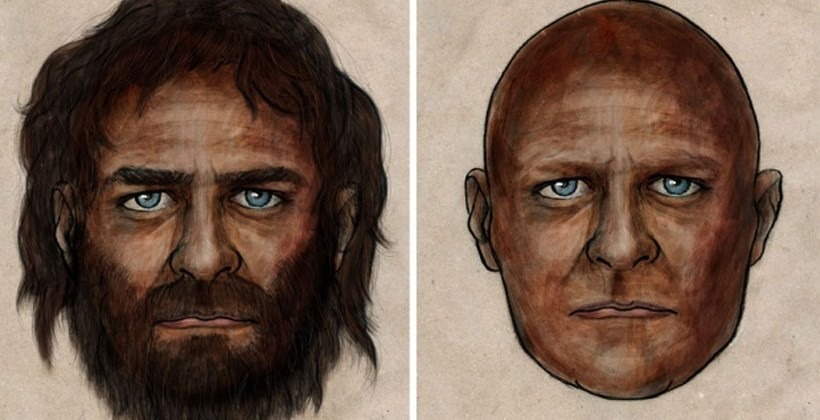
Media reports describe the two Mesolithic individuals from Spain and Luxembourg as blue-eyed, although this is not what either study actually found. All we know is that their eyes were not brown. They had blue, gray, hazel, or green eyes:
 

[The individual had] the associated homozygous haplotype spanning the HERC2–OCA2 locus that is strongly associated with blue eye colour. Moreover, a prediction of eye colour based on genotypes at additional loci using HIrisPlex24 produced a 0.823 maximal and 0.672 minimal probability for being non-brown-eyed (Supplementary Information). The genotypic combination leading to a predicted phenotype of dark skin and non-brown eyes is unique and no longer present in contemporary European populations. Our results indicate that the adaptive spread of light skin pigmentation alleles was not complete in some European populations by the Mesolithic, and that the spread of alleles associated with light/blue eye colour may have preceded changes in skin pigmentation. (Olalde et al., 2014)


These findings seem to conflict with previous estimates of the time frame when European skin became white: 11,000 to 19,000 years ago according to Beleza et al. (2013) and 7,600 to 19,200 years ago according to Canfield et al. (2014). I would argue that this was indeed the time frame when European skin became white; however, white skin was initially confined to a geographic area that covered only part of Europe, essentially the plains of the north and east.

It also appears that the changes to hair, eye, and skin color did not happen simultaneously. First came the diversification of eye color and then the diversification of hair color. Parallel to these changes, and extending over a longer time, was the whitening of skin color. 

The most surprising—though least commented on—finding is that this Mesolithic hunter-gatherer had the ancestral allele for KITLG. According to Beleza et al. (2013), this gene was involved in the first stage of skin lightening that affected the common ancestors of Europeans and East Asians some 30,000 years ago. It looks like this first stage, like the second stage over 10,000 years later, affected Europeans only within part of Europe. The Mesolithic hunter-gatherers from Spain and Luxembourg thus seem to have belonged to a population that was peripheral to the evolution of white skin and multi-hued hair and eyes.


References
 
Beleza, S., Murias dos Santos, A., McEvoy, B., Alves, I., Martinho, C., Cameron, E., Shriver, M.D., Parra E.J., and Rocha, J. (2013). The timing of pigmentation lightening in Europeans. Molecular Biology and Evolution, 30, 24-35.
http://mbe.oxfordjournals.org/content/30/1/24.short 

Canfield, V.A., A. Berg, S. Peckins, S.M. Wentzel, K.C. Ang, S. Oppenheimer, and K.C. Cheng. (2014). Molecular phylogeography of a human autosomal skin color locus under natural selection, G3, 3, 2059-2067.
http://www.g3journal.org/content/3/11/2059.full 

Lazaridis, I., Patterson, N., Mittnik, A., Renaud, G., Mallick, S., et al. (2013). Ancient human genomes suggest three ancestral populations for present-day Europeans, BioRxiv, December 23.
http://biorxiv.org/content/early/2013/12/23/001552.full-text.pdf+html

Olalde, I., M.E. Allentoft, F. Sanchez-Quinto, G. Saintpere, C.W.K. Chiang, et al. (2014).  Derived immune and ancestral pigmentation alleles in a 7,000-year-old Mesolithic European, Nature, early view

Saturday, February 1, 2014

SLC24A5: Reply to Greg Cochran


Ethiopian manuscript paintings (source: A. Davey). Ethiopians have a self-image that is lighter-skinned than their actual selves. If the prevalence of SLC24A5 is higher in Ethiopia than the degree of admixture from lighter-skinned peoples across the Red Sea, this discrepancy may be explained by social selection for lighter skin.


Greg Cochran has been asking why the “European” allele for SLC24A5 has been so successful, not only in Europe but also elsewhere. He seems to be hinting that this allele has a selective advantage that is unrelated to skin color.

I posted the following comments at his website. References have been inserted for this post.
 

***************************************************


SLC24A5 is one of three genes involved in the whitening of European skin, the other two being SLC45A2 and TYRP1. This whitening occurred over a relatively short time and long after the entry of modern humans into Europe some 40,000 years ago. Sandra Beleza’s team estimates that all three genes “went white” between 11,000 and 19,000 years ago (Beleza et al, 2013). Victor Canfield’s team, working only with SLC24A5, estimates between 7,600 and 19,200 years ago (Canfield et al., 2014).

So, yes, white European skin is not an adaptation to weaker sunlight; otherwise, it would have evolved much earlier. Are we looking at some pleiotropic effect then? In that case, this effect would involve not only SLC24A5 but the other two genes as well. Perhaps, but I’d like to see the evidence.

No, I’m not going to invoke sexual selection to explain the apparent success of the “European” allele for SLC24A5. Sexual selection, especially sexual selection of women, occurs under very limited circumstances.  I believe that there was an episode of very intense sexual selection of women, but this episode was confined to northern and eastern Europe during the time frame of 10,000 to 20,000 years ago, i.e., the last ice age (Frost, 2006; Frost, 2008).

How then do we explain the much greater geographic and historical success of this allele? The answer is part of the larger one of why lighter-skinned folks have done better than darker-skinned folks. Mean temperature is inversely correlated with technological complexity, even going back to the hunter-gatherer stage of cultural evolution. This is partly because colder environments created a greater need for heat conservation (by means of tailored clothing and insulated shelters) and partly because their food resources were more dispersed and typically available for short periods of time. There was thus strong selection in such environments for time budgeting, forward planning, and the ability to manage storage technologies (ice cellars) and untended facilities (traps, snares). Northern hunters were pre-adapted for technological complexity and thus better able to exploit the sort of complex cultural environments that developed much later in time (Hoffecker, 2002, pp. 6-12).

Is this the whole story? You point to Ethiopians as an example where SLC24A5 seems to be present at a higher frequency than Caucasian admixture. This discrepancy can probably be explained by social selection for lighter skin, as indicated by an Israeli study that found light-skin preference among Falasha children (Munitz et al., 1987).  This preference may be learned, although there is evidence that people are predisposed to associate lighter skin with certain good qualities (as a result of a mental algorithm that uses skin tone for identification of women and young infants) (Frost, 2011). For whatever reason, social selection for lighter skin is a reality in Ethiopia, and it probably has had some impact on the prevalence of SLC24A5.
 

Question from ‘RS’: Sexual selection, especially sexual selection of women, occurs under very limited circumstances. So you are equally attracted to all women?
 

Sexual selection is not the same thing as sexual preference. In other words, what you prefer is not necessarily what you will get. It all comes down to the law of supply and demand.

Sexual selection occurs when too many of one sex have to compete for too few of the other. Normally, the males have to compete for the females. The reverse is rare in nature. It happens when (1) males die much earlier than females do and (2) the costs of providing for a second mate are too high for almost all males. In human hunter-gatherers, the ratio of men to women on the mate market declines as one moves away from the equator. It reaches its lowest point in open steppe-tundra environments, where almost all food is obtained by men through hunting and where male mortality is high because men have to pursue mobile herds of game over long distances in a cold environment that offers few alternate sources of food.

Steppe-tundra covered most of northern and eastern Europe during the Late Pleniglacial (25,000 to 10,000 BP). I use the term “last ice age” in order to be better understood. There was a series of ice ages during the Pleniglacial (70,000 to 10,000 BP), but modern humans had to adapt only to the last one. To date, it looks like the most visible features of Europeans (white skin, multi-hued hair and eyes) evolved during the time window of the Late Pleniglacial. If the estimates by Beleza and Canfield are to be believed, the time window is somewhere between 20,000 and 10,000 BP.

These estimates seem to conflict with the recent findings of brown-skinned Mesolithic Europeans from Spain (7,000 BP) and Luxembourg (8,000 BP). I would argue that the changes to hair, eye, and skin color took place within a relatively restricted geographic area (essentially the plains of northern and eastern Europe) and later spread outward. It’s silly to argue that these changes must have originated in the Middle East, since the Middle East was inhabited by an African-like population until at least 12,000 BP. This population (the Natufians) shows no biological continuity with later Middle Easterners.
 

References
 

Beleza, S., Murias dos Santos, A., McEvoy, B., Alves, I., Martinho, C., Cameron, E., Shriver, M.D., Parra E.J., and Rocha, J. (2013). The timing of pigmentation lightening in Europeans. Molecular Biology and Evolution, 30, 24-35.
http://mbe.oxfordjournals.org/content/30/1/24.short 

Canfield, V.A., A. Berg, S. Peckins, S.M. Wentzel, K.C. Ang, S. Oppenheimer, and K.C. Cheng. (2014). Molecular phylogeography of a human autosomal skin color locus under natural selection, G3, 3, 2059-2067.
http://www.g3journal.org/content/3/11/2059.full 

Cochran, G. (2014). Shades of pale, January 27, West Hunter
http://westhunt.wordpress.com/2014/01/27/shades-of-pale/

Frost, P. (2011). Hue and luminosity of human skin: a visual cue for gender recognition and other mental tasks, Human Ethology Bulletin, 26(2), 25-34. http://media.anthro.univie.ac.at/ISHE/index.php/bulletin/bulletin-contents 

Frost, P. (2008). Sexual selection and human geographic variation, Special Issue: Proceedings of the 2nd Annual Meeting of the NorthEastern Evolutionary Psychology Society. Journal of Social, Evolutionary, and Cultural Psychology, 2(4), pp. 169-191.
http://www.jsecjournal.com/articles/volume2/issue4/NEEPSfrost.pdf

Frost, P. (2006). European hair and eye color - A case of frequency-dependent sexual selection? Evolution and Human Behavior, 27, 85-103.

Hoffecker, J.F. (2002). Desolate Landscapes. Ice-Age Settlement in Eastern Europe. New Brunswick: Rutgers University Press.

Munitz, S., B. Priel, and A. Henik. (1987). Color, skin color preferences and self color identification among Ethiopian and Israeli born children, in M. Ashkenazi and A. Weingrod (eds.), Ethiopian Jews and Israel. (pp. 74-84). New Brunswick (U.S.A.): Transaction Books.

Saturday, January 11, 2014

The brown man with blue eyes


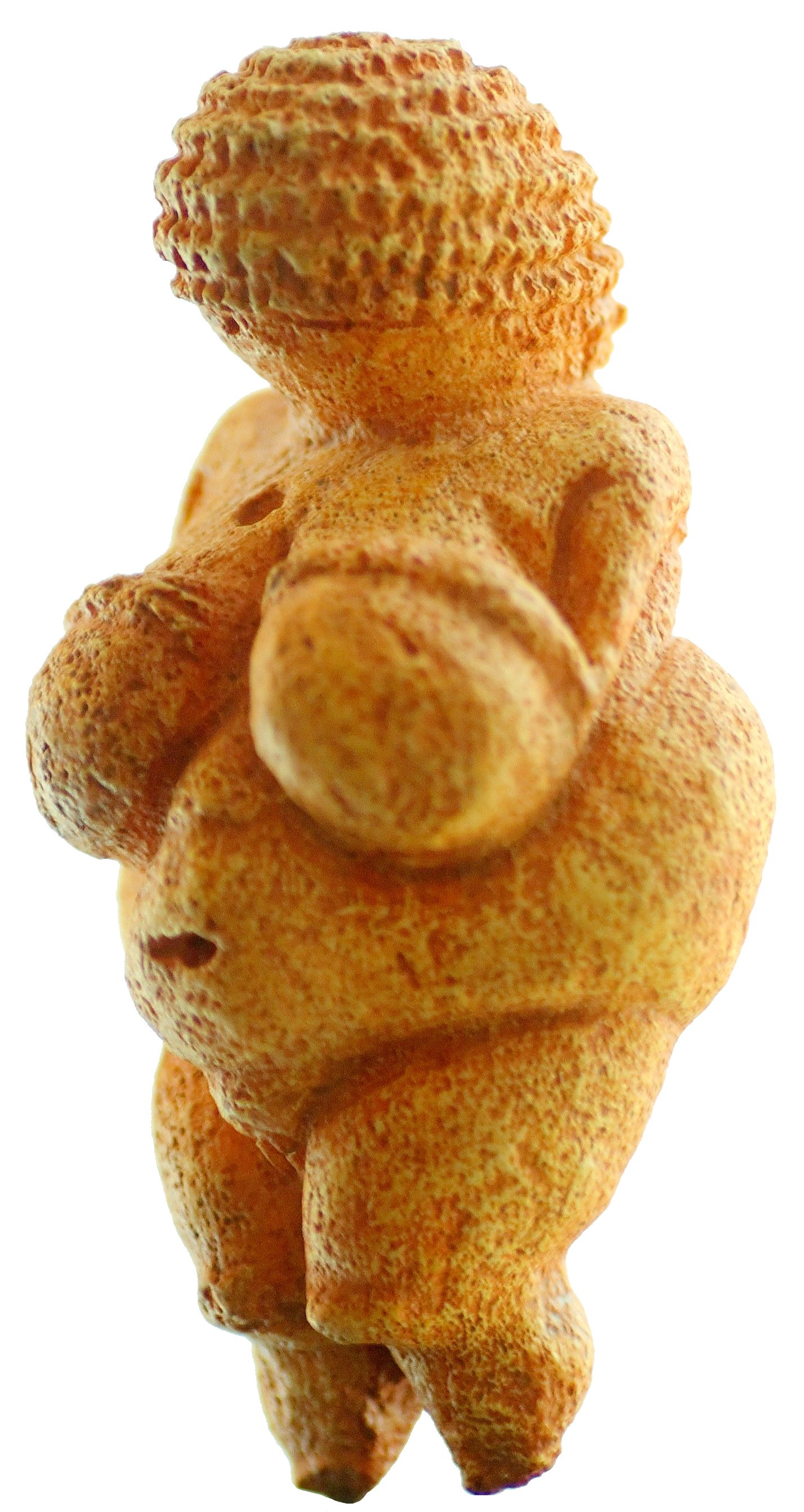
Venus of Willendorf (30,000 – 27,000 BP). Is that a special headdress … or peppercorn hair? (source: Matthias Kabel)


Europeans already had blue eyes while still hunter-gatherers. This is what we’ve learned after retrieving ancient DNA from two Mesolithic individuals, one from Luxembourg, dated to 8,000 years ago, and another from Spain, dated to 7,000 years ago (Dienekes, 2013; Lazaridis et al.,2013). These are late hunter-gatherers, so there is always the possibility of gene flow from early European farmers. Nonetheless, the time of origin now seems earlier for the palette of European eye colors and probably for the palette of European hair colors. How much earlier? Probably within the same time frame when European skin turned white: somewhere between 11,000 and 19,000 years ago according to Beleza et al. (2013) or between 7,600 and 19,200 years according to Canfield et al. (2014). Although different genes are responsible for eye, hair, and skin color, there was probably a single selection pressure that seems to have acted primarily on early European women (Frost, 2006; Frost, 2008).

Interestingly, although the Luxembourg man was blue-eyed, he also had brown skin. He lacked the ‘European’ alleles at all three genes involved in the whitening of European skin. Such a genotype is extremely rare today in unadmixed Europeans (Khan, 2014). Equally odd is the fact that this brown-skinned European lived long after (Beleza et al., 2013) or probably after (Canfield et al., 2014) the time period when European skin turned white. How could that be? Well, these estimates apply only to the ancestors of living Europeans. This individual may not have been so lucky.

When the last ice age ended some 10,000 years ago, it may be that only some European populations had acquired a fully ‘European’ phenotype, i.e., white skin, multi-hued eyes and hair, a more childlike face, and longer, straighter hair. This phenotype would have been most predominant on the former steppe-tundra of northern and eastern Europe. Moving outward from this region, one would have seen humans with more and more of the evolutionarily older traits, i.e., brown skin, uniformly brown eyes and black hair, a more robust face, and short, frizzy hair.

This older phenotype might have persisted well into the Holocene in peripheral and isolated parts of Europe.  As Fleure (1945) notes:

In a few places in Sweden, Britain, and France, people have been noticed who show characteristics of the skull and face that remind one of late-Paleolithic man: these people are usually darker, in hair and eyes, than their neighbors; sometimes they even have swarthy skins.

Even in Scandinavia, we find references in folklore and mythology to an ancient dark-skinned population. A Norse poem, the Rigsthula, describes how the god Rig created a class of thralls who were black-haired, swarthy, and flat-nosed (Jonassen, 1951). This theme comes up elsewhere in Old Norse literature (Karras, 1988).

This leads us to the debate over the discovery of so-called ‘Negroid’ skeletal remains in Europe. Clearly, these individuals were not African, but nor were they like present-day Europeans. They seem to represent an older phenotype that had already lost predominance by Holocene times. The skeletal evidence is reviewed by Boule and Vallois (1957, pp. pp. 291-292):

‘In Brittany, as well as in Switzerland and in the north of Italy, there lived in the Polished Stone period, in the Bronze Age and during the early Iron Age, a certain number of individuals who differed in certain characters from their contemporaries’, in particular in the dolichocephalic character of their skull, in possessing a prognathism that was sometimes extreme, and a large grooved nose. This is a matter of partial atavism which in certain cases, as in the Neolithic Breton skull from Conguel, may attain to complete atavism. Two Neolithic individuals from Chamblandes in Switzerland are Negroid not only as regards their skulls but also in the proportions of their limbs. Several Ligurian and Lombard tombs of the Metal Ages have also yielded evidences of a Negroid element.

Since the publication of Verneau’s memoir, discoveries of other Negroid skeletons in Neolithic levels in Illyria and the Balkans have been announced. The prehistoric statues, dating from the Copper Age, from Sultan Selo in Bulgaria are also thought to portray Negroids. In 1928 René Bailly found in one of the caverns of Moniat, near Dinant in Belgium, a human skeleton of whose age it is difficult to be certain, but which seems definitely prehistoric. It is remarkable for its Negroid characters, which give it a resemblance to the skeletons from both Grimaldi and Asselar.

It is not only in prehistoric times that the Grimaldi race seems to have made its influence felt. Verneau has been able to see, now in modern skulls and now in living subjects, in the Italian areas of Piedmont, Lombardy, Emilia, Tuscany, and the Rhone Valley, numerous characters of the old fossil race.

This older phenotype must have gradually disappeared as the newer phenotype spread outwards from the plains of northern and eastern Europe. Why did one replace the other? What sort of selective advantage did the newer phenotype confer? The reason probably had less to do with physical appearance and more to do with the mental toolkit that humans had developed on the steppe-tundra of the last ice age. These northern hunting peoples were pre-adapted to technological complexity and thus better able to exploit the opportunities of later cultural environments (Frost, 2010). Some of them, specifically the semi-sedentary hunter-fisher-gatherers around the North Sea and the Baltic, would become pre-adapted not only to technological complexity but also to social and economic complexity (Frost, 2013).

References 

Beleza, S., Murias dos Santos, A., McEvoy, B., Alves, I., Martinho, C., Cameron, E., Shriver, M.D., Parra E.J., and Rocha, J. (2013). The timing of pigmentation lightening in Europeans. Molecular Biology and Evolution, 30, 24-35.
http://mbe.oxfordjournals.org/content/30/1/24.short

Boule, M. and H.V. Vallois. (1957). Fossil Men. New York: Dryden Press. 

Canfield, V.A., A. Berg, S. Peckins, S.M. Wentzel, K.C. Ang, S. Oppenheimer, and K.C. Cheng. (2014). Molecular phylogeography of a human autosomal skin color locus under natural selection, G3, 3, 2059-2067.
http://www.g3journal.org/content/3/11/2059.full 

Dienekes (2013).  Mesolithic Iberians (La Braña-Arintero) not ancestors of modern ones,
Dienekes’ Anthropology Blog
http://dienekes.blogspot.ca/2013/12/europeans-neolithic-farmers-mesolithic.html

Fleure, H.J. (1945). The distribution of types of skin color, Geographical Review, 35, 580-595. 

Frost, P. (2013). Origins of Northwest European guilt culture. Part II, Evo and Proud, December 14
http://evoandproud.blogspot.ca/2013/12/origins-of-northwest-european-guilt.html

Frost, P. (2010). Out of North Eurasia, Evo and Proud, May 27
http://evoandproud.blogspot.ca/2010/05/out-of-north-eurasia.html 

Frost, P. (2008). Sexual selection and human geographic variation, Special Issue: Proceedings of the 2nd Annual Meeting of the NorthEastern Evolutionary Psychology Society. Journal of Social, Evolutionary, and Cultural Psychology, 2(4), pp. 169-191.
http://www.jsecjournal.com/articles/volume2/issue4/NEEPSfrost.pdf

Frost, P. (2006). European hair and eye color - A case of frequency-dependent sexual selection? Evolution and Human Behavior, 27, 85-103.

Jonassen, C.T. (1951). Some historical and theoretical bases of racism in northwestern Europe, Social Forces, 30, 155-161.

Karras, R.M. (1988). Slavery and Society in Medieval Scandinavia. New Haven. 

Khan, R. (2014). Phenotypic Whiteness as an Outcome of Neolithic Admixture, The Unz Review: An Alternative Media Selection, January 3.
http://www.unz.com/gnxp/phenotypic-whiteness-as-an-outcome-of-neolithic-admixture/ 

Lazaridis, I., Patterson, N., Mittnik, A., Renaud, G., Mallick, S., et al. (2013). Ancient human genomes suggest three ancestral populations for present-day Europeans, BioRxiv, December 23.
http://biorxiv.org/content/early/2013/12/23/001552.full-text.pdf+html 

Saturday, November 9, 2013

The ancestors with no descendants


Venus of Mal’ta, a figurine from a site in eastern Siberia (source). She comes from a population that was related to modern Europeans and Amerindians but not to modern native Siberians. The Mal’ta Siberians died out at the height of the last ice age and were replaced by people spreading north from East Asia and west from Beringia.


On the eve of the last ice age, Siberia was home to a people who were related to modern Europeans and Amerindians but not to modern native Siberians. So concludes an analysis of DNA from the remains of a boy who lived 24,000 years ago at Mal’ta near Lake Baikal, Siberia.

They found that a portion of the boy's genome is shared only by today's Native Americans and no other groups, showing a close relationship. Yet the child's Y chromosome belongs to a genetic group called Y haplogroup R, and its mitochondrial DNA to a haplogroup U. Today, those haplogroups are found almost exclusively in people living in Europe and regions of Asia west of the Altai Mountains, which are near the borders of Russia, China, and Mongolia.

One expected relationship was missing from the picture: The boy's genome showed no connection to modern East Asians. DNA studies of living people strongly suggest that East Asians—perhaps Siberians, Chinese, or Japanese—make up the major part of Native American ancestors (Balter, 2013).

These findings are consistent with earlier ones. Strong dental and cranial affinities exist between remains from the same site and those of Upper Paleolithic Europeans (Alexeyev and Gokhman, 1994). Also, when we compare the Clovis sites of early Amerindians (13,000 BP) with early European and Siberian sites (20,000-15,000 BP), we find many features in common: characteristic lithic technology, grave goods with red ocher, and sites with small shallow basins (Goebel, 1999; Haynes, 1980; Haynes, 1982).

What do these findings tell us? I would propose the following:

1. When the last ice age began some 25,000 years ago, a single population of nomadic hunters occupied the steppe-tundra that stretched from southwestern France to Beringia.

2. Ancestral East Asians had already split away from this proto-Eurasian population. They had probably adapted to life farther south in the more temperate environments of what is now north China. The Ainu may be an evolutionarily conservative branch of these East Asians.

3. At the height of the last ice age some 20,000 to 17,000 years ago, Siberia became virtually devoid of human life (Graf, 2009a; Graf, 2009b). Proto-Eurasians survived in refugia in parts of Europe to the west and in coastal regions of northeast Asia, Beringia and northwest North America to the east. Kennewick Man (c. 9,000-10,000 BP) may have been an example of this refuge population.

4. Siberia was then repeopled by two streams of settlement. One was composed of ‘Kennewickians’ spreading westward and inland from coastal refugia. The other stream was composed of early East Asians spreading northward.

5. This new mixed population of eastern Siberia and Beringia would later spread eastward into the interior of post-glacial North America around 13,000 years ago. These people were the early Amerindians of the Clovis culture.

It would be interesting to know what the reconstructed Mal’ta genome tells us about the skin, hair, and eye color of the proto-Eurasians. Were they pale-skinned with a diverse palette of hair and eye colors, like modern Europeans? Or were they brown-skinned with black hair and brown eyes, like modern Amerindians?  Probably the second possibility, given that the European color scheme seems to be a later evolutionary development—11,000 to 19,000 years ago for white skin and probably the same time frame for diversification of hair and eye color (Beleza et al., 2013). The Mal’ta people might have gone on to develop the same characteristics during this time frame, but they all died out at the height of the last ice age. 

In short, the Mal’ta people probably looked very much like native Indians with a more European skull shape, perhaps like the Ainu of northern Japan or the Kennewick humans of North America. 


References

Alexeyev, V.P., and I.I. Gokhman. (1994). Skeletal remains of infants from a burial on the Mal'ta Upper Paleolithic site, Homo, 45, 119‑126. 

Balter, M. (2013). Ancient DNA links Native Americans with Europe, Science, 342, 409-410.
http://www.sciencemag.org/content/342/6157/409.full

Beleza, S., A. Múrias dos Santos, B. McEvoy, I. Alves, C. Martinho, E. Cameron, M.D. Shriver, E.J. Parra, and J. Rocha. (2013). The timing of pigmentation lightening in Europeans, Molecular Biology and Evolution, 30, 24-35.
http://www.utm.utoronto.ca/~parraest/profile/PDF%20files/Beleza-2012(Mol.Biol.Evol.).pdf 

Goebel, T. (1999). Pleistocene human colonization of Siberia and peopling of the Americas: An ecological approach, Evolutionary Anthropology, 8, 208‑227.
http://onlinelibrary.wiley.com/doi/10.1002/(SICI)1520-6505(1999)8:6%3C208::AID-EVAN2%3E3.0.CO;2-M/abstract

Graf, K.E. (2009a). “The Good, the Bad, and the Ugly”: evaluating the radiocarbon chronology of the middle and late Upper Paleolithic in the Enisei River valley, south-central Siberia. Journal of Archaeological Science, 36, 694–707.
http://www.centerfirstamericans.com/cfsa-publications/Graf-JAS2009-36-694.pdf

Graf, K.E. (2009b). Modern human colonization of the Siberian Mammoth Steppe: A view from South-Central Siberia. In M. Camps, P. Chauhan (eds.), Sourcebook of Paleolithic transitions (pp. 484-496), Springer Science & Business Media.

Haynes, C.V. (1982). Were Clovis progenitors in Beringia? In D.M. Hopkins (ed). Paleoecology of Beringia, (pp. 383‑398), New York: Academic Press. 

Haynes, C.V. (1980). The Clovis culture, Canadian Journal of Anthropology, 1, 115‑121.

Saturday, June 1, 2013

Just for show?


European woman in Mughal costume and jewelry, 19th century (Wikicommons)


People of European origin have an unusually diverse palette of hair and eye colors. This diversity is commonly ascribed to their unusually white skin. Ancestral Europeans became lighter-skinned, and this genetic change therefore caused other changes to hair and eye pigmentation.

Actually, the genetic changes are different in each case. European skin turned white through a replacement of alleles, primarily at TYRP1, SLC24A5, and SLC45A2. European hair and eyes diversified in color through a proliferation of new alleles, primarily at MC1R for hair color and in the HERC2-OCA2 region for eye color.

It now appears that this diversification has occurred at other gene loci as well. Zhang et al. (2013) report that a region downstream from EDNRB is associated with differences in hair color and that two other loci, VASH2 and POLS, are associated with differences in eye color. Sulem et al. (2008) report that TPCN2 is associated with differences in hair color and that ASIP is associated with red hair.

A common selection pressure, not a common gene

This is further proof that a selection pressure created the visual effect of color diversity by acting on whatever genes it could. In short, this diverse palette of hues seems to exist “just for show.”

The evolutionary problem is spelled out by Walsh et al. (2012):

People of European descent display the widest variation in pigmentation traits, such as iris (eye) and hair colouration, in the world. In particular, eye colour variation is nearly restricted to people of (at least partial) European descent. Eye colour categories here often concern blue, brown and intermediate (green, etc.). In the rest of the world, people tend to have brown eye colour, which is considered to be the ancestral human trait in agreement with the Out-of-Africa hypothesis of modern humans. The current variation in eye colour is thought to have originated via a genetic founder event involving non-brown irises in early European history. It is furthermore assumed that eye colour variation in Europe has been shaped by positive selection via sexual selection i.e., mate choice preference. Alternatively it has been proposed that eye colour variation evolved via a correlation with skin colour and its environmental adaptation e.g. maximizing vitamin D conversion in low levels of UV radiation, or as a combination of both. One suggested geographic region for the origin of blue eye colour in Europe is the southern Baltic, as indicated by concentric rings of decreasing frequency of the blue eye colour trait spreading from the southern Baltic region, resulting in a strong north–south gradient in blue eye colour frequency across Europe.

It is doubtful whether a lack of vitamin D at northern latitudes played a role in the whitening of European skin, let alone in the diversifying of European hair and eye color. As Elias and Williams (2012) note, certain northern populations whitened much more than others:

An obvious feature of the northward dispersal of humans is a quasi-geographic reduction in pigmentation (Murray, 1934; Loomis, 1967; Chaplin and Jablonski, 2009). Coloration varies greatly among northerners. Native Inuit display medium-to-dark (type III/IV), rather than light pigmentation, and both northern and central-dwelling Asians display medium (type III) pigmentation. Recent population genetic data show that the reduction in skin pigmentation occurred sporadically and incompletely in northern and Asian populations (Sturm, 2009). Moreover, while modern humans reached Central Europe ≈40 ka (thousands of years ago), they reached northern Europe only after the last ice sheets receded less than 11 ka. It is only these humans that display light pigmentation, and recent molecular genetic studies suggest that the very light pigmentation of northern Europeans did not develop until 5-6 ka (Norton et al., 2007; Norton and Hammer, 2008).


Heather Norton’s estimate for European skin whitening (which she set within a broader range of 3,000 to 12,000 years ago) has been revised upward by Sandra Beleza to a range of 11,000 to 19,000 years ago, the second estimate being now accepted as the better one by Norton (Beleza et al., 2013; Norton and Hammer, 2007; Norton, 2012). This time period still began long after the entry of modern humans into Europe, the implication being that ancestral Europeans were brown-skinned for tens of thousands of years.

Elias and Williams (2012) also note that the vitamin-D hypothesis cannot explain the changes to European hair color, since hair is not involved in vitamin-D synthesis. Their alternate hypothesis is that European skin became white as a way to cut back on unnecessary energy expenditure:

[…] a declining need to heavily pigment the epidermis favored the retention of mutations in genes that reduced pigment synthesis, thereby diverting energy toward the production of more urgently-needed proteins.

But why, then, did ancestral Europeans wait over twenty thousand years before cutting back on this unnecessary expenditure? And why would this expenditure be less unnecessary at northern latitudes in Asia and North America? Moreover, in the case of hair color, what has happened is not a loss of pigment but rather a shift from production of one kind of pigment, i.e., eumelanin (black-brown hues), to production of another, i.e., pheomelanin (yellow-red hues).

Sexual selection?

Color polymorphisms are not limited to humans. They occur in many other species for reasons that Hofreiter and Schöneberg (2010) discuss in a recent review article. One reason is crypsis—the need to blend into a background that may vary from one place to another. Deer mice, for instance, have light fur where the ground is likewise light in color and dark fur where it is dark in color. Another reason is aposematism—individuals with a rare coloration have better chances of survival, since they are a poorer match for a predator’s search image.

Such a frequency dependent effect, favouring the rarer colour morphs, is also known from sexual selection, when females preferentially mate with rare colour morph males, a phenomenon also known from guppies. (Hofreiter and Schöneberg, 2010)

This kind of color polymorphism typically involves bright colors, since sexual selection is influenced by sensory biases that favor not only novel colors but also bright ones as well. In fish species, for instance, color morphs are often red because a sensory bias for this color has developed irrespective of mating contexts.

If we look at the polymorphisms for human hair and eye color, the recently evolved “European” hues tend to be brighter than the species norm of black hair and brown eyes. Eyes may be light blue, but not navy blue. Hair may be carrot red, but not beetroot red. Sexual selection is also indicated by a greater variability of hair color in women, with red hair being especially more frequent (Shekar et al., 2008).

But why?

Why would sexual selection have been more intense among ancestral Europeans? Such selection happens when too many of one sex are competing to mate with too few of the other. In most mammals, the males do the competing—because polygyny dries up the pool of available females. So the males are brilliantly colored, and the females duller in appearance.

But here we have the reverse. Hair color is brighter and more diverse in European women than in European men. We see a similar pattern with skin color. “European” physical traits seem to be female traits. It looks as though sexual selection primarily targeted women and then secondarily spilled over on to men.

This unusual color scheme seems to result from the unusual steppe-tundra that covered the plains of northern and eastern Europe during the last ice age 25,000 to 10,000 years ago. This environment offered ancestral Europeans a huge amount of edible biomass, but nearly all of it was locked up as meat in wandering herds of reindeer and other herbivores. Since male hunters provided almost all of the food for their wives and offspring, the cost of supporting a second wife and her children was prohibitive for them, being feasible for only the ablest hunters. At the same time, pursuit of migratory game greatly lengthened the mean hunting distance and boosted male death rates accordingly.

Thus, limited polygyny, combined with higher hunting-related mortality, skewed the mate market towards a shortage of available men. Women had to compete for men, unlike the situation among tropical humans and most other mammalian species. This intense mate competition in turn drove sexual selection for colorful features that could, by their brightness or their novelty, catch the attention of a prospective mate (Frost, 2006; Frost, 2008).

References

Beleza, S., A. Murias dos Santos, B. McEvoy, I. Alves, C. Martinho, E. Cameron, M.D. Shriver, E.J. Parra, and J. Rocha. (2013). The timing of pigmentation lightening in Europeans, Molecular Biology and Evolution, 30, 24-35.

Frost, P. (2006). European hair and eye color - A case of frequency-dependent sexual selection? Evolution and Human Behavior, 27, 85-103.

Frost, P. (2008). Sexual selection and human geographic variation, Journal of Social, Evolutionary,and Cultural Psychology, 2(4), 169-191. http://137.140.1.71/jsec/articles/volume2/issue4/NEEPSfrost.pdf

Hofreiter, M., and T. Schöneberg. (2010). The genetic and evolutionary basis of colour variation in vertebrates, Cellular and Molecular Life Sciences, 67, 2591–2603.

Norton, H.L., and M.F. Hammer. (2007). Sequence variation in the pigmentation candidate gene SLC24A5 and evidence for independent evolution of light skin in European and East Asian populations. Program of the 77th Annual Meeting of the American Association of Physical Anthropologists, p. 179

Norton, H.L. (2012). Personal communication

Shekar, S.N., D.L. Duffy, T. Frudakis, G.W. Montgomery, M.R. James, R.A. Sturm, and N.G. Martin. (2008). Spectrophotometric methods for quantifying pigmentation in human hair—Influence of MC1R genotype and environment, Photochemistry and Photobiology, 84, 719–726.

Sulem, P., D.F Gudbjartsson, S.N. Stacey, A. Helgason, T. Rafnar, M. Jakobsdottir, S. Steinberg, S.A. Gudjonsson, A. Palsson, G. Thorleifsson, S. Palsson, B. Sigurgeirsson, K. Thorisdottir, R. Ragnarsson, K.R. Benediktsdottir, K.K. Aben, S.H. Vermeulen, A.M. Goldstein, M.A. Tucker, L.A. Kiemeney, J.H. Olafsson, J. Gulcher, A. Kong, U. Thorsteinsdottir, and K. Stefansson. (2008). Two newly identified genetic determinants of pigmentation in Europeans, Nature Genetics, 40, 835-837.

Walsh, S., A. Wollstein, F. Liu, U. Chakravarthy, M. Rahu, J.H. Seland, G. Soubrane, L. Tomazzoli, F. Topouzis, J.R. Vingerling, J. Vioque, A.E. Fletcher, K.N. Ballantyne, and M. Kayser. (2012). DNA-based eye colour prediction across Europe with the IrisPlex system, Forensic Science International: Genetics, 6, 330–340.


Zhang, M., F. Song, L. Liang, H. Nan, J. Zhang, H. Liu, L.-E. Wang, Q. Wei, J.E. Lee, C.I. Amos, P. Kraft, A.A. Qureshi, and J. Han. (2013). Genome-wide association studies identify several new loci associated with pigmentation traits and skin cancer risk in European Americans, Human Molecular Genetics, advance access 1–12