Saturday, October 17, 2015

The end of Indian summer


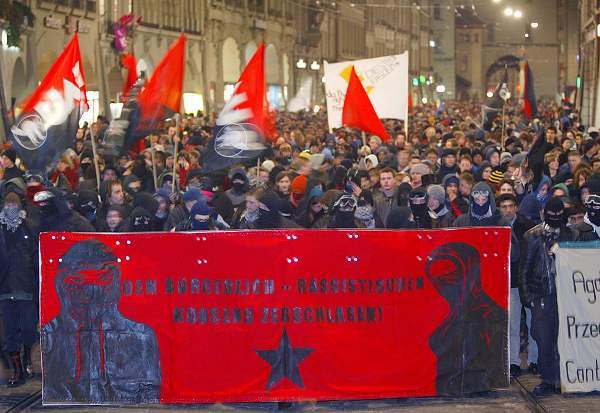
Antifas, Switzerland (Wikicommons). Today, antifas are becoming an extrajudicial police, just as human rights commissions are becoming a parallel justice system.


Until three years ago, Canada’s human rights commissions had the power to prosecute and convict individuals for "hate speech." This power was taken away after two high-profile cases: one against the magazine Maclean's for printing an excerpt from Mark Steyn's book America Alone; and the other against the journalist Ezra Levant for publishing Denmark’s satirical cartoons of the prophet Mohammed. Both cases were eventually dismissed, largely because the accused were well known and popular. As Mark Steyn observed:

[...] they didn't like the heat they were getting under this case. Life was chugging along just fine, chastising non-entities nobody had ever heard about, piling up a lot of cockamamie jurisprudence that inverts the principles of common law, and nobody paid any attention to it. Once they got the glare of publicity from the Maclean's case, the kangaroos decided to jump for the exit. I've grown tired of the number of Canadian members of Parliament who've said to me over the last best part of a year now, "Oh, well of course I fully support you, I'm fully behind you, but I'd just be grateful if you didn't mention my name in public.” (Brean, 2008)

Despite the dismissals, both cases had a chilling effect on Canadian journalism. Maclean's made this point in a news release:

Though gratified by the decision, Maclean's continues to assert that no human rights commission, whether at the federal or provincial level, has the mandate or the expertise to monitor, inquire into, or assess the editorial decisions of the nation's media. And we continue to have grave concerns about a system of complaint and adjudication that allows a media outlet to be pursued in multiple jurisdictions on the same complaint, brought by the same complainants, subjecting it to costs of hundreds of thousands of dollars, to say nothing of the inconvenience. (Maclean's, 2008)

This situation had come about gradually in Canada. At first, human rights commissions fought discrimination only in employment and housing, and there was strong resistance to prosecution of people simply for their ideas. This situation changed from the 1970s onward. Human rights took the place in society that formerly belonged to religion, and human rights advocates acquired the immunity from criticism that formerly belonged to the clergy. Discrimination was no longer wrong in certain cases and under certain circumstances. It became evil, and people who condoned it in any form and for any reason were likewise evil.

This view of reality progressively transformed human rights commissions. On the one hand, they were given an ever longer list of groups to protect. On the other, their scope of action grew larger, expanding to include not only the job and housing markets but also the marketplace of ideas. Their power increased until they became a parallel justice system, the key difference being that they denied the accused certain rights that had long existed in traditional courts of law, particularly the presumption of innocence and the right to know one’s accuser. All of this was made possible by section 13 of the Human Rights Act (1977):

Section 13 ostensibly banned hate speech on the Internet and left it up to the quasi-judicial human rights commission to determine what qualified as "hate speech." But, unlike a court, there was no presumption of innocence of those accused of hate speech by the commission. Instead, those accused had to prove their innocence. (Akin, 2013)

In 2012, the House of Commons repealed section 13. The ensuing three years brought a return to normal and a dissipation of the chill that had descended on Canadian journalists and writers.

Today, our Indian summer is coming to an end. In Alberta, the human rights commission is pushing to see how far it can go, and Ezra Levant is again being prosecuted:

This October I will be prosecuted for one charge of being "publicly discourteous or disrespectful to a Commissioner or Tribunal Chair of the Alberta Human Rights Commission" and two charges that my "public comments regarding the Alberta Human Rights Commission were inappropriate and unbecoming and that such conduct is deserving of sanction."

Because last year I wrote a newspaper editorial calling Alberta's human rights commission "crazy". (Levant, 2015)

Last month in Quebec, the government passed a bill that greatly expands the powers of its human rights commission to prosecute "hate."

Bill 59, introduced by Quebec Premier Philippe Couillard's Liberal government, would make it illegal to promote hate speech in Quebec, without defining what hate speech is. Despite this, it would expand the definition of hate speech to include "political convictions" for any speech deemed by Quebec's human rights bureaucracy to promote "fear of the other", an absurdly vague term which could easily lead to prosecutorial abuses.

Bill 59 would empower Quebec's human rights commission to investigate anonymous complaints, or to launch investigations on its own, without any complaint, culminating in charges before Quebec's Human Rights Tribunal. The tribunal would be able to impose fines of up to $10,000 for first offenders, $20,000 for repeat offenders. Those found to have violated the legislation would be named and shamed on a publicly accessible list of offenders, maintained by the government. (Editorial, 2015)

The new law also casts a wider net by defining two forms of complicity in hate speech, direct and indirect:

Engaging in or disseminating the types of speech described in section 1 is prohibited.

Acting in such a manner as to cause such types of speech to be engaged in or disseminated is also prohibited. (Gouvernement du Québec, 2015)

"Hate speech" is supposedly defined in section 1 of Bill 59, but this section merely repeats the same term:

The Act applies to hate speech and speech inciting violence that are engaged in or disseminated publicly and that target a group of people sharing a characteristic identified as prohibited grounds for discrimination under section 10 of the Charter of human rights and freedoms (chapter C-12).(Gouvernement du Québec, 2015)
 
In short, "hate speech" will be defined by the Quebec Human Rights Commission, the only limitation being that the speech must target a protected group.

How did this piece of legislation come to be? It had been sold to the public as a means to fight Islamist terrorism and, as such, gained the support of many people, including right-wing politicians who thought its “ant-hate” language was just window dressing to make it more palatable. In its final form, however, there are no references at all to Islamism or terrorism. As columnist Joanne Marcotte points out:

Nowhere in the bill is this goal mentioned. It doesn't seem that this is the intention of the Liberal Party, which is perhaps more concerned about a supposedly Islamophobic current of opinion than about the pressure that radical religious fundamentalists are exerting on our values of individual freedom.

Indeed, no mention of the following words appear in the bill: fundamentalism, fundamentalist, radicalism, radicalization, terrorism, religious (as in "religious fundamentalism").

So it isn't surprising that only two groups to date have supported the bill: The Canadian Muslim Forum and the Muslim Council of Montreal. (Marcotte, 2015)

As Joanne Marcotte notes ironically, this bill was pushed through by a center-right government that claims to believe in individual freedom. Even more ironically, the strongest support for the new law comes from the far left. A demonstration in Montreal against Bill 59 was broken up by a hundred antifas. The police were there but not one antifa was arrested (Kamel, 2015).

This is a growing trend in Western countries: a strange alliance between center-right regimes and far-left antifas. For all intents and purposes, the latter are becoming an extrajudicial police, just as human rights commissions are becoming a parallel justice system. 

Conclusion

After a brief lull, a new offensive has begun against "hate speech" in Canada. Quebec is leading the way with legislation that is not only punitive but also broadly-worded. Hate speech is whatever the human rights commission considers to be hate speech.

Outside Quebec, existing laws are likewise being interpreted more punitively and more broadly, as seen in the prosecution of Ezra Levant for "disrespectful" speech. This trend may lead to new legislation in other provinces and perhaps at the federal level, especially if the Liberal Party takes power on October 19.

Although the Liberal Party of Canada is legally distinct from the Liberal Party of Quebec, the two work together and cater to the same clientele. The major difference is that the former defines itself as center-left and the latter as center-right. In practice, the difference is trivial, "left" and "right" referring more and more to the same ideology. Today, the left pushes for cultural globalism (multiculturalism, antiracism), while the right pushes for economic globalism (outsourcing to low-wage countries, insourcing of low-wage labor).

Quebec's Bill 59 may thus become a template for federal legislation. The Liberal leader, Justin Trudeau, has in fact promised to amend the Human Rights Act while not spelling out his plans, other than to say he will recognize transgendered individuals as a protected group.

So will I be packing my bags and going south of the border? No, I love my country too much and, frankly, I don’t envy Americans. The U.S. doesn’t have anti-hate laws because it doesn’t need them. Most Americans have fully internalized the antiracist ethos and can be counted on to be willing partners in their own dispossession.

The situation is different in Canada, especially in Quebec: the new ethos is more recent, has a weaker hold on people, and cannot be counted on “to do its job.” This is why we have legislation like Bill 59. It’s a sign of weakness, not of strength.

References 

Akin, D. (2013). Hate speech provision in Human Rights Act struck down, The Toronto Sun, June 26.
http://www.torontosun.com/2013/06/26/hate-speech-provision-in-human-rights-act-struck-down

Brean, J. (2008). Maclean's wins third round of hate fight, National Post, October 11 

Editorial (2015). Quebec's Bill 59 attacks free speech, The Toronto Sun, September 4
http://www.torontosun.com/2015/09/04/quebecs-bill-59-attacks-free-speech 

Gouvernement du Québec (2015). Bill no. 59: An Act to enact the Act to prevent and combat hate speech and speech inciting violence and to amend various legislative provisions to better protect individuals, Assemblée Nationale du Québec.
http://www.assnat.qc.ca/en/travaux-parlementaires/projets-loi/projet-loi-59-41-1.html

Kamel, Z. (2015). Blows exchanged between anti-Bill 59 and anti-fascist demos. No arrests made despite physical altercations, The Link, September 28
http://thelinknewspaper.ca/article/blows-exchanged-between-anti-bill-59-and-anti-fascist-demos 

Levant, E. (2015). I'm being prosecuted for calling human rights commissions "crazy," Stand with Ezra
http://www.standwithezra.ca/?utm_campaign=mrg_before_july&utm_medium=email&utm_source=standwithezra 

Maclean's. (2008). Maclean's responds to recent decision from the Canadian Human Rights Commission, June 26, News Release
http://archive.newswire.ca/fr/story/210185/maclean-s-responds-to-recent-decision-from-the-canadian-human-rights-commission 

Marcotte, J. (2015). Projet de loi 59: liberticide, dangereux, inutile, Le Huffington Post, September 21
http://quebec.huffingtonpost.ca/joanne-marcotte/projet-loi-59-liberticide-dangereux-propos-haineux-liberte-expression_b_8159532.html

Saturday, October 10, 2015

No, blacks aren't all alike. Who said they were?


In 1915, Paul Robeson became the third African American ever enrolled at Rutgers College, being one of four students selected for its Cap and Skull honor society. His father was of Igbo descent (Wikicommons)


Chanda Chisala has written another piece on IQ and African immigrants to the UK:

One of the biggest problems I had with the commenters were readers who apparently were only exposed to the statistical concept of Regression to the Mean from outside the IQ debate. [...]. The problem is not that the black immigrant children were not regressing to the point of equaling their source population mean IQ (that's also not what hereditarians predict either), but that they were clearly not even moving (or being pulled) towards that extremely low IQ, as hereditarians predict.

The correct term is not "regression to the mean." It's "non-inheritance of acquired characteristics." In other words, each person has a single genotype and a range of possible phenotypes. A culture can push its members to either limit of this range, thus creating a phenotype unlike that of other people with the same genetic endowment. But this phenotype has to be recreated with each succeeding generation. For instance, there used to be a Chinese custom of binding a girl's foot to make it four inches long and of limited use for walking. When the custom was outlawed, the next generation of women had normal feet. The phenotype bounced back to its initial form, so to speak, much like an elastic band when you stop stretching it (see note 1).

Regression to the mean is something else. It happens because of genetic change. For instance, a man with above-average IQ will likely marry a woman with above-average IQ. But only part of their above-averageness is genetic. The rest is due to favorable circumstances. Or simply luck. So their children's IQ will likely be a bit closer to the mean of the overall population. That second generation will in turn marry people with similar IQs. And their children will likewise be closer still to the population mean. Eventually, several generations later, the descendants of that original couple will have a mean IQ that matches the population mean.

That's regression to the mean. It's a multigenerational genetic change. It's not what happens when genes stay constant and culture changes.

Chanda is really talking about what happens when a culture stops pushing people to excel. The phenotype reverts to its usual state and the pressure to excel comes only from within. This is a legitimate argument, and it may have great explanatory value. When people from certain cultures move to Western countries, the second and third generations do a lot worse than the first generation over many indicators—academic achievement, crime rates, family stability, etc. This is a frequent outcome when people move from an environment where behavior is tightly controlled by family and community to one where behavior is much more self-controlled.

Such social atomization is less toxic for people of Northwest European descent because they have adapted to it over a longer time. For at least the past millennium, they have had weaker kinship ties and stronger tendencies toward individualism than any other human population. This cultural environment has favored individuals who rely less on external means of behavior control and more on internal means, specifically guilt proneness and affective empathy (Frost, 2014).

But that isn't Chanda's argument. That's the argument he attributes to something called "the HBD position." In reality, there are at least three HBD positions:

1. African immigrants to the UK perform better than whites academically because they are a select group, either because they have elite backgrounds or because they tend to be more motivated than the people who stay behind.

2. African immigrants perform better than whites academically, but this academic performance is weakly linked to the heritable component of IQ, especially in modern Britain. Teachers tend to "over-reward" black students who satisfy basic requirements (regular attendance, assignments turned in on time, non-disruptive behavior, etc.). African parents also invest in private tutoring to improve exam results.

3. Most African immigrants perform worse than whites academically. Only certain African groups excel, notably the Igbo of Nigeria. Igbo excellence is due to their specific evolutionary history and cannot be generalized to all sub-Saharan Africans.

Are African immigrants better than the Africans left behind?

Chanda attacks the first argument, saying that the average African immigrant is very average:

I actually know that the average African immigrants to the UK from any nation or tribe are not from the African elite class, economically or intellectually (even if there is a small segment from the super-professional class)

He also points to the example of African American families. The children of middle-class and even upper-class African Americans do worse on IQ tests than the children of lower-class Euro-American families. So even if you select from the black elite, the next generation will still underperform whites.

One could counter that the African American middle class largely works for the government. In Africa, the middle class is more likely to be self-made men and women. Also, a selection effect may exist despite the averageness of most African immigrants to the UK. Even if most are average, it may be that fewer are below-average. Below a certain level of ability, many Africans may not bother to emigrate.

Fuerst (2014) has studied this question and found that black immigrants to the U.S. have a mean IQ that is one third of a standard deviation above the mean IQ of their home countries. So there is a selection effect. But it seems too weak to explain the difference in IQ—more than one standard deviation and possibly two—between African immigrants to the UK and Africans back home, unless one assumes that migration to the UK is a lot more selective than migration to the US.

What does the GCSE actually measure?

We now come to the second explanation. It is assumed in this debate that the GCSE (General Certificate of Secondary Education) is a good proxy for IQ, which in turn is a proxy for the heritable component of intelligence. Is this true? Or does the GCSE largely measure something that is culturally acquired rather than heritable? Perhaps something as simple as showing up for class, doing one's assignments, or having a private tutor. This point is raised by one commenter:

[...] black Africans in London, even if poor and living in social housing, hire private tutors for their children. White British do not, especially the working class. This much better explains the GCSE results, a very tuition friendly test [...]

Furthermore, many African immigrants may be targeting those exams they can do best on and avoiding those they are less sure about:

[...] one needs to know how many children from each racial group take the exams. For example, the pass rate for Higher Mathematics is very high, not because the exams are easy, but because they are hard, and frighten off most applicants.

Interestingly, Chanda replies to this GCSE skepticism by pointing out that the same "Nigerians" (Igbos) who do well on the GCSE also do well in Nigeria:

For example, the subgroups within the Nigerian group that are the best in Nigeria or even in the US etc are also the best on the GCSEs. Also, the Traveller white (or whatever precise race) groups are placed by the GCSEs exactly where you would expect to find them.

The Igbo factor

This brings us to the third explanation. It's the one I favor, although the other two probably play a role. African excellence in the UK seems largely driven by a single high-performing people: the Igbo of southeastern Nigeria. Let's begin with the example of Harold Ekeh, whom Chanda describes in glowing terms:

Harold Ekeh showing off his acceptance letters to all 8 Ivy League Schools. He was born in Nigeria and migrated with his parents at age 8.

Ekeh is an Igbo name, and the Igbo (formerly known as Ibo) have a long history of academic success within Nigeria (Frost, 2015). Chanda himself referred to this success in his first article:

The superior Igbo achievement on GCSEs is not new and has been noted in studies that came before the recent media discovery of African performance. A 2007 report on "case study" model schools in Lambeth also included a rare disclosure of specified Igbo performance (recorded as Ibo in the table below) and it confirms that Igbos have been performing exceptionally well for a long time (5 + A*-C GCSEs); in fact, it is difficult to find a time when they ever performed below British whites. (Chisala, 2015a)

This superior achievement was widely known in Nigeria by the time of independence:

All over Nigeria, Ibos filled urban jobs at every level far out of proportion to their numbers, as laborers and domestic servants, as bureaucrats, corporate managers, and technicians. Two-thirds of the senior jobs in the Nigerian Railway Corporation were held by Ibos. Three-quarters of Nigeria's diplomats came from the Eastern Region. So did almost half of the 4,500 students graduating from Nigerian universities in 1966. The Ibos became known as the "Jews of Africa," despised—and envied—for their achievements and acquisitiveness. (Baker, 1980)

The term "Jews of Africa" recurs often in the literature. Henry Kissinger used it back in the 1960s:

The Ibos are the wandering Jews of West Africa — gifted, aggressive, Westernized; at best envied and resented, but mostly despised by the mass of their neighbors in the Federation. (Kissinger, 1969) 

To what degree is African success Igbo success? If we go back to Chanda's first article, we see that high African achievers are overwhelmingly "Nigerians" (Chisala, 2015a). This is evident in a chart that lists mean % difference from the mean English GCSE score in 2010-2011 by ethnicity:

Nigerian: +21.8
Ghanaian: +5.5
Sierra Leone: +1.4
Somali: -23.7
Congolese: -35.3

Clearly, high academic achievement is due to something that is very much present in Nigeria, a little bit in Ghana, and not at all in Somalia and Congo. Could this something be the Igbo? The Igbo make up 18% of Nigeria's population and form a large diaspora elsewhere in West Africa and farther afield. In fact, they seem to be disproportionately represented in overseas Nigerian communities, making up most of the Nigerian community in Japan and a large portion of China's Nigerian community (Wikipedia, 2015). Statistics are unfortunately lacking for the UK.

Conclusion

What happens when we remove Igbo students from the GCSE results? How well do the other Africans do? To some degree, Chanda answered that question in his first article. African excellence seems to be overwhelmingly Igbo excellence.

So why doesn't he speak of Igbo excellence? Probably because he assumes that all sub-Saharan Africans are fundamentally the same. Or maybe he assumes that all humans are fundamentally the same. Both assumptions are wrong, and neither can be construed as an "HBD position." 

We are all genetically different, even within our own families. So why the surprise that different African peoples are ... different? The Igbo have for a long time specialized in a trading lifestyle that favors a certain mental toolkit: future time orientation; numeracy, and abstract reasoning. This is gene-culture coevolution. When circumstances push people to excel in a certain way, there will be selection for people who can naturally excel in that way, without the prodding of circumstances. And it doesn't take eons of time for such evolution to work.
 
Will we hear more about the Igbo in this debate? Probably not. There is a strong desire, especially in the United Kingdom, to show that blacks are converging toward white norms of behavior, including academic performance. There is indeed some convergence, but almost all of it can be traced to the growing numbers of high-performing "Nigerians" (Igbos) and the growing numbers of biracial children (the census now has a mixed-race category, but most biracial people still self-identify as "black"). In the UK, 55% of Black Caribbean men and 40% of Black Caribbean women have a partner from another ethnic background. It's very likely that half of all "black" children in the UK are at least half-white by ancestry (Platt, 2009, p. 7).

Nor is it likely that we'll hear more about the Igbo from Chanda. As he sees it, the debate should be over. The academic excellence of Igbo students proves that the black/white IQ gap in the U.S. cannot have a genetic basis:

[It is not] a function of global racial evolution (Sub-Saharan African genes versus European genes), as most hereditarians believe, especially those who identify with the Human Biodiversity or HBD intellectual movement (generally known as "scientific racism" in academic circles, but we are avoiding such unkind terms).

Thank you, Chanda, for avoiding unkind terms. Well, I know a bit about HBD. The term was coined by Steve Sailer in the late 1990s for an email discussion group that included myself and various academics who may or may not want their names disclosed. It's hard to generalize but we were all influenced by findings that genetic evolution didn’t slow down as cultural evolution speeded up in our species. In fact, the two seemed to feed into each other. This is why genetic evolution accelerated over 100-fold about 10,000 years ago when humans began to abandon hunting and gathering for farming, which in turn led to ever more diverse societies. Our ancestors thus adapted much more to their cultural environments than to their natural environments. These findings were already circulating within our discussion group before being written up in a paper by Hawks et al. (2007) and later in a book by Greg Cochran and Henry Harpending (2009).

Yes, previously it was thought that genetic evolution slowed to a crawl with the advent of culture. Therefore, groups like the Igbo couldn't possibly differ genetically from other sub-Saharan Africans, at least not for anything culture-related. But that kind of thinking wasn't HBD or even racialist. It was simply the old anthropological narrative, and it's still accepted by many anthropologists, most of whom aren't "scientific racists."

Oh sorry, I forgot we promised to avoid that term.

Note

(1) Of course, if the cultural pressure is maintained long enough, there may be selection for individuals who naturally produce the new phenotype—with no prodding and pushing. Let’s suppose that foot binding had never been outlawed in China. Through chance mutations, some Chinese women might be born with tiny feet, and their descendants would become more and more numerous because of their better life prospects. So what began as a new phenotype could end up becoming a new genotype. Culture pushes the limits of phenotypic plasticity, and then favors genotypes that don't have to be pushed. That's gene-culture coevolution.

References 

Baker, P.H. (1980). Lurching toward unity, The Wilson Quarterly, 4, 70-80
http://archive.wilsonquarterly.com/sites/default/files/articles/WQ_VOL4_W_1980_Article_01_2.pdf 

Chisala, C. (2015b). Closing the Black-White IQ gap debate. Part I, The Unz Review, October 5
http://www.unz.com/article/closing-the-black-white-iq-gap-debate-part-i/ 

Chisala, C. (2015a). The IQ gap is no longer a black and white issue, The Unz Review, June 25
http://www.unz.com/article/the-iq-gap-is-no-longer-a-black-and-white-issue/

Cochran, G. and H. Harpending. (2009). The 10,000 Year Explosion: How Civilizations Accelerated Human Evolution, Basic Books, New York. 

Frost, P. (2015). The Jews of West Africa? Evo and Proud, July 4
http://evoandproud.blogspot.ca/2015/07/the-jews-of-west-africa.html 

Frost, P. (2014). How universal is empathy? Evo and Proud, June 28
http://evoandproud.blogspot.ca/2014/06/how-universal-is-empathy.html 

Fuerst, J. (2014). Ethnic/race differences in aptitude by generation in the United States: An exploratory meta-analysis, June 29, Open Differential Psychology
http://openpsych.net/ODP/wp-content/uploads/2014/07/U.S.-Ethnic-Race-Differences-in-Aptitude-by-Generation-An-Exploratory-Meta-analysis-John-Fuerst-2014-07262014FINAL.pdf 

Hawks, J., E.T. Wang, G.M. Cochran, H.C. Harpending, and R.K. Moyzis. (2007). Recent acceleration of human adaptive evolution, Proceedings of the National Academy of Sciences (USA), 104, 20753-20758.
http://harpending.humanevo.utah.edu/Documents/accel_pnas_submit.pdf 

Kissinger, H.A. (1969). Memorandum, January 28. U.S. Department of State Archive
http://2001-2009.state.gov/r/pa/ho/frus/nixon/e5/55258.htm 

Platt, L. (2009). Ethnicity and family. Relationships within and between ethnic groups: An analysis using the Labour Force Survey. Equality and Human Rights Commission.
http://www.equalityhumanrights.com/sites/default/files/documents/raceinbritain/ethnicity_and_family_report.pdf  
Wikipedia (2015). Igbo people
https://en.wikipedia.org/wiki/Igbo_people

Saturday, October 3, 2015

The adaptive value of "Aw shucks!"


Solitude - Frederic Leighton (1830-1896)
 

In a mixed group, women become quieter, less assertive, and more compliant. This deference is shown only to men and not to other women in the group. A related phenomenon is the sex gap in self-esteem: women tend to feel less self-esteem in all social settings. The gap begins at puberty and is greatest in the 15-18 age range (Hopcroft, 2009).

Do women learn this behavior? Why, then, do they learn it just as easily in Western societies where constraints on female behavior are much weaker and typically stigmatized?

In U.S. society most of the formal institutional constraints on women have been removed, and ideologies of the inferiority of women are publicly frowned on. Sexual jealousy is also publicly disapproved, however much private expectation there may be of the phenomenon. Resources inequalities between men and women have also been reduced, although not eradicated. Certainly, male violence against women is still a reality and may play a role promoting deference behaviors in college-aged women. However, it seems unlikely that fear of physical violence is enough to explain why young women typically defer to men when involved in non-sex typed tasks in experimental settings. (Hopcroft, 2009)

Moreover, why would this behavior be learned mainly between 15 and 18 years of age?

[...] by many measures, girls at this age in the United States are doing objectively better than boys — they get better grades, have fewer behavioral and disciplinary problems, and are more likely to go to college than boys (Fisher 1999: 82). Qualitative studies also show the decline in female confidence and certainty at adolescence (Brown and Gilligan 1992). Brown and Gilligan's (1992) study was done in an elite private girls' school among girls who were likely to have every opportunity in life. Why would their self confidence be eroded at puberty? Certainly, there are few differences in resources between teenage boys and girls. Brown and Gilligan (1992) argue that our sexist culture strikes at girls during puberty, stripping girls of their self esteem. It seems odd that our patriarchal culture should wait until that precise moment to ensnare girls. (Hopcroft, 2009)

Female self-esteem seems to be hormonally influenced. It declines at puberty, reaches its lowest levels in late adolescence, gradually increases during adulthood, and peaks after menopause.

[...] evidence from many cultures [shows that] post-menopausal women often enjoy a status equal to that of men: they become in effect "honorary men." [...] Even in the most gender restrictive societies they are freed from menstrual taboos and purdah, often begin to inherit property and acquire wealth, and in general have increased freedom, status, power and influence in society. A recent experimental study of influence in small groups showed that older women (50 and older) do not defer to older men, and that older men do not display lack of deference to older women. (Hopcroft, 2009)

Female deference varies not only over a woman's lifetime but also from one woman to the next, i.e., some women are more predisposed than others. This variability may exist for one or more reasons:

- Not enough time has elapsed for selection to remove contrary predispositions (non-deference) from the gene pool.

- The selection pressure is relatively weak: contrary predispositions appear through mutation as fast as they are removed through selection.

- The strength or weakness of selection may vary among human populations. Gene flow may reintroduce contrary predispositions from populations where the selection pressure against them is relatively weak.

- There may be frequency-dependent selection. Non-deferring women may be better liked when less common.

Sexual selection?

For all these reasons, evolutionary psychologist Rosemary Hopcroft (2009) argues that female deference is an innate predisposition and not a learned behavior. It has become widespread because sexual selection has favored deferential women. When women compete on the mate market, success goes to the more deferential ones.

One might point out that deferential behavior would be advantageous not only at the time of mating but also later—during pregnancy and infant care. So, strictly speaking, the selection pressure wouldn’t be just sexual selection.

But Hopcroft's argument is vulnerable to a more serious objection: sexual selection of females is the exception and not the rule in most animal species, especially mammals. The males are the ones that have to compete for mates. This reflects differing contributions to procreation, the female being saddled with the tasks of pregnancy, nursing, and early infant care. Meanwhile, the male is usually free to go back on the mate market, with the result that mateable males outnumber mateable females at any one time.

Hopcroft knows this but argues that the human species is a special case because "human fathers often invest heavily in their children." But often they don't. What about societies where men do very little to raise their offspring? This point doesn't disprove Hopcroft's argument. In fact, it may provide a way to prove it, i.e., female deference should be stronger where paternal investment is higher.

If we look at hunter-gatherers, paternal investment tends to follow a north-south cline. It's low in the tropical zone where women gather food year-round and can thus provide for themselves and their children with little male assistance. It's higher farther away from the equator, where winter limits food gathering and makes women dependent on food that men provide through hunting. Paternal investment is highest in the Arctic: almost all food is provided by men, and women specialize in tasks unrelated to food procurement (garment making, shelter building, meat processing).

This north-south cline was maintained and in some cases accentuated when hunting and gathering gave way to farming. In the tropical zone, farming developed out of female food gathering and thus became women's work, as is still the case in sub-Saharan Africa and Papua New Guinea. This sexual division of labor also explains why tropical farmers preferred to domesticate plants for food production. Only one animal species, the guinea fowl, has been domesticated in sub-Saharan Africa, and it was apparently domesticated by women. All other forms of livestock have come from elsewhere.

How universal is female deference?

Female deference should therefore vary within our species. In particular, it should correlate with the degree of paternal investment in offspring and, relatedly, the intensity of female-female competition for mates. This doesn't mean that women are actually more deferential in societies where men are providers. It simply means that they create an impression of deference, while continuing to do much of the real decision-making.

This issue is sidestepped by Hopcroft, who speaks only of 'women' and 'men'—as if all human groups show the same pattern of female deference. She cites many studies to prove her point, but this literature is overwhelmingly based on Euro-American or European participants. There is one study on African Americans, but it was limited to boys and girls 11 to 14 years old (Weisfeld et al., 1982).

In fact, this presumed universality of female deference was already disproven by a study published two years earlier:

Much feminist literature has described the relative silence of girls in classrooms and a concomitant drop in self-esteem for girls in their early teens (Sadker & Sadker, 1994; American Association of University Women, 1992). But other work has noted that Black girls maintain their self-esteem and their classroom "voice" into adolescence despite the fact that they may feel neglected in education (Orenstein, 1994; Taylor et al., 1995). (Morris, 2007)

Over a period of two years, Morris (2007) studied African American girls in grades 7 and 9 of an American middle school referred to as "Mathews." The students were 46% African American and the teachers two-thirds African American.

He found that African American girls seemed to feel little inhibition in the presence of boys:

Indeed, at Matthews I often observed girls—particularly Black girls—dominating classroom discussion.

[...] I noticed this active participation of girls to a greater extent in English classrooms, particularly when, as in this example, the subject concerned gender issues or relationships. However, the topic in this example also concerned computers and technology, areas more commonly dominated by boys. Furthermore, girls at Matthews, especially Black girls, spoke out to ask and answer questions in science and math classes as well, although to a lesser extent than in English and history classes. This willingness of African American girls to compete and stand up to others also emerged in their non-academic interactions with boys.

[...] Black girls at Matthews often challenged physical contact initiated by boys by hitting and chasing them back. They did not yield to and accept this behavior from boys, nor did they tend to seek adult authority to protect themselves and punish the boys.

[...] Thus, most African American girls in my observations did not hesitate to speak up in classrooms, and stand up to boys physically. Few Black girls I observed created disruptions in classrooms, but most consistently competed with boys and other girls to gain teachers' positive attentions.

[..] I observed this outspokenness at Matthews. Black girls there appeared less restrained by the dominant, White middle-class view of femininity as docile and compliant, and less expectant of male protection than White girls in other educational research.

These observations were consistent with those of the teachers, who generally described African American girls as being confrontational, loud, and unladylike:

Teachers, particularly women, often scolded Black girls for supposedly subverting their authority in the classroom. 

[...] By far the most common description and criticism of African American girls by all teachers at Matthews was that they were too "loud."

[...] For many adults at Matthews, the presumed loud and confrontational behavior of African American girls was viewed as a defect that compromised their very femininity. This emerged most clearly in educators castigating Black girls to behave like "ladies."

Morris attributed this behavioral pattern to America's history of slavery and race relations. It would be useful to examine comparable data from sub-Saharan Africa. Do African women show less deference to men in mixed-gender settings?

According to a study of Akan society in Ghana, wives traditionally deferred to their husbands, but such deference was less common than in European society because social interactions were less frequent between husband and wife, being limited to certain areas of family life:

Traditional norms stipulated, for example, that the wife should not eat with the husband; that she alone must carry the foodstuffs from the farm; take water for the husband to the bathroom; sweep the compound; do the cooking; clean her husband's penis after sexual intercourse; and show deference to him in speech and action. (van der Geest, 1976)

Husbands and wives seldom made decisions jointly:

Joint decision-making is believed to be a departure from the past when decisions were made in a much more autocratic way by the husband alone or when spouses decided over their own matters separately (van der Geest, 1976).

Things were very different in mixed-gender settings outside the family. In the larger community, African women of all ages showed little deference to men, the situation being similar to that of older women in European societies.

Despite these outward rules, however, women held considerable power and commanded wide respect. They played a role in traditional politics and religion and were nearly always economically independent of their husbands. Moreover, women enjoyed a high degree of freedom to enter and to terminate marital unions, and in the matrilineal society of the Akan they were the focal points of descent lines. (van der Geest, 1976)

It is unclear to what degree modernization has changed these social dynamics. Van der Geest (1976) found much interest among younger Akan in the European model of family life, i.e., husband and wife eating and socializing together, and making decisions together. His own study, however, failed to find a significant difference between older and younger Akan in this respect. He concluded that the elite were moving toward European models of behavior, but not the majority of the population:

There are indications that—contrary to the situation in elite circles—marriage in lower socioeconomic groups remains an institution of secondary importance. Spouses have relatively low expectations of their marriage partners and of marriage in general. Men are often reluctant or unable to provide sufficient financial support for their families, and not infrequently women bear the burden of parenthood alone. [...] Wives remain more attached to their families of origin than to their partners, and in almost half of all cases husband and wife do not even constitute a residential unit. The relatively low status of marriage in Kwahu is perhaps best reflected in the high incidence of divorce and extramarital sex. (van der Geest, 1976)

This is consistent with findings from other studies. The pair bond is relatively weak in sub-Saharan Africa. Husband and wife tend to feel greater attachment to their respective kin. The husband is more certain that his sister's offspring are his blood relatives, whereas the wife sees her mother, sisters, and other female relatives as more reliable sources of child care.

Poewe found in her fieldwork that the marriage institution was highly flexible and discouraged strong, intense, or lasting solidarity between husband and wife. The male in these matrilineal societies did not produce for his progeny or for himself, but usually for a matrician with whom he might or might not reside. His role, as husband, was to sexually satisfy and impregnate his wife and to take care of her during her pregnancies, but under no circumstances should a man be the object of "exclusive emotional investment or focus of attention. Instead, women are socialized to invest their emotions and material wealth in their respective matrilineages." (Saidi, 2010, p. 16).

For this reason, European outsiders see parental neglect of children where Africans see no neglect at all—simply another system of child care. As Africans move to other parts of the world, they tend to recreate the African marriage system in their host countries by using local people and institutions as "surrogate kin." This is the case in England, where young African couples often place their children in foster homes:

The foster parents interpret the infrequent visiting of their wards' "real" parents as signs of parental neglect and become strongly attached to the foster children. This sometimes results in legal suits for transfer of custody to the foster parents (Ellis 1977). Meanwhile, the African parents make no comparable assumption that the delegation of care means they have surrendered formal rights in children. They consider that by having made safe and reliable arrangements for the care of children and by regular payment of fees, they are dispatching their immediate responsibility. (Draper, 1989, p.164)

In recent years, there has been much talk of an "adoption crisis" in Africa, where millions of children are not being raised by both parents and thus purportedly need to be placed in Western homes. Yet this situation is far from new. In fact, it's unavoidable in a culture where women cannot count on male assistance and have to make other arrangements:

In most African communities, the concept of "adoption" does not exist in the western sense. Children are fostered, a prevalent, culturally sanctioned procedure whereby natal parents allow their children to be reared by adults other than the biological parent [35] [36]. Child fostering is a reciprocal arrangement and contributes to mutually recognised benefits for both natal and fostering families [37]. In Tanzania, less than one quarter of children being fostered by relatives other than their biological parent were orphans. (Foster and Williamson, 2000).

Conclusion

Evolutionary psychologists believe that all human populations share the same genetic influences on behavior. They defend this belief by pointing to the complexity of behavior and the presumably long time it would take for corresponding genetic influences to evolve coherently from scratch. But why do they have to evolve from scratch? Evolution usually proceeds through minor modifications to what already exists. This is no less true for genetic determinants of behavior. For instance, an innate mental algorithm may be partially or completely deactivated. Or its range of targets may be broadened. Or it may deactivate more slowly with increasing age.

To the extent that human groups differ genetically in mental makeup, the differences are not due to some groups having completely new mental algorithms. Instead, the differences are due to the same algorithms being modified in various ways, often subtly so. For example, learning is primarily an infant behavior that becomes more difficult with increasing age. People may differ in learning capacity not because their learning algorithms differ but because these algorithms remain fully active for a longer time in some people than in others.

Another example may be female deference. In early modern humans, women tended to feel deferential in the presence of men, but this tendency was weak because a woman's interactions with her husband were infrequent and less important for her survival and the survival of her children. This is still the case in human groups that never left the tropical zone.

As humans spread beyond the tropics, this behavioral tendency became more easily triggered, particularly during the ages of 15 to 18 when young women entered the mate market. This evolutionary change came about because women in non-tropical environments were more dependent on men for food, particularly in winter. Women were, so to speak, in a weaker bargaining position than men, first of all on the mate market and later during pregnancy and infant care.

References 

Brown, L.M., and C. Gilligan. (1992). Meeting at the Crossroads: Women's Psychology and Girls' Development, Harvard University Press.
http://fap.sagepub.com/content/3/1/11.short 

Draper, P. (1989). African marriage systems: Perspectives from evolutionary ecology, Ethology and Sociobiology, 10, 145-169.
http://www.sciencedirect.com/science/article/pii/0162309589900174

Fisher, H. (1999). The First Sex, Random House. 

Foster, G., and J. Williamson. (2000). A review of current literature of the impact of HIV/AIDS on children in sub-Saharan Africa, AIDS 2000, 14: S275-S284.
http://www.hsrc.ac.za/uploads/pageContent/1670/AreivewofcurrentliteratureontheimpactoforphansinAfrica.pdf 

Hopcroft, R.L. (2009). Gender inequality in interaction - An evolutionary account, Social Forces, 87, 1-28.
https://www.researchgate.net/publication/236707130_Gender_Inequality_in_Interaction__An_Evolutionary_Account 

Morris, E.W. (2007). "Ladies" or "Loudies"? Perceptions and experiences of black girls in classrooms, Youth & Society, 20, 1-26.
http://www.researchgate.net/profile/Edward_Morris7/publication/258200296_Ladies_or_Loudies_Perceptions_and_Experiences_of_Black_Girls_in_Classrooms/links/54be6b4e0cf218d4a16a60ac.pdf 

Saidi, C. (2010). Women's Authority and Society in Early East-Central Africa, University of Rochester Press.
https://books.google.ru/books?id=_dQcIsFvkfwC&printsec=frontcover&hl=ru#v=onepage&q&f=false 

van der Geest, S. (1976). Role relationships between husband and wife in rural Ghana, Journal of Marriage and the Family, 38, 572-578.
http://sjaakvandergeest.socsci.uva.nl/pdf/ghana/kwahu_marriage.pdf 

Weisfeld, C.C., G.E. Weisfeld, and J.W. Callaghan. (1982). Female inhibition in mixed-sex competition among young adolescents, Ethology and Sociobiology, 3, 29-42.

Sunday, September 27, 2015

Déjà vu ?


Goths traversant une rivière, Évariste-Vital Luminais (1822-1896). The Goths came en masse and unopposed, as immigrants. They discovered that Roman civilians would not defend themselves and had not done so for a long time.


When discussing the influx of Syrian refugees into Europe, we often ignore one thing: most of them are neither Syrians nor refugees. The majority are Iraqis, Iranians, Afghans, Pakistanis, or even Bangladeshis. They live crummy lives but are in no immediate danger, their motive being simply the prospect of a better life in the West.

A Pakistani identity card in the bushes, a Bangladeshi one in a cornfield. A torn Iraqi driver's license bearing the photo of a man with a Saddam-style mustache, another one with a scarfed woman displaying a shy smile.

Documents scattered only metres from Serbia's border with Hungary provide evidence that many of the migrants flooding Europe to escape war or poverty are scrapping their true nationalities and likely assuming new ones, just as they enter the European Union. Serbian border police say that 90 percent of those arriving from Macedonia, some 3,000 a day, claim they are Syrian, although they have no documents to prove it. [...]

"You can see that something is fishy when most of those who cross into Serbia enter January first as the date of their birth," said border police officer Miroslav Jovic. "Guess that's the first date that comes to their mind." (The New Zealand Herald, 2015)

A breach has opened up in the defenses of Europe, and large numbers of people are pouring through. Meanwhile, another breach has been made in Libya.

Steve Sailer has compared this influx to the entry of the Goths into the Roman Empire (Sailer, 2015). They too came en masse and unopposed, as refugees. Is the comparison justified? There are both similarities and dissimilarities, but the latter, I will argue, are such that the current crisis may actually be the worse one.

Let's begin with the similarities:

Demographic imbalance

Contemporary observers (Augustus, Tacitus, Pliny the Younger, Plutarch, Stobaeus) believed that birth rates had fallen considerably, largely because too many people were postponing marriage and resorting to abortion or infanticide within marriage (Harris, 1982; Rawson, 1986). This opinion is supported by archaeological evidence that Roman towns and cities lost population between the 2nd and 5th centuries, with no signs of population growth elsewhere. Using this evidence, Latouche (1947) argued that birth rates were falling throughout the Empire by the 3rd century. Nonetheless, other historians tend to be dismissive, saying that the contemporary observers in question had pro-family biases.

There is agreement on one point: infantile mortality was high, particularly in urban areas. Even a modest fertility decline would have led to a shrinking population (Frost, 2010b). Just to keep the population stable, each Roman mother would have had to bear at least five children (Parkin, 1992).

Conditions were better for growth just outside the Empire, where people enjoyed increased opportunities for trade without the cultural influences that tend to delay family formation and reduce fertility (Wells, 1999, p. 225). The result would have been an increasing pressure of population on the Empire's borders.

Controlled immigration: beginnings of the mass influx

The fall of Rome evokes horrific images of death and plunder. At first, however, the barbarians came peacefully, being recruited as soldiers and rewarded with land grants at the end of their military service (Goffart, 1980). It was with this outcome in mind that the Goths, fleeing the advance of the Huns in the 4th century, showed up along the Danube and begged to be allowed in. But this time the influx would be much greater, perhaps in the hundreds of thousands. They were nonetheless allowed in, and the Emperor's entourage saw this influx as business as usual.

Optimism among the elites

By that time, Rome's capacity to assimilate was at its height. Ethnic and regional identities were dissolving throughout the Empire and being replaced by a common identity of Roman civilization or humanitas. This broader identity seemed to be spreading even beyond the Empire:

The most profound effect of the interactions was to spread Roman goods, practices, and values beyond the provinces out to regions far removed from the territories conquered by Rome. When auxiliary soldiers returned home to regions such as Denmark or Poland, they brought with them not only their weapons and perhaps Roman bronze vessels and ornate pottery, but also personal familiarity with large-scale political organization, cities, writing, and all of the myriad other features that distinguished Roman civilization from the cultures of the peoples of northern Europe. (Wells, 1999, p. 225)

Christianity was likewise making inroads. For all these reasons, the northern barbarians didn't form a rival civilization like the Persian Empire to the east. They were merely disparate tribes being drawn economically and culturally into Rome's orbit and apparently destined to become future Romans. This should be kept in mind when we read about the optimism of the Emperor's entourage, who considered the Gothic influx to be a godsend of future soldiers and loyal subjects (Pohl, 1997, p. 4). Goffart (1980, p. 35) is not far off the mark when he states, "what we call the fall of the Western Roman Empire was an imaginative experiment that got a little out of hand."

Why things went wrong

To some degree, optimism was justified. Large numbers of barbarians had become useful citizens, particularly soldiers. But past success is no guarantee against future failure. First, a demographic pressure cooker was developing beyond the Empire's borders, and many more barbarians would soon follow the example of the Goths. Second, even as longtime Roman soldiers, they often felt greater loyalty to their own people than to abstract principles of humanitas. Third, many had trouble accepting the Roman idea that only the State may use violence.

Barbarians considered violence to be legitimate. In their eyes, every adult male had the right to use violent means when and if appropriate, even to the point of committing murder. In barbarian society, a victim of violence could go to a court of law, but the court's decision had to be enforced by the victim and his kinsmen. In short, no one had an inherent right to life and property. That right had to be continually earned through one's ability to defend oneself and rally support from friends and family (Frost, 2010a). 

Things were very different within the Empire, as summed up by the term Pax Romana. Only the State had the right to use violence, and people who usurped that right were branded as bandits and treated as such. It was this pacification of social relations that made possible the creation of a large complex society where people could live, trade, and come and go in relative peace.

The barbarian influx would destroy the Pax Romana. If we take the case of the Goths, so many were allowed to enter that the Empire lacked the means to feed them. The resulting famine pushed them to plunder towns and villages for food. At that point, they saw with their own eyes the defenselessness of the average Roman, who in any altercation would not defend himself and would typically flee.

The Romans did have a system of collective defense. By the 4th century, there was an extensive network of walls, forts, and watchtowers along the border, as well as defense in depth—legions stationed farther behind to contain any incursions. But this system failed to allow for a situation where large numbers of barbarians would be invited to cross the militarized border zone with no opposition whatsoever. At that point, they entered the so-called 'civil zone,' where defenses were much weaker.

The resulting crisis tended to feed on itself. When large numbers of barbarians were invited in, even more decided to invite themselves. The border ceased to exist. There was no longer any barrier between the barbaric outer world and the pacified Roman world, which was home to millions of people who didn't know how to defend themselves and who had not done so for generations.

And so the inevitable happened. The barbarians didn't wish to destroy Roman society—they just wanted to help themselves to its wealth—-but their very presence made the survival of Roman society impossible. No, they didn't completely destroy the heritage of Rome. They came to plunder, not to destroy; moreover, they were already semi-Roman and semi-Christian, and in time the kingdoms they founded would preserve some of that heritage. But the Empire did collapse, as a French historian has wryly pointed out:

For the decisive point is that Rome had shown its weakness by admitting peoples onto its territory whom it had been unable to subordinate and whose presence it had regularized without having vanquished them in the field. Contrary to what is commonly said today, the invasions really did happen. The Barbarians were in no way "invited" to settle in the empire. They entered in large numbers by immigration and also, at least in equal numbers, by violent invasion, by piercing the defense lines, plundering the cities, and massacring people as much in Italy and Greece as in Gaul, Spain, and Africa. (Voisin, 2014)

And now the differences

While the fall of Rome resembles the current crisis, there are differences. First, the demographic imbalance between Romans and barbarians was hardly comparable to the one that now exists between Europeans, on the one hand, and Muslims and Africans, on the other. When the Roman Empire collapsed, barbarians replaced the native population in only a few areas: England, Flanders, southern Germany, parts of Switzerland, and Austria (furthermore, the case of England is disputed by some historians). Elsewhere, they were no more than 5 to 10% of the local population. The population replacement now under way—which is merely in its initial stages—promises to be much greater.

Second, the peoples of Africa and the Muslim world may covet Europe's higher standard of living, but they don't see themselves as future Europeans. They see themselves as Africans and Muslims, and that's not going to change. The difference is crucial. Whereas Europe was still European when the Dark Ages ended, it may be something else when this is all over.

The outcome will depend on what you do or fail to do. When people look on and say nothing, they hand over the keys of history to those who have no such inhibitions.

References

Frost, P. (2010a). The Roman State and genetic pacification, Evolutionary Psychology, 8(3), 376-389.

Frost, P. (2010b). Are empires bad for your health? Evo and Proud, January 14 http://evoandproud.blogspot.ru/2010/01/are-empires-bad-for-your-health.html

Goffart, W. (1980). Barbarians and Romans A.D. 418-584. The Techniques of Accommodation, Princeton University Press.
https://books.google.ru/books?id=_oooA4QiDY8C&printsec=frontcover&hl=ru#v=onepage&q&f=false

Harris, W.V. (1982). The theoretical possibility of extensive infanticide in the Graeco-Roman world, The Classical Quarterly, 32, 114-116.
http://www.jstor.org/stable/638743?seq=1#page_scan_tab_contents

Latouche, R. (1947). Aspect démographique de la crise des grandes invasions, Population, 2, 681-690.
http://www.persee.fr/web/revues/home/prescript/article/pop_0032-4663_1947_num_2_4_1870

Parkin, T.G. (1992). Demography and Roman Society, Ancient Society and History, Baltimore: Johns Hopkins University Press.

Pohl, W. (1997). Kingdoms of the Empire. The Integration of Barbarians in Late Antiquity, Brill.
https://books.google.ru/books?id=f1eWQ8w9m7AC&printsec=frontcover&hl=ru#v=onepage&q&f=false

Rawson, B. (1986). The Roman Family, in B. Rawson (ed.) The Family in Ancient Rom, New Perspectives, Cornell University Press.
https://books.google.ru/books?id=85Gdul_43DEC&printsec=frontcover&hl=ru#v=onepage&q&f=false

Sailer, S. (2015). Civilization capitulates to barbarism at the Danube in "The Decline and Fall of the Roman Empire," The Unz Review, September 7
http://www.unz.com/isteve/civilization-capitulates-to-barbarism-at-the-danube-in-the-decline-and-fall-of-the-roman-empire/

The New Zealand Herald. (2015). The big migrant passport scam, September 7 http://m.nzherald.co.nz/world/news/article.cfm?c_id=2&objectid=11509101 

Voisin, J.L. (2014). Ce que nous enseigne la chute de l'empire romain, Le Figaro, October 17
http://www.lefigaro.fr/vox/histoire/2014/10/17/31005-20141017ARTFIG00353-ce-que-nous-enseigne-la-chute-de-l-empire-romain.php 

Wells, P.S. (1999). The Barbarians Speak. How the Conquered Peoples Shaped Roman Europe, Princeton University Press.
https://books.google.ru/books?id=vru5XzGXkuAC&printsec=frontcover&hl=ru#v=onepage&q&f=false