Showing posts with label Steve Sailer. Show all posts

Monday, May 16, 2022

When did Europe pull ahead?


Medieval market – Nicole Oresme (15th century) (Wikicommons)


In terms of GDP per capita growth, northwest Europe began to surpass the rest of the world during the 14th century: before the conquest of the Americas, the invention of printing, the Atlantic slave trade, and the Protestant Reformation.


In a recent post, Steve Sailer asks why the European world pulled ahead of the non-European world between 1000 and 1500 AD:


[…] much of the non-European world entered a sort of cultural recession well before Europeans directly interfered with them. If you look at, say, Charles Murray’s 2003 book Human Achievement, several major non-European civilizations appear to have lost momentum in making progress in the arts and sciences over roughly the time period of 1000 or maybe 1250 to 1500. (Sailer 2022)


For Steve, the reason was the collapse of the Mongol Empire during the 14th century. That century was indeed a turning point for Europe, particularly for England and Holland:


These North Sea economies experienced sustained GDP per capita growth for six straight centuries. The North Sea begins to diverge from the rest of Europe long before the 'West' begins its more famous split from 'the rest.'


[...] we can pin point the beginning of this 'little divergence' with greater detail. In 1348 Holland's GDP per capita was $876. England's was $777. In less than 60 years time Holland's jumps to $1,245 and England's to 1090. The North Sea's revolutionary divergence started at this time. (Greer 2013b)


This process began before the European conquest of the Americas, the invention of printing, the creation of modern finance institutions, the Atlantic slave trade, or the Protestant Reformation. None of these can be proper explanations for this "little divergence." (Greer 2013a; see also Thompson 2012 and Hbd *chick 2013).


The divergence began within a part of Europe that was much less affected by the rise and fall of the Mongol Empire. Moreover, if we compare southern Europe with North Africa during the same period, we see the same divergence that we see more generally between Christian Europe and the rest of the world. Yet North Africa was never conquered by the Mongols.


It looks like internal causes were responsible for the divergence between Christian Europe and the rest of the world. Those causes seem to have their point of origin in northwest Europe during the long period from 500 to 1500 AD. In that region, the Western Church consolidated a pre-existing pattern of small, nuclear households, weak family ties, and residential mobility, thus strengthening a mindset of individualism and impersonal sociality (Frost 2020; Schulz et al. 2019). Then, from 1000 AD onward, the Western Church strove to pacify social relations (Frost and Harpending 2015). Those two factors—an individualistic mindset operating in a pacified social environment—allowed the market economy to expand into all areas of life and eventually replace kinship as the main organizing principle of society (Frost 2020; Macfarlane 1978; Weber 1930).


The expansion of the market economy went hand in hand with the expansion of the middle class. In England, this class began to expand in the twelfth century and would gradually replace the lower classes through downward mobility. By the 1800s, its lineages accounted for most of the English population. English society thus became more middle class in its values: "Thrift, prudence, negotiation, and hard work were becoming values for communities that previously had been spendthrift, impulsive, violent, and leisure loving" (Clark 2007, p. 166). The same process took place elsewhere in Western Europe and more generally throughout Europe to varying degrees and over different timescales (Frost 2019, p. 176).


In sum, between 500 and 1500 AD the Western Church created a system of social reproduction that would have far-reaching demographic, behavioral, and economic consequences. To understand that system, one must understand not only the Bible but also the writings of early and medieval Christianity, as well as the pagan Germanic elements it incorporated (Russell 1994). Finally, one must understand the preceding system, and its failings.


The pre-Christian world: demographic and cognitive decline


Ancient DNA from Greece suggests that mean cognitive ability began to decline at some point during Classical Antiquity (Woodley of Menie et al. 2019). A similar decline probably happened throughout the Mediterranean basin and the Middle East of that time.

There were three main causes:


·         A decline in fertility and family formation, particularly among the upper classes (Caldwell 2004; Hopkins 1965; Roetzel 2000, p. 234);

·         A corresponding increase in female hypergamy, often by freed slaves, which reduced the reproductive importance of upper-class women (Perry 2013);

·         An increase in the slave population, particularly foreign slaves (Harris 1999). This ongoing influx disrupted the process of local cognitive evolution. Even if there had been demographic overflow from the upper classes, that overflow could not have replaced the lower classes, since those classes were being replaced from external sources.


Christianity and Islam both tried to correct the ruinous demographic state of the ancient world. Islam succeeded in reversing negative population growth but failed to restart cognitive evolution. In some ways, it made such evolution more difficult. Islam increased female hypergamy by permitting male polygamy, thus further reducing the reproductive importance of upper-class women (van den Berghe 1960). Foreign slaves were also imported on a larger-scale than in antiquity, thus further disrupting local cognitive evolution (Lewis 1990). Finally, the upper classes tended to congregate in urban areas, where the death rate was higher.


Before the 20th century, population growth had been sluggish in the Muslim world. Wherever Muslims coexisted with Christians, the latter community was often the one that grew at a faster pace. This was the case in the Balkans:


By the end of the eighteenth century the Muslim population had entered a period of comparative economic and moral decline. Several explanations have been offered for this development. Certainly the fact that the Muslim population provided the soldiers contributed to its ultimate weakening. Their concentration in towns also made them more susceptible to the ravages of plague and other diseases. Turkish customs, particularly the practice of polygamy, played a part. This process of decay was clearly illustrated in the eighteenth century in the changing demography of the Balkan towns where Christian and national elements formed an increasingly larger proportion of the population (Jelavich and Jelavich, 1977, pp. 6-7)


Christianity, especially Western Christianity, succeeded not only in promoting population growth but also in restarting cognitive evolution, specifically by supporting the formation of monogamous families, by discouraging slavery, at least during the long period from 500 to 1500 AD, and eventually by creating the peace, order, and stability that allowed the middle class to expand and become dominant. The rise of Christian Europe actually began before its expansion into the Americas and Asia. The latter was, in fact, a consequence of the former.


References


Caldwell, J.C. (2004). Fertility control in the classical world: Was there an ancient fertility transition?  Journal of Population Research 21:1. https://doi.org/10.1007/BF03032208  


Clark, G. (2007). A Farewell to Alms. A Brief Economic History of the World. Princeton University Press: Princeton.


Frost, P. (2019). The Original Industrial Revolution. Did Cold Winters Select for Cognitive Ability? Psych 1(1): 166-181. https://doi.org/10.3390/psych1010012


Frost, P. (2020). The large society problem in Northwest Europe and East Asia. Advances in Anthropology 10(3): 214-134. https://doi.org/10.4236/aa.2020.103012   


Frost, P. and H. Harpending. (2015). Western Europe, state formation, and genetic pacification. Evolutionary Psychology 13(1): 230-243. https://doi.org/10.1177%2F147470491501300114


Greer, T. (2013a). The Rise of the West: Asking the Right Questions. July 7, The Scholar's Stagehttps://scholars-stage.org/the-rise-of-the-west-asking-the-right-questions/


Greer, T. (2013b). Another look at the 'Rise of the West' - but with better numbers. November 20, The Scholar's Stagehttps://scholars-stage.org/another-look-at-the-rise-of-the-west-but-with-better-numbers/


Harris, W. (1999). Demography, Geography and the Sources of Roman Slaves. Journal of Roman Studies 89, 62-75. https://doi.org/10.2307/300734  


Hbd *chick (2013). Going Dutch, November 29. https://hbdchick.wordpress.com/2013/11/29/going-dutch/


Hopkins, K. (1965). Contraception in the Roman Empire. Comparative Studies in Society and History 8(1): 124-151. https://doi.org/10.1017/S0010417500003935  


Jelavich, C. and B. Jelavich. (1977). The Establishment of the Balkan National States, 1804-1920. Seattle: University of Washington Press.


Lewis, B. (1990). Race and Slavery in the Middle East. New York: Oxford University Press.


Macfarlane, A. (1978). The Origins of English Individualism: The Family, Property and Social Transition. Oxford: Blackwell.


Perry, M.J. (2013). Gender, Manumission, and the Roman Freedwoman. Cambridge University Press.


Roetzel, C.J. (2000). Sex and the single god: celibacy as social deviancy in the Roman period. In: S.G. Wilson and M. Desjardins (eds). Text and Artefact in the Religions of Mediterranean Antiquity. Essays in Honour of Peter Richardson. Wilfrid Laurier University Press (pp. 231-248).


Russell, J.C. (1994). The Germanization of Early Medieval Christianity: A Sociohistorical Approach to Religious Transformation. New York; Oxford: Oxford University Press.


Sailer, S. (2022). Why was much of the non-European world stagnating well before 1492? The Unz Review, May 10 https://www.unz.com/isteve/why-was-much-of-the-non-european-world-stagnating-well-before-1492/#new_comments  


Schulz, J.F., D. Bahrami-Rad, J.P. Beauchamp, and J. Henrich. (2019). The Church, intensive kinship, and global psychological variation. Science 366(707), 1-12. https://doi.org/10.1126/science.aau5141  


Thompson, D. (2012). The Economic History of the Last 2000 Years: Part II, The Atlantic, June 20, http://www.theatlantic.com/business/archive/2012/06/the-economic-history-of-the-world-after-jesus-in-4-slides/258762/  


Van den Berghe, P.L. (1960). Hypergamy, Hypergenation, and Miscegenation. Human Relations 13(1):83-91. https://doi.org/10.1177%2F001872676001300106   


Weber, M. (1930). The Protestant Ethic and the Spirit of Capitalism. New York: Charles Scribner’s Sons.


Woodley of Menie, M.A., J. Delhez, M. Peñaherrera-Aguirre, and E.O.W. Kirkegaard. (2019). Cognitive archeogenetics of ancient and modern Greeks. London Conference on Intelligencehttps://www.altcensored.com/watch?v=UES_tpDxz9A  
Saturday, November 7, 2015

The missing hour of sleep


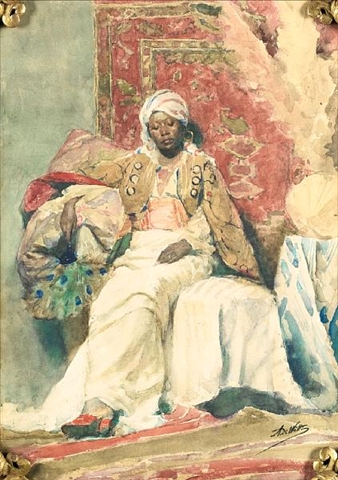
Rêverie, Adrien de Witte (1850-1935), Wikicommons


African Americans sleep on average almost an hour less than do Euro Americans. The two groups have mean sleep times of 6.05 hours and 6.85 hours. This finding has recently been discussed by Brian Resnick in National Journal and by our Steve Sailer.

Researchers reject a genetic explanation: "There is a consensus that innate biological differences between blacks and whites are not a factor" (Resnick, 2015). So what is the cause?

One study points the finger at racism:  "If you can take out that discrimination piece, the average African-American and the average Caucasian look at lot more similar. [...]  "It's not perfect, but in terms of sleep, a lot of the disparity goes away" (Resnick, 2015).

The study is by Tomfohr et al. (2012). It found that duration of deep sleep and duration of Stage 2 of light sleep correlated in African Americans with perceived discrimination, which is defined as "the extent to which an individual believes that members of his or her ethnic group have been discriminated against in society."

Nonetheless, as the authors note, sleep duration still differs significantly between African and Euro Americans even when the difference is adjusted for the effects of perceived discrimination. So we are left with a curious finding: two separate causes, one genetic and the other environmental, are producing the same pattern of effects. Both are reducing deep sleep and Stage 2 light sleep in African Americans while not affecting Stage 1 light sleep.

Whenever I see this kind of finding, I start looking for confounds. Is one cause a sock puppet for the other? It may be that perceived discrimination increases with African ancestry. Perhaps African Americans who feel conscious of discrimination also tend to be darker-skinned and more visibly African than those who don’t. This confound has actually been shown by several studies, such as the following:

This study tested the extent to which skin color is associated with differential exposure to discrimination for a sample of 300 Black adults. Results revealed that dark-skinned Blacks were 11 times more likely to experience frequent racial discrimination than their light-skinned counterparts; 67% of subjects reporting high discrimination were dark-skinned and only 8.5% were light-skinned. (Klonoff and Landrine, 2000; see also Keith and Herring, 1991)

Even if perceived discrimination could fully explain the race difference in sleep duration, we still couldn’t exclude a genetic explanation, since the degree of perceived discrimination is confounded with the degree of African ancestry.

In reality, perceived discrimination accounts for only part of the race difference, and since this difference remains significant even if we factor out that putative cause, the most parsimonious explanation is a genetic cause. Only that cause can fully account for shorter sleep duration in African Americans.

Studies in Africa

Another way to solve this puzzle is to look at Africans living in Africa. Do they show the same pattern we see in African Americans?

We know less about sleep patterns in Africa, but what we do know suggests that Africans, too, have shorter sleep duration. When Friborg et al. (2012) studied sleep in Ghanaians and Norwegians, they found that Ghanaians slept about an hour less than do Norwegians on weekends and between a quarter and half an hour less on weekdays. Oluwole (2010) studied sleep in Nigerian undergraduates and found they slept an average of 6.2 hours plus another 70 minutes in the afternoon. This pattern is actually typical in the tropical zone. People prefer to get some sleep when the temperature is at its peak and spend more time awake when it's more bearable.

But why would this pattern persist in African Americans? Perhaps it’s hardwired to some degree. When siestas become the cultural norm, there is selection for those individuals who enjoy being normal (and against those who don't).

Sleep patterns are heritable:

Assessed self-reported sleep data from 2,238 monozygotic (MZ) and 4,545 dizygotic (DZ) adult twin pairs born in Finland before 1958. Results indicate a significant hereditary effect on sleep length and on sleep quality. When the data were examined in subgroups defined by sex, age (18-24 yrs and 25+ yrs), and cohabitation status of the twin pair, the highest heritability estimates for sleep length were for Ss living together aged 25 yrs or older. For Ss living apart, the heritability estimates were statistically significant in all Ss aged 25 yrs or older. For sleep quality, significant heritability estimates were found for all groups except women living together. Results indicate that a significant proportion of the variance in sleep length and quality was due to factors that make MZ Ss more similar than DZ Ss. (Partinen et al., 1983)

A single genetic polymorphism seems to explain much of the variability between individuals in sleep patterns, particularly deep sleep and slow wave activity (SWA):

Here we show in humans that a genetic variant of adenosine deaminase, which is associated with the reduced metabolism of adenosine to inosine, specifically enhances deep sleep and SWA during sleep. In contrast, a distinct polymorphism of the adenosine A2A receptor gene, which was associated with interindividual differences in anxiety symptoms after caffeine intake in healthy volunteers, affects the electroencephalogram during sleep and wakefulness in a non-state-specific manner. Our findings indicate a direct role of adenosine in human sleep homeostasis. Moreover, our data suggest that genetic variability in the adenosinergic system contributes to the interindividual variability in brain electrical activity during sleep and wakefulness. (Retey et al., 2005)

Conclusion

So African Americans are getting enough sleep at night. It’s just that they're not getting enough afternoon naps. But aren't naps for kids? Or old fogeys? Actually, they’re quite normal for adults in much of the world. In the Nigerian study, 82% of the participants regularly took afternoon naps.

It’s ironic that the “r word” has been injected into this debate. If a behavior deviates from the white American norm, and if racism is held responsible either directly or indirectly, one is assuming that this deviation is pathological. It is “deviant.” It shouldn’t exist and something should be done about it. The white American norm thus becomes a norm for all humans, and all humans—if they want to be fully human—should strive toward it.

In reality, there is no single human nature. Genetic evolution didn’t slow down when humans began to split up and settle the different continents. It accelerated. And not just because our ancestors were adapting to different natural environments. Most of the acceleration took place long after the globe had been settled from the equator to the arctic. It happened when humans began to adapt to an increasingly diverse range of cultural environments. And those adaptations were mostly behavioral and psychological.

One of them is the way we sleep. The African sleep pattern is normal in its native environment. It is simply an adaptation to a particular set of circumstances, just as the northern European sleep pattern is an adaptation to another set of circumstances.

References

Friborg, O., B. Bjorvatn, B. Amponsah, and S. Pallesen. (2012), Associations between seasonal variations in day length (photoperiod), sleep timing, sleep quality and mood: a comparison between Ghana (5°) and Norway (69°). Journal of Sleep Research, 21: 176-184.

Keith, V. M., and Herring, C. (1991). Skin Tone and Stratification in the Black-Community. American Journal of Sociology, 97(3), 760-778.

Klonoff, E. A., and Landrine, H. (2000). Is skin color a marker for racial discrimination? Explaining the skin color-hypertension relationship. Journal of Behavioural Medicine, 23(4), 329-338.

Oluwole, O. S. A. (2010), Sleep habits in Nigerian undergraduates. Acta Neurologica Scandinavica, 121, 1-6.

Partinen, M., J. Kaprio, M. Koskenvuo, P. Putkonen, and H. Langinvainio (1983). Genetic and environmental determination of human sleep. Sleep: Journal of Sleep Research & Sleep Medicine, 6(3), 79-185.

Resnick, B. (2015). The Black-White sleep gap, National Journal, October 23

Retey, J.V., M. Adam, E. Honegger, R. Khatami, U.F.O. Luhmann, H.H. Jung, W. Berger, and H.P. Landolt. (2005). A functional genetic variation of adenosine deaminase affects the duration and intensity of deep sleep in humans, Proceedings of the National Academy of Sciences U.S.A., 102, 15676-15681

Sailer, S. (2015). Racism never sleeps: "The Black-White Sleep Gap: An Unexpected Challenge in the Quest for Racial Justice",  The Unz Review, October 29

Tomfohr, L., M.A. Pung, K.M. Edwards, and J.E. Dimsdale. (2012). Racial differences in sleep architecture: The role of ethnic discrimination, Biological Psychology, 89, 34-38.
https://www.researchgate.net/profile/Lianne_Tomfohr/publication/51649994_Racial_differences_in_sleep_architecture_The_role_of_ethnic_discrimination/links/00b495314ab6f01fae000000.pdf

Saturday, August 18, 2012

He who pays the piper ...


You want to publish a book about HBD? You’ll have to find a wealthy patron.

Debate is continuing over Ron Unz’s article on Race, IQ, and Wealth. In a favorable review at Living Anthropologically, the following comment caught my eye:

Unz has money, and he uses it to publish and promote. Unz apparently gave out at least $500,000 to Gregory Cochran, co-author with Harpending on The 10,000 Year Explosion: How Civilization Accelerated Human Evolution and with John Hawks on Recent acceleration of human adaptive evolution.

Raised eyebrows ... And those people aren’t the only ones. Ron’s 2009 tax return mentions donations to Steve Sailer and Razib Khan, among others (Unz, 2009).

Once upon a time academics got grants or sabbaticals for book writing. But that option is becoming less and less feasible if you want to write about human biodiversity. Getting your manuscript published is even more problematic. In the past, you could submit it to a publishing house and they would have it assessed by an expert in the field. Today, that system is almost extinct, at least in North America. You must go through a ‘literary agent’ who will pitch your manuscript at wine and cheese parties. It’s a system that is highly prone to abuse: schmoozing, petty bribery, and sleeping with the right people.

There are only two other options: publish on a shoestring budget or find a wealthy patron. Like Ron Unz. But what do you do when your patron starts promoting ideas you feel are wrong? Do you say nothing? Or do you bite the hand that feeds you?

The act of giving money is not wholly altruistic. Implicitly, it can become a form of control. The receiver thinks twice before doing anything that might offend the giver. And the giver may drop hints …

Other happenings

- Emily Sohn has recently interviewed me for an article in Discovery News. See here.

- A journal article will soon come out on the relationships between blue eye color and feminization of facial structure. This finding is consistent with other evidence of sex linkage for non-brown eyes and non-black hair. Indeed, a twin study has shown that hair is, on average, lighter-colored in women than in men, with red hair being especially more frequent in females. Women also show greater variation in hair color (Shekar et al., 2008). All of this, in turn, is consistent with a selection pressure, possibly sexual selection, that has acted more strongly on European women than on European men to diversify the palette of human hair colors.

References

Anon. (2012). Race IQ – Game Over: It was always all about wealth, August 9, Living Anthropologically http://www.livinganthropologically.com/2012/08/09/race-iq-game-over/

Shekar, S.N., D.L. Duffy, T. Frudakis, G.W. Montgomery, M.R. James, R.A. Sturm, & N.G. Martin. (2008). Spectrophotometric methods for quantifying pigmentation in human hair—Influence of MC1R genotype and environment. Photochemistry and Photobiology, 84, 719–726.

Sohn, E. (2012). Why do so many women go blonde? August 14, Discovery News http://news.discovery.com/human/miley-cyrus-blonde-hair-120814.html

Unz, R. (2012). Race, IQ, and Wealth, The American Conservative, July 18. http://www.theamericanconservative.com/articles/race-iq-and-wealth/

Unz, R. (2009). Return of Private Foundation (IRS) http://irs990.charityblossom.org/990PF/200912/207181582.pdf

Thursday, May 6, 2010

Ask the rhino


Linda Vigilant – Was she in on the Big Secret? Was the rhino?

The HBD blogosphere has been rife with speculation about the reconstruction of the Neanderthal genome. John Hawks, Razib Khan, and Steve Sailer felt that something big was in the offing. Above all, this something would resurrect the multiregional model of human origins.

Much of the stir centered on a
recent study by Sarah Joyce that showed a higher-than-expected amount of variability in the microsatellite DNA of modern humans. Since this DNA is unaffected by natural selection, the unexplained variability must have come from an outside source, i.e., Neanderthals and other archaic humans.

Then there was this comment:

Linda Vigilant, an anthropologist at the Planck Institute, found Joyce's talk a convincing answer to "subtle deviations" noticed in genetic variation in the Pacific region.

"This information is really helpful," says Vigilant. "And it's cool."
(Dalton, 2010)

Linda Vigilant works at the Planck Institute, where a team headed by Svante Pääbo is reconstructing the Neanderthal genome. Perhaps she was privy to something big that Pääbo had discovered but was waiting to disclose.

Now the hand-wringing is over.
This morning, it's been revealed that modern Europeans and Asians are 1-4% Neanderthal. Does this mean the multiregional model has been vindicated?

First, let’s be clear about what we mean by the multiregional model. Originally, it meant that Homo sapiens evolved out of earlier, more archaic humans at different times and at different places. Modern Europeans are thus primarily descended from Neanderthals, East Asians from Peking Man, and so on.

That version is now dead as a dodo. No one accepts it anymore. If we look at mtDNA or dental traits, the Neanderthals are no closer to modern Europeans than they are to modern Africans or modern East Asians (Krings et al., 1999; Ovchinnikov et al., 2000; Tyrrell & Chamberlain, 1998). In addition Joyce’s findings were not corroborated by Laval et al. (2010), who failed to find evidence of admixture in the noncoding DNA of modern Europeans and modern East Asians. The latest findings have backtracked a bit on this consensus, but not a lot.

So the current multiregional model is a weak version of the original. The idea now is that sporadic admixture brought potentially valuable Neanderthal alleles into our gene pool. Natural selection then caused the alleles to spread and multiply among modern humans. There could thus have been considerable Neanderthal introgression into our gene pool at certain loci, despite very low levels of admixture (Hawks & Cochran, 2006; Hawks et al., 2007). Laval et al. (2010) concede this point in their recent study:

However, it is important to emphasize that our inferences are based on non-coding neutral regions of the genome and that adaptive introgression from archaic to modern humans may have occurred to a greater extent. Indeed, in contrast to neutral alleles, adaptive variants may attain high frequencies by natural selection after minimal genetic introgression. Future studies comparing coding-sequence variation in modern humans and extinct hominids (e.g. Neanderthals) should help to answer this question. (Laval et al., 2010).

What do I think? This ‘minimal multiregionalism’ suffers from two arguments that seem to me weak:

1. Microbes do it. Why not humans?

Different strains of bacteria regularly swap genes, thus allowing new and better variants to leapfrog from one strain to another. Such ‘lateral gene transfer’ is a powerful engine of evolutionary change because it spares different species the trouble of having to reinvent the wheel.

But what works in simple organisms or for simple traits does not necessarily work elsewhere. Yes, if the gene works more or less independently, you can plug it into another genome and get the same result, like the pigment gene that aphids have somehow taken from fungi. But this kind of ‘plug and play’ is harder to pull off with complex traits in complex organisms, like humans. A particular gene might work like fresh sliced bread in one species … and like burnt toast in another.

But perhaps some adaptive solutions are still essentially the same in different complex organisms, like Neanderthals and modern humans. This point is made by Greg Cochran:

Selection often stalls out (in the medium term) because genetic variety has been exhausted, but an injection of archaic genes would have facilitated adaptive change. Moreover, some of those archaic alleles must have been useful ( i.e. had a fitness edge), since archaic humans in Eurasia had had a long time to adapt to their non-African ecology. (Khan, 2010)

Cochran and Hawks seem to be particularly interested in alleles relating to brain function, like the microcephalin allele that they had earlier attributed to gene transfer (Hawks & Cochran, 2006; Hawks et al., 2007). The Neanderthal microcephalin gene has since been reconstructed and … it does not have that allele (Hawks, 2009).

Yet Cochran and Hawks remain undeterred. One reason why they don’t see the weaknesses in their hypothesis is their unwillingness to spell it out in detail. Why won’t they? Well, ask the rhino.

As I understand it, their hypothesis is that Eurasian populations are relatively smart because their ancestors received special brain alleles from the Neanderthal gene pool. If I’m right in my understanding, they’re probably wrong in theirs. Modern humans adapted to temperate and arctic Eurasian environments in ways that were unique and unparalleled. Neanderthal brainpower had nothing to do with it. Although the Neanderthals apparently borrowed cultural and technological adaptations from modern humans, there is no evidence of any borrowing in the other direction. In fact, these archaic humans seem to have had very little to offer our ancestors:

Despite the apparent advances over their predecessors, Neanderthal technological complexity falls at the low end of the scale for recent hunter-gatherers. Both in terms of the number of types and component parts of individual implements, the complexity of Neanderthal tools and weapons is significantly lower than that of hunter-gatherers in northern latitudes (and more typical of modern groups in temperate or equatorial regions). Technological complexity in colder environments seems to reflect the need for greater foraging efficiency in settings where many resources are available only for limited periods of time. More specifically, the Neanderthals seem to have lacked untended facilities (e.g., traps and snares) and devices for food storage, which are common technological strategies for coping with resource fluctuations and high mobility requirements among hunter-gatherers in high latitudes. (Hoffecker, 2002, p. 135)


2. If Europeans were part-Neanderthal, they’d have native rights

This is an interesting argument: “If we Europeans are even a little bit Neanderthal, no one could deny our special claim to the European continent. People like Gordon Brown and Ségolène Royal would stop saying we’re no more indigenous than newly arrived immigrants.”

I have two responses. First, modern humans have inhabited Europe for some 35,000 years. If that length of residency doesn’t confer native rights, then no one anywhere has any—certainly not the Amerindians or the Inuit, who have been in the Americas for less than 15,000 years.

Which brings me to my second point. The currently dominant ideology—global capitalism—denies the very notion of native rights. It doesn’t matter whether your people have inhabited their land for 35,000 years or 35 million years. That’s just history, and we’ve come to the End of History. From now on, we’re all just individuals interacting in a global marketplace.

Eventually, this ideology will fall victim to its own contradictions. A market economy can exist with minimal state supervision only in a relatively homogeneous ‘high trust’ society. Liquidate that social environment, and you liquidate the economic environment that comes with it. At ‘best’, you’ll get a kind of totalitarian capitalism where everyone is deemed to be a potential thief or terrorist. At ‘worst’, the system will collapse, as communism did in Eastern Europe.

Of course, we shouldn’t wait passively for globalism to self-destruct. As thinking individuals with foresight, we should actively take part in the process. But such activism must start with an honest understanding of the world we live in. The lies of the current system cannot be fought with counter-lies. Europeans will not become more indigenous to their continent because they are found to have a few Neanderthal alleles here and there. They’re already indigenous, and that’s that.

Well, maybe the rhino can tell us more.

References

Dalton, R. (2010).
Neanderthals may have interbred with humans. Genetic data points to ancient liaisons between species. Naturenews, April 20.
http://www.nature.com/news/2010/100420/full/news.2010.194.html

Hawks, J. (2010).
Multiregional evolution lives! John Hawks Weblog, April 21, 2010.
http://johnhawks.net/weblog/reviews/evolution/introgression/joyce-dalton-interbreeding-2010.html

Hawks, J. (2009). The Neandertal genome FAQ, February 2009 edition, John Hawks Weblog, February 17, 2009.
http://johnhawks.net/weblog/reviews/neandertals/neandertal_dna/neandertal-genome-faq-2-2009.html

Hawks J., Cochran G., Harpending H.C., Lahn BT. (2007). A genetic legacy from archaic Homo. Trends Genet
doi:10.1016/j.tig.2007.10.003

Hawks J., Cochran G. (2006). Dynamics of adaptive introgression from archaic to modern humans. PaleoAnthropology, 2006, 101-115.
Open access

Hoffecker, J.F. (2002). Desolate Landscapes. Ice-Age Settlement in Eastern Europe. New Brunswick: Rutgers University Press.

Khan, R. (2010). Neandertal genomics paper coming? Discover magazine, April 27, 2010.
http://blogs.discovermagazine.com/gnxp/2010/04/neandertal-genomics-paper-coming/

Krings, M., Geisert, H., Schmitz, R.W., Krainitzki, H., & Pääbo, S. (1999). DNA sequence of the mitochondrial hypervariable region II from the Neandertal type specimen. Proceedings of the National Academy of Sciences USA, 96, 5581-5585.

Laval, G., E. Patin, L.B. Barreiro, and L-Quintana-Murci. (2010). Formulating a historical and demographic model of recent human evolution based on resequencing data from noncoding regions, PloS ONE 5(4) : e10284

Ovchinnikov, I.V., Götherström, A., Romanova, G.P., Kharitonov, V.M., Lidén, K., & Goodwin, W. (2000). Molecular analysis of Neanderthal DNA from the Northern Caucasus. Nature, 404, 490-493.

Sailer, S. (2010).
The Neanderthal within. Steve Sailer’s iSteve Blog, May 2, 2010.
http://isteve.blogspot.com/2010/05/neanderthal-within.html

Tyrrell, A.J. & Chamberlain, A.T. (1998). Non-metric trait evidence for modern human affinities and the distinctiveness of Neanderthals. Journal of Human Evolution, 34, 549-554.