Tuesday, September 26, 2017

Tales from old bones


Around three thousand years ago Bantu began to spread east and south from the Nigeria/Cameroun border, eventually replacing the original inhabitants of eastern and southern Africa. Those people no longer exist. Only the DNA in their skeletal remains are left to speak for them.


When scientists began to retrieve ancient DNA from human remains, they succeeded only at sites in the temperate and arctic zones. It seemed impossible to retrieve any at tropical sites, apparently because warm year-round temperatures soon reduce DNA to a meaningless molecular jumble.

This problem seems to be solved. Two years ago, DNA was successfully retrieved from 4,500 year old remains in Ethiopia. Now, we have ancient DNA from several sites across eastern and southern Africa over a range of dates from 10,000 to 400 years ago (Skoglund et al. 2017).

Vanished peoples

This new study shows that eastern and southern Africans have changed a lot since the time of the ancient Greeks. As far north as Tanzania, the continent was once home to peoples related to the Hottentots (now called Khoisans, Khoe-Sans, or simply San)—short in stature, gracile in body build, and light yellowish brown in color. From Zanzibar north, people were of mixed Middle Eastern and Cushitic origin—sort of like present-day Ethiopians but with more Arab ancestry.

What happened to these peoples? They were either replaced or absorbed by Bantus moving in from the west, although it now looks like they were replaced a lot more than they were absorbed. No trace of them remains in Malawi's gene pool:


Population replacement by incoming food producers appears to have been nearly complete in Malawi, where we detect little if any ancestry from the ancient individuals who lived ~8,100-2,500 BP. Instead, present-day Malawian individuals are consistent with deriving all their ancestry from the Bantu expansion of ultimate western African origin. (Skoglund et al. 2017)

The original inhabitants were related to present-day Khoisans but had significantly diverged from them:

Notably, the Khoe-San-related ancestry in ancient individuals from Malawi and Tanzania is symmetrically related to the two previously identified lineages present in the San [...], estimated to have diverged at least 20,000 years ago [...], implying that this was an ancient divergent branch of this group that lived in eastern Africa at least until 1,400 BP. (Skoglund et al. 2017)

This is in line with previous DNA findings from the Fwe (a Bantu group of southwestern Zambia), particularly the presence of Khoisan admixture that resembles nothing in present-day Khoisans:

[It is possible] that the Fwe intermarried with a Khoisan group whose genetic composition differed from that of the populations included in molecular anthropological investigations to date. [...] it is plausible that the Fwe ancestors interacted with a Khoisan community that differed genetically from those still settled in southern Africa today, which was ultimately replaced by the newcomers. (Barbieri et al. 2013)

Aside from these scattered fragments of DNA, we also have the testimony of ancient observers. Two tenth-century Arab geographers state that "in the outer reaches of the land of the Zanj there are cool highlands in which live white Zanj" (Lewis 1990, p. 121, n. 3). The Zanj are the dark-skinned peoples of east Africa and the term 'white' is better translated by 'lighter-skinned.' (The words 'black' and 'white' are often used in a relative sense in Arabic). The highlands might be the Drakensberg Escarpment of South Africa. 

Encounters with the archaic Other

Modern humans arose some 80,000 years ago in eastern Africa through a series of population expansions that culminated twenty thousand years later in a big bang that spread outward in Africa and then into the Middle East, Europe, and Asia (Watson et al. 1997). There, they encountered more archaic hominins: Neanderthals and, farther east, Denisovans. There was some intermixture. How much? Some have argued that modern Europeans and Asians are 3.4 to 7.9 percent admixed (Lohse and Frantz 2013). Most still opt for a lower figure of 1.5 to 2.1 percent (Prüfer et al. 2014).

But it wasn't only in Eurasia that modern humans encountered Neanderthal-like groups. Archaic hominins were present in Africa itself, some being relatively close to modern humans, and some more distantly related.

The latest DNA study has confirmed that modern humans intermixed with at least one archaic group as they expanded into western Africa:

The possible basal western African population lineage would represent the earliest known divergence of a modern human lineage that contributed a major proportion of ancestry to present-day humans. Such a lineage must have separated before the divergence of San ancestors, which is estimated to have begun on the order of 200-300 thousand years ago. (Skoglund et al. 2017)

This archaic ancestry is visible in human remains found at the Iwo Eleru rock shelter, in southwestern Nigeria, and dated to approximately 16,300 BP:

Our analysis indicates that Iwo Eleru possesses neurocranial morphology intermediate in shape between archaic hominins (Neanderthals and Homo erectus) and modern humans. This morphology is outside the range of modern human variability in the PCA and CVA analyses, and is most similar to that shown by LPA individuals from Africa and the early anatomically modern specimens from Skhul and Qafzeh. (Harvati et al., 2011)

Archaic ancestry is also visible in present-day West Africans, particularly in their teeth: 

[...] compared to other world populations, Africans south of the Sahara Desert are distinct dentally — especially in their expression of nine high- and two low-frequency morphological features. [...] the same nine high-frequency traits are also ubiquitous in the dentitions of extinct hominids and many extinct and extant non-human primates.  
[...] The presence and, indeed, prevalence (see next section), of high-frequency Sub-Saharan dental traits in fossil and recent hominoids—some of which are probably direct ancestors of modern humans, suggests they have been around for a long time.  
[...] A final ancestral feature found with some regularity in Sub-Saharan Africans, relative to other modern groups, is polydontia. Numerous cases of extra incisors, third premolars, and fourth molars have been noted [...] In one study (Watters, 1962) the incidence reached 2.5-3% in several hundred west Africans; many of the extra teeth were fully formed and erupted. "Typical" mammals exhibit three incisors and four premolars (Jordan et al., 1992). Polydontia is also found in living non-human primates. (Irish, 1998)

How much archaic ancestry do sub-Saharan Africans have today? The latest DNA study is silent on this point. Any answer can only be approximate, there being no reconstructed genome of this Neanderthal-like population. Moreover, there was probably more than one such population within Africa. Watson et al. (1997) attribute 13% of the sub-Saharan gene pool to a population that expanded some 111,000 years ago—when Skhul-Qafzeh hominins entered the Middle East from Africa. Those hominins were anatomically modern, or almost so, but culturally Neanderthal. Hammer et al. (2011) estimate that about 2% of the sub-Saharan African genome comes from a much more divergent population that split off from the ancestors of modern humans some 700,000 years ago. That admixture entered the sub-Saharan gene pool about 35,000 years ago, perhaps in Central Africa, since pygmy groups from that region have the most.

It looks like the proportion of archaic ancestry is higher in sub-Saharan Africans than in other modern humans. This is to be expected because of the broader range of archaic populations in Africa, including some that were almost modern anatomically and behaviorally. Admixture with them would have been likelier.

Admixture: good, bad, or neither?

Some alleles have successfully introgressed from archaic hominins, thus helping our ancestors adapt to new climates and new diets (Racimo et al. 2015). In general, however, we should not expect such alleles to perform as well in the body of a modern human as they did in the body of an archaic hominin. It's like taking a part from a Chevy and installing it on a Subaru. It might work, but I wouldn't count on it. 

If we look at Neanderthal admixture in the Eurasian genome, we see that natural selection has tended to remove functional genes, while leaving the non-functioning ones alone. 

Neanderthal ancestry decreases in proximity to functional elements in all populations [...] as does Denisovan ancestry in Oceanians [...] most likely reflecting greater selection against Neanderthal ancestry in low B statistic regions. Power to detect archaic ancestry is elevated close to regions of linked selection due to a reduction in the rates of incomplete lineage sorting caused by the lower effective population size in these regions, so these results are not artifacts of reduced power. Thus, similar processes appear to have worked to remove Neanderthal and Denisovan ancestry near genes. (Sankararaman et al. 2016)

Archaic admixture is also associated with reduced male fertility:

Our study provides new evidence in support of the hypothesis that reduced male fertility may be a common feature of admixture between human populations diverged by at least a half million years, a hypothesis that was previously suggested based on genetic patterns associated with the hybridization between Neanderthals and modern humans.

[...] One line of evidence for reduced fertility in male hybrids is that the proportion of archaic ancestry in modern humans is significantly reduced on chromosome X compared to the autosomes. This is suggestive of reduced male fertility as loci contributing to this phenotype are concentrated on chromosome X in hybrids of other species. We confirm an extreme reduction of Neanderthal ancestry on chromosome X (16%-34% of the autosomes depending on the population) and find a quantitatively similar reduction of Denisovan ancestry (21% of the autosomes in Oceanians).

The second line of evidence in support of the hypothesis of reduced fertility in hybrids is that there is a reduction of archaic ancestry in genes that are disproportionately expressed in testes, a known characteristic of male hybrid fertility (Sankararaman et al. 2016)

In sum, archaic admixture did provide modern humans with some ready-made alleles that have helped them adapt to new climates and new diets, but this advantage hardly applies to Africa. There, modern humans were already adapted to the local climate and diet. Archaic admixture couldn't have done much to help them adapt, since the new environments they faced were cultural ones of their own making.

References

Barbieri, C., A. Butthof, K. Bostoen, and B. Pakendorf. (2013). Genetic perspectives on the origin of clicks in Bantu languages from southwestern Zambia, European Journal of Human Genetics, 21(4), 430-436.
https://www.ncbi.nlm.nih.gov/pmc/articles/PMC3598317/  

Hammer, M.F., A.E. Woerner, F.L. Mendez, J.C. Watkins, and J.D. Wall. (2011). Genetic evidence for archaic admixture in Africa, Proceedings of the National Academy of Science (USA), 108(37), 15123-15128, www.pnas.org/cgi/doi/10.1073/pnas.1109300108

Harvati, K., C. Stringer, R. Grün, M. Aubert, P. Allsworth-Jones, C.A. Folorunso. (2011). The Later Stone Age Calvaria from Iwo Eleru, Nigeria: Morphology and Chronology. PLoS ONE 6(9): e24024. doi:10.1371/journal.pone.0024024
http://www.plosone.org/article/info%3Adoi%2F10.1371%2Fjournal.pone.0024024  

Irish, J.D. (1998). Ancestral dental traits in recent Sub-Saharan Africans and the origins of modern humans, Journal of Human Evolution, 34, 81-98.
http://www.sciencedirect.com/science/article/pii/S0047248497901913  

Lohse, K., and L.A.F. Frantz. (2013). Maximum likelihood evidence for Neandertal admixture in Eurasian populations from three genomes, Populations and Evolution, 1307, 8263
http://www.integratedbiology.com/uploads/2/5/6/9/25695765/_1307.8263.pdf  

Prüfer, K., F. Racimo, N. Patterson, F. Jay; et.al. (2014). The complete genome sequence of a Neandertal from the Altai Mountains, Nature, 505(7481), 43-49.
https://www.ncbi.nlm.nih.gov/pmc/articles/PMC4031459/

Racimo, F., S. Sankararaman, R. Nielsen, and E. Huerta-Sanchez. (2015). Evidence for archaic adaptive introgression in humans, Nature Reviews Genetics, 16(6), 359-371.
https://www.ncbi.nlm.nih.gov/pmc/articles/PMC4478293/  

Sankararaman, S., S. Mallick, N. Patterson, D, Reich; et al. (2016). The combined landscape of Denisovan and Neanderthal ancestry in present-day humans, Current Biology, 26(9), 1241-1247.
http://www.sciencedirect.com/science/article/pii/S0960982216302470  

Skoglund, P., J.C. Thompson, M.E. Prendergast, A. Mittnik; et al. (2017). Reconstructing prehistoric African population structure, Cell, 171(1), 59-71
http://www.cell.com/cell/fulltext/S0092-8674(17)31008-5  

Watson, E., P. Forster, M. Richards, and H-J. Bandelt. (1997). Mitochondrial footprints of human expansions in Africa, American Journal of Human Genetics, 61, 691-704.
https://ac.els-cdn.com/S000292970764333X/1-s2.0-S000292970764333X-main.pdf?_tid=9bebd320-a127-11e7-9e7c-00000aacb360&acdnat=1506257895_6658dfe089335953bd04987696fa7444  

Saturday, September 16, 2017

An idea abandoned by its father


Italian wall lizard (Podarcis sicula) (Credit: Charles J. Sharp). Five mating pairs were taken from one island to another, and over the next thirty generations the transplanted population became remarkably different from the parent population.


Unlike other animals, we adapt not only to natural environments but also to cultural environments of our making. We thus direct our own evolution. At the same time we are busy redesigning our cultural environment, the latter is just as busy redesigning us. Like the natural environment, it favors the survival and reproduction of those who best fit in.

This concept of gene-culture coevolution began with anthropologist Claude Lévi-Strauss in a 1971 lecture:

... Among early humans, biological evolution may have selected for pre-cultural traits like upright posture, manual dexterity, sociability, symbolic thinking, and ability to vocalize and communicate. It was culture, however, once it came into being, that consolidated these traits and propagated them. When cultures specialize, they consolidate and favor other traits, like resistance to cold or heat in societies that have willingly or unwillingly had to adapt to extreme climates, like dispositions to aggressiveness or contemplation, like technical ingenuity, and so on. In the form these traits appear to us on the cultural level, none can be clearly linked to a genetic basis, but we cannot exclude that they are sometimes linked partially and distantly via intermediate linkages. In this case, it would be true to say that each culture selects for genetic aptitudes, which then, via a feedback loop, influence the culture that had initially helped to strengthen them.

Credit is usually given, however, to geneticist Luigi Luca Cavalli-Sforza. In 1976, he developed the first mathematical models for gene-culture coevolution with another geneticist, Marcus Feldman, and in 1978-1979 he spoke on this subject to a cultural evolution class at Stanford (Feldman & Cavalli-Sforza 1976; Stone & Lurquin 2005, p. 108). Two of his students were Robert Boyd and Peter Richerson, who later wrote a seminal book on gene-culture coevolution (Boyd & Richerson 1985). In the mid-1980s, he decided to test this concept in the field by investigating the cultural and genetic bases of artistic talent among the Inuit:

One of the most remarkable phenomena in the contemporary Canadian Arctic is the presence of highly-acclaimed art forms — carving in stone and ivory, and printing on paper. The question we ask is: how can we account for the wide-spread distribution of such talent in a small dispersed population? (Berry & Cavalli-Sforza 1986, p. 2)

To answer this question, he organized a joint project with psychologist John W. Berry at Queen's University and anthropologist Bernard Saladin d'Anglure at Université Laval. The Inuit were chosen for study because their high rate of adoption made it possible "to distinguish cultural from biological inheritance by studying correlations of adopted children with foster relatives on one hand and biological relatives on the other" (Berry & Cavalli-Sforza 1986, p. 5). Also, until recently, Inuit had lived off the land and, as such, had "abilities [that] are considered to be adaptive to a nomadic and hunting life style" (Berry & Cavalli-Sforza 1986, p. 3). Berry argued that the artistic talent of the Inuit came from certain mental skills that helped them during hunting.

Hunters, by this way of thinking, require good visual acuity, keen disembedding skills and a well-developed sense of spatial orientation. To hunt successfully, the hunter must be able to discern the object of the quest (which is often embedded in a complex visual landscape), then disembed the object, and finally return to home base. In contrast, agriculturalists need not develop these particular skills, but rather they need to invest in other areas of development, such as conservation (in both the economic and the Piagetian senses) and close social interactions. (Berry 2008, p. 3)

The project fell through. Cavalli-Sforza said he had to quit because of illness. Neither of his biographies, however, mention any illness during that time period (Frost 2014). Interestingly, his American biography ascribes his interest in culture at that time to a desire to disprove the existence of mental differences between human populations:

Yet another source of his interest in culture was the idea that the concept of human cultural learning was a valid weapon against racist arguments that differences between people (for example, different IQ scores among ethnic groups) were due to biologically determined "racial" differences. (Stone & Lurquin, 2005, p. 86)

The reality was a bit different. He believed in the importance of culture, but not as an entity separate and distinct from biology. This put him in opposition not only to the racists he denounced in the 1960s but also to the antiracists who increasingly viewed him with suspicion from the late 1980s onward.

With Cavalli-Sforza out of the picture, research on gene-culture coevolution languished over the next quarter-century. This field of research needed a high-profile champion in academia, and all of the possible candidates were either unable or unwilling.  Cavalli-Sforza never was suited for the job, being too timid and, frankly, too easy to blackmail. (Do you really think his wartime research on anthrax involved only mice?)

Lately, there seems to have been a renewal of interest, as seen in this review article on "Human biological and psychological diversity":

Humans migrated out of Africa at least 50,000 years ago and occupied many different ecological and climatological niches. Because of this, they evolved slightly different anatomical and physiological traits. For example, Tibetans evolved various traits that help them cope with the rigors of altitude; similarly, the Inuit evolved various traits that help them cope with the challenges of a very cold environment. It is likely that humans also evolved slightly different psychological traits as a response to different selection pressures in different environments and niches. One possible example is the high intelligence of the Ashkenazi Jewish people. Frank discussions of such differences among human groups have provoked strong ethical concerns in the past. We understand those ethical concerns and believe that it is important to address them. However, we also believe that the benefits of discussing possible human population differences outweigh the costs. (Winegard et al. 2017)

This article is a good read, and I was intrigued by its examples of fast evolution, particularly the Italian wall lizards. Five mating pairs were taken from one island to another, and over the next thirty generations the transplanted population became remarkably different from the parent population. The lizards were now larger, had shorter hind limbs, and could bite with much more force. Even more remarkably, they had a new morphological trait: a cecal valve—a muscle between the large and small intestines that slows down food movement and allows digestion of cellulose. This is an adaptation to the abundance of plant food on that island, but it is surprising that an entirely new trait could evolve so fast.

As far back as Darwin, biologists have described evolutionary change as slow. This is true only when organisms live in slowly changing environments. Transplant them into a very different one, and they will evolve very fast. This has been especially true for modern humans, who over the past 50,000 years have spread into a wide range of natural environments from the tropics to the arctic and into an even wider range of cultural environments:

Humans, like many animals, actively alter their environment, which changes the selection pressures they face (Laland et al. 2001; Laland and Sterelny 2006). In fact, humans may be the paradigmatic example of a niche-creating species, using brains rather than brawn to conquer the world (Baumeister 2005; Pinker 2010). Across the globe, humans devised distinctive cultural systems to cope with their environments, creating vastly different selective regimes from one culture to another. (Winegard et al. 2017)

Humans are indeed niche creators who have speeded up their own diversification. Nonetheless, they aren't alone in diversifying so fast. For example, some animal and plant species have spread into a wide range of new habitats since the last ice age, thereby giving rise to many new populations. Whether these recent populations are "sibling species," "subspecies," or "races"—the distinction is often arbitrary—their example can help us understand our own genetic diversity (Frost 2011).

These populations, like our own, seem to have evolved much more anatomically than they have genetically. Their anatomies are often distinct from each other, with no overlap, yet their genomes overlap considerably—there is far more genetic variation within each population than between them. So they are easier to tell apart by their appearance than by their genes. 

Why this discordance between genes and anatomy? Genes don't lie, do they? To make sense of this puzzle, we need to understand three points:

  • When a gene has different "alleles" or versions of itself, these alleles vary in their degree of similarity, some performing very differently and others identically or almost so—often because the gene itself is little more than "junk DNA.
  • Population boundaries separate not only different populations but also different natural or cultural environments. This is especially true for humans. The cultural environment usually differs, even when the natural environment is the same.
  • If the alleles of a gene perform differently, some of them will be more useful to one population than to another because they do better in one environment than in another. The more differently they perform, the more their frequencies will differ across population boundaries, with some alleles being more common in some populations than in others. Conversely, if the alleles perform identically, they will do equally well in all environments and tend to be equally common in all populations. To the extent that different alleles are present within a single population, the reasons will be more stochastic and less related to the usefulness of any one allele. Genetic variation within a population is therefore disproportionately due to alleles that perform similarly.

So genetic variation between populations differs qualitatively from genetic variation within each population. The first kind matters a lot more than the second kind. There are exceptions to this rule, e.g., balanced polymorphisms, founder effects, genetic drift, but that's the general picture. So when you read that genes vary far more within human populations than between them, you should keep in mind that we see the same pattern with many sibling species that are nonetheless anatomically and behaviorally distinct. This pattern tells us only that the populations in question are very young. It doesn't tell us how different they really are from each other, since real evolutionary change can happen very fast—as we saw with the Italian wall lizards. 

References

Berry, J.W. (2008). Models of Ecocultural Adaptation and Cultural Transmission: The Example of Inuit Art, paper presented at the conference Adaptation et socialisation des minoritiés culturelles en région, June 3-4, Quebec City.

Berry, J.W., and L.L. Cavalli-Sforza. (1986). Cultural and genetic influences on Inuit art. Report to Social Sciences and Humanities Research Council of Canada, Ottawa.

Boyd, R. and P.J. Richerson. (1985). Culture and the Evolutionary Process, Chicago: Chicago University Press.

Feldman, M.; Cavalli-Sforza, L. (1976). Cultural and biological evolutionary processes, selection for a trait under complex transmission, Theoretical Population Biology, 9: 238-59.

Frost, P. (2014). L.L. Cavalli-Sforza. A bird in a gilded cage, Open Behavioral Genetics, March 28,
http://openpsych.net/OBG/2014/03/l-l-cavalli-sforza-a-bird-in-a-gilded-cage/

Frost, P. (2011). Human nature or human natures? Futures, 43: 740-748.
https://www.researchgate.net/profile/Peter_Frost2/publication/251725125_Human_nature_or_human_natures/links/004635223eaf8196f0000000.pdf  
Lévi-Strauss, C. 1971). Race et culture, conférence de Lévi-Strauss à l'UNESCO le 22 mars 1971 (Audio). Polit'productions
http://politproductions.com/content/%C2%ABrace-et-culture%C2%BB-conf%C3%A9rence-de-l%C3%A9vi-strauss-%C3%A0-lunesco-le-22-mars-1971-audio  

Stone, L. and P.F. Lurquin. (2005). A Genetic and Cultural Odyssey. The Life and Work of L. Luca Cavalli-Sforza, New York: Columbia University Press.

Winegard, B., B. Winegard, and B. Boutwell. (2017). Human biological and psychological diversity, Evolutionary Psychological Science, 3(2): 159-180.
http://atavisionary.com/wp-content/uploads/2017/05/Human-Biological-and-Psychological-diversity.pdf  


Monday, September 4, 2017

Gene-culture coevolution in northwest Europe


Notre-Dame-de-Compassion, Paris. Women have more affective empathy than do men, an indication that it originated served to bind a mother to her young children. To different degrees, and in different societies, it has become extended to other human relations. 


I've published a new paper: The Hajnal line and gene-culture coevolution in northwest Europe. This is the abstract:


North and west of a line running from Trieste to St. Petersburg, social relations have long conformed to the Western European Marriage Pattern, i.e., men and women marry relatively late; many people never marry; children usually leave the nuclear family to form new households, and households often have non-kin members. This pattern goes back at least to the thirteenth century and perhaps to prehistoric times. I argue that this environment of weaker kinship caused northwest Europeans to create communities based on shared moral rules, rather than shared kinship. Community members enforced these rules by monitoring not only the behavior of other members but also their own behavior and even their own thoughts. Initially, this new mindset did not have a genetic basis. Individuals acquired it within the bounds of phenotypic plasticity. Over time, however, a genetic basis would have developed through the survival and reproduction of individuals who were better at being socially independent, at obeying universal rules, at monitoring other community members, and at self-monitoring, self-judging, and self-punishing. These psychological adaptations-independent social orientation, universal rule adherence, affective empathy, guilt proneness-are moderately to highly heritable. Although they are complex, they required only minor evolutionary changes to evolve out of mechanisms that were already present but limited to specific behavioral contexts. Affective empathy, for instance, is a species-wide trait but usually confined to relations with close kin, particularly between a mother and her young children. An evolutionary scenario is proposed, and two questions discussed. Are these mental traits too complex to have evolved over a span of 30 to 300 generations? Are they too altruistic to be sustainable?


*****************************************************


In a series of tweets, hbd* chick has accused me of plagiarizing her work without acknowledgment. This is a serious accusation, so please let me address it at length. 


I first became interested in the Western European Marriage Pattern (WEMP) in the early 1990s. I wanted to know why marriage systems are so different in Europe from elsewhere in the world. The high incidence of polygyny in sub-Saharan Africa can be explained by the mode of subsistence (year-round horticulture with high female participation and low male participation). But why is polygyny stigmatized so much more in European societies than elsewhere in Eurasia? Why the emphasis on monogamy and on postponement of marriage? Most scholars seemed to blame Christianity, but I knew, from my own readings, that polygyny had been stigmatized in Europe before Christianization. I made this point in an exchange with Kevin MacDonald in the pages of Ethology and Sociobiology in 1991 and 1992. I later discovered Wally Seccombe’s book A Millennium of Family Change. Feudalism to Capitalism in Northwestern Europe (1992). It was this book that introduced me to the WEMP, and it was at that point in time that I began to wonder whether the WEMP might explain the development of "guilt culture" (as opposed to "shame culture") in northwest Europe.

I first put forward some of these ideas in a post on my blog, "The Western European Marriage Pattern" (November 12, 2011). At that time, I knew hbd* chick had also written about the WEMP, but her posts hadn't contributed to the development of my thinking. I recognize that she has come up with original ideas on this topic, particularly her belief in the key role of manorialism, but I don't share that belief. Like Seccombe, I believe that the WEMP goes farther back in time. At one point, I tried to incorporate her ideas into my thinking, but I eventually gave up. I may be wrong, and I would like to be proven wrong, but the northwest European mindset seems to be much older than the Middle Ages.

So what did I plagiarize without acknowledgment? Whatever I know about this subject comes from authors who predate hbd chick, especially Wally Seccombe, but also Alan MacFarlane and Ruth Benedict. And I discovered those authors independently of hbd* chick. I'm especially flabbergasted by her claim that she originated the notion of Western European "guilt culture." Is she older than Ruth Benedict? Nor did she (or I) originate the notion that independent social orientation is stronger in northwest Europe. Alan MacFarlane and, more recently, Joan Chiao and Katherine Blizinsky have been the trailblazers in that area. Yes, credit should be given where credit is due, and I have given credit to those people who have the strongest moral claim to those ideas.

I wanted to insert a reference in my article to hbd* chick, but that insertion would have simply described her belief that the spread of manorialism was key to the WEMP (whereas I feel otherwise). Unfortunately it's difficult to cite an anonymous blogger in an academic publication because reviewers and editors have a strong prejudice against such citations. I tried doing that once for a previous article, and I was persuaded to find another source. Citing Wikipedia is usually possible, but citing an anonymous blogger is a bridge too far. The reasons are understandable. When people write under a pseudonym and without peer review, there is no way to prevent publication of poorly formulated views that are written impulsively and in the heat of the moment. I'm not supporting political correctness here. I'm supporting responsible scholarship.

I can understand why many people choose to publish under a pseudonym, especially on topics like this one. I've had to endure personal attacks for publishing under my own name, and my name can be linked to a lot of things: home address, personal photos, place of work, and so on. That's the price I've chosen to pay. In exchange, my publications can be cited in the academic literature. 

Aside from that one point (the spread of manorialism), I feel no moral obligation to cite hbd* chick for a topic that has long been discussed by many other people. My interest in the WEMP is quite different from hers. I wanted to explain why guilt plays such a strong role in the cultures of northwest Europe. The usual explanation is that northwest Europeans feel guilty because they have a lot to feel guilty about: slavery, colonialism, the Holocaust, etc. But how would that explain a guilt-ridden country like Sweden? The Swedes played little or no role in those historical events. In any case, the roots of northwest European guilt culture go much farther back in time.

I hope everyone will think over what I have written here. I don't like to treat people wrongly, and it pains me to be accused of wrongdoing.


 ******************************************************


I'm back to blogging, perhaps a new column every two weeks. To be honest, I have mixed feelings. On the one hand, blogging forces me to come up with new ideas, which can later be written up as academic articles, like the above. On the other hand, a single column can easily consume five to seven hours of my time. There are also legal ramifications: I can be held responsible not only for what I write but also for what anonymous commenters write.


References

Benedict, R. (1946 [2005]). The Chrysanthemum and the Sword. Patterns of Japanese Culture. First Mariner Books.

Chiao, J.Y. & Blizinsky, K.D. (2010). Culture-gene coevolution of individualism-collectivism and the serotonin transporter gene. Proceedings of the Royal Society B, 277, 529-537.

Frost, P. (2017). The Hajnal line and gene-culture coevolution in northwest Europe, Advances in Anthropology, 7, 154-174.

Frost, P. (2011). The Western European Marriage Pattern, November 12, 2011 http://evoandproud.blogspot.ca/2011/11/western-european-marriage-pattern.html

Frost, P. (1991). Letter to the Editors, Ethology and Sociobiology, 12(5), 335-336.

Macfarlane, A. (2012). The invention of the modern world. Chapter 8: Family, friendship and population. The Fortnightly Review, Spring-Summer serial

Macfarlane, A. (1992). On individualism. Proceedings of the British Academy, 82, 171-199. 

Macfarlane, A. (1978). The origins of English individualism: Some surprises. Theory and Society, 6, 255-277. 

Seccombe, W. (1992). A Millennium of Family Change. Feudalism to Capitalism in Northwestern Europe, London: Verso.

Monday, April 4, 2016

Farewell to Henry


Henry Harpending (1944-2016) died this past Sunday. He had a stroke a year ago, and then a second one three weeks ago, but apparently he died of a lung infection. This is one of the risks of getting older: you dodge one bullet only to get hit by another.

The cemeteries are full of people who die before their time, but this is one case where I really wish death had held off a while longer, so that he could see more of the fruits of his labors, particularly in the area of gene-culture coevolution.

No, he wasn’t the only academic to show that culture and genes have coevolved in our species. In fact, the idea probably originated with Claude Lévi-Strauss in the early 1970s:

When cultures specialize, they consolidate and favor other traits, like resistance to cold or heat for societies that have willingly or unwillingly had to adapt to extreme climates, like dispositions to aggressiveness or contemplation, like technical ingenuity, and so on. [...] each culture selects for genetic aptitudes that, via a feedback loop, influence the culture that had initially helped to strengthen them. (Lévi-Strauss, 1971)

This idea of gene-culture coevolution became popular in the 1980s through papers by L.L. Cavalli-Sforza, Robert Boyd, Peter Richerson, and Pierre van den Berghe. It then fell out of fashion because ... well, because. When Paul Ehrlich wrote Human Natures (2000), he returned to the conventional wisdom that cultural evolution had largely replaced genetic evolution in our species. As one became more important, the other became less so.

In 2007, Henry Harpending turned this thinking on its head with a study on changes to the human genome over the past 80,000 years. With four other researchers, he found that these changes actually sped up more than a hundred-fold some 10,000 years ago, when hunting and gathering gave way to farming, which in turn led to population growth and larger, more complex societies. Our ancestors were no longer adapting to relatively static natural environments but rather to faster-changing cultural ones of their own making. They created new ways of life, which in turn influenced who would survive and who wouldn't.

As Henry and his co-authors pointed out, this estimate of a hundred-fold acceleration is actually conservative:

It is sometimes claimed that the pace of human evolution should have slowed as cultural adaptation supplanted genetic adaptation. The high empirical number of recent adaptive variants would seem sufficient to refute this claim. It is important to note that the peak ages of new selected variants in our data do not reflect the highest intensity of selection, but merely our ability to detect selection. Due to the recent acceleration, many more new adaptive mutations should exist than have yet been ascertained, occurring at a faster and faster rate during historic times. (Hawks et al., 2007)

Few ideas belong solely to one person, but Henry deserves credit for perseverance. Most of the others, like L.L. Cavalli-Sforza, eventually found it expedient to focus on other ideas. Henry pushed on, not only by co-writing a book with Greg Cochran, but also by continuing to do original research.

I would like to say that Henry was allowed to work in peace. That's how things are in a free society, no? Unfortunately, he was repeatedly warned to stop, subtly at first and then not so subtly. Last year, the Southern Poverty Law Center added his name to its list of "extremists"—a list that, curiously, omits people whose skin is darker than peaches and cream.

In its "Extremist File" the SPLC describes him as follows:

Harpending is most famous for his book, co-authored with frequent collaborator Gregory Cochran, The 10,000 Year Explosion: How Civilization Accelerated Human Evolution, which argues that humans are evolving at an accelerating rate, and that this began when the ancestors of modern Europeans and Asians left Africa. Harpending believes that this accelerated evolution is most visible in differences between racial groups, which he claims are growing more distinct and different from one another. The evolution of these racial differences are, in Harpending's account, the driving force behind all of modern human history. He is also a eugenicist who believes that medieval Europeans intuitively adopted eugenic policies, and that we should recognize the importance of eugenics in our own society. (Southern Poverty Law Center, 2015)
 
I would give that summary a D+.

- The book's argument was that genetic evolution slowly accelerated as modern humans spread outward from a relatively small area in Africa, beginning some 80,000 years ago. Much later, this acceleration greatly increased when farming began to replace hunting and gathering some 10,000 years ago. The actual Out of Africa event—when modern humans spread out of Africa some 50,000 years ago—was tangential to this process of accelerating genetic evolution, yet the SPLC summary makes it seem pivotal (perhaps to show that Henry was obsessed with black people?).

- The book's argument was that culture and genes coevolve: culture drives genetic evolution just as much as genes drive cultural evolution. And this process can take place within groups that are not normally thought to be “racial.”

- The last sentence is way off the mark. Yes, a culture will make it harder for some individuals to survive and reproduce, thereby removing certain predispositions and personality types from the gene pool, but this process is no more a "eugenic policy" than is natural selection itself. It's silly to use words like "eugenics" and "policy" for something that happens unconsciously in any culture, even in small bands of hunter-gatherers.

I don't mind people making unfounded criticisms. That's par for the course in academia. But was the SPLC interested in academic debate when it listed Henry as an "extremist"?

Indeed, what's the point of that list? Information gathering? Or is it more like incitement to extrajudicial punishment and, yes, extrajudicial violence? "Look folks, this is a BAD PERSON, so go and do what the justice system is too cowardly to do!" Isn't that the point of the exercise? And isn't that exactly what the KKK was condemned for doing?

A strange role reversal has taken place between the long-dead KKK and the SPLC. It's now the latter that tries to enforce its notions of good behavior through intimidation, veiled threats, public shaming, and blacklisting. It's now the SPLC that is conspiring, literally, to deny people their civil rights.

Anyway, Henry Harpending seemed unfazed by the SPLC's blacklisting. He was apparently one of those rare tenured professors who put his tenure to good use and blissfully went on doing what he had always been doing. I wish he had lived longer. He was irreplaceable not so much because he knew more but because he was unafraid to say and act on what he knew. I will miss him.

References

Cochran, G. and H. Harpending. (2010). The 10,000 Year Explosion: How Civilization Accelerated Human Evolution, New York: Basic Books.

Ehrlich, P. (2000). Human Natures. Genes, Cultures, and the Human Prospect, Penguin. 

Harpending, H., and G. Cochran. (2002). In our genes, Proceedings of the National Academy of Sciences (USA), 99, 10-12.
http://www.ncbi.nlm.nih.gov/pmc/articles/PMC117504/  

Hawks, J., E.T. Wang, G.M. Cochran, H.C. Harpending, and R.K. Moyzis. (2007). Recent acceleration of human adaptive evolution. Proceedings of the National Academy of Sciences (USA), 104, 20753-20758.
http://harpending.humanevo.utah.edu/Documents/accel_pnas_submit.pdf 

Lévi-Strauss, C. (1971). Race et culture, conférence de Lévi-Strauss à L'UNESCO le 22 mars 1971
http://politproductions.com/sites/default/files/art-%C2%ABrace_et_culture%C2%BB_levi-strauss_unesco_22_3_1971.pdf  

Southern Poverty Law Center (2015). Henry Harpending, Extremist Files,
https://www.splcenter.org/fighting-hate/extremist-files/individual/henry-harpending

Saturday, December 19, 2015

A look back over 2015


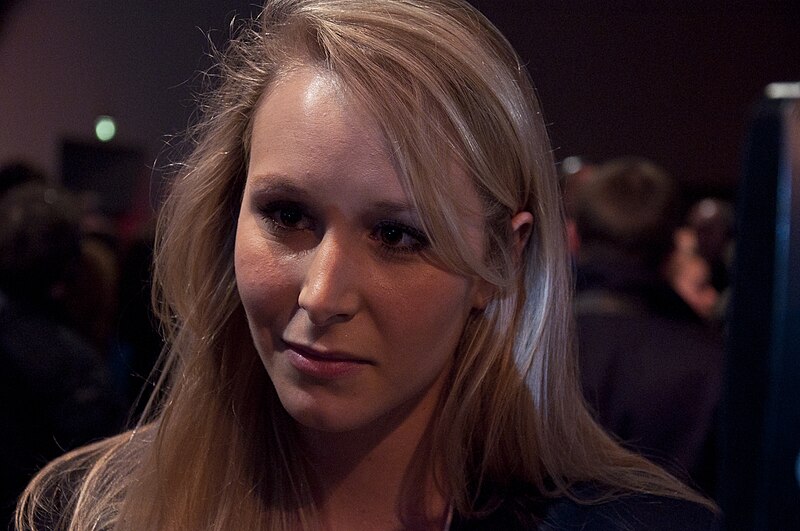
Marion-Maréchal Le Pen (Wikicommons - Remi JDN). This year, she received 45% of the popular vote in one of France's regions, as a Front National candidate.


We must act now to bring anti-globalist parties to power: the UKIP in Britain, the Front national in France, the Partij voor de Vrijheid in the Netherlands, the Alternative für Deutschland in Germany, and the Sverigedemokraterna in Sweden. How, you may ask? It's not too complicated. Just go into the voting booth and vote. You don't even have to talk about your dirty deed afterwards.

I wrote the above last January, fearing that Europe would see an acceleration of the massive demographic change already under away—the Great Replacement, to use a term coined by Renaud Camus:

Oh, the Great Replacement needs no definition. It isn't a concept. It's a phenomenon, as obvious as the nose on your face. To observe it, you need only go out into the street or just look out the window. A people used to be there, stable, occupying the same territory for fifteen or twenty centuries. And all of a sudden, very quickly, in one or two generations, one or more other peoples have substituted themselves for it. It's been replaced. It's no longer itself.  We should note that the tendency to consider individuals, things, objects, and peoples replaceable or interchangeable is fairly widespread and in line with a threefold movement whereby people have become industrialized, deprived of their spirituality, and dumbed down. Call it a later and more generalized stage of Taylorism. At first, we replace only the parts of manufactured goods. Then, we replace workers. Finally, we replace entire peoples. (Camus, 2012)

Two breaches have been made in the dike that used to hold back this process of replacement: one in Libya and the other in Syria. Through them is pouring the demographic overflow that has been building up in Africa and the Middle East. Meanwhile, there has been an incredible loss of will among Europe's leaders to do anything, other than hectoring recalcitrant nations like Hungary for not taking their "fair share."

I'm not using the word "incredible" lightly. This wave of immigrants won't be a one-time-only thing. It won't come to an end when conditions improve in their home countries. Indeed, once it gets under way it can only increase in magnitude, and spreading it over a wider area will do nothing to stop the increase. Instead of being confined to Western and Southern Europe, the Great Replacement will be extended to Eastern Europe. Swell. You call that a solution?

Instead of replacing native Europeans, why not replace their leaders? Why not vote them out of office? That was the solution I advocated back in January and still do. Political change is more certain when done by peaceful means at the ballot box, as opposed to being imposed by coercion and illegal acts. Unfortunately, this option faces a number of obstacles.

The obstacles are threefold:

Unwillingness to play by the rules

In this, the problem lies not so much with Europe's nationalist parties as with their opponents. It's the latter who are not willing to play by the rules.

This was the case in Belgium, where in 2004 a court ruling shut down the Vlaams Blok, a party that had won 24% of the popular vote for the Flemish parliament the same year.

In October 2000, the Centre for Equal Opportunities and Opposition to Racism, together with the Dutch-speaking Human Rights League in Belgium registered a complaint at the Correctional Court, in which they claimed that three non-profit organisations connected to the Vlaams Blok (its education and research office and the "National Broadcasting Corporation") had violated the 1981 anti-racism law. The publications which were referred to included its 1999 election agenda and 1997 party platform. The challenged passages included those where the party called for a separate education system for foreign children, a special tax for employers employing non-European foreigners, and a restriction of unemployment benefits and child allowances for non-European foreigners. (Wikipedia - Vlaams Blok, 2015)

Elsewhere, nationalist parties have faced a combination of judicial and extrajudicial harassment. Indeed, when antifas commit brazen acts of violence that go unpunished, one cannot help but wonder whether the correct term is "quasi-judicial." The antifas are functioning as a kind of secret police that is allowed to do what the regular police cannot do.

Even without the antifas, the level of harassment is considerable. In 2013, for example, the European Parliament stripped Marine Le Pen of her parliamentary immunity for having denounced the illegal blocking of French streets for Muslim prayers:

For those who want to talk a lot about World War II, if it's about occupation, then we could also talk about it (Muslim prayers in the streets), because that is occupation of territory. ...It is an occupation of sections of the territory, of districts in which religious laws apply. ... There are of course no tanks, there are no soldiers, but it is nevertheless an occupation and it weighs heavily on local residents (Wikipedia - Marine Le Pen, 2015)

For that comment, she was dragged before the courts, being finally acquitted this year. Compare that with the indulgence reserved for the magazine Le Nouvel Observateur when it featured a tweet on its twitter page that called for the mass rape of women who vote FN. The tweet was removed but there was no apology, and there certainly won't be any prosecution by the Minister of Justice—as was the case with Marine's comment.

This is the reality of political debate in Western Europe. One side can speak with impunity, whereas the other has to watch what it says.

Extremist image of nationalism

In 2015, the progress of nationalist parties was not uniform. In Greece, Chrysí Avgí (Golden Dawn) seems to have stalled at 7% of the popular vote. In Norway, Fremskrittspartiet (Progress Party) lost support in local elections, this being part of a decline that began in 2011 … with Breivik's terrorist attacks.

In Norway, it is now difficult to be a nationalist without being associated with Anders Breivik or church burnings by black metallists. In Greece, nationalism is tarred with Nazi-like rhetoric and imagery—this, in a country that Nazi Germany had occupied during the last war. It is a sign of just how bad things are that so many Greeks are still willing to vote for a party that revels in an extremist image.

This problem is inevitable with any movement that begins on the fringes among people who feel alienated. As nonconformists they tend to be lone wolves, and as lone wolves they tend to act without restraint, sometimes mindlessly. Such people are both a help and a hindrance for any new political movement.

Assimilation into the dominant political culture

There is also the reverse problem. In the Venice state election, the Liga Veneta received 41% of the popular vote. This might seem to be good news, since the Liga Veneta is part of the Lega Nord, which in turn is allied with the Front National in France.

Unfortunately, things are not as they might seem. When a new party comes closer to power, it tends to assimilate mainstream values because its leaders now have to navigate within that culture—daily encounters with the media, meetings with campaign donors, invitations to wine and cheese parties ... The result may be seen in the Liga Veneta’s political platform for 2010-2015:

The challenges that Veneto should face in the next decades, said the party, were to enhance "internationalization" in the era of globalization, to overcome the traditional Venetian policentrism and interpret Veneto as a united and cohesive region: a "European region in Italian land". The program stressed also concepts such as "Europe of the regions", "Europe of citizens", "global Veneto", "openness toward the world", "green economy", "urban planning" in respect of the environment, "respect for diversity" and "integration" of immigrants, along with the more traditional "think globally, act locally". (Wikipedia - Liga Veneta)

It is not enough for nationalist parties to gain power. They must also have confidence in their ideas and change the way other people think. Otherwise, they'll end up assimilating into the dominant political culture.

But there was progress in 2015

Despite these problems—harassment, lack of discipline, ideological assimilation—most nationalist parties are moving forward. In the first round of France's recent regional elections, the Front National took first place in six of the thirteen regions in Europe (four others are overseas). Yes, it was shut out in the second round, when left-wing parties threw their support behind the main right-wing party, but this defeat was only a partial one. While not securing the office of president in any region, the FN is now represented on all regional councils of European France, ranging from a high of 34% of council seats in Provence-Alpes-Côte d'Azur to a low of 8% in Corsica. Imagine a similar situation in the United States: a nationalist party with at least 8% of the seats in every state legislature.

This year saw gains for nationalist parties elsewhere. In Poland, Prawo i Sprawiedliwosc (Law and Justice) took power with 38% of the vote, in large part because of its opposition to immigration. In Switzerland, Schweizerische Volkspartei (Swiss People's Party) became the leading party, receiving 29% of the popular vote, up from 27%. In Denmark, Dansk Folkeparti (Danish People's Party) earned 21% of the popular vote, up from 12%.

Outside Europe, in other European-descended societies, the picture is more mixed. In the United States, Donald Trump has shattered the phoney consensus on massive demographic change, but even if elected he will face a long uphill battle against opposition from the bureaucracy and from entrenched factions in society at large, particularly the business community—which has long been a source of funding for the Republican Party.

In Canada, the Conservative Party lost power in Ottawa and the Parti Québécois lost power in Quebec City. To be honest, I feel little regret for either loss. In their earlier incarnation, as the Reform Party, the Conservatives were committed to a sharp reduction in immigration. But that promise fell by the wayside once they took power, and they instead chose a neo-con policy of "Invade the world! Invite the world!" They followed that recipe to the letter and—Surprise! Surprise!—it wasn’t what their own voters wanted, let alone the rest of the electorate. Well, good riddance.

As for the Parti Québécois, it began in the 1960s as an alliance of the traditional left and the traditional right. Over time, both factions withered away, being replaced by the new synthesis of globalism and post-nationalism. The PQ became an anti-nationalist nationalist party. They lost power largely because they could no longer energize their natural constituency while failing to make inroads into others. Well, good riddance.

*****************************************************

This will be my last column for 2015, and I wish all of you a very Merry Christmas! Although I no longer go to church, I still consider Christmas to be a very important time of year when we can spend more time with our loved ones and enjoy the traditions of this mid-winter celebration.

I don't know whether I will resume my column in the new year. The legal environment in Canada has changed over the past few months, especially with the adoption of Bill 59. If need be, I will concentrate on writing papers for academic journals.

References 

Camus, R. (2012). " Renaud Camus à L'AF : " J'ai une conception lazaréenne de la patrie " ", L'Action française, no 2832,
http://www.actionfrancaise.net/craf/?Entretien-Renaud-Camus-a-L-AF-J-ai 

Wikipedia - Liga Veneta. (2015)
https://en.wikipedia.org/wiki/Liga_Veneta 

Wikipedia - Marine Le Pen (2005).
https://en.wikipedia.org/wiki/Marine_Le_Pen 

Wikipedia - Vlaams Blok. (2015).
https://en.wikipedia.org/wiki/Vlaams_Blok#Court_of_Cassation_ruling_.282004.29