Saturday, June 15, 2013

How the pacification of Europe came to an end


John Locke: “every man, in the state of nature, has a power to kill a murderer […] such men are not under the ties of the common law of reason, have no other rule, but that of force and violence, and so may be treated as beasts of prey (source of picture)
 

The last millennium has seen three overlapping trends in Western societies with respect to unlawful violence.

The first one began in the 12th century with the rise of strong States and a growing determination, with the consent of the Church, to punish the “wicked” so that the “good” may live in peace. By the late Middle Ages, the courts were condemning to death between 0.5 and 1.0 % of all men of each generation, with an equal number dying while awaiting trial. There was correspondingly a shift in the cultural environment. The violent male went from hero to zero; even if he didn’t pay the ultimate penalty, his opportunities for social advancement were now much more constrained.

The second trend was a steady drop in the homicide rate throughout most of Western Europe. In England, this rate fell by over a hundred-fold between the 12th and 19th centuries (Eisner, 2001).

The third trend began in the 17th century with a growing unwillingness by the courts to impose the death penalty. Then, from the mid-18th century onward, one country after another began to limit the death penalty or abolish it altogether.

These three trends were interrelated. The first one—the “war on murder”—succeeded all too well. The pool of violent men dried up to the point that most murders occurred only under conditions of extreme stress, jealousy, or intoxication. Violence ceased to be a socially approved way to gain prestige and advance personal interests. It became a mark of shame, condemning those guilty of it to the margins of society, if not to the gallows. Thus, the longer the death penalty was used, the less necessary it became.

The ideological background

But there was another reason, an ideological one. At all levels of society, people began to see the death penalty as being inherently wrong. In the early 19th century, for instance, English law still required hanging for thefts equal to or greater than forty shillings. To get around the law, and save a condemned man, a jury decided that a stolen 10-pound note was worth only thirty-nine shillings. Another jury came to the same decision for a theft of a hundred pounds! (Savey-Casard, 1968).

What caused this change of heart? The usual answer is liberalism, specifically “the Enlightenment”—a philosophical movement of the 18th century that sought to base public policy on reason and science. For many traditionalists today, this is one example among many of how the Enlightenment replaced the old faith in proven tradition with a new faith in unproven ideals.

Yet most philosophers of the Enlightenment accepted the death penalty. This was the case with John Locke (1632-1704), the Father of Classical Liberalism:

[…] every man, in the state of nature, has a power to kill a murderer, both to deter others from doing the like injury, which no reparation can compensate, by the example of the punishment that attends it from every body, and also to secure men from the attempts of a criminal, who having renounced reason, the common rule and measure God hath given to mankind, hath, by the unjust violence and slaughter he hath committed upon one, declared war against all mankind, and therefore may be destroyed as a lion or a tyger, one of those wild savage beasts, with whom men can have no society nor security: and upon this is grounded that great law of nature, Whoso sheddeth man's blood, by man shall his blood be shed. (Second Treatise of Government, 2, 11)

[…] one may destroy a man who makes war upon him, or has discovered an enmity to his being, for the same reason that he may kill a wolf or a lion; because such men are not under the ties of the common law of reason, have no other rule, but that of force and violence, and so may be treated as beasts of prey, those dangerous and noxious creatures, that will be sure to destroy him whenever he falls into their power. (3, 16)

This is the idea of the “Social Contract.” In modern societies, people forego the use of violence for personal ends so that they may enjoy the benefits of a peaceful society. If a man commits unlawful violence, he repudiates this implicit contract and thus loses his immunity from violence. Interestingly, Locke supported the death penalty not just for murder but for lesser offences as well: “each transgression may be punished to that degree [with death], and with so much severity, as will suffice to make it an ill bargain to the offender, give him cause to repent, and terrify others from doing the like” (2, 12). 

The Social Contract was central to an essay by Jean-Jacques Rousseau (1712-1778):

The death-penalty inflicted upon criminals may be looked on in much the same light: it is in order that we may not fall victims to an assassin that we consent to die if we ourselves turn assassins. […]

Again, every malefactor, by attacking social rights, becomes on forfeit a rebel and a traitor to his country; by violating its laws he ceases to be a member of it; he even makes war upon it. In such a case the preservation of the State is inconsistent with his own, and one or the other must perish; in putting the guilty to death, we slay not so much the citizen as an enemy. (Du contrat social, 2, 5)

Among the philosophers of the Enlightenment, Cesare Beccaria (1738-1794) was the only major one to argue against the death penalty:

[…] the laws, which are intended to moderate the ferocity of mankind, should not increase it by examples of barbarity the most horrible, as this punishment is usually attended with formal pageantry. Is it not absurd that the laws, which detest and punish homicide, should, in order to prevent murder, publicly commit murder themselves? (On crimes and punishments, 28)

But Beccaria’s opinion was a minority one. After the French Revolution, his arguments for abolition were presented to the Assembly by several deputies, but the majority remained opposed (Carbasse, 2011, p. 76-77).

Was abolitionism liberal?

The French Revolution actually reversed an abolitionist trend that had developed under the Ancien Régime. From 1750 onward, the courts had become increasingly reluctant to condemn people to death. In Dijon, the death penalty accounted for 13 to 14.5% of all sentences before 1750, 8.5% in 1758-1760, 6% in 1764-1766, and less than 5% after 1770. By 1788, on the eve of the revolution, no executions at all were being carried out in Paris (Carbasse, 2011, p. 70).

Elsewhere, abolitionism made the most progress where liberalism was the weakest. In Russia, the death penalty was unofficially abolished during the reign of Elizaveta Petrovna (1741-1762), apparently out of Christian piety. It was then reestablished by Ekaterina II (Catherine the Great), who corresponded with Voltaire and professed Enlightenment ideals (Carbasse, 2011, pp. 74-75). Under the influence of Beccaria, the death penalty was abolished in countries that were nonetheless illiberal by any other standard, notably Tuscany in 1786 and the Hapsburg dominions in 1787. The least progress was made in England, the very epicenter of liberalism:

The only European country where the ideas of penal reform had almost no effect was finally England. English criminal law, whose particular ferocity we have pointed out, remained just as repressive. In the late 18th century, nearly 300 infractions were still punishable by death (Carbasse, 2011, p. 75).  

Who was breaking with the past?

Thus, when debating the rightness or wrongness of the death penalty, most philosophers of the Enlightenment did not break with the past. Medieval views similarly prevailed in secondary debates, like whether this penalty should be motivated by retribution or by the need to maintain public order. The latter, more utilitarian view is often associated with the Enlightenment, yet it had been earlier expressed by medieval thinkers, such as Thomas Aquinas (1225-1274):

[…] it is lawful to kill an evildoer in so far as it is directed to the welfare of the whole community, so that it belongs to him alone who has charge of the community's welfare. Thus it belongs to a physician to cut off a decayed limb, when he has been entrusted with the care of the health of the whole body. Now the care of the common good is entrusted to persons of rank having public authority: wherefore they alone, and not private individuals, can lawfully put evildoers to death.  (IlaIlae, q. 64)

Another secondary debate was whether murderers act out of free will and, if not, whether it is fair to execute them. On this, the philosophers of the Enlightenment denied the existence of free will. All behavior is channeled through constraints that exist either within oneself or in one’s environment, and these constraints are stronger in those murderers who act on impulse and not after sober reflection. Nonetheless, lack of free will is no excuse for a condemned murderer, any more than for a mad dog. He isn’t sentenced to be executed because he “deserves” it and will know better next time. There will be no next time. He is simply removed, permanently, from the community of peace-loving citizens. In this, the Enlightenment was reiterating views held by Thomas Aquinas and other medieval scholars. (Carbasse, 2011, pp. 62-63).

The Enlightenment thus refined ideas that had already taken shape during the late Middle Ages. It was really the 12th century that had broken with prior thinking. Previously, the death penalty had been reserved for exceptional cases, partly because the Church considered it inherently wrong and partly because the State preferred to be an honest broker in personal conflicts that did not challenge its authority. It was only from the 12th century onward that the death penalty came to be seen as a force for good, and this consensus still prevailed among most philosophers of the Enlightenment.

So how did this consensus come to an end? The Enlightenment was paralleled by an ideological change within Christianity itself. The same processes that made the Enlightenment possible—invention of printing, mass distribution of books, rising level of literacy—also allowed more and more Christians to discover the Bible. They soon discovered that this book did not contain the overlay of correction, interpretation, and commentary that had been added during the Middle Ages. Why, they wondered, was this overlay absent from the Holy Scriptures? Surely it must be a sham! And so they discarded the hard lessons that had been learned at much cost. The clock was literally turned back to the Dark Ages—when the Church provided murderers with sanctuary and when the State preferred to be an arbiter between the murderer and the victim’s family.

We associate this rejection of medieval teachings with Protestantism, but it has also been present in Catholicism. In both, there has been a move towards a truncated kind of Christianity … towards “Jesusism.”

It is this Jesus-centered Christianity, much more so than the Enlightenment, that has shaped modern liberalism. For every copy of John Locke’s works, there have been millions more of the Bible, and millions more of writings by people who spurn medieval Christianity as one would an imposter.

Conclusion

Some people have called me a thinker of the “Dark Enlightenment.” Actually, the original one seems fine enough to me. We have not been failed by science and reason. Rather, we have been failed by an ideological change within Christianity that has become secularized and now dominates the modern world view. One might call it “secularized Christianity” or perhaps “Christian atheism,” but neither is really appropriate. It is a changeling. It claims descent from our rich traditions of the Middle Ages and the Enlightenment … while actually owing little to either.
 

References

Beccaria, C. (1767). An Essay on Crimes and Punishments, transl. from the Italian
http://archive.org/details/anessayoncrimes00beccgoog

Carbasse, J-M. (2011). La peine de mort, Que sais-je ?, Paris.

Eisner, M. (2001). Modernization, self-control and lethal violence. The long-term dynamics of European homicide rates in theoretical perspective, British Journal of Criminology, 41, 618-638.

Locke, J. (1690). Second Treatise of Government,
http://www.gutenberg.org/files/7370/7370-h/7370-h.htm

Rousseau, J-J. (1762). The Social Contract or Principles of Political Right, transl. from the French
http://www.constitution.org/jjr/socon.htm

Savey-Casard, P. (1968). La peine de mort, Librairie Droz, Geneva.

Thomas Aquinas. Ila Ilae, The Summa Theologica, Benziger Bros (transl. 19474)
http://dhspriory.org/thomas/summa/SS/SS064.html#SSQ64A3THEP1
Saturday, June 8, 2013

Making Europeans kinder, gentler


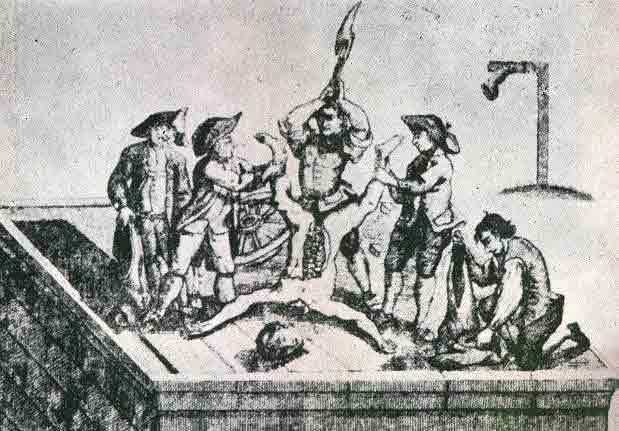
Hanged, drawn, and quartered. (source)

Although the Middle Ages were, in the imagination of our contemporaries, “the time of the gallows,” the reality was appreciably different (Carbasse, 2011, pp. 38-39)

Like many well-meaning people, I once considered the death penalty a relic of a more barbaric age. Outside the old jailhouse, here in Quebec City, I can see the open space where people used to be hanged … in public. In some cases, the authorities would go one better. The body would be placed in a cage and suspended near a thoroughfare for all to see … while it decomposed. This was our past, and presumably the system of justice was even more gruesome longer ago.

Actually, it wasn’t. Longer ago, the death penalty was not the preferred punishment for murder.

The Dark Ages – 5th to 12th centuries

When the Roman Empire collapsed in the 5th century, so did its system of retributive justice. Actually, justice had already become less retributive through the growing influence of Christianity. This is apparent in a letter from a Roman magistrate who felt troubled by the death penalty and sought advice from Ambrose, bishop of Milan (374-397). In a long reply, the bishop defended this punishment, but then went on to praise those who refrain from it. In fact, most of his reply was an appeal for mercy on the grounds that the wrongdoer may end up repenting (Swift, 1970, p. 542, see also Frost, 2010).

This trend continued after the Empire’s collapse. In 511, the bishops of France greatly extended the right of sanctuary. If a man committed murder, he could now ask for and receive sanctuary in any holy place. This policy was defended by Pope Gregory the Great: “Let the Church extend its protection even to those who have spilled blood, for it must not contribute, even indirectly, to the shedding of their own blood” (Carbasse, 2011, p. 34).

The new barbarian rulers also disliked the death penalty, but for different reasons. There was a strong feeling that every adult male had a right to use violence and to kill, if need be. This right was of course reciprocal. If you killed a man, his death could be avenged by his brothers and other male kinsmen. The prospect of a vendetta thus created a ‘balance of terror’ that kept violence within limits. So, initially, the barbarians allowed capital punishment only for treason, desertion, and cowardice in combat (Carbasse, 2011, p. 35).

As the barbarian kingdoms developed on the ruins of the Roman Empire, steps were taken to limit male violence, particularly when it took the form of vendettas. This was the aim of the Salic Law, proclaimed in 507-511:

[The Salic Law] is a pact (pactus) “concluded between the Franks and their chiefs,” for the specific purpose of ensuring peace among the people by “cutting short the development of brawls.” This term evidently means private acts of vengeance, the traditional vendettas that went on from generation to generation. In place of the vengeance henceforth forbidden, the law obliged the guilty party to pay the victim (or, in the case of murder, his family) compensation. This was an indemnity whose amount was very precisely set by the law, which described with much detail all of the possible damages, this being to avoid any discussion between the parties and make [murder] settlements as rapid, easy, and peaceful as possible. […] This amount was called the wergild, the “price of a man.” The victim’s family could not refuse the wergild, and once it was paid, the family had to be satisfied. They no longer had the right to avenge themselves (Carbasse, 2011, pp. 33-34).

The punishment for murder was thus monetized. If you killed a boy under 10, you paid 24,000 denars. Killing a free pregnant woman would cost a bit more: 28,000 denars. The payment was only 12,000 denars for killing a Roman who ate in the king’s palace (source). Capital punishment existed only for the murder of the king, for whom there was no wergild, or in the case of a slave killing a free man.

Over the next few centuries, attempts were made to broaden the scope of the death penalty but to little avail, partly because law enforcement was still rudimentary and because of resistance from the Church:

[…] the couple “peace and charity” remained the supreme objective. This ideal had practical applications, since the legal forms of this time offered model agreements called “peace” or “concords” (today we would say ‘plea bargaining’) for even major crimes like murder. Clearly, the public justice system was used only in exceptional cases, the usual way of settling disputes being private in nature (Carbasse, 2011, p. 36).

The war on murder – 12th to 17th centuries

Thus, for a long period, murder was normally a personal matter to be settled by the victim’s family, through vengeance or a cash settlement.

This situation began to change in the 12th century. One reason was that the State had become stronger. But there also had been an ideological change. The State no longer saw itself as an honest broker for violent disputes that did not challenge its existence. Jurists were now arguing that the king must punish the wicked to ensure that the good may live in peace. The Church itself was coming around to this view through what may be called a medieval synthesis of Christian morality:

[…] a reaction arose beginning in the 11th century against the previous system of monetary compensation. Henceforth, increasingly, it was felt that money could not be a sufficient compensation for such an infraction. The idea that the murder of a man is a crime too serious, an offence too manifest to the order of Creation, to be simply “compensated” by a sum of money was present from the early 11th century onward in the thinking of some bishops (Carbassse, 2011, p. 38)

And so began the war on murder. From the 12th to 17th centuries, capital punishment became steadily more prevalent. We see this in an increasing willingness to use it not only for murder but also for other crimes (rape, abortion, infanticide, lèse majesté, theft, counterfeiting, etc.). We also see this in the use of ‘exemplary’ punishment: drawing and quartering, breaking on the wheel, and burning. Beginning in the 13th and 14th centuries, we see cases of a murderer being buried alive in a casket placed underneath the victim’s casket (Carbasse, 2011, p. 53).

Then, after the 17th century, the war on murder began to go into reverse. It had been largely won, and public sympathy now shifted to the condemned man. In England, the homicide rate fell by over a hundred-fold between 1300 and 1900 (Eisner, 2001). Europeans were becoming kinder and gentler, and this pacification of social relations would make possible much of what we call modernity: the expansion of the market economy; a growing freedom to live among total strangers; the rise of the individual as an autonomous, self-maximizing being, and so on.

But this pacification also had a down side. We now take it for granted. If people act violently, to the point of committing murder, we assume there must be a very good reason. Otherwise, why would they have done it?

References

Carbasse, J-M. (2011). La peine de mort, Que sais-je ? Paris

Eisner, M. (2001). Modernization, self-control and lethal violence. The long-term dynamics of European homicide rates in theoretical perspective, Br J Criminol.,41, 618-638. http://bjc.oxfordjournals.org/content/41/4/618.abstract

Frost, P. (2010). The Roman State and genetic pacification, Evolutionary Psychology, 8(3), 376-389.
http://www.epjournal.net/filestore/EP08376389.pdf


Swift, L.J. (1970). St. Ambrose on violence and war, Transactions and Proceedings of the American Philological Association, 101, 533-543.

Saturday, June 1, 2013

Just for show?


European woman in Mughal costume and jewelry, 19th century (Wikicommons)


People of European origin have an unusually diverse palette of hair and eye colors. This diversity is commonly ascribed to their unusually white skin. Ancestral Europeans became lighter-skinned, and this genetic change therefore caused other changes to hair and eye pigmentation.

Actually, the genetic changes are different in each case. European skin turned white through a replacement of alleles, primarily at TYRP1, SLC24A5, and SLC45A2. European hair and eyes diversified in color through a proliferation of new alleles, primarily at MC1R for hair color and in the HERC2-OCA2 region for eye color.

It now appears that this diversification has occurred at other gene loci as well. Zhang et al. (2013) report that a region downstream from EDNRB is associated with differences in hair color and that two other loci, VASH2 and POLS, are associated with differences in eye color. Sulem et al. (2008) report that TPCN2 is associated with differences in hair color and that ASIP is associated with red hair.

A common selection pressure, not a common gene

This is further proof that a selection pressure created the visual effect of color diversity by acting on whatever genes it could. In short, this diverse palette of hues seems to exist “just for show.”

The evolutionary problem is spelled out by Walsh et al. (2012):

People of European descent display the widest variation in pigmentation traits, such as iris (eye) and hair colouration, in the world. In particular, eye colour variation is nearly restricted to people of (at least partial) European descent. Eye colour categories here often concern blue, brown and intermediate (green, etc.). In the rest of the world, people tend to have brown eye colour, which is considered to be the ancestral human trait in agreement with the Out-of-Africa hypothesis of modern humans. The current variation in eye colour is thought to have originated via a genetic founder event involving non-brown irises in early European history. It is furthermore assumed that eye colour variation in Europe has been shaped by positive selection via sexual selection i.e., mate choice preference. Alternatively it has been proposed that eye colour variation evolved via a correlation with skin colour and its environmental adaptation e.g. maximizing vitamin D conversion in low levels of UV radiation, or as a combination of both. One suggested geographic region for the origin of blue eye colour in Europe is the southern Baltic, as indicated by concentric rings of decreasing frequency of the blue eye colour trait spreading from the southern Baltic region, resulting in a strong north–south gradient in blue eye colour frequency across Europe.

It is doubtful whether a lack of vitamin D at northern latitudes played a role in the whitening of European skin, let alone in the diversifying of European hair and eye color. As Elias and Williams (2012) note, certain northern populations whitened much more than others:

An obvious feature of the northward dispersal of humans is a quasi-geographic reduction in pigmentation (Murray, 1934; Loomis, 1967; Chaplin and Jablonski, 2009). Coloration varies greatly among northerners. Native Inuit display medium-to-dark (type III/IV), rather than light pigmentation, and both northern and central-dwelling Asians display medium (type III) pigmentation. Recent population genetic data show that the reduction in skin pigmentation occurred sporadically and incompletely in northern and Asian populations (Sturm, 2009). Moreover, while modern humans reached Central Europe ≈40 ka (thousands of years ago), they reached northern Europe only after the last ice sheets receded less than 11 ka. It is only these humans that display light pigmentation, and recent molecular genetic studies suggest that the very light pigmentation of northern Europeans did not develop until 5-6 ka (Norton et al., 2007; Norton and Hammer, 2008).


Heather Norton’s estimate for European skin whitening (which she set within a broader range of 3,000 to 12,000 years ago) has been revised upward by Sandra Beleza to a range of 11,000 to 19,000 years ago, the second estimate being now accepted as the better one by Norton (Beleza et al., 2013; Norton and Hammer, 2007; Norton, 2012). This time period still began long after the entry of modern humans into Europe, the implication being that ancestral Europeans were brown-skinned for tens of thousands of years.

Elias and Williams (2012) also note that the vitamin-D hypothesis cannot explain the changes to European hair color, since hair is not involved in vitamin-D synthesis. Their alternate hypothesis is that European skin became white as a way to cut back on unnecessary energy expenditure:

[…] a declining need to heavily pigment the epidermis favored the retention of mutations in genes that reduced pigment synthesis, thereby diverting energy toward the production of more urgently-needed proteins.

But why, then, did ancestral Europeans wait over twenty thousand years before cutting back on this unnecessary expenditure? And why would this expenditure be less unnecessary at northern latitudes in Asia and North America? Moreover, in the case of hair color, what has happened is not a loss of pigment but rather a shift from production of one kind of pigment, i.e., eumelanin (black-brown hues), to production of another, i.e., pheomelanin (yellow-red hues).

Sexual selection?

Color polymorphisms are not limited to humans. They occur in many other species for reasons that Hofreiter and Schöneberg (2010) discuss in a recent review article. One reason is crypsis—the need to blend into a background that may vary from one place to another. Deer mice, for instance, have light fur where the ground is likewise light in color and dark fur where it is dark in color. Another reason is aposematism—individuals with a rare coloration have better chances of survival, since they are a poorer match for a predator’s search image.

Such a frequency dependent effect, favouring the rarer colour morphs, is also known from sexual selection, when females preferentially mate with rare colour morph males, a phenomenon also known from guppies. (Hofreiter and Schöneberg, 2010)

This kind of color polymorphism typically involves bright colors, since sexual selection is influenced by sensory biases that favor not only novel colors but also bright ones as well. In fish species, for instance, color morphs are often red because a sensory bias for this color has developed irrespective of mating contexts.

If we look at the polymorphisms for human hair and eye color, the recently evolved “European” hues tend to be brighter than the species norm of black hair and brown eyes. Eyes may be light blue, but not navy blue. Hair may be carrot red, but not beetroot red. Sexual selection is also indicated by a greater variability of hair color in women, with red hair being especially more frequent (Shekar et al., 2008).

But why?

Why would sexual selection have been more intense among ancestral Europeans? Such selection happens when too many of one sex are competing to mate with too few of the other. In most mammals, the males do the competing—because polygyny dries up the pool of available females. So the males are brilliantly colored, and the females duller in appearance.

But here we have the reverse. Hair color is brighter and more diverse in European women than in European men. We see a similar pattern with skin color. “European” physical traits seem to be female traits. It looks as though sexual selection primarily targeted women and then secondarily spilled over on to men.

This unusual color scheme seems to result from the unusual steppe-tundra that covered the plains of northern and eastern Europe during the last ice age 25,000 to 10,000 years ago. This environment offered ancestral Europeans a huge amount of edible biomass, but nearly all of it was locked up as meat in wandering herds of reindeer and other herbivores. Since male hunters provided almost all of the food for their wives and offspring, the cost of supporting a second wife and her children was prohibitive for them, being feasible for only the ablest hunters. At the same time, pursuit of migratory game greatly lengthened the mean hunting distance and boosted male death rates accordingly.

Thus, limited polygyny, combined with higher hunting-related mortality, skewed the mate market towards a shortage of available men. Women had to compete for men, unlike the situation among tropical humans and most other mammalian species. This intense mate competition in turn drove sexual selection for colorful features that could, by their brightness or their novelty, catch the attention of a prospective mate (Frost, 2006; Frost, 2008).

References

Beleza, S., A. Murias dos Santos, B. McEvoy, I. Alves, C. Martinho, E. Cameron, M.D. Shriver, E.J. Parra, and J. Rocha. (2013). The timing of pigmentation lightening in Europeans, Molecular Biology and Evolution, 30, 24-35.

Frost, P. (2006). European hair and eye color - A case of frequency-dependent sexual selection? Evolution and Human Behavior, 27, 85-103.

Frost, P. (2008). Sexual selection and human geographic variation, Journal of Social, Evolutionary,and Cultural Psychology, 2(4), 169-191. http://137.140.1.71/jsec/articles/volume2/issue4/NEEPSfrost.pdf

Hofreiter, M., and T. Schöneberg. (2010). The genetic and evolutionary basis of colour variation in vertebrates, Cellular and Molecular Life Sciences, 67, 2591–2603.

Norton, H.L., and M.F. Hammer. (2007). Sequence variation in the pigmentation candidate gene SLC24A5 and evidence for independent evolution of light skin in European and East Asian populations. Program of the 77th Annual Meeting of the American Association of Physical Anthropologists, p. 179

Norton, H.L. (2012). Personal communication

Shekar, S.N., D.L. Duffy, T. Frudakis, G.W. Montgomery, M.R. James, R.A. Sturm, and N.G. Martin. (2008). Spectrophotometric methods for quantifying pigmentation in human hair—Influence of MC1R genotype and environment, Photochemistry and Photobiology, 84, 719–726.

Sulem, P., D.F Gudbjartsson, S.N. Stacey, A. Helgason, T. Rafnar, M. Jakobsdottir, S. Steinberg, S.A. Gudjonsson, A. Palsson, G. Thorleifsson, S. Palsson, B. Sigurgeirsson, K. Thorisdottir, R. Ragnarsson, K.R. Benediktsdottir, K.K. Aben, S.H. Vermeulen, A.M. Goldstein, M.A. Tucker, L.A. Kiemeney, J.H. Olafsson, J. Gulcher, A. Kong, U. Thorsteinsdottir, and K. Stefansson. (2008). Two newly identified genetic determinants of pigmentation in Europeans, Nature Genetics, 40, 835-837.

Walsh, S., A. Wollstein, F. Liu, U. Chakravarthy, M. Rahu, J.H. Seland, G. Soubrane, L. Tomazzoli, F. Topouzis, J.R. Vingerling, J. Vioque, A.E. Fletcher, K.N. Ballantyne, and M. Kayser. (2012). DNA-based eye colour prediction across Europe with the IrisPlex system, Forensic Science International: Genetics, 6, 330–340.


Zhang, M., F. Song, L. Liang, H. Nan, J. Zhang, H. Liu, L.-E. Wang, Q. Wei, J.E. Lee, C.I. Amos, P. Kraft, A.A. Qureshi, and J. Han. (2013). Genome-wide association studies identify several new loci associated with pigmentation traits and skin cancer risk in European Americans, Human Molecular Genetics, advance access 1–12 

Saturday, May 25, 2013

Can antiracism reform itself?


Nelson Mandela shakes hands with Frederik de Klerk, 1992. Antiracist iconography is focused on past struggles, like the fight against apartheid. Yet the world is now a very different place (source).


After five centuries of growth, the European world is contracting, and this contraction is visible not only overseas—in Johannesburg, Sydney, and New York—but also in Europe itself—in London, Paris, and Oslo. Yet this new reality is scarcely visible in antiracist iconography, which is set in the heroic age of past struggles. For some, the high point was the anti-apartheid struggle of the 1980s. For others, it was the civil rights era of the early 1960s. For others still, it was the last world war.

When a French magazine interviewed Pierre-André Taguieff about his newly published dictionary of racism, the interview was accompanied by photos of the usual suspects, including one from apartheid South Africa. Yet that country has been under black rule for almost two decades now. Yes, it’s been that long already.

This is one point that Pierre-André has been raising. The world is now a changed place, yet antiracism has failed to adapt. Worse still, antiracists fail to see the perverse effects of this failure to adapt. The solution, however, is not to abandon antiracism, but to reform it. For Pierre-André, antiracists need to rediscover their libertarian roots. At one time, they were “on the side of anti-conformism, of spiritual rebellion. The Dreyfusard intellectuals fought with the arms of intellect, in the name of universal values (Justice, Truth), against official prejudices and dominant ideas” (Taguieff, 2013, p. 66).

Anti-White racism?

In addition, Pierre-André argues that antiracists should do more to condemn racism against Whites.

But “anti-White racism” has never really been recognized and condemned by organized antiracist activists as a full-fledged form of racism. Its importance continues to be minimized, and its dangerousness underestimated. The most common attitude is not to deny the existence of so-called “anti-White racism” but to consider it negligible. Professional antiracists—the heads and staff of antiracist associations—wish to preserve their monopoly over the definition of “racism” and the designation of “racists.” (Taguieff, 2013a)

This attitude, bordering on denial, is not wholly unjustified. First, let’s suppose that the antiracist movement does recognize the existence of anti-White racism. Overnight, its purpose would shift from primarily one of changing the behavior of Whites to primarily one of changing the behavior of non-Whites, especially people of African or Muslim origin. For those are the people who perpetuate most acts of interracial violence. Could most antiracists handle such an about-face?

Second, interracial violence against Whites seem less racially motivated than interracial violence against non-Whites. To a large degree, it is a side effect of the higher rate of interpersonal violence within certain non-White communities. If we look at the United States, the high rate of Black-on-White violence is largely explained by the similarly high rate of Black-on-Black violence. Undoubtedly, there are cases where Whites are victimized specifically because of their racial background. Even there, however, the reason has more to do with Whites being an easy target. “Whites don’t fight back.”

This was a lesson I once learned … the hard way. When my family moved to a town of largely Scots-Irish heritage, I had to deal with a more aggressive environment at school. For a while I felt like the other boys were singling me out. Actually, their violence was just following the path of least resistance. Things got easier when I learned to fight back, although “fighting back” wasn’t just self-defense. It was also preemptive violence. And collective violence. It could also mean provoking a fight when the odds were in your favor, as opposed to letting the other guy choose the moment when the odds were in his favor.

That kind of violence will not be remedied by antiracist education. Imagine a “youth” who wants to beat someone up—either for an initiation or just for the fun of it. He settles on an easy target, a person who won’t fight back, a White. How can antiracist education stop him from acting out his thoughts? By teaching him that White passivity is a baseless stereotype? By making him feel guilty? By appealing to his sense of justice?

Such a strategy works with a population that considers violence unacceptable, unless permitted by some higher authority and sanctioned as “just.” In Western Europe, however, that kind of population isn’t the one that’s committing the interracial violence.

The problem here is the lack of a common rulebook. Although many ‘New Europeans’ see violence as a legitimate way to settle a personal dispute, their countries of origin are often surprisingly peaceful. The reason is that any act of violence will trigger retaliation by the victim’s brothers and male relatives, and this retaliation will be visited not only on the perpetrator but also on his own family and relatives. The result is a “balance of terror” that ensures some degree of social peace.

The situation changes, however, when the same people move to a society that imposes nothing worse than a prison sentence on violent criminals and no punishment at all on their families. The result? In France, between 60 and 70% of prison inmates are Muslims, mostly from North or West Africa, although they make up only 12% of the total population (Moore, 2008). In Spain, they account for 70% of prison inmates but only 2.3% of the total population (WikiIslam, 2013). In Belgium, they make up 45% of prison inmates (Sudinfo.be, 2013). In all three cases, “Muslim” is a rough proxy for “people from clan-based societies that have been weakly pacified by a higher authority.” This proxy has the disadvantage of excluding some groups that shouldn’t be excluded (Christians and animists from parts of Africa). It also applies more to some Muslim groups (e.g., Somalis, Afghans) than to others (e.g., Egyptians).

It is difficult to discuss the above prison data in polite society. One has the impression of breaking a taboo, of saying something reprehensible. In polite society, violence is a last resort and done only under duress. Surely, those facts are exaggerated, if not fraudulent.

Yet the prison data actually understate the problem. Most acts of immigrant violence go unreported, and when reported they often go unpunished. The most flagrant examples are provided by the recent riots in London, Malmö, and the suburbs of many French cities:

Despite the scale of the damage, French police have hesitated to make any arrests for fear of sparking more riots. Residents of the neighborhood know the names of the perpetrators but "nobody dares to speak for fear of reprisals." "You can no longer order a pizza or get a doctor to come to the house." (Kern, 2012)

The riots nonetheless account for only a small part of the underreporting and underpunishment. In England, France, the Netherlands, Norway, and Sweden, there are now many ‘no-go areas’ or zones de sécurité prioritaires where the police go intermittently or not at all.

Conclusion

Pierre-André is to be commended for criticizing the double standard that governs discussion of interracial violence. Nonetheless, this double standard is not wholly unwarranted. When Whites are the victims, the motives are less apparent, often being only a perception that Whites are easy targets. Even when the motives are clearly racial, if not racist, it’s unclear how they can be eliminated. Antiracist education would be of little use. Most of the educational material has been designed for Whites, with a view to making them feel guilty about the injustices they and their ancestors have done to non-Whites. If the target audience is now Muslim and African, we might get the reverse of what we want. We could actually end up inciting race hatred.

Yes, more balanced educational material could be produced, but how effective would it be anyway? Would appeals to feelings of guilt have the same effect on people who make less use of guilt in their own cultures to restrain wrong behavior? And who furthermore tend to define “wrong behavior” in non-universalistic terms, i.e., as whatever is bad for their own group? In any case, wouldn’t the target audience perceive such education as just “enemy” propaganda? Keep in mind that a low-grade insurrection is already brewing in many Afro-Muslim communities of Western Europe.

So what will be done? I suspect antiracists will acknowledge the existence of anti-White racism and take some steps to fight it, if only to remain credible. We’ll then see frantic searches for the masterminds behind such violence (Islamists? Cultural Marxists?). By and large, this ‘reformed antiracism’ will come to nothing.

The situation is eerily similar to that of Eastern Europe in the 1980s. Minor reforms produced disappointing results and tended to make other problems worse. Major reforms were not attempted because they might get out of hand … as they eventually did. So a consensus developed to muddle on, in the hope that things would sort themselves out … which they didn’t.

References

Kern, S. (2012). France seeks to reclaim ‘No-Go’ zones, August 24, Gatestone Institute,
http://www.gatestoneinstitute.org/3305/france-no-go-zones 

Sudinfo.be (2013). 45% des détenus des prisons belges sont de confession musulmane, Sudinfo.be, May 23
http://www.sudinfo.be/726092/article/actualite/belgique/2013-05-17/45-des-detenus-des-prisons-belges-sont-de-confession-musulmane

Moore, M. (2008). In France, prisons filled with Muslims, The Washington Post, April 29
http://www.washingtonpost.com/wp-dyn/content/article/2008/04/28/AR2008042802560.html?hpid=topnews

Taguieff, P-A. (2013b). Dictionnaire historique et critique du racisme, Paris: PUF.

Taguieff, P. (2013a). Le racisme aujourd'hui, une vue d'ensemble, Le Huffington Post, May 21,

WikiIslam (2013). Muslim Statistics (Population)
http://wikiislam.net/wiki/Muslim_Statistics_%28Population%29#Spain 

Saturday, May 18, 2013

More thoughts. The evolution of a word


Are you assaulting me because I’m White?
How do you react to this poster? Is it antiracist or racist? Why?


The word “racist” is so common today that you may have trouble imagining a time when neither the word nor the concept existed. Yet such a time did exist, and not so long ago.

The first appearances of this word seem to date to the 1920s, in both English and French. At that time “racist” was a translation of the German völkisch and, as such, referred to the “blood and soil” nationalism so prevalent in Germany and in other countries that looked to Germany as a model (Taguieff, 2013, p. 1528). It remained a rather esoteric term during the interwar years, being narrow not only in its range of meaning but also in the political spectrum of those who used it—essentially the left, if not the far left.(1)

All of this changed with the Second World War. At first, the word “racist” was used mainly in postwar Europe—as part of the effort to root out ex-Nazis and their collaborators. Bit by bit, however, it became more widely used elsewhere, particularly in the contexts of race relations in the United States and colonialism in Africa and Asia. It also began to appear in the emerging context of Afro-Asian immigration to Western Europe. “Racists” were no longer Nazis. They could in fact be people who had valiantly fought against Nazi Germany.

Yet there were certain unspoken limits. By and large, this word was not directed against non-Europeans. Even today, it just doesn’t sound right when applied to a man with brown or black skin, no matter how intolerant he might be. A racist should at least look like a Nazi.

Besides becoming broader in meaning, this term also became less descriptive and more pejorative. It took on a highly emotional intent, even more so than words like “bastard!” or “liar!” Pierre-André Taguieff describes this transformation:

[…] over the last thirty years of the 20th century, the word “racism” became an insult in everyday language (“racist!” “dirty racist!”), an insult derived from the racist insult par excellence (“dirty nigger!”, “dirty Jew!”), and given a symbolic illegitimating power as strong as the political insult “fascist!” or “dirty fascist!”. To say an individual is “racist” is to stigmatize him, to assign him to a heinous category, and to abuse him verbally […] The “racist” individual is thus expelled from the realm of common humanity and excluded from the circle of humans who are deemed respectable by virtue of their intrinsic worth. Through a symbolic act that antiracist sociologists denounce as a way of “racializing” the Other, the “racist” is in turn and in return categorized as an “unworthy” being, indeed as an “unworthy” being par excellence. For, as people say, what can be worse than racism? (Taguieff, 2013, p. 1528)

What can be worse than racism? The question would have been incomprehensible a hundred years ago—and not just because the word didn’t exist yet. The underlying concept didn’t exist. People did not consider it sinful to prefer the company of their kith and kin. Nor did they consider it unfair to judge non-kith and non-kin by a higher standard. Such individuals existed outside one’s moral community and could not be trusted to the same degree as someone within it. So where’s the unfairness? And where’s the sin?

Note 

1. The first author to use the term raciste seems to have been Leo Trotsky in his work Histoire de la revolution russe (1930), in which he applied it to traditionalist Russian slavophiles. During the late 1930s, and with the rise of Nazism, it became much more negative than the German term it had originally translated, so much so that a German anti-Nazi, Magnus Hirschfeld, introduced it into German for his work Rassismus. His book then appeared in English translation under the title Racism (1938). This was the first appearance of the term “racism” in the title of a book, and it was really at that point in time that it entered the language of academics and political activists (Taguieff, 2013, p. 844; Wikipedia, 2013).

References 

Taguieff, P-A. (2013). Dictionnaire historique et critique du racisme, Paris: PUF.
 
Wikipedia (2013). Racisme - Étymologie
http://fr.wikipedia.org/wiki/Racisme#cite_note-10


Saturday, May 11, 2013

Thoughts on the Paris spring


Antifa badge (Norway). Antiracism is now part of a legally enforced system of values and norms. Its followers are surreptitiously becoming the underlings of authority, even to the point of becoming a secret police that does the regrettable but necessary “dirty work.” (source)
 

Something is happening in France. Will this “Paris spring” end up like the Prague Spring of 1968? Or more like the Velvet Revolution of 1989? One thing is sure. There is a greater willingness to speak out on various taboo subjects, one of which is race and racism.

This may be seen in a soon-to-be-published book, Dictionnaire historique et critique du racisme, which shifts the spotlight of critical analysis from racism to antiracism. Its editor, Pierre-André Taguieff, chooses his words carefully. As he points out, “antiracism” is not just a word but also a norm, and one cannot objectively describe a norm without offending those who feel bound by it. To be objective is to blur the distinction between Good and Evil.

Pierre-André resolves this dilemma by arguing that antiracism has violated its own stated norms. It has abandoned its original values of doubt, debate, criticism, and free enquiry. It has moved out of the academy and into the police department. It has become the antithesis of what it once was.

He describes this reversal, and why it came about:

[Since WWII] Western antiracism has taken the form of an ongoing anti-Nazism, or of a neo-anti-Nazism in search of "neo-Nazis" who are believed to carry the racist ideology. Hence the temptation to "Nazify" all phenomena perceived as being racist, beginning with nationalist movements of whatever sort. Shaped by anti-Nazi activism, the antiracism of the 1950s to 1970s was governed by the conviction that racist views [thèses racistes] were errors due to ignorance or to the power of prejudices, errors that scientists could and must rectify after denouncing them. When not a villain, a racist could be only an ignorant person, a man who was misleading himself or who had been misled. The good news of antiracist activists could be summed up in one sentence: racism was not in any way “scientific.” Antiracism was defined ideally as a fight that the Enlightened were waging against the darkness of ignorance or false ideas—the historical incarnation par excellence being the racism of the Nazis and the racism of colonial regimes (during the era of decolonization). This antiracism, incarnated by the authorized discourse of biologists (and geneticists in particular), has thus long dominated antiracist practices since the first UNESCO declarations in the early 1950s. “Scientific” antiracism embraced an ideal that flowed from rationalist humanism: through instruction and education, we shall create a world where, with the disappearance of errors, prejudices, and illusions, racism will survive only as an archaism, a relic of the past, a past we have fortunately transcended.

This faith that racism will inevitably wither away seems to have evaporated. Antiracist activism has gone from historical optimism to anthropological pessimism. If the racist is no longer an ignorant person but rather a villain, and if he is defined by his impulses or negative passions (hate, aggressive intolerance, etc.), then the evil is in him, and his case seems hopeless. The antiracist’s task is no longer to lead the "racist" towards goodness, but rather to isolate him as a carrier of evil. The "racist" must be singled out and stigmatized. The task is now only to make him powerless by imposing legal penalties, at the risk of reestablishing ideological censorship and limiting freedom of expression.

[…] With racism being illegal and illicit, and with antiracism now part of a legally enforced system of values and norms, antiracists have also ceased to stand for criticism and questioning. Through a related process, antiracist organizations are no longer functioning as an opposition to authority. They are surreptitiously becoming the underlings [auxiliaires] of authority.

[…] As the fight against racism becomes increasingly State-owned and professionalized, many antiracists have lost their status as freethinkers who oppose authority, and antiracism has taken on the face of repressive policing. Is there not a risk that the hyper-legalism of contemporary antiracism is leading it into hyper-conformism? Are antiracists forsaking the Sorbonne for the police department? Are they drifting away from the fight for justice and truth, preferring instead the dreary hunt for delinquents who say or write the wrong things? (Taguieff, 2013)

Like Pierre-André, I was once involved in the antiracist movement. Like him, I deplore the totalitarian turn it has taken. I am less sanguine, however, about the prospects for returning it to its original values. Once antiracism had secured a monopoly over intellectual discourse, it no longer needed to engage in intellectual debate, and its priority naturally became one of maintaining this monopoly. Why should antiracism now jeopardize its privileged status by engaging in self-criticism and allowing debate, or even doubt? To be true to its original values? But those values were situational, a compromise between long-term goals and the realities of the moment. Circumstances change, and it’s not at all unusual for an ideology to go from a libertarian stage to a totalitarian one.

Yes, the reverse can also happen … sometimes. In such cases, however, the real reason is not a desire to return to original values. It’s a growing conviction, particularly among the intelligentsia, that something has gone terribly wrong and that a change in direction is imperative. Typically, the only way to legitimize the new direction is to make it seem consistent with original values. 

This was the case with the short-lived Prague Spring:

Those who drafted the Action Programme were careful not to criticize the actions of the post-war Communist regime, only to point out policies that they felt had outlived their usefulness. For instance, the immediate post-war situation had required "centralist and directive-administrative methods" to fight against the "remnants of the bourgeoisie." Since the "antagonistic classes" were said to have been defeated with the achievement of socialism, these methods were no longer necessary (Wikipedia, 2013)

That strategy worked well enough inside Czechoslovakia. Outside, not so well. The Prague Spring was brutally crushed by the other members of the Warsaw Pact. For the next twenty years, that country’s leaders, like those elsewhere in Eastern Europe, maintained the status quo by making consumer goods more available (at the cost of a growing mountain of debt) and by controlling intellectual dissent more effectively.

Which scenario will play out in France? An abortive Prague Spring or a more promising Velvet Revolution? Much will depend on what goes on in the minds of our antiracist friends. When I ask them about the need for debate and self-criticism, I typically get a blank look. Debate? What is there to debate? Criticism? What is there to criticize? Most of them prefer to think in terms of stricter control and surveillance. If France, or any European country, does abandon globalism, or simply moves away from it, they will be clamoring for intervention by an outside power. Just like in Prague, 1968.

References

Mahler, T. (2013). Taguieff : le racism a son encyclopédie, May 9, Le Point, pp. 2-4

Taguieff, P-A. (2013). Dictionnaire historique et critique du racisme, Paris: PUF.

Taguieff, P-A. (2013). Réflexions sur la « lutte contre le racisme. », May 7, Le Huffington Post
http://www.huffingtonpost.fr/pierreandre-taguieff/lutte-contre-le-racisme_b_2915909.html?utm_hp_ref=france

Wikipedia (2013). Prague Spring
http://en.wikipedia.org/wiki/Prague_Spring


Saturday, May 4, 2013

Cultural modernity and behavioral modernity


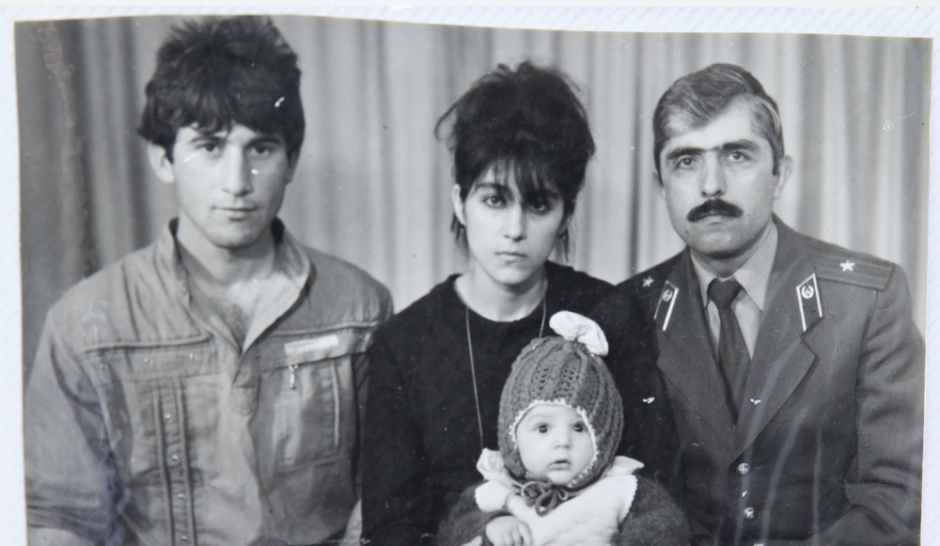
Where’s the beard? And the headscarf? In this photo from the 1980s, the Tsarnaevs look secular and modern (Source: Paris Match)

Much has been made of radical Islam and its role in shaping the mental makeup of the Tsarnaev brothers. During their formative years, however, they were scarcely even nominal Muslims. Although their father was Chechen and their mother Avar (another Caucasus nationality), the language spoken at home was Russian, and their culture was the secular and increasingly Westernized one of late Soviet society. At that time, the cultural referents were largely those of the 1980s: heavy metal, New Wave, and Michael Jackson.

Religious radicalization would not begin until much later, after their family had emigrated to the U.S. and specifically in 2008 when the older brother, Tamerlan, stopped drinking and smoking and started attending a local mosque (Wikipedia, 2013).

Already, however, Tamerlan was having problems with anger control. In 2007, he confronted a Brazilian youth who had dated his younger sister and punched him in the face. In May 2008, his other sister said her husband was cheating on her and beating her up. Tamerlan flew across the country to "straighten up the brains" of his brother-in-law. Although his future American wife converted to Islam and started wearing a hijab in 2008, her conversion did not prevent domestic fights in which he would "fly into rages and sometimes throw furniture or throw things." In 2009, he got involved with another woman, allegedly assaulted her, and was arrested for aggravated domestic assault and battery (Wikipedia, 2013). In 2010, as an aspiring boxer, he entered his opponent’s locker room before the fight to taunt him and the man’s trainer (Sontag et al., 2013). In addition to his bad temper, Tamerlan had other behavioral problems. After his marriage, he stopped working and lived off his wife (who had to put in 70-80 hour weeks as a home health aide) and Massachusetts welfare services (to the tune of over $100,000). “He wasn’t really willing to work. That in my mind made him an unsuitable husband. She worked like crazy for him” (Fisher, 2013).

Failed assimilation?

The Boston bombers are often presented as a case of failed assimilation. In reality, they and their family had already been assimilated into modern secular culture. This was, of course, the authoritarian modernity of the Soviet Union, which severely repressed premodern patterns of behavior, i.e., religion, vendettas, child marriage, seclusion of women, etc. The Soviet Union also dealt harshly with what results when premodern impulses are expressed in a modern social setting, namely “hooliganism” and “parasitism.” By emigrating to the U.S., the Tsarnaevs entered a much freer environment that would eventually enable them—first Tamerlan and then other family members—to return to a cultural system that could bring some control back into their lives.

This phenomenon has been observed not only in immigrant communities of the U.S., but also in those of Western Europe. Islamism has arisen primarily in the relatively free environments of the West, and not in the more authoritarian ones of the Middle East. In many cases, the West has helped radicalize individuals who initially come as students or immigrants and later return to promote Islamism back home. Furthermore, when we in the West intervene to overthrow secular dictatorships in that region—Hussein in Iraq, Mubarak in Egypt, Gaddafi in Libya, Assad in Syria—we unwittingly create optimal conditions for the emergence of radical Islam. We refuse to countenance the possibility that some kind of authoritarianism is necessary to make those societies work. The choice is really whether it will be secular authoritarianism or the ultra-religious kind.

The other Chechen revolution

Another example is Chechnya itself. The first and second Chechen wars (1994-1996, 1999-2000) are usually seen in the West as a reaction to political circumstances, specifically the dissolution of the Soviet Union and the inability of its successor state, the Russian Federation, to maintain political control. The Chechen people thus saw an opportunity to reclaim their independence and took it.

There was also, however, a prior weakening of cultural control that can be traced farther back to the late Soviet period. This was a time when official Communist ideology had become little more than an empty shell and when people began to emulate Western ways. School and parental discipline slowly became more relaxed, under the influence of beliefs that children start off good and are made bad by excessive control.

With the collapse of Communism in 1991, the way was clear for this new vision:

Education reform in the Russia Federation after 1991 was an orchestrated attack on what was now perceived as the ideologically impure Soviet system of education, with its ubiquitous administrative centralization, a bankrupt communist ideology and bureaucratic inefficiency. Hurried attempts were made to Westernize Russian education. […] In Russia, these education reforms represented a radical shift in ideology, knowledge and values and appropriately typified the inevitable outcome of the global Weltanschauung of modernity.

Curriculum reforms and implementation of change in Russia during the early 1990s have been “almost completely permissive” […] The ideas of democracy, humanisation and individuation — the three popular slogans of post-Soviet education reforms, which almost echoed the spirit of the French Revolution — liberty, equality, and fraternity, have successfully challenged the hegemony of Marxism-Leninism in schooling, authority, and curricular control in the teaching/learning process. In subjects’ content and teaching methodology considerably more power at the school-level decision-making has been given to teachers, parents and students. (Zajda, 2005, p. 405)

This was a real cultural revolution, particularly in the Caucasus where “in Chechen families there are very strict rules of behavior with a stern social control” (Mikus Kos, 2009, p. 144). By the 1990s, most teachers had been won over to “modern” notions of child discipline: 

I had an interesting experience working with Chechen and Ingush teachers during the first Chechen war. The prevailing belief was (which was some decades ago the belief in Europe and the USA as well) that all emotional and behavioural problems in children, and even many learning problems, stem from harming influences of the family and that the unique way to cure them was to provide love and understanding to the child. So there was quite a lot of blaming on parents and teachers and feelings of guilt in parents and in teachers who did not succeed in helping children with difficulties and children in distress. When starting to run seminars for teachers from North Caucasus, I was very eager, guided by the best intention to explain that there are biologically “difficult children”, children with temperamental traits which affect the process of socialisation, and that the problems in normal life circumstances are most often the result of interaction between the difficult child and his/her environment, and not only the fault of parents and teachers. (Mikus Kos, 2009, p. 143)

Since the 2000s, discipline has made a comeback under the growing influence of both Islamism and “Putinism.” There is of course the continuing influence of well-meaning Westerners who come to the Caucasus and try to market their own notions of child development, without considering local conditions:

Instead of using existing local knowledge, values and experience, and synthesising them with the new ones, some international trainers bring a well wrapped package of modern concepts and guidelines […] The value of local explanatory models and old practices should be recognised and respected.  Radical changes of paradigm are not working, at least not in practice (Mikus Kos, 2009, p. 144)

A rendez-vous with disaster …

Recent decades have brought a relaxation of external controls over behavior. On the one hand, people from the rest of the world have been emigrating in growing numbers to the West, where behavioral norms are more relaxed. On the other hand, the West has been exporting these same norms to the rest of the world. The situation wouldn’t be so serious if everyone everywhere had the same internal controls over their behavior. But they don’t.

Some societies have gone farther than others along the trajectory that leads to cultural modernity and, in time, behavioral modernity. Wherever strong States have imposed a monopoly on the use of violence, there has been a consequent pacification of social relations, the result being increased trust in strangers and a freer, more open society. This transition also affects the way societies are organized. In premodern societies, the market economy is secondary, being limited to special places at special times, i.e., marketplaces. In modern societies, the market economy is primary and encompasses almost all possible transactions. In premodern societies, kinship is primary, being the main organizing principle of social relations. In modern societies, kinship has little importance beyond the bounds of each nuclear family. The transition from premodernity to modernity in turn leads to a suite of behavioral changes: higher anger thresholds, a more future-oriented time orientation, and a stronger work ethic.

Wherever the social environment has long been pacified, these internal behavioral controls have largely taken over from external cultural controls. Where pacification has been more recent, “correct behavior” is enforced largely through external controls. Not enough time has elapsed to bring behavioral predispositions into line with cultural modernity.

The above analysis may seem unacceptable to most of us. Current discourse allows only two possible causes for the Boston bombings: social exclusion or radical Islam. The “social exclusion” explanation is the weirdest. The Tsarnaevs were accepted as Chechen refugee claimants even though they had spent almost their whole lives outside Chechnya and were in no danger. Tamerlan himself was welcomed with open arms into an American household despite his uncontrollable temper and unwillingness to work. Such indulgence is unusual, and it’s hard to avoid the conclusion that Tamerlan benefited from an almost pathological fear of seeming to be xenophobic.

The other possible cause, radical Islam, has become the leading explanation, largely by default. But what if Tamerlan had not been radicalized? There would have been no Boston bombings, yes, but sooner or later he would have committed an act of murder or attempted murder (assuming he had not already done so before the bombings) and he would have almost certainly remained a tax consumer, and not a tax payer.

In this latter respect, Tamerlan was not unusual. If we examine immigrant communities of similar backgrounds, their work ethic tends to weaken as they become more and more assimilated. In the 1960s and 1970s, the Turkish population in Germany had a labor-force participation rate higher than that of native Germans. Now, as we enter the 2nd and 3rd generations, the picture has completely reversed: 40% unemployment in Berlin and other cities; welfare dependency three times the national rate; and an average retirement age of 50 (Caldwell, 2009, p. 36). This is the paradox we see with many non-European immigrants: the more they become assimilated, the more different they become. They shed the cultural controls that formerly kept their behavior in line.

What, then, will be done? Nothing, probably, other than that the U.S. will become more and more a society under surveillance. One thing that used to make American society so exceptional was its high level of personal security and personal responsibility. Americans didn’t have to fear being sucker-punched by some guy with a problem. They didn’t have to closely monitor the body language and facial expressions of anyone they happened to meet. And they didn’t have to worry about other people abusing their trust and generosity. In other countries, people do. And that’s a big reason why those countries are less productive and, hence, less wealthy.

References

Caldwell, C. (2009). Reflections on the Revolution in Europe. Immigration, Islam and the West, Doubleday.

Fisher, M. (2013). The Tsarnaev family: A faded portrait of an immigrant’s American dream, April 27, The Washington Post
http://www.washingtonpost.com/sf/feature/wp/2013/04/27/the-tsarnaev-family-a-faded-portrait-of-an-immigrants-american-dream/?hpid=z1

Mikus Kos, A. (2009). Psychosocial programmes can also diminish or destroy local resources, in E. Baloch-Kaloianov and A. Mikus Kos (eds). Activating Psychosocial Local Resources  in Territories Affected by War and Terrorism, IOS Press.

Sontag, D., D.M. Herszenhorn, and S.F. Kovaleski. (2013). A battered dream, then a violent path, April 28, The New York Times.
http://www.nytimes.com/2013/04/28/us/shot-at-boxing-title-denied-tamerlan-tsarnaev-reeled.html?pagewanted=all&_r=0
 
Wikipedia. (2013). Dzhokhar and Tamerlan Tsarnaev
http://en.wikipedia.org/wiki/Dzhokhar_and_Tamerlan_Tsarnaev
 

Zajda, J. (2005). “The educational reform and transformation in Russia,” in J. Zajda (ed). International Handbook on Globalization, Education and Policy Research, Springer.
http://link.springer.com/chapter/10.1007/1-4020-2960-8_26#