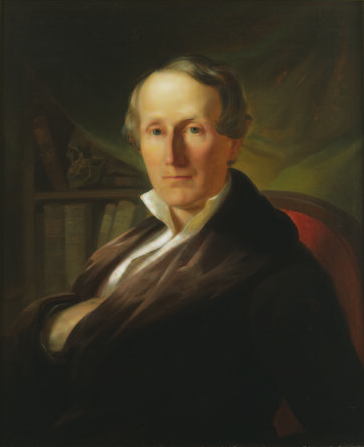
A new arrival (painting
by Giuilo Rosati - source). The privilege of white skin …
Earlier this year, fashion model Cameron Russell
condemned the unbearable whiteness of her industry:
[…] I won a genetic lottery, and
I am a recipient of a legacy. For the past few centuries, we have defined
beauty not just as health and youth and symmetry that we’re biologically
programmed to admire, but also as tall, slender figures with femininity and
white skin. This is a legacy that was built for me, and that I’ve been cashing in
on. (Russell, 2013)
Yes, Ms. Russell did win a genetic lottery, being
certainly more attractive than average. But she also mentioned a second
unearned windfall: a beauty privilege due to the “legacy” of the past few
centuries, when Europeans lorded over the world. Without that legacy, she would
presumably be a very ordinary woman, perhaps even ugly.
This presumption can be tested. There was a time,
not so long ago, when Europeans were weaklings on the world scene, when large
parts of their continent were ruled by other peoples, and when the center of geopolitical
power lay in the Middle East. In such a context, women like Cameron Russell would
have had much less beauty privilege to cash in on.
In reality, they had plenty, and not just in Europe.
‘White slavery’ today means the international trafficking of women for
prostitution. Back then, it meant the provisioning of the Muslim world with European
concubines, who were valued for their white skin (Lewis, 1990, pp. 11-13, 56,
72). This trade was considerable in Muslim Spain:
The same convoys of booty also
included women, these Frankish women who were all the more sought after in
Cordova because they were blond and fair-skinned. It was among them, as among
the captive women from Gascony, that the Umayyad princes chose their most
pampered concubines and who, once they became mothers, were themselves raised
to the rank of veritable princesses, of proven sultanesses (umm walad) who were influential and
quick to enter, with the assistance of Slav eunuchs, into secret and
complicated palace intrigues. But the Frankish women did not populate only the
caliph's harems; the dignitaries of the khassa
and the rich burghers of the cities also procured them at lavish prices, like,
in the modern period, the Circassian women who have so curiously tinted the
upper classes of oriental Muslim society. (Lévi-Provençal, 1953, p. 179)
Such women came from places that were poorer and
less advanced than the Muslim world. Neither they nor their future masters knew
what white skin would signify over a half-millennium later. Indeed, no one
foresaw the rise of Europe to geopolitical preeminence, certainly not this
11th-century Muslim author:
For those who live furthest to the
north between the last of the seven climates and the limits of the inhabited
world, the excessive distance of the sun in relation to the zenith line makes
the air cold and the atmosphere thick. Their temperaments are therefore frigid,
their humors raw, their bellies gross, their color pale, their hair long and
lank. Thus they lack keenness of understanding and clarity of intelligence, and
are overcome by ignorance and dullness, lack of discernment, and stupidity.
Such are the Slavs, the Bulgars, and their neighbors. (Lewis, 1990, p. 47)
Nonetheless, their women were considered strikingly attractive,
even to the point of being simply called ‘beautiful girls.’ An 8th-century Arab
musician wrote: “They used not to train beautiful slave girls to sing, but they
used only to train yellow and black girls. The first to teach valuable girls to
sing was my father” (Lewis, 1990, p. 56).
What gave rise to this desire for light-skinned
foreign women? It seems that fair skin has long been key to Arab notions of female
beauty:
Praise of a girl's looks is
traditionally couched in such terms as: Her face is like the full moon,
her mouth is an almond, her nose a cardamon, she is plump, and dimpled etc.
[...] The highest praise is perhaps that she is as white as snow — strange
praise indeed to come from a people very few of whom had ever seen snow. (Haim
1978, p. 88)
[The moon] is the most common
image used to represent female beauty. When attempting to draw the attention of
a beautiful girl on the street, a young man may call out, “’Es ya qamar?”
(roughly, “What’s happening, O moon?”). Two important components of the image,
brightness (fairness of skin) and roundness (of face), convey the popular
conception of beauty in Palestinian and Arab culture. (Muhawi and Kanaana 1989,
p. 60, cf. also 122, 181)
Not just in Arab
societies …
In general, traditional human societies share a
belief that women should be fairer-skinned than men (van den Berghe and Frost, 1986). This cultural norm runs parallel to a physical norm, i.e., in all human
populations, women are less pigmented than men from puberty onward. Both
melanin and cutaneous blood are involved, with the result that women look paler
and men browner and ruddier. Women also display a sharper contrast between facial
skin color and eye/lip color. These visual cues are subconsciously used by the
human mind to determine whether an individual is a man or a women (Dupuis-Roy et al., 2009; Frost, 2011; Russell, 2010; Russell, 2003; Russell and Sinha, 2007; Tarr et al., 2001).
In addition to aiding sex recognition, these visual
cues may also trigger feelings that in one way or another depend on the sex of
the person being observed. Since lighter skin is specific not only to women but
also to infants, some authors view it as one of several features (smooth,
pliable skin, high-pitched voice, small nose and chin, etc.) that the adult
female body has borrowed for the purpose of calming aggressive impulses in the adult
male and inducing feelings of care (Frost, 2010, pp. 134-135). Such feelings
may feed into male eroticism but are not erotic per se. Desire for darker female skin is attested as an alternate,
though secondary mode of sexual arousal, even in contexts where exotic
otherness seems to play no role, such as premodern European peasant societies, specifically
within a context of passionate but short-lived relationships (Frost, 2010, pp.
90-91). This alternate eroticism, previously repressed, has become popular in
the Western world since the 1920s with the growing acceptance of tanned skin as
a female fashion accessory (Frost, 2010, pp. 91-103).
Men thus seem to be innately oriented toward
paler female skin, if only as part of a mechanism for sex recognition. This
orientation can, but does not always, translate into erotic attraction and mate
choice. One notable exception is the modern Western world, where tanned female
skin has become increasingly popular. Another seems to be the high-polygyny region
of sub-Saharan Africa and Papua-New Guinea, where attitudes toward female skin
color tend to be ambivalent (Frost, 2010, pp. 83-97). First, the relative
scarcity of female mates ensures that all available women have takers. Second,
due to the higher polygyny rate, fathers invest less in their offspring and mothers
invest more. Darker women may thus benefit from a perception that they are better
at hoe farming and providing for their children. Ardener (1954) makes this
point with regard to the Ibo of Nigeria:
In the choice of a wife,
yellow-skinned girls are regarded as beauties, and, other things being equal,
they command higher bride prices. On the
other hand it is generally held, especially by dark-complexioned persons, that
yellow-skinned people are not as strong as the dark and do not live as
long. A 'black' girl is said to be a
harder worker. […] A Mission headmaster was of the opinion that the preference
for yellow girls was greater nowadays than in his youth. He thought that the reason for this was that
people formerly looked for strength rather than beauty and tended to marry
black girls.
Conclusion
There is a widespread belief, particularly among proponents
of whiteness studies, that notions of beauty are determined by power
relationships. The strong and mighty are inevitably ‘beautiful.’ This belief is
so entrenched that little concern is shown for counterfactual evidence, such as
the medieval trade in fair-skinned women for clients in North Africa, the
Middle East, and South Asia.
This trade existed for two reasons. On the one hand,
European states were too weak to stop it. On the other, European women were considered
beautiful by people in geopolitically stronger states to the south and east. Again, this pattern is inconsistent with the belief
that power relationships determine notions of beauty.
References
Ardener, E.W. (1954). Some Ibo attitudes to skin
pigmentation, Man, 54, 71-73.
Dupuis-Roy, N., I. Fortin, D. Fiset, et al., et al. (2009).
Uncovering gender discrimination cues in a realistic setting, Journal of Vision, 9(2), art. 10, 1–8.
Haim, S.G. (1978). Love in an Arab Climate, Encounter, 50, 86‑91.
Frost, P. (2011). Hue and luminosity of human skin:
a visual cue for gender recognition and other mental tasks, Human Ethology Bulletin, 26(2), 25-34.
http://media.anthro.univie.ac.at/ISHE/index.php/bulletin/bulletin-contents
Frost, P. (2010). Femmes
claires, hommes foncés. Les racines oubliées du colorisme, Quebec
City : Presses Universitaires de Laval.
Lévi-Provençal, É. (1953). Histoire de l’Espagne musulmane, tome III, Paris: G.P. Maisonneuve.
Lewis, B. (1990). Race and Slavery in the Middle East, New York: Oxford University
Press.
Muhawi, I. and S. Kanaana. (1989). Speak, Bird, Speak Again, Berkeley:
University of California Press.
Russell, C. (2013). Model Cameron Russell: I get
what I don’t deserve, February 18, CNN
Edition International
http://edition.cnn.com/2013/02/17/opinion/russell-model-genetic-lottery/index.html?hpt=hp_c3
Russell, R. (2010). Why cosmetics work, in R. B. Adams,
N. Ambady, K. Nakayama et al. (eds.) The
Science of Social Vision. New York, Oxford.
Russell, R. (2003). Sex, beauty, and the relative
luminance of facial features, Perception,
32, 1093-1107.
Russell, R. and P. Sinha. (2007). Real-world
face recognition: The importance of surface reflectance properties, Perception, 36, 1368-1374.
Tarr, M.J., D. Kersten, Y. Cheng et al. (2001). It’s
Pat! Sexing faces using only red and green, Journal
of Vision, 1(3), 337, 337a.
Van den Berghe, P. L. and P. Frost. (1986). Skin
color preference, sexual dimorphism, and sexual selection: A case of
gene-culture co-evolution?, Ethnic and
Racial Studies, 9, 87-113.