skip to main |
skip to sidebar
Patterson Town Hall,
(Wikicommons - Anthony22). Putnam County NY has the lowest IFR for COVID-19 in
the United States.
SARS-CoV-2 is more virulent in
southern Europe than in northern Europe. The reason, I’ve argued, is that the
Mediterranean Basin is one of several regions where humans have coevolved for a
longer time with crowded social environments. By "crowded" I mean not
only proximity to other people but also proximity to domesticated animals. In
such environments, which are prone to deadly pulmonary diseases like
tuberculosis and pneumonia, natural selection may have favored susceptibility
to infection by coronaviruses, which are normally mild in their effects, as a
means to maintain a strong immune response to respiratory infections (Frost
2020).
If we look at case fatality
rates, Italy and Spain have been hit much worse than Germany, Switzerland,
Austria, and Iceland. The United Kingdom falls between the two extremes,
although a confounding factor is its large population of non-native origin
(Singh 2020).
This pattern also shows up in
a meta-study of infection fatality rates. Meyerowitz-Katz and Merone (2020)
examined thirteen estimates of IFR from a wide range of countries. They came to
two main conclusions:
- Mean IFR is 0.75% but varies
considerably between countries;
- IFR has increased over time,
being lower in February and March than in April and May.
Earlier estimates were based
on the assumption that the average time lag between infection and death is two
weeks on average. Actually, it's probably longer, perhaps a month. Later deaths
may have thus been missed by estimates made in February and March.
If we look only at IFRs from
April and May, the meta-study shows a north-south cline in the virulence of
SARS-CoV-2:
Germany - 0.36%
France - 0.70%, 0.80%
Italy - 0.95%, 1.29%, 1.60%
For the same time period, the
meta-study also presented three estimates from the United States:
New York City - 0.93%
California - 0.20%
United States - 1.30%
The last study provides
estimates ranging from a low of 0.5% in Putnam County NY to a high of 3.6% in
King County WA (Basu 2020). These numbers are so high because IFR is calculated only in relation to symptomatic cases. In my opinion, this study is not comparable to the others and should not have been included in the metastudy. It is nonetheless useful for charting the virulence of SARS-CoV-2 within the United States.
So why would the virus be less virulent in Putnam County NY than in King County WA? Let's consider the demographics in each case. The first county is 80% non-Hispanic White, 14%
Hispanic, 3% Black, and 2% Asian. The second county is 65% non-Hispanic White, 15%
Asian, 9% Hispanic, and 6% Black. Putnam County is whiter and probably less cosmopolitan
than King County, which encompasses the Seattle area. This impression is strengthened
by the voting pattern in Putnam County, which trends much more Republican than Democrat
(Wikipedia 2020). The virus thus seems to be least virulent among "old stock"
Euro Americans. I would also predict low virulence in Amerindian
communities.
Virulence may also differ
between west coast Hispanics and east coast Hispanics, as suggested by the
difference between California and New York City. East Coast Hispanics are less often Mexican and more often Puerto Rican. They may thus be more vulnerable because
they are more Mediterranean and less Amerindian by ancestry.
References
Basu, A. (2020). Estimating The
Infection Fatality Rate Among Symptomatic COVID-19 Cases In The United States. Health affairs (Project Hope).
2020:101377hlthaff202000455.
https://www.healthaffairs.org/doi/full/10.1377/hlthaff.2020.00455
Frost, P. (2020). Does a
commensal relationship exist between coronaviruses and some human populations? Journal of Molecular Genetics 3(2): 1-2.
https://researchopenworld.com/does-a-commensal-relationship-exist-between-coronaviruses-and-some-human-populations/
Meyerowitz-Katz, G. and L.
Merone. (2020). A systematic review and
meta-analysis of published research data on COVID-19 infection-fatality rates. medRxiv,
May 18, 2020
https://www.medrxiv.org/content/10.1101/2020.05.03.20089854v2
Singh, S. (2020). BCG vaccines
may not reduce COVID-19 mortality rates. medRxiv
April 11, 2020
https://www.medrxiv.org/content/10.1101/2020.04.11.20062232v1
Wikipedia (2020). Putnam County, New
York.
https://en.wikipedia.org/wiki/Putnam_County,_New_York
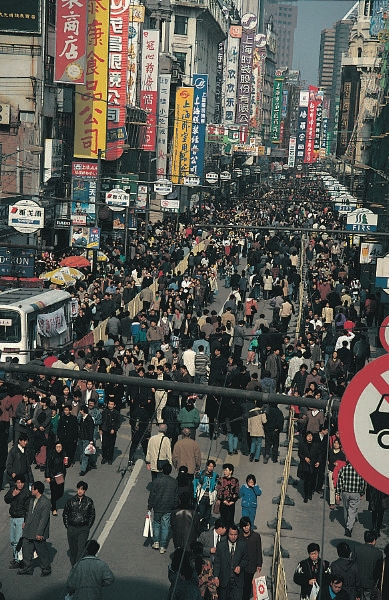
Nanjing
Road, Shanghai (Wikicommons - Stephen Codrington). Populations with a long
history of social crowding may have become more susceptible to coronavirus
infection.
I've
published a paper on coevolution between coronaviruses and "crowded"
social environments. Comments are welcome. Here is the abstract:
Coronaviruses enter lung tissue via the
ACE2 receptor, which varies structurally among human populations. In
particular, the Chinese population has fewer variants that bind weakly to the
coronavirus S-protein. This global variation suggests that the ACE2 receptor
has coevolved with different environments, some of which have favored
susceptibility to infection of lung tissue by coronaviruses.
It has been argued
that respiratory viruses boost the immune response of lung tissue and thereby
prevent more serious pulmonary diseases, like tuberculosis, pneumonia, and
pneumonic plague. This preventive effect has been shown with other viral
pathogens, notably γherpesvirus 68 and cytomegalovirus. Some human populations
may have therefore gained protection from severe respiratory infections by
becoming more susceptible to mild respiratory infections, such as those
normally caused by coronaviruses.
This commensal virus-host relationship would
have been especially adaptive wherever respiratory pathogens could easily
propagate, i.e., in crowded environments, where many people live in proximity
not only to each other but also to animal sources of infection. In regions that
have long had crowded environments, natural selection may have favored
susceptibility to infection by coronaviruses, which are normally mild in their
effects, as a means to maintain a strong immune response to deadly pulmonary
diseases.
Reference
Frost,
P. (2020c). Does a commensal relationship exist between coronaviruses and some
human populations? Journal of Molecular
Genetics 3(2): 1-2.
https://researchopenworld.com/does-a-commensal-relationship-exist-between-coronaviruses-and-some-human-populations/
Why
have British women become broader-hipped over the past three thousand years?
(Wikicommons: Niek Sprakel)
British
women have become broader-hipped over the past three thousand years or so.
That's the conclusion of a recent study of alleles that influence female hip
circumference, using data from the UKBiobank.
Audrey Arner and her colleagues at Penn State identified 148 SNPs associated with female hip circumference and 49 SNPs associated with first child birth weight. Nine of them influence both
women's hip circumference and first child birth weight. The SNPs associated with
female hip circumference seemed to influence first child birth weight but not vice versa. There also seems to have been selection over approximately the last three thousand years for women with broader hips.
The
baby's head is the biggest challenge during childbirth:
Human
birthing is difficult owing to a tradeoff between large neonatal brain size and
maternal pelvic dimensions, which are constrained by aspects of bipedal
biomechanics. The net effect is that human neonatal head size closely matches
maternal pelvic dimensions, unlike in our closest living relatives, the great
apes, whose pelvic dimensions are larger than neonatal head sizes. (Franciscus
2009)
Have
female hips become broader over the past three thousand years because the birth
canal has had to accommodate babies with larger brains? That hypothesis would
be consistent with an analysis of ancient DNA by Michael Woodley of Menie and
others, who showed that alleles for educational attainment gradually increased
in frequency between 4,560 and 1,210 years ago in Europeans and Central Asians.
That increase may have been due to gene-culture coevolution: as societies grew
larger and more complex, the average person had to perform mental tasks that
likewise became larger in number and more complex. Such an environment would
have favored the survival and reproduction of individuals with higher cognitive
ability. Mean IQ thus rose over time, as did cranial capacity.
On
the other hand, Henneberg (1988) showed that cranial capacity steadily shrank
from the Mesolithic to modern times, becoming 9.9% smaller in men and 17.4%
smaller in women. His conclusion was based on a large sample: 9,500 male skulls
and 3,300 female skulls.
So
we have a contradiction. Perhaps cranial capacity didn't really shrink from the
Mesolithic to modern times. Perhaps smaller skulls are more likely to decompose
faster. The skulls we unearth would therefore be a biased sample, and this bias
toward preservation of larger skulls would gradually increase for skulls that
have been in the ground longer.
The
problem of "preservation bias" has already been noted with respect to
female and infant remains:
There
are nearly always more males than females in skeletal collections from
archeological sites [...]. This has been explained in part by the comparatively
rapid disintegration of lightly built female skeletons.
[...]
The burial records show that most of the people buried in the Purisima cemetery
were either infants, children, or elderly adults. The skeletal remains
excavated from the cemetery, in contrast, are predominately those of young
adults. The underrepresentation of young children in the skeletal collection is
most likely a result of the comparatively rapid disintegration of their
incompletely calcified bones.
[...]
If, on the other hand, infants or elderly people are more common in a skeletal
collection from a recent cemetery than they are in an ancient one, much less
can be inferred about differences in the original age structure of the two
burial populations. Such a difference would be expected due to differential
preservation, even if the age structures of the two burial populations were
identical. (Walker et al. 1988)
The
same preservation bias might cause an overrepresentation of larger skulls among
older remains.
References
Arner,
A., H. Reyes-Centeno, G. Perry, and M. Grabowski. (2020). Pleiotropic effects
on the recent evolution of human hip circumference and infant body size. The 89th Annual Meeting of the American
Association of Physical Anthropologists (2020), April 17
https://meeting.physanth.org/program/2020/session26/arner-2020-pleiotropic-effects-on-the-recent-evolution-of-human-hip-circumference-and-infant-body-size.html
Franciscus,
R.G. (2009). When did the modern human pattern of childbirth arise? New
insights from an old Neandertal pelvis. Proceedings
of the National Academy of Sciences 106(23): 9125-9126.
https://www.pnas.org/content/106/23/9125.short
Henneberg,
M. (1988). Decrease of human skull size in the Holocene. Human Biology 60: 395-405.
https://www.jstor.org/stable/41464021
Walker,
P.L., J.R. Johnson, and P.M. Lambert. (1988). Age and sex biases in the
preservation of human skeletal remains. American
Journal of Physical Anthropology 76: 183-188.
https://onlinelibrary.wiley.com/doi/abs/10.1002/ajpa.1330760206
Woodley
of Menie, M.A., S. Younuskunju, B. Balan, and D. Piffer. (2017). Holocene
selection for variants associated with general cognitive ability: Comparing
ancient and modern genomes. Twin Research
and Human Genetics 20: 271-280.
https://www.cambridge.org/core/journals/twin-research-and-human-genetics/article/holocene-selection-for-variants-associated-with-general-cognitive-ability-comparing-ancient-and-modern-genomes/BF2A35F0D4F565757875287E59A1F534
Worldwide
frequency of the new ASPM variant (Mekel-Bobrov
et al. 2007)
Fifteen
years ago, Science published a major finding:
the human brain was still evolving well after the dawn of history. This could
be seen in the evolution of ASPM, a
gene that severely reduces brain size if it fails to function during
development.
Here,
we show that one genetic variant of ASPM
in humans arose merely about 5800 years ago and has since swept to high
frequency under strong positive selection. These findings, especially the
remarkably young age of the positively selected variant, suggest that the human
brain is still undergoing rapid adaptive evolution. (Mekel-Bobrov et al. 2007)
This
variant seems to have come from the Middle East, where it is most prevalent
today (37-52%). Its prevalence is next highest in Europe (38-50%). It is much
less common in East Asia (0-25%) and virtually absent almost everywhere else.
Interest
waned in the subject when several researchers found no association between the new
variant and IQ scores or brain size (Mekel-Bobrov et al. 2007; Rushton et al.
2007). At the time it was widely thought, notably by J. Philippe Rushton, that IQ
covers all aspects of mental effort. When I asked him whether the researchers
had measured mental endurance, he replied: "No, they just used the
standard IQ tests, head circumference, and (in our case) a test of altruism.
[...] Generally there isn't thought to be much left to be explained after g is taken out."
This
view has since been called into question. Some cognitive abilities correlate
poorly with IQ, like executive function (Arffa 2007). Others show no
correlation at all, like face recognition (Zhu et al. 2010). Furthermore, there
has been growing evidence that the different ASPM variants of modern humans affect only some parts of the brain,
and not the entire brain. According to a comparative study of primate species,
the evolution of ASPM does not
correlate with major changes in the whole brain or in cerebellum size:
Particularly
striking is the result that only major changes of cerebral cortex size and not
major changes in whole brain or cerebellum size are associated with positive
selection in ASPM. This is consistent
with an expression report indicating that ASPM's
expression is limited to the cerebral cortex of the brain (Bond et al. 2002).
Our findings stand in contrast to recent null findings correlating ASPM genotypes with human brain size
variation. Those studies used the relatively imprecise phenotypic trait of
whole brain instead of cerebral cortex size (Rushton, Vernon, and Bons 2006;
Woods et al. 2006; Thimpson et al. 2007). Although previous studies have shown
that parts of the brain scale strongly with one another and especially with
whole brain (e.g., Finlay and Darlington 1995), evidence here suggests that
different brain parts still have their own evolutionary and functional
differentiation with unique genetic bases. (Ali and Meier 2008)
Another
comparative study found that ASPM had
undergone accelerated change in chimpanzee, bonobo, and human lineages. Perhaps
more interestingly, the effects were confined to development of the cerebral
cortex:
Our
findings indicate that ASPM variation
is potentially associated with cerebral ventricular volume in chimpanzees, but
not with any of the other brain structure measures. Ventricles are a critical
site of neuronal proliferation in early development. Furthermore, the
cerebrospinal fluid which circulates through the ventricles throughout life
carries proteins that play important roles in central nervous system
development and maintenance, like Sonic Hedgehog protein and Insulin-like
Growth Factor 2.
Sonic
Hedgehog protein?
Thus,
variation in ventricular volume may affect the circulation of growth factors
that could potentially influence the regulation of cerebral cortical
development. Alternatively, because ASPM
has a significant effect on neural progenitor cycling along the ventricles in
fetal life, the association shown in our study may be a result of how brain
size is patterned by ASPM during
neurogenesis in early development. It has been shown that ASPM plays a role in regulating the affinity of ventricular radial
glial cells (VRGs) for the ventricular surface. (Singh et al. 2019)
While
there is also a broader role in brain development and brain size, it is usually
limited to extreme cases, like microcephaly:
The
abundance of ASPM mutations in human
patients with microcephaly suggests that the gene plays a significant role in
the regulation of brain size; however, variation in the gene has not always
shown direct impact on brain circumference, volume, and intelligence in
non-pathological populations. It is possible that ASPM interacts with other genes to affect brain volume, and thus
associations depend on genetic background. Furthermore, selective pressure on ASPM may be associated with other
aspects of neuronal function that do not lead to overt changes in brain
structure, or might have a pleiotropic effect in other areas of the body, as ASPM is also expressed outside of the
brain (Singh et al. 2019)
Possible
explanations for the new ASPM variant
Shift from tonal
to nontonal language?
So
what made the new ASPM variant so
successful? Two British researchers, Dan Dediu and D. Robert Ladd argue that it
was a shift from tonal to non-tonal language. After showing that nontonality
correlates geographically with the new ASPM
variant (and also a new variant of the Microcephalin
gene), they note that "the fact that nontonality is associated with the
derived haplogroups suggests that tone is phylogenetically older and that the
bias favors nontonality" (Dediu Ladd 2007).
If
this is true, tonality gave way to nontonality in the Middle East when the new ASPM variant arose there some six thousand
years ago. Yet we have no evidence of such a shift. Furthermore, languages have
usually evolved from nontonality to tonality: "it seems to be the dominant
view in the literature that tones arose from a toneless state" (Abramson
2004).
Spread of
alphabetical writing?
I
have argued for another explanation: the new ASPM variant was successful because it somehow assisted a mental
task that originated in the Middle East some six thousand years ago and then
spread into Europe. The task was alphabetical writing, specifically the mental
process of transcribing speech and copying texts into alphabetical characters.
Though more easily learned than ideographs, these characters place higher
demands on the mind, especially under premodern conditions (continuous text
with little or no punctuation, real-time stenography, absence of automated
assistance for publishing or copying, etc.). This task was largely assigned to
scribes of various sorts who enjoyed privileged status and probably superior
reproductive success, thereby spreading the new ASPM variant throughout the population (Frost 2007).
Conclusion
For
a brief time, over a decade ago, it seemed we had hard evidence that the human
brain was still evolving during the time of recorded history. That evidence was
soon rejected and largely forgotten, ironically through the efforts of J.
Philippe Rushton. It didn't fit his model. As he saw it, if something fails to
correlate with IQ, specifically with the g
factor, it cannot be a cognitive ability and is unworthy of interest.
Rushton
was also held back by the idea that human evolution had largely ended with the
end of the last ice age. Though intrigued by the contrary idea of ongoing human
evolution, he never brought it into his theoretical work and generally treated
it like an unwanted strip of film on a cutting-room floor.
References
Abramson,
A.S. (2004). The plausibility of phonetic explanations of tonogenesis. In:
Fant, G., Fujisaki, H., Cao, J., Xu, Y. (Eds.), From traditional phonology to modern speech processing: Festschrift for
Professor Wu Zongji's 95th birthday. Beijing: Foreign Language Teaching and
Research Press, 17-29.
http://www.haskins.yale.edu/Reprints/HL1336.pdf
Ali,
F. and R. Meier. (2008). Positive selection in ASPM is correlated with cerebral cortex evolution across primates
but not with whole brain size. Molecular
Biology and Evolution 25(11): 2247-2250.
http://www.haskins.yale.edu/Reprints/HL1336.pdf
Arffa,
S. (2007). The relationship of intelligence to executive function and
non-executive function measures in a sample of average, above average, and
gifted youth. Archives of Clinical
Neuropsychology 22(8): 969-978
https://academic.oup.com/acn/article/22/8/969/3025
Dediu,
D., and R. Ladd. (2007). Linguistic tone is related to the population frequency
of the adaptive haplogroups of two brain size genes, ASPM and Microcephalin. Proceedings of the National Academy of Sciences
104(26):10944-10949
https://langev.com/pdf/dediu07linguisticTonePNAS.pdf
Frost,
P. (2007). The spread of alphabetical writing may have favored the latest
variant of the ASPM gene. Medical Hypotheses 70: 17-20.
http://www.sciencedirect.com/science/article/pii/S0306987707003234
Frost,
P. (2008). Decoding the ASPM puzzle. Evo and Proud, August 27
http://evoandproud.blogspot.com/2008/08/decoding-aspm-puzzle.html
Mekel-Bobrov,
N., S.L. Gilbert, P.D. Evans, E.J. Vallender, J.R. Anderson, R.R. Hudson, S.A.
Tishkoff and B.T. Lahn. (2005). Ongoing adaptive evolution of ASPM, a brain size determinant in Homo sapiens. Science 309: 1720-1722
https://www.researchgate.net/publication/7611130_Ongoing_Adaptive_Evolution_of_ASPM_a_Brain_Size_Determinant_in_Homo_Sapiens
Mekel-Bobrov,
N., D. Posthuma, S.L. Gilbert, P. Lind, M.F. Gosso, et al. (2007). The ongoing
adaptive evolution of ASPM and Microcephalin is not explained by
increased intelligence. Human Molecular
Genetics 16(6): 600-608.
https://academic.oup.com/hmg/article/16/6/600/610971
Rushton,
J.P., P.A. Vernon, and T.A. Bons. (2007). No evidence that polymorphisms of
brain regulator genes Microcephalin
and ASPM are associated with general
mental ability, head circumference or altruism. Biology Letters-UK 3(2):157-60.
https://royalsocietypublishing.org/doi/full/10.1098/rsbl.2006.0586
Singh,
S.V., N. Staes, E.E. Guevara, S.J. Schapiro, J.J. Ely, et al. (2019). Evolution
of ASPM coding variation in apes and
associations with brain structure in chimpanzees. Genes, Brain and Behavior 18:e12582.
https://dukespace.lib.duke.edu/dspace/bitstream/handle/10161/19252/Singh_etal2019.pdf?sequence=2
Zhang,
J. (2003). Evolution of the Human ASPM
Gene, a Major Determinant of Brain Size. Genetics
165(4): 2063-2070.
https://www.genetics.org/content/165/4/2063.short
Zhu,
Q., Y. Song, S. Hu, X. Li, M. Tian, Z. Zhen, Q. Dong, N. Kanwisher, and J. Liu.
(2010). Heritability of the specific cognitive ability of face perception. Current Biology 20(2): 137-142.
https://www.sciencedirect.com/science/article/pii/S096098220902123X
A
dying man, stoned on suspicion of spreading the plague - Felix Jenewein, 1899
(Wikicommons)
SARS-CoV-2,
though novel, belongs to a long-existing group of respiratory pathogens:
coronaviruses. Until the first appearance of SARS in 2002, these pathogens did
little harm to their hosts, usually causing nothing worse than a common cold.
So they may have coevolved with us. Furthermore, this coevolution may have
taken different forms in different human populations and different cultural
environments.
Coronaviruses
infect lung tissue via a receptor, ACE2, that varies structurally not only
between Asians and other human groups but also between different Asian groups.
In particular, the Chinese population has fewer alleles that code for weak
binding to the coronavirus S-protein (Cao et al. 2020). Different ACE2 alleles are also associated with
differences in susceptibility to diabetic retinopathy, an eye disease with a
distinct global pattern of prevalence: 22% in Italy, 23% in China, 30% in the
United Kingdom, and 40% in the United States (Adams 2020).
This
geographic pattern doesn’t exist because some populations have become more
resistant to coronaviruses. Instead, the reverse seems to have happened: some
populations have become more susceptible to coronavirus infection, perhaps as a
means to prevent more serious pulmonary infections, like tuberculosis and
pneumonic plague (Shekhar et al. 2017). Such an effect has been shown with γherpesvirus
68 and cytomegalovirus (Barton et al. 2007; Miller et al. 2019). This crude
vaccination boosts the immune response through increased production of IFN-γ
and increased activation of macrophages.
Historically,
tuberculosis was especially common in crowded environments, where people lived
in proximity not only to each other but also to domesticated animals (Comas et
al. 2013). Such environments have existed continuously for the longest time in
China, as well as in areas like the Indo-Gangetic Plain, the Fertile Crescent,
and the Mediterranean Basin. Those areas are where people should be most
susceptible to coronavirus infection.
This
may explain why COVID-19 has been more severe in southern Europe than in
northern Europe. It is surprising that infection tends to become less severe with
latitude when one would expect the opposite: respiratory viruses spread more
effectively under conditions of lower temperature, lower humidity, and lower
solar UV.
Ongoing research?
These
geographic differences have caught the interest of a molecular epidemiologist
at the University of Hawai'i, Maarit Tiirikainen:
"There
have been major differences in the rates of SARS-CoV-2 infection and the severe
disease between the different geographic regions since the beginning of the
COVID-19 pandemic, even among young individuals," Dr. Tiirikainen said.
"Epidemiological studies-so-called Genome Wide Association Studies
(GWAS)-indicate that populations carry different variants of the ACE2 gene.
This variation in the gene coding for the ACE2 receptor may have an effect on
the number of ACE2 receptors on the lung cells, as well as on how effectively
the virus binds to the receptor. There may also be genetic differences in
immune and other important genes explaining why some people get more sick than
others."
She
is collaborating with a genomics company, LifeDNA, in a study that will
initially focus on Hawai'i's multiethnic inhabitants, specifically their
diversity of ACE2 alleles in relation
to the latest coronavirus (LifeDNA 2020 – h/t to Steve Sailer).
Parting thoughts
All
humans can get infected by coronaviruses, but the infection tends to vary in
severity from one population to another. This variance may reflect differences
in genetic adaptation in different cultural environments.
Of
course, adaptation may also be cultural. Because natural selection acts on the
end result, and not on the means to that end, the means may be a purely learned
algorithm, like adding spices to food or avoiding physical contact with
strangers. One might not have understood why or how such practices worked, but
they did work and would be passed on to subsequent generations, thus becoming the
traditional way of doing things. Today, we’re likely to reject such practices as
outmoded superstitions.
So
be modern. Hug a stranger.
References
Adams
N. (2020). Cracking the code to the 2019 novel coronavirus (COVID-19): Lessons
from the eye. Eye Reports 6(1).
https://eyereports.org/index.php/eyereports/article/view/97
Barton
E.S., White D.W., Cathelyn J.S., Brett-McClellan K.A., Engle M., Diamond M.S.,
et al. (2007). Herpesvirus latency confers symbiotic protection from bacterial
infection. Nature 447: 326-329.
https://www.nature.com/articles/nature05762
Cao
Y., Li L., Feng Z., Wan S., Huang P., Sun X., et al. (2020). Comparative
genetic analysis of the novel coronavirus (2019-nCoV/SARS-CoV-2) receptor ACE2
in different populations. Cell Discovery
6(11).
https://www.nature.com/articles/s41421-020-0147-1%3C/blockquote%3E
Comas
I., Coscolla M., Luo T., Borrell S., Holt K.E., Kato-Maeda M., et al. (2013).
Out-of-Africa migration and Neolithic coexpansion of Mycobacterium tuberculosis with modern humans. Nature Genetics 45(10): 1176-1182.
https://www.ncbi.nlm.nih.gov/pmc/articles/PMC3800747/
LifeDNA
(2020). COVID-19: LifeDNA and University of Hawai’i Collaborate on Studying Why
Certain Populations Are Hit Harder. Research focuses on ACE2 receptor, probing
the role of genetics in both susceptibility to infection and severity of
response April 2, University of
Hawai'i Cancer Center
https://www.uhcancercenter.org/about-us/newsroom/600-covid-19-lifedna-and-university-of-hawai-i-collaborate-on-studying-why-certain-populations-are-hit-harder
Miller
H.E., Johnson K.E., Tarakanova V.L., Robinson R.T. (2019). γ-herpesvirus
latency attenuates Mycobacterium
tuberculosis infection in mice. Tuberculosis
116: 56-60.
https://www.ncbi.nlm.nih.gov/pmc/articles/PMC6876742/
Shekhar
S., Schenck K., Petersen F.C. (2017). Exploring host-commensal interactions in
the respiratory tract. Frontiers in Immunology 8: 1971.
https://www.frontiersin.org/articles/10.3389/fimmu.2017.01971/full
March
in Brooklyn (?) (Wikicommons - Amanda Hirsch). Can we learn to feel another
person's pain or joy? Twin studies indicate that affective empathy is 52-57%
heritable. The rest includes prenatal and postnatal influences that happen long
before social learning begins.
In
our species, a major problem has been to create high-trust societies that
encompass large numbers of people who are not closely related and yet have to
deal with each other regularly. This problem hasn’t been resolved in most human
populations—for the most part, people trust only family and close kin.
Consequently, a market economy cannot realize its full potential: a lot of
economic activity never happens because the low level of trust makes it too
costly. This point is repeatedly made in the book India Unbound by Gurcharan Das:
[…]
the social life of Indians revolves around the family or caste. It does not
encompass the whole community. Perhaps this is why our streets are dirty when
our homes are spotlessly clean. (Das 2002, p. 81)
A
striking characteristic of Indian business is that it is family-owned and
family-managed. […] (Das 2002, p. 265)
Whether
businesses here can create managerial capitalism depends partly on Indian
society’s ability to build “social capital.” Where strangers spontaneously trust
each other and cooperate with each other, there is high social capital. Indeed,
Tocqueville regarded this “art of association” as an essential virtue of
American society because it moderated the American tendency toward
individualism. Trust and cooperation are necessary in all market activity.
Social capital can help companies make the transition from small family units
to large, professionally run enterprises. High trust can dramatically lower
transaction costs, corruption, and bureaucracy. (Das 2002, pp. 267-268)
The
"large society problem" has been fully resolved only in two culture
areas: Northwest Europe and East Asia. In general, the solution has been to
weaken the importance of kinship in social relations and to strengthen
impersonal forms of sociality that can bring everyone together, and not just
closely related people. To be specific, the focus of empathy has been extended
beyond the circle of close kin, and people become more attuned to universal social
rules that exist independently of kinship obligations.
Northwest
Europeans have transcended the ties of kinship to an unusual extent. North and
west of a line running from Trieste to St. Petersburg, kinship ties have been
relatively weak for at least a millennium. Almost everyone is single for at
least part of adulthood, and many stay single their entire lives. In addition,
households often have non-kin members, and children normally leave the nuclear
family to form new households. This weak-kinship environment is associated with
an equally unusual pattern of behavior: greater individualism, less loyalty to
kin, and more willingness to trust strangers.
This
is not so with East Asians, who still have strong kinship ties and are actually
less individualistic than humans in general. Whereas a greater sense of self
has helped Northwest Europeans transcend the limitations of kinship to build
larger societies, East Asians have relied on a lesser sense of self to
strengthen impersonal sociality within and beyond their circle of close kin.
There is more emphasis on holistic attention, on social happiness rather than
personal happiness, and on suspension of self-interest. Conversely, there is
less emphasis on self-expression, self-esteem, and self-efficacy (Kitayama et
al. 2014).
Empathy: cognitive
versus affective
Empathy
seems especially key to strengthening social relations beyond one's circle of
close kin. It has two components. Cognitive empathy is the ability to
understand the feelings of another person, and affective (or emotional) empathy
is the ability to internalize those feelings and actually feel that person's
pain or joy. Affective empathy is 52-57% heritable, and cognitive empathy 27%
heritable (Melchers et al. 2016). This is in line with longitudinal studies on
children: affective empathy remains stable as a child develops, while cognitive
empathy progressively increases, perhaps through learning (Decety et al. 2017).
Affective
empathy, but not cognitive empathy, is sexually dimorphic:
[...]
females do indeed appear to be more empathic than males [but] [t]hey do not
appear to be more adept at assessing another person's affective, cognitive, or
spatial perspective" (Hoffman 1977).
Women
are faster in recognizing facial expression, emotional body language, more
sensitive to baby voice, more experientially reactive to negative, but not
positive, emotional pictures compared to men. Men, on the other hand, seem to
show better skills in cognitive empathy while women performed better in
emotional empathy (Uysal et al. 2020).
This
difference between men and women has been confirmed by a British study
(Baron-Cohen and Wheelwright 2004), a largely Argentinean study (Baez et al.
2017), an Italian twin study (Toccaceli et al. 2018), and a Chinese study (Liu
et al. 2018). The size of the difference varies, however, being slight in the
British and Argentinean studies, large but not significant in the Italian
study, and significant in the Chinese study. The sex difference in affective
empathy largely accounts for the sex difference in aggression (Dryburgh and Vachon
2019). Women are also more likely to forgive, and this sex difference seems
mediated by the sex difference in empathy (Witvliet et al. 2020).
Thus,
affective empathy may have initially served to facilitate the relationship
between a mother and her young children. This female adaptation may have a long
evolutionary history among mammals: it has been shown that sensitivity to the
pain of others is stronger in female mice than in male mice (Uysal et al.
2018).
As
some human populations formed larger and more complex societies, natural
selection may have gradually extended affective empathy to both sexes and to
all social relationships. An analogy would be the gene-culture coevolution
between lactose metabolism and dairy farming. The ability to digest lactose is
lost after infancy by most humans but is lifelong in cultures where adults
consume milk and other dairy products.
Northwest
Europeans versus East Asians
Northwest
Europeans and East Asians are similar in having high levels of empathy but differ
in the relative importance of cognitive empathy versus affective empathy.
Affective empathy is much more key to prosocial behavior among Northwest
Europeans than among East Asians. This was the conclusion of Li et al. (2019):
Previous
research has shown that affective empathy, rather than cognitive empathy,
significantly predicts people's altruistic sharing behavior in economic games.
However, most of these studies were conducted in Western populations. There
might be cultural differences in the relations between empathy and altruism due
to different levels of empathy between Western and Asian individuals. In this
study, we measured different aspects of empathy in Chinese adults as well as
their allocation offers in the dictator and ultimatum games. We found that
cognitive empathy, but not affective empathy, was a significant predictor of
adults' altruistic sharing behavior in the two economic games.
Similarly,
Siu and Shek (2005) found that Chinese subjects had trouble distinguishing
between cognitive empathy and affective empathy. They concluded that
"Chinese people might not perceive the items from the two dimensions as
too different in nature."
One
might think that cognitive empathy would be worse than affective empathy as a
basis for prosocial behavior. For instance, sociopaths are usually high in
cognitive empathy: they know how another person feels in a given situation, but
they use this knowledge to exploit and control that person. Wouldn't their
resulting success eventually destroy social order? East Asian societies may
have avoided this outcome through their low level of individualism and their
correspondingly high level of social conformity. Kitayama et al. (2014) makes
this point when discussing certain alleles of a gene, DRD4, that are associated with risk seeking and heavy drinking in
the United States but not in East Asia. These alleles seem to increase the
desire to emulate one's peers, and such emulation is more likely to favor
dysfunctional behavior in the United States than in East Asia:
It
might be the case that the 7R and 2R alleles are associated with greater
acquisition of culturally sanctioned social orientations under generally
favorable conditions of socialization, such as careful guidance and scaffolding
of norm-congruous behaviors by socialization agents (e.g., parents, relatives,
neighbors), but with markedly different, deviant behaviors (e.g., delinquency
and risk proneness) under unfavorable social conditions or adversity, which
might "reward" externalization or risk taking. (Kitayama et al. 2014)
These
alleles seem to explain the weaker individualism and stronger social conformity
of East Asians. When Kitayama et al. (2014) compared a sample of Euro-Americans
with a sample of East Asians born in China, Korea, or Japan, they found that
the East Asians were less individualistic than the Euro-Americans on a social
orientation test, but this difference was limited to carriers of DRD4 alleles that increase dopamine
signalling, i.e., 7- or 2-repeat alleles. Non-carrier East Asians were just as
individualistic as non-carrier Euro-Americans (Kitayama et al. 2014)
Finally,
we should keep in mind a serious shortcoming of affective empathy: you may
become so overcome by your emotion that you can no longer accurately assess the target of
your empathy. This point is made by Atkins (2014) in a review of
several experimental studies of empathy in British and East Asian subjects:
Thus,
it is possible that being in a highly emotionally empathic state may cloud the
ability to accurately infer the emotions of a target due to the heightened
emotions experienced in response to the suffering of another. In line with this
reasoning, East Asians' lower level of emotional involvement might have freed
cognitive resources to allow them to more accurately infer the emotions of
targets.
A review of the
subject
Atkins
(2014) comes to several conclusions in his comparative review:
-
When viewing a person suffering physical pain, British subjects report greater
negative affect than do East Asian subjects.
- When viewing a person suffering social pain,
British subjects show greater empathic concern but lower empathic accuracy than
do East Asian subjects.
-
British subjects report greater empathic concern, but lower empathic accuracy
than do Chinese subjects. Emotional expressivity predicts British but not
Chinese empathic concern.
-
Empathic concern explains differences between the two groups in donating, a
measure of prosocial behavior.
-
American subjects, more so than Japanese subjects, feel more affective empathy
for one friend over another when the two friends are engaged in an intense
disagreement.
In
sum, East Asians have resolved the "large society problem" through a
different psychological and behavioral package that places less emphasis on
emotional involvement and more on restoration of social harmony.
References
Atkins,
D. (2014). The Role of Culture in
Empathy: The Consequences and Explanations of Cultural Differences in Empathy
at the Affective and Cognitive Levels. Doctor of Philosophy (PhD) thesis,
University of Kent.
https://kar.kent.ac.uk/47970/
Baez,
S., Flichtentrei, D., Prats, M., Mastandueno, R., García, A.M., Cetkovich, M.,
et al. (2017). Men, women...who cares? A population-based study on sex
differences and gender roles in empathy and moral cognition. PLoS ONE 12(6): e0179336.
https://journals.plos.org/plosone/article/file?type=printable&id=10.1371/journal.pone.0179336
Baron-Cohen,
S. (2011). The Empathy Bell Curve. Phi Kappa Phi Forum; Baton Rouge 91(1): 10-12.
http://go.galegroup.com/ps/anonymous?id=GALE%7CA267422895&sid=googleScholar&v=2.1&it=r&linkaccess=abs&issn=15385914&p=AONE&sw=w
Das,
G. (2002). India Unbound. The Social and
Economic Revolution from Independence to the Global Information Age. New
York: Anchor Books.
Decety,
J., K.L. Meidenbauer, and J.M. Cowell. (2017). The development of cognitive
empathy and concern in preschool children: A behavioral neuroscience
investigation. Developmental Science
2018;21:e12570.
https://doi.org/10.1111/desc.12570
Dryburgh,
N.S.J., and D.D. Vachon. (2019). Relating sex differences in aggression to
three forms of empathy. Personality and
Individual Differences 151(1): 109526.
https://e-tarjome.com/storage/panel/fileuploads/2019-08-25/1566713640_E12864-e-tarjome.pdf
Frost,
P. (2017). The Hajnal line and gene-culture coevolution in northwest Europe. Advances in Anthropology 7: 154-174.
https://www.scirp.org/html/3-1590616_78813.htm
Frost,
P. (2015). Two paths. The Unz Review,
January 24
https://www.unz.com/pfrost/two-paths/
Hajnal,
J. (1965). European marriage patterns in perspective: essays in historical
demography. In D.V. Glass and D.E. Eversley (eds). Population in History. Chicago: Aldine Publishing, pp. 101-143.
https://www.taylorfrancis.com/books/e/9781315127019/chapters/10.4324/9781315127019-7
Hallam,
H.E. (1985). Age at first marriage and age at death in the Lincolnshire
Fenland, 1252-1478. Population Studies
39(1): 55-69.
https://www.tandfonline.com/doi/abs/10.1080/0032472031000141276
hbd chick (2014). Big
summary post on the Hajnal Line. October 3
https://hbdchick.wordpress.com/2014/03/10/big-summary-post-on-the-hajnal-line/
ICA
(2013). Research Themes - Marriage
Patterns, Institutions for Collective Action
http://www.collective-action.info/_THE_MarriagePatterns_EMP
Hoffman,
M. L. (1977). Sex differences in empathy and related behaviors. Psychological Bulletin 84(4): 712-722.
http://dx.doi.org/10.1037/0033-2909.84.4.712
Kitayama,
S., A. King, C. Yoon, S. Tompson, S. Huff, and I. Liberzon. (2014). The
Dopamine D4 Receptor Gene (DRD4) Moderates Cultural Difference in Independent
Versus Interdependent Social Orientation. Psychological
Science 25: 1169-1177. http://pss.sagepub.com/content/25/6/1169.short
Li,
Z., J. Yu, and L. Zhu. (2019). Associations between empathy and altruistic
sharing behavior in Chinese adults. The
Journal of General Psychology 146(1): 1-16
https://www.tandfonline.com/doi/abs/10.1080/00221309.2018.1510826
Liu,
J., X. Qiao, F. Dong, and A. Raine. (2018). The Chinese version of the
cognitive, affective, and somatic empathy scale for children: Validation,
gender invariance and associated factors. PLoS
ONE 13(5): e0195268.
https://doi.org/10.1371/journal.pone.0195268
Melchers,
M., C. Montag, M. Reuter, F.M. Spinath, and E. Hahn. (2016). How heritable is
empathy? Differential effects of measurement and subcomponents. Motivation and Emotion 40(5): 720-730.
https://doi.org/10.1007/s11031-016-9573-7
Schulz,
J.F., D. Bahrami-Rad, J.P. Beauchamp, and J. Henrich. (2019). The Church,
intensive kinship, and global psychological variation. Science 366(707): 1-12.
https://coevolution.fas.harvard.edu/files/culture_cognition_coevol_lab/files/sciencefull.pdf
Seccombe,
W. (1992). A Millennium of Family Change.
Feudalism to Capitalism in Northwestern Europe. London: Verso.
https://books.google.ca/books?id=MiTxtZI-pzUC&printsec=frontcover&hl=fr&source=gbs_ge_summary_r&cad=0#v=onepage&q&f=false
Siu,
A.M.H. and D.T. L. Shek. (2005). Validation of the Interpersonal Reactivity
Index in a Chinese Context. Research on
Social Work Practice 15: 118-126.
http://rsw.sagepub.com/content/15/2/118.short
Toccaceli, V., C. Fagnani, N.
Eisenberg, G. Alessandri, A. Vitale and M.A. Stazi. (2018). Adult
Empathy: Possible Gender Differences in Gene-Environment Architecture for
Cognitive and Emotional Components in a Large Italian Twin Sample. Twin Research and Human Genetics 21(3):
214-226
https://doi.org/10.1017/thg.2018.19
Uysal,
N., U.M. Çamsari, M. ATEs, S. KandIs, A. Karakiliç, and G.B. Çamsari (2019).
Empathy as a Concept from Bench to Bedside: A Translational Challenge. Noro psikiyatri arsivi, 57(1): 71-77. https://doi.org/10.29399/npa.23457
Witvliet,
C.V., L. M.R. Luna, J.L. VanderStoep, T. Gonzalez, and G.D. Griffin (2020).
Granting forgiveness: State and trait evidence for genetic and gender indirect
effects through empathy. The Journal of
Positive Psychology 15(3): 390-399
https://www.tandfonline.com/doi/full/10.1080/17439760.2019.1615108
Paleolithic
tent (Wikicommons - Michal Mañas). Did Europeans lose haplogroup U because they
were replaced by farmers from the south? Or because they needed less energy for
body heat?
Blood
group systems have long been used to reconstruct prehistory. A good example is
the Diego antigen. One of its alleles, DI*A,
has helped us chart the prehistory of indigenous peoples in the Americas. Among
other things, we have learned that most of them originated in Siberia some
12,000 years ago. This is not the case with the Eskimo-Aleut and Na-Dene
peoples, who seem to have entered North America later.
It’s
assumed here that the Diego antigen has mutated at a steady rate and that the
mutations have displaced earlier ones at a steady rate. So this antigen can act
as a clock. If two populations have separated from each other, we can estimate
their time of separation by measuring the mean genetic difference between them
at the Diego antigen.
The
"clock" assumption has its limitations. Diego mutations are neither
kept nor lost at a constant rate. Both processes can be slowed down or speeded
up by natural selection:
Our
study also revealed a significant correlation between DI*A allele frequency and warm tropical conditions, domesticated
crop type, and presence of disease-carrying vector species. The circumscribed
areas defined by these factors compose a mosaic of specific biocenoses and
pathocenoses. It is thus reasonable to consider natural selection in the
distribution of human genetic polymorphisms. (Bégat et al. 2015)
It's
widely believed that all blood groups have the same survival value, so differences
between them should be "selectively neutral." That belief is
mistaken. In fact, nothing in the genome is truly of neutral value, not even
noncoding genes that supposedly do nothing. Even if a gene doesn't code for
anything, it still affects the spatial configuration of genes on the
chromosome, thus altering how one gene may regulate another.
According
to a recent study, 80% of our genome has some kind of function, even noncoding
genes (The ENCODE Project Consortium 2012). Indeed, such genes may have
disproportionately contributed to human evolution. Comparison of our genome
with other primate genomes has shown that almost all human-specific deletions
are in noncoding regions (Bae et al. 2015). Furthermore, DNA is mostly
noncoding in human accelerated regions (HARs)—genomic regions that have been
well conserved throughout vertebrate evolution but are strikingly different in
humans, perhaps in ways that alter how coding genes regulate each other (Bae et
al. 2015). This would be consistent with the belief that
our ancestors evolved largely through new ways of regulating existing
systems,
particularly the pace and timing of development (King and Wilson 1975).
Loss of haplogroup
U: population replacement or change in natural selection?
Let's
now look at haplogroup U. This, too, is assumed to be "selectively
neutral" and is used to reconstruct prehistory, specifically the
replacement of hunter-gatherers by farmers in Europe. Haplogroup U is a group
of mitochondrial genes that was widespread among Mesolithic hunter-gatherers
throughout Europe and is now common only among the Sami of Finland and the
Mansi of northwestern Siberia, both of whom were hunter-gatherers until
recently (Derbeneva et al. 2002). Indeed, according to ancient mtDNA from
central and western Europe, the population frequency of haplogroup U shows a
sharp break at the time boundary between late hunter-gatherers and early
farmers (Bramanti et al. 2009). That break strongly suggests that European
hunter-gatherers were largely replaced by farmers spreading into Europe from
the Middle East.
Yet
things are not always as they seem. In Denmark, haplogroup U persisted at high
frequencies long after the transition to farming, in fact as late as the Early
Iron Age (Melchior et al. 2010). In Latvia and Ukraine it persisted into
Neolithic times (Jones et al. 2017).
Perhaps
haplogroup U disappeared because it ceased to be adaptive and was removed by
natural selection. This haplogroup shifts the energy balance away from ATP
synthesis and toward production of body heat—a
useful cold adaptation for hunter-gatherers, who had to sleep in makeshift
shelters and pursue game animals in all kinds of weather (Balloux et al.
2009; Montiel-Sosa et al. 2006). Farmers slept in a warmer environment and
could more easily plan their outdoor activities.
This
being said, the loss of haplogroup U was not the only genetic change across the
Mesolithic-Neolithic divide. Were those other changes due to natives being
replaced by farmers from the Middle East? Or was natural selection again
responsible? Researchers have tried to exclude the second cause by examining
how noncoding genes changed across the divide, on the assumption that such
genes are generally non-functional and make
no difference to one’s chances of survival and reproduction. As we've seen,
that assumption is unfounded.
Clearly,
some of this genetic change was due to natural selection. I mentioned the shift
in energy balance, but there were others. Farmers had less need for odor
recognition, monotony avoidance, and sensation seeking (Majid and Kruspe 2018; Zuckerman
2008). They also had to process reciprocal obligations with a larger number of
people while interacting less, on average, with each person. All
in all, farming did not impose the same demands on mind and body. Going from
one way of life to the other required many physiological adjustments.
To
explain the genetic divide between hunter-gatherers and farmers, we should also allow for founder effects. When bands of hunter-gatherers are given
the opportunity, only a few will choose to become farmers. Because this
minority is a small sample of the hunter-gatherer gene pool, the new farming
population will differ genetically from the previous one in many random ways.
Conclusion
When
reconstructing the past, particularly the transition from hunting and gathering
to farming, we shouldn't interpret genetic change solely in terms of one
population replacing another. Some of the change may also be due to a
new regime of natural selection, as well as founder effects.
I
once made this point to Greg Cochran, and his reply was that changes in natural
selection couldn't possibly account for all of the genetic change we see in
ancient DNA between late hunter-gatherers and early farmers. True, but that's
not my point. Some population replacement did happen, but its magnitude is
exaggerated by a methodology that attributes all genetic change to that one
factor alone.
Interview
with Grégoire Canlorbe
I
was recently interviewed by Grégoire Canlorbe, a young French author and
scholar. The interview covers a variety of topics and can be read in its
entirety (in two parts) at American
Renaissance:
https://www.amren.com/features/2020/03/how-did-whites-get-their-appearance/
https://www.amren.com/features/2020/03/why-are-human-groups-so-different/
Une traduction française est
disponible sur le site Evopsy de Philippe Gouillou :
http://www.evopsy.com/concepts/coevolution-frost.html
http://www.evopsy.com/concepts/hbd-frost.html
References
Bae,
B-I., D. Jayaraman, and C.A. Walsh. (2015). Genetic changes shaping the human
brain. Developmental Cell 32:
423-434.
https://www.sciencedirect.com/science/article/pii/S1534580715000787
Balloux
F., L.J. Handley, T. Jombart, H. Liu, and A. Manica. (2009). Climate shaped the
worldwide distribution of human mitochondrial DNA sequence variation. Proceedings of the Royal Society B.
Biological Sciences 276: 3447-3455.
https://www.ncbi.nlm.nih.gov/pmc/articles/PMC2817182/
Bégat,
C., Bailly, P., Chiaroni, J., & Mazières, S. (2015). Revisiting the Diego
Blood Group System in Amerindians: Evidence for Gene-Culture Comigration. PloS one 10(7), e0132211.
https://www.ncbi.nlm.nih.gov/pmc/articles/PMC4493026/
Bramanti,
B., M.G. Thomas, W. Haak, M. Unterlaender, P. Jores, K. Tambets, I.
Antanaitis-Jacobs, M.N. Haidle, R. Jankauskas, C.J. Kind, et al. (2009).
Genetic discontinuity between local hunter-gatherers and Central Europe's first
farmers. Science 326: 137-140.
http://roceeh.mediatis.de/fileadmin/download/Publications/Bramanti_Sci09_Meso_Neo.pdf
Derbeneva,
O.A., E.B. Starikovskaya, D.C. Wallace, and R.I. Sukernik, (2002). Traces of
early Eurasians in the Mansi of Northwest Siberia revealed by mitochondrial DNA
analysis. American Journal of Human
Genetics 70: 1009-1014.
https://www.sciencedirect.com/science/article/pii/S0002929707603085
Jones,
E.R., G. Zarina, V. Moiseyev, E. Lightfoot, P.R. Nigst, A. Manica, et al.
(2017). The Neolithic transition in the Baltic was not driven by admixture with
early European farmers. Current Biology
27(4): 576-582.
https://www.sciencedirect.com/science/article/pii/S0960982216315421
King,
M-C, and A.C. Wilson. (1975). Evolution at two levels in humans and
chimpanzees. Science 188: 107-116.
http://hydrodictyon.eeb.uconn.edu/people/schwenk/KingWilsonHumansChimps75.pdf
Majid,
A., and N. Kruspe. (2018). Hunter-gatherer olfaction is special. Current Biology 28: R108-R110.
https://www.sciencedirect.com/science/article/pii/S0960982217316160
Melchior,
L., N. Lynnerup, H.R. Siegismund, T. Kivisild, and J. Dissing. (2010). Genetic
diversity among ancient Nordic populations. PLoS
One 5(7): e11898
https://www.ncbi.nlm.nih.gov/pmc/articles/PMC2912848/
Montiel-Sosa, F., E.
Ruiz-Pesini, J.A. Enriquez, A. Marcuello, C. Diez-Sanchez, J. Montoya, D.J.
Wallace, and M.J. López-Pérez, (2006). Differences of sperm motility in
mitochondrial DNA haplogroup U sublineages. Gene
368: 21-27.
http://cnc.cj.uc.pt/BEB/private/pdfs/2007-2008/RepBiology/ExtraBibliog/MontielSosa2006.pdf
The
ENCODE Project Consortium. (2012). An integrated encyclopedia of DNA elements
in the human genome. Nature 489:
57-74
https://www.nature.com/articles/nature11247
Zuckerman,
M. (2008). Genetics of Sensation Seeking. In J. Benjamin, R.P. Ebstein, and
R.H. Belmaker (Eds) Molecular Genetics
and the Human Personality, (pp. 193-210). Washington D.C.: American
Psychiatric Publishing Inc.
https://books.google.ca/books?id=mfANqS-SnwgC&printsec=frontcover&hl=fr&source=gbs_ge_summary_r&cad=0#v=onepage&q&f=false